

 My Starred Hymns
 My FlexScores
 My Hymnals
 My Purchased Files
Planning worship?
Check out our sister site, ZeteoSearch.org,
for 20+ additional resources related to your search.
- |
User Links
Search Results


夕陽西沈, (Abide with Me)
Author: Henry F. Lyte Appears in 3 hymnals First Line: 夕陽西沈 Lyrics: 夕陽西沉,求主與我同住,黑暗漸深,求主與我同住,求助無門,安慰也無覓處,懇求助人之神與我同住。渺少浮生,飄向生涯盡處,世情歡樂,轉瞬都成過去,四周所見,都是敗壞變故,懇求不變之神與我同住。我需要主,時刻在我身邊,除卻主恩,怎能與魔作戰?誰能像主,時常引導關注,求主不論晴雨與我同住。我閉目時,求顯救恩十架,照徹幽暗,指示天上美家,陰翳消逝,欣看天光破曙,無論在天在地懇求同住。 Used With Tune: EVENTIDE
夕陽西沈, (Abide with Me)


夕陽西沉歌
Author: Henry F. Lyte; 劉廷芳 Hymnal: The Cyber Hymnal #13334 Meter: 10.10.10.10 First Line: 夕陽西沉, 求主與我同居 Lyrics: 夕陽西沉, 求主與我同居;
黑暗漸深, 求主與我同居;
求助無門, 安慰也無求處,
常助孤苦之神, 與我同居.
渺小浮生, 飄向生涯盡處
歡娛好景, 轉瞬都成過去;
變化無常, 環境何能留住?
懇求不變之神, 與我同居.
我深需主, 時刻需主眷顧,
除卻主恩, 尚有何法驅魔?
誰能如主, 時常導引扶持?
無論風雨晦明, 懇求同居.
有主降祥, 仇敵何需畏懼?
淚不辛酸, 病痛也無足慮;
墳墓威權, 鋒鋩今天何處?
我仍欣然得勝, 主若同居.
示我寶架. 雙眸垂閉之時,
照徹昏幽, 指我直上天衢;
陰翳飛逝, 欣看天光破曙,
無論天上人間, 懇求同居. Languages: Chinese Tune Title: EVENTIDE
夕陽西沉歌
夕阳西沉歌
Author: Henry F. Lyte; 刘廷芳 Hymnal: The Cyber Hymnal #13381 First Line: 夕阳西沉, 求主与我同居 Lyrics: 夕阳西沉, 求主与我同居;
黑暗渐深, 求主与我同居;
求助无门, 安慰也无求处,
常助孤苦之神, 与我同居.
渺小浮生, 飘向生涯尽处,
欢娱好景, 转瞬都成過去;
变化无常, 环境何能留住?
恳求不变之神, 与我同居.
我深需主, 时刻需主眷顾,
除卻主恩, 尚有何法驅魔?
谁能如主, 时常导引扶持?
无论风雨晦明, 恳求同居.
有主降祥, 仇敌何需畏惧?
泪不辛酸, 病痛也无足虑;
墳墓威權, 鋒鋩今天何處?
我仍欣然得胜, 主若同居.
示我宝架. 双眸垂闭之时,
照彻昏幽, 指我直上天衢;
阴翳飞逝, 欣看天光破曙,
无论天上人间, 恳求同居 Languages: Chinese Tune Title: EVENTIDE
夕阳西沉歌
夕陽西沈, (Abide with Me)
Author: Henry F. Lyte Hymnal: 生命聖詩 - Hymns of Life, 1986 #499 (1986) First Line: 夕陽西沈 Lyrics: 夕陽西沉,求主與我同住,黑暗漸深,求主與我同住,求助無門,安慰也無覓處,懇求助人之神與我同住。渺少浮生,飄向生涯盡處,世情歡樂,轉瞬都成過去,四周所見,都是敗壞變故,懇求不變之神與我同住。我需要主,時刻在我身邊,除卻主恩,怎能與魔作戰?誰能像主,時常引導關注,求主不論晴雨與我同住。我閉目時,求顯救恩十架,照徹幽暗,指示天上美家,陰翳消逝,欣看天光破曙,無論在天在地懇求同住。 Languages: Chinese Tune Title: EVENTIDE
夕陽西沈, (Abide with Me)

Henry Francis Lyte
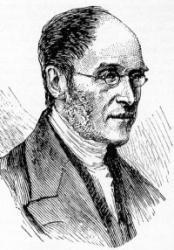
1793 - 1847 Person Name: Henry F. Lyte Author of "夕陽西沈, (Abide with Me)" in 生命聖詩 - Hymns of Life, 1986 Lyte, Henry Francis, M.A., son of Captain Thomas Lyte, was born at Ednam, near Kelso, June 1, 1793, and educated at Portora (the Royal School of Enniskillen), and at Trinity College, Dublin, of which he was a Scholar, and where he graduated in 1814. During his University course he distinguished himself by gaining the English prize poem on three occasions. At one time he had intended studying Medicine; but this he abandoned for Theology, and took Holy Orders in 1815, his first curacy being in the neighbourhood of Wexford. In 1817, he removed to Marazion, in Cornwall. There, in 1818, he underwent a great spiritual change, which shaped and influenced the whole of his after life, the immediate cause being the illness and death of a brother clergyman. Lyte says of him:—
"He died happy under the belief that though he had deeply erred, there was One whose death and sufferings would atone for his delinquencies, and be accepted for all that he had incurred;"
and concerning himself he adds:—
"I was greatly affected by the whole matter, and brought to look at life and its issue with a different eye than before; and I began to study my Bible, and preach in another manner than I had previously done."
From Marazion he removed, in 1819, to Lymington, where he composed his Tales on the Lord's Prayer in verse (pub. in 1826); and in 1823 he was appointed Perpetual Curate of Lower Brixham, Devon. That appointment he held until his death, on Nov. 20, 1847. His Poems of Henry Vaughan, with a Memoir, were published in 1846.
His own Poetical works were:—
(1) Poems chiefly Religious 1833; 2nd ed. enlarged, 1845. (2) The Spirit of the Psalms, 1834, written in the first instance for use in his own Church at Lower Brixham, and enlarged in 1836; (3) Miscellaneous Poems (posthumously) in 1868. This last is a reprint of the 1845 ed. of his Poems, with "Abide with me" added. (4) Remains, 1850.
Lyte's Poems have been somewhat freely drawn upon by hymnal compilers; but by far the larger portion of his hymns found in modern collections are from his Spirit of the Psalms. In America his hymns are very popular. In many instances, however, through mistaking Miss Auber's (q. v.) Spirit of the Psalms, 1829, for his, he is credited with more than is his due. The Andover Sabbath Hymn Book, 1858, is specially at fault in this respect. The best known and most widely used of his compositions are "Abide with me, fast falls the eventide;” “Far from my heavenly home;" "God of mercy, God of grace;" "Pleasant are Thy courts above;" "Praise, my soul, the King of heaven;" and "There is a safe and secret place." These and several others are annotated under their respective first lines: the rest in common use are:—
i. From his Poems chiefly Religious, 1833 and 1845.
1. Above me hangs the silent sky. For Use at Sea.
2. Again, 0 Lord, I ope mine eyes. Morning.
3. Hail to another Year. New Year.
4. How good, how faithful, Lord, art Thou. Divine care of Men.
5. In tears and trials we must sow (1845). Sorrow followed by Joy.
6. My [our] rest is in heaven, my [our] rest is not here. Heaven our Home.
7. 0 Lord, how infinite Thy love. The Love of God in Christ.
8. Omniscient God, Thine eye divine. The Holy Ghost Omniscient.
9. The leaves around me falling. Autumn.
10. The Lord hath builded for Himself. The Universe the Temple of God.
11. Vain were all our toil and labour. Success is of God.
12. When at Thy footstool, Lord, I bend. Lent.
13. When earthly joys glide swift away. Ps. cii.
14. Wilt Thou return to me, O Lord. Lent.
15. With joy we hail the sacred day. Sunday.
ii. From his Spirit of the Psalms, 1834.
16. Be merciful to us, O God. Ps. lvii.
17. Blest is the man who knows the Lord. Ps. cxii.
18. Blest is the man whose spirit shares. Ps. xli.
19. From depths of woe to God I cry. Ps. cxxxx.
20. Gently, gently lay Thy rod. Ps. vi.
21. Glorious Shepherd of the sheep. Ps. xxiii.
22. Glory and praise to Jehovah on high. Ps. xxix.
23. God in His Church is known. Ps. lxxvi.
24. God is our Refuge, tried and proved. Ps. xlvi.
25. Great Source of my being. Ps. lxxiii.
26. Hear, O Lord, our supplication. Ps. lxiv.
27. How blest the man who fears the Lord. Ps.cxxviii.
28. Humble, Lord, my haughty spirit. Ps. cxxxi.
29. In this wide, weary world of care. Ps. cxxxii.
30. In vain the powers of darkness try. Ps.lii.
31. Jehovah speaks, let man be awed. Ps. xlix.
32. Judge me, O Lord, and try my heart. Ps. xxvi.
33. Judge me, O Lord, to Thee I fly. Ps. xliii.
34. Lord, I have sinned, but O forgive. Ps. xli.
35. Lord, my God, in Thee I trust. Ps. vii.
36. Lord of the realms above, Our Prophet, &c. Ps.xlv.
37. Lone amidst the dead and dying. Ps. lxii.
38. Lord God of my salvation. Ps. lxxxviii.
39. Lord, I look to Thee for all. Ps. xxxi.
40. Lord, I would stand with thoughtful eye. Ps. lxix.
41. Lord, my God, in Thee I trust. Ps. vii.
42. My God, my King, Thy praise I sing. Ps. cviii.
43. My God, what monuments I see. Ps. xxxvi.
44. My spirit on [to] Thy care. Ps. xxxi.
45. My trust is in the Lord. Ps. xi.
46. Not unto us, Almighty Lord [God]. Ps. cxv.
47. O God of glory, God of grace. Ps. xc.
48. O God of love, how blest are they. Ps. xxxvii.
49. O God of love, my God Thou art. Ps. lxiii.
50. O God of truth and grace. Ps. xviii.
51. O had I, my Saviour, the wings of a dove. Ps. lv.
52. O how blest the congregation. Ps. lxxxix.
53. O how safe and [how] happy he. Ps. xci.
54. O plead my cause, my Saviour plead. Ps. xxxv.
55. O praise the Lord, 'tis sweet to raise. Ps. cxlvii.
56. O praise the Lord; ye nations, pour. Ps. cxvii.
57. O praise ye the Lord With heart, &c. Ps. cxlix.
58. O that the Lord's salvation. Ps. xiv.
59. O Thou Whom thoughtless men condemn. Ps. xxxvi.
60. Of every earthly stay bereft. Ps. lxxiv.
61. Our hearts shall praise Thee, God of love. Ps. cxxxviii.
62. Pilgrims here on earth and strangers. Ps. xvi.
63. Praise for Thee, Lord, in Zion waits. Ps. lxv.
64. Praise to God on high be given. Ps. cxxxiv.
65. Praise ye the Lord, His servants, raise. Ps. cxiii.
66. Redeem'd from guilt, redeem'd from fears. Ps. cxvi.
67. Save me by Thy glorious name. Ps. liv.
68. Shout, ye people, clap your hands. Ps. xlvii.
69. Sing to the Lord our might. Ps. lxxxi.
70. Strangers and pilgrims here below. Ps. cix.
71. Sweet is the solemn voice that calls. Ps. cxxii.
72. The Church of God below. Ps. lxxxvii.
73. The Lord is King, let earth be glad. Ps. xcvii.
74. The Lord is on His throne. Ps. xciii.
75. The Lord is our Refuge, the Lord is our Guide. Ps. xlvii.
76. The mercies of my God and King. Ps. lxxxix.
77. The Lord Who died on earth for men. Ps. xxi.
78. Tis a pleasant thing to fee. Ps. cxxxiii.
79. Thy promise, Lord, is perfect peace. Ps. iii.
80. Unto Thee I lift mine [my] eyes. Ps. cxxiii.
81. Whom shall [should] we love like Thee? Ps. xviii.
Lyte's versions of the Psalms are criticised where their sadness, tenderness and beauty are set forth. His hymns in the Poems are characterized by the same features, and rarely swell out into joy and gladness.
--John Julian, Dictionary of Hymnology (1907)
==================
Lyte, Henry Francis, p. 706, i. Additional versions of Psalms are in common use:--
1. Lord, a thousand foes surround us. Psalms lix.
2. Praise, Lord, for Thee in Zion waits. Psalms lxv.
3. The Christian like his Lord of old. Psalms cxl.
4. The Lord of all my Shepherd is. Psalms xxiii.
5. The Lord of heaven to earth is come. Psalms xcviii.
6. Thy mercy, Lord, the sinner's hope. Psalms xxxvi.
7. To Thee, O Lord, in deep distress. Psalms cxlii. Sometimes given as "To God I turned in wild distress."
8. Uphold me, Lord, too prone to stray. Psalms i.
9. When Jesus to our [my] rescue came. Psalms cxxvi. These versions appeared in the 1st edition of Lyte's Spirit of the Psalms, 1834. It must be noted that the texts of the 1834, the 1836, and the 3rd ed., 1858, vary considerably, but Lyte was not responsible for the alterations and omissions in the last, which was edited by another hand for use at St. Mark's, Torquay.
Lyte's version of Psalms xxix., "Glory and praise to Jehovah on high" (p. 706, ii., 22), first appeared in his Poems, 1st ed., 1833, p. 25. Read also No. 39 as "Lord, I look for all to Thee."
--John Julian, Dictionary of Hymnology, Appendix, Part II (1907)
Henry Francis Lyte
Timothy T'ingfang Lew
1891 - 1947 Person Name: 劉廷芳 Translator of "夕陽西沉歌" in The Cyber Hymnal T'ingfang Lew was a leading Chinese educator, author, and editor. He was educated in China and at Columbia University in New York City (M.A.; Ph.D.). His Bachelor of Divinity degree was from Yale and he studied at Union Theological Seminary, New York City, where he also taught Christian education. Lew lectured throughout America at schools and colleges from 1926 to 1938 and received an S.T.D. degree from Oberlin College.
In 1932, Lew began to chair the commission to prepare a Chinese Union hymnal. The resulting Hymns of Universal Praise was published in 1936. Its music editor was Bliss Wiant, a colleague of Lews's at Yenching University in Peking. Lew also edited the Union Book of Common Prayer which was used by four Protestant Chinese groups having approximately one-half million members. He represented China at the World Council of Churches meetings (1927-1939). He served as a member of the Chinese government's legislative body (1936-1941).
Lew is remembered for his work with Chinese Christian organizations in China and America where he resided from 1941 to 1947. He died while teaching at the University of New Mexico.
--The Presbyterian Hymnal Companion, 1993
Timothy T'ingfang Lew
William Henry Monk
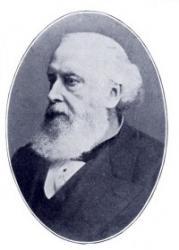
1823 - 1889 Person Name: William H. Monk Composer of "EVENTIDE" in 生命聖詩 - Hymns of Life, 1986 William H. Monk (b. Brompton, London, England, 1823; d. London, 1889) is best known for his music editing of Hymns Ancient and Modern (1861, 1868; 1875, and 1889 editions). He also adapted music from plainsong and added accompaniments for Introits for Use Throughout the Year, a book issued with that famous hymnal. Beginning in his teenage years, Monk held a number of musical positions. He became choirmaster at King's College in London in 1847 and was organist and choirmaster at St. Matthias, Stoke Newington, from 1852 to 1889, where he was influenced by the Oxford Movement. At St. Matthias, Monk also began daily choral services with the choir leading the congregation in music chosen according to the church year, including psalms chanted to plainsong. He composed over fifty hymn tunes and edited The Scottish Hymnal (1872 edition) and Wordsworth's Hymns for the Holy Year (1862) as well as the periodical Parish Choir (1840-1851).
Bert Polman
William Henry Monk