

 My Starred Hymns
 My Hymnals
 My Purchased Files
Planning worship?
Check out our sister site, ZeteoSearch.org,
for 20+ additional resources related to your search.
- |
User Links
Search Results


Hail! Thou once despised Jesus!
Author: John Bakewell; Augustus M. Toplady Appears in 637 hymnals Topics: Christ Intercession of Lyrics: 1 Hail! Thou once despised Jesus!
Hail! Thou Galilean King!
Thou didst suffer to release us;
Thou didst free salvation bring:
Hail! Thou agonizing Saviour,
Who hast borne our sin and shame,
By whose merit we find favor;
Life is given through Thy name.
2 Paschal Lamb, by God appointed,
All our sins on Thee were laid;
By almighty love anointed,
Thou hast full atonement made.
All Thy people are forgiven
Through the virtue of Thy blood;
Opened is the gate of heaven;
Peace is made 'twixt man and God.
3 Jesus, hail! enthroned in glory,
There forever to abide!
All the heavenly host adore Thee,
Seated at Thy Father's side;
There for sinners Thou art pleading;
There Thou dost our place prepare;
Ever for us interceding,
Till in glory we appear.
4 Worship, honor, power, and blessing,
Thou art worthy to receive;
Loudest praises, without ceasing,
Meet it is for us to give:
Help, ye bright angelic spirits!
Bring your sweetest, noblest lays!
Help to sing our Saviour's merits;
Help to chant Immanuel's praise.
Amen. Used With Tune: FABEN
Hail! Thou once despised Jesus!
Christ, the Lord is risen again
Author: Rev. Michael Weisse Appears in 263 hymnals Topics: Christ Intercession of Used With Tune: [Christ, the Lord is risen again]
Christ, the Lord is risen again

Alleluia! Sing to Jesus
Author: William C. Dix Meter: 8.7.8.7 D Appears in 228 hymnals Topics: Intercession of Christ; Intercession of Christ Lyrics: 1 Alleluia! sing to Jesus!
his the scepter, his the throne;
Alleluia! his the triumph,
his the victory alone.
Hark! the songs of peaceful Zion
thunder like a mighty flood.
Jesus, out of every nation,
has redeemed us by his blood.
2 Alleluia! not as orphans
are we left in sorrow now;
Alleluia! he is near us;
faith believes, nor questions how.
Though the cloud from sight received him
when the forty days were o'er,
shall our hearts forget his promise,
"I am with you evermore"?
3 Alleluia! heavenly High Priest,
here on earth our help, our stay;
Alleluia! hear the sinful
cry to you from day to day.
Intercessor, Friend of sinners,
earth's Redeemer, hear our plea,
where the songs of all the sinless
sweep across the crystal sea.
Scripture: Matthew 28:19-20 Used With Tune: LOWELL
Alleluia! Sing to Jesus

NUN KOMM DER HEIDEN HEILAND
Meter: 7.7.7.7 Appears in 138 hymnals Composer and/or Arranger: Seth Calvisius Topics: Intercession of Christ; Intercession of Christ Tune Sources: Enchiridion Oder Handbüchlein, Erfurt, 1524 Tune Key: g minor Incipit: 11732 12113 43453 Used With Text: Savior of the Nations, Come
NUN KOMM DER HEIDEN HEILAND
PLAINFIELD
Meter: 7.8.7.8 with refrain Appears in 375 hymnals Composer and/or Arranger: Robert Lowry Topics: Jesus Christ His Priestly Intercession; Christ Blood of Tune Key: G Major Incipit: 11123 53111 23321 Used With Text: Nothing but the Blood
PLAINFIELD


The intercession of Christ
Author: Steele Hymnal: A Selection of Hymns #CLII (1792) Meter: 8.8.8.8 Topics: The Intercession of Christ; Intercession of Christ First Line: He lives, the great redeemer lives Lyrics: 1 He lives, the great redeemer lives,
(What joy the blest assurance gives!)
And now before his father God,
Pleads the full merits of his blood.
2 Repeated crimes awake our fears,
And justice arm'd with frowns appears;
But in the savior's lovely face
Sweet mercy smiles, and all is peace.
3 Hence then, ye black despairing thoughts,
Above our fears, above our faults
His powerful intercessions rise
And guilt recedes, and terror dies.
4 In every dark distressful hour,
When sin and satan join their power;
Let this dear hope repel the dart,
That Jesus bears us on his heart.
5 Great advocate, almighty friend—
On him our humble hopes depend;
Our cause can never, never fail,
For Jesus pleads, and must prevail.
Scripture: Hebrews 7:25 Languages: English
The intercession of Christ
Christ's admonition to Peter under approaching trials, and intercession for him
Author: Dr. Doddridge Hymnal: A Selection of Hymns #CLV (1792) Meter: 8.6.8.6 Topics: The Intercession of Christ; Intercession of Christ For Peter; Christ's intercession of the tempted First Line: How keen the tempter's malice is! Lyrics: 1 How keen the tempter's malice is!
How artful, and how great!
Tho' not one grain shall be destroyed,
Yet will he sift the wheat.
2 But God can all his power control,
And gather in his chain;
And, where he seems to triumph most,
The captive soul regain.
3 There is a shepherd kind and strong,
Still watchful for his sheep;
Nor shall the infernal lion rend,
Whom he vouchsafes to keep.
4 Blest Jesus, intercede for us,
That we may fall not more,
O raise us when we prostrate lie,
And comfort lost restore,
5 The secret energy impart,
That faith may never fail;
But, 'midst whole showers of fiery darts,
That temper'd shield prevail.
6 Secur'd ourselves by grace divine,
We'll guard our brethren too;
And, taught their frailty by our own,
Our care of them renew.
Scripture: Luke 22:31-32 Languages: English
Christ's admonition to Peter under approaching trials, and intercession for him
Christ's Intercession typified by Aaron's Breastplate
Author: Dr. Doddridge Hymnal: A Selection of Hymns #CLIV (1792) Meter: 8.6.8.6 Topics: The Intercession of Christ; Intercession of Christ Typified by Aaron's breast plate First Line: Now let our cheerful eyes survey Lyrics: 1 Now let our cheerful eyes survey
Our great high priest above,
And celebrate his constant care,
And sympathetic love.
2 Tho' rais'd to a superior throne,
Where angels bow around,
And high o'er all the shining train
With matchless honors crown'd;
3 The names of all his saints he bears,
Deep graven on his heart;
Nor shall the meanest christian say
That he has lost his part.
4 Those characters shall fair abide,
Our everlasting trust,
When gems, and monuments, and crowns
Have moulder'd down to dust.
5 So, gracious savior, on my breast
May thy dear name be worn,
A sacred ornament and guard,
To endless ages borne!
Scripture: Exodus 28:29 Languages: English
Christ's Intercession typified by Aaron's Breastplate


Charles Wesley
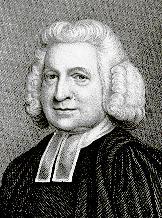
1707 - 1788 Topics: Intercession of Christ; Intercession of Christ Author of "Hail the Day That Sees Him Rise" in Psalter Hymnal (Gray) Charles Wesley, M.A. was the great hymn-writer of the Wesley family, perhaps, taking quantity and quality into consideration, the great hymn-writer of all ages. Charles Wesley was the youngest son and 18th child of Samuel and Susanna Wesley, and was born at Epworth Rectory, Dec. 18, 1707. In 1716 he went to Westminster School, being provided with a home and board by his elder brother Samuel, then usher at the school, until 1721, when he was elected King's Scholar, and as such received his board and education free. In 1726 Charles Wesley was elected to a Westminster studentship at Christ Church, Oxford, where he took his degree in 1729, and became a college tutor. In the early part of the same year his religious impressions were much deepened, and he became one of the first band of "Oxford Methodists."
In 1735 he went with his brother John to Georgia, as secretary to General Oglethorpe, having before he set out received Deacon's and Priest's Orders on two successive Sundays. His stay in Georgia was very short; he returned to England in 1736, and in 1737 came under the influence of Count Zinzendorf and the Moravians, especially of that remarkable man who had so large a share in moulding John Wesley's career, Peter Bonier, and also of a Mr. Bray, a brazier in Little Britain. On Whitsunday, 1737, [sic. 1738] he "found rest to his soul," and in 1738 he became curate to his friend, Mr. Stonehouse, Vicar of Islington, but the opposition of the churchwardens was so great that the Vicar consented that he "should preach in his church no more." Henceforth his work was identified with that of his brother John, and he became an indefatigable itinerant and field preacher. On April 8, 1749, he married Miss Sarah Gwynne. His marriage, unlike that of his brother John, was a most happy one; his wife was accustomed to accompany him on his evangelistic journeys, which were as frequent as ever until the year 1756," when he ceased to itinerate, and mainly devoted himself to the care of the Societies in London and Bristol. Bristol was his headquarters until 1771, when he removed with his family to London, and, besides attending to the Societies, devoted himself much, as he had done in his youth, to the spiritual care of prisoners in Newgate. He had long been troubled about the relations of Methodism to the Church of England, and strongly disapproved of his brother John's "ordinations." Wesley-like, he expressed his disapproval in the most outspoken fashion, but, as in the case of Samuel at an earlier period, the differences between the brothers never led to a breach of friendship. He died in London, March 29, 1788, and was buried in Marylebone churchyard. His brother John was deeply grieved because he would not consent to be interred in the burial-ground of the City Road Chapel, where he had prepared a grave for himself, but Charles said, "I have lived, and I die, in the Communion of the Church of England, and I will be buried in the yard of my parish church." Eight clergymen of the Church of England bore his pall. He had a large family, four of whom survived him; three sons, who all became distinguished in the musical world, and one daughter, who inherited some of her father's poetical genius. The widow and orphans were treated with the greatest kindness and generosity by John Wesley.
As a hymn-writer Charles Wesley was unique. He is said to have written no less than 6500 hymns, and though, of course, in so vast a number some are of unequal merit, it is perfectly marvellous how many there are which rise to the highest degree of excellence. His feelings on every occasion of importance, whether private or public, found their best expression in a hymn. His own conversion, his own marriage, the earthquake panic, the rumours of an invasion from France, the defeat of Prince Charles Edward at Culloden, the Gordon riots, every Festival of the Christian Church, every doctrine of the Christian Faith, striking scenes in Scripture history, striking scenes which came within his own view, the deaths of friends as they passed away, one by one, before him, all furnished occasions for the exercise of his divine gift. Nor must we forget his hymns for little children, a branch of sacred poetry in which the mantle of Dr. Watts seems to have fallen upon him. It would be simply impossible within our space to enumerate even those of the hymns which have become really classical. The saying that a really good hymn is as rare an appearance as that of a comet is falsified by the work of Charles Wesley; for hymns, which are really good in every respect, flowed from his pen in quick succession, and death alone stopped the course of the perennial stream.
It has been the common practice, however for a hundred years or more to ascribe all translations from the German to John Wesley, as he only of the two brothers knew that language; and to assign to Charles Wesley all the original hymns except such as are traceable to John Wesley through his Journals and other works.
The list of 482 original hymns by John and Charles Wesley listed in this Dictionary of Hymnology have formed an important part of Methodist hymnody and show the enormous influence of the Wesleys on the English hymnody of the nineteenth century.
-- Excerpts from John Julian, Dictionary of Hymnology (1907)
==================
Charles Wesley, the son of Samuel Wesley, was born at Epworth, Dec. 18, 1707. He was educated at Westminster School and afterwards at Christ Church, Oxford, where he graduated M.A. In 1735, he took Orders and immediately proceeded with his brother John to Georgia, both being employed as missionaries of the S.P.G. He returned to England in 1736. For many years he engaged with his brother in preaching the Gospel. He died March 29, 1788. To Charles Wesley has been justly assigned the appellation of the "Bard of Methodism." His prominence in hymn writing may be judged from the fact that in the "Wesleyan Hymn Book," 623 of the 770 hymns were written by him; and he published more than thirty poetical works, written either by himself alone, or in conjunction with his brother. The number of his separate hymns is at least five thousand.
--Annotations of the Hymnal, Charles Hutchins, M.A., 1872.
Charles Wesley
E. J. Hopkins
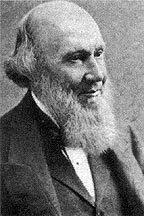
1818 - 1901 Person Name: Dr. E. J. Hopkins, 1818-1901 Topics: Christ Intercession of; Intercession of Christ Composer of "CULFORD" in Methodist Hymn and Tune Book Dr Edward John Hopkins MusDoc United Kingdom 1818-1901. Born at Westminster, England, the son of a clarinetist with the Royal Opera House orchestra, he became an organist (as did two of his brothers) and a composer. In 1826 he became a chorister of the Chapel Royal and sang at the coronation of King William IV in Westminster Abbey. He also sang in the choir of St. Paul’s Cathedral, a double schedule requiring skill and dexterity. On Sunday evenings he would play the outgoing voluntary at St. Martin’s in-the-field. He left Chapel Royal in 1834 and started studying organ construction at two organ factories. He took an appointment at Mitcham Church as organist at age 16, winning an audition against other organists. Four years later he became organist at the Church of St. Peter, Islington. In 1841 he became organist at St. Luke’s, Berwick St., Soho. Two Years later he was organist at Temple Church, which had a historic organ (built in 1683). He held this position for 55 years. In 1845 he married Sarah Lovett, and they had four sons and five daughters. He was closely associated with the Bach Society and was organist for the first English performances of Bach’s St. Matthew Passion. In 1855 he collaborated with Edward Rimbault publishing “The organ, its history and construction” (3 editions 1855-70-77). In 1864 he was one of the founders of the “College of organists”. In 1882 he received an honorary Doctorate of Music from the Archbishop of Canterbury. He composed 30+ hymn tunes and some psalm chants, used by the Church of England. He died in London, England.
John Perry
E. J. Hopkins
Augustus Toplady
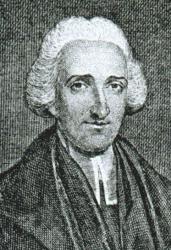
1740 - 1778 Person Name: Augustus M. Toplady Topics: Christ Intercession of Author of "Hail! Thou once despised Jesus!" in Book of Worship with Hymns and Tunes Toplady, Augustus Montague, the author of "Rock of Ages," was born at Farnham, Surrey, November 4, 1740. His father was an officer in the British army. His mother was a woman of remarkable piety. He prepared for the university at Westminster School, and subsequently was graduated at Trinity College, Dublin. While on a visit in Ireland in his sixteenth year he was awakened and converted at a service held in a barn in Codymain. The text was Ephesians ii. 13: "But now, in Christ Jesus, ye who sometimes were far off are made nigh by the blood of Christ." The preacher was an illiterate but warm-hearted layman named Morris. Concerning this experience Toplady wrote: "Strange that I, who had so long sat under the means of grace in England, should be brought nigh unto God in an obscure part of Ireland, amidst a handful of God's people met together in a barn, and under the ministry of one who could hardly spell his name. Surely this is the Lord's doing, and it is marvelous." In 1758, through the influence of sermons preached by Dr. Manton on the seventeenth chapter of John, he became an extreme Calvinist in his theology, which brought him later into conflict with Mr. Wesley and the Methodists. He was ordained to the ministry in the Church of England in 1762, and in 1768 he became vicar of Broadhembury, a small living in Devonshire, which he held until his death. The last two or three years of his life he passed in London, where he preached in a chapel on Orange Street. His last sickness was of such a character that he was able to make a repeated and emphatic dying testimony. A short time before his death he asked his physician what he thought. The reply was that his pulse showed that his heart was beating weaker every day. Toplady replied with a smile: "Why, that is a good sign that my death is fast approaching; and, blessed be God, I can add that my heart beats stronger and stronger every day for glory." To another friend he said: "O, my dear sir, I cannot tell you the comforts I feel in my soul; they are past expression. . . . My prayers are all converted into praise." He died of consumption August 11, 1778. His volume of Psalms and Hymns for Public and Private Worship was published in 1776. Of the four hundred and nineteen hymns which it contained, several were his own productions.
If on a quiet sea 446
Rock of ages, cleft for me 279
Hymn Writers of the Church, 1915 by Charles S. Nutter
===============================================
Toplady, Augustus Montague, M.A. The life of Toplady has been repeatedly and fully written, the last, a somewhat discursive and slackly put together book, yet matterful, by W. Winters (1872). Summarily, these data may be here given: he was born at Farnham, in Surrey, on November 4, 1740. His father, Richard Toplady, was a Major in the British array, and was killed at the siege of Carthagena (1741) soon after the birth of his son. His widowed mother placed him at the renowned Westminster school, London. By-and-by circumstances led her to Ireland, and young Augustus was entered at Trinity College, Dublin, where he completed his academical training, ultimately graduating M.A. He also received his "new birth" in Ireland under remarkable conditions, as he himself tells us with oddly mixed humility and lofty self-estimate, as "a favourite of heaven," common to his school:—
"Strange that I who had so long sat under the means of grace in England should be brought right unto God in an obscure part of Ireland, midst a handful of people met together in a barn, and by the ministry of one who could hardly spell his own name. Surely it was the Lord's doing and is marvellous. The excellency of such power must be of God and cannot be of man. The regenerating spirit breathes not only on whom but likewise, when and where and as He listeth."
Toplady received orders in the Church of England on June 6, 1762, and after some time was appointed to Broadhembury. His Psalms and Hymns of 1776 bears that he was then “B.A." and Vicar of Broadhembury. Shortly thereafter be is found in London as minister of the Chapel of the French Calvinists in Leicester Fields. He was a strong and partizan Calvinist, and not well-informed theologically outside of Calvinism. We willingly and with sense of relief leave unstirred the small thick dust of oblivion that has gathered on his controversial writings, especially his scurrilous language to John Wesley because of his Arminianism, as we do John Wesley's deplorable misunderstanding and misrepresentation of Calvinism.
Throughout Toplady lacked the breadth of the divine Master's watchword "Forbid him not, for he that is not against us is for us" (St. Luke ix. 50). He was impulsive, rash-spoken, reckless in misjudgment; but a flame of genuine devoutness burned in the fragile lamp of his overtasked and wasted body. He died on August 11, 1778. The last edition of his works is in 6 vols., 8 vo., 1825. An accurate reproduction of most of his genuine hymns was one of the reprints of Daniel Sedgwick, 1860. His name occurs and recurs in contemporary memoirs and ecclesiastical histories, e.g., in Tyerman's Life of John Wesley. The reader will find in their places annotations on the several hymns of Toplady, and specially on his "Rock of Ages,” a song of grace that has given him a deeper and more inward place in millions of human hearts from generation to generation than almost any other hymnologist of our country, not excepting Charles Wesley. Besides the "Rock of Ages" must be named, for power, intensity, and higher afflatus and nicer workmanship, "Object of my first desire,” and "Deathless principle arise." It is to be regretted that the latter has not been more widely accepted. It is strong, firm, stirring, and masterful. Regarded critically, it must be stated that the affectionateness with which Toplady is named, and the glow and passion of his faith and life, and yearning after holiness, have led to an over-exaltation of him as a hymnwriter. Many of his hymns have been widely used, and especially in America, and in the Evangelical hymnbooks of the Church of England. Year by year, however, the number in use is becoming less. The reason is soon found. He is no poet or inspired singer. He climbs no heights. He sounds no depths. He has mere vanishing gleams of imaginative light. His greatness is the greatness of goodness. He is a fervent preacher, not a bard. [Rev. A. B. Grosart, D.D., LL.D.]
Toplady's hymns and poetical pieces were published in his:—
(1) Poems on Sacred Subjects wherein The Fundamental Doctrines of Christianity, with many other interesting Points, are occasionally introduced. . . Dublin: Printed by S. Powell, in Crane-lane, MDCCLIX.; (2) his Psalms & Hymns for Public and Private Worship, 1776; (3) in The Gospel Magazine, 1771-1776; and (4) in Hymns and Sacred Poems on a variety of Divine Subjects, &c. D. Sedgwick's reprint, 1860. His Works, with a Memoir by W. Row, were published in 6 volumes, in 1794. Walter How was also the editor of the 2nd and some later editions of the Psalms & Hymns. He was a most careless editor, and attributed several hymns by C. Wesley and others to Toplady.
The following additional hymns in common use together with centos indicated in the sub-lines, are from:—
i. His Poems on Sacred Subjects, 1759.
1. Can my heaven-born soul submit? All for Christ.
2. Come from on high, my King and God. Holiness desired.
(1.) 0 might this worthless heart of mine.
3. Earnest of future bliss. The Witness of the Spirit.
4. From Thy supreme tribunal, Lord. Christ's Righteousness a Refuge.
(1.) The spotless Saviour lived for me.
5. Great God, Whom heaven, and earth, and sea. For Peace.
6. I saw, and lo! a countless throng. Saints' Days. Revised form in the Gospel Magazine, 1774, p. 449.
7. Immovable our hope remains. Divine Faithfulness.
8. Jesus, God of love, attend. Divine Worship. Pt. ii. is "Prayer can mercy's door unlock."
9. Jesus, Thy power I fain would feel. Lent.
10. Lord, I feel a carnal mind. Mind of Christ desired.
11. My yielding heart dissolves as wax. On behalf of Arians, &c.
(1.) 0 Jesus, manifest Thy grace.
12. Not to myself I owe. Praise for Conversion,
(1.) Not to ourselves we owe.
(2.) The Father's grace and love.
13. 0 that my heart was right with Thee. Dedication to God desired.
14. 0 Thou that hearest the prayer of faith. Christ the Propitiation.
15. 0 Thou Who didst Thy glory leave. Thanksgiving for Redemption.
16. 0 when wilt Thou my Saviour be. Trust in Jesus.
(1.) Jesus, the sinner's Rest Thou art.
17. Redeemer, whither should I flee? Safety in the Cross.
18. Remember, Lord, that Jesus bled. Pardon.
19. Surely Christ thy griefs hath borne. Redemption. Revised text in Gospel Magazine, 1774, p. 548.
(1.) Weary sinner, keep thine eyes.
(2.) Weeping soul, no longer mourn.
ii. From the Gospel Magazine.
20. Compared with Christ, in all besides. Christ All in All. Feb. 1772.
21. Eternal Hallelujahs Be to the Father given. Holy Trinity, Dec. 1774.
22. From whence this fear and unbelief. Reviving Faith, Feb. 1772.
23. How vast the benefits divine. Redemption. Dec. 1774. From this "Not for the works which we have done" is taken.
24. Whom have I in heaven but Thee? Christ All and in All, Feb. 1772. From this "If my Lord Himself reveal" is taken.
25. Jesus, immutably the same. Jesus, the True Vine. June, 1771.
All these hymns, together with "O precious blood, 0 glorious death" (Death of Christ), are in D. Sedgwick's reprint of Toplady's Hymns, &c, 1860. We have met with several other hymns to which Toplady's name is appended, but for this we can find no authority whatever.
-- Excerpts from John Julian, Dictionary of Hymnology (1907)
Augustus Toplady





