

 My Starred Hymns
 My Hymnals
 My Purchased Files
Planning worship?
Check out our sister site, ZeteoSearch.org,
for 20+ additional resources related to your search.
- |
User Links
Search Results


Love Divine, All Loves Excelling
Author: Charles Wesley Meter: 8.7.8.7 D Appears in 1,940 hymnals Topics: Love Lyrics: 1. Love divine, all loves excelling,
joy of heaven, to earth come down;
fix in us thy humble dwelling;
all thy faithful mercies crown!
Jesus, thou art all compassion,
pure, unbounded love thou art;
visit us with thy salvation;
enter every trembling heart.
2. Breathe, O breathe thy loving Spirit
into every troubled breast!
Let us all in thee inherit;
let us find that second rest.
Take away our bent to sinning;
Alpha and Omega be;
end of faith, as its beginning,
set our hearts at liberty.
3. Come, Almighty to deliver,
let us all thy life receive;
suddenly return and never,
nevermore thy temples leave.
Thee we would be always blessing,
serve thee as thy hosts above,
pray and praise thee without ceasing,
glory in thy perfect love.
4. Finish, then, thy new creation;
pure and spotless let us be.
Let us see thy great salvation
perfectly restored in thee;
changed from glory into glory,
till in heaven we take our place,
till we cast our crowns before thee,
lost in wonder, love, and praise.
Used With Tune: BEECHER
Love Divine, All Loves Excelling
What Wondrous Love Is This
Meter: 12.9.12.9 Appears in 264 hymnals Topics: God Love and Grace of First Line: What wondrous love is this, O my soul, O my soul Lyrics: 1 What wondrous love is this, O my soul, O my soul,
what wondrous love is this, O my soul!
What wondrous love is this that caused the Lord of bliss
to bear the dreadful curse for my soul, for my soul,
to bear the dreadful curse for my soul!
2 To God and to the Lamb, I will sing, I will sing,
to God and to the Lamb, I will sing;
to God and to the Lamb, who is the great I AM,
while millions join the theme, I will sing, I will sing,
while millions join the theme, I will sing!
3 And when from death I'm free, I'll sing on, I'll sing on,
and when from death I'm free, I'll sing on;
and when from death I'm free, I'll sing and joyful be,
and through eternity I'll sing on, I'll sing on,
and through eternity I'll sing on! Scripture: 1 Corinthians 15:54-57 Used With Tune: WONDROUS LOVE Text Sources: American folk hymn
What Wondrous Love Is This
Psalm 122
Appears in 304 hymnals Topics: Sanctuary Love for; Sanctuary Love for; Sanctuary Love for First Line: How did my heart rejoice to hear Lyrics: 1 How did my heart rejoice to hear
My friend devoutly say,--
"In Zion let us all appear,
And keep the solemn day."
2 I love her gates, I love the road;
The Church, adorned with grace,
Stands like a palace built for God,
To show his milder face.
3 Up to her courts, with joys unknown,
The holy tribes repair;
The Son of David holds his throne,
And sits in judgment there.
4 Peace be within this sacred place,
And joy a constant guest;
With holy gifts and heavenly grace,
Be her attendants blest.
5 My soul shall pray for Zion still,
While life or breath remains;
There my best friends, my kindred dwell,
There God, my Saviour reigns.
Used With Tune: MEAR
Psalm 122

ROCKINGHAM
Meter: 8.8.8.8 Appears in 561 hymnals Composer and/or Arranger: Edward Miller (1731-1807); George Guest (1924-2002) Topics: God Love of Tune Sources: Melody Tunbridge from A Second Supplement to Psalmody in Miniature, c. 1780 Tune Key: D Major Incipit: 13421 35655 17655 Used With Text: When I survey the wondrous cross
ROCKINGHAM
JOYFUL SONG
Meter: 12.10.12.10.11.10 with refrain Appears in 303 hymnals Composer and/or Arranger: Chester G. Allen, 1838-1878 Topics: Love of God for Us Tune Key: G Major Incipit: 35132 32176 51351 Used With Text: Praise Him! Praise Him!
JOYFUL SONG


Love Is His Word
Author: Luke Connaughton, 1917-1979 Hymnal: Worship (3rd ed.) #599 (1986) Meter: 4.4.8.5.4.7 Topics: Love of God for Us First Line: Love is his word, love is his way Scripture: John 13:34-35 Languages: English Tune Title: JULINORMA
Love Is His Word
Sweet Jesu! when I think on thee
Hymnal: Psalmodia Germanica #17 (1732) Topics: Love of Christ Lyrics: I. Sweet Jesu! when I think on Thee,
My Heart for Joy doth leap in me.
Thy bless'd Remembrance yields Delight;
But far more sweet will be thy Sight.
II. When I th'incarnate Jesus spy,
I'm lost in Joy, in Transport die;
When with his Name I'm charm'd in song,
I with myself all Ear and Tongue.
III. Of him, who did Salvation bring,
I could for ever think and sing,
Arise, ye Guilty: he'll forgive;
Arise, ye Poor: for he'll relive.
IV. His Grace but ask, and 'twill be giv'n:
He'll raise, and turn your Hell to Heav'n.
When Sin and Sorrow wounds the Soul,
The Balm of Christ will make it whole.
V. If dismal Clouds the Mind affright,
His Beams clear up the mournful Night.
These Pleasures are beyond Compare:
His Love exceeds our Wish and pray'r.
VI. His Praise whene'er we strive to tell,
Our Pens must flag, our Tongues must fail;
The Joy's too great, we must confess;
We fell a Bliss we can't express.
VII. O wondrous Jesu! Greatest King!
The World doth with thy Triumphs ring;
Thou conquer'st all, below, above,
Dire Friends with Force, and Men with Love.
VIII. Thus diff'rent Ways thou giv'st thy Laws:
Some Terror frights; Some Softness draws.
O, dart upon us thy bright Ray,
Expelling Darkness, bringing Day.
IX. For thy Seraphick Sweets, we find,
Can cure the Conscience, and the Mind;
Chace Errors, which our Souls benight:
No Fiend nor Falshood bears thy Sight.
X. This shews the World Things hid before:
Its Glory's Shame, its Riches poor,
Its Pride Disgrace,its Pleasure Pain,
Its Wisdom Nonsense, Bus'ness vain.
XI. The Sunlike Light drives far the cold;
Enlight'ning Love, obscuring Gold;
For they whose Sight its Beams restore,
Despise the Purse, to prize the Poor.
XII. With Love of thee I'm overcome,
Entranc'd with Joy, with Pleasure dumb;
When on the Cross I thee behold,
I lose all Strength, grow dead with Cold.
XIII. The wounding Spear doth pierce my Heart;
When thou art nail'd, I feel the Smart:
Thy dying Groans my Sighs display;
Thou bow'st thy Head, I faint away.
XIV. Ye Hearts of Stone, come melt to see,
That this was done for you and me.
His Griefs procur'd, that we're forgiv'n;
And on his Blood we swim to Heav'n.
XV. To shame for Sins, he blush'd in Blood;
He clos'd his Eyes to shew us God:
Let all the World fall down, and know,
That none but God such Love could show.
XVI. His Love with equal Warmth pursue;
Burn for him, as he flam'd for you;
Love shou'd Returns of Love inspire,
And his bright Flames set us on Fire.
XVII. View well his Face, and winning Charms,
And fly with Speed into his Arms;
Thy Love, my Saviour! ne'er can cloy,
Fountain of Bliss, and Source of Joy.
XVIII. Oh! Let me ever share thy Grace,
Still taste thy Love and see thy Face;
Still let my Tongue resound thy Name,
And Jesus be my constant Theme.
XIX. For tho' I can't Words worthy speak,
Yet stop my Tongue, my Heart will break;
Big with thy Love, I must to Joy
Give Vent, lest I in Pieces fly.
XX. For when thy Charms croud in my Mind,
I split, unless a Vent I find:
Thy Merits in my Mem'ry roll;
They sooth my Thoughts, and raise my Soul.
XXI. The Love of Christ's stupendous Meat;
It fills me, yet I still could eat;
With this his Food I'm never cloy'd;
Still hungry, tho' I'm ever fed.
XXII. Insatiate to thy Spring I fly;
I drink, and yet am eve dry;
As Dropsy loves the liquid Store,
I swell, and yet I thirst for more.
XXIII. Against its Charms I can't be Proof.
Ah! who that loves can have enough?
No Heathen in this Feast delights;
It is not for such Appetites.
XXIV. No Beauty to the Blind appears:
Sweet Sounds are lost on deaven'd EArs;
Christ is to me a pleasing Feast;
They Jesus love, who Jesus taste.
XXV. Of this his Love who's once a Taste,
Will thirst for more; his Thirst will last;
But they thrice happy Lovers prove,
Whose Hearts are fill'd with Jesus; Love.
XXVI. Thy name adorns the Angels Sphere,
Pleases the Taste, and charms the Ear;
Ten thousand Times I thee desire;
If thou withdraw'st, I must expire.
XXVII. When shall thy highest Love be try'd?
When shall my soul be satisfy'd?
Remembring thee, I panting lye;
Thy Love both makes me live and die.
XXVIII. I rise and sink in Ecstasy,
Reviv'd with Love, and kill'd with Joy.
Sweet Love! in Publick still I sigh,
And still for Thee in Secret cry.
XXIX. 'Tis thee I love: For Thee alone
I shed my Tears and make my Moan.
Where'er I am, where'er I move,
I meet the Object of my Love.
XXX. In finding him, my Hours are blest;
And when he's found, I'll hold him fast.
O Bliss! the Lord I sought, appears;
My Sighs are lost with all my Fears.
XXXI. Let Love for Joy Hosanna sing;
Heav'n, Earth with Hallelujahs ring;
To celebrate this welcome Day,
I dance, and die for Love away.
XXXII. The Love of Jesus now shall last,
And keep its most transporting Taste:
No more I lose it; no more mourn;
Its Flame continual shall burn.
XXXIII. Sent from above this Fire shall glow,
Nor die as temp'ral Fire below;
It melts my Marrow, warms my Blood;
Lights up, but not consumes its Food.
XXXIV. Ev'n as the Damn'd I Heat sustain;
But mine's of Pleasure, their's of Pain.
What wond'rous Love is this I share!
It burns; yet doth refresh like Air.
XXXV. Come, Sinners! learn of me to love;
All wanton Charms from you remove;
My Passions' chaste, divinely good;
You love Men's Daughters, I my God.
XXXVI. He's sweeter than the Sweets of May;
Far clearer than the brightest Day;
More pleasing to my Taste and Eye,
Than Eastern Spice, or Eastern Sky.
XXXVII. Oh! let my Mouth thy Sweetness taste;
My Nostrils with thy Odours feast:
Still let my Lips thy Glories kiss,
Tho' I still faint beneath the Bliss.
XXXVIII. To thee I'll be for e'er confin'd,
Bliss of my Heart, Joy of my Mind!
Of Thee I think, of Thee I boast:
Who sav'd the World, won't see me lost.
XXXIX. But Christ resumes his Father's Throne.
While Angels sing, Man's left to moan.
But, Lord! I'll never part with Thee;
I'll mount up in thy Company.
XL. Come all, and fast to Jesus cleave:
Let's follow close; ne'er Jesus leave;
Both Hearts and Tongues to Jesus raise,
With Vows, and loud harmonious Lays.
XLI. That when we shall have learn'd this Art,
And from this earthly Choir depart,
He may requite our Songs of Love,
And joy us to the Choir above. Languages: English
Sweet Jesu! when I think on thee
God's love, God's love
Author: Anon Hymnal: The Song Book of the Salvation Army #47 (1986) Topics: God the Father Love First Line: God's love is as high as the heavens Lyrics: 1 God's love is as high as the heavens,
God’s love is as deep as the sea,
God’s love is for all kinds of sinners,
God’s love is sufficient for me.
Refrain:
God’s love, God’s love,
God’s love is sufficient for me;
God’s love, God’s love,
God’s love is sufficient for me.
2 God’s love is as wide as creation,
God’s love is as boundless and free,
God’s love brought his Son down from Heaven,
God’s love is sufficient for me.
3 God’s love brought his Son down from Heaven,
God’s love let him die on the tree;
God’s love, it can never be measured,
God’s love is sufficient for me.
Languages: English
God's love, God's love


June Nakada Sumida
Topics: God Love of God Translator of "Para Para Pitter Pat" in Hymns from the Four Winds
June Nakada Sumida
Christian Gregor
1723 - 1801 Person Name: Christian Gregor, 1723-1801 Topics: Christ--Love of Author of "What Splendid Rays of Truth and Grace" in Moravian Book of Worship Gregor, Christian, son of Georg Gregor, a peasant living in the Silesian village of Dirsdorf, near Peilau, was born at Dirsdorf, Jan. 1, 1723. In 1742 he went to Herrnhut, where he was at first employed in tuition. He became leader of the music in the [Moravian] Brethren's congregation at Herrnhaag, in 1748, and in 1749 at Zeist; but in 1753 he returned to Herrnhut as cashier of the Brethren's Board of Direction. He was, in 1756, ordained diaconus, in 1767 presbyter, and in 1789 bishop of the Brethren's Church. On Nov. 6,1801, he attended a meeting, held at Herrnhut, of the Board of Direction of which he had been a member from 1764. Just as he entered his house at Berthelsdorf, near Herrnhut, he was struck with paralysis, and died that same day. (Koch, vi. 436; Allgemeine Deutsche Biographie, ix. 630.)
He was a man greatly beloved and respected, simple of heart, loving, earnest and hardworking; and was entrusted with many important missions and visitations. His hymns are characterised by childlike fervour of devotion to his crucified Lord. A number appeared in Des kleinen Brüder-Gesangbuchs dritter Theil, Barby, 1767; but they were mostly contributed to the Gesang-buch zum Gebrauch der evangelischen Brüder Gemeinen, Barby, 1778, of which he was the principal editor. He was also an excellent organist, and edited, in 1784, a collection of accompanying tunes for the hymnbook of 1778, contributing thereto various melodies by himself. A little volume entitled Historische Nachrteht vom Brüder-Gesangbuche des Jahres 1778, und von dessen Lieder-Verfassern, Gnadau, 1835 (2nd ed., 1851), occasionally referred to in these pages, is based on materials collected by Gregor.
His hymns in English common use are:—
i. Bis dereinst mein Stündlein schlägt. [Love to Christ.] 1778, No. 640, in 5 st. of 4 1. Translated as:—
Till permitted hence to go, of st. i., ii., iv., as No. 563 in the Moravian Hymn Book, 1801 (1886, No. 1228). In 1826 an original st.anza by T. Bird was added, beginning, " Till the day when I shall tread." Repeated thus in 1886, No. 1228, and in J. A. Latrobe's Collection, 1841, No. 484.
ii. Die Gottes Cherubim. [The Angels.] Appeared as No. 1877 in Appendix xii. c, 1746, to the Herrnhut Gesang-Buch of 1735, thus :—
"Die Gottes Cherubim
Erheben ihre Stimm,
(Funkelnd von Blitz und Strahl,)
Ihr Lied ist, wenn ichs sagen darf,
Dazu spielt mehr als eine Harf:
Ehre dem Seitenmaal!"
In 1778 it is included as No. 1600, beginning, "Die Gottes Seraphim," and expanded to three stanzas; i. of the Angels; ii. of the Redeemed; iii. of the Church on Earth. Here the song, "Ehre dem Seitenmaal," is given to the Church on Earth, and a paraphrase of Is. vi. 3, to the Angels. The only translation in common use is :—
The Seraphim of God, in full from the 1778, by J. Miller and F. W. Foster, as No. 792 in the Moravian Hymn Book, 1789 (1886, No. 1220), repeated in J. A. Latrobe's Collection, 1841, No. 424. Another translation is The Cherubims of God," from the original form, as No. 93 in pt. iii. of the Moravian Hymn Book, 1748.
iii. Heiliger, heiliger, heiliger, Herr Zebaoth. [Public Worship.] The introductory hymn in 1778, in 4 st. of 81, as on "The Word of God." The only translation is:—
Holy Lord, Holy lord, Holy and Almighty Lord, by F. W. Foster, C. G. Clemens, and J. Swertner, as No. 1 in the Moravian Hymn Book, 1789 (1886, No. 1). Included from the text of 1801, as No. 217 in Dr. Pagenstecher's Collection, 1864.
iv. Nach tausendfachen Plagen. [Passiontide.] 1778, No. 128, in 8 1. It is translated as :—
Behold, my soul, Thy Saviour, by P. H. Molther, as No. 352 in the Moravian Hymn Book, 1789. See No. vi.
v. 0 angenehme Augenblicke. [Eternal Life.] Written in 1766. In 1778, No. 1749, in 2 st. of 8 1. The translations are :—
1. What heavenly joy and consolation, by P. H, Molther, of st. i., as No. 886 in the Moravian Hymn Book, 1789 (1886, No. 1314, st. iii.). Included as st. iii. of No. 403 in the Irish Church Hymnal, 1873.
2. 0 what joy, 0 what joy awaiteth me. No. 988 in the Moravian Hymn Book, 1801. In the 1886 edition it is marked as a translation of No. v. as above. It bears more resemblance, however, to "O wie wallt mein Herz," which is No. 268 in the 1806 Appendix to the Brüder Gesang-Buchof 1778.
vi. 0 süsse Seelenweide. [Passiontide.] 1778, No. 167, in 11 st. of 8 1. St. i., ii. are ascribed to Gregor; iii., iv., xi. to Johann Prätorius ; and v.-x. to C. B. von Zinzendorf (taken from Nos. 40 and 41 of the collected edition of his hymns, 1754). The translation is:—
How is my soul delighted, a translation of st. i., ii., iv., v., vii., x. by F. W. Foster, and J. Miller, as No. 360 in the Moravian Hymn Book, 1789. In the 1801 and later editions (1886, No. 407), Molther's translation of No. iv. was prefixed as st. i., new trranslations of st. viii., x. given, and the rest altered. In the Book of Common Praise, ed. 1872, No. 86, is st. i., ii., 11. 5-8, and iii., by Gregor; and iv., 11. 5-8, by Prätorius, beginning, "Behold, my soul, thy Saviour."
vii. 0 Tage wahrer Seligkeit. [Joy of Forgiveness.] 1778, No. 398, in 6 st. of 8 1., included in the Berlin Geistliche Lieder S. , ed. 1863. Translated as:—
O days of solid happiness in full as No. 340 in the Moravian Hymn Book, 1801 (1886, No. 386). Two centos from the text of 1849 are in common use :—
1. "What days of solid happiness," st. i.-iv., as No. 433 in the edition of 1857 of Mercer's The Church Psalter & Hymnbook.
2. "Whene'er we contemplate the grace," st. iv.-vi. as No. 396 in the Irish Church Hymnal, 1873.
viii. Wenn schlägt die angenehme Stunde. [Ascension.] Written for Aug. 17, 1765, and included as No. 113 in 1767, as above, in 8 1. Translated as :—
When, O when shall I have the favour, by P. H. Molther, c. 1774, included as No. 839 in the Moravian Hymnbook, 1789, repeated as st. ii. of No, 403, in the Irish Church Hymnal, 1873. In the 1886 ed. of the Moravian Hymnbook, No. 1314, it begins, "O when shall I have that great favour."
ix. Wie wifd mir einst dooh sein. [Eternal Life.] 1778, No. 1743, in 10 st. of 6 1. In the Historische Nachricht thereto, st. i.-iii. are marked as by Gregor, and st. iv.-x. as by N. L. von Zinzendorf. St. iv.-x. are recast from a hymn beginning, "Die Bäume blühen ab," writ¬ten in the autumn of 1721, and included as No. 1245 in the 3rd edition, 1731, of his Sammlung geistund lieblicher Lieder, in 46 st. of 4 1., the stanza of the original used being in order 39, 42, 34, 18, 22, 29, 45. The only translation in common use is:—
What shall I feel, when I, in full from the 1778, by J. A. Latrobe, as No. 885 in the Moravian Hymnbook, 1789 (1886, No. 1301). Two centos are in use:-
1. "How shall the joy be told"; st. i.-iv., vi., viii. altered in J. A. Latrobe's Collection, 1841, No. 498.
2. "I hear the enraptured song"; st. 2, 6, 9, 10, as No. 582 in the App. of 1873 to Mercer's The ChurchPsalter & Hymnbook.
Hymns not in English common use:—
x. Ach mein Heir Jesu! dein Nahesein. Communion with Christ. 1767, as above, No. 432, in 10 st. In the Berlin Geistliche Lieder S.,, ed. 1863, No. 925. Justly characterised by Dr. Schaff in his Christ in Song, 1869, p. 496, as "One of the sweetest hymns from the holy of holies of the believer's personal communion with his Saviour, and very characteristic of Moravian piety in its best form." The trsanslations are (1) "What peace divine, what perfect happiness," by P. H. Molther, as No. 278 in the Moravian Hymn Book, 1789 (1849, No. 362). In the 1886 ed. of the Moravian Hymn Book, No. 359, it begins with the translation of st. v., "Gracious Redeemer, grant to us while here." (2) "Jesus, our Lord, when Thou art near," by Dr. H. Mills, 1845 (1856, p. 122). (3) "Ah dearest Lord! to feel that Thou art near," by Miss Winkworth, 1858, p. 168. (4) "Ah, Jesus, Lord, Thou art near to me," in the British Herald, Dec, 1866, p. 372, and as No. 304 in Reid's Praise Book, 1872. (5) "Jesus, my Lord, Thy nearness does impart," by E. Reynolds for Schaff’s Christ in Song, 1869, p. 496.
xi. Hallelujah! der Heiland lebt. Easter. 1778, No. 203, in 17 st. (st. xiv. being by Matthaus Stach, and first published as st. ii. of No. 109, in 1767). Translated as "Sing Hallelujah, Christ doth live," as No. 131 in the Moravian Hymn Book, 1801 (1886, No. 142), repeated in Bishop Ryle's Collection, 1860, No. 131. Beginning with the translation of st. ix., “The God of Peace, to guilty man," 6 st. were included as No. 90 in Reid's Praise Book, 1872. [Rev. James Mearns, M.A.]
-- John Julian, Dictionary of Hymnology (1907)
Christian Gregor
Albert Midlane
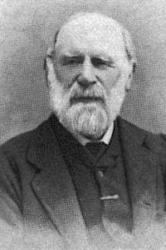
1825 - 1909 Topics: Love brotherly Author of "Revive Thy work, O Lord" in The Hymnal Midlane, Albert, was born at Newport, Isle of Wight, Jan. 23, 1825, and was engaged in business in that town for many years. To his Sunday school teacher he ascribes the honour of prompting him to poetic efforts: and the same teacher did much to shape his early life. His first printed hymn, "Hark! in the presence of our God," was written in September, 1842, at Carisbrooke Castle, and printed in the Youth’s Magazine in November of the same year. Since then he has written over 300, and of these a large proportion are in common use. They appeared in magazines and small mission hymn-books, including:—
(1) The Youth's Magazine; (2) The British Messenger; (3) The London Messenger; (4) Trotter's Evangelical Hymn Book, 1860; (5) The Ambassador's Hymn Book, 1861; (6) Second edition of the same, 1868; (7)Hymn Book for Youth; (8) Good News for the Little Ones, 1860; (9) William Carter's Gospel Hymn Book, 1862; and several other works of a similar kind.
In addition to several small works in prose, Mr. Midlane has gathered his verse together from time to time and published it as:—
(1) Poetry addressed to Sabbath School Teachers, 1844; (2) Vecta Garland, 1850; (3) Leaves from Olivet, 1864; (4) Gospel Echoes, 1865; (5) Above the Bright Blue Sky, 1867; (6) Early Lispings, 1880.
Of the hymns contained in these works nearly 200 have been in common use from 1861 to 1887, the most popular being "There's a Friend for little children." The hymn-books, however, in which many of them are found are usually very small, are used in what are commonly known as Gospel Missions, and have gradually given way to other and more important collections. We therefore append only those hymns which are at the present time in use in official or quasi-official hymn-books, or such collections as have a wide circulation. Those hymns which are omitted from the following list may be found in the works given above, and especially in the Gospel Echoes. The bracketed dates below are those of the composition of the hymns.
i. Given in Trotter's Evangelical Hymn Book, 1860.
1. How sweet the cheering words. (Aug. 1860.) The Gospel.
2. Lord Jesus, save! (July 1860.) Lent.
ii. Given in The Ambassador's Hymn Book, 1861.
3. Angels rejoice o'er sinners saved. (Aug. 1860.) Joy in Heaven over Repenting Sinners.
4. Come to the royal feast. (Aug. 1860.) The Gospel Feast.
5. Father, bless the heavenly message. (Aug. 1860.) Divine blessing implored.
6. How vast, how full, how free. (Aug. 1860.) Divine Mercy.
7. I am not told to labour. (June 25, 1860.) Salvation by Faith.
8. Jesus died upon the tree. (Aug. 13, 1860.) Good Friday.
9. Lord, prepare the hearts of sinners. (Aug. 28, 1861.) Preparation of the heart.
10. Not all the gold of all the world. Peace through Jesus.
11. Now we'll render to the Saviour. (Sept. 1, 1861.) Praise for Salvation.
12. O what a gift the Father gave. (Aug. 22, 1860.) The Gift of The Son.
13. O what a Saviour is Jesus the Lord. (Aug. 29, 1861.) Jesus the Saviour.
14. Passing onward, quickly passing. (Sept. 10, 1861.) Prepared?
15. Salvation, Lord, is Thine. (Aug., 1860.) Salvation through Jesus.
16. Sinner, where is room for doubting? (Sept., 1861.) Expostulation.
17. Soft the voice of mercy sounded. Grace.
18. The perfect righteousness of God. (Sept. 21, 1861.) God our Righteousness.
19. There is a throne of grace. (Sept. 14, 1860.) The Throne of Grace.
20. We speak of the mercy of God. (Sept. 19, 1861.) Divine Mercy.
iii. Given in W. Carter's Gospel Hymn Book, 1863.
21. Can any say, I do believe ? (Aug., 1860.) Assurance in Christ.
22. If Jesus came to seek and save. (Oct., 1861.) Salvation in Jesus.
iv. Given in Leaves from Olivet, 1864.
23. See the blessed Saviour dying. (Oct. 5, 1860.) Good Friday.
24. Sweet the theme of Jesus' love. (April 22, 1862.) The Love of Jesus.
v. Given in Gospel Echoes, 1865.
25. Come and welcome to the Saviour. (June 8, 1862) Invitation.
26. God be gracious to a sinner. (May 21, 1861.) Lent.
27. God speaks from heaven; in love He speaks. (July, 1860.) Love and Mercy of God.
28. Hark! the cry, Behold He cometh. (June 8, 1862.) Advent.
29. He saves because He will. (April 20, 1862.) The "I Wills" of Jesus.
30. How solemn are the words. (Aug. 1, 1865.) The New Birth.
31. Himself He could not save. (Sept. 1861.) Good Friday.
32. I once was bound in Satan's chains. Pardon.
33. Jesus lived. He lived for sinners. (Jan. 4, 1862.) Easter.
34. Jesus never answered "Nay." (May 13, 1862.) Jesus always the same.
35. Jesus the blessed centre is. (June 8, 1862). Father glorified in the Son.
36. Jesus, the risen Saviour. (July 31, 1862.) Easter.
37. Jesus, the soul that trusts in Thee. (May 7, 1864.) Salvation through Jesus.
38. Look, poor sinner, look to Calvary. Good Friday.
39. Lord, when I think upon the love. (Oct. 1, 1860.) The Love of Jesus.
40. Peace with God ! How great a treasure (Oct. 18, 1861.) Peace.
41. Salvation! What a precious word. (Nov. 22, 1861.) Salvation.
42. Scripture says Where sin abounded. (March 3, 1862.) Abounding Grace.
43. Shall Jesus' love be spoken? (May 4, 1862.) Love of Jesus.
44. The Lamb was slain, the blood was brought. (Aug. 24,1862.) The Passover.
45. The silver trumpets sounding. (May 7, 1862.) The Year of Jubilee.
46. There is a rest for weary souls. (Dec. 4, 1863.) Rest. Peace in Jesus.
47. 'Tis the voice of mercy calls thee. (Nov. 5, 1861.) Mercy.
48. When the Saviour said "'Tis finished" (Oct. 1861.) Good Friday.
49. When God begins His gracious work. (Dec. 27, 1860.) God Unchangeable.
50. Who can praise the blessed God ? (Oct. 1861.) Praise for Salvation.
51. Why those fears, poor trembling sinner. Safety in Jesus.
vi. Given in the Ambassador's Hymn Book, 2nd ed., 1868.
52. Life from the dead, eternal life. (Oct. 11, 1867.) Work of the Holy Spirit.
53. Stern justice cries for blood. (March 2, 1867.) The Atonement.
vii. Various.
54. Apart from every worldly care. (June 1866.) Prayer Meetings. Written for Spurgeon's Our Own Hymn Book 1866.
55. Be not weary, toiling Christian. (Feb. 1857.) Encouragement. In the British Messenger, Sept. 1857.
56. Eighteen hundred years ago. (Aug. 1859.) Fulness of Time. In the London Messenger, April, 1861.
57. Father, for Thy promised blessing. (Feb. 20, 1860.) Outpouring of the Spirit desired. In The Revival, July, 1860.
58. God bless our Sunday School. Sunday School Anniversary. First printed in the Baptist Children's Magazine, July, 1844. It has passed into numerous collections for children, but usually st. ii. is omitted, thus reducing it to 3 st.
59. He comes! He comes! the Bridegroom comes. (Sept. 9, 1850.) Advent. In The Present Testimony, 1851.
60. Kept by the power of God. (May 6 ,1858.) Security in God. In the London Messenger, Sept., 1860.
61. Let the waves of blessing roll. (Jan. 6, 1868.) Missions. In the Enlarged London Hymn Book, 1873.
62. Lord, 'our waiting spirits bow. (June, 1866.) Prayer Meetings. Written for Spurgeon's Our Own Hymn Book 1866.
63. Love us freely, blessed Jesus. (July 2, 1858.) Lent. In the Churchman's Penny Magazine. Oct., 1858.
64. Never perish! words of mercy. Mercy in Christ. Printed in the monthly Girdle, June, 1857, and in the British Messenger, Aug. 1857, in 4 double st. In the collections it is reduced to the first two stanzas.
65. No separation, O my soul. (May 6, 1863.) Perseverance. In the British Herald, Aug., 1863.
66. Nought but the voice of God can speak. (Jan. 29, 1863.) All things are of God. In the 1873 Appendix to Snepp's Songs of Grace & Glory.
67. Now, O joy, my sins are pardoned. Pardon and Peace. (Nov. 9, 1860). Printed in the London Messenger, March, 1861, then in the Gospel Echoes, 1865; and then in several hymn-books. The original began, "Once I sang, but not in earnest." Usually st. ii., iii., of 8 l, are given as "Now, O joy, &c."
68. O art thou an heir of glory? (June 4, 1861.) Cautions. In Hymn Book for Youth, 1862.
69. O what a glorious truth is this. (Aug. 3, 1860.) Jesus Died. In the London Messenger, Sept., 1860.
70. Once it was mine, the cup of wrath. (Aug. 8, 1860.) Wrath and Pardon. In the London Messenger, Oct., 1861.
71. Onward, upward, heavenward. (Feb. 7, 1860.) Pressing Onward. In the London Messenger, March, 186l.
72. Perennial spring of pure delight. (March 17, 1864.) Jesus All in All. In the London Messenger, Jan., 1865.
73. Sheltered by the [Thy] sprinkled blood. (Sept. 23, 1863.) Safety in Jesus. In the London Messenger, Feb. 1864.
74. Showers of blessing, gracious promise. (April 19, 1862.) Missions. In the London Messenger, Aug., 1862, and Leaves from Olivet, 1864.
75. The Church of God, amazing, precious thought. (July 6, 1857.) The Church. In The Present Testimony, 1858, and Leaves from Olivet, 1864.
76. The whispers of Thy love divine. (May 3, 1868.) Love of God. In the Island Greeting, Oct., 1872.
77. Though billows round me roll. (April 2, 1853.) Trust. In Food for Christ's Flock, 1853.
78. 'Tis finished, cried the dying Lamb. (Feb. 21, 1850.) Good Friday. In the Baptist Children's Magazine, 1850).
79. Tis heaven where Jesus is. (Oct. 23, 1862.) Joy and Peace in Jesus. In the Enlarged London Hymn Book, 1873.
80. Together all things work for good. (Aug. 14, 1860.) All work for Good. In the Enlarged London Hymn Book, 1813.
81. Waiting for Jesus, and loving while waiting. (Jan. 9, 1872.) Second Advent desired. In the 1873 Appendix to Snepp's Songs of Grace & Glory.
82. Without a cloud between. (Mar. 18,1862.) Jesus, Face to Face. In the London Messenger, June, 1862.
83. Yet awhile; how sweet the thought. (Dec, 1864.) Second Advent desired. In theLondon Messenger, 1865.
The collections in which these hymns are mainly found are Spurgeon's Our Own Hymn Book, 1866; Snepp's Songs of Grace & Glory, 1872-3; Hurditch's Enlarged London Hymn Book, 1873, and smaller books for Evangelical mission work. Of Mr. Midlane's hymns as a whole, Miher's estimate that "His hymns are full of spiritual thought, careful in their wording, and often very pleasing without reaching the highest form of poetical excellence " (Singers and Songs, p. 572), is just. A marked feature of these hymns is the constant and happy use of Scripture phraseology.
--John Julian, Dictionary of Hymnology (1907)
========================
Midlane, A., p. 733, ii. Mr. Midlane published in 1901 The Bright Blue Sky Hymn Book, of 315 of his hymns, and the same year The Gospel Hall Hymn Book, for use in the Gospel Hall, Newport, I.W., with 218 additional, making 533 original compositions. A broad-sheet of seven special hymns for Jewish children, in connection with the Mildmay Mission to the Jews, was also issued in December, 1904. Other publications previously noticed give, with these, over 800 hymns to Mr. Midlane as his contribution to the hymnody of the Church.
--John Julian, Dictionary of Hymnology, New Supplement (1907)
Albert Midlane





