

 My Starred Hymns
 My FlexScores
 My Hymnals
 My Purchased Files
Planning worship?
Check out our sister site, ZeteoSearch.org,
for 20+ additional resources related to your search.
- |
User Links
Search Results


Still, still with Thee, when purple morning breaketh
Author: Harriet Beecher Stowe, 1812 - 1896 Meter: 11.10.11.10 Appears in 369 hymnals Topics: Times and Seasons Morning Used With Tune: DAWNINGS
Still, still with Thee, when purple morning breaketh

Oh, for the peace which floweth like a river
Author: Jane Crewdson Appears in 71 hymnals Used With Tune: DAWNING
Oh, for the peace which floweth like a river
I cannot find Thee. Still on restless pinion
Author: Eliza Scudder Appears in 26 hymnals Topics: The Holy Spirit Used With Tune: DAWNING
I cannot find Thee. Still on restless pinion


Still, still with Thee, when purple morning breaketh
Author: Harriet Beecher Stowe, 1812 - 1896 Hymnal: The Hymnary #539 (1936) Meter: 11.10.11.10 Topics: Times and Seasons Morning Languages: English Tune Title: DAWNINGS
Still, still with Thee, when purple morning breaketh
I cannot find Thee. Still on restless pinion
Author: Eliza Scudder Hymnal: Worship Song #157 (1905) Topics: The Holy Spirit Languages: English Tune Title: DAWNING
I cannot find Thee. Still on restless pinion
We Hail Thee, Lord
Author: Joseph Collin Hymnal: Favourite Hymns of the Church #228 (1995) Meter: 11.10.11.10 First Line: We hail Thee, Lord, this resurrection morning! Languages: English Tune Title: DAWNING
We Hail Thee, Lord


Harriet Beecher Stowe
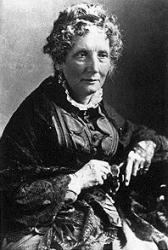
1811 - 1896 Person Name: Harriet Beecher Stowe, 1812 - 1896 Author of "Still, still with Thee, when purple morning breaketh" in The Hymnary Stowe, Harriet, née Beecher, daughter of the Rev. Lyman Beecher, D.D., was born at Litchfield, Connecticut, June 15, 1812. In 1832, her father having been appointed President of Lane Seminary, Cincinnati, Ohio, she removed therewith the family; and in 1833 was married to the Rev. Calvin E. Stowe, D.D., Professor of Languages and Biblical Literature in the same Institution. Her high reputation as an author is well known; and the immense success of Uncle Tom's Cabin, which first appeared in The National Era, in 1852, ensures her a lasting reputation. She has also written other well-known works. Three of her hymns appeared in the Plymouth Collection, edited by her brother, H. W. Beecher, in 1855:—
1. Still, still with Thee, when purple morning breaketh. Resting in God.
2. That mystic word of Thine, 0 sovereign Lord. Abiding in Jesus.
3. When winds are raging o'er the upper ocean. Peace.
Another hymn by Mrs. Stowe, "How beautiful, said he of old" (The Gospel Ministry), is No. 231 in the Boston Hymns of the Spirit, 1864. Her poetic pieces were published in her Religious Poems, 1867; and from a poem therein the hymn, "Knocking, knocking, who is there?" (Christ knocking), in Sankey's Sacred Songs and Solos is adapted. [Rev. F. M. Bird, M.A.]
-- John Julian, Dictionary of Hymnology (1907)
Harriet Beecher Stowe
Mrs. T. D. Crewdson
1808 - 1863 Person Name: Jane Crewdson Author of "Oh, for the peace which floweth like a river" in Common Praise Crewdson, Jane, née Fox, daughter of George Fox, of Perraw, Cornwall, was born at Perraw, October, 1809; married to Thomas Crewdson, of Manchester, 1836; and died at Summerlands, near Manchester, Sept. 14, 1863. During a long illness Mrs. Crewdson composed her works published as:—
(1) Lays of the Reformation, 1860. (2) A Little While, and Other Poems (posthumous), 1864. (3) The Singer of Eisenach, n.d.; and (4) Aunt Jane's Verses for Children, 1851. 2nd ed. 1855, 3rd 1871.
From these works nearly a dozen of her hymns have come into common use. The best known are, "O for the peace which floweth as a river," and "There is no sorrow, Lord, too light." In addition to these and others which are annotated under their respective first lines, there are the following in various collections:
1. Give to the Lord thy heart. 1864. Offertory.
2. How tenderly Thy hand is laid . 1864. Resignation.
3. Looking unto Jesus. 1864. Jesus All in All.
4. Lord, we know that Thou art near us. 1864. Resignation.
5. 0 Saviour, I have naught to plead. 1864. During Sickness. These plaintive lines were written a short time before her death.
6. 0 Thou whose bounty fills my cup. 1860. Peace.
7. The followers of the Son of God. 1864. The Daily Cross.
8. Though gloom may veil our troubled skies. 1864. Resignation.
--John Julian, Dictionary of Hymnology (1907)
======================
Crewdson, Jane, p. 268, ii. The following additional hymns by Mrs. Crewdson have recently come into common use through The Baptist Church Hymnal, 1900:—
1. For the sunshine and the rain. Harvest.
2. O Fount of grace that runneth o'er. Public Worship.
3. There is an unsearchable joy. Joy in God.
4. When I come with troubled heart. Prayer.
These hymns are all from her A Little While, and Other Poems, 1864.
--John Julian, Dictionary of Hymnology, New Supplement (1907)
===================
Crewdson, Jane, née Fox, p. 269, i. From her A Little While, and Other Poems, 1864, are:—
1. I've found a joy in sorrow. Power of Faith.
2. One touch from Thee, the Healer of diseases. Christ the Healer.
3. Tis not the Cross I have to bear. Faith desired .
--John Julian, Dictionary of Hymnology, Appendix, Part II (1907)
Mrs. T. D. Crewdson
Eliza Scudder
1821 - 1896 Author of "I cannot find Thee. Still on restless pinion" in Worship Song Scudder, Eliza , niece of Dr. E. H. Sears, (q.v.), was born in Boston, U.S.A., Nov. 14,1821, and now (1888) lives in Salem, Massachusetts. Formerly an Unitarian, she some time ago joined the Protestant Episcopal Church. Her hymns in common use are:—
1. From past regret and present[faithlessness] feebleness . Repentance. In the Quiet Hours, Boston, 1875.
2. I cannot find Thee! Still on restless pinion . Seeking after God. Appeared in Longfellow and Johnson's Unitarian Hymns of the Spirit, 1864.
3. In Thee my powers and treasures live. Faith.
4. Life of our life, and light of all our seeing! Prayer. In the Boston Quiet Hours, 1875.
5. The day is done; the weary day of thought and toil is past. Evening. In Sermons and Songs of the Christian Life, by E. H. Sears, Boston, 2nd ed.,1878, p. 296, entitled "Vesper Hymn," and dated "October, 1874." This is possibly her finest hymn.
6. Thou grace divine, encircling all . Divine Grace. Appeared in Dr. E. H. Sears's Pictures of the Olden Time, as shown in the Fortunes of a Family of Pilgrims, 1857. It was written in 1852, and included in the Boston Hymns of the Spirit, 1864. It has sometimes been taken as "An Ancient Catholic Hymn" (Universalist's Psalms & Hymns 1865), but in error.
7. Thou long disowned, reviled, oppresst. The Spirit of Truth. In the Boston Hymns of the Spirit, 1864.
Of these hymns, Nos. 2, 6, and 7 are in Dr. Martineau's Hymns, 1873. Some of Miss Scudder's poetical pieces appeared in Dr. Sears's Monthly Religious Magazine. Her Hymns and Sonnets, by E. S., were published by Lockwood, Brooks & Co., Boston, 1880. From this her hymn "Thou hast gone up again" (Ascension), is taken. [Rev. F. M. Bird, M.A.]
-- John Julian, Dictionary of Hymnology (1907)
====================
Scudder, Eliza, pp. 1035, L, 1589, i. Miss Scudder died in 1896. Her Hymns & Sonnets, with biographical notes, &c, by Horace E. Scudder, was published by Houghton & Mifflin, 1897. In The Pilgrim Hymnal, 1904, the hymn," Thou Life within my life," begins with st. ii. of "From past regret and present [faithlessness] feebleness," p. 1035, i. 1), which was written in Feb. 1871. Another of Miss Scudder's hymns is “ Let whosoever will enquire" (New Heaven), from which "My God, I rather look to Thee," in Horder's Worship Song, 1905, is taken.
--John Julian, Dictionary of Hymnology, New Supplement (1907)
Eliza Scudder