You help make Hymnary.org possible. More than 10 million people from 200+ countries found hymns, liturgical resources and encouragement on Hymnary.org in 2025, including you. Every visit affirms the global impact of this ministry.

If Hymnary has been meaningful to you this year, would you take a moment today to help sustain it? A gift of any size—paired with a note of encouragement if you wish—directly supports the server costs, research work and curation that keep this resource freely available to the world.

Give securely online today, or mail a check to:
Hymnary.org
Calvin University
3201 Burton Street SE
Grand Rapids, MI 49546

Thank you for your partnership, and may the hope of Advent fill your heart.

Person Results

Tune Identifier:"^optatus_votis_omnium_17665$"
In:people

Planning worship? Check out our sister site, ZeteoSearch.org, for 20+ additional resources related to your search.
Showing 1 - 7 of 7Results Per Page: 102050

Anonymous

Composer of "OPTATUS VOTIS OMNIUM" in Worship (4th ed.) In some hymnals, the editors noted that a hymn's author is unknown to them, and so this artificial "person" entry is used to reflect that fact. Obviously, the hymns attributed to "Author Unknown" "Unknown" or "Anonymous" could have been written by many people over a span of many centuries.

Herman G. Stuempfle

1923 - 2007 Person Name: Herman G. Stuempfle, Jr., 1923-2007 Author of "Prepare a Room for Me" in Worship (4th ed.) Rev. Dr. Herman G. Stuempfle, Jr., 83, died Tuesday, March 13, 2007, after a long illness. Born April 2, 1923, in Clarion, he was the son of the late Herman G. and Helen (Wolfe) Stuempfle, Sr. Stuempfle lived most of his life in Gettysburg, PA. He served as President of the Lutheran Theological Seminary in Gettysburg. He attended Hughesville public schools, and was a graduate of Susquehanna University and the Lutheran Theological Seminary at Gettysburg. He received additional advanced degrees from Union Theological Seminary in New York and a doctoral degree at Southern California School of Theology at Claremont. He retired in 1989. Rev. Dr. Stuempfle was the author of several books and numerous articles and lectures on preaching, history, and theology. He was also among the most honored and respected hymn writers of the 20th and 21st centuries. Rev. Dr. Stuempfle was known for his leadership in community and civic projects. Always taking an active stance on social issues, he participated in the creation of day care centers, served on the Gettysburg interchurch social action committee, helped create and support prison ministries and a homeless shelter, and tutored young people in the after school program of Christ Lutheran Church, where he was a long time member. --Excerpts from his obituary published in Evening Sun from Mar. 15 to Mar. 16, 2007

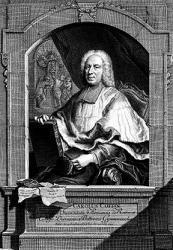
Charles Coffin

1676 - 1749 Person Name: Charles Coffin, 1676-1749 Author of "The Coming of Our God" in Credo Hymnal Coffin, Charles, born at Buzaney (Ardennes) in 1676, died 1749, was principal of the college at Beauvais, 1712 (succeeding the historian Rollin), and rector of the University of Paris, 1718. He published in 1727 some, of his Latin poems, for which he was already noted, and in 1736 the bulk of his hymns appeared in the Paris Breviary of that year. In the same year he published them as Hymni Sacri Auctore Carolo Coffin, and in 1755 a complete ed. of his Works was issued in 2 vols. To his Hymni Sacri is prefixed an interesting preface. The whole plan of his hymns, and of the Paris Breviary which he so largely influenced, comes out in his words. "In his porro scribendis Hymnis non tam poetico indulgendunv spiritui, quam nitoro et pietate consulendum esse existimavi. Pleraque igitur, argumentis convenientia e purissiinis Scripturae Sacrae fontibus deprompsi quac idoneis Ecclesiae cantui numeris alligarem." His hymns are described by a French critic as having less brilliancy than those of Santüil (q.v.), but more simplicity and unction. They number 100 in the edition of 1736. Translated into English by J. Chandler, I. Williams and others, are noted under their respective Latin first lines. [William T. Brooke] -- John Julian, Dictionary of Hymnology (1907)

Robert Campbell

1814 - 1868 Person Name: Robert Campbell, 1814-1868 Translator of "The Coming of Our God" in Credo Hymnal Robert Campbell was an advocate residing in Edinburgh. He is not much known as an author, but some of his hymns have been adopted in several hymnals. He was Roman Catholic. His death occurred in 1868. --Annotations of the Hymnal, Charles Hutchins, M.A. 1872. ==================== Campbell, Robert. Advocate, of Sherrington, Scotland, was born at Trochmig, Ayrshire, Dec. 19, 1814. When quite a boy he attended the University of Glasgow. Though showing from his earliest years a strong predilection for Theological studies, eventually he fixed upon the Scottish law as a profession. To this end he entered the Law Classes of the University of Edinburgh, and in due course entered upon the duties of an advocate. Originally a Presbyterian, at an early age he joined the Episcopal Church of Scotland. He became a zealous and devoted Churchman, directing his special attention to the education of the children of the poor. His classical attainments were good, and his general reading extensive. In 1848 he began a series of translations of Latin hymns. These he submitted to Dr. Neale, Dr. Mills of Ely, and other competent judges. In 1850, a selection therefrom, together with a few of his original hymns, and a limited number from other writers, was published as Hymns and Anthems for Use in the Holy Services of the Church within the United Diocese of St. Andrews, Dunkeld, and Dunblane. Edinburgh, R. Lendrum & Co. This collection, known as the St. Andrews Hymnal, received the special sanction of Bishop Torry, and was used throughout the Diocese for some years. Two years after its publication he joined the Roman Catholic Church. During the next sixteen years he devoted much time to the young and poor. He died at Edinburgh, Dec. 29, 1868. From his collection of 1850, four translations were given in Hymns Ancient & Modern, 1861, "At the Lamb's high feast we sing;" “Come, pure hearts, in sweetest measures;" "Ye Choirs of New Jerusalem;" " Ye servants of a martyr'd God" (altered). Attention was thereby directed to his translations. They are smooth, musical, and well sustained. A large number, not included in his 1850 collection, were left by him in manuscript. From these Mr. O.Shipley has printed several in his Annus Sanctus, 1884. (C. MSS.) --John Julian, Dictionary of Hymnology (1907)

Monastery of Our Lady of the Rosary (Summit, N.J.)

Person Name: DNS Descant of "OPTATIS VOTIS OMNIUM" in The Summit Choirbook The Monastery of Our Lady of the Rosary is a Dominican convent in Summit, New Jersey. It was founded in 1919.

George Ratcliffe Woodward

1848 - 1934 Person Name: George R. Woodward, 1848-1934 Harmonizer of "OPTATUS VOTIS OMNIUM" in Worship (4th ed.) Educated at Caius College in Cambridge, England, George R. Woodward (b. Birkenhead, Cheshire, England, 1848; d. Highgate, London, England, 1934) was ordained in the Church of England in 1874. He served in six parishes in London, Norfolk, and Suffolk. He was a gifted linguist and translator of a large number of hymns from Greek, Latin, and German. But Woodward's theory of translation was a rigid one–he held that the translation ought to reproduce the meter and rhyme scheme of the original as well as its contents. This practice did not always produce singable hymns; his translations are therefore used more often today as valuable resources than as congregational hymns. With Charles Wood he published three series of The Cowley Carol Book (1901, 1902, 1919), two editions of Songs of Syon (1904, 1910), An Italian Carol Book (1920), and the Cambridge Carol Book

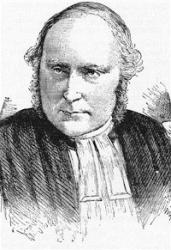
James Russell Woodford

1820 - 1885 Person Name: James R. Woodford, 1820-1885 Author of "Within the Father's House" in Worship (4th ed.) Woodford, James Russell, D.D., was born April 30, 1820, and educated at Merchant Taylors School, and Pembroke College, Cambridge, of which he was a scholar; B.A. Senior Optime, and 2nd class in the Classical Tripos. He was ordained in 1843, and became second Master in Bishop's College, Bristol; and Curate of St. John the Baptist, Broad Street, in that city. He became Incumbent of St. Saviour's, Coalpit Heath, 1845; of St. Mark's, Easton, Bristol, 1848; and Vicar of Kempsford, Gloucestershire, 1855. In 1868 he was preferred by the Crown to the important vicarage of Leeds on Dr. Atlay's appointment as Bishop of Hereford. He was several times Select Preacher at Cambridge. He was also Hon. Chaplain to the Queen (1867). In 1873 he was consecrated, in Westminster Abbey, Bishop of Ely. He died at Ely on Oct. 24, 1885. Bishop Woodford published Sermons, 1853; Lectures for Holy Week, 1853; Lectures on the Creed, 1853; Sermons, 1864; and Sermons, Charges, &c, at later dates. His Hymns arranged for the Sundays and Holy Days of the Church of England appeared in 1852 and 1855. He also joined H. W. Beadon, and Greville Phillimore in editing The Parish Hymn Book, 1863, and (enlarged) 1875. To these collections his original hymns, and his translations from the Latin, were contributed. The originals include:— 1. Lamb of God, for sinners slain. Passiontide. 1852. 2. Not by Thy mighty hand. Epiphany. 1863. 3. O come, and with the early morn. Easter. 1852. 4. Within the Father's house. Epiphany. 1863. Bishop Woodford's translations are annotated under their respective Latin first lines. They are good and popular, the best known being "Thee we adore, O hidden Saviour, Thee." -- John Julian, Dictionary of Hymnology (1907)

Export as CSV
It looks like you are using an ad-blocker. Ad revenue helps keep us running. Please consider white-listing Hymnary.org or getting Hymnary Pro to eliminate ads entirely and help support Hymnary.org.