

 My Starred Hymns
 My FlexScores
 My Hymnals
 My Purchased Files
Planning worship?
Check out our sister site, ZeteoSearch.org,
for 20+ additional resources related to your search.
- |
User Links
Search Results


[I will sing for Jesus]
Appears in 30 hymnals Composer and/or Arranger: Philip Phillips Incipit: 55321 21112 32125 Used With Text: I Will Sing for Jesus
[I will sing for Jesus]

I Will Sing for Jesus
Appears in 60 hymnals First Line: I will sing for Jesus, With his blood Refrain First Line: O, help me sing for Jesus Used With Tune: [I will sing for Jesus, With his blood]
I Will Sing for Jesus
A Cristo Doy Mi Canto
Author: P. Phillips; Anónimo Appears in 20 hymnals Refrain First Line: Ensalce nuestro canto Topics: El Hijo Adoracion y Culto Used With Tune: I WILL SING FOR JESUS
A Cristo Doy Mi Canto
Ensalce nuestro canto
Appears in 1 hymnal First Line: Alegre a Cristo canto Used With Tune: ALEGRE A CRISTO CANTO
Ensalce nuestro canto

I Will Sing for Jesus
Hymnal: International Song Service #100b (1887) Refrain First Line: O, help me sing for Jesus Languages: English Tune Title: [I will sing for Jesus]
I Will Sing for Jesus
O, help me sing for Jesus
Hymnal: The Tribute of Praise #578 (1874) First Line: I will sing for Jesus Tune Title: I WILL SING FOR JESUS
O, help me sing for Jesus
I Will Sing for Jesus
Hymnal: Popular Hymns No. 3 #63 (1910) Refrain First Line: O, help me sing for Jesus Languages: English Tune Title: [I will sing for Jesus]
I Will Sing for Jesus


Anonymous
Person Name: Anon. Author of ""My blessed Master"" in Laudes Domini In some hymnals, the editors noted that a hymn's author is unknown to them, and so this artificial "person" entry is used to reflect that fact. Obviously, the hymns attributed to "Author Unknown" "Unknown" or "Anonymous" could have been written by many people over a span of many centuries.
Anonymous
Philip Phillips
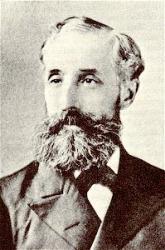
1834 - 1895 Composer of "[I will sing for Jesus]" in International Song Service Phillips, Philip, commonly known as the "Singing Pilgrim," was born in Chautauqua County, N. York, Aug. 13, 1834. Although engaged in farming for a time, from an early age he devoted himself to music, and ultimately devoted himself to the work of a "Singing Evangelist," in which capacity he has visited most English-speaking countries. His popular hymnals are: (1) Early Blossoms, 1860; (2) Musical Leaves, 1862; and (3) The Singing Pilgrim, 1866. In these works he published one or two hymns, including "I have heard of a Saviour's love" (The love of Christ), as in I. D. Sankey's Sacred Songs and Solos, 1878.
--John Julian, Dictionary of Hymnology, Appendix, Part II (1907)
Philip Phillips
Ellen M. H. Gates
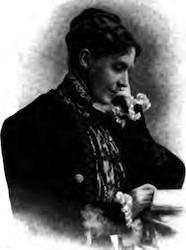
1835 - 1920 Person Name: Mrs. Ellen H. Gates Author of "I Will Sing for Jesus" in Imperial Songs Gates, Ellen, née Huntingdon, of Elizabeth, New Jersey, is the author of several popular pieces in the American Mission and Sunday School hymn-books. Of these the following have passed from the American books into Sankey's Sacred Songs and Solos:—
1. Come home, come home, you are weary at heart. Invitation.
2. I am now a child of God. Saved through Jesus.
3. I will sing you a song of that beautiful land. Concerning Heaven.
4. O the clanging bells of time. Yearning for Heaven.
5. Say, is your lamp burning, my brother. Watching and Waiting.
Concerning her poem which is used as a hymn in America, "If you cannot on the ocean" (Duty), Duffield says her account of its origin is as follows:—"The lines were written upon my slate one snowy afternoon in the winter of 1860. I knew, as I know now, that the poem was only a simple little thing, but somehow 1 had a presentiment that it had wings, and would fly into sorrowful hearts, uplifting and strengthening them." (English Hymns, 1886, p. 257.)
--John Julian, Dictionary of Hymnology, Appendix, Part II (1907)
======================
Gates, Ellen, p. 1565, i., now (1906) of New York city, was born at Torrington, Conn., and married to Isaac E. Gates. Her poems, &c, were published as Treasures of Kurium, 1895. Concerning Dr. March's hymn, "Hark! the voice of Jesus crying" (q.v.), and Mrs. Gates's "If you cannot on the ocean," some confusion has arisen, mainly, we think, from the fact that the opening line of Mrs. Gates's hymn, written in 1860, and the first line of Dr. March's second stanza are nearly the same, i.e., "If you cannot on the ocean," and "If you cannot cross the ocean." The incident which associates the late President Lincoln's name with this hymn is thus set forth by Mr. Philip Phillips in his Singing Pilgrim, 1866, p. 97:—
"The words of this truly beautiful song ['If you cannot on the ocean'] were written by Mrs. Ellen H. Gates . . . When our lamented President Lincoln heard Mr. Phillips sing it at the Hall of Representatives in Washington, Feb. 29, 1865, he was overcome with emotion, and sent up the following written request [given in facsimile on p. 97] to Hon. Wm. H. Seward, Chairman, for its repetition:—' Near the end let us have "Your Mission" [the title of the hymn] repeated by Mr. Phillips. Don't say I called for it. A. Lincoln.' "
It was through this incident that the hymn became known through America as " President Lincoln's favourite hymn." [Rev. James Mearns, M.A.]
--John Julian, Dictionary of Hymnology, New Supplement (1907)
Ellen M. H. Gates