

 My Starred Hymns
 My FlexScores
 My Hymnals
 My Purchased Files
Planning worship?
Check out our sister site, ZeteoSearch.org,
for 20+ additional resources related to your search.
- |
User Links
Person Results
Edward Henry Bickersteth
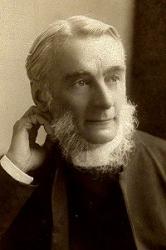
1825 - 1906 Person Name: E. H. Bickersteth Author of "My God, my Father, dost Thou call" in The Congregational Mission Hymnal Bickersteth, Edward Henry, D.D., son of Edward Bickersteth, Sr. born at Islington, Jan. 1825, and educated at Trinity College, Cambridge (B.A. with honours, 1847; M.A., 1850). On taking Holy Orders in 1848, he became curate of Banningham, Norfolk, and then of Christ Church, Tunbridge Wells. His preferment to the Rectory of Hinton-Martell, in 1852, was followed by that of the Vicarage of Christ Church, Hampstead, 1855. In 1885 he became Dean of Gloucester, and the same year Bishop of Exeter. Bishop Bickersteth's works, chiefly poetical, are:—
(l) Poems, 1849; (2) Water from the Well-spring, 1852; (3) The Rock of Ages, 1858 ; (4) Commentary on the New Testament, 1864; (5) Yesterday, To-day, and For Ever, 1867; (6) The Spirit of Life, 1868; (7) The Two Brothers and other Poems, 1871; (8) The Master's Home Call, 1872 ; (9) The Shadowed Home and the Light Beyond, 1874; (10) The Beef and other Parables, 1873; (11) Songs in the House of Pilgrimage, N.D.; (12) From Year to Year, 1883.
As an editor of hymnals, Bp. Bickersteth has also been most successful. His collections are:—
(1) Psalms & Hymns, 1858, based on his father's Christian Psalmody, which passed through several editions; (2) The Hymnal Companion, 1870; (3) The Hymnal Companion revised and enlarged, 1876. Nos. 2 and 3, which are two editions of the same collection, have attained to an extensive circulation. [Ch. of England Hymnody.]
About 30 of Bp. Bickersteths hymns are in common use. Of these the best and most widely known are:—" Almighty Father, hear our cry"; "Come ye yourselves apart and rest awhile"; "Father of heaven above"; "My God, my Father, dost Thou call"; "O Jesu, Saviour of the lost"; "Peace, perfect peace"; "Rest in the Lord"; "Stand, Soldier of the Cross"; " Thine, Thine, for ever"; and "Till He come.” As a poet Bp. Bickersteth is well known. His reputation as a hymn-writer has also extended far and wide. Joined with a strong grasp of his subject, true poetic feeling, a pure rhythm, there is a soothing plaintiveness and individuality in his hymns which give them a distinct character of their own. His thoughts are usually with the individual, and not with the mass: with the single soul and his God, and not with a vast multitude bowed in adoration before the Almighty. Hence, although many of his hymns are eminently suited to congregational purposes, and have attained to a wide popularity, yet his finest productions are those which are best suited for private use.
-John Julian, Dictionary of Hymnology (1907)
=================
Bickersteth, Edward Henry, p. 141, ii. Bishop Bickersteth's 1890 edition of his Hymnal Companion is noted on p. 1312, i., and several of his own hymns and translations, which appear therein for the first time, are annotated in this Appendix. One of these, "All-merciful, Almighty Lord," for the Conv. of St. Paul, was written for the 1890 edition of Hymnal Companion.
--John Julian, Dictionary of Hymnology, Appendix, Part II (1907)
==================
Bickersteth, B. H., p. 141, ii. Bp. Bickersteth died in London, May 16, 1906.
--John Julian, Dictionary of Hymnology, New Supplement (1907)
Edward Henry Bickersteth
Carl P. Daw Jr.
b. 1944 Person Name: Carl P. Daw, Jr. Paraphraser of "O Light Whose Splendor Thrills" in The Presbyterian Hymnal Carl P. Daw, Jr. (b. Louisville, KY, 1944) is the son of a Baptist minister. He holds a PhD degree in English (University of Virginia) and taught English from 1970-1979 at the College of William and Mary, Williamsburg, Virginia. As an Episcopal priest (MDiv, 1981, University of the South, Sewanee, Tennesee) he served several congregations in Virginia, Connecticut and Pennsylvania. From 1996-2009 he served as the Executive Director of The Hymn Society in the United States and Canada. Carl Daw began to write hymns as a consultant member of the Text committee for The Hymnal 1982, and his many texts often appeared first in several small collections, including A Year of Grace: Hymns for the Church Year (1990); To Sing God’s Praise (1992), New Psalms and Hymns and Spiritual Songs (1996), Gathered for Worship (2006). Other publications include A Hymntune Psalter (2 volumes, 1988-1989) and Breaking the Word: Essays on the Liturgical Dimensions of Preaching (1994, for which he served as editor and contributed two essays. In 2002 a collection of 25 of his hymns in Japanese was published by the United Church of Christ in Japan. He wrote Glory to God: A Companion (2016) for the 2013 hymnal of the Presbyterian Church (U.S.A.).
Emily Brink
Carl P. Daw Jr.
Ludvig Mathias Lindeman
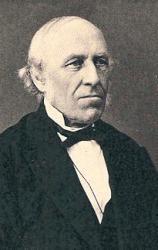
1812 - 1887 Person Name: L. M. Lindeman, 1812-87 Harmonizer of "WENN WIR IN HÖCHSTEN NÖTEN SEIN" in Evangelical Lutheran Hymnary Ludvig M. Lindeman (b. 1812; d. 1887) was a Norwegian composer and organist. Born in Trondheim, he studied theology in Oslo where he remained the rest of his life. In 1839 he succeeded his brother as the organist and cantor of Oslo Cathedral, a position he held for 48 years up until his death. Lindeman was appointed Knight of the Royal Norwegian Order of St. Olav, and was invited to both help christen the new organ in Royal Albert Hall in London, as well as compose for the coronation of King Oscar II and Queen Sophie of Sweden. In 1883, he and his son started the Organist School in Oslo. Lindeman is perhaps best known for his arrangements of Norwegiam folk tales; over the course of his life he collected over 3000 folk melodies and tunes.
Laura de Jong
Ludvig Mathias Lindeman
Michael Bruce
1746 - 1767 Author of "Where high the Heavenly Temple stands" in The Westminster Abbey Hymn-Book Bruce, Michael, son of a Scottish weaver, was born at Kinnesswood, Portmoak, Kinrossshire, Scotland, March 27,1746, and educated at the village school, Edinburgh University (where he first became acquainted with John Logan), and the Theological Hall of the Associate Synod, held at Kinross, under the Rev. John Swanston, intending ultimately to enter the ministry, a hope which was frustrated by his untimely death. To assist in procuring University fees and maintenance he for some time conducted a school, during the recess, at Gairney Bridge, and subsequently at Forrest Mill, near Tillicoultry. Whilst yet a student he died at Kinnesswood, July 5th, 1767.
[Also, see Logan, John]
The names of Michael Bruce and John Logan are brought together because of the painful controversy which has long prevailed concerning the authorship of certain Hymns and Paraphrases of Holy Scripture which are in extensive use in the Christian Church both at home and abroad. During the latter years of Bruce's short life he wrote various Poems, and also Hymns for a singing class at Kinnesswood, which were well known to his family and neighbours, and were eventually copied out by Bruce himself in a quarto MS. book, with the hope that some day he might see them in print. Immediately upon his death, in 1767, Logan called upon his father and requested the loan of this book that he might publish the contents for the benefit of the family. This was granted. Not till three years afterwards did a certain work, containing seventeen poems, and entitled Poems on Several Occasions , by Michael Bruce, 1770, appear, with a Preface in which it was stated that some of the Poems were by others than Bruce.
-- John Julian, Dictionary of Hymnology (1907)
Michael Bruce
Henry Alford
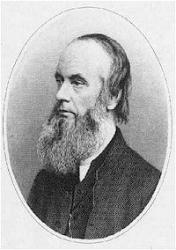
1810 - 1871 Author of "When Christ the Lord would come on earth" in The Westminster Abbey Hymn-Book Alford, Henry, D.D., son of the Rev. Henry Alford, Rector of Aston Sandford, b. at 25 Alfred Place, Bedford Row, London, Oct. 7, 1810, and educated at Trinity College, Cambridge, graduating in honours, in 1832. In 1833 he was ordained to the Curacy of Ampton. Subsequently he held the Vicarage of Wymeswold, 1835-1853,--the Incumbency of Quebec Chapel, London, 1853-1857; and the Deanery of Canterbury, 1857 to his death, which took. place at Canterbury, Jan. 12, 1871. In addition he held several important appointments, including that of a Fellow of Trinity, and the Hulsean Lectureship, 1841-2. His literary labours extended to every department of literature, but his noblest undertaking was his edition of the Greek Testament, the result of 20 years' labour. His hymnological and poetical works, given below, were numerous, and included the compiling of collections, the composition of original hymns, and translations from other languages. As a hymn-writer he added little to his literary reputation. The rhythm of his hymns is musical, but the poetry is neither striking, nor the thought original. They are evangelical in their teaching, but somewhat cold and conventional. They vary greatly in merit, the most popular being "Come, ye thankful people, come," "In token that thou shalt not fear," and "Forward be our watchword." His collections, the Psalms and Hymns of 1844, and the Year of Praise, 1867, have not achieved a marked success. His poetical and hymnological works include—
(1) Hymns in the Christian Observer and the Christian Guardian, 1830. (2) Poems and Poetical Fragments (no name), Cambridge, J. J. Deighton, 1833. (3) The School of the Heart, and other Poems, Cambridge, Pitt Press, 1835. (4) Hymns for the Sundays and Festivals throughout the Year, &c.,Lond., Longman ft Co., 1836. (5) Psalms and Hymns, adapted for the Sundays and Holidays throughout the year, &c, Lond., Rivington, 1844. (6) Poetical Works, 2 vols., Lond., Rivington, 1845. (7) Select Poetical Works, London, Rivington, 1851. (8) An American ed. of his Poems, Boston, Ticknor, Reed & Field, 1853(9) Passing away, and Life's Answer, poems in Macmillan's Magazine, 1863. (10) Evening Hexameters, in Good Words, 1864. (11) On Church Hymn Books, in the Contemporary Review, 1866. (12) Year of Praise, London, A. Strahan, 1867. (13) Poetical Works, 1868. (14) The Lord's Prayer, 1869. (15) Prose Hymns, 1844. (16) Abbot of Muchelnaye, 1841. (17) Hymns in British Magazine, 1832. (18) A translation of Cantemus cuncti, q.v.
-- John Julian, Dictionary of Hymnology (1907)
==================
Alford, Henry, p. 39, ii. The following additional hymns by Dean Alford are in common use:—
1. Herald in the wilderness. St. John Baptist. (1867.)
2. Let the Church of God rejoice. SS. Simon and Jude. (1844, but not in his Psalms & Hymns of that year.)
3. Not in anything we do. Sexagesima. (1867.)
4. O Thou at Whose divine command. Sexagesima. (1844.)
5. 0 why on death so bent? Lent. (1867.)
6. Of all the honours man may wear. St. Andrew's Day. (1867.)
7. Our year of grace is wearing to a close. Close of the Year. (1867.)
8. Saviour, Thy Father's promise send. Whit-sunday. (1844.)
9. Since we kept the Saviour's birth. 1st Sunday after Trinity. (1867.)
10. Thou that art the Father's Word. Epiphany. (1844.)
11. Thou who on that wondrous journey. Quinquagesima. (1867.)
12. Through Israel's coasts in times of old. 2nd Sunday after Epiphany. (1867.)
13. Thy blood, O Christ, hath made our peace. Circumcision . (1814.)
14. When in the Lord Jehovah's name. For Sunday Schools. (1844.)
All these hymns are in Dean Alford's Year of Praise, 1867, and the dates are those of their earliest publication, so far as we have been able to trace the same.
--Excerpts from John Julian, Dictionary of Hymnology, Appendix, Part II (1907)
Henry Alford
Anne Steele
1717 - 1778 Person Name: Anne Steele, 1717-78 Author of "Enslaved by Sin and Bound in Chains" in Christian Worship (1993) Anne Steele was the daughter of Particular Baptist preacher and timber merchant William Steele. She spent her entire life in Broughton, Hampshire, near the southern coast of England, and devoted much of her time to writing. Some accounts of her life portray her as a lonely, melancholy invalid, but a revival of research in the last decade indicates that she had been more active and social than what was previously thought. She was theologically conversant with Dissenting ministers and "found herself at the centre of a literary circle that included family members from various generations, as well as local literati." She chose a life of singleness to focus on her craft. Before Christmas in 1742, she declined a marriage proposal from contemporary minister-hymnist Benjamin Beddome. All the same, some of Steele's sufferings were very real. She lost her mother at age 3, a potential suitor at age 20, her step mom at 43, and her sister-in-law at 45. She spent many years caring for her father until his death in 1769. For most of her life, she exhibited symptoms of malaria, including persistent pain, fever, headaches, and stomach aches. Caleb Evans, in his preface to Steele's posthumous Miscellaneous Pieces in Verse and Prose (1780), noted that she had been bed ridden for "some years" before her death: When the interesting hour came, she welcomed its arrival, and though her feeble body was excruciated with pain, her mind was perfectly serene. . . . She took the most affectionate leave of her weeping friends around her, and at length, the happy moment of her dismission arising, she closed her eyes, and with these animating words on her dying lips, "I know that my Redeemer liveth," gently fell asleep in Jesus. Historically, her most popular hymn has been "When I survey life's varied scene" (and its shortened form, "Father, whate'er of earthly bliss"), a hymn that turns earthly loss or denial into a spirit of thankfulness, published in over 800 North American hymnals since 1792. Not all of her work deals with personal agony. Her hymns span a wide doctrinal and ecclesiastical range, some crafted and used for her father's congregation. Her metrical psalms are among the finest of the genre. Steele's hymns and psalms were published in two volumes in 1760, Poems on Subjects Chiefly Devotional, under the pseudonym Theodosia, with an additional volume of material published after her death, in Miscellaneous Pieces in Verse and Prose, 1780. Another small collection, Verses for Children, was issued in 1788, with two other editions given in 1803 and 1806. Sixty-two of her hymns, including new material and some revisions by Steele, were published in a hymnal for Baptists in 1769, A Collection of Hymns Adapted to Public Worship, edited by Caleb Evans and John Ash. Forty seven were included in John Rippon's A Selection of Hymns from the Best Authors in 1787; the only author with larger representation was Philip Doddridge, with 101. These collections represent the earliest attempts to anthologize Baptist hymns and were vital for bringing Steele's hymns into wider public worship, where they have been a mainstay for over two hundred years.
Chris Fenner adapted from The Towers (Southern Baptist Theological Seminary, August 2015)
Recommended Bibliography:
Cynthia Y. Aalders, To Express the Ineffable: The Hymns and Spirituality of Anne Steele (Milton Keynes, U.K.: Paternoster, 2008).
Cynthia Y. Aalders, "In melting grief and ardent love: Anne Steele's contribution to eighteenth-century hymnody," The Hymn (summer 2009), 16-25.
J.R. Broome, A Bruised Reed: The Life and Times of Anne Steele (Harpenden, U.K.: Gospel Standard Trust Publications, 2007).
Joseph Carmichael, The Hymns of Anne Steele in John Rippon's Selection of Hymns: A Theological Analysis in the Context of the English Particular Baptist Revival (2012), dissertation, http://digital.library.sbts.edu/handle/10392/4112
Priscilla Wong, Anne Steele and Her Spiritual Vision (Grand Rapids: Reformation Heritage Books, 2012).
Timothy Whelan & Julia B. Griffin, eds., Nonconformist Women Writers, 1720–1840, vols. 1 & 2 (London: Pickering & Chatto, 2011).
========================
Steele, Anne, born in 1716, was the daughter of Mr. Wm. Steele, a timber merchant, and pastor, without salary, of the Baptist Church at Broughton, in Hampshire. At an early age she showed a taste for literature, and would often entertain her friends by her poetical compositions. But it was not until 1760 that she could be prevailed upon to publish. In that year two volumes appeared under the title of Poems on Subjects chiefly Devotional, by Theodosia. After her death, which occurred in November, 1778, a new edition was published with an additional volume and a Preface by the Rev. Dr. Caleb Evans, of Bristol (Bristol, 1780). In the three volumes are 144 hymns, 34 Psalms in verse, and about 30 short poems. They have been reprinted in one vol. by D. Sedgwick, 1863….
Among Baptist hymnwriters Miss Steele stands at the head, if we regard either the number of her hymns which have found a place in the hymnals of the last 120 years, or the frequency with which they have been sung. Although few of them can be placed in the first rank of lyrical compositions, they are almost uniformly simple in language, natural and pleasing in imagery, and full of genuine Christian feeling. Miss Steele may not inappropriately be compared with Miss F. R. Havergal, our "Theodosia" of the 19th century. In both there is the same evangelic fervour, in both the same intense personal devotion to the Lord Jesus. But whilst Miss Steele seems to think of Him more frequently as her "bleeding, dying Lord "—dwelling on His sufferings in their physical aspect—Miss Havergal oftener refers to His living help and sympathy, recognizes with gladness His present claims as "Master" and "King," and anticipates almost with ecstasy His second coming. Looking at the whole of Miss Steele's hymns, we find in them a wider range of thought than in Miss Havergal's compositions. She treats of a greater variety of subjects. On the other hand, Miss Havergal, living in this age of missions and general philanthropy, has much more to say concerning Christian work and personal service for Christ and for humanity. Miss Steele suffered from delicacy of health and from a great sorrow, which befell her in the death of her betrothed under peculiarly painful circumstances. In other respects her life was uneventful, and occupied chiefly in the discharge of such domestic and social duties as usually fall to the lot of the eldest daughter of a village pastor. She was buried in Broughton churchyard. [Rev W. R. Stevenson, M.A.]
A large number of Miss Steele's hymns are in common use, the larger proportion being in American hymnbooks. In addition to "Almighty Maker of my frame," “Far from these narrow scenes of night," "Father of mercies in Thy word," and others annotated under their respective first lines, there are also:—
i. From her Poems on Subjects Chiefly Devotional, 1760, vols. i., ii.
1. Come, let our souls adore the Lord. Pleading for Mercy. One of two hymns "On the Fast, Feb. 11, 1757," the first being "While justice waves her vengeful hand."
2. Come, tune ye saints, your noblest strains. Christ Dying and Rising.
3. Deep are the wounds which sin has made. Christ, the Physician.
4. Enslaved by sin, and bound in chains. Redemption.
5. Eternal power, almighty God. Divine Condescension.
6. Eternal Source of joys divine. Divine Assurance desired.
7. Great God, to Thee my evening song. Evening.
8. Great Source of boundless power and grace. Desiring to Trust in God.
9. Hear, gracious [God] Lord, my humble moan [prayer] . The presence of God desired.
10. Hear, O my God, with pity hear. Ps. cxliii.
11. How long shall earth's alluring toys ? On Longing after unseen pleasures.
12. How lovely, how divinely sweet. Ps. lxxziv.
13. How oft, alas, this wretched heart. Pardoning Love.
14. In vain my roving thoughts would find. Lasting Happiness.
15. Jesus, the spring of joys divine. Christ the Way.
16. Lord, how mysterious are Thy ways. Providence.
17. Lord, Thou hast been Thy Children's God. Ps. xc.
18. Lord, we adore Thy boundless grace. Divine Bounty.
19. Lord, when my [our] raptured thought surveys. Creation and Providence.
20. Lord, when my thoughts delighted rove. Passiontide.
21. My God, 'tis to Thy mercy seat. Divine Mercy.
22. My God, to Thee I call. Lent.
23. O for a sweet, inspiring ray. The Ascended Saviour.
24. O Thou Whose tender mercy hears. Lent.
25. Permit me, Lord, to seek Thy face. Strength and Safety in God alone.
26. Should famine o'er the mourning field. During Scarcity.
27. So fades the lovely, blooming flower. Death of a Child.
28. Stretched on the Cross the Saviour dies. Good Friday.
29. The Lord, my Shepherd and my Guide. Ps.xxiii.
30. The Lord, the God of glory reigns. Ps. xciii.
31. The Saviour calls; let every ear. The Invitation.
32. There is a glorious world on high. True Honour.
33. Thou lovely [only] Source of true delight. Desiring to know Jesus.
34. Thou only Sovereign of my heart. Life in Christ alone.
35. To Jesus, our exalted Lord. Holy Communion.
36. To our Redeemer's glorious Name. Praise to the Redeemer.
37. To your Creator, God. A Rural Hymn.
38. When I survey life's varied scene. Resignation.
39. When sins and fears prevailing rise. Christ the Life of the Soul.
40. Where is my God? does He retire. Rreathing after God.
41. While my Redeemer's near. The Good Shepherd.
42. Why sinks my weak desponding mind? Hope in God.
43. Ye earthly vanities, depart. Love for Christ desired.
44. Ye glittering toys of earih adieu. The Pearl of great Price.
45. Ye humble souls, approach your God. Divine Goodness.
ii. From the Bristol Baptist Collection of Ash & Evans, 1769.
46. Come ye that love the Saviour's Name. Jesus, the King of Saints.
47. How helpless guilty nature lies. Need of Receiving Grace.
48. Praise ye the Lord let praise employ. Praise.
iii. Centos and Altered Texts,
49. How blest are those, how truly wise. True honour. From "There is a glorious world on high."
50. How far beyond our mortal view. Christ the Supreme Beauty. From "Should nature's charms to please the eye," 1760, st. iii.
51. In vain I trace creation o'er. True happiness. From "When fancy spreads her boldest wings," 1760, st. ii.
52. Jesus, and didst thou leave the sky? Praise to Jesus. From “Jesus, in Thy transporting name," 1760, st. iv.
53. Look up, my soul, with cheerful eye. Breathing after God. From No. 40, st. v.
54. Lord, in the temple of Thy grace. Christ His people's Joy. From "The wondering nations have beheld," 1760, st. iii.
55. My God, O could I make the claim. Part of No. 9 above.
56. My soul, to God, its source, aspires. God, the Soul's only Portion. From "In vain the world's alluring smile," st. iii.
57. O could our thoughts and wishes fly. Part of No. 11 above, st. iv.
58. O for the eye of faith divine. Death anticipated. From "When death appears before my sight," 1760, st. iii., vii., viii. altered, with opening stanzas from another source.
59. O Jesus, our exalted Head. Holy Communion. From "To Jesus, our exalted Lord." See No. 35.
60. O world of bliss, could mortal eyes. Heaven. From "Far from these narrow scenes of night."
61. See, Lord, Thy willing subjects bow. Praise to Christ. From "O dearer to my thankful heart," 1780, st. 5.
62. Stern winter throws his icy chains. Winter. From "Now faintly smile day's hasty hours," 1760, st. ii.
63. Sure, the blest Comforter is nigh. Whitsuntide. From "Dear Lord, and shall Thy Spirit rest," 1760, st. iii.
64. The God of my salvation lives. In Affliction. From, "Should famine, &c," No. 26, st. iv.
65. The Gospel, O what endless charms. The Gospel of Redeeming Love. From "Come, Heavenly Love, inspire my song."
66. The mind was formed lo mount sublime. The Fettered Mind. From "Ah! why should this immortal mind?" 1760, st. ii.
67. The once loved form now cold and dead. Death of a Child. From "Life is a span, a fleeting hour," 1760, st. iii.
68. Thy gracious presence, O my God. Consolation in Affliction. From "In vain, while dark affliction spreads," 1780, st. iv.
69. Thy kingdom, Lord, for ever stands. Ps. cxlv. From "My God, my King, to Thee I'll raise," 1760, st. xii.
70. Triumphant, Christ ascends on high. Ascension. From "Come, Heavenly Love, inspire my song," 1760, st. xxxii.
71. When blest with that transporting view. Christ the Redeemer. From "Almighty Father, gracious Lord," 1760, st. xi.
72. When death before my sight. Death Anticipated. From "When death appears before my sight," 1760.
73. When gloomy thoughts and boding fears. Com¬forts of Religion. From "O blest religion, heavenly fair," 1760, st. ii.
74. When weary souls with sin distrest. Invitation to Rest. From "Come, weary souls, with sin distressed," 1760.
75. Whene'er the angry passions rise. Example of Christ. From “And is the gospel peace and love?" 1760, st. ii.
All the foregoing hymns are in D. Sedgwick's reprint of Miss Steele's Hymns, 1863.
--Excerpts from John Julian, Dictionary of Hymnology (1907)
====================
Steele, Anne, p. 1089, i., Additional hymns in common use:
1. Amazing love that stoop'd so low. Thankfulness. From "O dearer to my thankful heart," 1780, iii.
2. Bright scenes of bliss, unclouded skies. Saved by Hope. Poems, 1760, i. p. 228.
3. Jesus demands this heart of mine. Pardon De¬sired. Poems, 1760, i. p. 120.
4. Jesus, Thou Source divine. Christ the Way. Poems, 1760, i. p. 53, altered.
5. Lord, how mysterious are Thy ways. Mysteries of Providence. Poems, 1760, i. p. 131.
6. Lord^in Thy great, Thy glorious Name. Ps. xxxi. Poems, 1760, ii. p. 158.
--John Julian, Dictionary of Hymnology, Appendix, Part II (1907)
Anne Steele
Paul Eber
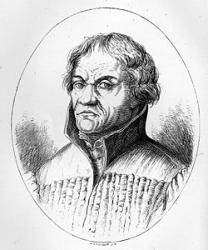
1511 - 1569 Author of "When in the hour of utmost need" in The Mennonite Hymnal Eber, Paul, son of Johannes Eber, master tailor at Kitzingen, Bavaria, was born at Kitzingen, Nov. 8, 1511. He was sent in 1523 to the Gymnasium at Ansbach, but being forced by illness to return home, was on his way thrown from horseback and dragged more than a mile, remaining as a consequence deformed ever after. In 1525 he entered the St. Lorentz school at Nürnberg, under Joachim Camerarius, and in 1532 went to the University of Wittenberg, where he graduated 1536, and thereafter became tutor in the Philosophical Faculty. He was appointed Professor of Latin in 1544, then in 1557 Professor of Hebrew and Castle preacher, and in 1558 Town preacher and General Superintendent of the Electorate, receiving in 1559 the degree D.D. from the University. He died at Wittenberg, Dec. 10, 1569 (Koch, i. 271-278; Allgemeines Deutsche Biog., v. 529).
At Wittenberg he was a close friend of Melanchthon, was privy to all his plans, and conducted the greater part of his correspondence. After Melanchthon's death in 1560, he became leader of his party, and had to engage in various controversies with the Crypto-Calvinists, &c.; the seeds of his fatal illness being sown on his return journey from the fruitless conference held at Altenburg with the theologians of Jena, which lasted from Oct. 20, 1568, to March 9, 1569.
Eber was, next to Luther, the best poet of the Wittenberg school. His hymns, some of them written for his own children to sing to Luther's melodies, are distinguished for their child-like spirit and beautiful simplicity. Seventeen hymns have been attributed to him, four of which are certainly his, and probably two others. Of these six, five have been translated into English, one of which is noted under "Dicimus grates," and the others are:—
i. Herr Jesu Christ, wahr Mensch und Gott. For the Dying. The first hymnbook in which this simple and beautiful hymn has been found is the Low German Enchiridion, published at Hamburg, 1565, where it is in 8 stanzas of 6 lines., entitled "A prayer to Christ for a happy departure from this troublous life," and marked as "D. Paulus Eberus Filiolis suis faciebat MDLVII. Wackernagel, iv. p. 4, gives this and a second form in High German from the Psalmen, Geystliche Lieder und Gesänge, Strassburg, 1569. In his Bibliographie, 1855, p. 233, Wackernagel describes an undated broadsheet, which he would date 1550, and at p. 279 says it forms the first of Neun Schöne Geistliche Lieder, Nürnberg N.D., c. 1556. G. Döring, in his Choralkunde, Danzig, 1865, p. 434, says it appeared as "Panie Jezu ty's czlowiek i Bog" in the Polish Cantional, edited by Pastor Seklucyan, and published at Königsberg, 1559. Lauxmann, in Koch, viii, 591-594, adds that it comforted Eber himself while he lay a-dying, Dec. 10, 1569; was repeated by Hugo Grotius a few minutes before his death, Aug. 28, 1645; and was a favourite hymn of Prince Wolfgang of Anhalt (d. 1566), Christian I., Elector of Saxony (d. 1591), of the Margrave Georg Friedrieh of Brandenburg-Kulmbach (d. 1603), &c. Included as No. 820 in the Unv. L. S., 1851. The translations in common use are:—
1. Lord Jesus Christ, true Man and God, Who borest. Good and full, by Miss Winkworth in the first Ser. of her Lyra Germanica, 1855, p. 239. Of this stanzas i.-iv. appear in the Psalms & Hymns., Bedford, 1859; i., ii., viii. in the Harrow School Hymn Book, 1866 ; and i.-iii., v., viii. in the Pennsylvania Lutheran Church Book,1868. A cento from stanza ii., line 3-6, iii., 11. 1-4, vii., 1line 3-6, beginning, "When from my sight all fades away," is No. 1181 in the American Sabbath Hymn Book, 1858.
2. Lord Jesus Christ, true Man and God, Thou Who. A translation by E. Cronenwett, in nine stanzas of L.M., based on stanzas i., ii., iv.-viii., as No. 434, in the Ohio Lutheran Hymnal 1880.
Other translations are, (1) "0 God, support me, death is near," by Dr. G. Walker, 1860, p. 103. (2) "Lord Jesus Christ, true Man and God, who hast”, by E. Massie, 1867, p. 10.
ii. Wenn wir in höchsten Nöthen sein. In Trouble. Founded on a hymn by Joachim Camerarius, his former master at Nürnberg [b. at Bamberg, April 12, 1500, d. as Professor of Greek and Latin at Leipzig, April 17, 1574], which in Wackernagel, i. p. 324, runs thus:—
"In tenebris nostrae et densa caligine mentis,
Cum nihil est toto pectore consilii,
Turbati erigimus, Deus, ad Te lumina cordis
Nostra, tuamque fides solius erat opem.
Tu rege consiliis actus, Pater optime, nostros,
Nostrum opus ut laudi serviat omne Tuae."
These lines comforted Melanchthon in 1546; and Lauxmann, in Koch, viii. 161-165, thinks probably Eber also. He relates that on Ascension Day, 1547, after the battle of Mühlberg, the Wittenbergers having received a message from the captive Elector to deliver their city to the Emperor Charles V. assembled for prayer in church; and quotes a portion of the prayer by Bugenhagen which greatly resembles Eber's hymn. But that the hymn was written then we have no proof, and the earliest source quoted by Wackernagel, iv. p. 6, is the Naw Betbüchlein, Dresden 1566, in 7 stanza of 4 line., though in his Bibliographie, 1855, p. 312, he describes a broadsheet printed at Nürnberg, N.D., c. 1560. In M. Moller's Meditationes sanctorum Patrum, Görlitz, 1584, it is entitled "A beautiful prayer of the venerable Dr. Paul Eber, which he composed on the beautiful words of King Jehoshaphat, 2 Chron. xx. 12." Included as No. 583 in the Unv. L. S., 1851.
A "Cry from the depths," though not in despair but in trustful confidence in God, it is one of the finest and most widely used hymns of the Reformation period. Lauxmann relates how the singing of this hymn and the prayers of Martin Rinkart (q.v.), Archidiaconus of Eulenburg near Leipzig, prevailed to move the heart of the Swedish Lieutenant-Colonel, who on Feb. 21, 1635, had demanded from the inhabitants a ransom of £4500, but eventually accepted 2000 florins; says that in commemoration of a similar deliverance from the Swedish army in 1642 the hymn was long sung at the end of the Sunday afternoon service at Pegau, near Leipzig, and adds other incidents regarding its use.
The only translation in common use is :—
When in the hour of utmost need. A full and very good translation by Miss Winkworth in the 2nd Ser. of her Lyra Germanica, 1858, p. 180, and thence as No. 141 in her Chorale Book for England, 1863. Included in full in the American Presbyterian Hymnal 1874, and the Ohio Lutheran Hymnal, 1880. In full, though slightly altered, as No. 233, in Hymns Ancient & Modern, 1861, but omitted in the revised edition, 1875. In the Hymnary, 1871, Psalmist, 1878, J. L. Porter's Collection, 1876, Thring's Collection, 1882, and the Evangelical Hymna, N. Y., 1880, st. v. is omitted.
Other translations are, (1) "When we are under great distress," by J. C. Jacobi, 1720, p. 19 (1722, p. 119; 1732, p. 184, altered, and thence as No. 140 in p. i. of the Moravian Hymn Book, 1754). (2) "When neither help nor counsel's nigh," by Dr. G. Walker, 1860, p. 89. (3) "When all our way is hedged around," by N. L. Frothingham, 1870.
His hymns not in English common use are:—
iii. Helft mir Gottes Güte preisen. [New Year.] Written on the name Helena, borne both by his wife and his daughter, the initial letters of each stanza composing it. Wackernagel, iv. p. 6, quotes it from Eichorn's Geistliche Lieder, Frankfurt a. Oder, c. 1580, in 6 st. of 8 l., entitled, "A Thanksgiving and Prayer for the New Year, in remembrance of God's goodness, for the Children." Older but less correct forms are noted by Mützell, p. 486, as in the Copenhagen GesangBuch,1511, and the Stettin, 1576. Included as No. 68 in the Unv. L. S., 1851. It is translation as, "Ye Christians in this nation," by J. C. Jacobi, 1722, p. 11 (1732, p. 10, altered and beginning, "Come, let us all, with Fervour.")
iv. In Christi Wunden schlaf ich ein. [For the Dying.] Appears in Jeremias Weber's Gesang-Buch, Leipzig, 1638, p. 797, marked as "Another" (the hymn immediately preceding is ascribed to Eber), in 3 st. of 4 1. In the Berlin Geistlicher Lieder Schatz, ed. 1863, No. 1468, the text is slightly varied, and arranged in 2 st. of 6 1. It was first ascribed to Eber in the Nürnberg Gesang-Buch, 1676. Lauxmann, in Koch, viii. 595-601, says of it, "That the hymn is much older than the date of its appearance [i.e. than 1638] seems obvious; that it breathes the childlike spirit of Eber is certain. More than this we cannot say." St. i., 11. 3-6, "Ja Christi Blut und Gerechtigkeit," has been adopted by many pious Germans, young and old, as a prayer in life and death, and Lauxmann relates many interesting incidents regarding its use by A. G. Spangenberg, by Wilhelm Hey, and others. These four lines were adopted by N. L. von Zinzendorf, as the first stanza of his well-known hymn, "Christi Blut und Gerechtigkeit" (q. v.). It is translation as, "I fall asleep in Jesus' arms," by Miss Winkworth, i860, p. 121. [Rev .James Mearns]
-- John Julian, Dictionary of Hymnology (1907)
Paul Eber
John Ellerton

1826 - 1893 Person Name: John Ellerton, 1826-1893 Author of "The Day Thou Gavest, Lord, Is Ended" in Pilgrim Hymnal John Ellerton (b. London, England, 1826; d. Torquay, Devonshire, England, 1893) Educated at King William's College on the Isle of Man and at Trinity College, Cambridge, England, he was ordained in the Church of England in 1851. He served six parishes, spending the longest time in Crewe Green (1860-1872), a church of steelworkers and farmers. Ellerton wrote and translated about eighty hymns, many of which are still sung today. He helped to compile Church Hymns and wrote its handbook, Notes and Illustrations to Church Hymns (1882). Some of his other hymn texts were published in The London Mission Hymn Book (1884).
Bert Polman
=========================
Ellerton, John, M.A., son of George Ellerton, was born in London, Dec. 16, 1826, and educated at Trinity College, Cambridge (B.A. 1849; M.A. 1854). Taking Holy Orders he was successively Curate of Easebourne, Sussex, 1850; Brighton, and Lecturer of St. Peter's, Brighton, 1852; Vicar of Crewe Green, and Chaplain to Lord Crewe, 1860; Rector of Hinstock, 1872; of Barnes, 1876; and of White Roding, 1886. Mr. Ellerton's prose writings include The Holiest Manhood, 1882; Our Infirmities, 1883, &c. It is, however, as a hymnologist, editor, hymnwriter, and translator, that he is most widely known. As editor he published: Hymns for Schools and Bible Classes, Brighton, 1859. He was also co-editor with Bishop How and others of the Society for Promoting Christian Knowledge Church Hymns, 1871. His Notes and Illustrations of Church Hymns, their authors and translators, were published in the folio edition of 1881. The notes on the hymns which are special to the collection, and many of which were contributed thereto, are full, accurate, and of special value. Those on the older hymns are too general for accuracy. They are written in a popular form, which necessarily precludes extended research, fulness, and exactness of detail. The result is acceptable to the general public, but disappointing to the hymnological expert. Mr. Ellerton's original hymns number about fifty, and his translations from the Latin ten or more. Nearly every one of these are in common use and include:—
1. Before the day draws near its ending. Afternoon. Written April 22, 1880, for a Festival of Choirs at Nantwich, and first published in the Nantwich Festival Book, 1880. In 1883 it passed into the Westminster Abbey Hymn Book.
2. Behold us, Lord, a little space. General for Weekdays. Written in 1870 for a mid-day service in a City Church, and published in Church Hymns in 1871. It has passed into several collections.
3. Come forth, 0 Christian brothers. Processional for Choral Festival. Written for a Festival of Parochial Choirs held at Chester, May, 1870, and 1st printed in the Service-book of the same. In 1871 it passed into Church Hymns.
4. Father, Name of love and fear. Confirmation. Written in 1871 for a Confirmation in the North of England, and published in Church Hymns, 1871, and other collections.
5. God, Creator and Preserver. In Time of Scarcity. Written for and first published in The Hymnary, 1870; and again in the revised edition, 1872, and other hymnbooks.
6. Hail to the Lord Who comes. Presentation of Christ in the Temple. Written Oct. 6, 1880, for Mrs. Brock's Children's Hymn Book, and published therein, 1881.
7. In the Name which earth and heaven. Foundation of a Church. Written for and first published in Church Hymns, 1871, and repeated in several collections. The hymn sung at the re-opening of the Nave of Chester Cathedral, January 25, 1872, was compiled by Mr. Ellerton from this hymn, and his "Lift the strain of high thanksgiving.”
8 King Messiah, long expected. The Circumcision. Written Jan. 14, 1871, and first published in Church Hymns, 1871. It has passed into other collections.
9. King of Saints, to Whom the number. St. Bartholomew. Written for and first published in Church Hymns., 1871. It is very popular, and has been repeated in many hymnals.
10. Mary at the Master's feet. Catechizing. Written for and first published in Church Hymns, 1871.
11. O Father, all-creating. Holy Matrimony. Written Jan. 29, 1876, at the request of the Duke of Westminster, for the marriage of his daughter to the Marquess of Ormonde. It was published in Thring's Collection, 1880 and 1882.
12 O! how fair the morning broke. Septuagesima. Written March 13, 1880, for Mrs. Brock's Children's Hymn Book, and included therein, 1881.
13. O Lord of life and death, welcome. In Time of Pestilence. Written for and first published in Church Hymns, 1871.
14. O shining city of our God. Concerning the Hereafter. First published in the Rev. R. Brown-Borthwick's Sixteen Hymns with Tunes, &c, 1870; and again in Church Hymns, 1871.
15. O Son of God, our Captain of Salvation. St. Barnabas. Written April 5, 1871, and first published in Church Hymns, 1871; and again in Hymns Ancient & Modern, 1875, Thring's Collection, 1882, and others.
16. O Thou in Whom Thy saints repose. Consecration of a Burial Ground. Written for the consecration of an addition to the Parish Churchyard of Tarporley, Cheshire, 1870, and published in Church Hymns, 1871.
17. O Thou Whose bounty fills the earth. Flower Services. Written for a Flower Service at St. Luke's Church, Chelsea, June 6, 1880, and published in Mrs. Brock's Children's Hymn Book, 1881.
18. Praise to our God, Whose bounteous hand. National Thanksgiving. Written in 1870 for Church Hymns, but first published in the Rev. R. Brown-Borthwick's Select Hymns, &c., 1871, and then in Church Hymns later the same year.
19. The day Thou gavest, Lord, is ended. The darkness, &c. Evening. Written in 1870 for A Liturgy for Missionary Meetings (Frome, Hodges), and revised for Church Hymns, 1871. The revised form has passed into other collections.
20. The Lord be with us when we bend. Close of Afternoon Service. Written [in 1870] at the request of a friend for use at the close of Service on Sunday afternoons when (as in summer) strictly Evening hymns would be unsuitable. It was published in Church Hymns, 1871, Thring's Collection, 1882, and others.
21. This day the Lord's disciples met. Whitsuntide. "Originally written in 1855 for a class of children, as a hymn of 8 verses of 5 lines each, beginning, 'The Fiftieth day was come at last.’ It was abridged, revised, and compressed into C.M. for Mrs. Brock's Children's Hymn Book, 1880," and published therein, 1881.
22. Thou in Whose Name the two or three. Wednesday. Appeared in the Parish Magazine, May, 1871, as a hymn for Wednesday. After revision it was included in Church Hymns, 1871, and repeated in other collections.
23. Thou Who sentest Thine Apostles. SS. Simon and Jude. Written in June, 1874, for the revised edition of Hymns Ancient & Modern, and published in the same in 1875.
24. We sing the glorious conquest. Conversion of St. Paul. Written Feb. 28, 1871, for and published later the same year in Church Hymns. It was repeated in Hymns Ancient & Modern, 1875.
25. When the day of toil is done. Eternal Best. Written in Jan., 1870, and first published in the Rev. R. Brown-Borthwick's Sixteen Hymns with Tunes, &c. 1870, Church Hymns, 1871, and subsequently in several Scottish hymn-books. The tune "Preston," in Church Hymns was written for this hymn.
To these hymns must be added those which are annotated under their respective first lines, and the translations from the Latin. The grandest of his original compositions is, "Throned upon the awful tree," and the most beautiful and tender, "Saviour, again to Thy dear Name we raise"; and of his translations, "Sing Alleluia forth in duteous praise," and "Welcome, happy morning, age to age shall say," are the most successful and popular. The subjects of Mr. Ellerton's hymns, and the circumstances under which they were written, had much to do with the concentration of thought and terseness of expression by which they are characterized. The words which he uses are usually short and simple; the thought is clear and well stated; the rhythm is good and stately. Ordinary facts in sacred history and in daily life are lifted above the commonplace rhymes with which they are usually associated, thereby rendering the hymns bearable to the cultured, and instructive to the devout. His antitheses are frequent and terse, almost too much so for devotional verse, and are in danger of interrupting the tranquil flow of devotion. His sympathy with nature, especially in her sadder moods, is great; he loves the fading light and the peace of eve, and lingers in the shadows. Unlike many writers who set forth their illustrations in detail, and then tie to them the moral which they are to teach, he weaves his moral into his metaphor, and pleases the imagination and refreshes the spirit together. Now and again he falls into the weakness of ringing changes on words; but taken as a whole his verse is elevated in tone, devotional in spirit, and elegant in diction.
-- John Julian, Dictionary of Hymnology (1907)
=====================
Ellerton, John, p. 326, i. Other hymns are:—
1. O Father, bless the children. Holy Baptism. Written in 1886, and published in his Hymns, &c, 1888, in 4 stanzas of 8 lines. Also in the 1889 Suppl. Hymns to Hymns Ancient & Modern.
2. O Thou Who givest food to all. Temperance. Written Aug. 30, 1882, and printed in the Church of England Temperance Chronicle, Sept. 1882. Also in his Hymns, &c, 1888.
3. Praise our God for all the wonders. St. Nicholas's Day. Dated in his Hymns, 1888, "December 1882." It was written for the Dedication Festival of St. Nicholas's Church, Brighton, and first printed as a leaflet in 1882.
4. Praise our God, Whose open hand. Bad Harvest. Written as a hymn for the bad harvest of 1881, and printed in the Guardian in August of that year. Also in his Hymns, &c, 1888.
5. Praise to the Heavenly Wisdom. St. Matthias's Day. Dated in his Hymns, &c, 1888, "January, 1888." Also in the 1889 Suppl. Hymns to Hymns Ancient & Modern.
6. Shine Thou upon us, Lord. For a Teachers' Meeting. Contributed to the 1889 Suppl. Hymns to Hymns Ancient & Modern.
7. Thou Who wearied by the well. Temperance. Written for the Opening of a Workmen's Coffee Tavern, and dated in his Hymns, &c, 1888, "September 23, 1882." It was printed in the Church of England Temperance Chronicle the same year.
8. Throned upon the awful Tree. Good Friday. Written in 1875, and published in the 1875 ed. of Hymns Ancient & Modern. It has passed into many collections, and is one of the finest of Mr. Ellerton's productions.
Mr. Ellerton's original and translated hymns to the number of 76 were collected, and published by Skeffington & Son in 1888, as Hymns, Original and Translated. By John Ellerton, Rector of White Roding.
--John Julian, Dictionary of Hymnology, Appendix, Part II (1907)
===================
Ellerton, J., pp. 326, ii.; 1561, ii. He was appointed Hon. Canon of St. Albans in 1892. and died June 15, 1893. His Life and Works, by H. Housman, was published in 1896.
--John Julian, Dictionary of Hymnology, New Supplement (1907)
John Ellerton
William Cowper
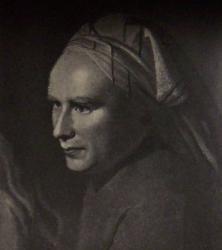
1731 - 1800 Author (sts. 1-5) of "God of My Life, to Thee I Call" in The Lutheran Hymnal William Cowper (pronounced "Cooper"; b. Berkampstead, Hertfordshire, England, 1731; d. East Dereham, Norfolk, England, 1800) is regarded as one of the best early Romantic poets. To biographers he is also known as "mad Cowper." His literary talents produced some of the finest English hymn texts, but his chronic depression accounts for the somber tone of many of those texts. Educated to become an attorney, Cowper was called to the bar in 1754 but never practiced law. In 1763 he had the opportunity to become a clerk for the House of Lords, but the dread of the required public examination triggered his tendency to depression, and he attempted suicide. His subsequent hospitalization and friendship with Morley and Mary Unwin provided emotional stability, but the periods of severe depression returned. His depression was deepened by a religious bent, which often stressed the wrath of God, and at times Cowper felt that God had predestined him to damnation.
For the last two decades of his life Cowper lived in Olney, where John Newton became his pastor. There he assisted Newton in his pastoral duties, and the two collaborated on the important hymn collection Olney Hymns (1779), to which Cowper contributed sixty-eight hymn texts.
Bert Polman
============
Cowper, William, the poet. The leading events in the life of Cowper are: born in his father's rectory, Berkhampstead, Nov. 26, 1731; educated at Westminster; called to the Bar, 1754; madness, 1763; residence at Huntingdon, 1765; removal to Olney, 1768; to Weston, 1786; to East Dereham, 1795; death there, April 25, 1800.
The simple life of Cowper, marked chiefly by its innocent recreations and tender friendships, was in reality a tragedy. His mother, whom he commemorated in the exquisite "Lines on her picture," a vivid delineation of his childhood, written in his 60th year, died when he was six years old. At his first school he was profoundly wretched, but happier at Westminster; excelling at cricket and football, and numbering Warren Hastings, Colman, and the future model of his versification. Churchill, among his contemporaries or friends. Destined for the Bar, he was articled to a solicitor, along with Thurlow. During this period he fell in love with his cousin, Theodora Cowper, sister to Lady Hesketh, and wrote love poems to her. The marriage was forbidden by her father, but she never forgot him, and in after years secretly aided his necessities. Fits of melancholy, from which he had suffered in school days, began to increase, as he entered on life, much straitened in means after his father's death. But on the whole, it is the playful, humorous side of him that is most prominent in the nine years after his call to the Bar; spent in the society of Colman, Bonnell Thornton, and Lloyd, and in writing satires for The Connoisseur and St. James's Chronicle and halfpenny ballads. Then came the awful calamity, which destroyed all hopes of distinction, and made him a sedentary invalid, dependent on his friends. He had been nominated to the Clerkship of the Journals of the House of Lords, but the dread of appearing before them to show his fitness for the appointment overthrew his reason. He attempted his life with "laudanum, knife and cord,"—-in the third attempt nearly succeeding. The dark delusion of his life now first showed itself—a belief in his reprobation by God. But for the present, under the wise and Christian treatment of Dr. Cotton (q. v.) at St. Albans, it passed away; and the eight years that followed, of which the two first were spent at Huntingdon (where he formed his lifelong friendship with Mrs. Unwin), and the remainder at Olney in active piety among the poor, and enthusiastic devotions under the guidance of John Newton (q. v.), were full of the realisation of God's favour, and the happiest, most lucid period of his life. But the tension of long religious exercises, the nervous excitement of leading at prayer meetings, and the extreme despondence (far more than the Calvinism) of Newton, could scarcely have been a healthy atmosphere for a shy, sensitive spirit, that needed most of all the joyous sunlight of Christianity. A year after his brother's death, madness returned. Under the conviction that it was the command of God, he attempted suicide; and he then settled down into a belief in stark contradiction to his Calvinistic creed, "that the Lord, after having renewed him in holiness, had doomed him to everlasting perdition" (Southey). In its darkest form his affliction lasted sixteen months, during which he chiefly resided in J. Newton's house, patiently tended by him and by his devoted nurse, Mrs. Unwin. Gradually he became interested in carpentering, gardening, glazing, and the tendance of some tame hares and other playmates. At the close of 1780, Mrs. Unwin suggested to him some serious poetical work; and the occupation proved so congenial, that his first volume was published in 1782. To a gay episode in 1783 (his fascination by the wit of Lady Austen) his greatest poem, The Task, and also John Gilpin were owing. His other principal work was his Homer, published in 1791. The dark cloud had greatly lifted from his life when Lady Hesketh's care accomplished his removal to Weston (1786): but the loss of his dear friend William Unwin lowered it again for some months. The five years' illness of Mrs. Unwin, during which his nurse of old became his tenderly-watched patient, deepened the darkness more and more. And her death (1796) brought “fixed despair," of which his last poem, The Castaway, is the terrible memorial. Perhaps no more beautiful sentence has been written of him, than the testimony of one, who saw him after death, that with the "composure and calmness" of the face there “mingled, as it were, a holy surprise."
Cowper's poetry marks the dawn of the return from the conventionality of Pope to natural expression, and the study of quiet nature. His ambition was higher than this, to be the Bard of Christianity. His great poems show no trace of his monomania, and are full of healthy piety. His fame as a poet is less than as a letter-writer: the charm of his letters is unsurpassed. Though the most considerable poet, who has written hymns, he has contributed little to the development of their structure, adopting the traditional modes of his time and Newton's severe canons. The spiritual ideas of the hymns are identical with Newton's: their highest note is peace and thankful contemplation, rather than joy: more than half of them are full of trustful or reassuring faith: ten of them are either submissive (44), self-reproachful (17, 42, 43), full of sad yearning (1, 34), questioning (9), or dark spiritual conflict (38-40). The specialty of Cowper's handling is a greater plaintiveness, tenderness, and refinement. A study of these hymns as they stood originally under the classified heads of the Olney Hymns, 1779, which in some cases probably indicate the aim of Cowper as well as the ultimate arrangement of the book by Newton, shows that one or two hymns were more the history of his conversion, than transcripts of present feelings; and the study of Newton's hymns in the same volume, full of heavy indictment against the sins of his own regenerate life, brings out the peculiar danger of his friendship to the poet: it tends also to modify considerably the conclusions of Southey as to the signs of incipient madness in Cowper's maddest hymns. Cowper's best hymns are given in The Book of Praise by Lord Selborne. Two may be selected from them; the exquisitely tender "Hark! my soul, it is the Lord" (q. v.), and "Oh, for a closer walk with God" (q. v.). Anyone who knows Mrs. Browning's noble lines on Cowper's grave will find even a deeper beauty in the latter, which is a purely English hymn of perfect structure and streamlike cadence, by connecting its sadness and its aspiration not only with the “discord on the music" and the "darkness on the glory," but the rapture of his heavenly waking beneath the "pathetic eyes” of Christ.
Authorities. Lives, by Hayley; Grimshaw; Southey; Professor Goldwin Smith; Mr. Benham (attached to Globe Edition); Life of Newton, by Rev. Josiah Bull; and the Olney Hymns. The numbers of the hymns quoted refer to the Olney Hymns. [Rev. H. Leigh Bennett, M.A.]
--John Julian, Dictionary of Hymnology (1907)
================
Cowper, W. , p. 265, i. Other hymns are:—
1. Holy Lord God, I love Thy truth. Hatred of Sin.
2. I was a grovelling creature once. Hope and Confidence.
3. No strength of nature can suffice. Obedience through love.
4. The Lord receives His highest praise. Faith.
5. The saints should never be dismayed. Providence. All these hymns appeared in the Olney Hymns, 1779.
--John Julian, Dictionary of Hymnology, Appendix, Part II (1907)
=====================
Cowper, W., p. 265, i. Prof. John E. B. Mayor, of Cambridge, contributed some letters by Cowper, hitherto unpublished, together with notes thereon, to Notes and Queries, July 2 to Sept. 24, 1904. These letters are dated from Huntingdon, where he spent two years after leaving St. Alban's (see p. 265, i.), and Olney. The first is dated "Huntingdon, June 24, 1765," and the last "From Olney, July 14, 1772." They together with extracts from other letters by J. Newton (dated respectively Aug. 8, 1772, Nov. 4, 1772), two quotations without date, followed by the last in the N. & Q. series, Aug. 1773, are of intense interest to all students of Cowper, and especially to those who have given attention to the religious side of the poet's life, with its faint lights and deep and awful shadows. From the hymnological standpoint the additional information which we gather is not important, except concerning the hymns "0 for a closer walk with God," "God moves in a mysterious way," "Tis my happiness below," and "Hear what God, the Lord, hath spoken." Concerning the last three, their position in the manuscripts, and the date of the last from J. Newton in the above order, "Aug. 1773," is conclusive proof against the common belief that "God moves in a mysterious way" was written as the outpouring of Cowper's soul in gratitude for the frustration of his attempted suicide in October 1773.
--John Julian, Dictionary of Hymnology, New Supplement (1907)
William Cowper
Bland Tucker
1895 - 1984 Person Name: F. Bland Tucker, 1895-1984 Translator of "Father, we thank thee who hast planted" in Common Praise Francis Bland Tucker (born Norfolk, Virginia, January 6, 1895). The son of a bishop and brother of a Presiding bishop of the Episcopal Church, he was educated at the University of Virginia, B.A., 1914, and at Virginia Theological Seminary, B.D., 1920; D.D., 1944. He was ordained deacon in 1918, priest in 1920, after having served as a private in Evacuation Hospital No.15 of the American Expeditionary Forces in France during World War I.
His first charge was as a rector of Grammer Parish, Brunswick County, in southern Virginia. From 1925 to 1945, he was rector of historic St. John's Church, Georgetown, Washington, D.C. Then until retirement in 1967 he was rector of John Wesley's parish in Georgia, old Christ Church, Savannah. In "Reflections of a Hymn Writer" (The Hymn 30.2, April 1979, pp.115–116), he speaks of never having a thought of writing a hymn until he was named a member of the Joint Commission on the Revision of the Hymnal in 1937 which prepared the Hymnal 1940
Bland Tucker
Pages