You help make Hymnary.org possible. More than 10 million people from 200+ countries found hymns, liturgical resources and encouragement on Hymnary.org in 2025, including you. Every visit affirms the global impact of this ministry.

If Hymnary has been meaningful to you this year, would you take a moment today to help sustain it? A gift of any size—paired with a note of encouragement if you wish—directly supports the server costs, research work and curation that keep this resource freely available to the world.

Give securely online today, or mail a check to:
Hymnary.org
Calvin University
3201 Burton Street SE
Grand Rapids, MI 49546

Thank you for your partnership, and may the hope of Advent fill your heart.

Person Results

Text Identifier:"^o_love_how_deep_how_broad_how_high$"
In:people

Planning worship? Check out our sister site, ZeteoSearch.org, for 20+ additional resources related to your search.
Showing 11 - 20 of 37Results Per Page: 102050

William B. Bradbury

1816 - 1868 Person Name: W. B. Bradbury Composer of "ZEPHYR" in New Manual of Praise William Batchelder Bradbury USA 1816-1868. Born at York, ME, he was raised on his father's farm, with rainy days spent in a shoe-shop, the custom in those days. He loved music and spent spare hours practicing any music he could find. In 1830 the family moved to Boston, where he first saw and heard an organ and piano, and other instruments. He became an organist at 15. He attended Dr. Lowell Mason's singing classes, and later sang in the Bowdoin Street church choir. Dr. Mason became a good friend. He made $100/yr playing the organ, and was still in Dr. Mason's choir. Dr. Mason gave him a chance to teach singing in Machias, ME, which he accepted. He returned to Boston the following year to marry Adra Esther Fessenden in 1838, then relocated to Saint John, New Brunswick. Where his efforts were not much appreciated, so he returned to Boston. He was offered charge of music and organ at the First Baptist Church of Brooklyn. That led to similar work at the Baptist Tabernacle, New York City, where he also started a singing class. That started singing schools in various parts of the city, and eventually resulted in music festivals, held at the Broadway Tabernacle, a prominent city event. He conducted a 1000 children choir there, which resulted in music being taught as regular study in public schools of the city. He began writing music and publishing it. In 1847 he went with his wife to Europe to study with some of the music masters in London and also Germany. He attended Mendelssohn funeral while there. He went to Switzerland before returning to the states, and upon returning, commenced teaching, conducting conventions, composing, and editing music books. In 1851, with his brother, Edward, he began manufacturring Bradbury pianos, which became popular. Also, he had a small office in one of his warehouses in New York and often went there to spend time in private devotions. As a professor, he edited 59 books of sacred and secular music, much of which he wrote. He attended the Presbyterian church in Bloomfield, NJ, for many years later in life. He contracted tuberculosis the last two years of his life. John Perry

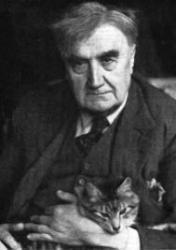
Ralph Vaughan Williams

1872 - 1958 Person Name: Ralph Vaughan Williams (1872-1958) Harmonizer of "DEO GRACIAS (AGINCOURT SONG)" in A New Hymnal for Colleges and Schools Through his composing, conducting, collecting, editing, and teaching, Ralph Vaughan Williams (b. Down Ampney, Gloucestershire, England, October 12, 1872; d. Westminster, London, England, August 26, 1958) became the chief figure in the realm of English music and church music in the first half of the twentieth century. His education included instruction at the Royal College of Music in London and Trinity College, Cambridge, as well as additional studies in Berlin and Paris. During World War I he served in the army medical corps in France. Vaughan Williams taught music at the Royal College of Music (1920-1940), conducted the Bach Choir in London (1920-1927), and directed the Leith Hill Music Festival in Dorking (1905-1953). A major influence in his life was the English folk song. A knowledgeable collector of folk songs, he was also a member of the Folksong Society and a supporter of the English Folk Dance Society. Vaughan Williams wrote various articles and books, including National Music (1935), and composed numerous arrange­ments of folk songs; many of his compositions show the impact of folk rhythms and melodic modes. His original compositions cover nearly all musical genres, from orchestral symphonies and concertos to choral works, from songs to operas, and from chamber music to music for films. Vaughan Williams's church music includes anthems; choral-orchestral works, such as Magnificat (1932), Dona Nobis Pacem (1936), and Hodie (1953); and hymn tune settings for organ. But most important to the history of hymnody, he was music editor of the most influential British hymnal at the beginning of the twentieth century, The English Hymnal (1906), and coeditor (with Martin Shaw) of Songs of Praise (1925, 1931) and the Oxford Book of Carols (1928). Bert Polman

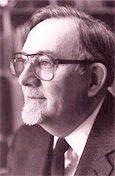
Carl Schalk

1929 - 2021 Harmonizer of "DEO GRACIAS" in Psalter Hymnal (Gray) Carl F. Schalk (b. Des Plaines, IL, 1929; d. 2021) is professor of music emeritus at Concordia University, River Forest, Illinois, where he taught church music since 1965. He completed gradu­ate work at the Eastman School of Music in Rochester, New York, and at Concordia Seminary, St. Louis, Missouri. From 1952 to 1956 he taught and directed music at Zion Lutheran Church in Wausau, Wisconsin, and from 1958 to 1965 served as director of music for the International Lutheran Hour. Honored as a Fellow of the Hymn Society in the United States and Canada in 1992, Schalk was editor of the Church Music journal (1966-1980), a member of the committee that prepared the Lutheran Book of Worship (1978), and a widely published composer of church music. Included in his publications are The Roots of Hymnody in The Lutheran Church-Missouri Synod (1965), Key Words in Church Music (1978), and Luther on Music: Paradigms of Praise (1988). His numerous hymn tunes and carols are collected in the Carl Schalk Hymnary (1989) and its 1991 Supplement. Bert Polman

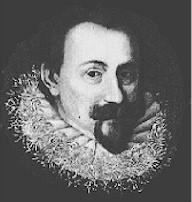
Johann Hermann Schein

1586 - 1630 Composer of "EISENACH" in The New Christian Hymnal Schein, Johann Hermann, son of Hieronymus Schein, pastor at Griinhain, near Annaberg, in Saxony, was born at Grünhain, Jan. 20,1586. He matriculated at the University of Leipzig in 1607, and studied there for four years. Thereafter he acted for some time as a private tutor, including two years with a family at Weissenfels. On May 21, 1615, he was appointed Capellmeister, at the court of Duke Johann Ernst, of Sachse-Weimar; and in 1616 he became cantor of I3t. Thomas's Church, and music director at Leipzig, in succession to Seth Calvisius (d. Nov. 24, 1615). This post he held till his death, at Leipzig, Nov. 19, 1630. Schein was one of the most distinguished musicians of his time, both as an original composer, and as a harmoniser of the works of others. As a hymnwriter he was not so prolific, or so noteworthy. Most of his hymns were written on the deaths of his children or friends, e.g. on seven of his children, and on his first wife. They appeared mostly in broadsheet form, and were included, along with his original melodies, in his Cantional oder Gesang-Buch Augspurgischer Confession, Leipzig, 1627; 2nd ed., 1645. [Both in Wernigerode Library.] Those of Schein's hymns which have passed into English are:— i. Machs mit mir, Gott, nach deiner Güt. For the Dying. First published, as a broadsheet, at Leipzig, 1628, as a Trost-Liedlein á 5 (i.e. for 5 voices), &c. [Berlin Library.] The words, the melody, and the five-part setting, are all by Schein. It was written for, and first used at, the funeral, on Dec. 15, 1628, of Margarita, wife of Caspar Werner, a builder and town councillor at Leipzig, and a churchwarden of St. Thomas's. It is in 6 stanzas of 6 lines; the initial letters of 11. 1, 3, in st. i.-iv., forming the name Margarita; and the W of st. v. 1. 1 standing for Werner. In Schein's Cantional, 1645, No. 303 (marked as Trost-Liedlein, Joh. Herm. Scheins, á 5), and later hymn-books, as e.g. the Unverfäschter Liedersegen, 1851, No. 830, st. vi. was omitted. It is Schein's finest production, and one of the best German hymns for the sick and dying. Translated as:— Deal with me, God, in mercy now. This is a good and full translation by Miss Winkworth, in her Chorale Book for England, 1863, No. 191, set to Schein's melody of 1628. ii. Mein Gott und Herr, ach sei nicht fern. For the Dying. First published, with his name, in his Cantional, 1627, No. 262, in 9 stanzas of 6 lines. The initial letters of the stanzas give the name Margarita, probably one of the daughters who predeceased him. It is included, in 5 st., in the 164-8, and later eds., of Crüger's Praxis. The translation in common use is:— My Lord and God, go not away. A good tr. of st. i., ii., iv., v., vii., by A. T. Russell, as No. 254, in his Psalms & Hymns, 1851. [Rev. James Mearns, M.A.] --Excerpts from John Julian, Dictionary of Hymnology (1907)

Thomas á Kempis

1380 - 1471 Person Name: Thomas á Kempis Author (attr.) of "O Love, How Deep, How Broad, How High" in The Presbyterian Hymnal Thomas of Kempen, commonly known as Thomas à Kempis, was born at Kempen, about fifteen miles northwest of Düsseldorf, in 1379 or 1380. His family name was Hammerken. His father was a peasant, whilst his mother kept a dame's school for the younger children of Kempen. When about twelve years old he became an inmate of the poor-scholars' house which was connected with a "Brother-House" of the Brethren of the Common Life at Deventer, where he was known as Thomas from Kempen, and hence his well-known name. There he remained for six years, and then, in 1398, he was received into the Brotherhood. A year later he entered the new religious house at Mount St. Agnes, near Zwolle. After due preparation he took the vows in 1407, was priested in 1413, became Subprior in 1425, and died according to some authorities on July 26. and others on Aug. 8, 1471. Much of his time was occupied in copying Missals, Breviaries, and other devotional and religious works. His original writings included a chronicle of the monastery of St. Agnes, several biographies, tracts and hymns, and, but not without some doubt as to his authorship the immortal Imitatio Christi, which has been translated into more languages than any other book, the Bible alone excepted. His collected works have been repeatedly published, the best editions being Nürnberg, 1494, Antwerp in 1607 (Thomae Malleoli à Kempis . . . Opera omnia), and Paris in 1649. An exhaustive work on St. Thomas is Thomas à Kempis and the Brothers of the Common Life, by S. W. Kettlewell, in 2 vols., Lond., 1882. In this work the following of his hymns are translated by the Rev. S. J. Stone:— i. From his Vita Boni Monachi, ii.:— 1. Vitam Jesu Christi. Imitation of Christ. Be the life of Christ thy Saviour. 2. Apprehende anna. Christian Armour. Take thy weapons, take thy shield. 3. Sustine dolores. Resignation. Bear thy sorrows with Laurentius. ii. From his Cantica Spiritualia:— 4. 0 dulcissime Jesu. Jesus the most Dear. 0 [Child] Christ Jesu, closest, dearest. 5. 0 Vera summa Trinitas. Holy Trinity. Most true, most High, 0 Trinity. 6. Ad versa mundi tolera. Resignation. Bear the troubles of thy life. 7. 0 qualis quantaque laetitia. Eternal Life. 0 joy the purest, noblest. Of these translations Mr. Stone has repeated Nos. 5, 6, and 7 in his Hymns, 1886, and No. 4 in a rewritten form as "Jesus, to my heart most precious," in the same. Pastor O. A. Spitzen has recently published from a manuscript circa 1480, ten additional hymns by Thomas, in his “Nalezing op mijn Thomas à Kempis," Utrecht, 1881. Six of these had previously been printed anonymously by Mone. The best known are "Jerusalem gloriosa", and "Nec quisquam oculis vidit". We may add that Thomas's hymnwriting is not regarded as being of the highest standard, and that the modern use of his hymns in any form is very limited. -- John Julian, Dictionary of Hymnology (1907)

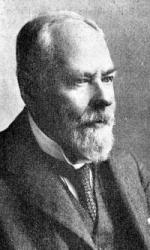
Basil Harwood

1859 - 1949 Person Name: Basil Harwood, 1859-1949 Harmonizer of "DEUS TUORUM MILITUM" in The Hymnal 1982 Basil Harwood (11 April 1859 – 3 April 1949) was an English organist and composer. Basil Harwood was born in Woodhouse, Gloucestershire (the second youngest of 12 children) on 11 April 1859. His mother died in 1867 when Basil was eight. His parents were Quakers but his elder sister Ada, on reaching 21 in 1867, converted to the Anglican Church. Basil was allowed to attend the ceremony at the Church of England in Almondsbury and this is where he was first drawn to organ music and choral singing. His father, Edward, remarried two years later in 1869 to a lady from an Anglican family. Basil was now sent to the Montpellier School in Weston-super-Mare for a year. In 1871, at 12 he was enrolled in Clevedon, the preparatory school for Charterhouse where he was first to formally study music. He went up to Charterhouse in 1874 and left in 1876 having won a leaving Exhibition to Trinity College, Oxford where he initially studied Classics (1879) and Modern History (1880). He then studied for a further two years, 1881–1882, at the Leipzig Conservatory under Carl Reinecke and Salomon Jadassohn. It was here in 1882, Basil composed his first anthem for chorus and organ "O Saving Grace." He returned from Leipzig to realise that he had now passed the age limit to study music formally. In 1883, Basil became organist of St. Barnabas Church, Pimlico completing his Sonata in C# Minor here in 1885, selling the copyright to the publisher Schott for one shilling a year or two later. After this success, he then moved to Ely Cathedral in 1887 where he wrote the bulk of Dithyramb, possibly his greatest organ work. His final appointment was as organist at Christ Church, Oxford and as precentor of Keble College, Oxford from 1892 to 1909. Whilst there he co-founded and conducted the Oxford Bach Choir which helped to earn him his degree as Doctor of Music. He conducted the Oxford Orchestral Association (1892–1898). He was musical editor of the 1908 Oxford Hymn Book and Examiner for Musical Degrees (1900–1925). During this time, he met and married Mabel Ada Jennings (the daughter of George Jennings) (who had become a pupil of his in 1896) at All Souls St. Marylebone, London (27 December 1899). Mabel had studied music herself, piano and composition, and was also a writer. She may well have composed lyrics for some of his lesser known tunes. At an advanced age she wrote a small volume of collected poems named Questing Soul. He retired early at 50 (in 1909) after the death of his father, Edward Harwood, from whom he inherited the family estate of Woodhouse having outlived his seven older brothers. Soon after moving in he had a three manual chamber organ built in the library by Bishop & Sons of Ipswich (now in Minehead Parish Church), on which he promptly finished his Sonata in F# Minor. He continued to compose prolifically. He was a keen walker, and named many of his hymn tunes after local places that he loved to visit, the most notable being the hymn tunes such as Tockington, Olveston, Almondsbury and Thornbury. In 1936 advancing in years, he let the Woodhouse estate and moved to Bournemouth. Part of the estate, Woodhouse Down, was later sold to his contemporary Robert Baden-Powell who was two years older than he was and who had also attended Charterhouse School, and is used as a Scout Camp to this day. In 1939, at eighty, he moved to London, taking a flat in Fleet Street. After a long life, he died on 3 April 1949, eight days short of his 90th birthday, at Courtfield Gardens in the Royal Borough of Kensington, London. A memorial service was held in St Paul's Cathedral on 22 April 1949. Mabel survived him, dying shortly before her 103rd birthday on 20 July 1974. He was survived by two sons; Major John Edward Godfrey Harwood (1900–1996) and Basil Antony Harwood (1903–1990) Senior Master of the Supreme Court, Q.B.D. and Queen's Remembrancer. His remains are interred in St. Barnabas Church, Pimlico and marked by a plaque inset in floor of the chancel, close to where he would have stood to conduct the choir. He composed cantatas, church music and works for the organ; his Service in A flat, the anthem O how Glorious and the hymn tunes LUCKINGTON ("Let all the world in every corner sing") and THORNBURY ("Thy hand O God has guided"), first used during a festival of the London Church Choir Association, remain in the Anglican repertory. --en.wikipedia.org/wiki

Alfred V. Fedak

b. 1953 Harmonizer of "DEO GRACIAS" in Glory to God Alfred Fedak (b. 1953), is a well-known organist, composer, and Minister of Music at Westminster Presbyterian Church on Capitol Hill in Albany, New York. He graduated from Hope College in 1975 with degrees in organ performance and music history. He obtained a Master’s degree in organ performance from Montclair State University, and has also studied at Westminster Choir College, Eastman School of Music, the Institute for European Studies in Vienna, and at the first Cambridge Choral Studies Seminar at Clare College, Cambridge. As a composer, he has over 200 choral and organ works in print, and has three published anthologies of his work (Selah Publishing). In 1995, he was named a Visiting Fellow in Church Music at Episcopal Seminary of the Soutwest in Austin, Texas. He is also a Fellow of the American Guild of Organists, and was awarded the AGO’s prestigious S. Lewis Elmer Award. Fedak is a Life Member of the Hymn Society, and writes for The American Organist, The Hymn, Reformed Worship, and Music and Worship. He was a member of the Presbyterian Committee on Congregational Song that prepared Glory to God, the 2013 hymnal of the Presbyterian Church (U.S.A.) Laura de Jong

Benjamin Webb

1819 - 1885 Translator of "O Love, How Deep, How Broad, How High" in Psalter Hymnal (Gray) Benjamin Webb (b. London, England, 1819; d. Marylebone, London, 1885) originally translated the text in eight stanzas, although six only appear in Lift Up Your Hearts. It was published in The Hymnal Noted (1852), produced by his friend John Mason Neale. Webb received his education at Trinity College, Cambridge, England, and became a priest in the Church of England in 1843. Among the parishes he served was St. Andrews, Wells Street, London, where he worked from 1862 to 1881. Webb's years there coincided with the service of the talented choir director and organist Joseph Barnby, and the church became known for its excellent music program. Webb edited The Ecclesiologist, a periodi­cal of the Cambridge Ecclesiological Society (1842-1868). A composer of anthems, Webb also wrote hymns and hymn translations and served as one of the editors of The Hymnary (1872). Bert Polman ================== Webb, Benjamin, M.A., was born in London in 1820, and was educated in St. Paul's School; whence he passed to Trinity College, Cambridge, in 1838, B.A. 1842, M.A. 1845. Ordained by the Bishop [Monk] of Gloucester and Bristol he was Assistant Curate of Kemeston in Gloucestershire, 1843-44; of Christ Church, St. Pancras, 1847-49; and of Brasted, Kent, 1849-51; at which date he was presented to the P. C. of Sheen in Staffordshire, which he held until 1862, when he became Vicar of St. Andrews, Wells Street, London. In 1881 the Bishop [Jackson] of London collated him to the Prebend of Portpool in St. Paul's Cathedral. Mr. Webb was one of the Founders of the Cambridge Camden, afterwards the Ecclesiological Society; and the Editor of the Ecclesiologist from 1842 to 1868, as well as the General Editor of the Society's publications. His first appearance in print was as joint editor of Bishop Montague's Articles of Inquiry in 184; in 1843 he was joined with Mr. J. M. Neale in An Essay on Symbolism, and A Translation of Durandus; in 1847 he put forth his valuable work on Continental Ecclesiology; in 1848 he was joint editor with Dr. Mill of Frank’s Sermons, for the Anglo-Catholic Library, and with the Rev. J. Fuller-Russell of Hierurgia Anglicana. After the decease of his father-in-law (Dr. Mill), he edited Dr. Mill's Catechetical Lectures, 1856; a second edition of Dr. Mill's Christian Advocates Publications on the Mythical Interpretation of the Gospels, 1861; and of Dr. Mill's Sermons on our Lord's Temptation, 1873. He was also one of the editors of the Burntisland reprint of the Sarum Missal. One of his most valuable works is Instructions and Prayers for Candidates for Confirmation, of which the third edition was published in 1882. Mr. Webb was one of the original editors of the Hymnal Noted, and of the sub-Committee of the Ecclesiological Society, appointed to arrange the words and the music of that book; and was also the translator of some of the hymns. In conjunction with the Rev. Canon W. Cooke he was editor of the Hymnary, 1872, for which office his habitual reconstruction and composition of the words of the anthems used at St. Andrew's, Wells Street, as well as his connection with the Hymnal Noted, eminently qualified him. His original hymns contributed to the Hymnary, 1871 and 1872, were:-- 1. Assessor to thy King. St. Bartholomew. In the Hymnary, 1872. 2. Behold He comes, thy King most holy. Advent. Originally written to be sung in St. Andrew's Church, Wells Street, as an anthem to the music of Schumann's Advent-lied, and afterwards published in the Hymnary, 1872. 3. Praise God, the Holy Trinity. Hymn of Faith. Originally written for use in St. Andrew's, Wells Street, and subsequently in the Hymnary, 1872. 4. Praise the Rock of our salvation. Dedication of a Church. Published in the Hymnary, 1872. Mr. Webb's authorised text is in the Westminster Abbey Hymn Book, 1883. 5. Ye angel hosts above. Universal Praise to God. In the Hymnary, 1872. He died in London, Nov. 27, 1885. [Rev. William Cooke, M.A.] -- John Julian, Dictionary of Hymnology (1907)

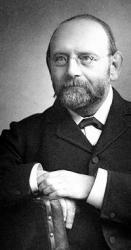
Joseph Barnby

1838 - 1896 Composer of "[O love, how deep, how broad, how high]" in Hymn Tunes Joseph Barnby (b. York, England, 1838; d. London, England, 1896) An accomplished and popular choral director in England, Barnby showed his musical genius early: he was an organist and choirmaster at the age of twelve. He became organist at St. Andrews, Wells Street, London, where he developed an outstanding choral program (at times nicknamed "the Sunday Opera"). Barnby introduced annual performances of J. S. Bach's St. John Passion in St. Anne's, Soho, and directed the first performance in an English church of the St. Matthew Passion. He was also active in regional music festivals, conducted the Royal Choral Society, and composed and edited music (mainly for Novello and Company). In 1892 he was knighted by Queen Victoria. His compositions include many anthems and service music for the Anglican liturgy, as well as 246 hymn tunes (published posthumously in 1897). He edited four hymnals, including The Hymnary (1872) and The Congregational Sunday School Hymnal (1891), and coedited The Cathedral Psalter (1873). Bert Polman

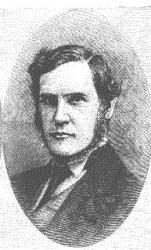
William Henry Gladstone

1840 - 1891 Person Name: William H. Gladstone Composer of "OMBERSLEY" in The Hymnal Born: June 3, 1840, Hawarden, Flintshire, Wales. Died: July 4, 1892, Westminster, London, England. Eldest son of British prime minister William Gladstone, William attended Eton College and read Greek and Latin at Christ Church College, Oxford University. A Member of Parliament for a total of 20 years, representing Chester for 3; Whitby, Yorkshire for 12; and East Worcestershire for 5. A singer and organist, he was well versed in musical history, especially the development of Anglican church music. He wrote on musical topics, and one of the views he expressed was that choral church services were to be deplored because "the choirs often discourage the congregations from singing." He wrote the anthems "Gracious and Righteous" and "Withdraw Not Thou", & chants, anthems, introits & organ voluntaries. His works include: A Selection of Hymns and Tunes, 1882 --www.hymntime.com/tch/

Pages


Export as CSV
It looks like you are using an ad-blocker. Ad revenue helps keep us running. Please consider white-listing Hymnary.org or getting Hymnary Pro to eliminate ads entirely and help support Hymnary.org.