

 My Starred Hymns
 My FlexScores
 My Hymnals
 My Purchased Files
Planning worship?
Check out our sister site, ZeteoSearch.org,
for 20+ additional resources related to your search.
- |
User Links
Person Results
‹ Return to hymnal
Export as CSV
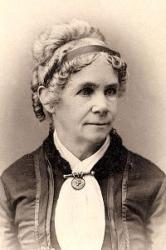
Phoebe Cary
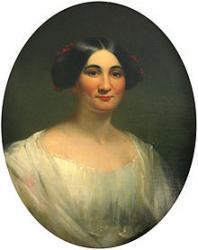
1824 - 1871 Hymnal Number: 1335 Author of "One sweetly solemn thought" in The Seventh-Day Adventist Hymn and Tune Book Phoebe Cary, (1824-1871) was born and raised in Mount Healthy in Hamilton County, Ohio. Her family came from Lyme, New Hampshire to Ohio when her grandfather was given land in return for his service in the Continental Army. She was the younger sister of Alice Cary (1820-1871). She and Alice submitted poetry to religious periodicals. Phoebe remained in Ohio and continued to write many hymns, including, "One sweetly solemn thought."
Mary Louise VanDyke
===========================================
Cary, Phoebe, sister of Alice Cary, born near Cincinnati, Ohio, Sept. 4, 1824, and died within six months of the death of the same sister at Newport, July 31, 1871. Her works include Poems and Parodies, 1854; and Poems of Faith, Hope and Love, 1868. With Dr. Charles F. Deems she compiled Hymns for all Christians, 1869. Her hymns are:—
1. One sweetly solemn thought. Anticipation of Heaven. This piece was not intended for public use, nor is it a suitable metre for musical treatment, yet it has won universal acceptance and popularity. In some instances this has been attained by change of metre as in the Supplement to the Baptist Psalms & Hymns 1880, No. 1185. Johnson's Encyclopedia is in error in saying it was "written at the age of 17." The Congregational Quarterly for Oct., 1874, says, "it was written, she tells us, in the little back third story bedroom, one Sabbath morning in 1852, on her return from church." This statement shows that it was composed when she was 28, and not 17. The popularity of the hymn in Great Britain arose mainly through its use in the Evangelistic services of Messrs. Moody and Sankey. In the Protestant Episcopal Hymns for Church and Home, Phila., 1860, No. 383, it is given as "A sweetly solemn thought."
The following additional pieces by this author are in the Lyra Sacra Americana, 1868:—
2. Go and sow beside all waters. Seed Sowing.
3. Great waves of plenty rolling up. Gratitude.
4. I had drunk, with lips unsated. Living Waters.
[Rev. F. M. Bird, M.A.]
--John Julian, Dictionary of Hymnology (1907)
Phoebe Cary
George Hews
1806 - 1873 Hymnal Number: 720 Composer of "HOLLEY" in The Seventh-Day Adventist Hymn and Tune Book Born: January 6, 1806, Weston, Massachusetts.
Died: July 6, 1873, Boston, Massachusetts.
George Hews
Edwin Pond Parker
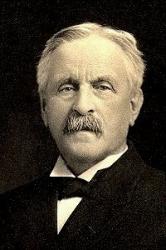
1836 - 1920 Person Name: E. P. Parker Hymnal Number: 158 Arranger of "MERCY" in The Seventh-Day Adventist Hymn and Tune Book Parker, Edwin Pond, D.D., born at Castine, Maine, Jan. 13, 1836, and educated at Bowdoin College, Maine, and Bangor Theo. Sem., Maine. Entering the Congregational ministry, he became pastor of the Second Church of Christ, Hartford, Conn., Jan. 1860, and has remained there to the present date. Besides editing some Sunday School Hymn and Tune Books, now out of use, he was chief Editor of The Book of Praise . . . (Congregational) . . ., Phila., 1874; and Editor of The Christian Hymnal, Hartford, Conn., 1877, revised ed. 1889. His hymns in common use include:—
1. Blest are they in Christ departed. [Death and Burial.] Dated 1886. In the Christian Hymnal, 1889, and several other collections.
2. Come to Jesus, ye who labour. [Invitation.] Written in 1898, and included in The Pilgrim Hymnal , 1904.
3. Hail, Holy Light, the world rejoices. [Morning.] Dated 1889, and given in The Christian Hymnal, 1889, The Pilgrim Hymnal, 1904, and others.
4. I would tell Jesus. [The Soul's Desire.] Written in 1887, and included in The Christian Hymnal, 1889.
5. Lord, as we Thy Name profess. [Sincerity.] Dated 1889, first published in The Christian Hymnal, 1889, and subsequently in several other collections, including The Pilgrim Hymnal, 1904.
6. Master, no offering costly and sweet. [Love and Service.] Originally written in 1888, to close a sermon, and first published in The Christian Hymnal, 1889, together with music by the author. It has been adopted, together with the original music, by many compilers. For both words and music see The Pilgrim Hymnal, 1904.
7. O Master, Brother, Lord, and Friend. [Christmas.] Written to close a Christmas sermon, 1903; first printed in a local newspaper, and then included in The Pilgrim Hymnal, 1904.
8. Thy Name, O Lord, in sweet accord. [Divine Worship.] First published in The Christian Hymnal, 1889, and subsequently in several collections, including The Pilgrim Hymnal, 1904.
Dr. Parker received his D.D. from Yale University, and is at the present time (1906) Chaplain to the Senate of the State of Connecticut. The above annotations are based upon Dr. Parker's manuscript notes.
--John Julian, Dictionary of Hymnology, New Supplement (1907)
Edwin Pond Parker
James Drummond Burns
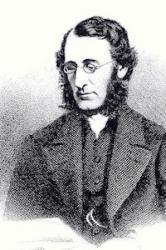
1823 - 1864 Person Name: James Burns Hymnal Number: 269 Author of "Still with thee, O my God!" in The Seventh-Day Adventist Hymn and Tune Book Burns, James Drummond, M.A., was born at Edinburgh, February 18, 1823. He studied and graduated M.A. at the University of Edinburgh. In 1845 he became Free Church minister of Dunblane, but resigned through failing health, in 1848, and took charge of the Presbyterian Church at Funchal, Madeira. In 1855 he became minister of Hampstead Presbyterian Church, London. Died at Mentone, Nov. 27, 1864, and was buried in Highgate Cemetery, London.
His hymns appeared in:—
(l) The Vision of Prophecy: and other Poems (Edin., Edmonston and Douglas). This was originally published in 1854, and enlarged in 1858. The Poems are distinguished by vivid colouring and poetic imagination, along with directness, delicacy of execution, pensive sweetness, and tenderness. They have never however become widely popular. Included are 29 "Hymns and Meditations," many of which rank among the very best of our modern hymns for beauty, simplicity of diction, and depth of religious feeling. (2) The Evening Hymn (Lond., T. Nelson & Sons), 1857. This consists of an original hymn and an original prayer for every evening in the month— 31 in all. The Hymns and Prayers alike are characterised by reverence, beauty, simplicity, and pathos. Some of the hymns in this volume are now well known; e.g. "Still with Thee, 0 my God," "Hushed was the evening hymn," "As helpless as a child who clings." (3) Memoir and Remains of the late Rev. James D. Burns, M.A., of Hampstead. By the late Rev. James Hamilton, D.D. (London, J. Nisbet & Co.), 1869. Besides 13 Sermons and the Memoir, this work includes 40 “Hymns and Miscellaneous Pieces." A number of these had appeared in periodicals. Some of them are very good though not equal to those previously published. Also 39 translations of German hymns, which appeared in the Family Treasury, &c., are rendered exactly in the metres of the originals and many had not previously been translated. The translations are generally very good. (4) Burns also wrote the article Hymn in the 8th edition of the Encyclopedia Britannica. [Rev. James Mearns, M.A.]
-- John Julian, Dictionary of Hymnology (1907)
=====================
Burns, James Drummond, p, 197, i. Additional hymns in common use are:—
1. Not, Lord, unto that mount of dread. Safety in Christ. From Vision of Prophecy, 1st ed., 1854, p. 266.
2. O Thou whose tender [sacred] feet have trod. Resignation. From Vision of Prophecy, 1st ed., 1854, p. 227.
3. Thou, Lord, art love, and everywhere. Divine Love. From Vision of Prophecy, 2nd ed., 1858, p. 275.
--John Julian, Dictionary of Hymnology, Appendix, Part II (1907)
See also in:
Hymn Writers of the Church
James Drummond Burns
Henry Ware
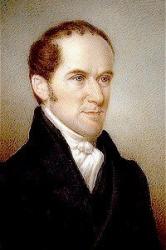
1794 - 1843 Hymnal Number: 1127 Author of "We rear not a temple, like Judah's of old" in The Seventh-Day Adventist Hymn and Tune Book Ware, Henry, D.D., son of Dr. H. Ware, pastor of the Unitarian congregation at Hingham, Massachusetts, and afterward Hollis Professor of Divinity at Cambridge, U.S.A., was born at Hingham, April 21, 1794. Before going to Harvard College, in 1808, he was under the care of Dr. Allyn, at Duxbury, and then of Judge Ware, at Cambridge. He graduated at Harvard in high honours, in 1812; and was then for two years an assistant teacher in Exeter Academy. He was licensed to preach by the Boston Unitarian Association, July 31, 1815; and ordained pastor of the Second Church of that city, Jan. 1, 1817. In 1829, in consequence of his ill health, he received the assistance of a co-pastor in the person of Ralph Waldo Emerson. In the same year Ware was appointed Professor of Pulpit Eloquence and Pastoral Care in the Cambridge Theological School. He entered upon his duties in 1830, and resigned in 1842. He removed to Framingham, and died there, Sept. 25, 1843. His D.D. degree was conferred upon Memoir, published by his brother John Ware, M.D., were numerous and on a variety of topics. He edited the Christian Disciple, which was established in 1813, and altered in title to the Christian Examiner in 1824, for some years before the change of title, and gave it his assistance subsequently. The Rev. Chandler Robbins collected his works and published them in four volumes, in 1847. His hymns, many of which are of more than usual excellence, are given in vol. i. Of these the following are in common use:
1. All nature's works His praise declare. Opening of an Organ. Dated Nov. 9, 1822. It is in Horder's English Congregational Hymns, 1884.
2. Around the throne of God The host angelic throngs. Universal Praise. Dated 1823, and printed in the Christian Disciple, vol. v., and in Putnam, 1874. A fine hymn of praise.
3. Father of earth and heaven, Whose arm upholds creation. Thanksgiving for Divine Mercies. Appeared in Cheever's American Common Place Book, 1831; and in Lyra Sacra Americana, 1868.
4. Father, Thy gentle chastisement. In Sickness. Dated March, 1836; and in Lyra Sacra Americana, 1868.
5. Great God, the followers of Thy Son. Ordination. Written for the Ordination of Jared Sparks, the historian, as pastor of the Unitarian Church, Baltimore,
1819. Given in Lyra Sacra Americana, 1868, and Putnam, 1874.
6. In this glad hour when children meet. Family Gatherings. Dated Aug. 20, 1835. In Lyra Sac. Americana, 1868, and Putnam, 1874.
7. Lift your glad voices in triumph on high. Easter. Dated 1817, and was published in the Christian Disciple of that year, in 2 stanzas of 8 lines. It is in Lyra Sac. Americana, 1868; Putnam, 1874, and numerous hymnbooks. Sometimes stanza ii. is given separately as, "Glory to God, in full anthems of joy."
8. Like Israel's hosts to exile driven. American National Hymn. Written for the Centennial Celebration of the Boston Thursday Lecture, Oct. 17,1833, and given in Lyra Sac. Americana, 1868, and Putnam, 1874. It is a quasi American National Hymn in praise of the Pilgrim Fathers.
9. 0 Thou in Whom alone is found. Laying Foundation Stone of a Place of Worship. In Lyra Sacra Americana, 1868, and Thring's English Collection, 1882.
10. 0 Thou Who on Thy chosen Son. Ordination. Written for an Ordination, March, 1829. In Putnam, 1874, and Dale's English Hymn Book, 1874.
11. Oppression shall not always reign. Against Slavery. "This was Mr. Ware's last composition in verse. It bears date March 15, 1843. In its original form it is longer than as presented here [in 3 stanzas of 8 lines], and is unsuited to a church-book. The following stanzas, taken from one of the Collections [stanzas i., ii. are in Longfellow and Johnson's Book of Hymns, 1848] are a part of the original, altered and transposed, and thus adapted to sacred worship."
12. To prayer, to prayer; for the morning breaks. Prayer. This poem of 10 stanzas of 6 lines is dated 1826, and is given in Lyra Sac. Americana, 1868, and Putnam, 1874. Two centos therefrom are in common use The first begins with stanza i., adapting it for Morning, and the second with stanza ii., "To prayer, for the glorious sun is gone," for Evening.
13. We rear not a temple, like Judah of old. Dedication of a Place of Worship. This is dated 1839, and is given in Putnam, 1874.
14. With praise and prayer our gifts we bring. Opening of a Place of Worship. In Dale's English Hymn Book. 1874.
With American Unitarians Dr. Ware ranks very high, and by them his hymns are widely used. [Rev. F. M. Bird, M.A.]
-- John Julian, Dictionary of Hymnology (1907)
==================
Ware, H., p. 1233, i. Another of his hymns in common use is "Great King of all, our nation's God" (National Humiliation). His hymn "To prayer, to prayer," is in Cheever's American Common-Place Book of Poetry, 1831.
--John Julian, Dictionary of Hymnology, Appendix, Part II (1907)
==================
Henry Ware was born in Hingham, Massachusetts, in 1793. His father was a Unitarian minister; afterwards a Professor in Harvard College. Young Ware graduated at Harvard, studied theology, and became minister of the Second Unitarian Society, in Boston, in 1817. After a ministry of twelve years, he made a foreign tour, and on his return was elected "Parkman Professor of Pulpit Eloquence and Pastoral Theology" in Harvard College. In this position he obtained eminence. He died in September, 1843. His collected works in four volumes, were edited after his death, by the Rev. Chandler Robbins.
--Annotations of the Hymnal, Charles Hutchins, M.A., 1872
Henry Ware
William Tidd Matson
1833 - 1899 Person Name: W. T. Matson Hymnal Number: 437 Author of "Lord, I was blind: I could not see" in The Seventh-Day Adventist Hymn and Tune Book Matson, William Tidd, was born at West Hackney, London, Oct. 17, 1833. He was educated first under the Rev. J. M. Gould, and then at St. John's College, Cambridge. Subsequently he studied under Professor Nesbitt, at the Agricultural and Chemical College, Kennington. In 1853 he underwent a great spiritual change. Leaving the Church of England, he first joined the Methodist New Connexion body, and then the Congregationalists. After the usual theological training, he entered the ministry, and held several pastorates, including Havant, Hants; Gosport; Highbury; Portsmouth, and others. His poetical works include:—
(1) A Summer Evening Reverie, and Other Poems, 1857; (2) Poems, 1858; (3) Pleasures of the Sanctuary, 1865; (4) The Inner Life, 1866; (5) Sacred Lyrics, 1870; (6) Three Supplemental Hymns, &c, 1872; (7) The World Redeemed, 1881, &c.
Several of Matson's hymns have been given in Allon's Supplemental Hymns; Horder's Congregational Hymns; The Baptist Hymnal; Dale's English Hymn Book.; Barrett's Congregational Church Hymnal, 1887, and others. The best known are:—
1. Father, of all, Whose wondrous power. Prayer to the Holy Trinity.
2. Glory, glory to God in the highest. Christmas.
3. God is in His temple. Divine Worship.
4. I'm but a little child. A Child's Prayer.
5. In whom shall I find comfort? God, the Source of Comfort.
6. Lord, I was blind, I could not see. Christ, the Life of Men.
7. O blessed Life, the heart at rest. Christ the Life of Men.
8. Teach me, O Lord, Thy holy way. Divine Guidance desired.
Mr Matson's hymns show a considerable mastery of the forms of hymnic expression, but are somewhat lacking in lyric energy. Those written for use with German chorales are excellent efforts, and rank with his best work. Taken as a whole his hymns are far above the average, and deserve wide acknowledgment. [Rev. W. Garrett Horder]
--John Julian, Dictionary of Hymnology (1907)
================
Matson, W. T, p. 719, ii. His "Glory to God in the highest, Shall be our song to-day" (Christmas) is in the Scottish Hymnal, 1884.
--John Julian, Dictionary of Hymnology, Appendix, Part II (1907)
=================
Matson, W. T. , p. 719, ii. He died in 1899. The hymn, "Glory to God in the highest, shall be our song to-day," p. 1591, i., is given to Mr. Matson in error. It is found in W. B. Bradbury's Golden Censer, 1864, p. 116, without authorship, and again in P. Phillips's Singing Pilgrim, 1866, p. 79, as by Mrs. E. H. Gates. [Rev. James Mearns, M.A.]
--John Julian, Dictionary of Hymnology, New Supplement (1907)
William Tidd Matson
Charles Lockhart
1745 - 1815 Hymnal Number: 857 Composer of "TAMWORTH" in The Seventh-Day Adventist Hymn and Tune Book Born: 1745, London, England.
Died: February 9, 1815, London, England.
Lockhart was first organist of the Lock Hospital, and was for some years associated with Martin Madan in the musical arrangements there. Though blind from infancy, Lockhart had a distinct musical gift, and was especially known for training children’s choirs. His earliest tunes were printed on separate sheets. He published a set of hymn tunes about 1810.
Sources:
Frost, p. 680
Lightwood, p. 155
Nutter, p. 460
Music:
CARLISLE
TAMWORTH
http://www.hymntime.com/tch/bio/l/o/c/lockhart_c.htm
================
http://en.wikipedia.org/wiki/Charles_Lockhart_%28musician%29
Charles Lockhart
Nicholas Brady
1659 - 1726 Person Name: Brady Hymnal Number: 288 Author of "While shepherds watched their flocks by night" in The Seventh-Day Adventist Hymn and Tune Book Nicholas Brady, the son of an officer in the Royalist army, was born in Brandon, Ireland, 1659. He studied at Westminster School, and at Christ Church College, oxford, and graduated at Trinity College, Dublin. He held several positions in the ministry, but later in life retired to Richmond Surrey, where he established a school. Here he translated some of the Psalms. Several volumes of his sermons and smaller works were published, but his chief work, like that of his co-colabourer Tate, was the "Metrical Version of Psalms."
This version was authorized by King William in 1696, and has, since that time, taken the place of the earlier translation by Sternhold and Hopkins, which was published in 1562. The whole of the Psalms, with tunes, appeared in 1698, and a Supplement of Church Hymns in 1703. Of this version, which has little poetic merit, Montgomery says "It is nearly as inanimate as the former, though a little more refined." None of the "Metrical Psalms" are to be compared with the Psalms of the Prayer Book Psalter, and very few of them are worthy a place in a collection of hymns.
--Annotations of the Hymnal, Charles Hutchins, 1872.
Nicholas Brady
Benjamin Beddome
1717 - 1795 Hymnal Number: 649 Author of "And must I part with all I have" in The Seventh-Day Adventist Hymn and Tune Book Benjamin Beddome was born at Henley-in Arden, Warwickshire, January 23, 1717. His father was a Baptist minister. He studied at various places, and began preaching in 1740. He was pastor of a Baptist society at Bourton-on-the-Water, Gloucestershire, until his death in 1795. In 1770, he received the degree of M.A. from the Baptist College in Providence, Rhode Island. He published several discourses and hymns. "His hymns, to the number of 830, were published in 1818, with a recommendation from Robert Hall." Montgomery speaks of him as a "writer worthy of honour both for the quantity and the quality of his hymns."
--Annotations of the Hymnal, Charles Hutchins, M.A. 1872.
=========================
Beddome, Benjamin , M.A. This prolific hymnwriter was born at Henley-in-Arden, Warwickshire, Jan. 23, 1717, where his father, the Rev. John Beddome, was atthat time Baptist Minister. He was apprenticed to a surgeon in Bristol, but removing to London, he joined, in 1739, the Baptist church in Prescott St. At the call of this church he devoted himself to the work of the Christian ministry, and in 1740 began to preach at Bourton-on-the-Water, in Gloucestershire. Declining invitations to remove to London or elsewhere, he continued pastor at Bourton until his death, on Sep. 3, 1795, at the age of 78. Mr. Beddome was for many years one of the most respected Baptist ministers in the West of England. He was a man of some literary culture. In 1770 he received the degree of M.A. from Providence College, Rhode Island. He was the author of an Exposition of the Baptist Catechism, 1752, in great repute at the time, and reprinted by Dr. C. Evans in 1772. It was his practice to prepare a hymn every week to be sung after his Sunday morning sermon. Though not originally intended for publication, he allowed thirteen of these to appear in the Bristol Baptist Collection of Ash & Evans (1769), and thirty-six in Dr. Rippon's Baptist Selection (1787), whence a number of them found their way into the General Baptist Hymn Book of 1793 and other collections. In 1817, a posthumous collection of his hymns was published, containing 830 pieces, with an introduction by the Rev. Robert Hall, and entitled "Hymns adapted to Public Worship or Family Devotion, now first published from the Manuscripts of the late Rev. B. Beddome, M.A."
Preface dated "Leicester, Nov. 10, 1817." Some of the early copies bear the same date on the title page. Copies bearing both the 1817 and 1818 dates are in the British Museum. The date usually given is 1818. Some hymns are also appended to his Sermons, seven volumes of which were published l805—1819; and over twenty are given in the Baptist Register of various dates.
Beddome's hymns were commended by Montgomery as embodying one central idea, "always important, often striking, and sometimes ingeniously brought out." Robert Hall's opinion is just, when in his "Recommendatory Preface" to the Hymns, &c, he says, p. vii.:—
"The man of taste will be gratified with the beauty and original turns of thought which many of them ex¬hibit, while the experimental Christian will often perceive the most secret movements of his soul strikingly delineated, and sentiments pourtrayed which will find their echo in every heart."
With the exception of a few composed for Baptisms and other special occasions, their present use in Great Britain is limited, but in America somewhat extensive. One of the best is the Ordination Hymn, "Father of Mercies, bow Thine ear." Another favourite is “ My times of sorrow and of joy," composed, by a singular coincidence, to be sung on Sunday, Jan. 14, 1778, the day on which his son died, most unexpectedly, in Edinburgh. "Let party names no more," is very popular both in Great Brit, and America. "Faith, His a precious gift," "Witness, ye men and angels, now," and the hymn for Holy Baptism, "Buried beneath the yielding wave," are also found in many collections. Beddome's popularity is, however, now mainly in America.
[Rev. W. R. Stevenson, M.A.]
Beddome is thus seen to be in common use to the extent of about 100 hymns. In this respect he exceeds every other Baptist hymnwriter; Miss Steele ranking second.
The authorities for Beddome's hymns are: (1) A Collection of Hymns adapted to Public Worship, Bristol, W. Pine, 1769, the Collection of Ash & Evans; (2) Dr. Rippon's Selections 1787, and later editions; (3) Sermons printed from the Manuscripts of the late Rev. Benjamin Beddome, M.A.,... with brief Memoir of the Author, Dunstable & Lond., 1805-1819; (4) Dr. Rippon's Baptist Register, 1795, &c.; (5) The Beddome Manuscripts, in the Baptist College, Bristol; (6) and Hymns adapted to Public Worship, or Family Devotion now first published, from Manuscripts of the late Rev. B. Beddome, A.M. With a Recommendatory Preface by the Rev. R. Hall, A.M. Lond., 1817. In his Preface, Mr. Hall gives this account of the Beddome Manuscript:— "The present Editor was entrusted several years ago with the MSS, both in prose and verse, with permission from the late Messrs. S. & B. Beddome, sons of the Author, to publish such parts of them as he might deem proper. He is also indebted to a descendant of the Rev. W. Christian, formerly pastor of the Baptist Church at Sheepshead, Leicestershire, for some of the Author's valuable hymns, which had been carefully preserved in the family. From both these sources, as well as others of less consequence, the present interesting volume has been derived."
-- Excerpts from John Julian, Dictionary of Hymnology (1907)
=======================
Beddome, Benjamin, pp. 121-124. Other hymns in common use:—
1. Great God, before Thy mercy-seat. (1817). Lent.
2. Great God, oppressed with grief and fear. (1787.) Reading H. Scripture.
3. How glorious is Thy word, 0 God. Holy Scripture. From "When Israel, &c," p. 124, i.
4. In God I ever will rejoice. Morning. From his Hymns, &c, 1817.
5. Jesus, my Lord, divinely fair. (1817.) Jesus the King of Saints. Begins with stanza ii. of “Listen, ye mortals, while I sing."
6. Rejoice, for Christ the Saviour reigns. Missions. Altered form of "Shout, for the blessed, &c," p. 123, ii.
7. Satan, the world, and sin. (1817.) In Temptation.
8. Thou, Lord of all above. (1817.) Lent.
9. Unto Thine altar, Lord. (1787.) Lent.
10. Ye saints of every rank, with joy. (1800.) Public Worship.
The dates given above are, 1787 and 1800, Rippon's Selection; and 1817 Beddome's Hymns.
--John Julian, Dictionary of Hymnology, Appendix, Part II
Benjamin Beddome
Mary Dana Shindler
1810 - 1883 Person Name: Mary S. B. Dana Hymnal Number: 1150 Author of "I'm a pilgrim, and I'm a stranger" in The Seventh-Day Adventist Hymn and Tune Book Shindler, Mary Stanley Bunce, née Palmer, better known as Mrs. Dana, was born in Beaufort, South Carolina, Feb. 15, 1810. In 1835 she was married to Charles E. Dana, of New York, and removed with him to Bloomington, now Muscatine, Iowa, in 1838. Mr. Dana died in 1839, and Mrs. Dana returned to South Carolina. Subsequently she was married to the Rev. Robert D. Shindler, who was Professor in Shelby College, Kentucky, in 1851, and afterwards in Texas. Mrs. Shindler, originally a Presbyterian, was for some time an Unitarian; but of late years she has been a member of the Protestant Episcopal Church. As Mary S. B. Dana she published the Southern Harp, 1840, and the Northern Harp, 1841. From these works her hymns have been taken, 8 of which are in T. O. Summers's Songs of Zion, 1851. The best known are:—
1. Fiercely came the tempest sweeping. Christ stilling the storm. (1841.)
2. I'm a pilgrim, and I'm a stranger. A Christian Pilgrim. (1841.)
3. O sing to me of heaven. Heaven contemplated. (1840.) Sometimes given as "Come, sing to me of heaven." [Rev. F. M. Bird, M.A.]
-- John Julian, Dictionary of Hymnology (1907)
===================
Shindler, Mary S. B., p. 1055, i. Other hymns usually attributed to this writer, are "Prince of Peace, control my will" (Perfect Peace), in the Church of England Magazine, March 3, 1858, in 32 lines; and " Once upon the heaving ocean" (Jesus calming the Sea).
--John Julian, Dictionary of Hymnology, Appendix, Part II (1907)
Mary Dana Shindler
Pages




