

 My Starred Hymns
 My FlexScores
 My Hymnals
 My Purchased Files
Planning worship?
Check out our sister site, ZeteoSearch.org,
for 20+ additional resources related to your search.
- |
User Links
Person Results
Anonymous
Person Name: Anon. Topics: Proper 10 Year A Author of "Come Now, Almighty King" in Voices United In some hymnals, the editors noted that a hymn's author is unknown to them, and so this artificial "person" entry is used to reflect that fact. Obviously, the hymns attributed to "Author Unknown" "Unknown" or "Anonymous" could have been written by many people over a span of many centuries.
Anonymous
John Bacchus Dykes
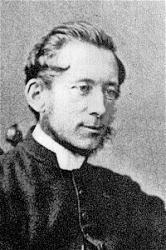
1823 - 1876 Person Name: John Bacchus Dykes (1823-1876) Topics: Proper 10 Year A Composer of "RIEVAULX" in Ancient and Modern As a young child John Bacchus Dykes (b. Kingston-upon-Hull' England, 1823; d. Ticehurst, Sussex, England, 1876) took violin and piano lessons. At the age of ten he became the organist of St. John's in Hull, where his grandfather was vicar. After receiving a classics degree from St. Catherine College, Cambridge, England, he was ordained in the Church of England in 1847. In 1849 he became the precentor and choir director at Durham Cathedral, where he introduced reforms in the choir by insisting on consistent attendance, increasing rehearsals, and initiating music festivals. He served the parish of St. Oswald in Durham from 1862 until the year of his death. To the chagrin of his bishop, Dykes favored the high church practices associated with the Oxford Movement (choir robes, incense, and the like). A number of his three hundred hymn tunes are still respected as durable examples of Victorian hymnody. Most of his tunes were first published in Chope's Congregational Hymn and Tune Book (1857) and in early editions of the famous British hymnal, Hymns Ancient and Modern.
Bert Polman
John Bacchus Dykes
Joseph Parry
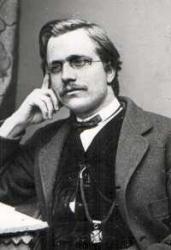
1841 - 1903 Person Name: Joseph Parry, 1841-1903 Topics: Year C Proper 10 Composer of "ABERYSTWYTH" in Complete Anglican Hymns Old and New Joseph Parry (b. Merthyr Tydfil, Glamorganshire, Wales, 1841; d. Penarth, Glamorganshire, 1903) was born into a poor but musical family. Although he showed musical gifts at an early age, he was sent to work in the puddling furnaces of a steel mill at the age of nine. His family immigrated to a Welsh settlement in Danville, Pennsylvania in 1854, where Parry later started a music school. He traveled in the United States and in Wales, performing, studying, and composing music, and he won several Eisteddfodau (singing competition) prizes. Parry studied at the Royal Academy of Music and at Cambridge, where part of his tuition was paid by interested community people who were eager to encourage his talent. From 1873 to 1879 he was professor of music at the Welsh University College in Aberystwyth. After establishing private schools of music in Aberystwyth and in Swan sea, he was lecturer and professor of music at the University College of South Wales in Cardiff (1888-1903). Parry composed oratorios, cantatas, an opera, orchestral and chamber music, as well as some four hundred hymn tunes.
Bert Polman
Joseph Parry
S. J. Stone

1839 - 1900 Person Name: Samuel John Stone (1832-1900) Topics: Proper 10 Year B Author of "The church's one foundation" in Ancient and Modern Stone, Samuel John, a clergyman of the Church of England, the son of Rev. William Stone, was born at Whitmore, Staffordshire, April 25, 1839. He was educated at Pembroke College, Oxford, where he was graduated B.A. in 1862. Later he took orders and served various Churches. He succeeded his father at St. Paul's, Haggerstown, in 1874. He was the author of many original hymns and translations, which were collected and published in 1886. His hymns are hopeful in spirit and skillfully constructed. He published several poetic volumes. He died November 19, 1900
--Hymn Writers of the Church, 1915 (Charles Nutter)
============================
Stone, Samuel John, M.A., son of the Rev. William Stone, M.A., was born at Whitmore, Staffordshire, April 25, 1839, and educated at the Charterhouse; and at Pembroke College, Oxford, B.A. 1862; and M.A. 1872. On taking Holy Orders he became Curate of Windsor in 1862, and of St. Paul's, Haggerston, 1870. In 1874 he succeeded his father, at St. Paul's, Haggerston. Mr. Stone's poetical works are (1) Lyra Fidelium, 1866; (2) The Knight of Intercession and Other Poems, 1872, 6th edition, 1887; (3) Sonnets of the Christian Year, first printed in the Leisure Hour, and then published by the R. T. Society, 1875; (4) Hymns, a collection of his original pieces and translations, 1886. He has also published Order of The Consecutive Church Service for Children, with Original Hymns, 1883. Mr. Stone's hymns, most of which are in common use, and several of which have a wide popularity, include:—
1. A sower went to sow his seed. The Sower. In his Hymns, 1886, the author says this hymn was ”Written specially in allusion to the sixteen years' work of the first Vicar [his Father] of St. Paul's, Haggerston, to whom the Parish was given in 1858, without Church, or School, or "Vicarage, or Endowment."
2. Bear the troubles of thy life. Patience. A translation of Thomas a Kempis's “Ad versa mundi tolera" (p. 23, ii.) made for the Rev. S. Kettlewell's Thomas á Kempis, 1882.
3. By Paul at war in Gentile lands. St. Mark. Written at Windsor in 1870, and published in his Knight of Intercession, 1872.
4. By Shepherds first was heard. Carol. Written in 1885, and published in the Parochial Magazine, 1885.
5. By Thy love which shone for aye. Litany of the Love of God. Written at Haggerston in 1883, and printed in the Monthly Packet, 1884.
6. Christ the Wisdom and the Power. For Church Workers. Written for the Church Society of St. Paul's, Haggerston in 1812, and published in The Knight of Intercession, 1872.
7. Dark is the sky that overhangs my soul. Sorrow succeeded by Joy. Written at Windsor in 1869 for the Monthly Packet, and printed therein 1869. Published in The Knight of Intercession, 1872, under the title of "Light at Eventide."
8. Deeply dark and deeply still. The Transfiguration. Written in 1871 and published in The Knight of Intercession, 1872.
9. Eastward, ever eastward. Processional for Sunday Morning. Written at Haggerston in 1876, and published in the Monthly Packet, 1884.
10. Faith, who sees beyond the portal. Faith, Hope, and Charity. Written at Windsor in 1869, and published in the Monthly Packet, 1869, and The Knight of Intercession, 1872.
11. Far off our brethren's voices. Missions. Written for the First Day of Intercession for Foreign Missions, 1871, and published in The Knight of Intercession, 1872. "For Colonial Missions."
12. Give the word, Eternal King. Missions. Written for the First Day of Intercession for Foreign Missions, 1871.
13. Glory in heaven to God. Christmas Carol. Written in 1882 for G. H. Leslie's Cantata The First Christmas Morn, 1882.
14. God the Father, All, and One. For Unity. Written in 1883 for Canon G. Venables's Service for Unity, and appeared in the Monthly Packet, 1884.
15. God the Father's Only Son. Offices of Christ. Published in his Lyra Fidelium, 1866, on Article ii.of the Apostles' Creed, "And in Jesus Christ His Only Son our Lord."
16. God the Spirit, we adore Thee. The Holy Ghost. Published in his Lyra Fidelium, 1866, or) Article viii. of the Apostles' Creed, "I believe in the Holy Ghost."
17. Great Captain of God's armies. For Purity. Written in 1884 for the Church of England Purity Society, and printed in Church Bells, April 10, 1885.
18. Homeward we pass in peace. Close of Divine Service. Written in 1884 at Haggerston; and included in the author's Hymns, 1886, as a "Hymn after Benediction."
19. How can we praise Thee, Father? For the Fatherless. Written by request for "The Church of England Central Home for Waifs and Strays," 1882, and printed in the Monthly Packet, 1884.
20. Is there no hope for those who lie? Missions. Written in 1870 for the Monthly Packet; and also included in The Knight of Intercession, 1872.
21. Jesu, to my heart most precious. Jesus, All in All. A translation of Thomas á Kempis's "De dulcedine Jesu," made for the Rev. S. Kettlewell's Thomas á Kempis, 1882.
22. Lo! They were, and they are, and shall be. St. Michael and All Angels. Written in 1875 for The Scottish Guardian, in which it was given in 1875.
23. Lord Christ, my Master dear. For Church Workers. Written for the Sunday School Teachers of St. Paul's, Haggerston, 1885, and given in his Hymns, 1886.
24. Lord of the harvest, it is right and meet. Missions, Thanksgiving. Written for the Second Day of Intercession for Foreign Missions, 1871, and published in The Knight of Intercession, 1872. In the 1889 Appendix to Hymns Ancient & Modern it is somewhat altered.
25. Most true, most High; O Trinity. Holy Trinity. A translation of Thomas á Kempis's "O vera summa Trinitas" made for the Rev. S. Kettlewell's Thomas á Kempis, 1882.
26. My Saviour! I behold Thy life. Passiontide. Published in his Lyra Fidelium, 1866, on Article iv. of the Apostles' Creed, "Suffered under Pontius Pilate, was Crucified, Dead, and Buried."
27. Need hath the golden city none. Evening. Written at Windsor in 1869, and was published in the Monthly Packet in 1870. Also in The Knight of Intercession, 1872.
28. None else but Thee for evermore. God the Father. The opening hymn of his Lyra Fidelium, 1866, on Article i. of the Apostles' Creed, "I believe in God the Father Almighty, Maker of Heaven and Earth."
29. 0 joy, the purest, noblest. Evening. A translation in two parts of Thomas á Kempis's "O qualis quantaque laetitia" made for the Rev. S. Kettlewell's Thomas á Kempis, 1882. Pt. ii. begins "State of divinest splendour!"
30. 0 Thou by Whom the saints abide. Litany of the Holy Spirit. Written for a Confirmation at Haggerston, 1875, and included in the 3rd edition of The Knight of Intercession, 1875.
31. 0 Thou Whose love paternal. Holy Matrimony. Written at Windsor in 1863.
32. On Olivet a little band. Ascension. Published in his Lyra Fidelium, 1866, on Article vi. of the Apostles’ Creed, “He ascended into Heaven," &c.
33. Peace: legacy of mystic power. Peace . Written in 1882 for The Society of St. Katharine for Invalids, and published in the Monthly Packet, 1884.
34. Remember Me, show forth My death. Holy Communion. Written at Windsor for the Monthly Packet, in 1870; and included in The Knight of Intercession, 1872.
35. The Son forsook the Father's home. Christmas. Published in his Lyra Fidelium, 1866, on Art. iii. of the Apostles' Creed, “Who was conceived by the Holy Ghost, Born of the Virgin Mary."
36. The old year's long campaign is o'er. The New Year. Written at Windsor in 1868, and published in The Knight of Intercession, 1872.
37. The whole creation groans and cries. Travail of the Creation. Written at Windsor for the Monthly Packet, 1869, and included in The Knight of Intercession, 1872.
38. The world is sad with hopes that die. Everlasting Life. Published in his Lyra Fidelium, 1866, on Art. xii. of the Apostles' Creed, "The Life Everlasting."
39. Their names are names of Kings. Saints Days. Written at Windsor for the Monthly Packet in 1869, and included in The Knight of Intercession, 1872.
40. There is an ancient river. The Spiritual River. Written at Windsor for the Monthly Packet, in 1870; and given in The Knight of Intercession, 1872.
41. Thou Who hast charged Thine elder sons. For School Teachers. Written in 1881 for St. Katharine's Training College for Mistresses; and subsequently adapted for use by teachers of both sexes.
42. Thou Who didst love us when our woes began. Temperance. Written for the Church of England Temperance Society Magazine, 1866.
43. Through midnight gloom from Macedon. Missions. Written for the First Day of Intercession for Foreign Missions, 1871.
44. Unchanging God, hear from eternal heaven. On behalf of the Jews. Written for the East London Mission to the Jews, 1885. It is included in an abridged form in the 1889 Appendix to Hymns Ancient & Modern.
45. While the Shepherds kept their vigil. Christmas Carol. Written at Windsor in 1868.
46. Winter in his heart of gloom. The Resurrection of the Body. Published in his Lyra Fidelium, 1866, on Article xi. of the Apostles' Creed, "The Resurrection of the Body."
47. Wistful are our waiting eyes. The Judgment. Published in his Lyra Fidelium, 1866, on Art. vii. of the Apostles' Creed, "From thence He shall come to judge the quick and the dead."
48. Ye faithful few of Israel's captive days. Holy Scriptures. Written at Windsor for the Monthly Packet, in 1869.
Some of Mr. Stone's finer hymns, including "Round the Sacred City gather;" "The Church's One Foundation;" "Weary of earth and laden with my sin," and others, are annotated under their respective first lines. These, together with the 48 above, are given in his Hymns, 1886, some of the translations being recast. Additional translations from Thomas á Kempis are also noted under his name.
Another hymn, inseparably associated with Mr. Stone's name is:—
49. Lord of our Soul's salvation. National Thanksgiving. This was ordered by command of Her Majesty the Queen to be sung at the Thanksgiving for the recovery of H. R. H. The Prince of Wales, on Feb. 27, 1872. In its original form it was in 7 stanzas of 8 lines, and was thus sung throughout the country. Owing however to the necessary restrictions as to time in the Cathedral service, a selection of four verses only--the First, a combination of the 2nd and 4th, the 6th, and the 7th--was adapted by the author for use in St. Paul's." The full text was included in The Knight of Intercession, 1872.
Mr. Stone's hymns vary considerably in metre and subject, and thus present a pleasing variety not always found in the compositions of popular hymnwriters. His best hymns are well designed and clearly expressed. The tone is essentially dogmatic and hopeful. The absence of rich poetic thought and graceful fancy is more than atoned for by a masterly condensation of Scripture facts and of Church teaching given tersely and with great vigour. His changes and antitheses are frequently abrupt, in many instances too much so for congregational purposes, and his vocabulary is somewhat limited. His rhythm, except where broken either by long or by compound words, is rarely at fault, and his rhyme is usually perfect. A few of his hymns are plaintive and pathetic, as the tender "Weary of earth and laden with my sin;" others are richly musical, as "Lord of the harvest! it is right and meet:" but the greater part are strongly outspoken utterances of a manly faith, where dogma, prayer, and praise are interwoven with much skill. Usually the keynote of his song is Hope. He died Nov. 19, 1900.
-- John Julian, Dictionary of Hymnology (1907)
=====================
Stone, S. J. , p. 1095, i. Of his hymns noted there the following appeared in Mission Life, 1872, vol. iii., pt. ii., pp. 685-88. No. 11, "Far off our brethren's voices," for Church Missionary Hymn Book, Colonial Missions, and No. 12, "Give the word, Eternal King," and No. 43, "Through midnight gloom from Macedon," for "Foreign Missions." In addition the following are also in common use:—
1. Awake, 0 Lord, the zeal of those who stand. Intercession for the Clergy. In the Church Missionary Hymn Book, 1899.
2. England, by thine own Saint Alban. St. Alban. In C. W. A. Brooke's Additional Hymns, 1903.
3. Our God of love Who reigns above. For Children. Appeared in the Church Monthly, July 1899, and Hymns Ancient & Modern, 1904.
--John Julian, Dictionary of Hymnology, New Supplement (1907)
S. J. Stone
Fred Kaan
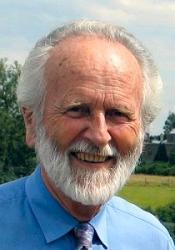
1929 - 2009 Person Name: Fred Kaan, b. 1929 Topics: Proper 10 Year C Author of "For the healing of the nations" in Common Praise Fred Kaan Hymn writer. His hymns include both original work and translations. He sought to address issues of peace and justice. He was born in Haarlem in the Netherlands in July 1929. He was baptised in St Bavo Cathedral but his family did not attend church regularly. He lived through the Nazi occupation, saw three of his grandparents die of starvation, and witnessed his parents deep involvement in the resistance movement. They took in a number of refugees. He became a pacifist and began attending church in his teens.
Having become interested in British Congregationalism (later to become the United Reformed Church) through a friendship, he was attended Western College in Bristol. He was ordained in 1955 at the Windsor Road Congregational Church in Barry, Glamorgan.
In 1963 he was called to be minister of the Pilgrim Church in Plymouth. It was in this congregation that he began to write hymns. The first edition of Pilgrim Praise was published in 1968, going into second and third editions in 1972 and 1975. He continued writing many more hymns throughout his life.
Dianne Shapiro, from obituary written by Keith Forecast in Independent (http://www.independent.co.uk/news/obituaries/fred-kaan-minister-and-celebrated-hymn-writer-1809481.html)
Fred Kaan
H. W. Baker
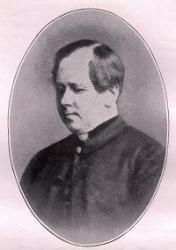
1821 - 1877 Person Name: H. W. Baker, 1821-1877 Topics: Proper 10 Year A Author of "Lord, thy word abideth" in Common Praise Baker, Sir Henry Williams, Bart., eldest son of Admiral Sir Henry Loraine Baker, born in London, May 27, 1821, and educated at Trinity College, Cambridge, where he graduated, B.A. 1844, M.A. 1847. Taking Holy Orders in 1844, he became, in 1851, Vicar of Monkland, Herefordshire. This benefice he held to his death, on Monday, Feb. 12, 1877. He succeeded to the Baronetcy in 1851. Sir Henry's name is intimately associated with hymnody. One of his earliest compositions was the very beautiful hymn, "Oh! what if we are Christ's," which he contributed to Murray's Hymnal for the Use of the English Church, 1852. His hymns, including metrical litanies and translations, number in the revised edition of Hymns Ancient & Modern, 33 in all. These were contributed at various times to Murray's Hymnal, Hymns Ancient & Modern and the London Mission Hymn Book, 1876-7. The last contains his three latest hymns. These are not included in Hymns Ancient & Modern. Of his hymns four only are in the highest strains of jubilation, another four are bright and cheerful, and the remainder are very tender, but exceedingly plaintive, sometimes even to sadness. Even those which at first seem bright and cheerful have an undertone of plaintiveness, and leave a dreamy sadness upon the spirit of the singer. Poetical figures, far-fetched illustrations, and difficult compound words, he entirely eschewed. In his simplicity of language, smoothness of rhythm, and earnestness of utterance, he reminds one forcibly of the saintly Lyte. In common with Lyte also, if a subject presented itself to his mind with striking contrasts of lights and shadows, he almost invariably sought shelter in the shadows. The last audible words which lingered on his dying lips were the third stanza of his exquisite rendering of the 23rd Psalm, "The King of Love, my Shepherd is:"—
Perverse and foolish, oft I strayed,
But yet in love He sought me,
And on His Shoulder gently laid,
And home, rejoicing, brought me."
This tender sadness, brightened by a soft calm peace, was an epitome of his poetical life.
Sir Henry's labours as the Editor of Hymns Ancient & Modern were very arduous. The trial copy was distributed amongst a few friends in 1859; first ed. published 1861, and the Appendix, in 1868; the trial copy of the revised ed. was issued in 1874, and the publication followed in 1875. In addition he edited Hymns for the London Mission, 1874, and Hymns for Mission Services, n.d., c. 1876-7. He also published Daily Prayers for those who work hard; a Daily Text Book, &c. In Hymns Ancient & Modern there are also four tunes (33, 211, 254, 472) the melodies of which are by Sir Henry, and the harmonies by Dr. Monk. He died Feb. 12, 1877.
--John Julian, Dictionary of Hymnology (1907)
H. W. Baker
William Henry Monk
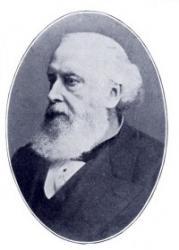
1823 - 1889 Person Name: W. H. Monk, 1823-1889 Topics: Proper 10 Year A Adapter of "RAVENSHAW" in Common Praise William H. Monk (b. Brompton, London, England, 1823; d. London, 1889) is best known for his music editing of Hymns Ancient and Modern (1861, 1868; 1875, and 1889 editions). He also adapted music from plainsong and added accompaniments for Introits for Use Throughout the Year, a book issued with that famous hymnal. Beginning in his teenage years, Monk held a number of musical positions. He became choirmaster at King's College in London in 1847 and was organist and choirmaster at St. Matthias, Stoke Newington, from 1852 to 1889, where he was influenced by the Oxford Movement. At St. Matthias, Monk also began daily choral services with the choir leading the congregation in music chosen according to the church year, including psalms chanted to plainsong. He composed over fifty hymn tunes and edited The Scottish Hymnal (1872 edition) and Wordsworth's Hymns for the Holy Year (1862) as well as the periodical Parish Choir (1840-1851).
Bert Polman
William Henry Monk
Orlando Gibbons
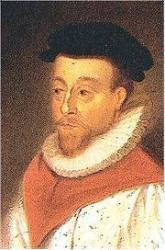
1583 - 1625 Person Name: Orlando Gibbons, 1583-1625 Topics: Year B Proper 10 Composer of "SONG 1" in Complete Anglican Hymns Old and New Orlando Gibbons (baptised 25 December 1583 – 5 June 1625) was an English composer, virginalist and organist of the late Tudor and early Jacobean periods. He was a leading composer in the England of his day.
Gibbons was born in Cambridge and christened at Oxford the same year – thus appearing in Oxford church records.
Between 1596 and 1598 he sang in the Choir of King's College, Cambridge, where his brother Edward Gibbons (1568–1650), eldest of the four sons of William Gibbons, was master of the choristers. The second brother Ellis Gibbons (1573–1603) was also a promising composer, but died young. Orlando entered the university in 1598 and achieved the degree of Bachelor of Music in 1606. James I appointed him a Gentleman of the Chapel Royal, where he served as an organist from at least 1615 until his death. In 1623 he became senior organist at the Chapel Royal, with Thomas Tomkins as junior organist. He also held positions as keyboard player in the privy chamber of the court of Prince Charles (later King Charles I), and organist at Westminster Abbey. He died at age 41 in Canterbury of apoplexy, and a monument to him was built in Canterbury Cathedral. A suspicion immediately arose that Gibbons had died of the plague, which was rife in England that year. Two physicians who had been present at his death were ordered to make a report, and performed an autopsy, the account of which survives in The National Archives:
We whose names are here underwritten: having been called to give our counsels to Mr. Orlando Gibbons; in the time of his late and sudden sickness, which we found in the beginning lethargical, or a profound sleep; out of which, we could never recover him, neither by inward nor outward medicines, & then instantly he fell in most strong, & sharp convulsions; which did wring his mouth up to his ears, & his eyes were distorted, as though they would have been thrust out of his head & then suddenly he lost both speech, sight and hearing, & so grew apoplectical & lost the whole motion of every part of his body, & so died. Then here upon (his death being so sudden) rumours were cast out that he did die of the plague, whereupon we . . . caused his body to be searched by certain women that were sworn to deliver the truth, who did affirm that they never saw a fairer corpse. Yet notwithstanding we to give full satisfaction to all did cause the skull to be opened in our presence & we carefully viewed the body, which we found also to be very clean without any show or spot of any contagious matter. In the brain we found the whole & sole cause of his sickness namely a great admirable blackness & syderation in the outside of the brain. Within the brain (being opened) there did issue out abundance of water intermixed with blood & this we affirm to be the only cause of his sudden death.
His death was a shock to peers and the suddenness of his passing drew comment more for the haste of his burial – and of its location at Canterbury rather than the body being returned to London. His wife, Elizabeth, died a little over a year later, aged in her mid-30s, leaving Orlando's eldest brother, Edward, to care for the children left orphans by this event. Of these children only the eldest son, Christopher Gibbons, went on to become a musician.
One of the most versatile English composers of his time, Gibbons wrote a quantity of keyboard works, around thirty fantasias for viols, a number of madrigals (the best-known being "The Silver Swan"), and many popular verse anthems. His choral music is distinguished by his complete mastery of counterpoint, combined with his wonderful gift for melody. Perhaps his most well known verse anthem is This is the record of John, which sets an Advent text for solo countertenor or tenor, alternating with full chorus. The soloist is required to demonstrate considerable technical facility at points, and the work at once expresses the rhetorical force of the text, whilst never being demonstrative or bombastic. He also produced two major settings of Evensong, the Short Service and the Second Service. The former includes a beautifully expressive Nunc dimittis, while the latter is an extended composition, combining verse and full sections. Gibbons's full anthems include the expressive O Lord, in thy wrath, and the Ascension Day anthem O clap your hands together for eight voices.
He contributed six pieces to the first printed collection of keyboard music in England, Parthenia (to which he was by far the youngest of the three contributors), published in about 1611. Gibbons's surviving keyboard output comprises some 45 pieces. The polyphonic fantasia and dance forms are the best represented genres. Gibbons's writing exhibits full mastery of three- and four-part counterpoint. Most of the fantasias are complex, multisectional pieces, treating multiple subjects imitatively. Gibbons's approach to melody in both fantasias and dances features a capability for almost limitless development of simple musical ideas, on display in works such as Pavane in D minor and Lord Salisbury's Pavan and Galliard.
In the 20th century, the Canadian pianist Glenn Gould championed Gibbons's music, and named him as his favorite composer. Gould wrote of Gibbons's hymns and anthems: "ever since my teen-age years this music ... has moved me more deeply than any other sound experience I can think of." In one interview, Gould compared Gibbons to Beethoven and Webern:
...despite the requisite quota of scales and shakes in such half-hearted virtuoso vehicles as the Salisbury Galliard, one is never quite able to counter the impression of music of supreme beauty that lacks its ideal means of reproduction. Like Beethoven in his last quartets, or Webern at almost any time, Gibbons is an artist of such intractable commitment that, in the keyboard field, at least, his works work better in one's memory, or on paper, than they ever can through the intercession of a sounding-board.
To this day, Gibbons's obit service is commemorated every year in King's College Chapel, Cambridge.
--wikipedia.org
Orlando Gibbons
Paul Gerhardt
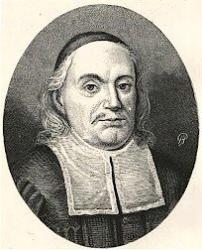
1607 - 1676 Topics: Proper 10 Year A Author of "O Lord, How Shall I Meet You" in Voices United Paul Gerhardt (b. Gräfenheinichen, Saxony, Germany, 1607; d. Lubben, Germany, 1676), famous author of Lutheran evangelical hymns, studied theology and hymnody at the University of Wittenberg and then was a tutor in Berlin, where he became friends with Johann Crüger. He served the Lutheran parish of Mittenwalde near Berlin (1651-1657) and the great St. Nicholas' Church in Berlin (1657-1666). Friederich William, the Calvinist elector, had issued an edict that forbade the various Protestant groups to fight each other. Although Gerhardt did not want strife between the churches, he refused to comply with the edict because he thought it opposed the Lutheran "Formula of Concord," which condemned some Calvinist doctrines. Consequently, he was released from his position in Berlin in 1666. With the support of friends he became archdeacon at Lubben in 1669 and remained there until his death. Gerhardt experienced much suffering in his life; he and his parishioners lived in the era of the Thirty Years' War, and his family experienced incredible tragedy: four of his five children died young, and his wife died after a prolonged illness. In the history of hymnody Gerhardt is considered a transitional figure-he wrote at a time when hymns were changing from a more objective, confessional, and corporate focus to a pietistic, devotional, and personal one. Like other German hymns, Gerhardt's were lengthy and intended for use throughout a service, a group of stanzas at a time. More than 130 of his hymns were published in various editions of Cruger's Praxis Pietatis Melica, the Crüger-Runge Gesangbuch (1653), and Ebeling's Das andere Dutzeud geistliche Andachtslieder Herrn Paul Gerhardts (1666-1667). John Wesley and Catherine Winkworth both made famous English translations of Gerhardt's texts.
Bert Polman
======================
Gerhardt, Paulus, son of Christian Gerhardt, burgomaster of Gräfenhaynichen, near Wittenberg, was born at Grafenhaynichen, Mar. 12, 1607. On January 2, 1628, he matriculated at the University of Wittenberg. In the registers of St. Mary's church, Wittenberg, his name appears as a godfather, on July 13, 1641, described still as "studiosus," and he seems to have remained in Wittenberg till at least the end of April, 1642. He appears to have gone to Berlin in 1642 or 1643, and was there for some time (certainly after 1648) a tutor in the house of the advocate Andreas Barthold, whose daughter (Anna Maria, b. May 19, 1622, d. March 5, 1668) became his wife in 1655. During this period he seems to have frequently preached in Berlin. He was appointed in 1651, at the recommendation of the Berlin clergy, Lutheran Probst (chief pastor) at Mittenwalde, near Berlin, and ordained to this post Nov. 18, 1651. In July, 1657, he returned to Berlin as third diaconus of St. Nicholas's church; but becoming involved in the contest between the Elector Friedrich Wilhelm (who was of the Reformed Church) and the Lutheran clergy of Berlin, he was deposed from his office in February, 1666, though he still remained in Berlin. In Nov. 1668, he accepted the post of archidiaconus at Lübben, on the Spree, was installed in June, 1669, and remained there till his death on June 7, 1676 (Koch, iii. 297-326; Allgemeine Deutsche Biographie, viii. 774-783, &c).
The outward circumstances of Gerhardt's life were for the most part gloomy. His earlier years were spent amid the horrors of the Thirty Years' War. He did not obtain a settled position in life till he was 44 years of age. He was unable to marry till four years later; and his wife, after a long illness, died during the time that he was without office in Berlin; while of the five children of the marriage only one passed the period of childhood. The sunniest period of his life was during the early years of his Berlin ministry (i.e. 1657-1663), when he enjoyed universal love and esteem; while his latter years at Lübben as a widower with one surviving child were passed among a rough and unsympathising people. The motto on his portrait at Lübben not unjustly styles him "Theologus in cribro Satanae versatus."
Gerhardt ranks, next to Luther, as the most gifted and popular hymnwriter of the Lutheran Church. Gervinus (ed. 1842, pt. iii. p. 366), the well-known historian of German literature, thus characterises him:—
"He went back to Luther's most genuine type of hymn in such manner as no one else had done, only so far modified as the requirements of his time demanded. In Luther's time the belief in Free Grace and the work of the Atonement, in Redemption and the bursting of the gates of Hell was the inspiration of his joyful confidence; with Gerhardt it is the belief in the Love of God. With Luther the old wrathful God of the Romanists assumed the heavenly aspect of grace and mercy; with Gerhardt the merciful Righteous One is a gentle loving Man. Like the old poets of the people he is sincerely and unconstrainedly pious, naive, and hearty; the bliss fulness of his faith makes him benign and amiable; in his way of writing he is as attractive, simple, and pleasing as in his way of thinking."
With a firm grasp of the objective realities of the Christian Faith, and a loyal adherence to the doctrinal standpoint of the Lutheran Church, Gerhardt is yet genuinely human; he takes a fresh, healthful view both of nature and of mankind. In his hymns we see the transition to the modern subjective tone of religious poetry. Sixteen of his hymns begin with, “I." Yet with Gerhardt it is not so much the individual soul that lays bare its sometimes morbid moods, as it is the representative member of the Church speaking out the thoughts and feelings he shares with his fellow members; while in style Gerhardt is simple and graceful, with a considerable variety of verse form at his command, and often of bell-like purity in tone.
From the first publication of Gerhardt's hymns they at once came into favour among all ranks and creeds; and a large proportion are among the hymns most cherished and most widely used by German-speaking Christians at the present day. They appeared principally in the various editions of Crüger's Praxis, and the Crüger-Runge Gesang-Buch, 1653. The first collected edition was prepared by J. G. Ebeling, and published in separate "Dozens" 1-4 in 1666, 5-10 in 1667, i.e. 120 in all. In the edition of J. H. Feustking, Zerbst, 1707, a few stanzas were intercalated (from manuscripts in the possession of Gerhardt's surviving son), but no new hymns were added.
Among modern editions of Gerhardt's hymns (mostly following the text of Ebeling) may be mentioned those by Langbecker, 1842; Schultz, 1842; Wackernagel, 1843; Becker, 1851; Goedeke, 1877, and Gerok, 1878. The Historico-Critical edition of Dr. J. F. Bachmann, 1866, is the most complete (with 11 additional pieces hardly Church hymns), and reverts to the pre-Ebeling text.
The length of many of Gerhardt's hymns ("Ein Lämmlein" is 10 stanzas of 10 lines; "Fröhlich soil," 15 stanzas of 8 lines, &c), and the somewhat intricate metres of others, have caused his hymns to be less used in English than otherwise might have been the case; but a considerable proportion have come in some form or other into English hymnbooks. A large selection, translated with scrupulous faithfulness but not retaining much of the lyric grace of the originals, was published by the Rev. John Kelly, in 1867, as Paul Gerhardt’s Spiritual Songs; while many individual hymns have been translated by John Wesley, Miss Winkworth, Miss Cox, Miss Borthwick, and many others. His translations from St. Bernard are noted under "O Haupt voll Blut." There are separate notes on 19 of his greater hymns. Besides these the following have passed into English:—
I. Hymns in English common use:
i. Auf den Nebel folgt die Sonn. Thanksgiving after great sorrow and affliction. In Crüger's Praxis, 1656, No. 249, in 15 stanzas of 7 1.; thence in Wackernagel’s ed. of his Geistliche Lieder, No. 87, and Bachmann's ed., No. 64. In the Unverfälschter Liedersegen, 1851, No. 402. Translated as:—
Cometh sunshine after rain. A good translation, omitting stanzas iv.-vii., x., xi., by Miss Winkworth, in her Lyra Germanica, 1st Ser., 1855, p. 100 (translations of x., xi. added to 2nd ed., 1856). Repeated, omitting the translations of stanzas ii., x.-xii., as No. 4 in her Chorale Book for England, 1863. In the Christian Hymn Book, Cincinnati, 1865, No. 799, begins with st. xiii., "Now as long as here I roam."
Another translation is:—"After clouds we see the sun," by J. Kelly, 1867, p. 261.
ii. Die Zeit ist nunmehr nah. Day of Judgment—Second Advent. Founded on Acts iii. 20. In the Crüger-Runge Gesang-Buch 1653, No. 367, iii 18 stanzas of 6 lines, and thence in Wackernagel's edition of his Geistliche Lieder, 1843, No. 119 (1874, No. 124), and Bachmann's edition, No. 40. In the Berlin Geistliche Lieder S., ed. 1863, No. 1517. Translated as:—
O Christ! how good and fair. Being a translation of stanzas iii., iv., vi., vii., x.-xiii., xvii., by Mrs. Charles, in her Voice of Christian Life in Song, 1858, p. 242. Her translations of stanzas iii., x., xii., are No. 150 in G. S. Jellicoe's Collection, 1867.
Other trs. are:—(1) "May I when time is o'er," of stanzas vii., viii. as part of No. 831 in the Moravian Hymn Book, 1789; in the 1801 and later eds. (1886, No. 1229), beginning, "I shall, when time is o'er." (2) “The time is very near," by J. Kelly, 1867, p. 341.
iii. Gottlob, nun ist erschollen. Peace. Thanksgiving for the Proclamation of the Peace of Westphalia, in 1648, after the Thirty Years’ War. In Crüger's Praxis 1656, No. 409, in 6 stanzas of 12 lines, and thence in Wackernagel's edition of his Geistliche Lieder, No. 64, and Bachmann's ed., No. 84; and in the Unverfälschter Liedersegen, 1851, No. 589. Translated as: —
Thank God it hath resounded. A full and good tr. by Miss Winkworth, in her Lyra Germanica, 2nd Ser., 1858, p. 156, repeated, omitting stanza ii., in her Chorale Book for England, 1863. St. i., v., vi., form No. 49 in M. W. Stryker's Christian Chorals, 1885.
Another tr. is: ”Praise God! for forth hath sounded," by J. Kelly, 1867, p. 251.
iv. Ich, der ich oft in tiefes Leid. Ps. cxlv. First published in J. G. Ebeling's edition of his Geistliche Andachten Dritte Dutzet, 1666, No. 27, in 18 stanzas of 7 lines. Thence in Wackernagel's ed., No. 95, and Bachmann's ed., No. 103; also in the Berlin Geistliche LiederSchatz, ed. 1863, No. 1004. Translated as:—
I who so oft in deep distress . A good translation, omitting stanzas ii.-iv., by Miss Winkworth, in her Lyra Germanica, 2nd Ser., 1858, p. 149. Her translations of stanzas i., xiii.-xvi., xviii., were included as No. 224, and of stanzas vi., viii., ix., xi. altered, and beginning, "O God! how many thankful songs," as No. 168, in Holy Song, 1869.
Another tr. is:—-"Who is so full of tenderness," of stanza viii. as stanza iv. of No. 1075 in the Supplement of 1808 to the Moravian Hymn Book, 1801 (1886, No. 537).
v. Ich steh an deiner Krippen bier. Christmas. Included in Crüger's Praxis, 1656, No. 105, in 15 stanzas of 7 lines. Thence in Wackernagel's ed., No. 9, and Bachmann's ed., No. 45; and in the Berlin Geistliche LiederSchatz, ed. 1863, No. 167. A beautiful hymn, in which the poet puts himself in the place of the shepherds and the wise men visiting Bethlehem; and in praise and adoration tenders his devotion, his love and his all, to the Infant Saviour in the manger. Translated as:—
My faith Thy lowly bed beholds. A translation of stanzas i., iv., vii., xv., by A. T. Russell, as No. 57 in his Psalms & Hymns, 1851.
Other trs. are:— (1) "I stand beside Thy manger-bed," by Miss Manington, 1864, p. 38. (2) "Now at the manger here I stand," by J. Kelly, 1867, p. 32.
vi. Ich weiss dass mein Erlöser lebt. Easter. Founded on Job xix. 25-27. First published in J. G. Ebeling's ed. of his Geistliche Andachten Zehende Dutzet, 1667, No. 119, in 9 stanzas of 7 lines; repeated in Wackernagel's ed., 1843, No. 118 (1874, No. 123); in Bachmann's ed., No. 119; and in the Berlin Geistliche Lieder S. ed. 1863, No. 301. Translated as:—
I know that my Redeemer lives, In this my faith is fast. A full and spirited translation by J. Oxenford, in Lays of the Sanctuary, 1859, p. 122. His translations of stanzas i., iii., vii.-ix., were included, altered, as No. 779 in Kennedy, 1863.
Another tr. is:— "I know that my Redeemer lives, This hope," &c, by Miss Manington, 1863, p. 78.
vii. Ich weiss, mein Gott, dass all mein Thun. Supplication. A prayer for success in all Christian works and purpose; founded on Jeremiah x. 23, and Acts v. 38, 39. Included in Crüger's Praxis, 1656, No. 332, in 18 stanzas of 5 lines. In Wackernagel's ed., No. 40; Bachmann's ed., No. 71, and the Berlin Geistliche Lieder S., ed. 1863. Translated as:—
I know, my God, and I rejoice. A good translation of stanzas i.-iii., viii., xi., ix., by Miss Winkworth, as No. 121 in her Chorale Book for England, 1863.
Another translation is:— "My God! my works and all I do” by J. Kelly, 1867, p. 102.
viii. Kommt, und lasst uns Christum ehren. Christmas. Founded on St. Luke ii. 15. First published in J. G. Ebeling's ed. of his Geistliche Andachten Fünffte Dutzet, 1667, No. 56, in 8 stanzas of 4 lines. Thence in Wackemagel's ed., No. 6; Bachmann's ed., No. 110; and the Unverfälschter Liedersegen, 1851, No. 43. Translated as:—
1. Come, unite in praise and singing. Omitting stanzas vi., vii., contributed by A. T. Russell to Maurice's Choral Hymnbook, 1861, No. 707.
2. Bring to Christ your best oblation. A full and good translation by P. Massie in his Lyra Domestica, 1864, p. 96; repeated in Snepp's Songs of Grace & Glory and Reid's Praise Book, 1872.
Other translations are:— (1) "Come, and let us Christ revere now," by Miss Manington, 1864, p. 25. (2) "Come, and Christ the Lord be praising," by J. Kelly, 1867, p. 24.
ix. Lobet den Herren, alle die ihn fürchten. Morning. Included in the Crüger-Runge Gesang-Buch 1653, No. 7, in 10 stanzas of 5 lines. In Wackernagel's ed., No. 100, and Bachmann's ed., No. 21, and in the Berlin Geistliche Lieder S. edition 1863, No. 1063. Translated as:—
Praise God! revere Him! all ye men that fear Him! This is from the version in Bunsen's Allgemeine Gesangbücher, 1846, No. 167, stanza i. being from Gerhardt, and st. ii., iii., from "Lobet den Herren, denn er ist sehr freundlich" (q. v.); and appeared in the Dalston Hospital Hymnbook, 1848, No. 55, signed "A. G."
Other translations are:— (1) "Our Lord be praising, All His glory raising," by H. J. Buckoll, 1842, p. 27. (2) "Praise ye Jehovah, all ye men who fear Him," by J. Kelly, 1867, p. 279.
x. Micht so traurig, nicht so sehr. Christian Contentment. In the 3rd edition, 1648, of Crüger's Praxis, No. 251, in 15 stanzas of 6 1., repeated in Wackernagel's ed., No. 53; Bachmann's ed., No. 16, and the Berlin Geistliche Lieder S., ed. 1863, No. 851. It is founded on Ps. cxvi. 7; Ps. xlii. 6-12; 1 Tim. vi. 6. Translated as:—
Ah! grieve not so, nor so lament. A free translation by Mrs. Findlater, of stanzas i., ii., vii.-x., xiii., xv., in the 1st Ser., 1854, of the Hymns from the Land of Luther, p. 48 (1884, p. 50). Repeated, abridged, in Holy Song, 1869, and Dale's English Hymnbook, 1875.
Other translations are:- (l) "Why this sad and mournful guise," by Miss Dunn, 1857, p. 85. (2) "Not so darkly, not so deep," by Miss Warner, 1858 (1861, p. 58). (3) “0 my soul, why dost thou grieve," by J. Kelly, 1867.
xi. Nun lasst uns gehn und treten. New Year. Included in the Crüger-Runge Gesang-Buch, 1653, No. 106, in 15 st. of 4 1. Thence in Wackernagel's ed., No. 12; Bachmann's ed., No. 24, and the Berlin Geistliche Lieder S., ed. 1863, No. 200. Evidently written during the Thirty Years' War. Translated as:—
In pray'r your voices raise ye. In full, by J. Kelly, 1867, p. 45. From this, 8 st. are included as No. 48 in the Ohio Lutheran Hymnal, 1880.
Other translations are:— (1) "Now let each humble Creature," in the Supplement to German Psalter, ed. 1765, p. 4, and Select Hymns from German Psalter, Tranquebar, 1754. p. 7. In the Moravian Hymnbook, 1789, No. 507 (1849, No. 1106), greatly altered, and beginning, “Year after year commenceth." (2) "0 come with prayer and singing," by R. Massie in the British Herald , Jan., 1865, p. 8. (3) “Christians all, with one accord," by E. Massie, 1867, p. 168. (4) "With notes of joy and songs of praise," by Dr. R. Maguire, 1883, p. 24.
xii. Schaut! Schaut! was ist für Wunder dar? Christmas. First published in J. G. Ebeling's ed. of his Geistliche Andachten Fünffte Dutzet, 1667, No. 55, in 18 stanzas of 4 1. Thence in Wackernagel’s ed., No. 4; Bachmann's ed., No. 109. Translated as:—
Behold! Behold! what wonders here. In full, by J. Kelly, 1867, p. 14. From this, 12 st. were included in the Ohio Lutheran Hymnal, 1880, as Nos. 25, 26: No. 26 beginning with the translation of st. xiii., "It is a time of joy today."
xiii. Warum willt du draussen stehen. Advent. Suggested by Gen. xxiv. 31. Appeared in the Crüger-Runge Gesang-Buch, 1653, No. 78, in 9 stanzas of 8 lines; viz., stanzas i.—vii., xi., xii., of the full form; st. viii.-x. being added in Ebeling's Geistliche Andachten Fünffte Dutzet, 1667, No. 50. The full text, in 12 stanzas, is also in Wackernagel's ed., No. 2; Bachmann's ed., No. 23, and Geistliche Lieder S., 1851, No. 20. Translated as:—
Wherefore dost Thou longer tarry. A good translation, omitting st. viii.-x., by Miss Winkworth, in her Lyrica Germanica, 2nd Ser., 1858, p. 6. In her Chorale Book for England, 1863, No. 153, the translations of st. iii., v., xi., are omitted.
Other trs. are:- (l) “Wherefore dost Thou, blest of God," by R. Massie, in Lyra Domestica, 1864, p. 90. (2) “Why, without, then, art Thou staying," by J. Kelly, 1867, p. 5.
xiv. Was alle Weisheit in der Welt. Trinity Sunday. In Crüger's Praxis, 1656, No. 212, in 8 stanzas of 9 lines. Thence in Wackernagel's ed., No. 1, and Bachmann's ed., No, 59, and the Berlin Geistliche Lieder S., ed. 1863, No. 50. Translated as:—
Scarce tongue can speak, ne'er human ken. In full, by J. Kelly, 1867, p. 1, repeated as No. 111 in the Ohio Lutheran Hymnal, 1880.
Another translation is:—"The mystery hidden from the eyes," by R. Massie, in Lyra Domestica, 1864, p. 87.
xv. Was Gott gefällt, mein frommes Kind. Resignation. This beautiful hymn, on resignation to “what pleases God," first appeared in the Crüger-Runge Gesang-Buch, 1653, No. 290, in 20 stanzas of 5 lines. Thence in Wackernagel's ed., No. 60; Bachmann's ed., No. 37, and the Unverfälschter Liedersegen, 1851, No. 723. Translated as:—-
What God decrees, child of His love. A good translation of stanzas i., ii., v., vi., viii., xii., xv., xviii., xx., by Mrs. Findlater, in the 3rd Ser., 1858, of the Hymns from the Land of Luther, p. 49 (1884, p. 170). Included, in full, in Bishop Ryle's Collection, 1860, No. 171; and abridged in Christian Hymns, Adelaide, 1872, and beginning, "What God decrees, take patiently," in Kennedy, 1863, No. 1344.
Other translations are:— (1) "What pleaseth God with joy receive," by Miss Dunn, 1857, p. 94. (2) “What pleases God, 0 pious soul," by Miss Winkworth, 1858, p. 193, (3) ”What pleaseth God, my faithful child," by J. Kelly, 1867, p. 189.
xvi. Wie schőn ists doch, Herr Jesu Christ. For Married Persons. Founded on Ps. cxxviii. First published in Ebeling's ed. of his Geistliche Andachten Vierte Dutzet, 1666, No. 38, in 8 st. of 12 1. Thence in Wackernagel's ed., 1843, No. 108 (1874, No. 109); Bachmann's ed., No. 105, and the Unverfälschter Liedersegen S., 1851, No. 680. Translated as:—
Oh, Jesus Christ! how bright and fair. In full, by J. Kelly, 1867, p. 307, repeated, altered, and omitting st. iii.—v., in the Ohio Lutheran Hymnal, 1880, No. 339.
II. Hymns not in English common use:
xvii. Also hat Gott die Welt geliebt. Good Friday. On St. John iii. 16. In Crüger's Praxis, 1661, No. 372, in 17 stanzas. Translated as, "Be of good cheer in all your wants,” by P. H. Molther, of stanza 16, as No. 181 in the Moravian Hymnbook, 1789 (1886, No. 217).
xviii. Auf, auf, mein Herz mit Freuden. Easter. In Crüger's Praxis, 1648, No. 141, in 9 stanzas. The translations are:-- (1) "Up! Up! my heart with gladness, See," by J. Kelly, 1867, p. 71. (2) "Up, up, my heart, with gladness; Receive," by N. L. Frothingham, 1870, p. 228.
xix. Du bist zwar mein und bleibest mein. For the Bereaved. A beautiful hymn of consolation for parents on the loss of a son. Written on the death of Constantin Andreas, younger son of Johannes Berkov, pastor of St. Mary's Church, Berlin, and first printed as one of the "Dulcia amicorum solatia" at the end of the funeral sermon by Georg Lilius, Berlin, 1650. Included in Ebeline's ed. of Gerhardt's Geistliche Andachten Sechste Dutzet, Berlin, 1667, No. 72, in 12 stanzas. The translations are: (1) "Thou'rt mine, yes, still thou art mine own”, by Miss Winkworth, 1858, p. 123. (2) "Yes, thou art mine, still mine, my son," by J. D. Burns, in the Family Treasury, 1861, p. 8, and his Remains, 1869, p. 249. (3) "Mine art thou still, and mine shalt be," by J. Kelly, 1867, p. 333. (4) "Thou art mine own, art still mine own," by Dr. J. Guthrie, 1869, p. 100.
xx. Du, meine Seele, singe. Ps. cxlvi. In the Crüger-Runge Gesang-Buch, Berlin, 1653, No. 183, in 10 stanzas. Translated as, “O come, my soul, with singing," by Miss Burlingham, in the British Herald, Jannary, 1866, p. 207, and as No. 423 in Reid's Praise Book, 1872.
xxi. Gieb dich zufrieden, und sei stille. Cross and Consolation—-Ps. xxxvii. 7. In Ebeling Erstes Dutzet, 1666, No. 11, in 15 stanzas. Translated as: (1) “Be thou content: be still before," by Miss Winkworth, 1855, p. 156, and in Bishop Ryle's Collection, 1860, No. 269. (2) “Be thou contented! aye relying," by J. Kelly, 1867, p. 202. (3) “Tranquilly lead thee, peace possessing," by N. L. Frothingham, 1870, p. 246.
xxii. Hőr an! mein Herz, die sieben Wort. Passiontide. On the Seven Words from the Cross. Founded on the hymn noted under Bőschenstein, J. (q.v.). In Crüger's Praxis, 1656, No. 137, in 15 stanzas. Translated as: (1) “Come now, my soul, thy thoughts engage," by Dr. H. Mills, 1845 (1856, p. 309). (2) "Seven times the Saviour spake my heart," by R. Massie, in the British Herald, Sept., 1865, p. 133. (3) "My heart! the seven words hear now," by J. Kelly, 1867, p. 63.
xxiii. Ich hab in Gottes Herz und Sinn. Resignation. In Crüger's Praxis, 1648, No. 249, in 12 st. Translated as: (1) "I into God's own heart and mind," by J. Kelly, 1867, p. 219. (2) "To God's all-gracious heart and mind”, by Miss Winkworth, 1869, p. 213, repeated in Statham's Collection, Edinburgh, 1869 and 1870.
xxiv. 0 Jesu Christ! dein Kripplein ist. Christmas. At the Manger of Bethlehem. In Crüger's Praxis, 1656, No. 101, in 15 stanzas. Translated as: (1) Be not dismay'd—-in time of need" (st. xi.) in the Moravian Hymnbook, 1789, No. 236. (2) "O blessed Jesus! This," by Miss Winkworth, 1858, p, 18. (3) "O Jesus Christ! Thy cradle is," by Miss Manington, 1864, p. 41. (4) "Thy manger is my paradise," by J. Kelly, 1867, p. 26.
xxv. Voller Wunder, voller Kunst. Holy Matrimony. In Ebeling Vierte Dutzet, 1666, No. 40, in 17 st. Often used in Germany at marriages on the way to church. Translated as: (1) "Full of wonder, full of skill," by Dr. H. Mills, 1845 (1856, p. 215). (2) "Full of wonder, full of skill," in Mrs. Stanley Carr's translation of Wildenhahn's Paul Gerhardt, ed. 1856, p. 52. (3) "Full of wonder, full of art," by J. Kelly, 1867, p. 302. (4) "Full of wonder, full of art," by Miss Winkworth, 1869, p. 215.
xxvi. Warum machet solche Schmerzen. New Year. On St. Luke ii. 21. In Crüger's Praxis, 1648, No. 97, in 4 stanzas. Bunsen, in his Versuch, 1833, No. 120, gives st. iii., iv. altered to "Freut euch, Sünder, allerwegen." Tr. as: (1) "Mortals, who have God offended," by Miss Cox, 1841, p. 21, from Bunsen. (2) "Why should they such pain e'er give Thee," by J. Kelly, 1867, p. 43.
xxvii. Weg, mein Herz, mit den Gedanken. Lent. On St. Luke xv. In Crüger's Praxis, 1648, No. 36, in 12 stanzas. Translated as: (1) "Let not such a thought e'er pain thee," by J. Kelly, 1867, p. 83. (2) "Hence, my heart, with such a thought," by Miss Winkworth, 1869, p. 210.
Besides the above, a considerable number of other hymns by Gerhardt have been translated by Mr. Kelly, and a few by Dr. Mills, Miss Manington, and others. The limits of our space forbid detailed notes on these versions. [Rev. James Mearns, M.A.]
-- John Julian, Dictionary of Hymnology (1907)
=============================
Gerhardt, Paulus, pp. 409, ii., 1565, i. The most recent edition of Gerhardt's hymns is in vol. iii. of the Fischer-Tümpel Deutsche evangelische Kirchenlied des Siebzehnten Jahr-hunderts, 1906, Nos. 389-495. In fixing the text the compilers have been enabled to use the recently discovered 1647, 1653 and 1657 Berlin editions of Cruger's Praxis Pietatis Melica. [Rev. James Mearns, M.A.]
--John Julian, Dictionary of Hymnology, New Supplement (1907)
Paul Gerhardt
Reginald Heber

1783 - 1826 Topics: Proper 10 Year B Author of "Holy, Holy, Holy, Lord God Almighty" in Voices United Reginald Heber was born in 1783 into a wealthy, educated family. He was a bright youth, translating a Latin classic into English verse by the time he was seven, entering Oxford at 17, and winning two awards for his poetry during his time there. After his graduation he became rector of his father's church in the village of Hodnet near Shrewsbury in the west of England where he remained for 16 years. He was appointed Bishop of Calcutta in 1823 and worked tirelessly for three years until the weather and travel took its toll on his health and he died of a stroke. Most of his 57 hymns, which include "Holy, Holy, Holy," are still in use today.
-- Greg Scheer, 1995
====================
Heber, Reginald, D.D. Born at Malpas, April 21, 1783, educated at Brasenose College, Oxford; Vicar of Hodnet, 1807; Bishop of Calcutta, 1823; died at Trichinopoly, India, April 3, 1826. The gift of versification shewed itself in Heber's childhood; and his Newdigate prize poem Palestine, which was read to Scott at breakfast in his rooms at Brazenose, Oxford, and owed one of its most striking passages to Scott's suggestion, is almost the only prize poem that has won a permanent place in poetical literature. His sixteen years at Hodnet, where he held a halfway position between a parson and a squire, were marked not only by his devoted care of his people, as a parish priest, but by literary work. He was the friend of Milman, Gifford, Southey, and others, in the world of letters, endeared to them by his candour, gentleness, "salient playfulness," as well as learning and culture. He was on the original staff of The Quarterly Review; Bampton Lecturer (1815); and Preacher at Lincoln's Inn (1822). His edition of Jeremy Taylor is still the classic edition. During this portion of his life he had often had a lurking fondness for India, had traced on the map Indian journeys, and had been tempted to wish himself Bishop of Calcutta. When he was forty years old the literary life was closed by his call to the Episcopate. No memory of Indian annals is holier than that of the three years of ceaseless travel, splendid administration, and saintly enthusiasm, of his tenure of the see of Calcutta. He ordained the first Christian native—Christian David. His first visitation ranged through Bengal, Bombay, and Ceylon; and at Delhi and Lucknow he was prostrated with fever. His second visitation took him through the scenes of Schwartz's labours in Madras Presidency to Trichinopoly, where on April 3,1826, he confirmed forty-two persons, and he was deeply moved by the impression of the struggling mission, so much so that “he showed no appearance of bodily exhaus¬tion." On his return from the service
”He retired into his own room, and according to his invariable custom, wrote on the back of the address on Confirmation 'Trichinopoly, April 3, 1826.' This was his last act, for immediately on taking off his clothes, he went into a large cold bath, where he had bathed the two preceding mornings, but which was now the destined agent of his removal to Paradise. Half an hour after, his servant, alarmed at his long absence, entered the room and found him a lifeless corpse." Life, &c, 1830, vol. ii. p. 437.
Heber's hymns were all written during the Hodnet period. Even the great missionary hymn, "From Greenland's icy mountains," notwithstanding the Indian allusions ("India's coral strand," "Ceylon's isle"), was written before he received the offer of Calcutta. The touching funeral hymn, "Thou art gone to the grave," was written on the loss of his first babe, which was a deep grief to him. Some of the hymns were published (1811-16) in the Christian Observer, the rest were not published till after his death. They formed part of a ms. collection made for Hodnet (but not published), which contained, besides a few hymns from older and special sources, contributions by Milman. The first idea of the collection appears in a letter in 1809 asking for a copy of the Olney Hymns, which he "admired very much." The plan was to compose hymns connected with the Epistles and Gospels, to be sung after the Nicene Creed. He was the first to publish sermons on the Sunday services (1822), and a writer in The Guardian has pointed out that these efforts of Heber were the germs of the now familiar practice, developed through the Christian Year (perhaps following Ken's Hymns on the Festivals), and by Augustus Hare, of welding together sermon, hymnal, and liturgy. Heber tried to obtain from Archbishop Manners Sutton and the Bishop of London (1820) authorization of his ms. collection of hymns by the Church, enlarging on the "powerful engine" which hymns were among Dissenters, and the irregular use of them in the church, which it was impossible to suppress, and better to regulate. The authorization was not granted. The lyric spirit of Scott and Byron passed into our hymns in Heber's verse; imparting a fuller rhythm to the older measures, as illustrated by "Oh, Saviour, is Thy promise fled," or the martial hymn, "The Son of God goes forth to war;" pressing into sacred service the freer rhythms of contemporary poetry (e.g. "Brightest and best of the sons of the morning"; "God that madest earth and heaven"); and aiming at consistent grace of literary expression.. Their beauties and faults spring from this modern spirit. They have not the scriptural strength of our best early hymns, nor the dogmatic force of the best Latin ones. They are too flowing and florid, and the conditions of hymn composition are not sufficiently understood. But as pure and graceful devotional poetry, always true and reverent, they are an unfailing pleasure. The finest of them is that majestic anthem, founded on the rhythm of the English Bible, "Holy, Holy, Holy, Lord God Almighty." The greatest evidence of Heber's popularity as a hymnwriter, and his refined taste as a compiler, is found in the fact that the total contents of his ms. collection which were given in his posthumous Hymns written and adapted to the Weekly Church Service of the Year. London, J. Murray, 1827; which included 57 hymns by Heber, 12 by Milman, and 29 by other writers, are in common in Great Britain and America at the present time. [Rev. H. Leigh Bennett, M.A.]
Of Bishop Heber's hymns, about one half are annotated under their respective first lines. Those given below were published in Heber's posthumous Hymns, &c, 1827. Some of them are in extensive use in Great Britain and America; but as they possess no special histories they are grouped together as from the Hymns, &c, 1827:—
1. Beneath our feet, and o'er our head. Burial.
2. Creator of the rolling flood. St. Peter's Day, or, Gospel for 6th Sunday after Trinity.
3. Lo, the lilies of the field. Teachings of Nature: or, Gospel for 15th Sunday after Trinity.
4. 0 God, by Whom the seed is given. Sexagesima.
6. 0 God, my sins are manifold. Forgiveness, or,
Gospel for 22nd S. after Trinity.
6. 0 hand of bounty, largely spread. Water into Wine, or, Gospel for 2nd S. after Epiphany.
7. 0 King of earth, and air, and sea. Feeding the Multitude; or, Gospel for 4th S. in Lent.
8. 0 more than merciful, Whose bounty gave. Good Friday.
9. 0 most merciful! 0 most bountiful. Introit Holy Communion.
10. 0 Thou, Whom neither time nor space. God unsearchable, or, Gospel for 5th Sunday in Lent.
11. 0 weep not o'er thy children's tomb. Innocents Day.
12. Room for the proud! Ye sons of clay. Dives and Lazarus, or, Gospel for 1st Sunday after Trinity.
13. Sit thou on my right hand, my Son, saith the Lord. Ascension.
14. Spirit of truth, on this thy day. Whit-Sunday.
15. The feeble pulse, the gasping breath. Burial, or, Gospel for 1st S. after Trinity.
16. The God of glory walks His round. Septuagesima, or, the Labourers in the Marketplace.
17. The sound of war in earth and air. Wrestling against Principalities and Powers, or, Epistle for 2lst Sunday after Trinity.
18. The world is grown old, her pleasures are past. Advent; or, Epistle for 4th Sunday in Advent.
19. There was joy in heaven. The Lost Sheep; or, Gospel for 3rd S. after Trinity.
20. Though sorrows rise and dangers roll. St. James's Day.
21. To conquer and to save, the Son of God. Christ the Conqueror.
22. Virgin-born, we bow before Thee. The Virgin Mary. Blessed amongst women, or, Gospel for 3rd S. in Lent.
23. Wake not, 0 mother, sounds of lamentation. Raising the Widow's Son, or, Gospel for 16th S. after Trinity.
24. When on her Maker's bosom. Holy Matrimony, or, Gospel for 2nd S. after Epiphany.
25. When through the torn sail the wild tempest is streaming. Stilling the Sea, or, Gospel for 4th Sunday after Epiphany.
26. Who yonder on the desert heath. The Good Samaritan, or, Gospel for 13th Sunday after Trinity.
This list is a good index of the subjects treated of in those of Heber's hymns which are given under their first lines, and shows that he used the Gospels far more than the Epistles in his work.
--John Julian, Dictionary of Hymnology (1907)
Reginald Heber
Pages




