

 My Starred Hymns
 My FlexScores
 My Hymnals
 My Purchased Files
Planning worship?
Check out our sister site, ZeteoSearch.org,
for 20+ additional resources related to your search.
- |
User Links
Person Results
Stopford A. Brooke
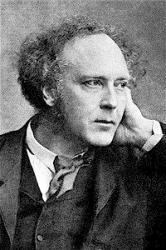
1832 - 1916 Author of "Let the Whole Creation Cry" in The Presbyterian Hymnal Brooke, Stopford Augustus, M.A., was born at Letterkenny, Donegal, Nov. 14, 1832, and educated at Trinity College, Dublin, graduating B.A. 1856; M.A. 1858. He carried off the Downes prize and the Vice-Chancellor's prize for English verse. On taking Holy Orders he was successively Curate of St. Matthew's, Marylebone, 1857-59; of Kensington, 1860-63; Chaplain to the British Embassy at Berlin, 1863-65; Minister of St. James's Chapel, York Street, London, 1866-75; and of Bedford Chapel, 1876. He was also appointed Chaplain in Ordinary to the Queen, in 1872. In 1865 he published the Life and Letters of the late F. W. Robertson; in 1874, Theology in the English Poets; in 1876, Primer of English Literature, &c. On seceding from the Church of England in 1881, he published for the use of his congregation, Christian Hymns, a collection of 269 pieces. Of these he is the author of:—
1. Immortal Love, within Whose righteous will. Resignation and Prayer for Guidance. No. 183, in 4 stanzas of 6 lines. It has a strong likeness to Card. Newman's "Lead, kindly light," is in the same metre, and might be called a companion hymn thereto. It was repeated in Horder's Congregational Hymns, 1884.
2. It fell upon a summer day. Christ blessing little children. No. 250, in 10 stanzas of 4 lines.
3. It is finished, all the pain. Good Friday. No. 80, in 6 stanzas of 4 lines.
4. Let the whole creation cry. Invitation to Praise God. An imitation of Ps. 148. It is No. 47, in 10 stanzas of 4 lines, and is of special merit. In st. iv., 11. 3, 4 are from another source.
5. Mysterious Spirit, unto Whom. Rest and Joy in God. Based on a translation by J. G. Whittier from Lamartine. It is No. 159, in 3 stanzas of 8 lines. It was repeated in Horder's Congregational Hymns, 1884.
6. Now that day its wings has furled. Evening. No. 13, in 5 stanzas of 4 lines.
7. 0 God, Whose love is near. Divine protection desired. No. 103, in 7 stanzas of 4 lines. This is Toplady's "Your harps, ye trembling Saints" re-written, only st. i. and iv. being absolutely by Mr. Brooke.
8. 0 that Thou would'st the heavens rend And comfort, &c. Peace desired. No. 149, in 4 stanzas of 4 lines. The first line is from C. Wesley; also stanzas ii., 1. 4, but the rest of the hymn is original.
9. 0 Who is this that on a tree. Good Friday. No. 79, in 8 stanzas of 4 lines.
10. Oft as we run the weary way. Heavenly Witnesses of the struggles of Men. No. 188, in 6 stanzas of 6 lines.
11. Still the night, holy the night. Christmas Carol. No. 55, in 3 stanzas of 8 lines. It is a translation from the German, and is noticed under Mohr, Joseph.
12. Through the starry midnight dim. Christmas. No. 53, in 6 stanzas of 3 lines, and the refrain "Hallelujah."
13. When the Lord of Love was here. Life of Christ. No. 66, in 6 stanzas of 4 lines. It has passed into The Norwood Hymnal; and with the omission of st. vi. and the transposition of st. iv. and v. into Horder's Congregational Hymns, 1884. This is his finest hymn.
In addition, Mr. Brooke has made extensive alterations in the text of the hymns which he has adopted from other writers, and has also inserted in many instances additional stanzas into well-known lyrics, and thereby brought them, to some extent, into harmony with his theological views. His own compositions are marked by great freshness of thought and tenderness of expression. [Rev. W. Garrett Horder]
-- John Julian, Dictionary of Hymnology (1907)
Stopford A. Brooke
Henry Harbaugh
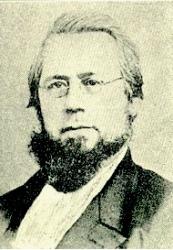
1817 - 1867 Author of "Christ, by Heavenly Hosts Adored" in The Cyber Hymnal Harbaugh, Henry, D.D., born in Franklin Co., Pennsylvania, Oct. 24, 1817, was of Swiss descent. In early life he was a farmer, carpenter, and teacher; but in 1840 he entered Marshall College, Mercersburg. Entering the ministry of the German Reformed body, he became, in 1844, Pastor at Lewisburg, Lancaster and Lebanon, Pennsylvania, and in 1864 Professor in Theology at Mercersburg. He died Dec. 27, 1867. He was Editor of the Guardian and the Mercersburg Review, in which he advocated what was called "Mercersburg Theology." His published works include sundry books about Heaven; Poems, Philadelphia, 1860, and Hymns & Chants for Sunday Schools, Lebanon, 1861. This last includes his hymns. The best known and most widely used of his compositions are:—
1. Jesus, I live to Thee. [Life consecrated to Jesus.] This hymn is dated 1850. It is No. 391 in the Hymns of the Church, N. Y., 1869; No. 255 in Allon's Supplementary Hymns, London, 1868, and is also in other collections.
2. God most mighty, sovereign Lord. [National Hymn.] Appeared in his Poems, 1860, in 8 stanzas of 8 lines, and headed, "A National Litany hymn." In some collections it is abridged, as in Hatfield's Church Hymnbook, N. Y., 1872, No. 1307; and in others part of it is altered to "Christ by heavenly hosts adored," as in the Reformed Dutch Hymns of the Church, 1869, No. 935, and others.
3. Make the cross your meditation. [Passiontide.] This translation of "Recordare sanctae crucis" (q.v.) appeared in the Mercersburg Review, 1858, p. 481, and in his Poems 1860. It is worthy of more attention than it has received.
[Rev. F. M. Bird, M.A.]
--John Julian, Dictionary of Hymnology (1907)
==================
Harbaugh, H., p. 484, ii. From No. 2, “God most mighty, &c," the cento, "Thou, by heavenly hosts adored" in the Songs of Christian Praise, N. Y., 1880, No. 658, is taken.
--John Julian, Dictionary of Hymnology, Appendix, Part II (1907)
Henry Harbaugh
Johann Georg Albinus
1624 - 1679 Author of "Alle Menschen müssen sterben" in Sonntagschulbuch Albinus, Johann Georg eldest s. of Zacharias Albinus, pastor at Unter-Nessa, near Weissenfels, Saxony, 1621-1633, and at Stuhlburgwerben, 1633-1635, was b. at UnterNessa, March 6, 1624. After his father's death, in 1635, he was, in 1638, adopted by his cousin, Lucas Pollio, diaconus at St Nicholas's Church in Leipzig. After his cousin's death, in 1643, the Court preacher, Sebastian Mitternacht, of Naumburg, took an interest in him, and he remained at Naumburg till he entered the University of Leipzig, in 1645. He studied for eight years at Leipzig, during which time ho acted as house tutor to the Burgomaster, Dr. Friedrich Kuhlwein, and was then, in 1653, appointed Eector of the Cathedral School at Naumburg. This post he resigned when, in 1657, he became pastor of St. Othmar's Church, in Naumburg. There he proved himself a zealous pastor, seeking ever "the glory of God, the edification of the Church, and the everlasting salvation, well-being, and happiness of his hearers." During his ministry he suffered greatly, not only from bodily infirmities, but from ecclesiastical encroachments and bickerings. The end came when, on Rogation Sunday, May 25,1679, he quietly fell asleep in Jesus, at 2.30 p.m. On his tombstone his eldest son placed the inscription, "Cum yiveret, moriebatur, et nunc cum mortuus vivit, quia sciebat, quod vita via sit mortis et inors vitae introitus." During his student days he was known as a poet, became, in 1654, a member of the Fruitbearing Society, and was also a member of Philipp v. Zesen's Patriotic Union. As a poet he was, says Koch, " distinguished by ease of style, force of expression, and liveliness of fancy, and his manner of thought was scriptural and pervaded by a deep religious spirit" (Koch, iii. 392-98; Allg. Deutsche Biog. i. 222-223). Of the many hymns he composed, and pub. in his various poetical works, only three have been tr. into English, viz.:—
i. Alle Menschen miiasen sterben. [For the Dying.] This hymn, which Koch, iii. 397, calls "his best known hymn, and a pearl in the Evangelical Treasury of Song," was written for the funeral of Paul von Henssberg, a Leipzig merchant, and was thus sung, from broadsheets, June 1, 1652. It was given in Niedling's Wasserquelle, Altenburg, 1663, and gradually came into universal use, passing through Freylinghausen's G. B., 1704, into most subsequent collections, as in the Unv. L. S., 1851, No. 804, in 8 st. of 8 1. It was a great favourite of P. J. Spener, who sang it regularly on Sunday afternoons; of J. F. Hochstetter, Prelate of Murrhardt, and many others (Koch, viii. 628-631).
In the Blatter fur Hymnologie, 1884, pp. 55-58, the text is quoted in full from the original broadsheet [Ducal Library, Gotha], the title of which ends " Mit seiner Poesie und Musick erweisen wollen Johannes Rosenmüller." Rosenmüller is not, however, known as a hymn-writer, and this statement is hardly sufficient to overthrow the traditional ascription to Albinus.
The translations in common use are:—
1. Death o'er all hit sway maintaineth. A good tr. of st. i., iii.-v., by A. T. Russell, as No. 260 in his Psalms & Hymns, 1851. Included, considerably altered and beginning, " Death in all this world prevaileth," as No. 745 in Kennedy, 1863.
2. Hark! a voice saith, all are mortal. A good tr., omitting st. v., viii., as No. 196 "by Miss Winkworth in her G. B. for England, 1863, and with a tr. of st. v. added as No. 429 in the Ohio Luth. Hymnal, 1880.
Other trs. are:—
(1) "All must die! there's no redemption," by Dr. H Mills, 1856, p. 234, 1st pub. (reading “no exception") in the Evang. Review, Gettysburg, Oct. 1851. (2) "All that's human still must perish," by Dr. John Ker, in the U. P. Juv. Miss. Magazine July, 1859. (3) "Tis God's decree that all shall die," by Dr. G. Walker, 1860, p. 107.
ii. Straf mich nicht in deinem Zorn. [Ps. vi.] Of the origin of this hymn, J. C. Wetzel, i. 46, and ii. 404, relates what seems rather an apocryphal story to this effect:—
Johann Rosenmüller, while music director at Leipzig, had been guilty of improper practices with some of his scholars. He was thrown into prison, but having made his escape, went to Hamburg. Thence he sent a petition for restoration to the Elector Johann Georg at Dresden, and to support his petition enclosed this hymn, which Albinus had written for him, along with the beautiful melody by himself (in the Irish Ch. Hyml., 1876; called Nassau, in the Darmstadt G. B. 1698, p. 49).
This, if correct, would date it about 1655, and Koch, iii. 398, says it was printed separately in that year; The earliest hymn-book in which it is found is Luppius's Andachtig Singender Christen Mund, Wesel., 1692, p. 20. It is a beautiful hymn of Penitence (by Miss Winkworth assigned to Ash Wednesday). Included as No. 273 in Freylinghausen's G. B., 1704, and recently as No. 535 in the Berlin G. L. S., ed. 1863, in 7 st. of 8 1. The trs. in C. U. are :—
1. O do not against me, Lord. A good tr. of st. i., iii., vi., vii., by A. T. Russell, as No. 79 in his Psalms & Hymns, 1851.
2. Not in anger, mighty God. A good tr. omitting st. ii., iv., as No. 41 in Miss Winkworth's Chorale Book for England, 1863, and thence as No. 205 in the Temple H. Bk. 1867, as No. 323 in the Free Church H. Bk. 1882, and omitting the tr. of st. vi., as No. 78 in the Upp. & Sherb. School H. Bk. 1874. In America as No. 398 in the Evang. Hymnal, New York, 1880, in full.
3. Not in anger, Lord, Thou wilt. A tr. of st. i., iii., vi., vii., signed « X. X." as No. 59 in Dr. Pagenstecher's Coll. 1864.
4. Cast me not in wrath away. A tr. of st. 1.—iil., vii., by E. Cronenwett, as No. 235 in the Ohio Lutheran Hymnal, 1880.
Other trs. are:—
(1) " Lord! withdraw the dreadful storm," by J. C. Jacobi, 1720, p. 41; 1722, p. 63; in his second ed., 1732, p. 98, greatly altered, and beginning, " O my God, avert the storm." (2) " Not in anger smite us, Lord," by Miss Winkworth, 1855, p. 55. (3) "In Thine anger smite me not," by N. L. Frothingham, 1870, p. 159.
iii. Welt, Ade! ion bin dein miide. [For the Dying,] 1st printed on a broadsheet for the funeral of Johanne Magdalene, daughter of the Archidiaconus Abraham Teller, of St. Nicholas’s Church, Leipzig, who died Feb. 27, 1649, and included in Albinus's Geistlicher geharnischter Kriegesheld, Leipzig, 1675. Also given in the Bayreuth G. B. of 1660, p. 542, and recently as No. 842 in the Unv. L. S. 1851, in 9 st. of 8 1. The tr. in C. U. is:—
World, farewell ! Of thee I'm tired. A full and good tr. in the 2nd Ser., 1858, of Miss Winkworth's Lyra Ger., p. 207. In her C. B. for England, 1863, No. 198, st. iii., iv., vi. were omitted. Her trs. of 11. 1-4, of st. viii., v., vi., iv., beginning. "Time, thou speedest on but slowly," were included as No. 1305 in Robinson's Songs for the Sanctuary, 1865, as No. 1392, in the Hymns & Songs of Praise, New York, 1874, and Ch. Praise Book, 1882, No. 652. Another tr. is:— "World, farewell, my soul is weary," by Miss Dunn, 1857, p. 113.
-John Julian, Dictionary of Hymnology (1907)
Johann Georg Albinus
William Dalrymple Maclagan
1826 - 1910 Person Name: William Dalrymple Maclagen Author of "Holy Spirit, Lord of Love" in The Presbyterian Hymnal Maclagan, William Dalrymple , D.D., son of David Maclagan, M.D., was born in Edinburgh, June 18, 1826. In early life he entered the army, and served for some time in India. Retiring with the rank of lieutenant, he entered St. Peter's College, Cambridge, where he graduated B.A. 1856 and M.A. in 1860. Taking Holy Orders, he was curate of St. Saviour's, Paddington, 1856-58, and St. Stephen's, Marylebone, 1858-60. He then became Secretary to the London Diocesan Church Building Society, from 1860 to 1865; curate of Enfield, 1865-69; Rector of Newington, 1869-75; and Vicar of Kensington, 1875-78. He was also Hon. Chaplain to the Queen, and Prebendary of Reculverland in St. Paul's Cathedral, London. In 1878 he was consecrated Bishop of Lichfield. Bishop Maclagan's work has been mainly of a practical character, and his publications are few. The few hymns which he has written have been received with great favour, and create a desire for more of the same kind and quality. The following are in common use.:—
1. Again the trumpet sounds. Missions. Written about 1870. Appeared in the Hymns Ancient & Modern Hymns Ancient & Modern series of Hymns for Mission Services. 1871.
2. Be still, my soul, for God is near. Holy Communion. Part ii. is “O Body, broken for my sake." Written about 1873 for St. Mary's, Newington. In Thring's Collection, 1882.
3. Holy Spirit, Lord of love. Confirmation. Written about 1873, and published in Mrs. C. Brock's Children's Hymn Book, 1884.
4. It is finished, blessed Jesus [Saviour]. Good Friday. Written for Hymns Ancient & Modern, 1875. In several collections.
5. Lord, when Thy Kingdom comes, remember me. Good Friday. Written for the 1875 ed. of Hymns Ancient & Modern. Sometimes given in two parts: Pt. ii. Beginning, “Lord, when with dying lips my prayer is said."
6. The Saints of God their conflict past. All Saints. First published in Church Bells, 1870; and again in the Society for Promoting Christian Knowledge Church Hymns, 1871.
7. What thanks and praise to Thee we owe. St. Luke. Written for the 1875 edition of Hymns Ancient & Modern
These hymns are of more than usual merit, being characterized by great simplicity, tenderness, and fervour. The special season or purpose is clearly indicated, and its lessons earnestly enforced.
-- John Julian, Dictionary of Hymnology (1907)
=============
Maclagan, Abp. W. D., pp. 709, i.; 1578, ii. At the present time all Abp. Maclagan's hymns are in common use, and most of his tunes likewise. With regard to the latter, it is exceptional to find so many tunes by the author of popular hymns sharing the same popularity in the principal hymnals. In Church Hymnal, 1903, and Hymns Ancient & Modern, 1904, combined, there are eight of his tunes, whilst the hymns are six in all.
--John Julian, Dictionary of Hymnology, New Supplement (1907)
William Dalrymple Maclagan
G. W. Briggs
1875 - 1959 Person Name: George W. Briggs, 1875- Author of "For the Brave of Every Race" in Pilgrim Hymnal George Wallace Briggs is a Canon of Worcester Cathedral and one of the most distinguished British hymn writers and hymnologists of today. Six of his hymns appear in the Episcopal Hymnal of 1940 (American). Another hymn on the Bible entitled "Word of the living God" was written for the 25th Anniversary of the British Bible Reading Fellowship and was sung in Westminster Abbey on June 5, 1947. It has been widely used since that time. Canon Briggs is a leading member of the Hymn Society of Great Britain and Ireland. He is also the composer of several hymn times, six of which have appeared in British hymnals. In addition to his work as a clergy man of the Church of England and an hymnologist, he has interest himself actively in the field of religious education, being largely responsible for two books with wide circulation in Britain, "Prayers and Hymns for used in Schools" and "The Daily Service." These books have had great influence on the worship practices of British schools, public and private. It is of historic interest that he is the author of one of the prayers used at the time of the famous meeting of Churchill and Roosevelt on H.M.S. Prince of Wales in 1941 when the Atlantic Charter was framed.
--Ten New Hymns on the Bible, 1952. Used by permission.
G. W. Briggs
Martin E. Leckebusch
b. 1962 Person Name: Martin Leckebusch Author of "Robed in Majesty" in Psalms for All Seasons
Martin E. Leckebusch
Frederick Lucian Hosmer
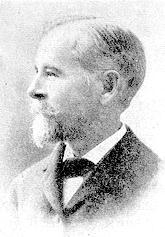
1840 - 1929 Author of "Lo, the day of days is here" in The Beacon Song and Service book Hosmer, Frederick Lucian, B.A., was born at Framingham, Mass., in 1840, and educated at Harvard, where he graduated B.A. in 1869. Entering the Unitarian Ministry in 1872 he has held charges in Quincy, Ill., 1872-77; Cleveland, Ohio, 1878-92; St. Louis, 1894-99; and since 1899, at Berkeley, Cal. His Way of Life, 1877, was a compilation of Prayers and Responsive Services for Sunday Schools. Of Unity Hymns and Carols, 1880, he was joint editor with W. C. Gannett and J. V. Blake. His hymns were published jointly by him and W. C. Gannett (q.v.), as The Thought of God in Hymns and Poems (Boston: Little, Brown & Co.), 1st Series, 1885; 2nd Series, 1894. Of his 56 hymns in this work the following have come into common use, for the most part during the past ten years:—
1. Father, to Thee we look in all our sorrow. [Trust in God.] Written in 1881 upon the death of a member of the author's congregation, and published in The Thought of God, 1st Series, 1885.
2. From age to age how grandly rise. [Unity.] Written for the annual festival of the Free Religious Assoc, Boston, June 2, 1899, and first published in Souvenir Festival Hymns, 1899. Subsequently altered by the author to "From age to age the prophet's vision."
3. From age to age they gather, all the brave of heart and strong. [Victory of Truth.] "Written in 1891 for the Dedication of Unity Church, Decorah, Iowa, and published in The Thought of God, 2nd Series, 1894.
4. From many ways and wide apart. [College or School Reunion.] Dated in The Thought of God, 2nd Series, 1894, as having been written in 1890.
5. Go not, my soul, in search of Him. [God Within.] Written in 1879, printed in the Boston Christian Register, May 31, 1879, and included in The Thought of God, 1st Series, 1885, with the title, "The Indwelling God."
6. I cannot think of them as dead. [Eternal Life.] Written in 1882, and first published in The Thought of God, 1st Series, 1885, and entitled "My Dead." in the English collections it is usually given as "We cannot think of them as dead."
7. I little see, I little know. [Trust.] "A Psalm of Trust," written in 1883, first appeared in the Boston Christian Register, and again in The Thought of God, 1st Series, 1885.
8. Immortal by their deed and word. [The Spirit of Jesus.] Written in 1880, and first published in Unity Hymns and Carols, Chicago, Ill., 1880, and then in The Thought of God, 1st Series, 1885.
9. Many things in life there are. [Mystery in all Things.] Written in 1885, and first published in The Thought of God, 1st Series, 1885, with the title "Passing Understanding," and the quotation "The Peace of God which passeth all understanding."
10. Not always on the mount may we. [On the Mount.] This lesson from the Transfiguration was written in 1882, and published in the Chicago Unity, April 1, 1884. After revision by the author, it was included in the 1st Series of The Thought of God, 1885.
11. Not when, with self dissatisfied. [Lent.] Written in 1891, and given in The Thought of God, 2nd series, 1894, p. 33. It is in The Public School Hymn Book, 1903, and others.
12. O beautiful, my country. [National Hymn.] As “Our Country," written in 1884, and published in the Chicago Unity Festivals, 1884; and again in The Thought of God, 1885.
13. O Light, from age to age the same. [Dedication Anniversary.] Written in 1890 for the fiftieth anniversary of the Second Congregational Church (Unitarian), Quincy, 111. Included in The Thought of God, 2nd Series, 1894, and entitled "From Generation to Generation."
14. O Lord of Life, where'er they be. [Life in God.] "Written in 1888 for Easter service in Author's own church," and first published in the Chicago Unit, and again in The Thought of God, 2nd Series, 1894. The "Alleluia!" refrain, which is added in some collections to each verse, is appended, in the original, to the last verse only.
15. O Name, all other names above. [Trust in God.] Under the title "Found. 'They that know Thy name will put their trust in Thee!’ this hymn, written in 1878, was given in The Thought of God, 1st Series, 1885.
16. O Prophet souls of all the years. [Unity.] “Written in 1893 for, and sung at, the Unitarian gathering in connection with The World's Parliament of Religions (World's Fair), Chicago, Sep., 1893," and included in The Thought of God, 2nd Series, 1894, and entitled "One Law, One Life, one Love."
17. O Thou, in all Thy might so far. [God All in All.] This hymn, given in The Thought of God, 1st Series, 1885, with the title "The Mystery of God," was written in 1876, and first published in the New York Inquirer.
18. O thou in lonely vigil led. This encouragement for lonely workers was written for the "Emerson Commemoration, W. U. C, 1888," and included in The Thought of God, 2nd Series, 1894.
19. O Thou, Who art of all that is. [Divine Guidance.] Under the title "Through unknown paths," this hymn was included in The Thought of God, 1st Series, 1885. It was written in 1877.
20. O Thou, Whose Spirit witness bears. [Dedication of a Place of Worship.] Written for the Dedication of First Unitarian Church, Omaha, Feb. 6, 1891, and published in The Thought of God, 2nd Series, 1894, with the title "The Inward Witness," and the subscription "For T. K., Omaha, 1801."
21. On eyes that watch through sorrow's night. [Easter] A Carol for Easter Morn, written in 1890 for the author's congregation, and published in The Thought of God, 2nd Series, 1894.
22. One thought I have, my ample creed. [The Thought of God.] This is the initial hymn to the collection The Thought of God, 1st Series, 1885, and supplies the title to the work. It was written in 1880, and first published in the Chicago Unity Hymns and Carols, 1880, and then in The Thought of God, 1885.
23. The rose is queen among the flowers. [Flower Service.] "Written in 1875, first published in The Sunnyside, a song book for Sunday Schools, and again in The Thought of God, 1st Series, 1885, under the title "Flower Sunday."
24. Thy kingdom come, — on bended knee. [Missions.] "Written in 1891 for the Commencement of the Meadville Theological School (Meadville, Pa.), June 12, 1891, and published in The Thought of God, 2nd Series, 1894," under the title "The Day of God," and the subscription, "M. T. S., June 12, 1891."
25. We pray no more, made lowly wise, For miracle and sign. [Greater Faith Desired.] Written in 1879, and first published in The Christian Register (Boston), Mar. 22 of that year, under the title 'The Larger Faith.'" Included under the same title in The Thought of God, 1st Series, 1885. Sometimes given as "Made lowly wise, we pray no more."
26. When courage fails, and faith burns low. [Victory of Truth.] Under the title "Loyalty," this hymn was given in The Thought of God, 1st Series, 1885. It was written in 1881.
27. Where men on mounts of vision Have passed the veil within. [Dedication of a Place of Worship.] "Written in 1891 for the Dedication of First Unitarian Church, Oakland, California." Included in The Thought of God, 2nd Series, 1894, entitled "Holy Places," and subscribed " For C. W. W., Oakland, Cal., 1891."
These annotations are from manuscript notes supplied to us by the author. Of these hymns all are in common use in America, and more than one half in Great Britain, mainly by Unitarians and Congregationalists. Amongst Unitarian hymn-writers of the last twenty years Mr. Hosmer is the most powerful and original known to us.
--John Julian, Dictionary of Hymnology, New Supplement (1907)
Frederick Lucian Hosmer
Johann Rosenmüller
1619 - 1684 Person Name: Johann Rosenmüller (-1686) Composer of "Salzburg" in The Evangelical Hymnal with Tunes Johann Rosenmueller, b. about 1615, Kursachsen; d. 1686, Wolfenbuettel
Evangelical Lutheran Hymnal, 1908
Johann Rosenmüller
Dimas Planas-Belfort
1934 - 1992 Person Name: Dimas Planas-Belfort, b. 1934 Translator of "Songs of Thankfulness and Praise (Gratitud y Prez al Rey)" in Oramos Cantando = We Pray In Song
Dimas Planas-Belfort
Christoph Anton
? - 1658 Person Name: Christoph Anton, d. 1658 Composer of "SALZBURG" in Lutheran Book of Worship
Christoph Anton
Pages