

 My Starred Hymns
 My FlexScores
 My Hymnals
 My Purchased Files
Planning worship?
Check out our sister site, ZeteoSearch.org,
for 20+ additional resources related to your search.
- |
User Links
Person Results
Ernst Lange
1650 - 1727 Person Name: Ernst Lange, 1650-1727 Author of "O God, thou bottomless abyss!" in The Methodist Hymn-Book with Tunes Lange, Ernst, was born at Danzig, Jan. 3, 1650, where his father, Matthias Lange, was in the service of the Senate. He was for some time secretary in Danzig, and thereafter in Warsaw. In 1691 he was appointed judge in the Altstadt of Danzig, and in 1694 senator. He died at Danzig, Aug. 20, 1727 (Bode, p. 103; Allegemeine Deutsche Biographie, xvii. 623, &c). After a visit to the Netherlands in 1698, Lange allied himself with the Mennonites and Pietists in Danzig, and came into conflict with the Lutheran clergy. His hymns were mostly written about the time when the pestilence visited Danzig, in 1710, and principally appeared in his LXI. Gott geheiligte Stunden, without place or date of publication., but probably at Danzig, 1711 (Preface dated "Danzig, Feb. 12, 1711"). The idea of this work was as a thankoffering for preservation during this trying time; and it embraced 61 hymns, viz., one for each year of his life. A number of additional hymns seem to have been contributed in manuscripts to Freylinghausen's Neues geistreiches Gesang-Buch, 1714.
Lange's hymns which have passed into English are:—
i. Im Abend blinkt der Morgenstern. Epiphany, 1711, as above, p. 4, in 19 stanzas of 4 lines, entitled, "The Saviour Who appeared at Bethlehem to the Wise men from the East, set forth; from Matt. ii. 1-12." A new stanza was added as xx. (probably from his MS.), when the hymn was included by Freylinghausen, 1714, No. 59. Repeated, abridged, in Knapp's Evangelischer Lieder-Schatz, 1837, No. 435 (1865, No. 414). The translation in common use is:—
The wondering sages trace from far. A translation of stanzas i., ii., xx., by Miss Cox, in her Sacred Hymns from the German, 1841, p. 23 (1864, p. 43). Repeated in Hedge & Huntington's American Hymns for the Church of Christ, Boston, 1853; Schaff's Christ in Song, 1869 and 1870, &c.
Another translation is: "At eve appears the Morning Star," by Lady E. Fortescue, 1843, p. 5.
ii. 0 Gott, du Tiefe sonder Grund. God's Majesty, First printed as No. 140, in Freylingkausen, 1714> in 10 stanzas of 141.; repeated in the Berlin Geistliche Lieder, ed. 1863. F. Schleiermacher called it "A masterpiece of sacred poetry." The translation in common use is :—
0 God, Thou bottomless abyss. A spirited tr., omitting stanzas vi., ix., and in 8 stanzas of 12 lines, by J. Wesley, in his Collection of Psalms & Hymns, Charlestown, 1737, No. 16, and the Wesley Hymns and Sacred Poems, 1739 (Poetical Works, 1868-72, vol. i. p. 143). The lines—
"Thy wakened wrath doth slowly move,
Thy willing mercy flies apace"
are adapted from the New Version of Ps. ciii. 8. The hymn passed into the Wesleyan Hymn Book, 1780, in two parts, Nos. 231 and 232 (ed. 1875, Nos. 240, 241). In other hymn-books it has appeared in a variety of centos. As these are all from the text of the Wesleyan Hymn Book, more or less altered and transposed, it will suffice to give their first lines with references to the text of 1780. These centos include:—
(1) While Thee, Unsearchable, I set (i., line 9 alt.). Martineau's Hymns, 1840.
(2) Unchangeable, all-perfect Lord (ii., line 9). Longfellow & Johnson's Book of Hymns, Boston, U.S., 1848.
(3) Thy parent-hand, Thy forming skill (iii). American Methodist Episcopal South Collection, 1847.
(4) Thou, true and only God, lead'st forth (v.). Wesleyan Hymn Book, 1780, No. 232.
(5) Thine, Lord, is Wisdom, Thine alone. Wesleyan Hymn Book (vi.). Scottish Evangelical Union Hymn, 1856.
(6) Parent of good! Thy bounteous hand (vii.). Martineau's Hymns, 1840.
(7) Parent of good! Thy genial ray (vii. alt.). Dr. Thomas's Augustine Hymn Book, 1866.
These details show the extensive use of this hymn in English-speaking countries.
Another translation is, "O God, Thou bottomless Abyss! How shall I competently know Thee," as No. 673 in pt. i. of the Moravian Hymn Book, 1754. In the edition 1886, No. 174, it begins, "O God, Thou fathomless abyss."
iii. Unter denen grossen Gütern. Brotherly Love, or, Quinquagesima. A fine paraphrase of 1 Cor. xiii. First published 1711, as above, p. 37, in 5 stanzas of 10 1., entitled, "The preeminence of Love. From 1 Cor. xiii. 1, 2, 3, 13." When included as No. 423, in Freylinghausen, 1714, a new stanza was added as stanza vi., and this form is No. 798 in the Univerfälschter Liedersegen, 1851. Translated as:—
Many a gift did Christ impart. A full and good translation by Miss Winkworth, in her Lyra Germanica, 1855, p. 50; repeated, abridged, in Kennedy, 1863. In the American Unitarian Hymns of the Spirit, Boston, 1864, and in the Laudes Domini, N. Y. 1884, &c., it begins with the translation of stanza ii., line 5, "Though I speak with angel tongues." [Rev. James Mearns, M.A.]
--John Julian, Dictionary of Hymnology (1907)
Ernst Lange
Johan Olof Wallin
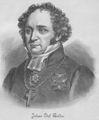
1779 - 1839 Person Name: Johan Olof Wallin, 1779-1839 Author of "Behold the Joyful Day is Nigh" in Hymnal and Order of Service Johan Olaf Wallin was born at Stora Tuna, in 1779, and early displayed his poetical powers. In 1805, and again in 1809, he gained the chief prize for poetry at Upsala. In the latter year he became pastor at Solna; here his ability as a preacher was so striking that he was transferred to Stockholm, in 1815, as "pastor primarius," a title for which we have no exact equivalent. In 1818 he was made Dean of Westeras, and set about the task of editing a revised hymn-book for the whole of Sweden. This task he completed in 1819, and published it as, Den Swenska Psalmboken, af Konungen gillad och stadfästad (The Swedish hymn-book, approved and confirmed by the King). To it he contributed some 150 hymns of his own, besides translations and recastings; and the book remains now in the form in which he brought it out. It is highly prized by the Swedes, and is in use everywhere.
--John Julian, Dictionary of Hymnology, p. 1000 (1907)
Johan Olof Wallin
Richard Massie
1800 - 1887 Translator of "To Shepherds, as they watched by night" in Evangelical Lutheran hymnal Massie, Richard, eldest son of the Rev. R. Massie, of Goddington, Cheshire, and Rector of Eccleston, was born at Chester, June 18, 1800, and resides at Pulford Hall, Coddington. Mr. Massie published a translation of Martin Luther’s Spiritual Songs, London, 1854. His Lyra Domestica, 1st series, London, 1860, contains translations of the 1st Series of Spitta's Psalter und Harfe. In 1864 he published vol. ii., containing translations of Spitta's 2nd Series, together with an Appendix of translations of German hymns by various authors. He also contributed many translations of German hymns to Mercer's Church Psalter & Hymn Book; to Reid's British Herald; to the Day of Rest, &c. He died Mar. 11,1887.
-- John Julian, Dictionary of Hymnology (1907)
Richard Massie
Georg Weissel
1590 - 1635 Person Name: Georg Weissel, 1590-1635 Author of "Make Wide the Door, Unbar the Gate" in Ambassador Hymnal Weissel, Georg, son of Johann Weissel, judge and afterwards burgomaster at Doranau, near Königsberg, was born at Domnau in 1590. He studied at the University of Königsberg, from 1608 to 1611, and thereafter, for short periods, at Wittenberg, Leipzig, Jena, Strassburg, Basel and Marburg In 1614 he was appointed rector of the school at Friedland near Domnau, but resigned this post after three years, and returned to Königsberg to resume his studies in theology. Finally, in 1623, he became pastor of the newly erected Altrossgart church at Königsberg, where he remained till his death, on August 1, 1635.
Weissel was one of the most important of the earlier hymn-writers of Prussia. His hymns, about 20 in all, are good in style, moderate in length, and varied in metre. The earliest seem to have been written for use at the consecration of the Altrossgart church on the 2nd Sunday in Advent, 1623. The majority are for the greater festivals of the Christian year. The best are No. ii. below, and those for the dying. They appeared mostly in the Königsberg hymn-books, 1639-1650, and in the Preussische Fest-Lieder, pt. i., Elbing, 1642; pt. ii., Königsberg, 1644 [Berlin Library].
Those of Weissel's hymns which have passed into English are:—
i. Im finstern Stall, o W under gross. Christmas. First published in B. Derschau's Ausserlesene geistliche Lieder, Königsberg, 1639, p. 7, in 5 stanzas of 5 lines In the Preussische Fest-Lieder, pt. i., 1642, No. 14, it is entitled "On the Birth of Christ, Lux in tenebris lucet.” The translation in common use is:—
0 miracle of love and might This is a somewhat free translation, omitting stanza v., by Dr. Kennedy, as No. 104 in his Hymnologia Christiana, 1863.
ii. Macht hoch die Thür, das Thor macht weit. Advent. This is a Hymn of Triumph for the Entry of the King of Glory, founded on Ps. xxiv.; and is one of the finest German Advent hymns. First published in the Preussische Fest-Lieder, pt. i., 1642, No. 2, in 5 stanzas of 8 lines, marked as "On the 1st Sunday of Advent."
The translations in common use are:—
1. Lift up your heads, ye mighty gates. This is a good and full translation by Miss Winkworth, in herLyra Germanica, 1st Ser., 1855, p. 10, and her Chorale Book for England, 1863, No. 25. In the Congregational Church Hymnal, 1887, the Evangelical Hymnal, N. Y., 1880, and others, the original form is followed. Other forms are:—
(1) Behold One cometh from afar (i. alt.). This (partly from Mercer) is in the Supplement to the New Congregational Hymn Book, and the 1874 Appendix. to the Leeds Hymn Book.
(2) Behold He cometh from afar. In J. L. Porter's Collection, 1876, altered from No. l.
(3) Oh! hallowed is the land and blest (iii. lines 1, alt.). In the American Sabbath Hymn Book, 1858, &c.
(4) 0 blest the souls, for ever blest (iii. lines1, alt.). In Hymns of the Spirit, Boston, U.S., 1864.
(5) Fling wide the portals of your heart (iv.). In the American Unitarian Hymn Book, 1868.
2. The mighty gates of earth unbar. This is by W. Mercer, based on Miss Winkworth's translation, in his Church Psalm & Hymn Book, 1857, No. 14 (Ox. ed., 1864, No. 71), repeated in Kennedy, 1863. Another translation is: "Lift up, lift up your heads, ye gates," by G. Moultrie, in his Espousals of St. Dorothea, 1870.
iii. Wo ist dein Stachel nun, o Tod? Easter. Founded on 1 Cor. xv., 55-58. First published as No. 3 in pt. ii., 1644, of the Preussische Fest-Lieder, in 5 stanzas of 8 lines, entitled "For the Easter festival." Thence in the Königsberg Gesang-Buch, 1650, p. 193, and others. The form which has passed into English is that in the Hannover Gesang-Buch, 1657, No. 74, in 10 stanzas. This, beginning "O Tod, wo ist dein Stachel nun," is entirely rewritten, probably by Justus Gesenius. Translated as:—
O Death! where is thy cruel sting? This is a full and good version of the 1657 text, as No. 80 in the Ohio Lutheran Hymnal, 1880, marked as a compilation. [Rev. James Mearns, M.A.]
-- Excerpts from John Julian, Dictionary of Hymnology (1907)
Georg Weissel
Leonard Bacon

1802 - 1881 Author of "O God, beneath thy guiding hand" in The Harvard University Hymn Book Leonard Bacon, D.D., was born in Detroit (where his father was a missionary to the Indians), February 19, 1802, and educated at Yale college and at Andover. In 1825 he was ordained Pastor of the Centre Church, New Haven, and retained that charge until 1866, when he was appointed Professor of Theology in Yale Divinity School. This professorship he resigned in 1871; but till his death in 1881, he was Lecturer on Church Polity. He died December 23, 1881. Dr. Bacon rendered important service to hymnology both as writer and compiler. While a student at Andover, he edited an important and now rare tract entitled Hymns and Sacred Songs for the Monthly Concert [of Prayer for Missions], Andover, September 1823. This contained the three hymns following, which are his:-
Weep not for the saint that ascends. Death of a Missionary.
Land where the bones of our father are sleeping. Missions. This was brought into notice in Great Britain through its insertion in the Evangelical Magazine, March, 1824.
Wake the song of jubilee. Missions. Of these No. 1 is found in Lyra Sac. Amer., p. 6 and No. 3 was adopted, with alterations, by Pratt in his Ps. and Hys. (Lond. Seeley & Co,. 1829), fro which it passed into Greene and Mason's Church Psalmody, 1831, and the Church Psalmist of the Evangelical Christians (N. Y., 1845, 7th ed.). This altered text, with some further changes, was adopted by the author in his Appendix to T. Dwight's revised ed. of Watt's Psalms, 1833. This Appendix also contained three newe hymns by him, viz.:-
Though now the nations sit beneath. Missions. This is based on a hymn by Sarah Slinn, "Arise in all Thy splendour, Lord" (q.v.), which Dr. Bacon had partly rewritten for his Andover Tract, above noted. In the Appendix to Dwight he substituted new verses for what remained of her's in the Tract, and then justly claimed the whole as his own.
O Thou Who hast died to redeem us from hell. Holy Communion.
God of our fathers, to Thy throne. Thanksgiving. In 1845 Dr. Bacon was joint compiler with Dr. E. T. Fitch, and several others, of Psalms & Hymns for Christian Use and Worship,, pub. "by the General Association of Connecticut."
To this collection he contributed the four hymns following:-
Here, Lord of life and light, to Thee. Institution of a Minister. This was written March 9, 1825, for his installation as pastor of the First Church, New Haven, and first published as above, No. 559, in 4 stanzas of 4 lines, and headed "Ordination in an ancient New England Church."
O God, beneath They guiding hand. American Anniversary Hymn. This is a favorite American Anniversary hymn. It is abbreviated and altered from his hymn, "The Sabbath morn is as bright and calm," which he wrote for the Bicentenary of New Haven, 1833. In this revised form it was first published as above, No. 619, in 5 stanzas of 4 lines, and appointed "For the twenty-second of December."
O God of Abraham, ever sure. Prayer on behalf of the Young. This was written as a substitute for Mrs. Hyde's "Dear Saviour, if these lambs should stray," the use of which was refused by the owners of the copyright of Nettleton's Village Hymns (1824). In the Psalms & Hymns, it is No. 635, in 4 stanzas of 4 lines, and headed "Prayer for the children of the Church."
Hail, tranquil hour of closing day. Evening. This popular hymns was written under the same circumstances as the preceding, and as a substitute for Mr.s Brown's Twilight hymn, "I love to steal awhile away." It is No. 706 of the Psalms & Hymns, 1845, in 5 stanzas of 4 lines, and entitled "Evening Twilight."
How sweet, thro' long remembered years. Evening. In the Church Praise Book., N.Y., 1882, No. 15, is composed of stanzas iii.-v. of No. 10.
--John Julian, Dictionary of Hymnology (1907)
Leonard Bacon
Frederick Lucian Hosmer
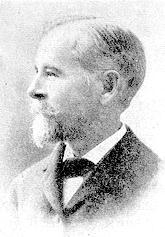
1840 - 1929 Author of "O Thou in lonely vigil led" in Hymns of the Spirit for Use in the Free Churches of America Hosmer, Frederick Lucian, B.A., was born at Framingham, Mass., in 1840, and educated at Harvard, where he graduated B.A. in 1869. Entering the Unitarian Ministry in 1872 he has held charges in Quincy, Ill., 1872-77; Cleveland, Ohio, 1878-92; St. Louis, 1894-99; and since 1899, at Berkeley, Cal. His Way of Life, 1877, was a compilation of Prayers and Responsive Services for Sunday Schools. Of Unity Hymns and Carols, 1880, he was joint editor with W. C. Gannett and J. V. Blake. His hymns were published jointly by him and W. C. Gannett (q.v.), as The Thought of God in Hymns and Poems (Boston: Little, Brown & Co.), 1st Series, 1885; 2nd Series, 1894. Of his 56 hymns in this work the following have come into common use, for the most part during the past ten years:—
1. Father, to Thee we look in all our sorrow. [Trust in God.] Written in 1881 upon the death of a member of the author's congregation, and published in The Thought of God, 1st Series, 1885.
2. From age to age how grandly rise. [Unity.] Written for the annual festival of the Free Religious Assoc, Boston, June 2, 1899, and first published in Souvenir Festival Hymns, 1899. Subsequently altered by the author to "From age to age the prophet's vision."
3. From age to age they gather, all the brave of heart and strong. [Victory of Truth.] "Written in 1891 for the Dedication of Unity Church, Decorah, Iowa, and published in The Thought of God, 2nd Series, 1894.
4. From many ways and wide apart. [College or School Reunion.] Dated in The Thought of God, 2nd Series, 1894, as having been written in 1890.
5. Go not, my soul, in search of Him. [God Within.] Written in 1879, printed in the Boston Christian Register, May 31, 1879, and included in The Thought of God, 1st Series, 1885, with the title, "The Indwelling God."
6. I cannot think of them as dead. [Eternal Life.] Written in 1882, and first published in The Thought of God, 1st Series, 1885, and entitled "My Dead." in the English collections it is usually given as "We cannot think of them as dead."
7. I little see, I little know. [Trust.] "A Psalm of Trust," written in 1883, first appeared in the Boston Christian Register, and again in The Thought of God, 1st Series, 1885.
8. Immortal by their deed and word. [The Spirit of Jesus.] Written in 1880, and first published in Unity Hymns and Carols, Chicago, Ill., 1880, and then in The Thought of God, 1st Series, 1885.
9. Many things in life there are. [Mystery in all Things.] Written in 1885, and first published in The Thought of God, 1st Series, 1885, with the title "Passing Understanding," and the quotation "The Peace of God which passeth all understanding."
10. Not always on the mount may we. [On the Mount.] This lesson from the Transfiguration was written in 1882, and published in the Chicago Unity, April 1, 1884. After revision by the author, it was included in the 1st Series of The Thought of God, 1885.
11. Not when, with self dissatisfied. [Lent.] Written in 1891, and given in The Thought of God, 2nd series, 1894, p. 33. It is in The Public School Hymn Book, 1903, and others.
12. O beautiful, my country. [National Hymn.] As “Our Country," written in 1884, and published in the Chicago Unity Festivals, 1884; and again in The Thought of God, 1885.
13. O Light, from age to age the same. [Dedication Anniversary.] Written in 1890 for the fiftieth anniversary of the Second Congregational Church (Unitarian), Quincy, 111. Included in The Thought of God, 2nd Series, 1894, and entitled "From Generation to Generation."
14. O Lord of Life, where'er they be. [Life in God.] "Written in 1888 for Easter service in Author's own church," and first published in the Chicago Unit, and again in The Thought of God, 2nd Series, 1894. The "Alleluia!" refrain, which is added in some collections to each verse, is appended, in the original, to the last verse only.
15. O Name, all other names above. [Trust in God.] Under the title "Found. 'They that know Thy name will put their trust in Thee!’ this hymn, written in 1878, was given in The Thought of God, 1st Series, 1885.
16. O Prophet souls of all the years. [Unity.] “Written in 1893 for, and sung at, the Unitarian gathering in connection with The World's Parliament of Religions (World's Fair), Chicago, Sep., 1893," and included in The Thought of God, 2nd Series, 1894, and entitled "One Law, One Life, one Love."
17. O Thou, in all Thy might so far. [God All in All.] This hymn, given in The Thought of God, 1st Series, 1885, with the title "The Mystery of God," was written in 1876, and first published in the New York Inquirer.
18. O thou in lonely vigil led. This encouragement for lonely workers was written for the "Emerson Commemoration, W. U. C, 1888," and included in The Thought of God, 2nd Series, 1894.
19. O Thou, Who art of all that is. [Divine Guidance.] Under the title "Through unknown paths," this hymn was included in The Thought of God, 1st Series, 1885. It was written in 1877.
20. O Thou, Whose Spirit witness bears. [Dedication of a Place of Worship.] Written for the Dedication of First Unitarian Church, Omaha, Feb. 6, 1891, and published in The Thought of God, 2nd Series, 1894, with the title "The Inward Witness," and the subscription "For T. K., Omaha, 1801."
21. On eyes that watch through sorrow's night. [Easter] A Carol for Easter Morn, written in 1890 for the author's congregation, and published in The Thought of God, 2nd Series, 1894.
22. One thought I have, my ample creed. [The Thought of God.] This is the initial hymn to the collection The Thought of God, 1st Series, 1885, and supplies the title to the work. It was written in 1880, and first published in the Chicago Unity Hymns and Carols, 1880, and then in The Thought of God, 1885.
23. The rose is queen among the flowers. [Flower Service.] "Written in 1875, first published in The Sunnyside, a song book for Sunday Schools, and again in The Thought of God, 1st Series, 1885, under the title "Flower Sunday."
24. Thy kingdom come, — on bended knee. [Missions.] "Written in 1891 for the Commencement of the Meadville Theological School (Meadville, Pa.), June 12, 1891, and published in The Thought of God, 2nd Series, 1894," under the title "The Day of God," and the subscription, "M. T. S., June 12, 1891."
25. We pray no more, made lowly wise, For miracle and sign. [Greater Faith Desired.] Written in 1879, and first published in The Christian Register (Boston), Mar. 22 of that year, under the title 'The Larger Faith.'" Included under the same title in The Thought of God, 1st Series, 1885. Sometimes given as "Made lowly wise, we pray no more."
26. When courage fails, and faith burns low. [Victory of Truth.] Under the title "Loyalty," this hymn was given in The Thought of God, 1st Series, 1885. It was written in 1881.
27. Where men on mounts of vision Have passed the veil within. [Dedication of a Place of Worship.] "Written in 1891 for the Dedication of First Unitarian Church, Oakland, California." Included in The Thought of God, 2nd Series, 1894, entitled "Holy Places," and subscribed " For C. W. W., Oakland, Cal., 1891."
These annotations are from manuscript notes supplied to us by the author. Of these hymns all are in common use in America, and more than one half in Great Britain, mainly by Unitarians and Congregationalists. Amongst Unitarian hymn-writers of the last twenty years Mr. Hosmer is the most powerful and original known to us.
--John Julian, Dictionary of Hymnology, New Supplement (1907)
Frederick Lucian Hosmer
Ernst W. Olson
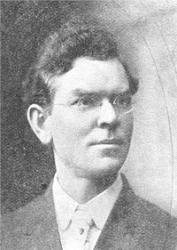
1870 - 1958 Translator of "Jerusalem, lift up thy voice!" in The Hymnal of the Evangelical Mission Covenant Church of America Ernst W. Olson (b. Skane, Sweden, 1870; d. Chicago, IL, 1958) prepared the English translation for the 1925 Hymnal of the Lutheran Augustana Synod. As editor, writer, poet, and translator, Olson made a valuable contribution to Swedish-American culture and to church music. His family immigrated to Nebraska when he was five years old, but he spent much of his life in the Chicago area. Educated at Augustana College, Rock Island, Illinois, he was editor of several Swedish-American newspapers and spent most of his professional career as an editor for the Augustana Book Concern (1911-1949). Olson wrote History of the Swedes in Illinois (1908). He also contributed four original hymns and twenty-eight translations to The Hymnal (1925) of the Evangelical Lutheran Augustana Synod and served on the committee that produced the Lutheran Service Book and Hymnal (1958).
Bert Polman
Ernst W. Olson
Mrs. Vokes
Author (attributed to) of "Soon may the last glad song arise" in The Hymnal Pseudonym. See also
Mrs. Vokes
M. B. Landstad
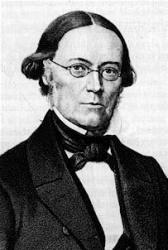
1802 - 1880 Person Name: Landstad Translator of "Fra Himlen høit jeg kommer her" in M. B. Landstads Kirkesalmebog og "Nokre Salmar" ved Professor Dr. E. Blix, samt følgende tillæg Magnus Brostrup Landstad (born 7 October 1802 in Måsøy, Norway and died 8 October 1880 in Kristiania) was a Norwegian minister, psalmist and poet who published the first collection of authentic Norwegian traditional ballads in 1853. This work was criticized for unscientific methods, but today it is commonly accepted that he contributed significantly to the preservation of the traditional ballads.
Landstad lived with his father Hans Landstad (1771–1838) who was also a minister, first in 1806 to Øksnes, to Vinje in 1811 and to Seljord in 1819. He took a theological degree (cand. theol) in 1827, and worked after that as the resident chaplain in Gausdal for six years. After that he worked in different parishes in Telemark, Østfold before he became minister of Sandar in Vestfold in 1859. He married Wilhelmine Margrete Marie Lassen, in 1828. He is well known for introducing popular, contemporary Norwegian language into the hymns he wrote, contributing significantly to the spirit of Norwegian romantic nationalism which grew in Norway in this period.
His greatest single achievement was the Landstad Hymnbook (Kirkepsalmebog), which with later revisions was used in Norwegian (bokmål) parishes from 1869 until 1985. The current official church hymnbook contains a lot of his hymns and his translations of foreign hymns.
He was the cousin of Hans Peter Schnitler Krag.
The Landstad-institute, which lies in Seljord, is named after him.
He was a great grandfather of Magny Landstad, also a famous writer.
Publications--
1852: Norske Folkeviser. 3 vols. Christiania: C. Tönsberg, [1852-]1853.
1869: Kirkesalmebok: efter offentlig Foranstaltning. Kristiania: J. W. Cappelens Forlag, 1871
--http://en.wikipedia.org/wiki/
See also in:
Wikipedia
M. B. Landstad
Pauline Martin
Translator (French) of "Vom Himmel hoch, da komm ich her" in Cantate Domino
Pauline Martin
Pages