You help make Hymnary.org possible. More than 10 million people from 200+ countries found hymns, liturgical resources and encouragement on Hymnary.org in 2025, including you. Every visit affirms the global impact of this ministry.

If Hymnary has been meaningful to you this year, would you take a moment today to help sustain it? A gift of any size—paired with a note of encouragement if you wish—directly supports the server costs, research work and curation that keep this resource freely available to the world.

Give securely online today, or mail a check to:
Hymnary.org
Calvin University
3201 Burton Street SE
Grand Rapids, MI 49546

Thank you for your partnership, and may the hope of Advent fill your heart.

Person Results

Topics:calling
In:people

Planning worship? Check out our sister site, ZeteoSearch.org, for 20+ additional resources related to your search.
Showing 51 - 60 of 1,652Results Per Page: 102050

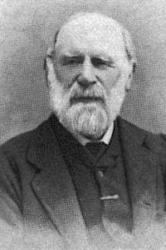
W. Chatterton Dix

1837 - 1898 Person Name: William C. Dix Topics: Calling; Christian Life Calling Author of ""Come unto me, ye weary" in Trinity Hymnal Most British hymn writers in the nineteenth century were clergymen, but William C. Dix (b. Bristol, England, 1837; d. Cheddar, Somerset, England, 1898) was a notable exception. Trained in the business world, he became the manager of a marine insurance company in Glasgow, Scotland. Dix published various volumes of his hymns, such as Hymns of Love and Joy (1861) and Altar Songs: Verses on the Holy Eucharist (1867). A number of his texts were first published in Hymns Ancient and Modern (1861). Bert Polman ======================== Dix, William Chatterton, son of John Dix, surgeon, of Bristol, author of the Life of Chatterton; Local Legends, &c, born at Bristol, June 14, 1837, and educated at the Grammar School of that city. Mr. Chatterton Dix's contributions to modern hymnody are numerous and of value. His fine Epiphany hymn, "As with gladness men of old,” and his plaintive ”Come unto Me, ye weary," are examples of his compositions, many of which rank high amongst modern hymns. In his Hymns of Love and Joy, 1861, Altar Songs, Verses on the Holy Eucharist, 1867; Vision of All Saints, &c, 1871; and Seekers of a City, 1878, some of his compositions were first published. The greater part, however, were contributed to Hymns Ancient & Modern; St. Raphaels Hymnbook, 1861; Lyra Eucharidica, 1863; Lyra Messianica, 1864; Lyra Mystica, 1865; The People's Hymns, 1867; The Hymnary, 1872; Church Hymns, 1871, and others. Many of his contributions are renderings in metrical form of Dr. Littledale's translation from the Greek in his Offices . . . of the Holy Eastern Church, 1863; and of the Rev. J. M. Rodwell's translation of hymns of the Abyssinian Church. These renderings of the "songs of other Churches" have not received the attention they deserve, and the sources from whence they come are practically unknown to most hymnal compilers. Mr. Dix has also written many Christmas and Easter carols, the most widely known of which is "The Manger Throne."   In addition to detached pieces in prose and verse for various magazines, he has published two devotional works, Light; and The Risen Life, 1883; and a book of instructions for children entitled The Pattern Life, 1885. The last-named contains original hymns by Mr. Dix not given elsewhere. In addition to the more important of Mr. Dix's hymns which are annotated under their respective first lines, the following are also in common use:- 1. God cometh, let the heart prepare.  Advent. In his Vision of All Saints, &c, 1871.      2. Holy, holy, holy, to Thee our vows we pay.  Holy Communion.   Published in his Altar Songs, 1867, in 6 stanzas of 6 lines, and headed "Eucharistic Processional for Dedication Feast."    In the Society for Promoting Christian Knowledge Church Hymns, 1871, and others in an abridged form.      3. How long, O Lord, how long, we ask.   Second Advent.   Appeared in the Appendix to the Society for Promoting Christian Knowledge Psalms & Hymns, 1869, and repeated in several collections.        4. In our work and in our play.    Children's Hymn. Published in his Hymns and Carols for Children, 1869, and is largely adopted  in  children's  hymnbooks, as  Mrs. Brock's Children's Hymnbook, 1881, and others.   Also in the Society for Promoting Christian Knowledge Church Hymns, 1871.      5.  In the hollow of Thine hand.   For Fair Weather. Appeared in the People's Hymns, 1867, and repeated in several others.      6.  Joy fills our inmost heart today.    Christmas. Printed in the Church Times, and  then on a Flysheet by Gr. J. Palmer, as the third of Four Joyful Hymns for Christmas, circa 1865. It is in the Society for Promoting Christian Knowledge Church Hymns, 1871, and other hymnals. It is also one of Mr. Dix's Christmas Customs & Christmas Carols, not dated.      7. Lift up your songs, ye thankful.   St. Ambrose. Contributed to the People's Hymns, 1867.  8. Now in numbers softly flowing.    St. Cecilia. Contributed to the People's Hymns, 1867.    9.  Now, our Father, we adore Thee.   Praise to the Father.   Appeared in the Appendix to the S. P. C. K. Psalms & Hymns, 1869.   10.  O Christ, Thou Son of Mary.   St. Crispin.   First printed in the Union Review, Sept., 1866, and thence into the People's Hymns, 1887.   11. O Cross which only canst allay.   Glorying and Trusting in the Cross.   Published in the People's Hymns, 1867.   12. O Thou the Eternal Son of God.   Good Friday. Appeared in Lyra Messianica, 1864; the author's Hymns and Carols for Children, 1869; the S. P. C. K. Church Hymns, 1871, &c.   13. On the waters dark and drear.   For use at Sea. Published in Hymns for Public Worship, &c. (St. Raphael's, Bristol), 1861; the S. P. C. K. Church Hymns, 1871, &c.   14. Only one prayer to-day.   Ash Wednesday.   Contributed to the People's Hymns, 1867.   15. Sitting at receipt of custom.  St. Matthew.  Appeared in the People's Hymns, 1867.   16. The Cross is on thy brow.   Confirmation.   In the 1869 Appendix to the S. P. C. K. Psalms & Hymns.   17.  The stars above our head.   Work and Humility. In the 1869 Appendix to the S. P. C. K. Psalms & Hymns.  18. When the shades of night are falling.   Evening Hymn to the Good Shepherd.   In the author's Seekers of a City, &c. [1878]. Most of Mr. Dix's best-known hymns, and also some of those named above, are in common use in America and other English-speaking countries. In Great Britain and America from 30 to 40 are in common use.  He died Sept. 9, 1898. -- John Julian, Dictionary of Hymnology (1907) ====================== Dix, William Chatterton, p. 302, ii. Additional hymns by Mr. Dix now in common use are:— 1. Lift up your songs, ye angel choirs. Ascension. 2. Now, my soul rehearse the story. Christ Feeding the Multitude. 3. Within the temple's hallowed courts. Blessed Virgin Mary. These hymns are from his Altar Songs, 1867. --John Julian, Dictionary of Hymnology, Appendix, Part II (1907)

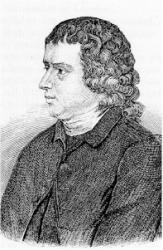
J. Hart

1712 - 1768 Person Name: Joseph Hart Topics: The Church at Worship Calling; Calling-to Salvation Author (stanzas) of "Come, Ye Sinners, Poor and Needy" in Celebrating Grace Hymnal Hart, Joseph, was born in London in 1712. His early life is involved in obscurity. His education was fairly good; and from the testimony of his brother-in-law, and successor in the ministry in Jewin Street, the Rev. John Hughes, "his civil calling was" for some time "that of a teacher of the learned languages." His early life, according to his own Experience which he prefaced to his Hymns, was a curious mixture of loose conduct, serious conviction of sin, and endeavours after amendment of life, and not until Whitsuntide, 1757, did he realize a permanent change, which was brought about mainly through his attending divine service at the Moravian Chapel, in Fetter Lane, London, and hearing a sermon on Rev. iii. 10. During the next two years many of his most earnest and impassioned hymns were written. These appeared as:— Hymns composed on Various Subjects, with the Author's Experience, London, 1759. During this year he became the Minister of the Independent Chapel, Jewin Street, London. In 1762 he added a Supplement to his Hymns; and in 1765 an Appendix. In modern editions of his Hymns these three are embodied in one volume as:— Hymns composed on Various Subjects: With the Author's Experience, The Supplement and Appendix. By the Rev. Joseph Hart, late Minister of the Gospel in Jewin Street, London. Allott & Co. [no date]. Hart died on May 24, 1768. At one time his hymns were widely used, especially by Calvinistic Nonconformists. Many of them are of merit, and are marked by great earnestness, and passionate love of the Redeemer. The best known are: “Come, Holy Spirit, come"; “Come, ye sinners, poor and wretched"; "This God is the God we adore"; and "Lord, look on all assembled here." Those which are more limited in their use include:— i. From his Hymns, &c, 1759. 1. Descend from heaven, celestial Dove. Whitsuntide. No. 6, in 6 stanzas of 6 lines. In Snepp's Songs of Grace & Glory., 1872, No. 374, st. iv., v. are omitted. It is in extensive use in America. 2. Great High Priest, we view Thee stooping. High Priesthood of Christ. No. 56, pt. ii., in 3 stanzas of 8 lines. In Snepp's Songs of Grace & Glory, 1872, No. 236; Hatfield's Church Hymn Book, N. Y., 1872, No. 435, &c. 8. How wondrous are the works of God. Redeeming Love. No. 21, in 9 stanzas of 4 lines. In the Scottish Evangelical Union Hymnal, 1878, st. i.-iv. are given as No. 11. 4. If ever it could come to pass. Final Perseverance. No. 58, in 3 stanzas of 6 lines. Repeated in Snepp's Songs of Grace & Glory, 1872, No. 729. 6. Jesus is our God and Saviour . Faith and Repentance. No. 54, in 7 stanzas of 8 lines. In Snepp's Songs of Grace & Glory, 1872, No. 146, st. iv. is omitted. In the London Hymn Book (enlarged), 1879, st. iii. and v. are given as "Nothing but Thy blood, 0 Jesus." 6. Jesus, while He dwelt below. Gethsemane. No. 75, in 23 stanzas of 6 lines. In Snepp's Songs of Grace & Glory, 1872, No. 230, sixteen stanzas are broken up into three parts: (i.) "Jesus, while He dwelt below"; (ii.) "Full of love to man's lost race"; (iii.) "There my God bore all my guilt." A cento is also given in Hatfield's Church Hymn Book, N. Y., 1872, No. 441, as "Many woes had Christ [He] endured." It is composed of st. viii., ix., xiii., xx., xxiii., slightly altered. In the Scottish Evangelical Union Hymnal, 1878, No. 34, 8 stanzas are given in two parts: pt. i. as, "Jesus, while He dwelt below"; pt. ii. "Eden from each flowery bed." 7. Lamb of God, we fall before Thee. Christ All in All. No. 17 in 4 stanzas of 8 lines. It is in various collections, and as altered in Kennedy , 1863, No. 1171, is much improved. 8. Let us all with grateful praises. Christmas. No. 14 in 7 stanzas of 8 lines. In Spurgeon's 0ur Own Hymn Book, 1866, it is reduced to 4 stanzas of 4 lines. 9. Lord, look on all assembled here. For a Public Fast. No. 96, in 8 stanzas of 4 lines. It is in several of the older hymnbooks. 10. Lord, we lie before Thy feet. Lent. No. 74, in 6 stanzas of 6 lines, and based on 2 Chron. xx. 20. In Spurgeon's 0ur Own Hymn Book, 1866, stanza i., iii., vi. are given as No. 585. 11. Mercy is welcome news indeed. God's Mercy in pardoning Sin. No. 51, in 6 stanzas of 4 lines, on St. Luke vii. 42. In Spurgeon, 1866, No. 544. 12. Much we talk of Jesu's blood. Passiontide. No. 41, in 4 st. of 8 lines, on Lam. i. 12. In Spurgeon, 1866, it is abridged to 4 stanzas of 4 lines. 13. Bow from the garden to the cross. Good Friday. No. 63, in 9 stanzas of 4 lines, and entitled, "The Crucifixion." In Spurgeon, 1866, No. 274, st. ii.-v., vi.-ix. are given as "See how the patient Jesus stands." 14. The Fountain of Christ Assist me to sing. The Fountain. No. 86, in 8 stanzas of 8 lines on Zech. xiii. 1. In Spurgeon, 1866, st. i., v., vii., viii., are given as No. 375. 15. The moon and stars shall lose their light. Advent. No. 48, in 4 stanzas of 4 lines, on St. Matt. xxiv. 35. In Spurgeon, 1866. 16. The sinner that truly believes. Saving Faith. No. 88, in 5 stanzas of 4 lines, and entitled, "Saving Faith" In Spurgeon, 1866, No. 533, st. ii. is omitted, and the opening line is altered to "The moment a sinner believes." ii. From his Supplement, 1762. 17. Behold what awful pomp. Advent. No. 52, in 8 stanzas of 4 lines. It is usually abridged as in the American Methodist Episcopal Hymns, 1849, No. 1107. 18. Christ is the Eternal Rock. The Offices of Christ. No. 27, in 6 stanzas of 8 lines. In Windle's Metrical Psalter & Hymnal, 1862, stanzas i., ii., v. are given as No. 53. 19. Christians, dismiss your fear. Easter. No. 33, in 4 stanzas of 8 lines into Dr. Alexander's Augustine Hymn Book, 1849, No. 79, in 7 stanzas of 4 lines. 20. Dismiss us with Thy blessing, Lord. Close of Service. No. 78, in 2 stanzas of 4 lines. In a few collections. 21. Gird thy loins up, Christian soldier. The Christian Armour . No. 29, in 5 stanzas of 8 lines, on Eph. vi. 11. Found in several of the older, and a few of the modern collections. 22. Glory to God on high, Our peace, &c. Holy Communion. No. 3, in 6 stanzas of 4 lines. In Hatfield's Church Hymn Book, 1872, No. 704, st. v., vi. are omitted. 23. Holy Ghost, inspire our praises. On behalf of Ministers. No. 77, in 5 stanzas of 8 lines. In the Scottish Evangelical Union Hymnal, 1878, No. 412, st. iii.-v. are given as, "Happy soul that hears and follows." 24. Jesus once for sinners slain. Holy Communion. No. 18, in 6 stanzas of 4 lines. In American use. 25. Lord, help us on Thy word to feed. Close of Service. No. 80, in 2 stanzas of 4 lines. In several modern hymnbooks. 26. O for a glance of heavenly day. Lent. No. 64, in 5 stanzas of 4 lines. In Hatfield's Church Hymn Book, 1872, and other American collections it is usually repeated in full. In Bickersteth's Christian Psalmody, 1833, it was given as, "Lord, shed a beam of heavenly day," and this is repeated in modern hymnbooks. 27. Once more before we part. Close of Service. No. 79, in 2 stanzas of 4 lines. Popular in Great Britain and America. 28. Once more we come before our God. Before a Sermon. No. 21, in 6 stanzas of 4 lines, into Hatfield, 1872, No. 111, and others. 29. Sons of God by bless'd adoption. Burial. No. 45, in 3 stanzas of 8 lines, into Snepp's Songs of Grace & Glory, 1872, No. 981, as "Sons of God by blest adoption." 30. Suffering Saviour, Lamb of God . Holy Communion. No. 14, in 8 stanzas of 4 lines. In W. F. Stevenson's Hymns for Church & Home, 1873, st. iii., vii. are omitted. 31. That doleful night before His death. Holy Communion. No. 17, in 2 stanzas of 8 lines. In the Scottish Evangelical Union Hymnal, 1878, st. i. 11. 4-8, and st. ii., are given as, "To keep Thy Feast, Lord, we are met." iii. From his Appendix, 1765. 32. Christians, in your several stations. Christian Duty. No. 7, in 5 stanzas of 6 lines. It is slightly altered in Snepp's Songs of Grace & Glory, 1872, No. 742, and dated 1759 in error. 33. Prayer was [is] appointed to convey. Prayer. No. 12 in 6 stanzas of 4 lines into Snepp's Songs of Grace & Glory, 1872, No. 542, with alterations and the omission of st. ii., v. In some American collections it begins, "Prayer is to God, the soul's sure way." --John Julian, Dictionary of Hymnology (1907) ======================= Hart, Joseph, p. 492, ii. Other hymns in common use are— 1. The blest memorials of Thy grief (1762). Holy Communion. 2. To comprehend the great Three-One (1759). Holy Trinity. 3. Vain man, thy fond pursuits forbear (1759). Death. 4. When the blest day of Pentecost (1759). Whitsuntide. --John Julian, Dictionary of Hymnology, Appendix, Part II (1907)

Robert Robinson

1735 - 1790 Topics: Church in the World Discipleship: Call; Calling and Response Author of "Come, O Fount of Every Blessing" in Voices United Robert Robinson was born at Swaffham, Norfolk, in 1735. In 1749, he was apprenticed to a hairdresser, in Crutched Friars, London. Hearing a discourse preached by Whitefield on "The Wrath to Come," in 1752, he was deeply impressed, and after a period of much disquietude, he gave himself to a religious life. His own peculiar account of this change of life is as follows:--"Robertus Michaelis Marineque Robinson filius. Natus Swaffhami, comitatu Norfolciae, Saturni die Sept. 27, 1735. Renatus Sabbati die, Maii 24, 1752, per predicationem potentem Georgii Whitefield. Et gustatis doloribus renovationis duos annos mensesque septem, absolutionem plenam gratuitamque, per sanguinem pretiosum i secula seculorum. Amen." He soon after began to preach, and ministered for some time in connection with the Calvinistic Methodists. He subsequently joined the Independents, but after a short period preferred the Baptist connection. In 1761, he became pastor of a Baptist congregation at Cambridge. About the year 1780, he began to incline towards Unitarianism, and at length his people deemed it essential to procure his resignation. While arrangements for this purpose were in progress he died suddenly at Bingham, in June 1790. He wrote and published a good many works of ability. --Annotations of the Hymnal, Charles Hutchins, M.A. 1872. ============================= Robinson, Robert, the author of "Come, Thou fount of every blessing," and "Mighty God, while angels bless Thee," was born at Swaffham, in Norfolk, on Sept. 27, 1735 (usually misgiven, spite of his own authority, as Jan. 8), of lowly parentage. Whilst in his eighth year the family migrated to Scarning, in the same county. He lost his father a few years after this removal. His widowed mother was left in sore straits. The universal testimony is that she was a godly woman, and far above her circumstances. Her ambition was to see her son a clergyman of the Church of England, but poverty forbade, and the boy (in his 15th year) was indentured in 1749 to a barber and hairdresser in London. It was an uncongenial position for a bookish and thoughtful lad. His master found him more given to reading than to his profession. Still he appears to have nearly completed his apprenticeship when he was released from his indentures. In 1752 came an epoch-marking event. Out on a frolic one Sunday with like-minded companions, he joined with them in sportively rendering a fortune-telling old woman drunk and incapable, that they might hear and laugh at her predictions concerning them. The poor creature told Robinson that he would live to see his children and grandchildren. This set him a-thinking, and he resolved more than ever to "give himself to reading”. Coincidently he went to hear George Whitefield. The text was St. Matthew iii. 7, and the great evangelist's searching sermon on "the wrath to come" haunted him blessedly. He wrote to the preacher six years later penitently and pathetically. For well nigh three years he walked in darkness and fear, but in his 20th year found "peace by believing." Hidden away on a blank leaf of one of his books is the following record of his spiritual experience, the Latin doubtless having been used to hold it modestly private:— "Robertus, Michaelis Mariseque Robinson filius. Natus Swaffhami, comitatu Norfolciae, Saturni die Sept. 27, 1735. Renatus Sabbati die, Maii 24,1752, per predicationem potentem Georgii Whitefield. Et gustatis doloribus renovationis duos annosque septem absolutionem plenam gratuitamque, per sanguinem pretiosum Jesu Christi, inveni (Tuesday, December 10, 1755) cui sit honor et gloria in secula seculorum. Amen." Robinson remained in London until 1758, attending assiduously on the ministry of Gill, Wesley, and other evangelical preachers. Early in this year he was invited as a Calvinistic Methodist to the oversight of a chapel at Mildenhall, Norfolk. Thence he removed within the year to Norwich, where he was settled over an Independent congregation. In 1759, having been invited by a Baptist Church at Cambridge (afterwards made historically famous by Robert Hall, John Foster, and others) he accepted the call, and preached his first sermon there on Jan. 8, 1759, having been previously baptized by immersion. The "call" was simply "to supply the pulpit," but he soon won such regard and popularity that the congregation again and again requested him to accept the full pastoral charge. This he acceded to in 1761, alter persuading the people to "open communion." In 1770 he commenced his abundant authorship by publishing a translation from Saurin's sermons, afterwards completed. In 1774 appeared his masculine and unanswerable Arcana, or the Principles of the Late Petitioners to Parliament for Relief in the matter of Subscription. In 1776 was published A Plea for the Divinity of our Lord Jesus Christ in a Pastoral Letter to a Congregation of Protestant Dissenters at Cambridge. Dignitaries and divines of the Church of England united with Nonconformists in lauding this exceptionally able, scholarly, and pungently written book. In 1777 followed his History and Mystery of Good Friday. The former work brought him urgent invitations to enter the ministry of the Church of England, but he never faltered in his Nonconformity. In 1781 he was asked by the Baptists of London to prepare a history of their branch of the Christian Church. This resulted, in 1790, in his History of Baptism and Baptists, and in 1792, in his Ecclesiastical Researches. Other theological works are included in the several collective editions of his writings. He was prematurely worn out. He retired in 1790 to Birmingham, where he was somehow brought into contact with Dr. Priestley, and Unitarians have made much of this, on exceedingly slender grounds. He died June 9, 1790. His Life has been fully written by Dyer and by William Robinson respectively, both with a bias against orthodoxy. His three changes of ecclesiastical relationship show that he was somewhat unstable and impulsive. His hymns are terse yet melodious, evangelical but not sentimental, and on the whole well wrought. His prose has all…that vehement and enthusiastic glow of passion that belongs to the orator. (Cf. Dyer and Robinson as above, and Gadsby's Memoirs of Hymn-Writers(3rd ed., 1861); Belcher's Historical Sketches of Hymns; Millers Singers and Songs of the Church; Flower's Robinson's Miscellaneous Works; Annual Review, 1805, p. 464; Eclectic Review, Sept. 1861. [Rev. A. B. Grosart, D.D., LL.D.] --John Julian, Dictionary of Hymnology (1907)

Benjamin Beddome

1717 - 1795 Topics: Call to Discples Author of "Shout, for the Blessed Jesus Reigns " in Lift Up Your Hearts Benjamin Beddome was born at Henley-in Arden, Warwickshire, January 23, 1717. His father was a Baptist minister. He studied at various places, and began preaching in 1740. He was pastor of a Baptist society at Bourton-on-the-Water, Gloucestershire, until his death in 1795. In 1770, he received the degree of M.A. from the Baptist College in Providence, Rhode Island. He published several discourses and hymns. "His hymns, to the number of 830, were published in 1818, with a recommendation from Robert Hall." Montgomery speaks of him as a "writer worthy of honour both for the quantity and the quality of his hymns." --Annotations of the Hymnal, Charles Hutchins, M.A. 1872. ========================= Beddome, Benjamin , M.A. This prolific hymnwriter was born at Henley-in-Arden, Warwickshire, Jan. 23, 1717, where his father, the Rev. John Beddome, was atthat time Baptist Minister. He was apprenticed to a surgeon in Bristol, but removing to London, he joined, in 1739, the Baptist church in Prescott St. At the call of this church he devoted himself to the work of the Christian ministry, and in 1740 began to preach at Bourton-on-the-Water, in Gloucestershire. Declining invitations to remove to London or elsewhere, he continued pastor at Bourton until his death, on Sep. 3, 1795, at the age of 78. Mr. Beddome was for many years one of the most respected Baptist ministers in the West of England. He was a man of some literary culture. In 1770 he received the degree of M.A. from Providence College, Rhode Island. He was the author of an Exposition of the Baptist Catechism, 1752, in great repute at the time, and reprinted by Dr. C. Evans in 1772. It was his practice to prepare a hymn every week to be sung after his Sunday morning sermon. Though not originally intended for publication, he allowed thirteen of these to appear in the Bristol Baptist Collection of Ash & Evans (1769), and thirty-six in Dr. Rippon's Baptist Selection (1787), whence a number of them found their way into the General Baptist Hymn Book of 1793 and other collections. In 1817, a posthumous collection of his hymns was published, containing 830 pieces, with an introduction by the Rev. Robert Hall, and entitled "Hymns adapted to Public Worship or Family Devotion, now first published from the Manuscripts of the late Rev. B. Beddome, M.A." Preface dated "Leicester, Nov. 10, 1817." Some of the early copies bear the same date on the title page. Copies bearing both the 1817 and 1818 dates are in the British Museum. The date usually given is 1818. Some hymns are also appended to his Sermons, seven volumes of which were published l805—1819; and over twenty are given in the Baptist Register of various dates. Beddome's hymns were commended by Montgomery as embodying one central idea, "always important, often striking, and sometimes ingeniously brought out." Robert Hall's opinion is just, when in his "Recommendatory Preface" to the Hymns, &c, he says, p. vii.:— "The man of taste will be gratified with the beauty and original turns of thought which many of them ex¬hibit, while the experimental Christian will often perceive the most secret movements of his soul strikingly delineated, and sentiments pourtrayed which will find their echo in every heart." With the exception of a few composed for Baptisms and other special occasions, their present use in Great Britain is limited, but in America somewhat extensive. One of the best is the Ordination Hymn, "Father of Mercies, bow Thine ear." Another favourite is “ My times of sorrow and of joy," composed, by a singular coincidence, to be sung on Sunday, Jan. 14, 1778, the day on which his son died, most unexpectedly, in Edinburgh. "Let party names no more," is very popular both in Great Brit, and America. "Faith, His a precious gift," "Witness, ye men and angels, now," and the hymn for Holy Baptism, "Buried beneath the yielding wave," are also found in many collections. Beddome's popularity is, however, now mainly in America. [Rev. W. R. Stevenson, M.A.] Beddome is thus seen to be in common use to the extent of about 100 hymns. In this respect he exceeds every other Baptist hymnwriter; Miss Steele ranking second. The authorities for Beddome's hymns are: (1) A Collection of Hymns adapted to Public Worship, Bristol, W. Pine, 1769, the Collection of Ash & Evans; (2) Dr. Rippon's Selections 1787, and later editions; (3) Sermons printed from the Manuscripts of the late Rev. Benjamin Beddome, M.A.,... with brief Memoir of the Author, Dunstable & Lond., 1805-1819; (4) Dr. Rippon's Baptist Register, 1795, &c.; (5) The Beddome Manuscripts, in the Baptist College, Bristol; (6) and Hymns adapted to Public Worship, or Family Devotion now first published, from Manuscripts of the late Rev. B. Beddome, A.M. With a Recommendatory Preface by the Rev. R. Hall, A.M. Lond., 1817. In his Preface, Mr. Hall gives this account of the Beddome Manuscript:— "The present Editor was entrusted several years ago with the MSS, both in prose and verse, with permission from the late Messrs. S. & B. Beddome, sons of the Author, to publish such parts of them as he might deem proper. He is also indebted to a descendant of the Rev. W. Christian, formerly pastor of the Baptist Church at Sheepshead, Leicestershire, for some of the Author's valuable hymns, which had been carefully preserved in the family. From both these sources, as well as others of less consequence, the present interesting volume has been derived." -- Excerpts from John Julian, Dictionary of Hymnology (1907) ======================= Beddome, Benjamin, pp. 121-124. Other hymns in common use:— 1. Great God, before Thy mercy-seat. (1817). Lent. 2. Great God, oppressed with grief and fear. (1787.) Reading H. Scripture. 3. How glorious is Thy word, 0 God. Holy Scripture. From "When Israel, &c," p. 124, i. 4. In God I ever will rejoice. Morning. From his Hymns, &c, 1817. 5. Jesus, my Lord, divinely fair. (1817.) Jesus the King of Saints. Begins with stanza ii. of “Listen, ye mortals, while I sing." 6. Rejoice, for Christ the Saviour reigns. Missions. Altered form of "Shout, for the blessed, &c," p. 123, ii. 7. Satan, the world, and sin. (1817.) In Temptation. 8. Thou, Lord of all above. (1817.) Lent. 9. Unto Thine altar, Lord. (1787.) Lent. 10. Ye saints of every rank, with joy. (1800.) Public Worship. The dates given above are, 1787 and 1800, Rippon's Selection; and 1817 Beddome's Hymns. --John Julian, Dictionary of Hymnology, Appendix, Part II

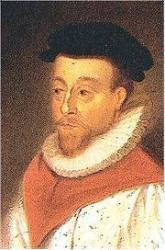
Orlando Gibbons

1583 - 1625 Topics: Church in the World Discipleship: Call; Calling and Response Composer of "SONG 1" in Voices United Orlando Gibbons (baptised 25 December 1583 – 5 June 1625) was an English composer, virginalist and organist of the late Tudor and early Jacobean periods. He was a leading composer in the England of his day. Gibbons was born in Cambridge and christened at Oxford the same year – thus appearing in Oxford church records. Between 1596 and 1598 he sang in the Choir of King's College, Cambridge, where his brother Edward Gibbons (1568–1650), eldest of the four sons of William Gibbons, was master of the choristers. The second brother Ellis Gibbons (1573–1603) was also a promising composer, but died young. Orlando entered the university in 1598 and achieved the degree of Bachelor of Music in 1606. James I appointed him a Gentleman of the Chapel Royal, where he served as an organist from at least 1615 until his death. In 1623 he became senior organist at the Chapel Royal, with Thomas Tomkins as junior organist. He also held positions as keyboard player in the privy chamber of the court of Prince Charles (later King Charles I), and organist at Westminster Abbey. He died at age 41 in Canterbury of apoplexy, and a monument to him was built in Canterbury Cathedral. A suspicion immediately arose that Gibbons had died of the plague, which was rife in England that year. Two physicians who had been present at his death were ordered to make a report, and performed an autopsy, the account of which survives in The National Archives: We whose names are here underwritten: having been called to give our counsels to Mr. Orlando Gibbons; in the time of his late and sudden sickness, which we found in the beginning lethargical, or a profound sleep; out of which, we could never recover him, neither by inward nor outward medicines, & then instantly he fell in most strong, & sharp convulsions; which did wring his mouth up to his ears, & his eyes were distorted, as though they would have been thrust out of his head & then suddenly he lost both speech, sight and hearing, & so grew apoplectical & lost the whole motion of every part of his body, & so died. Then here upon (his death being so sudden) rumours were cast out that he did die of the plague, whereupon we . . . caused his body to be searched by certain women that were sworn to deliver the truth, who did affirm that they never saw a fairer corpse. Yet notwithstanding we to give full satisfaction to all did cause the skull to be opened in our presence & we carefully viewed the body, which we found also to be very clean without any show or spot of any contagious matter. In the brain we found the whole & sole cause of his sickness namely a great admirable blackness & syderation in the outside of the brain. Within the brain (being opened) there did issue out abundance of water intermixed with blood & this we affirm to be the only cause of his sudden death. His death was a shock to peers and the suddenness of his passing drew comment more for the haste of his burial – and of its location at Canterbury rather than the body being returned to London. His wife, Elizabeth, died a little over a year later, aged in her mid-30s, leaving Orlando's eldest brother, Edward, to care for the children left orphans by this event. Of these children only the eldest son, Christopher Gibbons, went on to become a musician. One of the most versatile English composers of his time, Gibbons wrote a quantity of keyboard works, around thirty fantasias for viols, a number of madrigals (the best-known being "The Silver Swan"), and many popular verse anthems. His choral music is distinguished by his complete mastery of counterpoint, combined with his wonderful gift for melody. Perhaps his most well known verse anthem is This is the record of John, which sets an Advent text for solo countertenor or tenor, alternating with full chorus. The soloist is required to demonstrate considerable technical facility at points, and the work at once expresses the rhetorical force of the text, whilst never being demonstrative or bombastic. He also produced two major settings of Evensong, the Short Service and the Second Service. The former includes a beautifully expressive Nunc dimittis, while the latter is an extended composition, combining verse and full sections. Gibbons's full anthems include the expressive O Lord, in thy wrath, and the Ascension Day anthem O clap your hands together for eight voices. He contributed six pieces to the first printed collection of keyboard music in England, Parthenia (to which he was by far the youngest of the three contributors), published in about 1611. Gibbons's surviving keyboard output comprises some 45 pieces. The polyphonic fantasia and dance forms are the best represented genres. Gibbons's writing exhibits full mastery of three- and four-part counterpoint. Most of the fantasias are complex, multisectional pieces, treating multiple subjects imitatively. Gibbons's approach to melody in both fantasias and dances features a capability for almost limitless development of simple musical ideas, on display in works such as Pavane in D minor and Lord Salisbury's Pavan and Galliard. In the 20th century, the Canadian pianist Glenn Gould championed Gibbons's music, and named him as his favorite composer. Gould wrote of Gibbons's hymns and anthems: "ever since my teen-age years this music ... has moved me more deeply than any other sound experience I can think of." In one interview, Gould compared Gibbons to Beethoven and Webern: ...despite the requisite quota of scales and shakes in such half-hearted virtuoso vehicles as the Salisbury Galliard, one is never quite able to counter the impression of music of supreme beauty that lacks its ideal means of reproduction. Like Beethoven in his last quartets, or Webern at almost any time, Gibbons is an artist of such intractable commitment that, in the keyboard field, at least, his works work better in one's memory, or on paper, than they ever can through the intercession of a sounding-board. To this day, Gibbons's obit service is commemorated every year in King's College Chapel, Cambridge. --wikipedia.org

Henri F. Hemy

1818 - 1888 Person Name: Henri Frederick Hemy Topics: Calling and Response Composer of "ST CATHERINE" in Voices United Henri F. Hemy, born in the United Kingdom. Hemy spent time at sea as a young man, emigrating to Australia in 1850 with his family. Unable to make a decent living in Melbourne, he returned to Newcastle England. He was organist at St. Andrews Roman Catholic Church in Newcastle, later teaching professor of music at Tynemouth and at St. Cuthbert's College in Durham. He was pianist to Lord Ravensworth, Music Director of Ushaw College, and his orchestra played at fashionable venues in the region. He sang baritone as well. He composed waltzes, polkas, quadrilles, and galops. 3 music works: Easy Hymn Tunes for Catholic Schools; Royal Modern Tutor for Pianoforte; Crown of Jesus. He was active in local politics and published a manifesto in the daily newspaper. He lost a ward election. He also painted artwork. He set most of Longfellow's works to music. John Perry

Louis Bourgeois

1510 - 1561 Person Name: Louis Bourgeois, ca. 1510-1561 Topics: Disciples / Calling; Elements of Worship Call to Worship Composer of "GENEVAN 134 (OLD HUNDREDTH)" in Psalms for All Seasons Louis Bourgeois (b. Paris, France, c. 1510; d. Paris, 1561). In both his early and later years Bourgeois wrote French songs to entertain the rich, but in the history of church music he is known especially for his contribution to the Genevan Psalter. Apparently moving to Geneva in 1541, the same year John Calvin returned to Geneva from Strasbourg, Bourgeois served as cantor and master of the choristers at both St. Pierre and St. Gervais, which is to say he was music director there under the pastoral leadership of Calvin. Bourgeois used the choristers to teach the new psalm tunes to the congregation. The extent of Bourgeois's involvement in the Genevan Psalter is a matter of scholar­ly debate. Calvin had published several partial psalters, including one in Strasbourg in 1539 and another in Geneva in 1542, with melodies by unknown composers. In 1551 another French psalter appeared in Geneva, Eighty-three Psalms of David, with texts by Marot and de Beze, and with most of the melodies by Bourgeois, who supplied thirty­ four original tunes and thirty-six revisions of older tunes. This edition was republished repeatedly, and later Bourgeois's tunes were incorporated into the complete Genevan Psalter (1562). However, his revision of some older tunes was not uniformly appreciat­ed by those who were familiar with the original versions; he was actually imprisoned overnight for some of his musical arrangements but freed after Calvin's intervention. In addition to his contribution to the 1551 Psalter, Bourgeois produced a four-part harmonization of fifty psalms, published in Lyons (1547, enlarged 1554), and wrote a textbook on singing and sight-reading, La Droit Chemin de Musique (1550). He left Geneva in 1552 and lived in Lyons and Paris for the remainder of his life. Bert Polman

Albert Midlane

1825 - 1909 Topics: Calling Author of "Revive Thy Work, O Lord" in Trinity Hymnal (Rev. ed.) Midlane, Albert, was born at Newport, Isle of Wight, Jan. 23, 1825, and was engaged in business in that town for many years. To his Sunday school teacher he ascribes the honour of prompting him to poetic efforts: and the same teacher did much to shape his early life. His first printed hymn, "Hark! in the presence of our God," was written in September, 1842, at Carisbrooke Castle, and printed in the Youth’s Magazine in November of the same year. Since then he has written over 300, and of these a large proportion are in common use. They appeared in magazines and small mission hymn-books, including:— (1) The Youth's Magazine; (2) The British Messenger; (3) The London Messenger; (4) Trotter's Evangelical Hymn Book, 1860; (5) The Ambassador's Hymn Book, 1861; (6) Second edition of the same, 1868; (7)Hymn Book for Youth; (8) Good News for the Little Ones, 1860; (9) William Carter's Gospel Hymn Book, 1862; and several other works of a similar kind. In addition to several small works in prose, Mr. Midlane has gathered his verse together from time to time and published it as:— (1) Poetry addressed to Sabbath School Teachers, 1844; (2) Vecta Garland, 1850; (3) Leaves from Olivet, 1864; (4) Gospel Echoes, 1865; (5) Above the Bright Blue Sky, 1867; (6) Early Lispings, 1880. Of the hymns contained in these works nearly 200 have been in common use from 1861 to 1887, the most popular being "There's a Friend for little children." The hymn-books, however, in which many of them are found are usually very small, are used in what are commonly known as Gospel Missions, and have gradually given way to other and more important collections. We therefore append only those hymns which are at the present time in use in official or quasi-official hymn-books, or such collections as have a wide circulation. Those hymns which are omitted from the following list may be found in the works given above, and especially in the Gospel Echoes. The bracketed dates below are those of the composition of the hymns. i. Given in Trotter's Evangelical Hymn Book, 1860. 1. How sweet the cheering words. (Aug. 1860.) The Gospel. 2. Lord Jesus, save! (July 1860.) Lent. ii. Given in The Ambassador's Hymn Book, 1861. 3. Angels rejoice o'er sinners saved. (Aug. 1860.) Joy in Heaven over Repenting Sinners. 4. Come to the royal feast. (Aug. 1860.) The Gospel Feast. 5. Father, bless the heavenly message. (Aug. 1860.) Divine blessing implored. 6. How vast, how full, how free. (Aug. 1860.) Divine Mercy. 7. I am not told to labour. (June 25, 1860.) Salvation by Faith. 8. Jesus died upon the tree. (Aug. 13, 1860.) Good Friday. 9. Lord, prepare the hearts of sinners. (Aug. 28, 1861.) Preparation of the heart. 10. Not all the gold of all the world. Peace through Jesus. 11. Now we'll render to the Saviour. (Sept. 1, 1861.) Praise for Salvation. 12. O what a gift the Father gave. (Aug. 22, 1860.) The Gift of The Son. 13. O what a Saviour is Jesus the Lord. (Aug. 29, 1861.) Jesus the Saviour. 14. Passing onward, quickly passing. (Sept. 10, 1861.) Prepared? 15. Salvation, Lord, is Thine. (Aug., 1860.) Salvation through Jesus. 16. Sinner, where is room for doubting? (Sept., 1861.) Expostulation. 17. Soft the voice of mercy sounded. Grace. 18. The perfect righteousness of God. (Sept. 21, 1861.) God our Righteousness. 19. There is a throne of grace. (Sept. 14, 1860.) The Throne of Grace. 20. We speak of the mercy of God. (Sept. 19, 1861.) Divine Mercy. iii. Given in W. Carter's Gospel Hymn Book, 1863. 21. Can any say, I do believe ? (Aug., 1860.) Assurance in Christ. 22. If Jesus came to seek and save. (Oct., 1861.) Salvation in Jesus. iv. Given in Leaves from Olivet, 1864. 23. See the blessed Saviour dying. (Oct. 5, 1860.) Good Friday. 24. Sweet the theme of Jesus' love. (April 22, 1862.) The Love of Jesus. v. Given in Gospel Echoes, 1865. 25. Come and welcome to the Saviour. (June 8, 1862) Invitation. 26. God be gracious to a sinner. (May 21, 1861.) Lent. 27. God speaks from heaven; in love He speaks. (July, 1860.) Love and Mercy of God. 28. Hark! the cry, Behold He cometh. (June 8, 1862.) Advent. 29. He saves because He will. (April 20, 1862.) The "I Wills" of Jesus. 30. How solemn are the words. (Aug. 1, 1865.) The New Birth. 31. Himself He could not save. (Sept. 1861.) Good Friday. 32. I once was bound in Satan's chains. Pardon. 33. Jesus lived. He lived for sinners. (Jan. 4, 1862.) Easter. 34. Jesus never answered "Nay." (May 13, 1862.) Jesus always the same. 35. Jesus the blessed centre is. (June 8, 1862). Father glorified in the Son. 36. Jesus, the risen Saviour. (July 31, 1862.) Easter. 37. Jesus, the soul that trusts in Thee. (May 7, 1864.) Salvation through Jesus. 38. Look, poor sinner, look to Calvary. Good Friday. 39. Lord, when I think upon the love. (Oct. 1, 1860.) The Love of Jesus. 40. Peace with God ! How great a treasure (Oct. 18, 1861.) Peace. 41. Salvation! What a precious word. (Nov. 22, 1861.) Salvation. 42. Scripture says Where sin abounded. (March 3, 1862.) Abounding Grace. 43. Shall Jesus' love be spoken? (May 4, 1862.) Love of Jesus. 44. The Lamb was slain, the blood was brought. (Aug. 24,1862.) The Passover. 45. The silver trumpets sounding. (May 7, 1862.) The Year of Jubilee. 46. There is a rest for weary souls. (Dec. 4, 1863.) Rest. Peace in Jesus. 47. 'Tis the voice of mercy calls thee. (Nov. 5, 1861.) Mercy. 48. When the Saviour said "'Tis finished" (Oct. 1861.) Good Friday. 49. When God begins His gracious work. (Dec. 27, 1860.) God Unchangeable. 50. Who can praise the blessed God ? (Oct. 1861.) Praise for Salvation. 51. Why those fears, poor trembling sinner. Safety in Jesus. vi. Given in the Ambassador's Hymn Book, 2nd ed., 1868. 52. Life from the dead, eternal life. (Oct. 11, 1867.) Work of the Holy Spirit. 53. Stern justice cries for blood. (March 2, 1867.) The Atonement. vii. Various. 54. Apart from every worldly care. (June 1866.) Prayer Meetings. Written for Spurgeon's Our Own Hymn Book 1866. 55. Be not weary, toiling Christian. (Feb. 1857.) Encouragement. In the British Messenger, Sept. 1857. 56. Eighteen hundred years ago. (Aug. 1859.) Fulness of Time. In the London Messenger, April, 1861. 57. Father, for Thy promised blessing. (Feb. 20, 1860.) Outpouring of the Spirit desired. In The Revival, July, 1860. 58. God bless our Sunday School. Sunday School Anniversary. First printed in the Baptist Children's Magazine, July, 1844. It has passed into numerous collections for children, but usually st. ii. is omitted, thus reducing it to 3 st. 59. He comes! He comes! the Bridegroom comes. (Sept. 9, 1850.) Advent. In The Present Testimony, 1851. 60. Kept by the power of God. (May 6 ,1858.) Security in God. In the London Messenger, Sept., 1860. 61. Let the waves of blessing roll. (Jan. 6, 1868.) Missions. In the Enlarged London Hymn Book, 1873. 62. Lord, 'our waiting spirits bow. (June, 1866.) Prayer Meetings. Written for Spurgeon's Our Own Hymn Book 1866. 63. Love us freely, blessed Jesus. (July 2, 1858.) Lent. In the Churchman's Penny Magazine. Oct., 1858. 64. Never perish! words of mercy. Mercy in Christ. Printed in the monthly Girdle, June, 1857, and in the British Messenger, Aug. 1857, in 4 double st. In the collections it is reduced to the first two stanzas. 65. No separation, O my soul. (May 6, 1863.) Perseverance. In the British Herald, Aug., 1863. 66. Nought but the voice of God can speak. (Jan. 29, 1863.) All things are of God. In the 1873 Appendix to Snepp's Songs of Grace & Glory. 67. Now, O joy, my sins are pardoned. Pardon and Peace. (Nov. 9, 1860). Printed in the London Messenger, March, 1861, then in the Gospel Echoes, 1865; and then in several hymn-books. The original began, "Once I sang, but not in earnest." Usually st. ii., iii., of 8 l, are given as "Now, O joy, &c." 68. O art thou an heir of glory? (June 4, 1861.) Cautions. In Hymn Book for Youth, 1862. 69. O what a glorious truth is this. (Aug. 3, 1860.) Jesus Died. In the London Messenger, Sept., 1860. 70. Once it was mine, the cup of wrath. (Aug. 8, 1860.) Wrath and Pardon. In the London Messenger, Oct., 1861. 71. Onward, upward, heavenward. (Feb. 7, 1860.) Pressing Onward. In the London Messenger, March, 186l. 72. Perennial spring of pure delight. (March 17, 1864.) Jesus All in All. In the London Messenger, Jan., 1865. 73. Sheltered by the [Thy] sprinkled blood. (Sept. 23, 1863.) Safety in Jesus. In the London Messenger, Feb. 1864. 74. Showers of blessing, gracious promise. (April 19, 1862.) Missions. In the London Messenger, Aug., 1862, and Leaves from Olivet, 1864. 75. The Church of God, amazing, precious thought. (July 6, 1857.) The Church. In The Present Testimony, 1858, and Leaves from Olivet, 1864. 76. The whispers of Thy love divine. (May 3, 1868.) Love of God. In the Island Greeting, Oct., 1872. 77. Though billows round me roll. (April 2, 1853.) Trust. In Food for Christ's Flock, 1853. 78. 'Tis finished, cried the dying Lamb. (Feb. 21, 1850.) Good Friday. In the Baptist Children's Magazine, 1850). 79. Tis heaven where Jesus is. (Oct. 23, 1862.) Joy and Peace in Jesus. In the Enlarged London Hymn Book, 1873. 80. Together all things work for good. (Aug. 14, 1860.) All work for Good. In the Enlarged London Hymn Book, 1813. 81. Waiting for Jesus, and loving while waiting. (Jan. 9, 1872.) Second Advent desired. In the 1873 Appendix to Snepp's Songs of Grace & Glory. 82. Without a cloud between. (Mar. 18,1862.) Jesus, Face to Face. In the London Messenger, June, 1862. 83. Yet awhile; how sweet the thought. (Dec, 1864.) Second Advent desired. In theLondon Messenger, 1865. The collections in which these hymns are mainly found are Spurgeon's Our Own Hymn Book, 1866; Snepp's Songs of Grace & Glory, 1872-3; Hurditch's Enlarged London Hymn Book, 1873, and smaller books for Evangelical mission work. Of Mr. Midlane's hymns as a whole, Miher's estimate that "His hymns are full of spiritual thought, careful in their wording, and often very pleasing without reaching the highest form of poetical excellence " (Singers and Songs, p. 572), is just. A marked feature of these hymns is the constant and happy use of Scripture phraseology. --John Julian, Dictionary of Hymnology (1907) ======================== Midlane, A., p. 733, ii. Mr. Midlane published in 1901 The Bright Blue Sky Hymn Book, of 315 of his hymns, and the same year The Gospel Hall Hymn Book, for use in the Gospel Hall, Newport, I.W., with 218 additional, making 533 original compositions. A broad-sheet of seven special hymns for Jewish children, in connection with the Mildmay Mission to the Jews, was also issued in December, 1904. Other publications previously noticed give, with these, over 800 hymns to Mr. Midlane as his contribution to the hymnody of the Church. --John Julian, Dictionary of Hymnology, New Supplement (1907)

Synesius of Cyrene, Bishop of Ptolemais

370 - 430 Person Name: Synesius of Cyrene, c.375-430 Topics: Gospel Call and Response Author of "Lord Jesus, Think on Me" in Pilgrim Hymnal Synesius, a native of Cyrene, born circa 375. His descent was illustrious. His pedigree extended through seventeen centuries, and in the words of Gibbon, "could not be equalled in the history of mankind." He became distinguished for his eloquence and philosophy, and as a statesman and patriot he took a noble stand. When the Goths were threatening his country he went to the court of Arcadius, and for three years tried to rouse it to the dangers that were coming on the empire. But Gibbon says, ”The court of Arcadius indulged the zeal, applauded the eloquence, and neglected the advice of Synesius." In 410 he was made Bishop of Ptolemaïs, but much against his will. He died in 430. Synesius's opinions have been variously estimated. That he was imbued with the Neo-Platonic philosophy there is no doubt but that he was a semi-Christian, as alleged by Mosheim or that he denied the doctrine of the Resurrection as stated directly by Gibbon [see Decline and Fall, vol. ii.]; and indirectly by Bingham [see Christian Antiq., Lond., 1843, i., pp. 464-5] is very doubtful. Mr. Chatfield, who has translated his Odes in his Songs and Hymns of the Greek Christian Poets, 1876, contends that his tenth Ode "Lord Jesus, think on me," proves that he was not a semi-Christian, and that he held the doctrine of the Resurrection. The first is clear: but the second is open to doubt. He certainly prays to the Redeemer: but there is nothing in the hymn to shew that he looked upon the Redeemer as being clothed in His risen body. This tenth ode is the only Ode of Synesius, which has come into common use. The original Odes are found in the Anth. Graeca Carm. Christ, 1871, p. 2 seq., and Mr. Chatfield's trs. in his Songs, &c, 1876. Synesius's Odes have also been translation by Alan Stevenson, and included in his The Ten Hymns of Synesius, Bishop of Tyreore, A.D. 410 in English Verse. And some Occasional Pieces by Alan Stevenson, LL.B. Printed for Private Circulation, 1865. -- Excerpts from John Julian, Dictionary of Hymnology (1907)

Francis Pott

1832 - 1909 Topics: Call to Worship Author of "Praise is Comely" in The Pilgrim Hymnal Francis Pott studied at Brasenose College, Oxford, where he graduated B.A. in 1854, and M.A. in 1857. He was ordained Deacon in 1856, and Priest in 1857. He was Curate of Bishopsworth, Bristol, 1856; of Ardingley, Sussex, 1858; was appointed to Ticehurst in 1861; and is now incumbent of Northill, Bedfordshire. Mr. Pott has made many acceptable translations, and has edited "Hymns Fitted to the Order of Common Prayer, etc.;" a compilation of real merit. --Annotations of the Hymnal, Charles Hutchins, M.A., 1872 ============ Pott, Francis, M.A., was born Dec. 29, 1832, and educated at Brasenose, College, Oxford, B.A. 1854; M.A. 1857. Taking Holy Orders in 1856 he was curate of Bishopsworth, Gloucestershire, 1856-8; Ardingly, Berks, 1858-61; Ticehurst, Sussex, 1861-66; and Rector of Norhill, Ely, 1866. His Hymns fitted to the Order of Common Prayer, and Administration of the Sacraments, and other Rites and Ceremonies of the Church, According to the Use of the Church of England, To which are added Hymns for Certain Local Festivals, was published in 1861, and reprinted from time to time with a few additions. Mr. Pott contributed translations from the Latin and Syriac, and original hymns, including “Angel voices ever singing" (p. 68, ii.), and "Lift up your heads, eternal gates" (Ascension). These original hymns, together with his translations, have been received with much favour and are widely used. In several.…works, several translations from the Latin, and other hymnological work, are attributed to Archdeacon Alfred Pott. We are authorized to state that this ascription of authorship is an error. --John Julian, Dictionary of Hymnology (1907)

Pages


Export as CSV
It looks like you are using an ad-blocker. Ad revenue helps keep us running. Please consider white-listing Hymnary.org or getting Hymnary Pro to eliminate ads entirely and help support Hymnary.org.