

 My Starred Hymns
 My FlexScores
 My Hymnals
 My Purchased Files
Planning worship?
Check out our sister site, ZeteoSearch.org,
for 20+ additional resources related to your search.
- |
User Links
Person Results
Josiah Conder
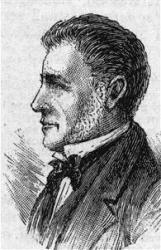
1789 - 1855 Person Name: J. Conder, 1789-1855 Topics: Communion Service Author of "Bread of heaven, on thee we feed" in The Hymnal Josiah Conder was born in London, in 1789. He became a publisher, and in 1814 became proprietor of "The Eclectic Review." Subsequently to 1824, he composed a series of descriptive works, called the "Modern Traveller," which appeared in thirty volumes. He also published several volumes of poems and hymns. He was the author of the first "Congregational Hymn Book" (1836). He died in 1855.
--Annotations of the Hymnal, Charles Hutchins, M.A. 1872.
==========================
Conder, Josiah, fourth son of Thomas Conder, engraver and bookseller, and grandson of the Rev. John Conder, D.D., first Theological Tutor of Homerton College, was born in Falcon Street (City); London, Sept. 17, 1789, and died Dec. 27, 1855. As author, editor and publisher he was widely known. For some years he was the proprietor and editor of the Eclectic Review, and also editor of the Patriot newspaper. His prose works were numerous, and include:—
The Modern Traveller, 1830; Italy, 1831; Dictionary of Ancient and Modern Geography, 1834; Life of Bunyan, 1835; Protestant Nonconformity, 1818-19; The Law of the Sabbath, 1830; Epistle to the Hebrews (a translation), 1834; Literary History of the New Testament, 1845, Harmony of History with Prophecy, 1849, and others.
His poetical works are:—
(1) The Withered Oak,1805; this appeared in the Athenceum. (2) The Reverie, 1811. (3) Star in the East, 1824. (4) Sacred Poems, Domestic Poems, and Miscellaneous Poems, 1824. (5) The Choir and the Oratory; or, Praise and Prayer, 1837. Preface dated Nov. 8, 1836. (6) Hymns of Praise, Prayer, and Devout Meditation, 1856. This last work was in the press at the time of his death, and was revised and published by his son, the Rev. E. R. Conder, M.A. He also contributed many pieces to the magazines and to the Associated Minstrels, 1810, under the signature of " C." In 1838, selections from The Choir and Oratory were published with music by Edgar Sanderson, as Harmonia Sacra. A second volume was added in 1839. To Dr. Collyer’s (q.v.) Hymns, &c, he contributed 3 pieces signed "C"; and to Dr. Leifchild's Original Hymns, 1843, 8 hymns.
As a hymn-book editor he was also well known. In 1836 he edited The Congregational Hymn Book: a Supplement to Dr. Watts’s Psalms and Hymns (2nd ed. 1844). To this collection he contributed fifty-six of his own hymns, some of which had previously appeared in The Star in the East, &c. He also published in 1851 a revised edition of Dr. Watts's Psalms and Hymns, and in the game year a special paper on Dr. Watte as The Poet of the Sanctuary, which was read before the Congregational Union at Southampton. The value of his work as Editor of the Congregational Hymn Book is seen in the fact that eight out of every ten of the hymns in that collection are still in use either in Great Britain or America.
As a hymn writer Conder ranks with some of the best of the first half of the present century. His finest hymns are marked by much elevation of thought expressed in language combining both force and beauty. They generally excel in unity, and in some the gradual unfolding of the leading idea is masterly. The outcome of a deeply spiritual mind, they deal chiefly with the enduring elements of religion. Their variety in metre, in style, and in treatment saves them from the monotonous mannerism which mars the work of many hymn writers. Their theology, though decidedly Evangelical, is yet of a broad and liberal kind. Doubtless Conder's intercourse with many phases of theological thought as Editor of the Eclectic Review did much to produce this catholicity, which was strikingly shewn by his embodying many of the collects of the Book of Common Prayer, rendered into verse, in his Choir and Oratory. Of his versions of the Psalms the most popular are "How honoured, how dear" (84th), and "O be joyful in the Lord" (100th). His hymns in most extensive use are," Bread of heaven, on Thee I feed; " “Beyond, beyond that boundless sea;" "The Lord is King, lift up thy voice" (this last is one of his best); "Day by day the manna fell;" "How shall I follow him I serve;" "Heavenly Father, to whose eye" (all good specimens of his subdued and pathetic style); and "O shew me not my Saviour dying." This last is full of lyric feeling, and expresses the too often forgotten fact that the Church has a living though once crucified Lord. The popularity of Conder's hymns may be gathered from the fact that at the present time more of them are in common use in Great Britain and America than those of any other writer of the Congregational body, Watts and Doddridge alone excepted. [Rev. W. Garrett Horder]
In addition to the hymns named above and others which are annotated under their respective first lines, the following, including two already named (4,16), are also in common use:—
i. From Dr. Collyer's Hymns, &c, 1812.
1. When in the hours of lonely woe. Lent.
ii. From The Star in the East, &c, 1824.
2. Be merciful, O God of grace. Ps. lxvii.
3. For ever will I bless the Lord. Ps. xxxiv.
4. How honoured, how dear. Ps. lxxxiv.
5. Now with angels round the throne. Doxology.
6. O Thou God, Who hearest prayer. Lent. Dated Sept. 1820. Usually abbreviated.
iii. From The Congregational Hymn Book, 1836.
7. Blessed be God, He is not strict. Longsuffering of God.
8. Followers of Christ of every name. Communion of Saints.
9. Grant me, heavenly Lord, to feel. Zeal in Missions desired.
10. Grant, 0 Saviour, to our prayers. Collect 5th S. after Trinity.
11. Head of the Church, our risen Lord. Church Meetings.
12. Holy, holy, holy Lord, in the highest heaven, &c. Praise to the Father.
13. Jehovah's praise sublime. Praise.
14. Leave us not comfortless. Holy Communion.
15. Lord, for Thv Name's sake! such the plea. In National Danger.
16. O be joyful in the Lord. Ps. c.
17. 0 breathe upon this languid frame. Baptism of Holy Spirit desired.
18. 0 give thanks to Him Who made. Thanksgiving for Daily Mercies.
19. 0 God, Protector of the lowly. New Year.
20. 0 God, to whom the happy dead. Burial.
21. 0 God, Who didst an equal mate. Holy Matrimony.
22. 0 God, Who didst Thy will unfold. Holy Scriptures.
23. 0 God, Who dost Thy sovereign might. Prayer Meetings.
24. 0 how shall feeble flesh and blood. Salvation through Christ.
25. 0 how should those be clean who bear. Purity desired for God's Ministers.
26. 0 say not, think not in thy heart. Pressing Onward.
27. 0 Thou divine High Priest. Holy Communion.
28. 0 Thou Who givest all their food. Harvest.
29. 0 Thou Whose covenant is sure. Holy Baptism.
30. Praise on Thee, in Zion-gates. Sunday.
31. Praise the God of all creation. Doxology
32. See the ransomed millions stand. Praise to Christ.
33. The heavens declare His glory. Ps. xix.
34. Thou art the Everlasting Word. Praise to Christ.
35. Thy hands have made and fashioned me. Thanks for Daily Mercies.
36. To all Thy faithful people, Lord. For Pardon.
37. To His own world He came. Ascension.
38. To our God loud praises give. Ps. cxxxvi.
39. Upon a world of guilt and night. Purification of B.V.M.
40. Welcome, welcome, sinner, hear. Invitation to Christ.
41. Wheresoever two or three. Continued Presence of Christ desired.
iv. From The Choir and the Oratory, 1837.
42. Baptised into our Saviour's death. Holy Baptism.
43. In the day of my [thy] distress. Ps. xx.
44. 0 comfort to the dreary. Christ the Comforter.
v. From Leifchild's Original Hymns, 1843.
45. I am Thy workmanship, 0 Lord. God the Maker and Guardian.
46. 0 Lord, hadst Thou been here! But when. The Resurrection of Lazarus.
47. 'Tis not that I did choose Thee. Chosen of God. This is altered in the Church Praise Book, N. Y., 1882, to “Lord, 'tis not that I did choose Thee," thereby changing the metre from 7.6 to 8.5.
vi. From Hymns of Praise, Prayer, &c, 1856.
48. Comrades of the heavenly calling. The Christian race.
When to these 48 hymns those annotated under their respective first lines are added, Conder’s hymns in common use number about 60 in all.
--John Julian, Dictionary of Hymnology (1907)
===================
Conder, Josiah, p. 256, i. Other hymns are:—
1. O love beyond the reach of thought. The love of God.
2. O Thou, our Head, enthroned on high. Missions.
3. Son of David, throned in light. Divine Enlightenment desired.
4. Thou Lamb of God for sinners slain. Christ the Head of the Church. From "Substantial Truth, 0 Christ, Thou art."
These hymns are all from his Hymns of Praise, &c, 1856.
--John Julian, Dictionary of Hymnology, Appendix, Part II (1907)
Josiah Conder
Paul Gerhardt
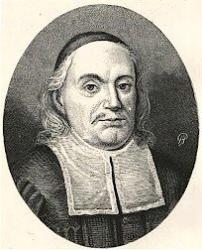
1607 - 1676 Person Name: Paul Gerhardt, 1607-1676 Topics: Communion Service Translator (into German) of "O sacred Head, now wounded" in The Hymnal Paul Gerhardt (b. Gräfenheinichen, Saxony, Germany, 1607; d. Lubben, Germany, 1676), famous author of Lutheran evangelical hymns, studied theology and hymnody at the University of Wittenberg and then was a tutor in Berlin, where he became friends with Johann Crüger. He served the Lutheran parish of Mittenwalde near Berlin (1651-1657) and the great St. Nicholas' Church in Berlin (1657-1666). Friederich William, the Calvinist elector, had issued an edict that forbade the various Protestant groups to fight each other. Although Gerhardt did not want strife between the churches, he refused to comply with the edict because he thought it opposed the Lutheran "Formula of Concord," which condemned some Calvinist doctrines. Consequently, he was released from his position in Berlin in 1666. With the support of friends he became archdeacon at Lubben in 1669 and remained there until his death. Gerhardt experienced much suffering in his life; he and his parishioners lived in the era of the Thirty Years' War, and his family experienced incredible tragedy: four of his five children died young, and his wife died after a prolonged illness. In the history of hymnody Gerhardt is considered a transitional figure-he wrote at a time when hymns were changing from a more objective, confessional, and corporate focus to a pietistic, devotional, and personal one. Like other German hymns, Gerhardt's were lengthy and intended for use throughout a service, a group of stanzas at a time. More than 130 of his hymns were published in various editions of Cruger's Praxis Pietatis Melica, the Crüger-Runge Gesangbuch (1653), and Ebeling's Das andere Dutzeud geistliche Andachtslieder Herrn Paul Gerhardts (1666-1667). John Wesley and Catherine Winkworth both made famous English translations of Gerhardt's texts.
Bert Polman
======================
Gerhardt, Paulus, son of Christian Gerhardt, burgomaster of Gräfenhaynichen, near Wittenberg, was born at Grafenhaynichen, Mar. 12, 1607. On January 2, 1628, he matriculated at the University of Wittenberg. In the registers of St. Mary's church, Wittenberg, his name appears as a godfather, on July 13, 1641, described still as "studiosus," and he seems to have remained in Wittenberg till at least the end of April, 1642. He appears to have gone to Berlin in 1642 or 1643, and was there for some time (certainly after 1648) a tutor in the house of the advocate Andreas Barthold, whose daughter (Anna Maria, b. May 19, 1622, d. March 5, 1668) became his wife in 1655. During this period he seems to have frequently preached in Berlin. He was appointed in 1651, at the recommendation of the Berlin clergy, Lutheran Probst (chief pastor) at Mittenwalde, near Berlin, and ordained to this post Nov. 18, 1651. In July, 1657, he returned to Berlin as third diaconus of St. Nicholas's church; but becoming involved in the contest between the Elector Friedrich Wilhelm (who was of the Reformed Church) and the Lutheran clergy of Berlin, he was deposed from his office in February, 1666, though he still remained in Berlin. In Nov. 1668, he accepted the post of archidiaconus at Lübben, on the Spree, was installed in June, 1669, and remained there till his death on June 7, 1676 (Koch, iii. 297-326; Allgemeine Deutsche Biographie, viii. 774-783, &c).
The outward circumstances of Gerhardt's life were for the most part gloomy. His earlier years were spent amid the horrors of the Thirty Years' War. He did not obtain a settled position in life till he was 44 years of age. He was unable to marry till four years later; and his wife, after a long illness, died during the time that he was without office in Berlin; while of the five children of the marriage only one passed the period of childhood. The sunniest period of his life was during the early years of his Berlin ministry (i.e. 1657-1663), when he enjoyed universal love and esteem; while his latter years at Lübben as a widower with one surviving child were passed among a rough and unsympathising people. The motto on his portrait at Lübben not unjustly styles him "Theologus in cribro Satanae versatus."
Gerhardt ranks, next to Luther, as the most gifted and popular hymnwriter of the Lutheran Church. Gervinus (ed. 1842, pt. iii. p. 366), the well-known historian of German literature, thus characterises him:—
"He went back to Luther's most genuine type of hymn in such manner as no one else had done, only so far modified as the requirements of his time demanded. In Luther's time the belief in Free Grace and the work of the Atonement, in Redemption and the bursting of the gates of Hell was the inspiration of his joyful confidence; with Gerhardt it is the belief in the Love of God. With Luther the old wrathful God of the Romanists assumed the heavenly aspect of grace and mercy; with Gerhardt the merciful Righteous One is a gentle loving Man. Like the old poets of the people he is sincerely and unconstrainedly pious, naive, and hearty; the bliss fulness of his faith makes him benign and amiable; in his way of writing he is as attractive, simple, and pleasing as in his way of thinking."
With a firm grasp of the objective realities of the Christian Faith, and a loyal adherence to the doctrinal standpoint of the Lutheran Church, Gerhardt is yet genuinely human; he takes a fresh, healthful view both of nature and of mankind. In his hymns we see the transition to the modern subjective tone of religious poetry. Sixteen of his hymns begin with, “I." Yet with Gerhardt it is not so much the individual soul that lays bare its sometimes morbid moods, as it is the representative member of the Church speaking out the thoughts and feelings he shares with his fellow members; while in style Gerhardt is simple and graceful, with a considerable variety of verse form at his command, and often of bell-like purity in tone.
From the first publication of Gerhardt's hymns they at once came into favour among all ranks and creeds; and a large proportion are among the hymns most cherished and most widely used by German-speaking Christians at the present day. They appeared principally in the various editions of Crüger's Praxis, and the Crüger-Runge Gesang-Buch, 1653. The first collected edition was prepared by J. G. Ebeling, and published in separate "Dozens" 1-4 in 1666, 5-10 in 1667, i.e. 120 in all. In the edition of J. H. Feustking, Zerbst, 1707, a few stanzas were intercalated (from manuscripts in the possession of Gerhardt's surviving son), but no new hymns were added.
Among modern editions of Gerhardt's hymns (mostly following the text of Ebeling) may be mentioned those by Langbecker, 1842; Schultz, 1842; Wackernagel, 1843; Becker, 1851; Goedeke, 1877, and Gerok, 1878. The Historico-Critical edition of Dr. J. F. Bachmann, 1866, is the most complete (with 11 additional pieces hardly Church hymns), and reverts to the pre-Ebeling text.
The length of many of Gerhardt's hymns ("Ein Lämmlein" is 10 stanzas of 10 lines; "Fröhlich soil," 15 stanzas of 8 lines, &c), and the somewhat intricate metres of others, have caused his hymns to be less used in English than otherwise might have been the case; but a considerable proportion have come in some form or other into English hymnbooks. A large selection, translated with scrupulous faithfulness but not retaining much of the lyric grace of the originals, was published by the Rev. John Kelly, in 1867, as Paul Gerhardt’s Spiritual Songs; while many individual hymns have been translated by John Wesley, Miss Winkworth, Miss Cox, Miss Borthwick, and many others. His translations from St. Bernard are noted under "O Haupt voll Blut." There are separate notes on 19 of his greater hymns. Besides these the following have passed into English:—
I. Hymns in English common use:
i. Auf den Nebel folgt die Sonn. Thanksgiving after great sorrow and affliction. In Crüger's Praxis, 1656, No. 249, in 15 stanzas of 7 1.; thence in Wackernagel’s ed. of his Geistliche Lieder, No. 87, and Bachmann's ed., No. 64. In the Unverfälschter Liedersegen, 1851, No. 402. Translated as:—
Cometh sunshine after rain. A good translation, omitting stanzas iv.-vii., x., xi., by Miss Winkworth, in her Lyra Germanica, 1st Ser., 1855, p. 100 (translations of x., xi. added to 2nd ed., 1856). Repeated, omitting the translations of stanzas ii., x.-xii., as No. 4 in her Chorale Book for England, 1863. In the Christian Hymn Book, Cincinnati, 1865, No. 799, begins with st. xiii., "Now as long as here I roam."
Another translation is:—"After clouds we see the sun," by J. Kelly, 1867, p. 261.
ii. Die Zeit ist nunmehr nah. Day of Judgment—Second Advent. Founded on Acts iii. 20. In the Crüger-Runge Gesang-Buch 1653, No. 367, iii 18 stanzas of 6 lines, and thence in Wackernagel's edition of his Geistliche Lieder, 1843, No. 119 (1874, No. 124), and Bachmann's edition, No. 40. In the Berlin Geistliche Lieder S., ed. 1863, No. 1517. Translated as:—
O Christ! how good and fair. Being a translation of stanzas iii., iv., vi., vii., x.-xiii., xvii., by Mrs. Charles, in her Voice of Christian Life in Song, 1858, p. 242. Her translations of stanzas iii., x., xii., are No. 150 in G. S. Jellicoe's Collection, 1867.
Other trs. are:—(1) "May I when time is o'er," of stanzas vii., viii. as part of No. 831 in the Moravian Hymn Book, 1789; in the 1801 and later eds. (1886, No. 1229), beginning, "I shall, when time is o'er." (2) “The time is very near," by J. Kelly, 1867, p. 341.
iii. Gottlob, nun ist erschollen. Peace. Thanksgiving for the Proclamation of the Peace of Westphalia, in 1648, after the Thirty Years’ War. In Crüger's Praxis 1656, No. 409, in 6 stanzas of 12 lines, and thence in Wackernagel's edition of his Geistliche Lieder, No. 64, and Bachmann's ed., No. 84; and in the Unverfälschter Liedersegen, 1851, No. 589. Translated as: —
Thank God it hath resounded. A full and good tr. by Miss Winkworth, in her Lyra Germanica, 2nd Ser., 1858, p. 156, repeated, omitting stanza ii., in her Chorale Book for England, 1863. St. i., v., vi., form No. 49 in M. W. Stryker's Christian Chorals, 1885.
Another tr. is: ”Praise God! for forth hath sounded," by J. Kelly, 1867, p. 251.
iv. Ich, der ich oft in tiefes Leid. Ps. cxlv. First published in J. G. Ebeling's edition of his Geistliche Andachten Dritte Dutzet, 1666, No. 27, in 18 stanzas of 7 lines. Thence in Wackernagel's ed., No. 95, and Bachmann's ed., No. 103; also in the Berlin Geistliche LiederSchatz, ed. 1863, No. 1004. Translated as:—
I who so oft in deep distress . A good translation, omitting stanzas ii.-iv., by Miss Winkworth, in her Lyra Germanica, 2nd Ser., 1858, p. 149. Her translations of stanzas i., xiii.-xvi., xviii., were included as No. 224, and of stanzas vi., viii., ix., xi. altered, and beginning, "O God! how many thankful songs," as No. 168, in Holy Song, 1869.
Another tr. is:—-"Who is so full of tenderness," of stanza viii. as stanza iv. of No. 1075 in the Supplement of 1808 to the Moravian Hymn Book, 1801 (1886, No. 537).
v. Ich steh an deiner Krippen bier. Christmas. Included in Crüger's Praxis, 1656, No. 105, in 15 stanzas of 7 lines. Thence in Wackernagel's ed., No. 9, and Bachmann's ed., No. 45; and in the Berlin Geistliche LiederSchatz, ed. 1863, No. 167. A beautiful hymn, in which the poet puts himself in the place of the shepherds and the wise men visiting Bethlehem; and in praise and adoration tenders his devotion, his love and his all, to the Infant Saviour in the manger. Translated as:—
My faith Thy lowly bed beholds. A translation of stanzas i., iv., vii., xv., by A. T. Russell, as No. 57 in his Psalms & Hymns, 1851.
Other trs. are:— (1) "I stand beside Thy manger-bed," by Miss Manington, 1864, p. 38. (2) "Now at the manger here I stand," by J. Kelly, 1867, p. 32.
vi. Ich weiss dass mein Erlöser lebt. Easter. Founded on Job xix. 25-27. First published in J. G. Ebeling's ed. of his Geistliche Andachten Zehende Dutzet, 1667, No. 119, in 9 stanzas of 7 lines; repeated in Wackernagel's ed., 1843, No. 118 (1874, No. 123); in Bachmann's ed., No. 119; and in the Berlin Geistliche Lieder S. ed. 1863, No. 301. Translated as:—
I know that my Redeemer lives, In this my faith is fast. A full and spirited translation by J. Oxenford, in Lays of the Sanctuary, 1859, p. 122. His translations of stanzas i., iii., vii.-ix., were included, altered, as No. 779 in Kennedy, 1863.
Another tr. is:— "I know that my Redeemer lives, This hope," &c, by Miss Manington, 1863, p. 78.
vii. Ich weiss, mein Gott, dass all mein Thun. Supplication. A prayer for success in all Christian works and purpose; founded on Jeremiah x. 23, and Acts v. 38, 39. Included in Crüger's Praxis, 1656, No. 332, in 18 stanzas of 5 lines. In Wackernagel's ed., No. 40; Bachmann's ed., No. 71, and the Berlin Geistliche Lieder S., ed. 1863. Translated as:—
I know, my God, and I rejoice. A good translation of stanzas i.-iii., viii., xi., ix., by Miss Winkworth, as No. 121 in her Chorale Book for England, 1863.
Another translation is:— "My God! my works and all I do” by J. Kelly, 1867, p. 102.
viii. Kommt, und lasst uns Christum ehren. Christmas. Founded on St. Luke ii. 15. First published in J. G. Ebeling's ed. of his Geistliche Andachten Fünffte Dutzet, 1667, No. 56, in 8 stanzas of 4 lines. Thence in Wackemagel's ed., No. 6; Bachmann's ed., No. 110; and the Unverfälschter Liedersegen, 1851, No. 43. Translated as:—
1. Come, unite in praise and singing. Omitting stanzas vi., vii., contributed by A. T. Russell to Maurice's Choral Hymnbook, 1861, No. 707.
2. Bring to Christ your best oblation. A full and good translation by P. Massie in his Lyra Domestica, 1864, p. 96; repeated in Snepp's Songs of Grace & Glory and Reid's Praise Book, 1872.
Other translations are:— (1) "Come, and let us Christ revere now," by Miss Manington, 1864, p. 25. (2) "Come, and Christ the Lord be praising," by J. Kelly, 1867, p. 24.
ix. Lobet den Herren, alle die ihn fürchten. Morning. Included in the Crüger-Runge Gesang-Buch 1653, No. 7, in 10 stanzas of 5 lines. In Wackernagel's ed., No. 100, and Bachmann's ed., No. 21, and in the Berlin Geistliche Lieder S. edition 1863, No. 1063. Translated as:—
Praise God! revere Him! all ye men that fear Him! This is from the version in Bunsen's Allgemeine Gesangbücher, 1846, No. 167, stanza i. being from Gerhardt, and st. ii., iii., from "Lobet den Herren, denn er ist sehr freundlich" (q. v.); and appeared in the Dalston Hospital Hymnbook, 1848, No. 55, signed "A. G."
Other translations are:— (1) "Our Lord be praising, All His glory raising," by H. J. Buckoll, 1842, p. 27. (2) "Praise ye Jehovah, all ye men who fear Him," by J. Kelly, 1867, p. 279.
x. Micht so traurig, nicht so sehr. Christian Contentment. In the 3rd edition, 1648, of Crüger's Praxis, No. 251, in 15 stanzas of 6 1., repeated in Wackernagel's ed., No. 53; Bachmann's ed., No. 16, and the Berlin Geistliche Lieder S., ed. 1863, No. 851. It is founded on Ps. cxvi. 7; Ps. xlii. 6-12; 1 Tim. vi. 6. Translated as:—
Ah! grieve not so, nor so lament. A free translation by Mrs. Findlater, of stanzas i., ii., vii.-x., xiii., xv., in the 1st Ser., 1854, of the Hymns from the Land of Luther, p. 48 (1884, p. 50). Repeated, abridged, in Holy Song, 1869, and Dale's English Hymnbook, 1875.
Other translations are:- (l) "Why this sad and mournful guise," by Miss Dunn, 1857, p. 85. (2) "Not so darkly, not so deep," by Miss Warner, 1858 (1861, p. 58). (3) “0 my soul, why dost thou grieve," by J. Kelly, 1867.
xi. Nun lasst uns gehn und treten. New Year. Included in the Crüger-Runge Gesang-Buch, 1653, No. 106, in 15 st. of 4 1. Thence in Wackernagel's ed., No. 12; Bachmann's ed., No. 24, and the Berlin Geistliche Lieder S., ed. 1863, No. 200. Evidently written during the Thirty Years' War. Translated as:—
In pray'r your voices raise ye. In full, by J. Kelly, 1867, p. 45. From this, 8 st. are included as No. 48 in the Ohio Lutheran Hymnal, 1880.
Other translations are:— (1) "Now let each humble Creature," in the Supplement to German Psalter, ed. 1765, p. 4, and Select Hymns from German Psalter, Tranquebar, 1754. p. 7. In the Moravian Hymnbook, 1789, No. 507 (1849, No. 1106), greatly altered, and beginning, “Year after year commenceth." (2) "0 come with prayer and singing," by R. Massie in the British Herald , Jan., 1865, p. 8. (3) “Christians all, with one accord," by E. Massie, 1867, p. 168. (4) "With notes of joy and songs of praise," by Dr. R. Maguire, 1883, p. 24.
xii. Schaut! Schaut! was ist für Wunder dar? Christmas. First published in J. G. Ebeling's ed. of his Geistliche Andachten Fünffte Dutzet, 1667, No. 55, in 18 stanzas of 4 1. Thence in Wackernagel’s ed., No. 4; Bachmann's ed., No. 109. Translated as:—
Behold! Behold! what wonders here. In full, by J. Kelly, 1867, p. 14. From this, 12 st. were included in the Ohio Lutheran Hymnal, 1880, as Nos. 25, 26: No. 26 beginning with the translation of st. xiii., "It is a time of joy today."
xiii. Warum willt du draussen stehen. Advent. Suggested by Gen. xxiv. 31. Appeared in the Crüger-Runge Gesang-Buch, 1653, No. 78, in 9 stanzas of 8 lines; viz., stanzas i.—vii., xi., xii., of the full form; st. viii.-x. being added in Ebeling's Geistliche Andachten Fünffte Dutzet, 1667, No. 50. The full text, in 12 stanzas, is also in Wackernagel's ed., No. 2; Bachmann's ed., No. 23, and Geistliche Lieder S., 1851, No. 20. Translated as:—
Wherefore dost Thou longer tarry. A good translation, omitting st. viii.-x., by Miss Winkworth, in her Lyrica Germanica, 2nd Ser., 1858, p. 6. In her Chorale Book for England, 1863, No. 153, the translations of st. iii., v., xi., are omitted.
Other trs. are:- (l) “Wherefore dost Thou, blest of God," by R. Massie, in Lyra Domestica, 1864, p. 90. (2) “Why, without, then, art Thou staying," by J. Kelly, 1867, p. 5.
xiv. Was alle Weisheit in der Welt. Trinity Sunday. In Crüger's Praxis, 1656, No. 212, in 8 stanzas of 9 lines. Thence in Wackernagel's ed., No. 1, and Bachmann's ed., No, 59, and the Berlin Geistliche Lieder S., ed. 1863, No. 50. Translated as:—
Scarce tongue can speak, ne'er human ken. In full, by J. Kelly, 1867, p. 1, repeated as No. 111 in the Ohio Lutheran Hymnal, 1880.
Another translation is:—"The mystery hidden from the eyes," by R. Massie, in Lyra Domestica, 1864, p. 87.
xv. Was Gott gefällt, mein frommes Kind. Resignation. This beautiful hymn, on resignation to “what pleases God," first appeared in the Crüger-Runge Gesang-Buch, 1653, No. 290, in 20 stanzas of 5 lines. Thence in Wackernagel's ed., No. 60; Bachmann's ed., No. 37, and the Unverfälschter Liedersegen, 1851, No. 723. Translated as:—-
What God decrees, child of His love. A good translation of stanzas i., ii., v., vi., viii., xii., xv., xviii., xx., by Mrs. Findlater, in the 3rd Ser., 1858, of the Hymns from the Land of Luther, p. 49 (1884, p. 170). Included, in full, in Bishop Ryle's Collection, 1860, No. 171; and abridged in Christian Hymns, Adelaide, 1872, and beginning, "What God decrees, take patiently," in Kennedy, 1863, No. 1344.
Other translations are:— (1) "What pleaseth God with joy receive," by Miss Dunn, 1857, p. 94. (2) “What pleases God, 0 pious soul," by Miss Winkworth, 1858, p. 193, (3) ”What pleaseth God, my faithful child," by J. Kelly, 1867, p. 189.
xvi. Wie schőn ists doch, Herr Jesu Christ. For Married Persons. Founded on Ps. cxxviii. First published in Ebeling's ed. of his Geistliche Andachten Vierte Dutzet, 1666, No. 38, in 8 st. of 12 1. Thence in Wackernagel's ed., 1843, No. 108 (1874, No. 109); Bachmann's ed., No. 105, and the Unverfälschter Liedersegen S., 1851, No. 680. Translated as:—
Oh, Jesus Christ! how bright and fair. In full, by J. Kelly, 1867, p. 307, repeated, altered, and omitting st. iii.—v., in the Ohio Lutheran Hymnal, 1880, No. 339.
II. Hymns not in English common use:
xvii. Also hat Gott die Welt geliebt. Good Friday. On St. John iii. 16. In Crüger's Praxis, 1661, No. 372, in 17 stanzas. Translated as, "Be of good cheer in all your wants,” by P. H. Molther, of stanza 16, as No. 181 in the Moravian Hymnbook, 1789 (1886, No. 217).
xviii. Auf, auf, mein Herz mit Freuden. Easter. In Crüger's Praxis, 1648, No. 141, in 9 stanzas. The translations are:-- (1) "Up! Up! my heart with gladness, See," by J. Kelly, 1867, p. 71. (2) "Up, up, my heart, with gladness; Receive," by N. L. Frothingham, 1870, p. 228.
xix. Du bist zwar mein und bleibest mein. For the Bereaved. A beautiful hymn of consolation for parents on the loss of a son. Written on the death of Constantin Andreas, younger son of Johannes Berkov, pastor of St. Mary's Church, Berlin, and first printed as one of the "Dulcia amicorum solatia" at the end of the funeral sermon by Georg Lilius, Berlin, 1650. Included in Ebeline's ed. of Gerhardt's Geistliche Andachten Sechste Dutzet, Berlin, 1667, No. 72, in 12 stanzas. The translations are: (1) "Thou'rt mine, yes, still thou art mine own”, by Miss Winkworth, 1858, p. 123. (2) "Yes, thou art mine, still mine, my son," by J. D. Burns, in the Family Treasury, 1861, p. 8, and his Remains, 1869, p. 249. (3) "Mine art thou still, and mine shalt be," by J. Kelly, 1867, p. 333. (4) "Thou art mine own, art still mine own," by Dr. J. Guthrie, 1869, p. 100.
xx. Du, meine Seele, singe. Ps. cxlvi. In the Crüger-Runge Gesang-Buch, Berlin, 1653, No. 183, in 10 stanzas. Translated as, “O come, my soul, with singing," by Miss Burlingham, in the British Herald, Jannary, 1866, p. 207, and as No. 423 in Reid's Praise Book, 1872.
xxi. Gieb dich zufrieden, und sei stille. Cross and Consolation—-Ps. xxxvii. 7. In Ebeling Erstes Dutzet, 1666, No. 11, in 15 stanzas. Translated as: (1) “Be thou content: be still before," by Miss Winkworth, 1855, p. 156, and in Bishop Ryle's Collection, 1860, No. 269. (2) “Be thou contented! aye relying," by J. Kelly, 1867, p. 202. (3) “Tranquilly lead thee, peace possessing," by N. L. Frothingham, 1870, p. 246.
xxii. Hőr an! mein Herz, die sieben Wort. Passiontide. On the Seven Words from the Cross. Founded on the hymn noted under Bőschenstein, J. (q.v.). In Crüger's Praxis, 1656, No. 137, in 15 stanzas. Translated as: (1) “Come now, my soul, thy thoughts engage," by Dr. H. Mills, 1845 (1856, p. 309). (2) "Seven times the Saviour spake my heart," by R. Massie, in the British Herald, Sept., 1865, p. 133. (3) "My heart! the seven words hear now," by J. Kelly, 1867, p. 63.
xxiii. Ich hab in Gottes Herz und Sinn. Resignation. In Crüger's Praxis, 1648, No. 249, in 12 st. Translated as: (1) "I into God's own heart and mind," by J. Kelly, 1867, p. 219. (2) "To God's all-gracious heart and mind”, by Miss Winkworth, 1869, p. 213, repeated in Statham's Collection, Edinburgh, 1869 and 1870.
xxiv. 0 Jesu Christ! dein Kripplein ist. Christmas. At the Manger of Bethlehem. In Crüger's Praxis, 1656, No. 101, in 15 stanzas. Translated as: (1) Be not dismay'd—-in time of need" (st. xi.) in the Moravian Hymnbook, 1789, No. 236. (2) "O blessed Jesus! This," by Miss Winkworth, 1858, p, 18. (3) "O Jesus Christ! Thy cradle is," by Miss Manington, 1864, p. 41. (4) "Thy manger is my paradise," by J. Kelly, 1867, p. 26.
xxv. Voller Wunder, voller Kunst. Holy Matrimony. In Ebeling Vierte Dutzet, 1666, No. 40, in 17 st. Often used in Germany at marriages on the way to church. Translated as: (1) "Full of wonder, full of skill," by Dr. H. Mills, 1845 (1856, p. 215). (2) "Full of wonder, full of skill," in Mrs. Stanley Carr's translation of Wildenhahn's Paul Gerhardt, ed. 1856, p. 52. (3) "Full of wonder, full of art," by J. Kelly, 1867, p. 302. (4) "Full of wonder, full of art," by Miss Winkworth, 1869, p. 215.
xxvi. Warum machet solche Schmerzen. New Year. On St. Luke ii. 21. In Crüger's Praxis, 1648, No. 97, in 4 stanzas. Bunsen, in his Versuch, 1833, No. 120, gives st. iii., iv. altered to "Freut euch, Sünder, allerwegen." Tr. as: (1) "Mortals, who have God offended," by Miss Cox, 1841, p. 21, from Bunsen. (2) "Why should they such pain e'er give Thee," by J. Kelly, 1867, p. 43.
xxvii. Weg, mein Herz, mit den Gedanken. Lent. On St. Luke xv. In Crüger's Praxis, 1648, No. 36, in 12 stanzas. Translated as: (1) "Let not such a thought e'er pain thee," by J. Kelly, 1867, p. 83. (2) "Hence, my heart, with such a thought," by Miss Winkworth, 1869, p. 210.
Besides the above, a considerable number of other hymns by Gerhardt have been translated by Mr. Kelly, and a few by Dr. Mills, Miss Manington, and others. The limits of our space forbid detailed notes on these versions. [Rev. James Mearns, M.A.]
-- John Julian, Dictionary of Hymnology (1907)
=============================
Gerhardt, Paulus, pp. 409, ii., 1565, i. The most recent edition of Gerhardt's hymns is in vol. iii. of the Fischer-Tümpel Deutsche evangelische Kirchenlied des Siebzehnten Jahr-hunderts, 1906, Nos. 389-495. In fixing the text the compilers have been enabled to use the recently discovered 1647, 1653 and 1657 Berlin editions of Cruger's Praxis Pietatis Melica. [Rev. James Mearns, M.A.]
--John Julian, Dictionary of Hymnology, New Supplement (1907)
Paul Gerhardt
Edward Henry Bickersteth
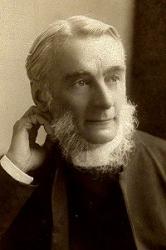
1825 - 1906 Person Name: Edward H. Bickersteth Topics: Communion Service Author of ""Till He Come!" Oh, Let the Words" in Hymns of the Christian Life Bickersteth, Edward Henry, D.D., son of Edward Bickersteth, Sr. born at Islington, Jan. 1825, and educated at Trinity College, Cambridge (B.A. with honours, 1847; M.A., 1850). On taking Holy Orders in 1848, he became curate of Banningham, Norfolk, and then of Christ Church, Tunbridge Wells. His preferment to the Rectory of Hinton-Martell, in 1852, was followed by that of the Vicarage of Christ Church, Hampstead, 1855. In 1885 he became Dean of Gloucester, and the same year Bishop of Exeter. Bishop Bickersteth's works, chiefly poetical, are:—
(l) Poems, 1849; (2) Water from the Well-spring, 1852; (3) The Rock of Ages, 1858 ; (4) Commentary on the New Testament, 1864; (5) Yesterday, To-day, and For Ever, 1867; (6) The Spirit of Life, 1868; (7) The Two Brothers and other Poems, 1871; (8) The Master's Home Call, 1872 ; (9) The Shadowed Home and the Light Beyond, 1874; (10) The Beef and other Parables, 1873; (11) Songs in the House of Pilgrimage, N.D.; (12) From Year to Year, 1883.
As an editor of hymnals, Bp. Bickersteth has also been most successful. His collections are:—
(1) Psalms & Hymns, 1858, based on his father's Christian Psalmody, which passed through several editions; (2) The Hymnal Companion, 1870; (3) The Hymnal Companion revised and enlarged, 1876. Nos. 2 and 3, which are two editions of the same collection, have attained to an extensive circulation. [Ch. of England Hymnody.]
About 30 of Bp. Bickersteths hymns are in common use. Of these the best and most widely known are:—" Almighty Father, hear our cry"; "Come ye yourselves apart and rest awhile"; "Father of heaven above"; "My God, my Father, dost Thou call"; "O Jesu, Saviour of the lost"; "Peace, perfect peace"; "Rest in the Lord"; "Stand, Soldier of the Cross"; " Thine, Thine, for ever"; and "Till He come.” As a poet Bp. Bickersteth is well known. His reputation as a hymn-writer has also extended far and wide. Joined with a strong grasp of his subject, true poetic feeling, a pure rhythm, there is a soothing plaintiveness and individuality in his hymns which give them a distinct character of their own. His thoughts are usually with the individual, and not with the mass: with the single soul and his God, and not with a vast multitude bowed in adoration before the Almighty. Hence, although many of his hymns are eminently suited to congregational purposes, and have attained to a wide popularity, yet his finest productions are those which are best suited for private use.
-John Julian, Dictionary of Hymnology (1907)
=================
Bickersteth, Edward Henry, p. 141, ii. Bishop Bickersteth's 1890 edition of his Hymnal Companion is noted on p. 1312, i., and several of his own hymns and translations, which appear therein for the first time, are annotated in this Appendix. One of these, "All-merciful, Almighty Lord," for the Conv. of St. Paul, was written for the 1890 edition of Hymnal Companion.
--John Julian, Dictionary of Hymnology, Appendix, Part II (1907)
==================
Bickersteth, B. H., p. 141, ii. Bp. Bickersteth died in London, May 16, 1906.
--John Julian, Dictionary of Hymnology, New Supplement (1907)
Edward Henry Bickersteth
Ray Palmer
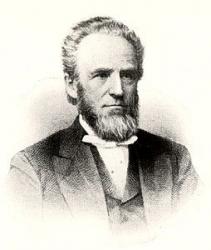
1808 - 1887 Person Name: Rev. Ray Palmer Topics: Communion Service Translator of "O Jesus, Joy of Loving Hearts" in Psalter Hymnal (Red) Ray Palmer (b. Little Compton, RI, 1808; d. Newark, NJ, 1887) is often considered to be one of America's best nineteenth-century hymn writers. After completing grammar school he worked in a Boston dry goods store, but a religious awakening prodded him to study for the ministry. He attended Yale College (supporting himself by teaching) and was ordained in 1835. A pastor in Congregational churches in Bath, Maine (1835-1850), and Albany, New York (1850-1865), he also served as secretary of the American Congregational Union (1865-1878). Palmer was a popular preacher and author, writing original poetry as well as translating hymns. He published several volumes of poetry and hymns, including Sabbath Hymn Book (1858), Hymns and Sacred Pieces (1865), and Hymns of My Holy Hours (1868). His complete poetical works were published in 1876.
Bert Polman
===================
Palmer, Ray, D.D., son of the Hon. Thomas Palmer, a Judge in Rhode Island, was born at Little Compton, Rhode Island, Nov. 12, 1808. His early life was spent at Boston, where he was for some time clerk in a dry-goods store. At Boston he joined the Park Street Congregational Church, then under the pastoral care of Dr. S. E. Dwight. After spending three years at Phillips Academy, Andover, he entered Yale College, New Haven, where he graduated in 1830. In 1835 he became pastor of the Central Congregational Church, Bath, Maine. During his pastorate there he visited Europe in 1847. In 1850 he was appointed to the First Congregational Church, at Albany, New York, and in 1865 Corresponding Secretary to the American Congregational Union, New York. He resigned in 1878, and retired to Newark, New Jersey. He died at Newark, Mar. 29, 1887. Dr. Palmer's published works in prose and verse include:--
(1) Memoirs and Select Remains of Charles Pond, 1829; (2) The Spirit's Life, a Poem, 1837; (3) How to Live, or Memoirs of Mrs. C. L. Watson, 1839; (4) Doctrinal Text Book, 1839; (5) Spiritual Improvement, 1839, republished as Closet Hours in 185; (6) What is Truth? or Hints on the Formation of Religious Opinions, 1860; (7) Remember Me, or The Holy Communion, 1865; (8) Hymns and Sacred Pieces, with Miscellaneous Poems, 1865; (9) Hymns of my Holy Hours, and Other Pieces, 1868; (10) Home, or the Unlost Paradise, 1873; and (11) Voices of Hope and Gladness, 1881.
Most of Dr. Palmer's hymns have passed into congregational use, and have won great acceptance. The best of them by their combination of thought, poetry, and devotion, are superior to almost all others of American origin. The first which he wrote has become the most widely known of all. It is:—
1. My faith looks up to Thee. Faith in Christ. This hymn was written by the author when fresh from College, and during an engagement in teaching in New York. This was in 1830. The author says concerning its composition, "I gave form to what I felt, by writing, with little effort, the stanzas. I recollect I wrote them with very tender emotion, and ended the last line with tears." A short time afterwards the hymn was given to Dr. Lowell Mason for use, if thought good, in a work then being compiled by him and Dr. T. Hastings. In 1831 that work was published as Spiritual Songs for Social Worship: adapted to the use of Families, &c. Words and Music arranged by Thomas Hastings, of New York, and Lowell Mason of Boston. It is No. 141 in 4 stanzas of 8 lines, entitled "Self Consecration," and accompanied with the tune by Dr. L. Mason, there given as "My faith looks up to Thee, "but subsequently known as Olivet. (Orig. text of hymn in Thring's Collection, 1882.) It has passed into most modern collections in all English-speaking countries, and has been rendered into numerous languages. That in Latin, by H. M. Macgill (p. 708, ii.), begins "Fides Te mea spectat."
2. Fount of everlasting love. Praise for renewed Spiritual Life. This also appeared in the Spiritual Songs, &c, 1831, No. 191, in 4 stanzas of 4 lines, and headed "Praise for a Revival."
The hymns which are given below are all in Dr. Palmer's Poetical Works, N. Y., 1876, and the dates appended in brackets are those given by him in that work.
3. Thou who roll'st the year around. (1832.) Close of the Year. In several American collections.
4. Away from earth my spirit turns. (1833.) Holy Communion. Appeared in Lowell Mason's Union Hymns, in 4 stanzas of 4 lines. In the Church Praise Book, N. Y.. 1882, it begins with st. ii., "Thou, Saviour, art the Living Bread."
5. Before Thy throne with tearful eyes. (1834.) Liberty of Faith.
6. Stealing from the world away. (1834.) Evening. Written at New Haven in 1834, and is very popular in America.
7. Thine [Thy] holy day's returning. (1834.) Sunday Morning.
8. Wake thee, 0 Zion. (1862.) Zion Exultant.
9. We stand in deep repentance. (1834.) Lent.
This last, No. 9, in common with Nos. 10, 11, 12, is marked "original," in the Presbyterian Parish Hymns, 1843. Probably they were given to the editors of that book in manuscript, and had not previously appeared.
10. And is there, Lord, a rest? (1843.) Rest in Heaven. Written at Bath, Maine, in 1843.
11. 0 sweetly breathe the lyres above. Consecration to Christ. This was accidentally omitted from Dr. Palmer's Poetical Works, 18?6. S. W. Duffield says:—
"It was written in the winter of 1842-43, at a time of revival. At the previous Communion several had been received under circumstances that made Doddridge's hymn, ‘0 happy day that fixed my choice 'a most appropriate selection. Not caring to repeat it, and needing something similar, Dr. Palmer composed the present hymn." English Hymns, N. Y., 1886, p. 432.
12. When downward to the darksome tomb. (1842.) Death Contemplated. Written at Bath, Maine, 1842.
From 1843 there comes a long break, and Dr. Palmer seems to have done no more hymn-writing until called upon by Professors Park and Phelps, of Andover, for contributions to their Sabbath Hymn-Book, 1858. His hymns written for that important collection rank amongst the best that America has produced. This is specially true of the first four (Nos. 13-16) from the Latin.
13. Jesus, Thou joy of loving hearts. (l858.) Translation of a cento from "Jesu dulcis memoria" (p. 588, ii.).
14. 0 Bread to Pilgrims given. (1858.) Translation of “O esca viatorum" (q.v.).
15. 0 Christ our King, Creator Lord. (1858.) Translation of “Rex Christe, factor omnium "
16. Come Holy Ghost, in love. (1858.) Translation of “Veni Sancte Spiritus" (q.v.)
17. Jesus, these eyes have never seen. (1858.) Christ loved, though unseen. This hymn is accounted by many as next in merit and beauty to "My faith looks up to Thee."
18. Lord, my weak thought in vain would climb. (1858.) God Unsearchable. This hymn deals with the mysteries of Predestination in a reverent and devout manner.
19. Thy Father's house! thine own bright home. (1858.) Heaven.
The next group, Nos. 20-27, appeared in Dr. Robinson's Songs for the Sanctuary, 1865.
20. Lord, Thou wilt bring the joyful day. (1864.) Contemplation of Heaven. Written in New York City.
21. Eternal Father, Thou hast said. (i860.) Missions.
22. Jesus, Lamb of God, for me. (1863.) Jesus, the Way of Salvation. Written in Albany, New York.
23. Take me, 0 my Father, take me. (1864.) Lent.
24. Wouldst thou eternal life obtain. (1864.) Good Friday.
25. Come Jesus, Redeemer, abide Thou with me. (1864.) Holy Communion.
26. Lord, Thou on earth didst love Thine own. (1864.) Fellowship with Christ.
27. Thou, Saviour, from Thy throne on high. (1864.) Prayer.
The next four (Nos. 28-31) present another group. They appeared in D. E. Jones's Songs for the New Life, 1869, and the Reformed Dutch Hymns of the Church, N. Y., 1869. The dates of composition are from Dr. Palmer's Poems, 1876.
28. Lord, Thou hast taught our hearts to glow. (1865.) Ordination, or Meeting of Ministers.
29. When inward turns my searching gaze. (1868.) Evening.
30. 0 Jesus, sweet the tears I shed. (1867.) Good Friday.
31. Jesus, this [my] heart within me burns. (1868.) Love.
The hymns which follow are from various sources.
32. 0 Christ, the Lord of heaven, to Thee. (1867.) Universal Praise to Christ. Appeared in the author's Hymns of my Holy Hours, 1867. It is a hymn of great merit, and is widely used.
33. Behold the shade of night is now receding. (1869.) A translation of "Ecce jam noctis." (p. 320, i., and Various).
34. Hid evening shadows let us all be waking. (1869.) A translation of "Nocte surgentes" (p. 809, i.).
35. I give my heart to Thee. (Aug. 20, 1868.) A translation of "Cor meum Tibi dedo," p. 262, ii.
36. Holy Ghost, that promised came. (1873.) Whitsuntide. From the author's Poems, 1876.
37. 0 Holy Comforter, I hear. The Comforter. Appeared in the Boston Congregationalist, September 7th, 1867.
38. Lord, when my soul her secrets doth reveal. (1865.) Holy Communion.
Most of the foregoing hymns are in common in Great Britain, and all are found in one or more American hymnbooks of importance. [Rev. F. M. Bird, M.A.]
-- John Julian, Dictionary of Hymnology (1907)
===================
Palmer, Ray, D.D., p. 877, i. The following original hymns by Dr. Palmer are also in common use:—
1. O Rock of Ages, since on Thee. Faith. From his Poetical Works, 1876, p. 27, where it is dated 1869. Bp. Bickersteth says "This hymn"... is "worthy of Luther." (Note Hymnal Companion, ed. 1876.)
2. Thy holy will, my God, be mine. Resignation. From his Hymns of my Holy Hours, &c, 1868, p. 47. Also in his P. Works, 1876, dated 1867.
3. We praise Thee, Saviour, for Thy grace. Holy Communion. From his Hymns and Sacred Pieces, &c, 1865. Also in P. Works, 1876, dated 1864.
--John Julian, Dictionary of Hymnology, Appendix, Part II (1907)
==========
Ray Palmer was born at Little Compton, Rhode Island, in 1808. He studied at Phillip's Academy, Andover, Mass., and graduated at Yale College in 1830. In 1835, he was ordained pastor of a Congregational Society in Bath, Maine, from which he removed, in 1850, to the pastorate of a Congregational Society in Albany, N.Y. He has published many hymns, some of his own authorship, and some translations. He has published some sermons and reviews.
--Annotations of the Hymnal, Charles Hutchins, M.A. 1872.
Ray Palmer
William B. Bradbury

1816 - 1868 Topics: Post-Communion Service Composer of "HE LEADETH ME" in Psalter Hymnal (Blue) William Batchelder Bradbury USA 1816-1868. Born at York, ME, he was raised on his father's farm, with rainy days spent in a shoe-shop, the custom in those days. He loved music and spent spare hours practicing any music he could find. In 1830 the family moved to Boston, where he first saw and heard an organ and piano, and other instruments. He became an organist at 15. He attended Dr. Lowell Mason's singing classes, and later sang in the Bowdoin Street church choir. Dr. Mason became a good friend. He made $100/yr playing the organ, and was still in Dr. Mason's choir. Dr. Mason gave him a chance to teach singing in Machias, ME, which he accepted. He returned to Boston the following year to marry Adra Esther Fessenden in 1838, then relocated to Saint John, New Brunswick. Where his efforts were not much appreciated, so he returned to Boston. He was offered charge of music and organ at the First Baptist Church of Brooklyn. That led to similar work at the Baptist Tabernacle, New York City, where he also started a singing class. That started singing schools in various parts of the city, and eventually resulted in music festivals, held at the Broadway Tabernacle, a prominent city event. He conducted a 1000 children choir there, which resulted in music being taught as regular study in public schools of the city. He began writing music and publishing it. In 1847 he went with his wife to Europe to study with some of the music masters in London and also Germany. He attended Mendelssohn funeral while there. He went to Switzerland before returning to the states, and upon returning, commenced teaching, conducting conventions, composing, and editing music books. In 1851, with his brother, Edward, he began manufacturring Bradbury pianos, which became popular. Also, he had a small office in one of his warehouses in New York and often went there to spend time in private devotions. As a professor, he edited 59 books of sacred and secular music, much of which he wrote. He attended the Presbyterian church in Bloomfield, NJ, for many years later in life. He contracted tuberculosis the last two years of his life.
John Perry
William B. Bradbury
Mary A. Lathbury
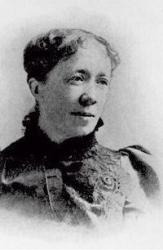
1841 - 1913 Topics: Communion Service Author of "Break thou the bread of life" in The Hymnal Lathbury, Mary Ann, was born in Manchester, Ontario County, New York, Aug. 10, 1841. Miss Lathbury writes somewhat extensively for the American religious periodical press, and is well and favourably known (see the Century Magazine, Jan., 1885, p. 342). Of her hymns which have come into common use we have:—
1. Break Thou the bread of life. Communion with God. A "Study Song" for the Chautauqua Literary and Scientific Circle, written in the summer of 1880. It is in Horder's (Eng.) Congregational Hymns, 1884.
2. Day is dying in the west. Evening. "Written at the request of the Rev. John H. Vincent, D.D., in the summer of 1880. It was a "Vesper Song," and has been frequently used in the responsive services of the Chautauqua Literary and Scientific Circle." It is in the Laudes Domini, N. Y., 1884.
For these details we are indebted to S. W. Duffield's English Hymns, &c, N. Y., 1886.
--John Julian, Dictionary of Hymnology (1907)
==================
Lathbury, Mary A., p. 640, i. Another hymn by this writer is, "Lift up, lift up thy voice with singing." [Praise to Christ), in Sankey's Sacred Songs & Solos, 1878.
--John Julian, Dictionary of Hymnology, Appendix, Part II (1907)
Mary A. Lathbury
Elizabeth Cecilia Clephane
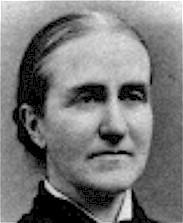
1830 - 1869 Person Name: Elizabeth C. Clephane Topics: Communion Service Author of "Beneath the Cross of Jesus" in Hymns of the Christian Life Clephane, Elizabeth Cecilia, third daughter of Andrew Clephane, Sheriff of Fife, was born at Edinburgh, June 18, 1830, and died at Bridgend House, near Melrose, Feb. 19, 1869. Her hymns appeared, almost all for the first time, in the Family Treasury, under the general title of Breathings on the Border. In publishing the first of these in the Treasury, the late Rev. W. Arnot, of Edinburgh, then editor, thus introduced them:—
"These lines express the experiences, the hopes, and the longings of a young Christian lately released. Written on the very edge of this life, with the better land fully, in the view of faith, they seem to us footsteps printed on the sands of Time, where these sands touch the ocean of Eternity. These footprints of one whom the Good Shepherd led through the wilderness into rest, may, with God's blessing, contribute to comfort and direct succeeding pilgrims."
The hymns, together with their dates,are:—
1. Beneath the cross of Jesus. Family Treasury, 1872, p. 398,
2. Mine eyes for ever closed. Family Treasury, 1872, p. 398.
3. Who climbeth up too nigh. Family Treasury, 1872, p. 552.
4. Into His summer garden. Family Treasury, 1873, p. 245.
5. From my dwelling midst the dead. Family Treasury, 1873, p. 365.
6. The day is drawing nearly done. Family Treasury, 1873, p. 389.
7. Life-light waneth to an end. Family Treasury, 1874, p. 595.
8. There were ninety and nine that safely lay. Family Treasury, 1874, p. 595.
Of these Nos. 1 and 8 are in common use. [Rev. James Mearns, M.A.]
--John Julian, Dictionary of Hymnology (1907)
Elizabeth Cecilia Clephane
Henry Burton
1840 - 1930 Person Name: Rev. Henry Burton Topics: Communion Service Author of "Come, for the Feast is Spread" in Psalter Hymnal (Red) Rv Alfred Henry Burton DD United Kingdom 1840-1930. Born at Swannington, Leicestershire, he emigrated with family to America and became a student at Beloit College, WI, graduating with honours. After a pastorate in the Methodist Episcopal Church at Monroe, WI, he returned to England and entered the Wesleyan Ministry in 1865. He married Ellen Pearse. He then ministered mostly in Lanca-shire and London. Published works include ”Gleanings in the gospels:, “Wayside songs”, “St. Luke in Expositor's Bible”.
John Perry
=====================
Burton, H. In I. D. Sankey's Sacred Songs and Solos, 1878, the hymns, "Come, for the feast is spread," (The Gospel Invitation), and "Look away to Jesus" (Looking unto Jesus) are attributed to the "Rev. H. Burton”
--John Julian, Dictionary of Hymnology, Appendix, Part II (1907)
=====================
Burton, Henry, D.D., p. 1555, i., born at Swannington, Leicestershire, in 1840. His parents having emigrated to America, he became a student at Beloit College, and graduated in honours. After labouring as a minister of the Methodist Episcopal Church for a time he returned to England, entered the Wesleyan Ministry in 1865, and has since laboured chiefly in Lanca¬shire and London. His published works include Gleanings in the Gospels, Wayside Songs, 1886, St. Luke in the Expositor's Bible, &c. His hymns in common use, in addition to those named on p. 1555, i., include:—
1. Break, day of God, 0 break. [Second Advent.] Written at Blundell Sauds, near Liverpool, on Christmas Eve, 1900, and included in The Methodist Hymn Book, 1904. "The opening stanza was composed on the Railway Bridge where I lingered on my way home" (Author's MS!.).
2. In the secret of His presence. [Peace in Christ.] Written at Acton, London, published in his Wayside Songs, 1886, and included in the Epworth Hymnal, U.S.A.
3. 0 King of Kings, 0 Lord of hosts. [National Hymn.] Dr. Burton's history of this hymn is: "In the late Queen's Jubilee year, 1887, I composed an Ode which was set to music by Sir J. Stainer, and sung at a Jubilee Festival in the Royal Albert Hall, London. As the Ode could not be sung at any other time, Sir J. Stainer requested me to compose a hymn to which the same music should be set [and of a national character]. This led me to write the hymn" Author's MS.). It is No. 975 in The Methodist Hymn Book, 1904.
4. Have you had a kindness shown? Pass it on. [Kind Deeds.] "This is based on a little incident in the life of my brother-in-law, the Rev. Mark Guy Pearse. When a boy returning home from a Moravian school in Holland, the steward of the boat on which he sailed from Bristol to Hayle showed him marked attention and kindness, because Mr. Pearse's father, years before, had proved a great friend to his mother. And so he was simply 'passing on' the kindness." (Author's MS.). The hymn was written at Acton on April 8, 1885, and first printed in The Christian Advocate, N.Y., 1886, and again in Wayside Songs, 1886, p. 81. The first stanza has been adopted as a motto by the "International Sunshine Society," of New York.
--John Julian, Dictionary of Hymnology, New Supplement (1907)
==========================
See also in:
Hymn Writers of the Church
Henry Burton
S. J. Stone

1839 - 1900 Person Name: Samuel J. Stone Topics: Post-Communion Service Author of "The Church's One Foundation" in Psalter Hymnal (Blue) Stone, Samuel John, a clergyman of the Church of England, the son of Rev. William Stone, was born at Whitmore, Staffordshire, April 25, 1839. He was educated at Pembroke College, Oxford, where he was graduated B.A. in 1862. Later he took orders and served various Churches. He succeeded his father at St. Paul's, Haggerstown, in 1874. He was the author of many original hymns and translations, which were collected and published in 1886. His hymns are hopeful in spirit and skillfully constructed. He published several poetic volumes. He died November 19, 1900
--Hymn Writers of the Church, 1915 (Charles Nutter)
============================
Stone, Samuel John, M.A., son of the Rev. William Stone, M.A., was born at Whitmore, Staffordshire, April 25, 1839, and educated at the Charterhouse; and at Pembroke College, Oxford, B.A. 1862; and M.A. 1872. On taking Holy Orders he became Curate of Windsor in 1862, and of St. Paul's, Haggerston, 1870. In 1874 he succeeded his father, at St. Paul's, Haggerston. Mr. Stone's poetical works are (1) Lyra Fidelium, 1866; (2) The Knight of Intercession and Other Poems, 1872, 6th edition, 1887; (3) Sonnets of the Christian Year, first printed in the Leisure Hour, and then published by the R. T. Society, 1875; (4) Hymns, a collection of his original pieces and translations, 1886. He has also published Order of The Consecutive Church Service for Children, with Original Hymns, 1883. Mr. Stone's hymns, most of which are in common use, and several of which have a wide popularity, include:—
1. A sower went to sow his seed. The Sower. In his Hymns, 1886, the author says this hymn was ”Written specially in allusion to the sixteen years' work of the first Vicar [his Father] of St. Paul's, Haggerston, to whom the Parish was given in 1858, without Church, or School, or "Vicarage, or Endowment."
2. Bear the troubles of thy life. Patience. A translation of Thomas a Kempis's “Ad versa mundi tolera" (p. 23, ii.) made for the Rev. S. Kettlewell's Thomas á Kempis, 1882.
3. By Paul at war in Gentile lands. St. Mark. Written at Windsor in 1870, and published in his Knight of Intercession, 1872.
4. By Shepherds first was heard. Carol. Written in 1885, and published in the Parochial Magazine, 1885.
5. By Thy love which shone for aye. Litany of the Love of God. Written at Haggerston in 1883, and printed in the Monthly Packet, 1884.
6. Christ the Wisdom and the Power. For Church Workers. Written for the Church Society of St. Paul's, Haggerston in 1812, and published in The Knight of Intercession, 1872.
7. Dark is the sky that overhangs my soul. Sorrow succeeded by Joy. Written at Windsor in 1869 for the Monthly Packet, and printed therein 1869. Published in The Knight of Intercession, 1872, under the title of "Light at Eventide."
8. Deeply dark and deeply still. The Transfiguration. Written in 1871 and published in The Knight of Intercession, 1872.
9. Eastward, ever eastward. Processional for Sunday Morning. Written at Haggerston in 1876, and published in the Monthly Packet, 1884.
10. Faith, who sees beyond the portal. Faith, Hope, and Charity. Written at Windsor in 1869, and published in the Monthly Packet, 1869, and The Knight of Intercession, 1872.
11. Far off our brethren's voices. Missions. Written for the First Day of Intercession for Foreign Missions, 1871, and published in The Knight of Intercession, 1872. "For Colonial Missions."
12. Give the word, Eternal King. Missions. Written for the First Day of Intercession for Foreign Missions, 1871.
13. Glory in heaven to God. Christmas Carol. Written in 1882 for G. H. Leslie's Cantata The First Christmas Morn, 1882.
14. God the Father, All, and One. For Unity. Written in 1883 for Canon G. Venables's Service for Unity, and appeared in the Monthly Packet, 1884.
15. God the Father's Only Son. Offices of Christ. Published in his Lyra Fidelium, 1866, on Article ii.of the Apostles' Creed, "And in Jesus Christ His Only Son our Lord."
16. God the Spirit, we adore Thee. The Holy Ghost. Published in his Lyra Fidelium, 1866, or) Article viii. of the Apostles' Creed, "I believe in the Holy Ghost."
17. Great Captain of God's armies. For Purity. Written in 1884 for the Church of England Purity Society, and printed in Church Bells, April 10, 1885.
18. Homeward we pass in peace. Close of Divine Service. Written in 1884 at Haggerston; and included in the author's Hymns, 1886, as a "Hymn after Benediction."
19. How can we praise Thee, Father? For the Fatherless. Written by request for "The Church of England Central Home for Waifs and Strays," 1882, and printed in the Monthly Packet, 1884.
20. Is there no hope for those who lie? Missions. Written in 1870 for the Monthly Packet; and also included in The Knight of Intercession, 1872.
21. Jesu, to my heart most precious. Jesus, All in All. A translation of Thomas á Kempis's "De dulcedine Jesu," made for the Rev. S. Kettlewell's Thomas á Kempis, 1882.
22. Lo! They were, and they are, and shall be. St. Michael and All Angels. Written in 1875 for The Scottish Guardian, in which it was given in 1875.
23. Lord Christ, my Master dear. For Church Workers. Written for the Sunday School Teachers of St. Paul's, Haggerston, 1885, and given in his Hymns, 1886.
24. Lord of the harvest, it is right and meet. Missions, Thanksgiving. Written for the Second Day of Intercession for Foreign Missions, 1871, and published in The Knight of Intercession, 1872. In the 1889 Appendix to Hymns Ancient & Modern it is somewhat altered.
25. Most true, most High; O Trinity. Holy Trinity. A translation of Thomas á Kempis's "O vera summa Trinitas" made for the Rev. S. Kettlewell's Thomas á Kempis, 1882.
26. My Saviour! I behold Thy life. Passiontide. Published in his Lyra Fidelium, 1866, on Article iv. of the Apostles' Creed, "Suffered under Pontius Pilate, was Crucified, Dead, and Buried."
27. Need hath the golden city none. Evening. Written at Windsor in 1869, and was published in the Monthly Packet in 1870. Also in The Knight of Intercession, 1872.
28. None else but Thee for evermore. God the Father. The opening hymn of his Lyra Fidelium, 1866, on Article i. of the Apostles' Creed, "I believe in God the Father Almighty, Maker of Heaven and Earth."
29. 0 joy, the purest, noblest. Evening. A translation in two parts of Thomas á Kempis's "O qualis quantaque laetitia" made for the Rev. S. Kettlewell's Thomas á Kempis, 1882. Pt. ii. begins "State of divinest splendour!"
30. 0 Thou by Whom the saints abide. Litany of the Holy Spirit. Written for a Confirmation at Haggerston, 1875, and included in the 3rd edition of The Knight of Intercession, 1875.
31. 0 Thou Whose love paternal. Holy Matrimony. Written at Windsor in 1863.
32. On Olivet a little band. Ascension. Published in his Lyra Fidelium, 1866, on Article vi. of the Apostles’ Creed, “He ascended into Heaven," &c.
33. Peace: legacy of mystic power. Peace . Written in 1882 for The Society of St. Katharine for Invalids, and published in the Monthly Packet, 1884.
34. Remember Me, show forth My death. Holy Communion. Written at Windsor for the Monthly Packet, in 1870; and included in The Knight of Intercession, 1872.
35. The Son forsook the Father's home. Christmas. Published in his Lyra Fidelium, 1866, on Art. iii. of the Apostles' Creed, “Who was conceived by the Holy Ghost, Born of the Virgin Mary."
36. The old year's long campaign is o'er. The New Year. Written at Windsor in 1868, and published in The Knight of Intercession, 1872.
37. The whole creation groans and cries. Travail of the Creation. Written at Windsor for the Monthly Packet, 1869, and included in The Knight of Intercession, 1872.
38. The world is sad with hopes that die. Everlasting Life. Published in his Lyra Fidelium, 1866, on Art. xii. of the Apostles' Creed, "The Life Everlasting."
39. Their names are names of Kings. Saints Days. Written at Windsor for the Monthly Packet in 1869, and included in The Knight of Intercession, 1872.
40. There is an ancient river. The Spiritual River. Written at Windsor for the Monthly Packet, in 1870; and given in The Knight of Intercession, 1872.
41. Thou Who hast charged Thine elder sons. For School Teachers. Written in 1881 for St. Katharine's Training College for Mistresses; and subsequently adapted for use by teachers of both sexes.
42. Thou Who didst love us when our woes began. Temperance. Written for the Church of England Temperance Society Magazine, 1866.
43. Through midnight gloom from Macedon. Missions. Written for the First Day of Intercession for Foreign Missions, 1871.
44. Unchanging God, hear from eternal heaven. On behalf of the Jews. Written for the East London Mission to the Jews, 1885. It is included in an abridged form in the 1889 Appendix to Hymns Ancient & Modern.
45. While the Shepherds kept their vigil. Christmas Carol. Written at Windsor in 1868.
46. Winter in his heart of gloom. The Resurrection of the Body. Published in his Lyra Fidelium, 1866, on Article xi. of the Apostles' Creed, "The Resurrection of the Body."
47. Wistful are our waiting eyes. The Judgment. Published in his Lyra Fidelium, 1866, on Art. vii. of the Apostles' Creed, "From thence He shall come to judge the quick and the dead."
48. Ye faithful few of Israel's captive days. Holy Scriptures. Written at Windsor for the Monthly Packet, in 1869.
Some of Mr. Stone's finer hymns, including "Round the Sacred City gather;" "The Church's One Foundation;" "Weary of earth and laden with my sin," and others, are annotated under their respective first lines. These, together with the 48 above, are given in his Hymns, 1886, some of the translations being recast. Additional translations from Thomas á Kempis are also noted under his name.
Another hymn, inseparably associated with Mr. Stone's name is:—
49. Lord of our Soul's salvation. National Thanksgiving. This was ordered by command of Her Majesty the Queen to be sung at the Thanksgiving for the recovery of H. R. H. The Prince of Wales, on Feb. 27, 1872. In its original form it was in 7 stanzas of 8 lines, and was thus sung throughout the country. Owing however to the necessary restrictions as to time in the Cathedral service, a selection of four verses only--the First, a combination of the 2nd and 4th, the 6th, and the 7th--was adapted by the author for use in St. Paul's." The full text was included in The Knight of Intercession, 1872.
Mr. Stone's hymns vary considerably in metre and subject, and thus present a pleasing variety not always found in the compositions of popular hymnwriters. His best hymns are well designed and clearly expressed. The tone is essentially dogmatic and hopeful. The absence of rich poetic thought and graceful fancy is more than atoned for by a masterly condensation of Scripture facts and of Church teaching given tersely and with great vigour. His changes and antitheses are frequently abrupt, in many instances too much so for congregational purposes, and his vocabulary is somewhat limited. His rhythm, except where broken either by long or by compound words, is rarely at fault, and his rhyme is usually perfect. A few of his hymns are plaintive and pathetic, as the tender "Weary of earth and laden with my sin;" others are richly musical, as "Lord of the harvest! it is right and meet:" but the greater part are strongly outspoken utterances of a manly faith, where dogma, prayer, and praise are interwoven with much skill. Usually the keynote of his song is Hope. He died Nov. 19, 1900.
-- John Julian, Dictionary of Hymnology (1907)
=====================
Stone, S. J. , p. 1095, i. Of his hymns noted there the following appeared in Mission Life, 1872, vol. iii., pt. ii., pp. 685-88. No. 11, "Far off our brethren's voices," for Church Missionary Hymn Book, Colonial Missions, and No. 12, "Give the word, Eternal King," and No. 43, "Through midnight gloom from Macedon," for "Foreign Missions." In addition the following are also in common use:—
1. Awake, 0 Lord, the zeal of those who stand. Intercession for the Clergy. In the Church Missionary Hymn Book, 1899.
2. England, by thine own Saint Alban. St. Alban. In C. W. A. Brooke's Additional Hymns, 1903.
3. Our God of love Who reigns above. For Children. Appeared in the Church Monthly, July 1899, and Hymns Ancient & Modern, 1904.
--John Julian, Dictionary of Hymnology, New Supplement (1907)
S. J. Stone
Robert Lowry
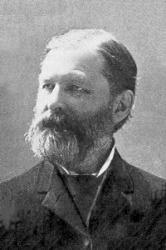
1826 - 1899 Topics: Post-Communion Service Author (Refrain) of "I Need Thee Every Hour" in Psalter Hymnal (Blue) Robert Lowry was born in Philadelphia, March 12, 1826. His fondness for music was exhibited in his earliest years. As a child he amused himself with the various musical instruments that came into his hands. At the age of seventeen he joined the First Baptist Church of Philadelphia, and soon became an active worker in the Sunday-school as teacher and chorister.
At the age of twenty-two he gave himself to the work of the ministry, and entered upon a course of study at the University of Lewisburg, Pa. At the age of twenty-eight he was graduated with the highest honors of his class. In the same year of his graduation, he entered upon the work of the ministry. He served as pastor at West Chester, Pa., 1851-1858; in New York City, 1859-1861; in Brooklyn, 1861-1869; in Lewisburg, Pa., 1869-1875. While pastor at Lewisburg, he was also professor of belles lettres in the University, and received the honorary degree of D. D. in 1875.
He then went to Plainfield, N. J., where he became pastor of Park Avenue Church. In each of these fields his work was crowned with marked success.
Dr. Lowry was a man of rare administrative ability, a most excellent preacher, a thorough Bible student, and whether in the pulpit or upon the platform, always a brilliant and interesting speaker. He was of a genial and pleasing disposition, and a high sense of humor was one of his most striking characteristics. Very few men had greater ability in painting pictures from the imagination. He could thrill an audience with his vivid descriptions, inspiring others with the same thoughts that inspired him.
His melodies are sung in every civilized land, and many of his hymns have been translated into foreign tongues. While preaching the Gospel, in which he found great joy, was his life-work, music and hymnology were favorite studies, but were always a side issue, a recreation.
In the year 1880, he took a rest of four years, visiting Europe. In 1885 he felt that he needed more rest, and resigned his pastorate at Plainfield, and visited in the South and West, also spending some time in Mexico. He returned, much improved in health, and again took up his work in Plainfield.
On the death of Wm. B. Bradbury, Messrs. Biglow & Main, successors to Mr. Bradbury in the publishing business, selected Dr. Lowry for editor of their Sunday-school book, Bright Jewels, which was a great success. Subsequently Dr. W. Doane was associated with him in the issue of the Sunday-school song book, Pure Gold, the sales of which exceeded a million copies. Then came Royal Diadem, Welcome Tidings, Brightest and Best, Glad Refrain, Good as Gold, Joyful Lays, Fountain of Song, Bright Array, Temple Anthems, and numerous other volumes. The good quality of their books did much to stimulate the cause of sacred song in this country.
When he saw that the obligations of musical editorship were laid upon him, he began the study of music in earnest, and sought the best musical text-books and works on the highest forms of musical composition. He possessed one of the finest musical libraries in the country. It abounded in works on the philosophy and science of musical sounds. He also had some musical works in his possession that were over one hundred and fifty years old.
One of his labors of love some years ago was an attempt to reduce music to a mathematical basis. On the established fact that Middle C has two hundred and fifty-six vibrations per second, he prepared a scale and went to work on the rule of three. After infinite calculation and repeated experiments, he carried it far enough to discover that it would not work.
A reporter once asked him what was his method of composition — "Do you write the words to fit the music, or the music to fit the words?" His reply was, "I have no method. Sometimes the music comes and the words follow, fitted insensibly to the melody. I watch my moods, and when anything good strikes me, whether words or music, and no matter where I am, at home or on the street, I jot it down. Often the margin of a newspaper or the back of an envelope serves as a notebook. My brain is a sort of spinning machine, I think, for there is music running through it all the time. I do not pick out my music on the keys of an instrument. The tunes of nearly all the hymns I have written have been completed on paper before I tried them on the organ. Frequently the words of the hymn and the music have been written at the same time."
The Doctor frequently said that he regarded "Weeping Will Not Save Me" as the best and most evangelistic hymn he ever wrote. The following are some of his most popular and sweetest gospel melodies: "Shall We Gather at the River?," "One More Day's Work for Jesus," "Where is My Wandering Boy To-night?," "I Need Thee Every Hour," "The Mistakes of My Life," "How Can I Keep from Singing?," "All the Way My Saviour Leads Me," "Saviour, Thy Dying Love," "We're Marching to Zion," etc. "Shall We Gather at the River?" is perhaps, without question, the most widely popular of all his songs. Of this Mr. Lowry said: "It is brass band music, has a march movement, and for that reason has become popular, though for myself I do not think much of it." Yet he tells us how, on several occasions, he had been deeply moved by the singing of that hymn, "Going from Harrisburg to Lewisburg once I got into a car filled with half-drunken lumbermen. Suddenly one of them struck up, "Shall We Gather at the River?" and they sang it over and over again, repeating the chorus in a wild, boisterous way. I did not think so much of the music then as I listened to those singers, but I did think that perhaps the spirit of the hymn, the words so flippantly uttered, might somehow survive and be carried forward into the lives of those careless men, and ultimately lift them upward to the realization of the hope expressed in my hymn." "A different appreciation of it was evinced during the Robert Raikes' Centennial. I was in London, and had gone to meeting in the Old Bailey to see some of the most famous Sunday-school workers in the world. They were present from Europe, Asia, and America. I sat in a rear seat alone. After there had been a number of addresses delivered in various languages, I was preparing to leave, when the chairman of the meeting announced that the author of "Shall We Gather at the River?" was present, and I was requested by name to come forward. Men applauded and women waved their handkerchiefs as I went to the platform. It was a tribute to the hymn; but I felt, when it was over, that, after all, I had perhaps done some little good in the world, and I felt more than ever content to die when God called." On Children's Day in Brooklyn, in 1865, this song was sung by over forty thousand voices.
While Dr. Lowry said, "I would rather preach a gospel sermon to an appreciative, receptive congregation than write a hymn," yet in spite of his preferences, his hymns have gone on and on, translated into many languages, preaching and comforting thousands upon thousands of souls, furnishing them expression for their deepest feelings of praise and gratitude to God for His goodness to the children of men. What he had thought in his inmost soul has become a part of the emotions of the whole Christian world. We are all his debtors.
Rev. Robert Lowry, D. D., died at his residence in Plainfield, K J., November 25, 1899. Dead, yet he lives and his sermons in gospel song are still heard and are doing good. Dr. Lowry was a great and good man, and his life, well spent, is highly worthy of a place among the world's greatest gospel song and hymn writers.
-- Biography of Gospel Song and Hymn Writers
-------
Lowry, Robert, D.D., son of Crozier Lowry, was born at Philadelphia, Pennsylvania, March 12, 1826, and educated at Lewisburg University. Having received ordination as a Baptist Minister, his first charge was at West Chester, Pennsylvania. From thence he passed to New York City, and then to Brooklyn, N. Y. In 1876 he was appointed Professor of Rhetoric in his University. On resigning his Professorship he undertook the charge of the 2nd Baptist Church, New Jersey. Dr. Lowry has been associated with some of the most popular Sunday School hymn-books published in the States, including Happy Voices, 1865; Chapel Melodies, 1868; Bright Jewels, 1869; Pure Gold, 1871; Royal Diadem, 1873; Tidal Wave, 1874; Fountain of Song1877; Welcome Tidings, 1877, &c. Of Dr. Lowry's hymns those which have attained the widest circulation are:—
1. Jerusalem, for ever bright. Heaven. Appeared in the American Tract Society's Happy Voices, 1865, with music by the author.
2. Low in the grave He lay. Resurrection of Christ. Written in 1874 and published in Brightest and Best, 1875.
3. Marching on, marching on. Sunday School Battle Song. Appeared, with music by the author, in Happy Voices, 1865.
4. My home is in heaven, my rest is not here. In Happy Voices, 1865, with music by the author.
5. My life flows on in endless song. Joy in God. In Bright Jewels, 1869; the Royal Diadem, 1873, and others in America and Great Britain, with music by the author.
6. One more day's work for Jesus. Work for Christ. Published, with music by the author, in Bright Jewels, 1869.
7. Shall we gather at the river? Mutual recognition in the Hereafter. The origin of this hymn is thus set forth in E. W. Long's Illustrated History of Hymns and their Authors, Philadelphia, 1876, p. 64:—
”On a very hot summer day, in 1864, a pastor was seated in his parlour in Brooklyn, N. Y. It was a time when an epidemic was sweeping through the city, and draping many persons and dwellings in mourning. All around friends and acquaintances were passing away to the spirit land in large numbers. The question began to arise in the heart, with unusual emphasis, ‘Shall we meet again? We are parting at the river of death, shall we meet at the river of life?' ‘Seating myself at the organ,’ says he, ‘simply to give vent to the pent up emotions of the heart, the words and music of the hymn began to flow out, as if by inspiration:—
‘Shall we gather at the river,
Where bright angel feet have trod?’"
In 1865 the hymn and music were given in Happy Voices, No. 220, in 5 stanzas of 4 lines and a chorus. The hymn has since passed into a great number of hymnals in Great Britain and America.
8. Take the wings of the morning; speed quickly thy flight. Exhortation to Repentance. Written for, and published with music by the author in, the Royal Diadem, 1873.
9. Weeping will not save me. Salvation through Faith. Published in the Chapel Melodies, 1868.
10. What can wash away my stain? Precious Blood of Jesus. Given in the Welcome Tidings, 1877, with music by the author.
11. Where is my wandering boy tonight! The absent Child. In the Fountain of Song, 1877, together with music by the author.
Most of these hymns are given in Mr. I. D. Sankey's Sacred Songs & Solos, Pts. i., ii.
--John Julian, Dictionary of Hymnology (1907)
Robert Lowry
Pages




