

 My Starred Hymns
 My FlexScores
 My Hymnals
 My Purchased Files
Planning worship?
Check out our sister site, ZeteoSearch.org,
for 20+ additional resources related to your search.
- |
User Links
Person Results
Christian Fürchtegott Gellert
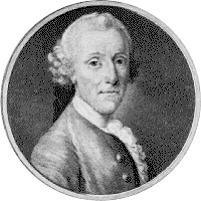
1715 - 1769 Person Name: Christian Fürchtegott Gellert (1715-1769) Topics: Purity Of Heart Author of "Jesus lives! thy terrors now" in Ancient and Modern Gellert, Christian Fürchtegott, son of Christian Gellert, pastor at Hainichen in the Saxon Harz, near Freiberg, was born at Hainichen, July 4, 1715. In 1734 he entered the University of Leipzig as a student of theology, and after completing his course acted for some time as assistant to his father. But then, as now, sermons preached from manuscript were not tolerated in the Lutheran Church, and as his memory was treacherous, he found himself compelled to try some other profession. In 1739 he became domestic tutor to the sons of Herr von Lüttichau, near Dresden, and in 1741 returned to Leipzig to superintend the studies of a nephew at the University. He also resumed his own studies. He graduated M.A. 1744; became in 1745 private tutor or lecturer in the philosophical faculty; and was in 1751 appointed extraordinary professor of philosophy, lecturing on poetry and rhetoric, and then on moral philosophy. An ordinary professorship offered to him in 1761 he refused, as he did not feel strong enough to fulfil its duties, having been delicate from a child, and after 1752 suffering very greatly from hypochondria. He died at Leipzig, Dec. 13, 1769 (Koch, vi. 263-277; Allgemeine Deutsche Biographie, viii. 544-549, &c).
As a professor, Gellert was most popular, numbering Goethe and Lessing among his pupils, and won from his students extraordinary reverence and affection, due partly to the warm interest he took in their personal conduct and welfare. In his early life he was one of the contributors to the Bremer Beiträge; and was one of the leaders in the revolt against the domination of Gottsched and the writers of the French school. His Fables (1st Ser. 1746; 2nd 1748), by their charm of style, spirit, humour and point, may justly be characterised as epoch-making, won for him universal esteem and influence among his contemporaries of all classes, and still rank among the classics of German literature.
As a hymnwriter he also marks an epoch; and while in the revival of churchly feeling the hymns of the Rationalistic period of 1760 to 1820 have been ignored by many recent compilers, yet the greatest admirers of the old standard hymns have been fain to stretch their area of selection from Luther to Gellert. He prepared himself by prayer for their composition, and selected the moments when his mental horizon was most unclouded. He was distinguished by deep and sincere piety, blameless life, and regularity in attendance on the services of the Church. His hymns are the utterances of a sincere Christian morality, not very elevated or enthusiastic, but genuine expressions of his own feelings and experiences; and what in them he preached he also put in practice in his daily life. Many are too didactic in tone, reading like versifications of portions of his lectures on morals, and are only suited for private use. But in regard to his best hymns, it may safely be said that their rational piety and good taste, combined with a certain earnestness and pathos, entitle them to a place among the classics of German hymnody. They exactly met the requirements of the time, won universal admiration, and speedily passed into the hymnbooks in use over all Germany, Roman Catholic as well as Lutheran.
Two of Gellert's hymns are noted under their own first lines, viz., "Jesus lebt, mit ihm auch ich," and "Wie gross ist des All-mächtgen Güte." The following have also passed into English, almost all being taken from his Geistliche Oden und Lieder, a collection of 54 hymns first published at Leipzig, 1757, and which has passed through very numerous editions:—
I. Hymns in English common use:
i. An dir allein, an dir hab ich gesündigt. Lent. 1757, p. 102, in 6 stanzas of 4 lines, entitled "Hymn of Penitence." In Zollikofer's Gesange-Buch, 1766, and the Berlin Geistliche Lieder S., ed. 1863, No. 499. Translated as:—
Against Thee only have I sinn'd, I own it. A good and full version, by Miss Wink worth, as No. 42 in her Chorale Book for England, 1863.
Another translation is:— "Against Thee, Lord, Thee only my transgression," by N. L. Frothingham, 1870, p. 241.
ii. Dies ist der Tag, den Gott gemacht. Christmas. One of his best and most popular hymns. 1757, p. 72, in 11 stanzas of 4 lines, repeated in the Berlin Gesang-Buch, 1765, No. 55, and the Berlin Geistliche Lieder S. ed. 1863, No. 154. Translated as:—
This is the day the Lord hath made, O'er all the earth. A translation of stanzas i.-iii., x., by Miss Borthwick, as No. 22 in Dr. Pagenstecher's Collection, 1864, and included in Hymns from the Land of Luther, 1884, p. 256.
Other trs. are:—(1) "This is the day which God ordains," by Dr. G. Walker, 1860, p. 27. (2) "This day shall yet by God's command," in the Family Treasury, 1811, p. 278.
iii. Für alle Güte sei gepreist. Evening. 1757, p. 85, in 4 stanzas of 6 lines, included in Zollikofer's Gesang-Buch 1766, No. 78, and the Berlin Geistliche Lieder S., ed. 1863, No. 1160. Translated as:—
To Father, Son, and Spirit praise. A good and full translation by A. T. Russell, as No. 7 in his Psalms & Hymns, 1851.
Another translation is: — "For all Thy kindness laud I Thee," by H. J. Buckoll, 1842, p. 96.
iv. Gott ist mein Lied. Praise. On God's Might and Providence. 1757, p. 78, in 15 st. of 5 1. In the Berlin Geistliche Lieder S.., ed. 1863, No. 24. Translated as:—
God is my song, His praises I'll repeat, A free translation of stanzas i.-v., as No. 94 in Sir John Bowring's Hymns, 1825. Repeated, omitting stanza ii., as No. 114 in Dale's English Hymn Book, 1875.
Other translations are:— (1) “Of God I sing," by Dr. H. Mills, 1856, p. 11. (2) "God is my song, With sovereign," by N. L. Frothingham, 1870, p. 243.
v. Wenn ich, o Schöpfer, deine Macht. Praise. This fine hymn of Praise for Creation and Providence was first published 1757, p. 62, in 6 stanzas of 7 lines. In the Berlin Gesang-Buch, 1765, No. 25, and Berlin Geistliche Lieder S.ed. 1863, No. 72. Translated as:—-
Thou Great First Cause! when of Thy skill. In full in Dr. H. Mills's Horae Germanicae, 1845 (1856, p. 5). Stanzas ii., iii., v., vi., altered and beginning, "The earth, where'er I turn mine eye," are in the American Lutheran General Synod's Collection, 1852.
Other trs. are:— (1) "When, O my dearest Lord, I prove," by Miss Dunn, 1857, p. 80. (2) "Creator! when I see Thy might," in Madame de Pontes's Poets and Poetry of Germany, 1858, v. i. p. 472. (3) "When I, Creator, view Thy might," by Miss Manington, 1863.
vi. Wer Gottes Wort nicht halt, und spricht. Faith in Works. This didactic hymn on Faith proved by Works, was first published 1757, p. 49, in 5 stanzas of 6 lines. In Zollikofer's Gesang-Buch, 1766, and the Berlin Geistliche Lieder S. ed. 1863, No. 72. Translated as:—
Who keepeth not God's Word, yet saith. A good and full translation by Miss Winkworth, in her Lyra Germanica, 2nd Ser., 1858, p. 161. A greatly altered version of stanzas ii.—v., beginning, "True faith in holy life will shine," was included as No. 418 in Kennedy, 1863, and repeated in the Ibrox Hymnal 1871, J. L. Porter's Collection 1876, and others.
II. Hymns not in English common use:
vii. Auf Gott, und nicht auf meinen Rath. Trust in God's Providence. 1757, p. 134, in 6 stanzas. Translated as: (1) "Rule Thou my portion, Lord, my skill," by Dr. H. Mills, 1845 (1856, p. 164). (2) "On God and on no earthly trust," by J. D. Burns, in his Remains, 1869.
viii. Auf, schicke dich. Christmas. 1757, p. 109, in 1 stanza. Translated as, "Come, tune your heart," by Miss Cox, 1841, p. 17 (1864, p. 39).
ix. Dein Heil, o Christ! nicht zu verscherzen. Prayer. 1757, p. 6, in 14 stanzas of 8 lines. In J. A. Schlegel's Geistliche Gesänge, 3rd Ser., 1772, p. 193, recast as "Zu deinem Gotte beten," in 5 stanzas of 12 lines; and this in the Kaiserwerth Lieder-Buch für Kleinkinderschulen, 1842, No. 208, appears "Zu Gott im Himmel beten," in 8 stanzas of 4 lines. The 1842 was translated as, "O how sweet it is to pray," by Mrs. Bevan, 1859, p. 148.
x. Der Tag ist wieder hin, und diesen Theil des Lebens. Evening. 1757, p. 13, in 10 stanzas, as "Self-Examination at Eventide." Translated as,"Another day is ended," by Miss Warner, 1869 (1871, p. 9).
xi. Du klagst, und fühlest die Beschwerden. Contentment. 1757, p. 91, in 8 stanzas. Translated as "Thy wounded spirit feels its pain," by Dr. B. Maguire, 1883, p. 153.
xii. Erinnre dich, mein Geist, erfreut. Easter. 1757, p. 27, in 13 stanzas. Translated as, "Awake, my soul, and hail the day," in Dr. J. D. Lang's Aurora Australis, Sydney, 1826, p. 43.
xiii. Er ruft der Sonn, und schafft den Mond. New Year. 1757, p. 154, in 6 stanzas. In the Berlin Gesang-Buch, 1765, No. 233, as "Gott ruft." Translated as, “Lord, Thou that ever wast and art," in the British Magazine, Jan., 1838, p. 36.
xiv. Gott, deine Güte reicht so weit. Supplication. 1757, p. 1, in 4 stanzas, founded on 1 Kings iii. 5-14. The translations are: (1) "O God, Thy goodness doth extend, Far as," by Dr. J. D. Lang, 1826, p. 10. (2) "Behold! Thy goodness, oh my God," by Miss Fry, 1845, p. 78.
xv. Gott ist mein Hort. Holy Scripture. 1757, p. 70, in 8 stanzas. Translated as, "I trust the Lord, Upon His word," by Dr. H. Mills, 1845 (1856, p. 23).
xvi. Herr, der du mir das Leben. Evening. 1757, p. 121, in 5 stanzas. Translated as, "By Thee, Thou Lord of Heaven," by H. J. Buckoll, 1842, p. 97.
xvii. Herr, starke mich, dein Leiden su bedenken. Passiontide. 1757, p. 123, in 22 stanzas. Translated as, "Clothe me, oh Lord, with strength! that I may dwell” by Miss Fry, 1859, p. 153.
xviii. Ich hab in guten Stunden. For the Sick. 1757, p. 128, in 6 stanzas. [See the Story of a Hymn, in the Sunday at Home for Sept., 1865.] Translated as: (1) “I have had my days of blessing," by Mrs. Findlater, in Hymns from the Land of Luther, 1855, p. 60. (2) "Once, happy hours with blessings crowned," by A. B. H., in the Day of Rest, 1877, p. 405.
xix. Ich komme, Herr, und suche dich. Holy Communion. 1757, p. 89, in 5 stanzas. The translations are: (1) "I come, 0 Lord, and seek for Thee," by Miss Manington, 1863, p. 14. (2) “Weary and laden with my load, I come," by Dr. B. Maguire, 1872, p. 178.
xx. Ich komme vor dein Angesicht. Supplication. 1757, p. 140. in 13 stanzas. The translations are: (1) "Great God, I bow before Thy face," by Dr. J. D. Lang, 1826, p. 23. (2) “Now in Thy presence I appear," by Dr. H. Mills, 1845 (1856, p. 137).
xxi. Mein erst Gefühl sei Preis und Dank. Morning. 1757, p. 55, in 12 stanzas. Translated as, "I bless Thee, Lord, Thou God of might," beginning with st. vi., by H. J. Buckoll, 1842, p. 56.
xxii. Nach einer Prüfung kurzer Tage. Eternal Life. 1757, p. 158, in 12 stanzas, as "The Consolation of Eternal Life." Though hardly a hymn for congregational use and too individualised, it has been a very great favourite in Germany. In the Berlin Gesang-Buch, 1765, 132, and the Berlin Geistliche Liedersegen, ed. 1863, No. 1483. The translations are: (1) "A few short days of trial past," in Miss Knight's Prayers and Hymns from the German, 1812 (1832, p. 107). (2) "A few short hours of transient joy," by Dr. J. D. Lang, 1826, p. 123. (3) “When these brief trial-days are past," by J. Sheppard, 1857, p. 98. (4) “A few short days of trial here,” by Miss Burlingham, in the British Herald, July 1865, p. 98. (5) "Our few short years of trial o'er," by Dr. J. Guthrie, 1869, d. 124. (6) “When these brief trial-days are spent," by Miss Winkworth, 1869, p. 318. (7) "A few more days, a few more years," by Dr. R. Maguire, 1883, p. 165.
xxiii 0 Herr, mein Gott! durch den ich bin und lebe. Resignation to the will of God. 1757, p. 152. in 7 st. Translated as, "In Thee, my God, I live and move," by Dr. R. Maguire, 1883, p. 113.
xxiv. So hoff’ ich denn mit festem Muth . Assurance of the Grace of God. 1757, p. 115, in 4 stanzas. The translations are: (1) "Firm is my hope of future good," by Dr. H. Mills, 1845 (1856, p. 188). (2) “In Thee, O Lord, my hope hath stood," by Dr. R. Maguire, 1872.
zzv. Was ists dast ich mich quäle. Patience. 1757, p. 17, in 7 stanzas. The translations are: (1) "O foolish heart, be still," by Miss Warner, 1858 (1861, p. 452), repeated in Bishop Ryle's Collection, 1860, No. 181 (2) “What billows these that o'er thee roll," by Dr. R. Maguire, 1872.
xxvi. Wie sicher lebt der Mensch, der Staub. For the Dying. 1757, p. 149, in 14 stanzas. Translated as, "How heedless, how secure is man!" by Dr. H. Mills, 1845 (1856, p. 238).
One or two recasts from Gellert's Lehrgedichte und Erzählungen, Leipzig, 1754, came into German common use, and one has passed into English, viz.:—
xxvii. Mensch, der du Christus schmähst, was ist in ihrer Lehre. Love to Mankind. 1754, pp. 27-56, being a poem entitled “The Christian." A recast from portions of this made by J. S. Diterich, beginning "Gieb mir, O Gott, ein Herz," in 9 stanzas, appears as No. 219 in the Berlin Gesang-Buch, 1765; and has been translated as "Grant me, O God! a tender heart," by Miss Knight, 1812 (1832, p. 97). [Rev. James Mearns, M.A.]
-- John Julian, Dictionary of Hymnology (1907)
Christian Fürchtegott Gellert
Vincent Novello
1781 - 1861 Topics: Heart Claimed of God; Heart God the Strength of; Heart Good, Perfect, Pure and Upright Composer of "ALBANO" in The Psalter
Vincent Novello
Ira B. Wilson
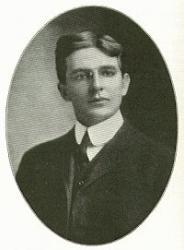
1880 - 1950 Person Name: Ira B. Wilson, 1880-1950 Topics: Offering of Heart, Life, and Self Author of "Make Me a Blessing (Usa mi vida)" in Santo, Santo, Santo Ira Bishop Wilson, 1880-1950
Born: September 6, 1880, Bedford, Iowa.
Died: April 3, 1950, Los Angeles, California.
Buried: Forest Lawn Memorial Park, Glendale, California.
Pseudonym: Fred B. Holton.
Wilson’s sister taught him to play the violin and organ while still at home. Around 1902, Ira began studies at the Moody Bible Institute in Chicago, Illinois. In 1905, he went to work for the Lorenz Publishing Company in Dayton, Ohio. His compositions appeared in The Choir Leader and The Choir Herald; he also served as editor in chief of The Volunteer Choir.
His works include:
The King’s Message, with Edmund Lorenz (New York: Lorenz Publishing Company, 1910)
The Beginners’ Choir, with Edmund Lorenz (Dayton, Ohio: Lorenz Publishing Company, 1911)
Praise Ye, a Collection of Sacred Songs, with Edmund Lorenz (New York: Lorenz Publishing Company, 1913)
His Worthy Praise, with Edmund Lorenz (Dayton, Ohio: Lorenz Publishing Company, 1915)
Sources--
Hall, pp. 413-5
Lyrics--
Go Forward to Conquer
Look Above
Make Me a Blessing © 1924
My Savior’s Voice
This Wonderful Christ Is Mine
Trustingly Follow
Music--
Across the Templed Hills
Angels’ Chorus, The
Christ Is Born
Christ the Lord Is Born
Christmas Lullaby
Conchita
Exalt the King
Give Praise
God Is Goodness, God Is Love
God Is So Good
He Arose Today
His Love Is Always True
Jesus Wants Us to Help
Joy to the World
Loving Jesus Christ
Marching Forward
May God Depend on You?
Night of Nights
O Star of Matchless Splendor
On Calvary’s Cross One Day
Out in the Highways and Byways of Life
Rejoice! Rejoice!
Ring, Sweet Bells
Song of the Morning, The
Stars of December
Walking with Jesus
Was There Ever a Friend So True?
We Come Today
What Do the Flowers Say?
Who Will Our Pilot Be?
Win One
--hymntime.com/tch
Ira B. Wilson
Johann Heermann
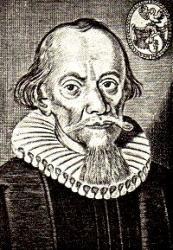
1585 - 1647 Topics: Heart--Surrender of Author of "O God, My Faithful God" in Moravian Book of Worship Johann Heermann's (b. Raudten, Silesia, Austria, 1585; d. Lissa, Posen [now Poland], 1647) own suffering and family tragedy led him to meditate on Christ's undeserved suffering. The only surviving child of a poor furrier and his wife, Heermann fulfilled his mother's vow at his birth that, if he lived, he would become a pastor. Initially a teacher, Heermann became a minister in the Lutheran Church in Koben in 1611 but had to stop preaching in 1634 due to a severe throat infection. He retired in 1638. Much of his ministry took place during the Thirty Years' War. At times he had to flee for his life and on several occasions lost all his possessions. Although Heermann wrote many of his hymns and poems during these devastating times, his personal faith and trust in God continued to be reflected in his lyrics. He is judged to be the finest hymn writer in the era between Martin Luther and Paul Gerhardt, one whose work marks a transition from the objective hymns of the Reformation to the more subjective hymns of the seventeenth century. His hymn texts were published in collections such as Devoti Musica Cordis, Hauss- und Hertz-Musica (1630, expanded in 1636, 1644), and Sontags- und Fest-evangelia (1636).
Bert Polman
===================
Heermann, Johann, son of Johannes Heermann, furrier at Baudten, near Wohlau, Silesia, was born at Baudten, Oct. 11, 1585. He was the fifth but only surviving child of his parents, and during a severe illness in his childhood his mother vowed that if he recovered she would educate him for the ministry, even though she had to beg the necessary money. He passed through the schools at Wohlau; at Fraustadt (where he lived in the house of Valerius Herberger, q. v., who took a great interest in him); the St. Elizabeth gymnasium at Breslau; and the gymnasium at Brieg. At Easter, 1609, he accompanied two young noblemen (sons of Baron Wenzel von Rothkirch), to whom he had been tutor at Brieg, to the University of Strassburg; but an affection of the eyes caused him to return to Baudten in 1610. At the recommendation of Baron Wenzel he was appointed diaconus of Koben, a small town on the Oder, not far from Baudten, and entered on his duties on Ascension Day, 1611, and on St. Martin's Day, 1611, was promoted to the pastorate there. After 1623 he suffered much from an affection of the throat, which compelled him to cease preaching in 1634, his place being supplied by assistants. In October, 1638, he retired to Lissa in Posen, and died there on Septuagesima Sunday (Feb. 17), 1647. (Koch, iii. 16-36; Allgemeine Deutsche Biographie, xi. 247-249, &c.)
Much of Heermann's manhood was spent amid the distressing scenes of the Thirty Years' War; and by his own ill health and his domestic trials he was trained to write his beautiful hymns of “Cross and Consolation." Between 1629 and 1634, Koben was plundered four times by the Lichtenstein dragoons and the rough hordes under Wallenstein sent into Silesia by the King of Austria in order to bring about the Counter-Reformation and restore the Roman Catholic faith and practice; while in 1616 the town was devastated by fire, and in 1631 by pestilence. In these troublous years Heermann several times lost all his moveables; once he had to keep away from Koben for seventeen weeks; twice he was nearly sabred; and once, while crossing the Oder in a frail boat loaded almost to sinking, he heard the bullets of the pursuing soldiers whistle just over his head. He bore all with courage and patience, and he and his were wonderfully preserved from death and dishonour. He was thus well grounded in the school of affliction, and in his House and Heart Music some of his finest hymns are in the section entitled "Songs of Tears. In the time of the persecution and distress of pious Christians."
As a hymnwriter Heermann ranks with the beat of his century, some indeed regarding him as second only to Gerhardt. He had begun writing Latin poems about 1605, and was crowned as a poet at Brieg on Oct. 8, 1608. He marks the transition from the objective standpoint of the hymnwriters of the Reformation period to the more subjective and experimental school that followed him. His hymns are distinguished by depth and tenderness of feeling; by firm faith and confidence in face of trial; by deep love to Christ, and humble submission to the will of God. Many of them became at once popular, passed into the hymnbooks, and still hold their place among the classics of German hymnody. They appeared principally in—
(1) Devoti Musica Cordis. Hauss-und Hertz-Musica &c. Leipzig and Breslau, 1630, with 49 hymns (2nd edition 1636, with 64; 3rd edition 1644, with 69). The first section is entitled "Hymns of Penitence and Consolation from the words of the Ancient Fathers of the Church." Seven of these, however, have no mention in their individual titles of the sources from which they are derived; and the remainder are mostly based not on Latin hymns, but on the prose meditations in Martin Moller's Meditationes sanctorum patrum, or on the mediaeval compilations known as the Meditationes and the Manuale of St. Augustine. (2) Sontags-und Fest-Evangelia. Leipzig and Breslau, 1636, being hymns on the Gospels for Sundays and festivals. (3) Poetische Erquickstunden, Nürnberg, 1656; and its Fernere Fortsetzung, also Nürnberg, 1656 [both in Wernigerode], are poems rather than hymns. The hymns of the Hauss-und Hertz-Musica, with a representative selection from Heermann's other poetical works, were edited by C. E. P. Wackernagel, prefaced by a long biographical and critical introduction, and published at Stuttgart, 1855.
Six of the most important of Heermann's hymns are annotated under their respective first lines. The other hymns by Heermann which have passed into English are :—
I. Hymns in English common use:--
i. 0 Jesu, du mein Bräutigam. Holy Communion. In his Devoti Musica Cordis, Breslau, 1630, p. 78, in 12 stanzas of 4 lines. Thence in Mützell, 1858, No. 34, in Wackernagel's ed. of his Geistliche Lieder, No. 22, and the Unverfälschter Liedersegen, 1851, No. 283. Seems to be founded on Meditation xi. in the mediaeval compilation known as St. Augustine's Manuale. Translated as:—
0 Jesu, Lord, who once for me, a good translation of stanzas i., ii., iv., v., viii., by A. T. Russell, as No. 158 in his Psalms & Hymns, 1851.
Other translations are: (l) 0 Jesu! Bridegroom of my Soul," by J. C. Jacobi, 1722, p. 44 (1732, p. 73). (2) "Dear Saviour, who for me hast borne," by Miss Dunn, 1857.
ii. Rett, 0 Herr Jesu, rett dein Ehr. In Time of Trouble. A prayer for deliverance and peace for the Church. In his Devoti Musica Cordis, 1630, p. 119, in 5 stanzas of 4 lines, among the "Songs of Tears." Thence in Mützell, 1858, No. 48, in Wackernagel’s ed., No. 36, and the Unverfälschter Liedersegen, 1851, No. 245. Translated as:—
Thine honour rescue, righteous Lord, in full, by Dr. M. Loy, in the Ohio Lutheran Hymnal, 1880.
iii. Treuer Wächter Israel. In Time of War. 1630, p. 115, in 13 stanzas of 7 lines, among the "Songs of Tears." In Mützell, 1858, No. 47; in Wackernagel's edition, No. 35, and the Unverfälschter Liedersegen, 1851, No. 594. Lauxmann, in Koch, viii. 549, says of it:—
"It is a powerful hymn filled with that prevailing prayer that takes heaven by force," and relates of st. vii.,11. v-7, "Eine Mauer um uns bau," that on Jan. 6, 1814, the Allied Forces were about to enter Schleswig. A poor widow with her daughter and grandson lived in a little house near the entrance of the town. The grandson was reading in his hymnbook those in time of war, and when he came to this said, “It would be a good thing, grandmother, if our Lord God would build a wall around us." Next day all through the town cries of distress were heard, but all was still before their door. On the following morning they had courage to open the door, and lo a snowdrift concealed them from the view of the enemy. On this incident Clemens Brentano composed a beautiful poem "Draus vor Schleswig."
It is translated as:—
Jesu! as a Saviour, aid. A good tr. of st; vii., viii., xiii., by A. T. Russell, as No. 138 in his Psalms & Hymns, 1851.
iv. Zionklagt mit Angst und Schmerzen. Church of Christ. First published in his Devoti Musica Cordis, 2nd ed., 1636 (1644, p. 196), in 6 stanzas of 8 lines, entitled, "From the beautiful golden saying of Isaiah, Chapter xlix." In Mützell, 1858, No. 101, in Wackernagel’s ed., No. 53, and the Unverfälschter Liedersegen, 1851, No. 256. Translated as:—
Sion bow'd with anguish weepeth A good translation of stanzas i., iii., v., by A. T. Russell, as No. 141 in his Psalms & Hymns, 1851.
Another translation is: "Zion mourns in fear and anguish," by Miss Winkworth, 1869, p. 198.
II. Hymns not in English common use:--
v. Ach Jesu! dessen Treu. Love to Christ. 1630, p. 144, in 33 stanzas. One of his finest hymns, full of deep love to Christ, but from its great length very little used in Germany. Translated as, "Ah! Jesus! Lord! whose faithfulness," by Miss Burlingham, in the British Herald, May, 1867, p. 72.
vi. Der Tod klopft bei mir an. For the Dying. 1656, p. 22, in 121. Translated as, "That Death is at my door," by Miss Winkworth, 1869, p. 201.
vii. Du weinest für Jerusalem. Christ weeping over Jerusalem. 1630, p. 81, in 6 stanzas, entitled, "On the Tears of Christ." Founded on St. Luke xix. 41-44, part of the Gospel for the 10 Sundays after Trinity. The translations are: (1) "With tears o'er lost Jerusalem," by Miss Cox, 1841, p. 159. (2) "Our Lord wept o'er Jerusalem," by Dr. H. Mills, 1845 (1856, p. 295). (3) "Thou weepest o'er Jerusalem," by Miss Winkworth, 1855,p. 70.
viii. Herr Jesu Christe mein getreuer Hirte. Holy Communion. 1630, p. 74, in 9 stanzas, founded on M. Moller's Meditationes sanctorum patrum, pt. i. c. 11, and pt. v. c. 2. The translations are: (1) "Dear Saviour, Thou my faithful Shepherd, come” by Miss Dunn, 1857, p. 111. (2) "Lord Jesus Christ, my faithful Shepherd, hear," by Miss Winkworth, 1858, p. 93, repeated in Lyra Eucharistica, 1863-64.
ix. Herr unser Gott, lass nicht zu Schanden werden. Christ's Church. 1630, p. 114, as one of the "Songs of Tears," in 5 stanzas. Translated as, "Ah! Lord our God, let them not be confounded," by Miss Winkworth, 1869, p. 197.
x. Hilf mir, mein Oott, hilf dass nach dir. Christian Conduct. 1630, p. 32, in 7 stanzas, entitled, "For a better life. From the words of Augustine." Founded on No. i. of the Meditationes current under the name of St. Augustine. This meditation is apparently by St. Anselm of Canterbury. Translated as, "Lord, raise in me a constant Flame," by J. C. Jacobi, 1725, p. 27 (1732, p. 105).
xi. Jesu, der du tausend Schmerzen. In Sickness. 1656, in the Fernere Fortsetzung, p. 79, in 12 lines, entitled, "In great bodily pain." Translated as, “Jesu, who didst stoop to prove," by Miss Winkworth, 1869, p. 200.
xii. Jesu Tilger meiner Sünden. Lent. 1656, in the Fernere Fortsetzung, p. 1, in 10 lines, entitled, "For Victory in Temptation." Translated as, "Jesu, Victor over sin," by Miss Winkworth, 1869, p. 201.
xiii. 0 Jesu, Jesu, Gottes Sohn. Love to Christ, 1630, p. 83, in 7 stanzas, entitled, “Of the Love, which a Christian heart bears to Christ, and will still bear." A beautiful expansion of his motto "Mihi omnia Jesus." The translations are: (1) "What causes me to mourn is this," a translation of stanza ii. by P. H. Molther, as No. 371, in the Moravian Hymn Book, 1789 (1886, No. 461). (2) "O Jesus, Jesus, Son of God," by Miss Burlingham, in the British Herald, Oct. 1865, p. 153, and in Reid's Praise Book, 1872.
xiv. Treuer Gott ich muss dir klagen. In Trouble. 1630, p. 103, in 12 stanzas, entitled, "Hymn of a sorrowful heart for increase of faith." Translated as, "Faithful God! I lay before Thee," by J. C. Jacobi, 1720, p. 9(1722, p. 70; 1732, p. 117), and as No. 538 in pt. i. of the Moravian Hymn Book, 1754.
xv. Wollt ihr euch nicht, o ihr frommen Christen. Second Advent. 1636, p. 210, in 9 stanzas, entitled, "On the day of the Holy Bishop Nicolaus. Gospel of Luke, 12 Chapter." Translated as: (l) "0 dear Christians, as 'tis needful, wou'd ye," as No. 153 in pt. i. of the Moravian Hymn Book, 1754. (2) “Help us, 0 Christ, to watch and pray," a tr. of st. ix. as st. iii. of No. 868 in the Moravian Hymn Book, 1789 (1849, No. 1221).
xvi. Wo soll ich fliehen hin. Lent. 1630, p. 20, in 11 stanzas, entitled, "A hymn of consolation in which a troubled heart lays all its sins in true faith upon Christ. From Tauler." Based on M. Moller's Meditationes, vol. i. pt. i., No. 10. Translated as, "0 whither shall I fly," as No. 447 in pt. i. of the Moravian Hymn Book, 1754. In 1886, No. 279, it begins with "0 Jesus, source of Grace" (stanza ii.). [Rev. James Mearns, M.A.]
--John Julian, Dictionary of Hymnology (1907)
Johann Heermann
Horatius Bonar
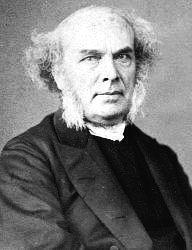
1808 - 1889 Topics: Heart Change of; Heart Change of Author of ""None other name"" in Laudes Domini Horatius Bonar was born at Edinburgh, in 1808. His education was obtained at the High School, and the University of his native city. He was ordained to the ministry, in 1837, and since then has been pastor at Kelso. In 1843, he joined the Free Church of Scotland. His reputation as a religious writer was first gained on the publication of the "Kelso Tracts," of which he was the author. He has also written many other prose works, some of which have had a very large circulation. Nor is he less favorably known as a religious poet and hymn-writer. The three series of "Hymns of Faith and Hope," have passed through several editions.
--Annotations of the Hymnal, Charles Hutchins, M.A. 1872
================================
Bonar, Horatius, D.D. Dr. Bonar's family has had representatives among the clergy of the Church of Scotland during two centuries and more. His father, James Bonar, second Solicitor of Excise in Edinburgh, was a man of intellectual power, varied learning, and deop piety.
Horatius Bonar was born in Edinburgh, Dec. 19th, 1808; and educated at the High School and the University of Edinburgh. After completing his studies, he was "licensed" to preach, and became assistant to the Rev. John Lewis, minister of St. James's, Leith. He was ordained minister of the North Parish, Kelso, on the 30th November, 1837, but left the Established Church at the "Disruption," in May, 1848, remaining in Kelso as a minister of the Free Church of Scotland. The University of Aberdeen conferred on him the doctorate of divinity in 1853. In 1866 he was translated to the Chalmers Memorial Church, the Grange, Edinburgh; and in 1883 he was chosen Moderator of the General Assembly of of the Free Church of Scotland.
Dr. Bonar's hymns and poems were, he tells us, composed amid a great variety of circumstances; in many cases he cannot himself recall these circumstances; they also appeared in several publications, but nearly all have boen published or republished in the following:— (i) Songs for the Wilderness, 1843-4. (2) The Bible Hymn Book, 1845. (3) Hymns, Original and Selected, 1846. (4) Hymns of Faith and Hope, First Series, 1857; Second Series, 1861; Third Series, 1866. (5) The Song of the New Creation, 1872. (6) My Old Letters, a long poem, 1877. (7) Hymns of the Nativity, 1879. (8) Communion Hymns, 1881. In addition to numerous prose works, he has also edited The New Jerusalem; a Hymn of the Olden Time, 1852, &c.
Dr. Bonar's poems—-including many beautiful lyrics, several psalm versions, and translations from the Greek and Latin, a large number of hymns, and a long meditative poem—-are very numerous, too numerous, perhaps, for their permanent fame as a whole.
Dr. Bonar's scholarship is thorough and extensive; and his poems display the grace of style and wealth of allusion which are the fruit of ripe culture. Affected very slightly by current literary moods, still less by the influence of other religious poetry, they reveal extreme susceptibility to the emotional power which the phases of natural and of spiritual life exercise; the phases of natural life being recognised chiefly as conveying and fashioning spiritual life, used chiefly for depicting spiritual life, and handled for this purpose with greater delicacy of touch than in the Olney Hymns, and with less conscious purpose than in the Christian Year. As a result of this susceptibility, and from habitual contemplation of the Second Advent as the era of this world's true bliss, his hymns and poems are distinguished by a tone of pensive reflection, which some might call pessimism. But they are more than the record of emotion; another element is supplied by his intellectual and personal grasp of Divine truth, these truths particularly:—The gift of a Substitute, our Blessed Saviour; Divine grace, righteous, yet free and universal in offer; the duty of immediate reliance upon the privilege of immediate assurance through that grace; communion with God, especially in the Lord's Supper, respecting which he insists on the privilege of cherishing the highest conceptions which Scripture warrants; and finally, the Second Advent of our Lord: by his vigorous celebration of these and other truths as the source and strength of spiritual life, his hymns are protected from the blight of unhealthy, sentimental introspection.
To sum up: Dr. Bonar's hymns satisfy the fastidious by their instinctive good taste; they mirror the life of Christ in the soul, partially, perhaps, but with vivid accuracy; they win the heart by their tone of tender sympathy; they sing the truth of God in ringing notes; and although, when taken as a whole, they are not perfect ; although, in reading them, we meet with feeble stanzas, halting rhythm, defective rhyme, meaningless Iteration; yet a singularly large number have been stamped with approval, both in literary circles and by the Church.
In Great Britain and America nearly 100 of Dr. Bonar's hymns are in common use. They are found in almost all modern hymnals from four in Hymns Ancient & Modern to more than twenty in the American Songs for the Sanctuary, N. Y., 1865-72. The most widely known are, "A few more years shall roll;" "Come, Lord, and tarry not;" "Here, O my Lord, I see Thee face to face;" "I heard the Voice of Jesus say;" "The Church has waited long;" and "Thy way, not mine, O Lord."
In addition to these and others which are annotated under their respective first lines, the following are also in common use:—
From Songs for the Wilderness, No. 1, 1843.
1. For Thee we long and pray. Sunday Morning.
2. Holy Father, hear my cry. A Child's Prayer.
3. I thought upon my sins and I was sad. Christ our Peace.
4. Peace to the world, our Lord is come. A Millennial Song.
5. Spirit of everlasting grace. The Vision of Dry Bones.
ii. From Songs for the Wilderness, No. 2,1844.
6. Ho, ye thirsty, parched and fainting. Invitation.
7. 0 'tis not what we fancied it. The world renounced.
8. Sing them, my children, sing them still. Children exhorted to Praise.
9. Time's sun is fast setting. Advent.
10. Weep, pilgrim, weep, yet 'tis not for the sorrow. Faith.
11. Yes, for me, for me He careth. Christ the Elder Brother .
iii. From The Bible Hymn Book, 1845.
12. Jesus, my sorrow lies too deep. Jesus, the Great High Priest.
13. There is a Morning Star, my soul. The Morning Star.
14. This is not my place of resting. Pressing towards heaven.
iv. From Hymns, Original and Selected, 1845.
15. Let there be light, Jehovah said. Creation.
v. From Hymns of Faith and Hope, 1st series, 1857.
16. Be brave, my brother. The Fight of Faith.
17. Blessed be God, our God. Good Friday.
18. Everlasting praises. Doxology.
19. Go up, go up, my heart. Heavenly aspirations desired.
20. I close my heavy eye. Evening. Sometimes given as "We close our heavy eyes."
21. I see the crowd in Pilate's hall. Good Friday.
22. Jesus, while this rongh desert soil. Strength by the Way.
23. Jesus, Whom angel-hosts adore. The Word made Flesh. From "The Son of God, in mighty love."
24. Make haste, 0 man, to live. Exhortation to lay hold of Life.
25. No seas again shall sever. Heaven.
26. Oppressed with noonday's scorching heat. Shadow of the Cross.
27. Rest for the toiling hand. Burial. From "Lie down, frail body, here."
28. Shall this life of mine be wasted? Exhortation to Duty.
29. These are the crowns that we shall wear. Heaven.
30. Thy works, not mine, O Christ [Lord]. The Sin-bearer.
31. Where the faded flower shall freshen. Heaven.
vi. From Hymns of Faith and Hope. 2nd series, 1861.
32. Be still, my soul, Jehovah loveth Thee. Rest in the Love of God.
33. Christ has done the mighty work. Good Friday.
34. Come, mighty Spirit, penetrate. Whitsuntide.
35. Deep down beneath the unresting surge. Burial at Sea.
36. Fear not the foe, thou flock of God [thou little flock]. Battle-Song of the Church.
37. For lack of love I languish. Lent.
38. From this bleak hill of storms. Eternal Rest desired.
39. He liveth long who liveth well. The True Life.
40. Here shall death's triumph end: the rock-barred door. Easter. From "The tomb is empty: wouldst thou have it full."
41. Jesus, Sun and Shield art Thou. Jesus the First and Last.
42. Jesus, the Christ of God. Praise to Christ.
43. Light of the world, for ever, ever shining. Christ the Light of the World. From "Why walk in darkness? Has the dear light vanished?"
44. Make use of me, my God. Duty desired.
45. Not what I am, 0 Lord, but what Thou art. The Love of God.
46. 0 Light of Light, shine in. Cry of the Weary.
47. 0 love of God, how strong and true. Love of God.
48. 0 love that casts out fear. Love of God.
49. 0 strong to save and bless. Lent.
50. 0 this soul, how dark and blind. Lent.
51. Safe across the waters. Thanksgiving at end of a journey.
52. Silent, like men in solemn haste. Pressing onwards.
53. Speak, lips of mine. Exhortation to Praise.
54. The Bridegroom comes. Advent.
vii. From Hymns of Faith and Hope. 3rd series, 1866.
55. Bear Thou my burden, Thou Who bar'st my sin. Lent or Passiontide.
56. Done is the work that saves. Easter.
57. Father, our children keep. Prayer on behalf of Children.
58. Fill Thou my life, 0 Lord my God. Life's Praise.
59. Finish Thy work, the time is short. Earnest labour to the end.
60. From the Cross the blood is falling. Good Friday.
61. He called them, and they left. Obedience.
62. Help me, my [0] God to speak. Truth desired.
63. Holy Father, Mighty God. Holy Trinity.
64. How are my troubles multiplied. Ps. iii.
65. How sweetly doth He show His face Flower Service.
66. Light hath arisen, we walk in its brightness. Sustaining power of Faith.
67. Lo, God, our God has come. Christmas.
68. Lord, give me light to do Thy work. Divine guidance desired.
69. No, not despairingly. Lent.
70. Not to ourselves again. Life in Christ, or, Living unto God.
71. Now in parting, Father, bless us. Post Communion.
72. Sounds the trumpet from afar. Battle-Song of the Church.
73. Thee in the loving bloom of morn. God in all.
74. Through good report and evil, Lord. Faithfulness.
75. To Jehovah, God of might. Praise to the Father.
76. To the name of God on high. Doxology.
77. Upward, where the stars are burning. Heavenward Aspirations.
78. We take the peace which He hath won. The Gift of Peace.
79. When the weary, seeking rest. Intercession for all Conditions of Men.
viii. From The Song of the New Creation,1872.
80. For the Bread and for the Wine. Holy Communion.
81. Light of life so softly shining. Light of Life.
82. Yet there is room. The Lamb's bright hall of song. Home Missions.
ix. From Hymns of the Nativity, 1879.
83. Great Ruler of the land and sea. Sailors' Liturgy. From Communion Hymns, 1881.
84. Beloved, let us love. Brotherly Love.
In several instances these hymns are given in an abbreviated form, and sometimes alterations are also introduced. In this latter respect however Dr. Bonar has suffered less than most modern hymn-writers. [Rev. James Mearns, M.A.]
-- John Julian, Dictionary of Hymnology (1907)
====================
Bonar, Horatius, p. 161, i. He died at Edinburgh, July 31, 1889. In 1890 his son published a posthumous volume of his poetical pieces as Until the Day Break and other Hymns and Poems left behind. The following additional hymns are in common use:—
1. Almighty Comforter and Friend. (1866.) Whitsuntide.
2. Father, make use of me. An altered form of No. 44, p. 162, ii.
3. I ask a perfect creed. (1861.) Creed not Opinions. From this is also taken "O True One, give me truth."
4. Long, long deferred, now come at last. Marriage of the Lamb. Part of "Ascend, Beloved, to the joy." (1861.)
5. Nay 'tis not what we fancied it. (1857.) Vanity of the World.
6. No blood, no altar now. (1861.) The Finished Sacrifice.
7. No shadows yonder. (1857.) Heaven Anticipated.
8. Not with the light and vain. (1857.) Godly Companionship.
9. O Love invisible, yet infinite. (1866.) Divine Love.
10. On the great love of God I lean. (1866.) Love of God our Resting-place.
11. On Thee, O Jesus, strongly leaning. (1866.) Fellowship with Christ.
12. Peace upon peace, like wave on wave. (1866.) Divine Peace.
13. Sower divine, sow the good seed in me. (1857.) Heavenly Sowing.
14. Speaketh the sinner's sin within my heart. (1866.) Ps. xxxvi.
15. Still one in life and one in death. (1857.) Communion of Saints. Part of "'Tis thus they press the hand and part."
16. Surely, yon heaven, where angels see God's face. (1857.) Heaven Anticipated.
17. That city with the jewelled crest. (1857.) Heaven. Part of "These are the crowns that we shall wear." Another cento from the same is "Yon city, with the jewelled crest."
18. That clime is not like this dull clime of ours. (1843.) Heaven.
19. The Free One makes you free: He breaks the rod. (1857.) Freedom in Christ. From "Of old they sang the song of liberty."
20. There is a Morning-star, my soul. (1357.) Christ the Morning Star.
21. This is the day of toil. (1866.) Pressing Onwards.
22. Thy thoughts are here, my God. (1866.) Holy Scripture.
23. Till the day dawn. (1857.) Life's Journey.
24. To Him Who spread the skies. (1866.) Creation's Song.
25. Trustingly, trustingly. (1866.) Trust.
26. Unto th' eternal hills. (1866.) Ps. cxxi.
The above dates are: 1843, Songs in the Wilderness; 1857, Hymns of Faith and Hope, 1st Series; 1861, same, 2nd Ser. (not 1864); 1866, same, 3rd Ser. (not 1867), The dates 1857, 1864,1867, were given by Dr. Bonar, but the British Museum copies are 1857, 1861, 1866 respectively.
--John Julian, Dictionary of Hymnology, Appendix, Part II (1907)
==============
Bonar, H., pp. 161, i.; 1554, i. The Rev. H. N. Bonar, Dr. Bonar's son, published in 1904, Hymns by Horatius Bonar, Selected and Arranged by his Son H. N. Bonar, With a brief History of some of the Hymns, &c. (London: H. Frowde). From this work we must correct the date of his Song of the New Creation to 1872. We have also enriched our pages by additional and expanded notes on several of Dr. Bonar's most widely used hymns. In his biographical notes, Mr. Bonar refers to Dr. Bonar's work as editor of the Quarterly Journal of Prophecy, begun in 1848, to which he contributed a hymn for each number. We find that the number of hymns contributed thereto is 101.
With Dr. Bonar's poetical productions great difficulty has been encountered by the historian and annotator because of his absolute indifference to dates and details. It was enough for him that he had written, and that the Church of Christ approved and gladly used what, out of the fulness of his heart, he had given her.
--Excerpt from John Julian, Dictionary of Hymnology, New Supplement (1907)
Horatius Bonar
Arthur Sullivan
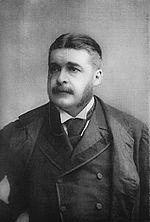
1842 - 1900 Person Name: A. S. Sullivan Topics: Heart Change of; Heart Change of Composer of "LUX MUNDI" in Laudes Domini Arthur Seymour Sullivan (b Lambeth, London. England. 1842; d. Westminster, London, 1900) was born of an Italian mother and an Irish father who was an army bandmaster and a professor of music. Sullivan entered the Chapel Royal as a chorister in 1854. He was elected as the first Mendelssohn scholar in 1856, when he began his studies at the Royal Academy of Music in London. He also studied at the Leipzig Conservatory (1858-1861) and in 1866 was appointed professor of composition at the Royal Academy of Music. Early in his career Sullivan composed oratorios and music for some Shakespeare plays. However, he is best known for writing the music for lyrics by William S. Gilbert, which produced popular operettas such as H.M.S. Pinafore (1878), The Pirates of Penzance (1879), The Mikado (1884), and Yeomen of the Guard (1888). These operettas satirized the court and everyday life in Victorian times. Although he composed some anthems, in the area of church music Sullivan is best remembered for his hymn tunes, written between 1867 and 1874 and published in The Hymnary (1872) and Church Hymns (1874), both of which he edited. He contributed hymns to A Hymnal Chiefly from The Book of Praise (1867) and to the Presbyterian collection Psalms and Hymns for Divine Worship (1867). A complete collection of his hymns and arrangements was published posthumously as Hymn Tunes by Arthur Sullivan (1902). Sullivan steadfastly refused to grant permission to those who wished to make hymn tunes from the popular melodies in his operettas.
Bert Polman
Arthur Sullivan
Richard Frederick Littledale
1833 - 1890 Person Name: Richard Frederick Littledale (1833-1890) Topics: Purity Of Heart Translator of "Come Down, O Love Divine" in Church Hymnary (4th ed.) Richard Frederick Littledale (b. Dublin, 1833; d. London, 1890) entered Trinity College, Dublin, as a foundation scholar, graduated with a bachelors degree in classics, a Masters of Divinity in 1858, then a Bachelors and Doctorate in Civil Law at Oxford in 1862. From 1856 to 1857 he was the curate of St. Matthew in Thorpe Hamlet, Norfolk, and from 1857 to 1861 was the curate of St. Mary the Virgin, in Soho, London. For the remainder of his life he suffered from chronic illness and spent most of his time writing. He authored many books and pamphlets on Anglican liturgy, theology, and the church’s engagement with society, and completed his good friend John Mason Neale’s work on the psalms after Neale died in 1866.
Laura de Jong
================
Littledale, Richard Frederick, LL.D., D.C.L., son of John Richard Littledale, merchant, was born at Dublin on the 14th of Sept, 1833, and was educated at Bective House Seminary, and Trinity College, Dublin. His University course was distinguished. In 1852 he became a University Scholar; in 1854 he was first class in Classics and gold medallist; in 1856 he won the Berkeley gold medal (for Greek), and other honours. He graduated B.A., 1855, M.A., 1858, LL.D., 1862, and D.C.L. at Oxford, 1862. Taking Holy Orders in 1856, he was Curate of St. Matthew's, in Thorpe Hamlet, Norwich, from 1856 to 1857, and of St. Mary the Virgin, Soho, London, from 1857 to 1861. Through ill-health he retired from parochial work in 1861, and devoted himself to literature. Dr. Littledale's publications amount to about fifty in all, and embrace Theological, Historical, Liturgical, and Hymnological subjects chiefly. His prose works include:—
(1) Application of Colour to the Decoration of Churches, 1857; (2) Religious Communities of Women in the Early Church, 1862; (3) Catholic Ritual in the Church of England, 1861; (4) Continuation of Dr. Neale's Commentary on the Psalms, vols. ii., iii., iv., 1868-74; (5) Commentary on the Song of Songs, 1869; (6) The Petrine Claims, 1878-84; (7) Plain Reasons against joining the Church of Rome, 1880, &c.; (8) Short History of the Council of Trent; and several articles in the Encyclopaedia Britannica, 1882-88. His contributions to periodical literature have been also extensive and valuable.
Dr. Littledale's Liturgical, Devotional, and Hymnological works include:—
(1) Offices of the Holy Eastern Church, in the Original Greek, with translation into English, Notes, &c, 1863; (2) Carols for Christmas and Other Seasons, 1863; (3)The Priest's Prayer Book, with hymns, 1864, and with Brief Pontifical in 1870 and later editions; (4)The People's Hymnal, 1867 ; (5) The Children's Bread. A Communion Office for the Young, with hymns, 1868; (6) Primitive Liturgies and Translations, 1868-69; (7) Children at Calvary: being The Stations of the Cross in Metre for Singing, 1872; (8) the Christian Passover, 1873; (9) The Altar Manual, 1863-77. He was joint Editor of Nos. 3, 4, 8 and 9 with the Rev. J. E. Vaux; and of No. 6 with Dr. Neale.
In addition to a large number of hymns, original and translated, in the above works, Dr. Littledale has also directly contributed original and translated hymns to:—
(1) Lyra Eucharistica, 1863; (2) Lyra Messianica, 1864; (3) Lyra Mystica, 1865; (4) The Eucharistic Hymnal, 1877; (5) The Roman Breviary in English, by the Marquess of Bute, 1879; (6) The Altar Hymnal, 1884; (7) Supplement to Hymns Ancient & Modern, 1889; (8) to the Night Hours of the Church; (9) to the St. Margaret's Hymnal [East Grinstead], 1875; and (10) to the Church Times, The Guardian, &c, &c.
Dr. Littledale's Hymnological works in verse consist of translations of Danish, Swedish, Greek, Latin, Syriac, German, and Italian hymns, together with original Carols, Hymns, and Metrical Litanies. His original hymns remain to be noted. These include the following:—
i. In the Priest's Prayer Book, 1864 :—
1. Captain of Salvation. Christian Warfare.
2. Christ, on Whose Face the soldiers. Passiontide.
3. Christ, Who hast for sinners suffered. Passiontide.
4. God the Father, from on high. For the Sick.
5. Lord Jesu, by Thy passion. Passiontide.
6. Lord, Who in pain and weariness. Passiontide.
7. 0 Jesu, in Thy torture. Passiontide. In Meditations and Prayers on the Passion of Our Lord Jesus Christ, 1863.
8. 0 Lord, to Whom the spirits live. All Souls.
9. The clouds of sorrow rest upon mine eyes. For the Sorrowing.
ii. In the People's Hymnal, 1867:—
10. Christ, our song we lift to Thee. Blessed Virgin Mary.
11. Christ, our Sun, on us arose. Whitsuntide. In Carols for Christmas, &c, 3rd series, 1864.
12. Christ, the Lord, Whose mighty hand. Prayer for Peace.
13. Day is past and gone. Evening. In the Church Times, Feb. 17, 1866.
14. Eternal Shepherd, God most high. Vacancy of a See or Parish.
15. Eternal Wisdom, God most high. Common of Doctors.
16. God eternal, infinite. Septuagesima.
17. Hidden Saviour, great High Priest. Holy Communion.
18. I believe in God the Father. The Creed.
19. I worship Thee, Lord Jesu. Holy Communion. In the Church Times, May 10, 1865.
20. In Paradise reposing. Burial of a Child.
21. In songs of glad thanksgiving. General Thanksgiving.
22. Lord, Whose goodwill is ever sure. In time of Famine.
23. Now the sun is in the skies. Morning. In the Church Times, Jan. 27, 1866.
24. 0 God of mercy, God of love. For Rain.
25. 0 God, Who metest in Thine hand. For those at Sea.
26. 0 God, Whose Sole-Begotten left. Almsgiving.
27. 0 sing to the Lord, Whose bountiful hand. Thanksgiving for Rain.
28. Set upon Sion's wall. Ember Days.
29. The Cedar of Lebanon, Plant of renown. Christmas. First published in Sedding's Christmas Carols, 1863.
30. The fight is o'er, the crown is won. Burial of a Sister of Mercy.
31. The wintry time hath ended. Thanksgiving for Fair Weather.
32. We are marching through the desert. Processional.
33. When the day hath come at last. The Judgment.
In addition to these, a few of the more widely used of Dr. Littledale's original hymns, as "From hidden source arising," and others, are annotated under their respective first lines. In the People's Hymnal, 1867, Dr. Littledale adopted the following signatures:—
A. L. P., i.e., A London Priest.
B., i.e., An initial of a former address.
B. T., i.e., The initials of a former address.
D. L., i.e. Dr. Littledale.
F., i.e., Frederick.
F. R., i.e., Frederick Richard.
L., i.e., Littledale.
P. C. E., i.e., Priest of the Church of England.
P. P. Bk., i.e., Priest's Prayer Book.
Taken as a whole, Dr. Littledale's translations from the seven languages named above are characterised by general faithfulness to the originals, great simplicity of diction, good metre, smooth rhythm, and deep earnestness. His original compositions are usually on special subjects, for which, at th$ time they were written, there were few hymns, and are marked by the same excellent features of a good hymn as his translations. His main object throughout is to teach through Praise and Prayer.
--John Julian, Dictionary of Hymnology (1907)
======================
Littledale, Richard F., p. 679, ii. He died at Red Lion Square, London, Jan. 11, 1890.
--John Julian, Dictionary of Hymnology, Appendix, Part II (1907)
Richard Frederick Littledale
J. M. Neale
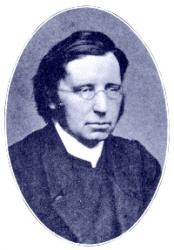
1818 - 1866 Person Name: John Mason Neale Topics: Purity Of Heart Author of "O Thou, Who by a Star Didst Guide" in The Hymnal and Order of Service John M. Neale's life is a study in contrasts: born into an evangelical home, he had sympathies toward Rome; in perpetual ill health, he was incredibly productive; of scholarly temperament, he devoted much time to improving social conditions in his area; often ignored or despised by his contemporaries, he is lauded today for his contributions to the church and hymnody. Neale's gifts came to expression early–he won the Seatonian prize for religious poetry eleven times while a student at Trinity College, Cambridge, England. He was ordained in the Church of England in 1842, but ill health and his strong support of the Oxford Movement kept him from ordinary parish ministry. So Neale spent the years between 1846 and 1866 as a warden of Sackville College in East Grinstead, a retirement home for poor men. There he served the men faithfully and expanded Sackville's ministry to indigent women and orphans. He also founded the Sisterhood of St. Margaret, which became one of the finest English training orders for nurses.
Laboring in relative obscurity, Neale turned out a prodigious number of books and artic1es on liturgy and church history, including A History of the So-Called Jansenist Church of Holland (1858); an account of the Roman Catholic Church of Utrecht and its break from Rome in the 1700s; and his scholarly Essays on Liturgiology and Church History (1863). Neale contributed to church music by writing original hymns, including two volumes of Hymns for Children (1842, 1846), but especially by translating Greek and Latin hymns into English. These translations appeared in Medieval Hymns and Sequences (1851, 1863, 1867), The Hymnal Noted (1852, 1854), Hymns of the Eastern Church (1862), and Hymns Chiefly Medieval (1865). Because a number of Neale's translations were judged unsingable, editors usually amended his work, as evident already in the 1861 edition of Hymns Ancient and Modern; Neale claimed no rights to his texts and was pleased that his translations could contribute to hymnody as the "common property of Christendom."
Bert Polman
========================
Neale, John Mason, D.D., was born in Conduit Street, London, on Jan. 24, 1818. He inherited intellectual power on both sides: his father, the Rev. Cornelius Neale, having been Senior Wrangler, Second Chancellor's Medallist, and Fellow of St. John's College, Cambridge, and his mother being the daughter of John Mason Good, a man of considerable learning. Both father and mother are said to have been "very pronounced Evangelicals." The father died in 1823, and the boy's early training was entirely under the direction of his mother, his deep attachment for whom is shown by the fact that, not long before his death, he wrote of her as "a mother to whom I owe more than I can express." He was educated at Sherborne Grammar School, and was afterwards a private pupil, first of the Rev. William Russell, Rector of Shepperton, and then of Professor Challis. In 1836 he went up to Cambridge, where he gained a scholarship at Trinity College, and was considered the best man of his year. But he did not inherit his father's mathematical tastes, and had, in fact, the greatest antipathy to the study; and as the strange rule then prevailed that no one might aspire to Classical Honours unless his name had appeared in the Mathematical Tripos, he was forced to be content with an ordinary degree. This he took in 1840; had he been one year later, he might have taken a brilliant degree, for in 1841 the rule mentioned above was rescinded. He gained, however, what distinctions he could, winning the Members' Prize, and being elected Fellow and Tutor of Downing College; while, as a graduate, he won the Seatonian Prize no fewer than eleven times. At Cambridge he identified himself with the Church movement, which was spreading there in a quieter, but no less real, way than in the sister University. He became one of the founders of the Ecclesiological, or, as it was commonly called, the Cambridge Camden Society, in conjunction with Mr. E. J. Boyce, his future brother-in-law, and Mr. Benjamin Webb, afterwards the well-known Vicar of St. Andrew's, Wells Street, and editor of The Church Quarterly Review. In 1842 he married Miss Sarah Norman Webster, the daughter of an evangelical clergyman, and in 1843 he was presented to the small incumbency of Crawley in Sussex. Ill health, however, prevented him from being instituted to the living. His lungs were found to be badly affected; and, as the only chance of saving his life, he was obliged to go to Madeira, where he stayed until the summer of 1844. In 1846 he was presented by Lord Delaware to the Wardenship of Sackville College, East Grinstead. This can hardly be considered as an ecclesiastical preferment, for both his predecessor and his successor were laymen. In fact the only ecclesiastical preferment that ever was offered to him was the Provostship of St. Ninian's, Perth. This was an honourable office, for the Provostship is equivalent to a Deanery in England, but it was not a lucrative one, being worth only £100 a year. He was obliged to decline it, as the climate was thought too cold for his delicate health. In the quiet retreat of East Grinstead, therefore, Dr. Neale spent the remainder of his comparatively short life, dividing his time between literary work, which all tended, directly or indirectly, to the advancement of that great Church revival of which he was so able and courageous a champion, and the unremitting care of that sisterhood of which he was the founder. He commenced a sisterhood at Rotherfield on a very small scale, in conjunction with Miss S. A. Gream, daughter of the rector of the parish; but in 1856 he transferred it to East Grinstead, where, under the name of St. Margaret's, it has attained its present proportions. Various other institutions gradually arose in connection with this Sisterhood of St. Margaret's, viz., an Orphanage, a Middle Class School for girls, and a House at Aldershot for the reformation of fallen women. The blessing which the East Grinstead Sisters have been to thousands of the sick and suffering cannot here be told. But it must be mentioned that Dr. Neale met with many difficulties, and great opposition from the outside, which, on one occasion, if not more, culminated in actual violence. In 1857 he was attending the funeral of one of the Sisters at Lewes, when a report was spread that the deceased had been decoyed into St. Margaret's Home, persuaded to leave all her money to the sisterhood, and then purposely sent to a post in which she might catch the scarlet fever of which she died. To those who knew anything of the scrupulously delicate and honourable character of Dr. Neale, such a charge would seem absurd on the face of it; but mobs are not apt to reflect, and it was very easy to excite a mob against the unpopular practices and sentiments rife at East Grinstead; and Dr. Neale and some Sisters who were attending the funeral were attacked and roughly handled. He also found opponents in higher quarters; he was inhibited by the Bishop of the Diocese for fourteen years, and the Aldershot House was obliged to be abandoned, after having done useful work for some years, in consequence of the prejudice of officials against the religious system pursued. Dr. Neale's character, however, was a happy mixture of gentleness and firmness; he had in the highest degree the courage of his convictions, which were remarkably definite and strong; while at the same time he maintained the greatest charity towards, and forbearance with, others who did not agree with him. It is not surprising, therefore, that he lived all opposition down; and that, while from first to last his relations with the community at East Grinstead were of the happiest description, he was also, after a time, spared any molestation from without. The institution grew upon his hands, and he became anxious to provide it with a permanent and fitting home. His last public act was to lay the foundation of a new convent for the Sisters on St. Margaret's Day (July 20), 1865. He lived long enough to see the building progress, but not to see it completed. In the following spring his health, which had always been delicate, completely broke down, and after five months of acute suffering he passed away on the Feast of the Transfiguration (Aug. 6), 1866, to the bitter regret of the little community at East Grinstead and of numberless friends outside that circle. One trait of his singularly lovable character must not pass unnoticed. His charity, both in the popular and in the truer Christian sense of the word, was unbounded; he was liberal and almost lavish with his money, and his liberality extended to men of all creeds and opinions; while it is pleasing to record that his relations with his ecclesiastical superiors so much improved that he dedicated his volume of Seatonian Poems to the bishop of the diocese. If however success in life depended upon worldly advantages, Dr. Neale's life would have to be pronounced a failure; for, as his old friend, Dr. Littledale, justly complains, "he spent nearly half his life where he died, in the position of warden of an obscure Almshouse on a salary of £27 a year." But, measured by a different standard, his short life assumes very different proportions. Not only did he win the love and gratitude of those with whom he was immediately connected, but he acquired a world-wide reputation as a writer, and he lived to see that Church revival, to promote which was the great object of his whole career, already advancing to the position which it now occupies in the land of his birth.
Dr. Neale was an industrious and voluminous writer both in prose and verse; it is of course with the latter class of his writings that this sketch is chiefly concerned; but a few words must first be said about the former.
I.— Prose Writings.— His first compositions were in the form of contributions to The Ecclesiologist, and were written during his graduate career at Cambridge. Whilst he was in Madeira he began to write his Commentary on the Psalms, part of which was published in 1860. It was afterwards given to the world, partly written by him and partly by his friend, Dr. Littledale, in 4 vols., in 1874, under the title of A Commentary on the Psalms, from Primitive and Mediaeval Writers. This work has been criticised as pushing the mystical interpretation to an extravagant extent. But Dr. Neale has anticipated and disarmed such criticism by distinctly stating at the commencement that "not one single mystical interpretation throughout the present Commentary is original;" and surely such a collection has a special value as a wholesome correction of the materialistic and rationalistic tendencies of the age. His next great work, written at Sackville College, was The History of the Holy Eastern Church. The General Introduction was published in 1847; then followed part of the History itself, The Patriarchate of Alexandria, in 2 vols.; and after his death another fragment was published, The History of the Patriarchate of Antioch, to which was added, Constantius's Memoirs of the Patriarchs of Antioch, translated from the Greek, edited by the Rev. G. Williams, 1 vol. The whole fragment was published in 5 vols. (1847-1873). The work is spoken very highly of, and constantly referred to, by Dean Stanley in his Lectures on the History of the Eastern Church. Dr. Neale was naturally in strong sympathy with the struggling Episcopal Church of Scotland, and to show that sympathy he published, in 1856, The Life and Times of Patrick Torry, D.D., Bishop of St. Andrews, &c, with an Appendix on the Scottish Liturgy. In the same direction was his History of the so-called Jansenist Church in Holland, 1858. Next followed Essays on Liturgiology and Church History, with an Appendix on Liturgical Quotations from the Isapostolical Fathers by the Rev. G. Moultrie, 1863, a 2nd edition of which, with an interesting Preface by Dr. Littledale, was published in 1867. It would be foreign to the purpose of this article to dwell on his other prose works, such as his published sermons, preached in Sackville College Chapel, his admirable little devotional work, Readings for the Aged, which was a selection from these sermons; the various works he edited, such as the Tetralogia Liturgica, the Sequentiae ex Missalibus Germanicis, Anglicis, Gallicis, aliisque Medii Aevi Collectae; his edition of The Primitive Liturgies of S. Mark, S. Clement, S. James, S. Chrysostom and S. Basil, with a Preface by Dr. Littledale; his Translation of the same; his many stories from Church History, his Voices from the East, translated from the Russ, and his various articles contributed to the Ecclesiologist, The Christian Remembrance, The Morning Chronicle, and The Churchman's Companion. It is time to pass on to that with which we are directly concerned.
II. —Poetical Writings.— As a sacred poet, Dr. Neale may be regarded under two aspects, as an original writer and as a translator.
i. Original Writer.—Of his original poetry, the first specimen is Hymns for Children, published in 1842, which reached its 10th edition the year after his death. It consists of 33 short hymns, the first 19 for the different days of the week and different parts of the day, the last 14 for the different Church Seasons. This little volume was followed in 1844 by Hymns for the Young, which was intended to be a sequel to the former, its alternative title being A Second Series of Hymns for Children; but it is designed for an older class than the former, for young people rather than for children. The first 7 hymns are "for special occasions," as "on goiug to work," “leaving home” &c.; the next 8 on "Church Duties and Privileges," "Confirmation," "First Holy Communion," &c, the last 13 on "Church Festivals,” which, oddly enough, include the Four Ember Seasons, Rogation Days, and the Sundays in Advent. In both these works the severe and rigid style, copied, no doubt, from the old Latin hymns, is very observable. Perhaps this has prevented them from being such popular favourites as they otherwise might have been; but they are quite free from faults into which a writer of hymns for children is apt to fall. They never degenerate into mere prose in rhyme; and in every case the purity as well as the simplicity of their diction is very remarkable. In the same year (1844) he also published Songs and Ballads for Manufacturers, which were written during his sojourn in Madeira, and the aim of which (he tells us) was "to set forth good and sound principles in metaphors which might, from their familiarity, come home to the hearts of those to whom they were addressed." They are wonderfully spirited both in matter and manner, and their freedom of style is as remarkable as the rigidity of the former works. They were followed eleven years later (1855) by a similar little work entitled Songs and Ballads for the People. This is of a more aggressive and controversial character than the previous ones, dealing boldly with such burning questions as "The Teetotallers," "Why don't you go to Meeting?" &c. Passing over the Seatonian Poems, most of which were of course written before those noticed above, we next come to the Hymns for the Side, which is a fitting companion to the Readings for the Aged, and then to Sequences, Hymns, and other Ecclesiastical Verses, which was published just after the author's death (1866), and may be regarded as a sort of dying legacy to the world. In fact, the writer almost intimates as much in the preface, where he speaks of himself as "one who might soon be called to have done with earthly composition for ever." Many of the verses, indeed, were written earlier, "forty years ago," he says, which is evidently intended for twenty. The preface is dated "In the Octave of S. James, 1866," and within a fortnight, on the Feast of the Transfiguration, “the veil” (to use the touching words of his old friend, Dr. Littledale) "was withdrawn from before his eyes, and the song hushed on earth is now swelling the chorus of Paradise." Was it an accident that these verses dwell so much on death and the life beyond the grave? or did the coming event cast its shadow before? Not that there is any sadness of tone about them; quite the reverse. He contemplates death, but it is with the eye of a Christian from whom the sting of death has been removed. Most of the verses are on subjects connected with the Church Seasons, especially with what are called the "Minor Festivals:" but the first and last poems are on different subjects. The first, the "Prologue," is "in dear memory of John Keble, who departed on Maundy Thursday, 1866, "and is a most touching tribute from one sacred poet to another whom he was about to follow within a few months to the "land that is very far off." The last is a poetical version of the legend of "the Seven Sleepers of Ephesus," and is, the writer thinks, "the first attempt to apply to primitive Christianity that which is, to his mind, the noblest of our measures." That measure is the hexameter, and undoubtedly Dr. Neale employed it, as he did all his measures, with great skill and effect; but it may be doubted whether the English language, in which the quantities of syllables are not so clearly defined as in Latin and Greek, is quite adapted for that measure. Throughout this volume, Dr. Neale rises to a far higher strain than he had ever reached before.
ii. Translations.— It is in this species of composition that Dr. Neale's success was pre-eminent, one might almost say unique. He had all the qualifications of a good translator. He was not only an excellent classical scholar in the ordinary sense of the term, but he was also positively steeped in mediaeval Latin. An anecdote given in an appreciative notice by "G. M." [Moultrie] happily illustrates this:—
Dr. Neale "was invited by Mr. Keble and the Bishop of Salisbury to assist them with their new hymnal, and for this purpose he paid a visit to Hursley Parsonage." On one occasion Mr. Keble "having to go to another room to find some papers was detained a short time. On his return Dr. Neale said, ‘Why, Keble, I thought you told me that the "Christian Year" was entirely original.' ‘Yes,' he answered, 'it certainly is.' ‘Then how comes this?' and Dr. Neale placed before him the Latin of one of Keble's hymns. Keble professed himself utterly confounded. He protested that he had never seen this 'original,' no, not in all his life. After a few minutes Neale relieved him by owning that he had just turned it into Latin in his absence."
Again, Dr. Neale's exquisite ear for melody prevented him from spoiling the rhythm by too servile an imitation of the original; while the spiritedness which is a marked feature of all his poetry preserved that spring and dash which is so often wanting in a translation.
(i.) Latin.— Dr. Neale's translations from the Latin include
(1.) Mediaeval Hymns and Sequences (1851). He was the, first to introduce to the English reader Sequences, that is, as he himself describes them, " hymns sung between the Epistle and Gospel in the Mass," or, as he explains more definitely, "hymns whose origin is to be looked for in the Alleluia of the Gradual sung between the Epistle and the Gospel." He was quite an enthusiast about this subject:—
"It is a magnificent thing,” he says, "to pass along the far-stretching vista of hymns, from the sublime self-containedness of S. Ambrose to the more fervid inspiration of S. Gregory, the exquisite typology of Venantius Fortunatus, the lovely painting of St. Peter Damiani, the crystal-like simplicity of S. Notker, the scriptural calm of Godescalcus, the subjective loveliness of St. Bernard, till all culminate in the full blaze of glory which surrounds Adam of S. Victor, the greatest of them all."
Feeling thus what a noble task he had before him, it is no wonder that he spared no pains over it, or that he felt it his duty to adopt "the exact measure and rhyme of the original, at whatever inconvenience and cramping." That he succeeded in his difficult work, the verdict of the public has sufficiently proved. Of all the translations in the English language no one has ever been so popular as that of the Hora Novissima, in this volume, afterwards (1858) published separately, under the title of the Rhythm of Bernard de Morlaix, Monk of Cluny. Some original hymns may be as well known as "Jerusalem the Golden," "For thee, O dear, dear country," or "Brief life is here our portion,” but it would be hard to find any translations which come near them for extensive use. A second edition of the Mediaeval Hymns, much improved, came out in 1863, and a third, "with very numerous additions and corrections," in 1867.
(2.) We next come to the Hymnal Noted, in which 94 out of the 105 hymns are the work of Dr. Neale. These are all translations from the Latin. The first part appeared in 1852, the second in 1854. Dr. Neale has himself given us an interesting account of his connection with this work:—
"Some," he writes, "of the happiest and most instructive hours of my life were spent in the Sub-Committee of the Ecclesiological Society, appointed for the purpose of bringing out the Second Part of the Hymnal Noted It was my business to lay before them the translations I had prepared, and theirs to correct. The study which this required drew out the beauties of the original in a way which nothing else could have done, and the friendly collisions of various minds elicited ideas which a single translator would in all probability have missed." Preface, Mediaeval Hymns & Sequences
(3.) The last volume of translations from the Latin published by Dr. Neale appeared in 1865, under the title of Hymns, chiefly Mediaeval, on the Joys and Glories of Paradise. It was intended to be a companion volume to the Rhythm of Bernard of Cluny. In this work the writer gives the general reader an opportunity of comparing the translation with the original by printing the two together in parallel pages.
Before quitting the subject of Dr. Neale's translations from the Latin, it is only fair to notice that while they have been almost universally accepted by the English Church, and some of them adopted by dissenting congregations, they called down upon the translator a storm of indignation from an opposite quarter. The Roman Catholics accused him of deliberate deception because he took no pains to point out that he had either softened down or entirely ignored the Roman doctrines in those hymns. So far, they said, as the originals were concerned, these translations were deliberate misrepresentations. As however the translations were intended for the use of the Anglican Church, it was only to be expected that Neale should omit such hymns or portions of hymns as would be at variance with her doctrines and discipline.
(ii.) Greek.— Dr. Neale conferred even a greater boon upon the lovers of hymnology than by his translations from the Latin, when he published, in 1862, his Hymns of the Eastern Church. In his translations from the Latin he did what others had done before; but in his translations from the Greek he was opening entirely new ground. "It is," he says in his preface to the first edition, "a most remarkable fact, and one which shows how very little interest has been hitherto felt in the Eastern Church, that these are literally, I believe, the only English versions of any part of the treasures of Oriental Hymnology." As early as 1853 he had printed a few of his versions in The Ecclesiastic, but it was not till the appearance of the complete volume that the interest of the general public was awakened in them. Then they became wonderfully popular. His translations "Christian, dost thou see them?" "The day is past and over," "'Tis the day of Resurrection," and his Greek-inspired "Art thou weary," and "O happy band of pilgrims," are almost as great favourites as "Jerusalem the golden," and the first in his Hymns of the Eastern Church, "Fierce was the wild billow," deserves to be. Dr. Neale had a far more difficult task before him when he undertook these Greek hymns than he had with the Latin, and he appeals to the reader "not to forget the immense difficulty of an attempt so perfectly new as the present, when I have had no predecessors and therefore could have no master." That difficulty in comparison with the Latin cannot be better stated than in his own words:—
"Though the superior terseness and brevity of the Latin hymns renders a translation which shall represent those qualities a work of great labour, yet still the versifier has the help of the same metre; his version may be line for line; and there is a great analogy between the collects and the hymns, most helpful to the translator. Above all, we have examples enough of former translation by which we may take pattern. But in attempting a Greek canon, from the fact of its being in prose (metrical hymns are unknown) one is all at sea. What measure shall we employ? Why this more than that? Might we attempt the rhythmical prose of the original, and design it to be chanted? Again, the great length of the canons renders them un suitable for our churches as wholes. Is it better simply to form centos of the more beautiful passages? or can separate odes, each necessarily imperfect, be employed as separate hymns? . . . My own belief is that the best way to employ Greek hymnology for the uses of the English Church would be by centos."
That, in spite of these difficulties, Dr. Neale succeeded, is obvious. His Greek hymns are, indeed, adaptations rather than translations; but, besides their intrinsic beauty, they at any rate give some idea of what the Greek hymn-writers were. In this case, as in his translations from the Latin, he omitted what he held was not good from his Anglican point of view, e.g., the Doxologies to the Blessed Virgin Mary.
One point strikes us as very remarkable in these hymns, and indeed in all Dr. Neale's poetry, viz., its thorough manliness of tone. Considering what his surroundings were, one might have expected a feminine tone in his writings. Dr. Littledale, in his most vivid and interesting sketch of Dr. Neale's life, to which the present writer is largely indebted, has remarked the same with regard to his teaching: "Instead of committing the grave error of feminising his sermons and counsels [at St. Margaret's] because he had only women to deal with, he aimed at showing them the masculine side of Christianity also, to teach them its strength as well as its beauty."
In conclusion, it may be observed that no one had a higher opinion of the value of Dr. Neale's labours in the field of ancient and mediaeval hymnology than the one man whose competency to speak with authority on such a point Dr. Neale himself would assuredly have rated above that of all others. Over and over again Dr. Neale pays a tribute to the services rendered by Archbishop Trench in this domain; and the present sketch cannot more fitly close than with the testimony which Archbishop Trench has given of his sense of the services rendered by Dr. Neale. The last words of his preface to his Sacred Latin Poetry (ed. 1864) are:—" I will only, therefore, mention that by patient researches in almost all European lands, he [Dr. Neale] has brought to light a multitude of hymns unknown before: in a treatise on sequences, properly so-called, has for the first time explained their essential character; while to him the English reader owes versions of some of the best hymns, such as often successfully overcome the almost insuperable difficulties which many among them present to the translator." [Rev. J. H. Overton, D.D.]
Dr. Neale's original hymns and translations appeared in the following works, most of which are referred to in the preceding article, and all of which are grouped together here to facilitate reference:—
(1) Hymns for Children. Intended chiefly for Village Schools. London, Masters, 1842. (2) Hymns for the Sick. London, Masters, 1843, improved ed. 1849. (3) Hymns for the Young. A Second Series of Hymns for Children. London, Masters, 1844. (4) Songs and Ballads for Manufacturers. London, Masters, 1844. (5) Hymns for Children. A Third Series. London, Masters, 1846. (6) Mediaeval Hymns and Sequences. London, Masters. 1851; 2nd ed. 1861; 3rd. ed. 1863. (7) Hymnal Noted. London, Masters & Novello, 1852: enlarged 1854. Several of the translations were by other hands. Musical editions edited by the Rev. T. Helmore. It is from this work that a large number of Dr. Neale's translations from the Latin are taken. (8) Carols for Christmas and Eastertide. 1853. (9) Songs and Ballads for the People. 1855. (10) The Rhythm of Bernard de Morlaix, Monk of Cluny, on the Celestial Country. London, Hayes, 1st ed. 1858: 3rd ed., with revision of text, 1861. It contains both the Latin and the English translation. (11) Hymns of The Eastern Church, Translated with Notes and an Introduction. London, Hayes, 1862: 2nd ed. 1862: 3rd ed. 1866 : 4th ed., with Music and additional notes, edited by The Very Rev. S. G. Hatherly, Mus. B., Archpriest of the Patriarchal (Ecumenical Throne. London, Hayes, 1882. Several of these translations and notes appeared in The Ecclesiastic and Theologian, in 1853. (12) Hymns, Chiefly Mediaeval, on the Joys and Glories of Paradise. London, Hayes, 1865. This work contains notes on the hymns, and the Latin texts of the older amongst them. (13) Original Sequences, Hymns, and other Ecclesiastical Verses. London, Hayes, 1866. This collection of Original verse was published posthumously by Dr. Littledale.
In addition to these works Dr. Neale published collections of Latin verse as:—
1.) Hymni Ecclesiae e Breviariis quibusdam et Missalibus Gallicanis, Germanis, Hispanis, Lusitanis, desumpti. Oxford & Lond. J. H. Parker, 1851: and (2) Sequentiae e Missalibus Germanicis, Anglicis, Gallicis, aliisque Medii Aevi collectae. Oxford & Lond. J. H. Parker, 1852.
A few of his translations appeared from time to time in The Ecclesiastic; and a few of his original hymns in The Christian Remembrancer. In the collection compiled for use at St. Margaret's, East Grinstead, St. Margaret's Hymnal, Printed Privately for the use of the Community only, 1875, there are several of his hymns not traceable elsewhere. [Many of his translations and original compositions are not listed here].
Some of the original hymns in common use which remain to be noted are:—
i. From Hymns for Children, 1842.
1. No more sadness now, nor fasting. Christmas.
2. 0 Thou, Who through this holy week. Passiontide.
3. The day, 0 Lord, is spent. Evening.
4. The grass so green, the trees so tall. Morning of the Third Day.
5. Thou art gone up, 0 Lord, on high. Evening.
6. Thou, Who earnest from above. Whitsuntide.
7. With Thee, 0 Lord, begins the year. Circumcision, or, the New Year.
ii. From Hymns for the Sick, 1843.
8. By no new path untried before. Support in Sickness.
9. Count not, the Lord's Apostle saith. Communion of the Sick.
10. Lord, if he sleepeth, he shall sure do well. Watching.
11. 0 Thou, Who rising long before the day. In a sleepless Night.
12. The Lord hath given, the Lord hath taken away. Death and Burial.
13. There is a stream, whose waters rise. In dangerous Sickness or Fever.
14. They slumber not nor sleep. Guardian Angels.
15. Thy servants militant below. In Affliction.
iii. From Hymns for the Young, 2nd series, 1844.
16. Lord Jesus, Who shalt come with power. Ember Week in Advent.
17. 0 God, in danger and distress. In time of Trouble.
18. 0 God, we raise our hearts to Thee. Ember-Week in Advent. From this, "0 Lord, we come before Thee now” is taken.
19. 0 God, Who lovest to abide. Dedication of a Church.
20. 0 our Father, hear us now. Rogation. The first of three hymns on The Lord's Prayer.
21. 0 Saviour, Who hast call'd away. Death of a Minister.
22. 0 Thou, Who lov'st to send relief. In Sickness.
23. 0 Thou, Who once didst bless the ground. Ember-Week in September.
24. 0 Thou, Who, when Thou hadst begun. On going to Work.
25. Still, 0 Lord of hosts, we share. Rogation. The Second of his hymns on The Lord's Prayer.
26. Strangers and pilgrims here below. On entering a new Dwelling to reside there.
27. They whose course on earth is o'er. Communion of Saints. From this, "Those whom many a land divides," is taken.
2S. Till its holy hours are past. Rogation. The third of his hymns on The Lord's Prayer.
iv. Songs and Ballads for Manufacturers, 1844.
29. Work is over; God must speed it. Evening.
v. Hymns for Children, 3rd series, 1846.
30. Before Thy Face, 0 God of old. St. John the Baptist.
31. By pain, and weariness, and doubt. St. Stephen.
32. First of the twelvefold band that trod. St. James.
33. Four streams through happy Eden flow'd. St. Mark.
34. Is there one who sets his face. St. Bartholomew. From this "He, for man who suffered woe," is taken.
35. Not a single sight we view. St. Matthias.
36. 0 Great Physician of the soul. St. Luke.
37. 0 Heavenly Wisdom, hear our cry. Christmas. “0 Sapientia."
38. 0 Key of David, hailed by those. Christmas. "0 Clavis David."
39. 0 Root of Jesse, Thou on Whom. Christmas. “O Radix Jesse."
40. 0 Thou, on Whom the nations [Gentiles] wait. Christmas. "0 Rex Gentium."
41. 0 Thou, Who earnest down of old [to call] . Christmas. "0 Adonai."
42. 0 Thou, Whose Name is God with us. Christmas. "0 Emmanuel."
43. 0 Very God of Very God. Christmas. "0 Oriens."
44. Saints of God, whom faith united. SS. Simon and Jude.
45. Since the time that first we came. St. Andrew. From this, "Every bird that upward springs," is taken.
46. That love is mighty love indeed. St. Barnabas.
47. We cannot plead, as others may. St. Matthew.
48. We have not seen, we cannot see. St. Thomas.
49. Would we go when life is o'er? St. Peter.
v. Carols for Christmas and Eastertide. 1853.
50. Gabriel's message does away. Christmas.
51. Joy and gladness be to king and peasant. Christmas.
52. Joy to thee, joy to thee, Day of our victory. Easter.
53. Sing Alleluia, all ye lands. Easter.
54. The world itself keeps Easter Day. Easter. From this "There stood three Marys by the tomb," is taken.
55. With Christ we share a mystic grave. Easter or Holy Baptism.
vi. From Sequences, Hymns, &c, 1866.
56. Can it, Master, can it be? Maundy Thursday.
57. Need it is we raise our eyes. All Saints.
58. Prostrate fell the Lord of all things. Maundy Thursday.
59. Rear the column, high and stately. All Saints.
60. The Paschal moonlight almost past. Easter.
61. Though the Octave-rainbow sometimes. Low Sunday.
62. When the earth was full of darkness. St. Margaret.
63. Young and old must raise the lay. Christmas Carol.
vi. From the St. Margaret's Hymnal, 1875.
64. O gracious God, Who bid'st me now. On Leaving Some.
65. Thou Who came to save Thy people. For a School.
66. Thy praise the holy Infants shewed. Holy Innocents.
These 66 hymns now in common use by no means represent Dr. Neale's position in modern hymnody. Many others must be added thereto. Even then, although the total is very large, it but feebly represents and emphasises the enormous influence which Di. Neale has exercised over modern hymnody.
--John Julian, Dictionary of Hymnology (1907)
J. M. Neale
Calvin Hampton
1938 - 1984 Person Name: Calvin Hampton, 1938-1984 Topics: Sacred Heart Composer of "ST. HELENA" in Worship (3rd ed.)
Calvin Hampton
John Bacchus Dykes
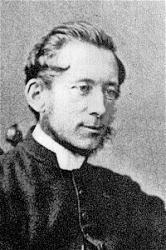
1823 - 1876 Person Name: Rev. John Bacchus Dykes (1823-1876) Topics: Heart Clean Composer of "BEATITUDE" in Songs of Praise with Tunes As a young child John Bacchus Dykes (b. Kingston-upon-Hull' England, 1823; d. Ticehurst, Sussex, England, 1876) took violin and piano lessons. At the age of ten he became the organist of St. John's in Hull, where his grandfather was vicar. After receiving a classics degree from St. Catherine College, Cambridge, England, he was ordained in the Church of England in 1847. In 1849 he became the precentor and choir director at Durham Cathedral, where he introduced reforms in the choir by insisting on consistent attendance, increasing rehearsals, and initiating music festivals. He served the parish of St. Oswald in Durham from 1862 until the year of his death. To the chagrin of his bishop, Dykes favored the high church practices associated with the Oxford Movement (choir robes, incense, and the like). A number of his three hundred hymn tunes are still respected as durable examples of Victorian hymnody. Most of his tunes were first published in Chope's Congregational Hymn and Tune Book (1857) and in early editions of the famous British hymnal, Hymns Ancient and Modern.
Bert Polman
John Bacchus Dykes
Pages