

 My Starred Hymns
 My FlexScores
 My Hymnals
 My Purchased Files
Planning worship?
Check out our sister site, ZeteoSearch.org,
for 20+ additional resources related to your search.
- |
User Links
Person Results
George Washington Doane
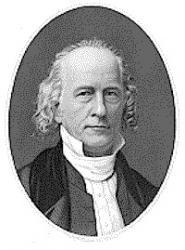
1799 - 1859 Person Name: Bishop George W. Doane Topics: The Kingdom of God on Earth Missions Author of "Fling out the banner! let it float" in The Hymnal Doane, George Washington, D.D. Bishop Doane was born at Trenton, New Jersey, May 27, 1799, and graduated at Union College, Schenectady, New York. Ordained in 1821, he was Assistant Minister at Trinity Church, New York, till 1824. In 1824 he became a Professor at Trinity College, Hartford, Conn.; in 1828 Rector of Trinity Church, Boston; and, in 1832, Bishop of New Jersey. He founded St. Mary's Hall, Burlington, 1837, and Burlington College, Burlington, 1846. Died April 27, 1859. Bishop Doane's exceptional talents, learning, and force of character, made him one of the great prelates of his time. His warmth of heart secured devoted friends, who still cherish his memory with revering affection. He passed through many and severe troubles, which left their mark upon his later verse. He was no mean poet, and a few of his lyrics are among our best. His Works, in 4 volumes with Memoir by his son, were published in 1860. He issued in 1824 Songs by the Way, a small volume of great merit and interest. This edition is now rare. A second edition, much enlarged, appeared after his death, in 1859, and a third, in small 4to, in 1875. These include much matter of a private nature, such as he would not himself have given to the world, and by no means equal to his graver and more careful lyrics, on which alone his poetic fame must rest.The edition of 1824 contains several important hymns, some of which have often circulated without his name. Two of these are universally known as his, having been adopted by the American Prayer Book Collection, 1826:--
1. Softly now the light of day. Evening. This, in addition to its use in American hymnals, is also found in the English Collections, including Snepp's Songs of Grace & Glory. Written in 1824.
2. Thou art the way, to Thee alone. Christ the Way. This, in the judgment of many, is the first of American hymns, and one of the most admirable and useful in the English language. In the United States its use is most extensive, and since its introduction into the English Collections by Bickersteth in 1833, Hall in his Mitre, in 1836, and others, it has grown in favour until it ranks with the most popular of the great English hymns. Near in merit to the foregoing stands a companion piece in the same work, which deserves to be better known :—
3. Lord, should we leave Thy hallowed feet.
The next three have been overlooked at home, but have obtained considerable circulation in English Collections.
4. Father of mercies hear, Thy pardon we implore. Ash Wednesday or Lent. A translation of "Audi, benigne Conditor" q.v.), published in his Songs by the Way, 1824, together with several other translations, thus anticipating by twelve years the great English movement in that direction. Original translation in his Songs by the Way, 1875Miller (S. & S., p. 12) attributes this translation to Dr. Neale in error.
5. Return and come to God. Invitation. In his Songs, &c, 1824. It is found in Hall’s Mitre, 1836; the Baptist Hymnal, 1879, and several others.
6. To thee, 0 Lord, with dawning light. Morning. This hymn is attributed to Heber by Miller (S. & S. , p. 381) in error. It is included in the Society for Promoting Christian Knowledge Hymns, 1852; in Windle and others. It is from the Songs, &c, 1824.
His later hymns, the dates of which are generally preserved in the last edition of his Songs by the Way, include the following, which are more or less in use :—
7. Beloved, it is well. All well in Christ. This is entitled "To my wife"; is dated Mar. 12, 1833, and was written in a copy of Dr. Bedell's "It is well." It is given in Kennedy, 1863.
8. Broken-hearted, weep no more. Assurance of Peace. The date of this hymn is not preserved. It is found as early as 1829, when it appeared in the 2nd edition of Cleland's (Baptist) Hymns.
9. Fling out the banner, let it float. Missions, Home & Foreign. This hymn, sometimes dated 1824 in error, was written at Riverside, 2nd Sunday in Advent, 1848, and is one of the author's latest effusions. It is in extensive use both in Great Britain and America.
10. He came not with His heavenly crown. The two Advents. In his Songs by the Way, edition 1875, this poem is dated Dec. 1827. In Dale's English Hymnbook, 1879, it is given with the omission of stanza iii., and in the American Protestant Episcopal Hymnal, 1871, it begins with stanza iv., "Once more, O Lord, Thy sign shall be." Full text in Lyra Sac. Amer., p. 92.
11. Lift not thou the wailing voice. Burial. A funeral hymn, adopted by the Anglican Hymnbook, but dated 1826 in error, for 1830.
12. What is that, mother? The lark, my child. This is not a hymn, but a familiar and long popular song.
13. "When darkness erst [once] at God's command. Israel in Egypt. In Kennedy, 1863, No. 722.
14. Young and happy while thou art. Youth for Christ. A favourite piece in many juvenile collections. It is dated Sept., 1827, and is given in Songs by the Way, 1875.
The Lyra Sacra Americana also contains the following:—
15. Brightness of the Father's glory. Morning. A tr. of "Consors Paterni luminis " (q.v.). It is from the Songs, &c, 1824.
16. Child that kneelest meekly there. Child at Prayer. Suggested by a cast from a piece of sculpture by Greenough representing a child at prayer.
17. Grant me, Lord, Thy graces three. Faith, Hope, and Charity desired.
18. Perfect through suffering may it be. Uses of suffering. Dated in Songs by the Way, "The Breakers, June 1, 1853."
19. Yes, it is a faithful saying. Redemption. In his Songs, &c, 1824. [Rev. F. M. Bird, M.A.]
-- John Julian, Dictionary of Hymnology (1907)
George Washington Doane
John Goss
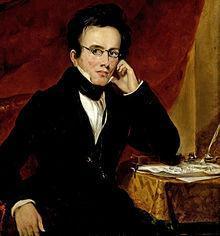
1800 - 1880 Topics: Kingdom of God on Earth, The Missions Adapter of "ARMAGEDDON" in The Hymnbook John Goss (b. Fareham, Hampshire, England, 1800; d. London, England, 1880). As a boy Goss was a chorister at the Chapel Royal and later sang in the opera chorus of the Covent Garden Theater. He was a professor of music at the Royal Academy of Music (1827-1874) and organist of St. Paul Cathedral, London (1838-1872); in both positions he exerted significant influence on the reform of British cathedral music. Goss published Parochial Psalmody (1826) and Chants, Ancient and Modern (1841); he edited William Mercer's Church Psalter and Hymn Book (1854). With James Turle he published a two-volume collection of anthems and Anglican service music (1854).
Bert Polman
John Goss
J. W. Elliott
1833 - 1915 Person Name: James W. Elliott Topics: Kingdom of God on Earth, The Missions Composer of "CHURCH TRIUMPHANT" in The Hymnbook J.W. Elliott was a popular composer of the Victorian period, and is best known for his nursery rhyme music and for his work on hymnals in the 1870s. He was born James William Elliott, in Warwick, England, on February 13, 1833. As a child, he sang as a chorister in the Leamington Parish Church. In those days, choristers were given lessons in all facets of church music, including organ lessons, counterpoint studies, and more in exchange for providing an extraordinary level of service to their parish church (services throughout the week, all holidays, extra services, etc.). The result is that most choristers who completed their studies received an excellent music education, and James was no exception. After starting his career as an organist and choirmaster for a countryside church, his talent became obvious. He moved to London, where he assisted Sir Arthur Sullivan (of Gilbert and Sullivan fame) in editing Church Hymns. In addition, James worked for a music publisher.
His compositions include two operettas, numerous anthems, service music, works for instruments including the very popular harmonium, and most particularly for Nursery Rhymes and Nursery Songs, his children’s music score that sets many of the Nursery Rhymes to delightful music. Several of his hymn tunes are still in use today in many hymnals, most notably his hymn tune “Day of Rest.” He was heavily involved in the preparation of the musical edition of Church Hymns in 1874, the Choral Service Book of 1892, and transcriptions of hymn tunes using harmonies different than the traditional ones found in hymnals. He died in St. Marylebone, London, on February 5, 1915.
--www.nursery-songs.com/
J. W. Elliott
A. H. Mann
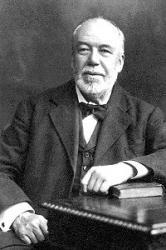
1850 - 1929 Person Name: Arthur H. Mann Topics: The Kingdom of God on Earth Missions Composer of "VALOUR" in The Hymnal Arthur Henry ‘Daddy’ Mann MusB MusD United Kingdom 1850-1929. Born at Norwich, Norfolk, England, he graduated from New College, Oxford. He married Sarah Ransford, and they had five children: Sarah, Francis, Arthur, John, and Mary. Arthur died in infancy. Mann was a chorister and assistant organist at Norwich Cathedral, then, after short stints playing the organ at St Peter’s, Wolverhampton (1870-71); St. Michael’s Tettenhall Parish Church (1871-75); and Beverley Minster (1875-76); he became organist at King’s College Chapel, Cambridge (1876-1929), Cambridge University organist (1897-1929), and music master and organist at the Leys School, Cambridge (1894-1922). In addition to composing an oratorio and some hymn tunes, he was music editor of the Church of England Hymnal (1894). In 1918 he directed the music and first service of “Nine lessons & carols” at King’s College Chapel. He was an arranger, author, composer, and editor. His wife, Sarah, died in 1918. He died at Cambridge, England.
John Perry
A. H. Mann
Ralph Vaughan Williams
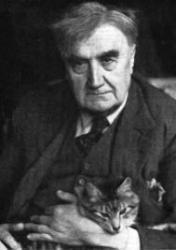
1872 - 1958 Person Name: R. Vaughan Williams Topics: Kingdom of God on Earth, The World Friendship and Peace Arranger of "FOREST GREEN" in The Hymnbook Through his composing, conducting, collecting, editing, and teaching, Ralph Vaughan Williams (b. Down Ampney, Gloucestershire, England, October 12, 1872; d. Westminster, London, England, August 26, 1958) became the chief figure in the realm of English music and church music in the first half of the twentieth century. His education included instruction at the Royal College of Music in London and Trinity College, Cambridge, as well as additional studies in Berlin and Paris. During World War I he served in the army medical corps in France. Vaughan Williams taught music at the Royal College of Music (1920-1940), conducted the Bach Choir in London (1920-1927), and directed the Leith Hill Music Festival in Dorking (1905-1953). A major influence in his life was the English folk song. A knowledgeable collector of folk songs, he was also a member of the Folksong Society and a supporter of the English Folk Dance Society. Vaughan Williams wrote various articles and books, including National Music (1935), and composed numerous arrangements of folk songs; many of his compositions show the impact of folk rhythms and melodic modes. His original compositions cover nearly all musical genres, from orchestral symphonies and concertos to choral works, from songs to operas, and from chamber music to music for films. Vaughan Williams's church music includes anthems; choral-orchestral works, such as Magnificat (1932), Dona Nobis Pacem (1936), and Hodie (1953); and hymn tune settings for organ. But most important to the history of hymnody, he was music editor of the most influential British hymnal at the beginning of the twentieth century, The English Hymnal (1906), and coeditor (with Martin Shaw) of Songs of Praise (1925, 1931) and the Oxford Book of Carols (1928).
Bert Polman
Ralph Vaughan Williams
H. T. Burleigh
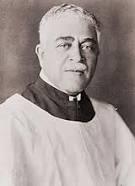
1866 - 1949 Person Name: Harry T. Burleigh Topics: Kingdom of God on Earth, The Brotherhood Adapter of "MCKEE" in The Hymnbook Harry T. Burleigh (b. Erie, PA, 1866; d. Stamford, CT, 1949) began his musical career as a choirboy in St. Paul's Cathedral, Erie, Pennsylvania. He also studied at the National Conservatory of Music, New York City, where he was befriended by Antonín Dvořák and, according to tradition, provided Dvořák with some African American musical themes that became part of Dvořák's New World Symphony. Burleigh composed at least two hundred works but is most remembered for his vocal solo arrangements of African American spirituals. In 1944 Burleigh was honored as a Fellow of the Hymn Society in the United States and Canada.
Bert Polman
H. T. Burleigh
W. G. Tarrant
1853 - 1928 Person Name: William Tarrant Topics: Kingdom of God on earth Author of "The fathers built this city" in Elmhurst Hymnal Tarrant, William George, B.A., b. 1853. Since 1883 Minister of the Wandsworth Unitarian Christian Church. Editor of The Inquirer, 1888-97. One of the editors of the Essex Hall Hymnal. 1890, and of the Revised ed., 1902.
1. Come, let us Join with faithful souls. The Faithful.
2. Draw nigh to God; He will draw nigh to you. The Divine Helper.
3. Long ago the lilies faded. The Constant Presence.
4. The Light along the ages. Easter.
5. With happy voices ringing. Children's Praise.
--John Julian, Dictionary of Hymnology, New Supplement (1907)
W. G. Tarrant
Johann Schop
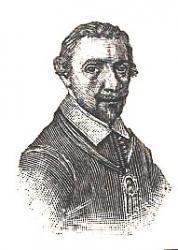
1590 - 1667 Person Name: J. Schop, ?-1664 Topics: The Kingdom of God on Earth Zion Composer (attributed to) of "WERDE MUNTER" in The Hymnal Johann Schop Germany 1590-1667. Born at lower Saxony, Germany, he became a Lutheran composer and violinist, much admired for his virtuoso and technical ability. In 1614 Duke Friedrich Ulrich made him a probationary musician in the Hofkapelle at Wolfenbuttel. He performed playing various instruments, but excelled as a violinist. He was engaged permanently in 1615, but the same year he responded to a summons to join the flourishing musical establishment of King Christian IV of Denmark in Copenhagen. There he met English viol player, William Brade, who had earlier been in service to Hamburg, Germany (and may have taught Schop there). Schops compositions for the violin set impressive demands for that area at that time. He also played other instruments, including the violi, lute, cornet, trombon, trumpet, zinke, and violin (virtuoso). In 1619 Schop and Brade left Copenhagen to escape the plague. He then went to Iburg, where he worked at the courtof the Osnabruck bishop, Philipp Sigismund. Schop had such a reputation that he soon acquired a post as Kapellmeister at an establishment in Hamburg and was the first member of the council music. In 1621 he was its director and the leading municipal violinist in that city, which offered him a substantial income for his participation in the church music program. He also was organist at the Jacobikirche. In 1634 he again traveled to Copenhagen with Heinrich Schutz and Heinrich Albert for the wedding of Crown Prince Christian. He won a violin contest there. Few German violinists were of his caliber musically. He returned to Hamburg, and the Danish king tried several times to woo him back to Denmark, but he stayed in Hamburg, becoming a director of music. He published books of violin music in 4 to 6 parts. He wrote two books of well-loved dance pieces and sacred concertos. He co-founded a school of song writing there in Hamburg with Thomas Selle. Many of his tunes were writtten for fellow townsmen and friend Johann Rist. Some of his music was performed at the Peace of Westphalia celebrations. Some of his tunes were used by chants in a cantata. Schop was married (wife’s name not found) and they had two sons, Johann II, and Albert, who also became musicians. He died in Hamburg.
John Perry
Johann Schop
S. Dryden Phelps
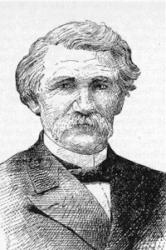
1816 - 1895 Person Name: Rev. Sylvanus D. Phelps Topics: The Kingdom of God on Earth Stewardship Author of "Saviour! Thy dying love " in The Hymnal Phelps, Sylvanus Dryden, D.D., was born at Suffield, Connecticut, May 15, 1816, and educated at Brown University, where he graduated in 1844. In 1846 he became pastor of the first Baptist Church, New Haven. Dr. Phelps is the Editor of The Christian Secretary, Hartford. His publications include, Eloquence of Nature, and Other Poems, 1842; Sunlight and Hearthlight, 1856; the Poet's Song, 1867, &c. He is the author of the following hymns:—
1. Christ, Who came my soul to save. Holy Baptism.
2. Did Jesus weep for me? Lent.
3. Saviour, Thy dying love. Passiontide.
4. Sons of day, arise from slumber. Home Missions.
5. This rite our blest Redeemer gave. Holy Baptism.
Of these Nos. 1 and 4 appeared in the Baptist ed. of the Plymouth Collection, 1857; Nos. 2 and 5 in the Baptist Devotional Hymn Book, 1864; and No. 3 in Gospel Hymns, 1st series, and Laudes Domini, 1884. [Rev. F. M. Bird, M.A.]
-- John Julian, Dictionary of Hymnology (1907)
====================
Phelps, Sylvanus Dryden, p. 893, ii. Additional hymns in common use by Dr. Phelps include (1) "Father, from Thy throne above" (Temperance); (2) "When over our land hung oppression's dark pall" (Temperance), both written in 1841. To J. Aldrich's Sacred Lyre, 1858, he contributed (3) "Sweet is the hour of prayer" (Prayer); (4) "Sweet Sunday-school! I love the place" (Sunday Schools); and (5) "Come friends, and let our hearts awake" (Divine Worship). There are also (6) "Once I heard a sound at my heart's dark door" (Voice of God within), in Pure Gold, with a refrain by Dr. Lowry; (7) "While on life's stormy sea" (Trust in God), written in 1862; and (8) "Come, trembling soul, be not afraid" (Confidence), "written after visiting a sick man, who, feeling his need of Christ, found it difficult to believe." Concerning his popular hymn "Saviour! Thy dying love," Burrage says it was written in 1862, and published in the Watchman and Reflector, and then, with music by Dr. R. Lowry in Pure Gold. It has been translated into Swedish and other languages. Burrage gives a revised version of the text, recently made by the author. (Burrage's Baptist Hymn Writers, 1888, p. 384.)
--John Julian, Dictionary of Hymnology, Appendix, Part II (1907)
S. Dryden Phelps
James G. Walton
1821 - 1905 Person Name: James G. Walton, 1821-1905 Topics: The Kingdom of God on Earth The Nation, Peace Composer of "ST. CATHERINE" in The Hymnal Born: February 19, 1821, Clitheroe, Lancashire, England.
Died: September 1, 1905, Bradford, New York.
Little is known of Walton’s life. His works include:
Plain Song Music for the Holy Communion Office, 1874 (editor)
Music: ST. CATHERINE
--www.hymntime.com/tch
James G. Walton
Pages