You help make Hymnary.org possible. More than 10 million people from 200+ countries found hymns, liturgical resources and encouragement on Hymnary.org in 2025, including you. Every visit affirms the global impact of this ministry.

If Hymnary has been meaningful to you this year, would you take a moment today to help sustain it? A gift of any size—paired with a note of encouragement if you wish—directly supports the server costs, research work and curation that keep this resource freely available to the world.

Give securely online today, or mail a check to:
Hymnary.org
Calvin University
3201 Burton Street SE
Grand Rapids, MI 49546

Thank you for your partnership, and may the hope of Advent fill your heart.

Person Results

Tune Identifier:"^dundee_ravenscroft$"
In:people

Planning worship? Check out our sister site, ZeteoSearch.org, for 20+ additional resources related to your search.
Showing 61 - 70 of 145Results Per Page: 102050

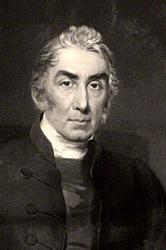
Reginald Heber

1783 - 1826 Person Name: Reginald Heber, 1783-1826 Author of "Abashed Be All The Boast Of Age!" in The Cyber Hymnal Reginald Heber was born in 1783 into a wealthy, educated family. He was a bright youth, translating a Latin classic into English verse by the time he was seven, entering Oxford at 17, and winning two awards for his poetry during his time there. After his graduation he became rector of his father's church in the village of Hodnet near Shrewsbury in the west of England where he remained for 16 years. He was appointed Bishop of Calcutta in 1823 and worked tirelessly for three years until the weather and travel took its toll on his health and he died of a stroke. Most of his 57 hymns, which include "Holy, Holy, Holy," are still in use today. -- Greg Scheer, 1995 ==================== Heber, Reginald, D.D. Born at Malpas, April 21, 1783, educated at Brasenose College, Oxford; Vicar of Hodnet, 1807; Bishop of Calcutta, 1823; died at Trichinopoly, India, April 3, 1826. The gift of versification shewed itself in Heber's childhood; and his Newdigate prize poem Palestine, which was read to Scott at breakfast in his rooms at Brazenose, Oxford, and owed one of its most striking passages to Scott's suggestion, is almost the only prize poem that has won a permanent place in poetical literature. His sixteen years at Hodnet, where he held a halfway position between a parson and a squire, were marked not only by his devoted care of his people, as a parish priest, but by literary work. He was the friend of Milman, Gifford, Southey, and others, in the world of letters, endeared to them by his candour, gentleness, "salient playfulness," as well as learning and culture. He was on the original staff of The Quarterly Review; Bampton Lecturer (1815); and Preacher at Lincoln's Inn (1822). His edition of Jeremy Taylor is still the classic edition. During this portion of his life he had often had a lurking fondness for India, had traced on the map Indian journeys, and had been tempted to wish himself Bishop of Calcutta. When he was forty years old the literary life was closed by his call to the Episcopate. No memory of Indian annals is holier than that of the three years of ceaseless travel, splendid administration, and saintly enthusiasm, of his tenure of the see of Calcutta. He ordained the first Christian native—Christian David. His first visitation ranged through Bengal, Bombay, and Ceylon; and at Delhi and Lucknow he was prostrated with fever. His second visitation took him through the scenes of Schwartz's labours in Madras Presidency to Trichinopoly, where on April 3,1826, he confirmed forty-two persons, and he was deeply moved by the impression of the struggling mission, so much so that “he showed no appearance of bodily exhaus¬tion." On his return from the service ”He retired into his own room, and according to his invariable custom, wrote on the back of the address on Confirmation 'Trichinopoly, April 3, 1826.' This was his last act, for immediately on taking off his clothes, he went into a large cold bath, where he had bathed the two preceding mornings, but which was now the destined agent of his removal to Paradise. Half an hour after, his servant, alarmed at his long absence, entered the room and found him a lifeless corpse." Life, &c, 1830, vol. ii. p. 437. Heber's hymns were all written during the Hodnet period. Even the great missionary hymn, "From Greenland's icy mountains," notwithstanding the Indian allusions ("India's coral strand," "Ceylon's isle"), was written before he received the offer of Calcutta. The touching funeral hymn, "Thou art gone to the grave," was written on the loss of his first babe, which was a deep grief to him. Some of the hymns were published (1811-16) in the Christian Observer, the rest were not published till after his death. They formed part of a ms. collection made for Hodnet (but not published), which contained, besides a few hymns from older and special sources, contributions by Milman. The first idea of the collection appears in a letter in 1809 asking for a copy of the Olney Hymns, which he "admired very much." The plan was to compose hymns connected with the Epistles and Gospels, to be sung after the Nicene Creed. He was the first to publish sermons on the Sunday services (1822), and a writer in The Guardian has pointed out that these efforts of Heber were the germs of the now familiar practice, developed through the Christian Year (perhaps following Ken's Hymns on the Festivals), and by Augustus Hare, of welding together sermon, hymnal, and liturgy. Heber tried to obtain from Archbishop Manners Sutton and the Bishop of London (1820) authorization of his ms. collection of hymns by the Church, enlarging on the "powerful engine" which hymns were among Dissenters, and the irregular use of them in the church, which it was impossible to suppress, and better to regulate. The authorization was not granted. The lyric spirit of Scott and Byron passed into our hymns in Heber's verse; imparting a fuller rhythm to the older measures, as illustrated by "Oh, Saviour, is Thy promise fled," or the martial hymn, "The Son of God goes forth to war;" pressing into sacred service the freer rhythms of contemporary poetry (e.g. "Brightest and best of the sons of the morning"; "God that madest earth and heaven"); and aiming at consistent grace of literary expression.. Their beauties and faults spring from this modern spirit. They have not the scriptural strength of our best early hymns, nor the dogmatic force of the best Latin ones. They are too flowing and florid, and the conditions of hymn composition are not sufficiently understood. But as pure and graceful devotional poetry, always true and reverent, they are an unfailing pleasure. The finest of them is that majestic anthem, founded on the rhythm of the English Bible, "Holy, Holy, Holy, Lord God Almighty." The greatest evidence of Heber's popularity as a hymnwriter, and his refined taste as a compiler, is found in the fact that the total contents of his ms. collection which were given in his posthumous Hymns written and adapted to the Weekly Church Service of the Year. London, J. Murray, 1827; which included 57 hymns by Heber, 12 by Milman, and 29 by other writers, are in common in Great Britain and America at the present time. [Rev. H. Leigh Bennett, M.A.] Of Bishop Heber's hymns, about one half are annotated under their respective first lines. Those given below were published in Heber's posthumous Hymns, &c, 1827. Some of them are in extensive use in Great Britain and America; but as they possess no special histories they are grouped together as from the Hymns, &c, 1827:— 1. Beneath our feet, and o'er our head. Burial. 2. Creator of the rolling flood. St. Peter's Day, or, Gospel for 6th Sunday after Trinity. 3. Lo, the lilies of the field. Teachings of Nature: or, Gospel for 15th Sunday after Trinity. 4. 0 God, by Whom the seed is given. Sexagesima. 6. 0 God, my sins are manifold. Forgiveness, or, Gospel for 22nd S. after Trinity. 6. 0 hand of bounty, largely spread. Water into Wine, or, Gospel for 2nd S. after Epiphany. 7. 0 King of earth, and air, and sea. Feeding the Multitude; or, Gospel for 4th S. in Lent. 8. 0 more than merciful, Whose bounty gave. Good Friday. 9. 0 most merciful! 0 most bountiful. Introit Holy Communion. 10. 0 Thou, Whom neither time nor space. God unsearchable, or, Gospel for 5th Sunday in Lent. 11. 0 weep not o'er thy children's tomb. Innocents Day. 12. Room for the proud! Ye sons of clay. Dives and Lazarus, or, Gospel for 1st Sunday after Trinity. 13. Sit thou on my right hand, my Son, saith the Lord. Ascension. 14. Spirit of truth, on this thy day. Whit-Sunday. 15. The feeble pulse, the gasping breath. Burial, or, Gospel for 1st S. after Trinity. 16. The God of glory walks His round. Septuagesima, or, the Labourers in the Marketplace. 17. The sound of war in earth and air. Wrestling against Principalities and Powers, or, Epistle for 2lst Sunday after Trinity. 18. The world is grown old, her pleasures are past. Advent; or, Epistle for 4th Sunday in Advent. 19. There was joy in heaven. The Lost Sheep; or, Gospel for 3rd S. after Trinity. 20. Though sorrows rise and dangers roll. St. James's Day. 21. To conquer and to save, the Son of God. Christ the Conqueror. 22. Virgin-born, we bow before Thee. The Virgin Mary. Blessed amongst women, or, Gospel for 3rd S. in Lent. 23. Wake not, 0 mother, sounds of lamentation. Raising the Widow's Son, or, Gospel for 16th S. after Trinity. 24. When on her Maker's bosom. Holy Matrimony, or, Gospel for 2nd S. after Epiphany. 25. When through the torn sail the wild tempest is streaming. Stilling the Sea, or, Gospel for 4th Sunday after Epiphany. 26. Who yonder on the desert heath. The Good Samaritan, or, Gospel for 13th Sunday after Trinity. This list is a good index of the subjects treated of in those of Heber's hymns which are given under their first lines, and shows that he used the Gospels far more than the Epistles in his work. --John Julian, Dictionary of Hymnology (1907)

Benjamin Beddome

1717 - 1795 Person Name: Benjamin Beddome, 1717-1795 Author of "In Duties and in Sufferings Too" in Hymnal and Liturgies of the Moravian Church Benjamin Beddome was born at Henley-in Arden, Warwickshire, January 23, 1717. His father was a Baptist minister. He studied at various places, and began preaching in 1740. He was pastor of a Baptist society at Bourton-on-the-Water, Gloucestershire, until his death in 1795. In 1770, he received the degree of M.A. from the Baptist College in Providence, Rhode Island. He published several discourses and hymns. "His hymns, to the number of 830, were published in 1818, with a recommendation from Robert Hall." Montgomery speaks of him as a "writer worthy of honour both for the quantity and the quality of his hymns." --Annotations of the Hymnal, Charles Hutchins, M.A. 1872. ========================= Beddome, Benjamin , M.A. This prolific hymnwriter was born at Henley-in-Arden, Warwickshire, Jan. 23, 1717, where his father, the Rev. John Beddome, was atthat time Baptist Minister. He was apprenticed to a surgeon in Bristol, but removing to London, he joined, in 1739, the Baptist church in Prescott St. At the call of this church he devoted himself to the work of the Christian ministry, and in 1740 began to preach at Bourton-on-the-Water, in Gloucestershire. Declining invitations to remove to London or elsewhere, he continued pastor at Bourton until his death, on Sep. 3, 1795, at the age of 78. Mr. Beddome was for many years one of the most respected Baptist ministers in the West of England. He was a man of some literary culture. In 1770 he received the degree of M.A. from Providence College, Rhode Island. He was the author of an Exposition of the Baptist Catechism, 1752, in great repute at the time, and reprinted by Dr. C. Evans in 1772. It was his practice to prepare a hymn every week to be sung after his Sunday morning sermon. Though not originally intended for publication, he allowed thirteen of these to appear in the Bristol Baptist Collection of Ash & Evans (1769), and thirty-six in Dr. Rippon's Baptist Selection (1787), whence a number of them found their way into the General Baptist Hymn Book of 1793 and other collections. In 1817, a posthumous collection of his hymns was published, containing 830 pieces, with an introduction by the Rev. Robert Hall, and entitled "Hymns adapted to Public Worship or Family Devotion, now first published from the Manuscripts of the late Rev. B. Beddome, M.A." Preface dated "Leicester, Nov. 10, 1817." Some of the early copies bear the same date on the title page. Copies bearing both the 1817 and 1818 dates are in the British Museum. The date usually given is 1818. Some hymns are also appended to his Sermons, seven volumes of which were published l805—1819; and over twenty are given in the Baptist Register of various dates. Beddome's hymns were commended by Montgomery as embodying one central idea, "always important, often striking, and sometimes ingeniously brought out." Robert Hall's opinion is just, when in his "Recommendatory Preface" to the Hymns, &c, he says, p. vii.:— "The man of taste will be gratified with the beauty and original turns of thought which many of them ex¬hibit, while the experimental Christian will often perceive the most secret movements of his soul strikingly delineated, and sentiments pourtrayed which will find their echo in every heart." With the exception of a few composed for Baptisms and other special occasions, their present use in Great Britain is limited, but in America somewhat extensive. One of the best is the Ordination Hymn, "Father of Mercies, bow Thine ear." Another favourite is “ My times of sorrow and of joy," composed, by a singular coincidence, to be sung on Sunday, Jan. 14, 1778, the day on which his son died, most unexpectedly, in Edinburgh. "Let party names no more," is very popular both in Great Brit, and America. "Faith, His a precious gift," "Witness, ye men and angels, now," and the hymn for Holy Baptism, "Buried beneath the yielding wave," are also found in many collections. Beddome's popularity is, however, now mainly in America. [Rev. W. R. Stevenson, M.A.] Beddome is thus seen to be in common use to the extent of about 100 hymns. In this respect he exceeds every other Baptist hymnwriter; Miss Steele ranking second. The authorities for Beddome's hymns are: (1) A Collection of Hymns adapted to Public Worship, Bristol, W. Pine, 1769, the Collection of Ash & Evans; (2) Dr. Rippon's Selections 1787, and later editions; (3) Sermons printed from the Manuscripts of the late Rev. Benjamin Beddome, M.A.,... with brief Memoir of the Author, Dunstable & Lond., 1805-1819; (4) Dr. Rippon's Baptist Register, 1795, &c.; (5) The Beddome Manuscripts, in the Baptist College, Bristol; (6) and Hymns adapted to Public Worship, or Family Devotion now first published, from Manuscripts of the late Rev. B. Beddome, A.M. With a Recommendatory Preface by the Rev. R. Hall, A.M. Lond., 1817. In his Preface, Mr. Hall gives this account of the Beddome Manuscript:— "The present Editor was entrusted several years ago with the MSS, both in prose and verse, with permission from the late Messrs. S. & B. Beddome, sons of the Author, to publish such parts of them as he might deem proper. He is also indebted to a descendant of the Rev. W. Christian, formerly pastor of the Baptist Church at Sheepshead, Leicestershire, for some of the Author's valuable hymns, which had been carefully preserved in the family. From both these sources, as well as others of less consequence, the present interesting volume has been derived." -- Excerpts from John Julian, Dictionary of Hymnology (1907) ======================= Beddome, Benjamin, pp. 121-124. Other hymns in common use:— 1. Great God, before Thy mercy-seat. (1817). Lent. 2. Great God, oppressed with grief and fear. (1787.) Reading H. Scripture. 3. How glorious is Thy word, 0 God. Holy Scripture. From "When Israel, &c," p. 124, i. 4. In God I ever will rejoice. Morning. From his Hymns, &c, 1817. 5. Jesus, my Lord, divinely fair. (1817.) Jesus the King of Saints. Begins with stanza ii. of “Listen, ye mortals, while I sing." 6. Rejoice, for Christ the Saviour reigns. Missions. Altered form of "Shout, for the blessed, &c," p. 123, ii. 7. Satan, the world, and sin. (1817.) In Temptation. 8. Thou, Lord of all above. (1817.) Lent. 9. Unto Thine altar, Lord. (1787.) Lent. 10. Ye saints of every rank, with joy. (1800.) Public Worship. The dates given above are, 1787 and 1800, Rippon's Selection; and 1817 Beddome's Hymns. --John Julian, Dictionary of Hymnology, Appendix, Part II

Henry Hart Milman

1791 - 1868 Person Name: H. H. Milman Author of "O help us Lord each hour of need" in The Academic Hymnal Milman, Henry Hart, D.D., the youngest son of Sir Francis Milman (who received his Baronetage as an eminent Court physician), was born Feb. 10th, 1791, and educated at Dr. Burney's at Greenwich, and subsequently at Eton. His career at B. N. C. Oxford, was brilliant. He took a first class in classics, and carried off the Newdigate, Latin Verse, Latin Essay, and English Essay. His Newdigate on the Apollo Belvedere, 1812, is styled by Dean Stanley "the most perfect of Oxford prize poems." His literary career for several years promised to be poetical. His tragedy Fazio was played at Covent Garden, Miss O'Neill acting Bianca. Samor was written in the year of his appointment to St. Mary's, Reading (1817); The Fall of Jerusalem (1820); Belshazzar and The Martyr of Antioch (1822), and Anne Boleyn, gained a brilliant reception from the reviewers and the public. He was appointed Poetry Professor at Oxford in 1821, and was succeeded ten years after by Keble. It must have been before 1823, the date of Heber's consecration to Calcutta, that the 13 hymns he contributed to Heber's Hymns were composed. But his poetry was only the prelude to his larger work. The Bampton Lectures (1827) mark his transition to theological study, and the future direction of it was permanently fixed by his History of the Jews (1829). This book raised a storm of obloquy. It was denounced from the University pulpit, and in the British Critic. "It was the first decisive inroad of German theology into England, the first palpable indication that the Bible could be studied like another book, that the characters and events of the sacred history could be treated at once critically and reverently" (Dean Stanley). In 1835 he was presented by Sir Robert Peel to a Canonry at Westminster and the Rectory of St. Margaret's. In 1839 appeared his valuable edition of Gibbon's Decline and Fall; and in 1840 his History of Christianity to the Abolition of Paganism in the Roman Empire. Among his minor works in a different field were his Life of Keats and his edition and Life of Horace. It was not till 1854 that his greatest work—-for "vast and varied learning, indefatigable industry, calm impartiality, and subtle and acute criticism, among the most memorable in our language" (Quart Rev.)—-Latin Christianity—-appeared. He had been appointed Dean of St. Paul's in 1849. The great services under the dome originated in his tenure of the Deanery. His latest work, published after his death, Sept. 24, 1868, was The Annals of St. Paul’s. Though one of the most illustrious in the school of English liberal theology, he had no sympathy with the extreme speculations of Germany. The "criticism" of Tübingen "will rarely bear criticism." He "should like an Ewald to criticise Ewald." "Christianity will survive the criticism of Dr. Strauss," and the "bright flashing artillery" of Rénan. His historical style has been compared to Gibbon in its use of epigram and antithesis. His narrative is full of rapidity of movement. His long complex paragraphs have often a splendour of imagination as well as wealth of thought. All the varied powers of his mind found vent in his conversation; he was called, after his death, "the last of the great converters." The catalogue of his friends from the days of Heber, "his early friend," to those of Hallam, Macaulay, and Dean Stanley, was long and distinguished. Milman's 13 hymns were published in Heber's posthumous Hymns in 1827, and subsequently in his own Selection of Psalms & Hymns, 1837. The fine hymn for The Burial of the Dead, in Thring's Collection, "Brother, thou art gone before us," is from The Martyr of Antioch (1822). Like Heber's, they aim at higher literary expression and lyric grace. He makes free use of refrains. The structure is often excellent. His style is less florid and fuller of burning, sometimes lurid force than Heber's. His hymn for the 16th Sunday after Trinity, "When our heads are bowed with woe," has no peer in its presentation of Christ's human sympathy; the hymn for the 2nd Sunday in Lent, “Oh! help us, Lord! each hour of need," is a piece of pure deep devotion. "Ride on, ride on in majesty," the hymn for Palm Sunday, is one of our best hymns. And the stanzas for Good Friday, "Bound upon the accursed tree," form one of the finest meditations on the Passion. All his hymns are still in common use. [Rev.H.Leigh Bennett, M.A.] --John Julian, Dictionary of Hymnology (1907)

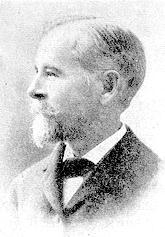
Frederick Lucian Hosmer

1840 - 1929 Person Name: F. L. Hosmer Author of "Immortal by their deed and word" in Sacred Songs For Public Worship Hosmer, Frederick Lucian, B.A., was born at Framingham, Mass., in 1840, and educated at Harvard, where he graduated B.A. in 1869. Entering the Unitarian Ministry in 1872 he has held charges in Quincy, Ill., 1872-77; Cleveland, Ohio, 1878-92; St. Louis, 1894-99; and since 1899, at Berkeley, Cal. His Way of Life, 1877, was a compilation of Prayers and Responsive Services for Sunday Schools. Of Unity Hymns and Carols, 1880, he was joint editor with W. C. Gannett and J. V. Blake. His hymns were published jointly by him and W. C. Gannett (q.v.), as The Thought of God in Hymns and Poems (Boston: Little, Brown & Co.), 1st Series, 1885; 2nd Series, 1894. Of his 56 hymns in this work the following have come into common use, for the most part during the past ten years:— 1. Father, to Thee we look in all our sorrow. [Trust in God.] Written in 1881 upon the death of a member of the author's congregation, and published in The Thought of God, 1st Series, 1885. 2. From age to age how grandly rise. [Unity.] Written for the annual festival of the Free Religious Assoc, Boston, June 2, 1899, and first published in Souvenir Festival Hymns, 1899. Subsequently altered by the author to "From age to age the prophet's vision." 3. From age to age they gather, all the brave of heart and strong. [Victory of Truth.] "Written in 1891 for the Dedication of Unity Church, Decorah, Iowa, and published in The Thought of God, 2nd Series, 1894. 4. From many ways and wide apart. [College or School Reunion.] Dated in The Thought of God, 2nd Series, 1894, as having been written in 1890. 5. Go not, my soul, in search of Him. [God Within.] Written in 1879, printed in the Boston Christian Register, May 31, 1879, and included in The Thought of God, 1st Series, 1885, with the title, "The Indwelling God." 6. I cannot think of them as dead. [Eternal Life.] Written in 1882, and first published in The Thought of God, 1st Series, 1885, and entitled "My Dead." in the English collections it is usually given as "We cannot think of them as dead." 7. I little see, I little know. [Trust.] "A Psalm of Trust," written in 1883, first appeared in the Boston Christian Register, and again in The Thought of God, 1st Series, 1885. 8. Immortal by their deed and word. [The Spirit of Jesus.] Written in 1880, and first published in Unity Hymns and Carols, Chicago, Ill., 1880, and then in The Thought of God, 1st Series, 1885. 9. Many things in life there are. [Mystery in all Things.] Written in 1885, and first published in The Thought of God, 1st Series, 1885, with the title "Passing Understanding," and the quotation "The Peace of God which passeth all understanding." 10. Not always on the mount may we. [On the Mount.] This lesson from the Transfiguration was written in 1882, and published in the Chicago Unity, April 1, 1884. After revision by the author, it was included in the 1st Series of The Thought of God, 1885. 11. Not when, with self dissatisfied. [Lent.] Written in 1891, and given in The Thought of God, 2nd series, 1894, p. 33. It is in The Public School Hymn Book, 1903, and others. 12. O beautiful, my country. [National Hymn.] As “Our Country," written in 1884, and published in the Chicago Unity Festivals, 1884; and again in The Thought of God, 1885. 13. O Light, from age to age the same. [Dedication Anniversary.] Written in 1890 for the fiftieth anniversary of the Second Congregational Church (Unitarian), Quincy, 111. Included in The Thought of God, 2nd Series, 1894, and entitled "From Generation to Generation." 14. O Lord of Life, where'er they be. [Life in God.] "Written in 1888 for Easter service in Author's own church," and first published in the Chicago Unit, and again in The Thought of God, 2nd Series, 1894. The "Alleluia!" refrain, which is added in some collections to each verse, is appended, in the original, to the last verse only. 15. O Name, all other names above. [Trust in God.] Under the title "Found. 'They that know Thy name will put their trust in Thee!’ this hymn, written in 1878, was given in The Thought of God, 1st Series, 1885. 16. O Prophet souls of all the years. [Unity.] “Written in 1893 for, and sung at, the Unitarian gathering in connection with The World's Parliament of Religions (World's Fair), Chicago, Sep., 1893," and included in The Thought of God, 2nd Series, 1894, and entitled "One Law, One Life, one Love." 17. O Thou, in all Thy might so far. [God All in All.] This hymn, given in The Thought of God, 1st Series, 1885, with the title "The Mystery of God," was written in 1876, and first published in the New York Inquirer. 18. O thou in lonely vigil led. This encouragement for lonely workers was written for the "Emerson Commemoration, W. U. C, 1888," and included in The Thought of God, 2nd Series, 1894. 19. O Thou, Who art of all that is. [Divine Guidance.] Under the title "Through unknown paths," this hymn was included in The Thought of God, 1st Series, 1885. It was written in 1877. 20. O Thou, Whose Spirit witness bears. [Dedication of a Place of Worship.] Written for the Dedication of First Unitarian Church, Omaha, Feb. 6, 1891, and published in The Thought of God, 2nd Series, 1894, with the title "The Inward Witness," and the subscription "For T. K., Omaha, 1801." 21. On eyes that watch through sorrow's night. [Easter] A Carol for Easter Morn, written in 1890 for the author's congregation, and published in The Thought of God, 2nd Series, 1894. 22. One thought I have, my ample creed. [The Thought of God.] This is the initial hymn to the collection The Thought of God, 1st Series, 1885, and supplies the title to the work. It was written in 1880, and first published in the Chicago Unity Hymns and Carols, 1880, and then in The Thought of God, 1885. 23. The rose is queen among the flowers. [Flower Service.] "Written in 1875, first published in The Sunnyside, a song book for Sunday Schools, and again in The Thought of God, 1st Series, 1885, under the title "Flower Sunday." 24. Thy kingdom come, — on bended knee. [Missions.] "Written in 1891 for the Commencement of the Meadville Theological School (Meadville, Pa.), June 12, 1891, and published in The Thought of God, 2nd Series, 1894," under the title "The Day of God," and the subscription, "M. T. S., June 12, 1891." 25. We pray no more, made lowly wise, For miracle and sign. [Greater Faith Desired.] Written in 1879, and first published in The Christian Register (Boston), Mar. 22 of that year, under the title 'The Larger Faith.'" Included under the same title in The Thought of God, 1st Series, 1885. Sometimes given as "Made lowly wise, we pray no more." 26. When courage fails, and faith burns low. [Victory of Truth.] Under the title "Loyalty," this hymn was given in The Thought of God, 1st Series, 1885. It was written in 1881. 27. Where men on mounts of vision Have passed the veil within. [Dedication of a Place of Worship.] "Written in 1891 for the Dedication of First Unitarian Church, Oakland, California." Included in The Thought of God, 2nd Series, 1894, entitled "Holy Places," and subscribed " For C. W. W., Oakland, Cal., 1891." These annotations are from manuscript notes supplied to us by the author. Of these hymns all are in common use in America, and more than one half in Great Britain, mainly by Unitarians and Congregationalists. Amongst Unitarian hymn-writers of the last twenty years Mr. Hosmer is the most powerful and original known to us. --John Julian, Dictionary of Hymnology, New Supplement (1907)

Granton Douglas Hay

b. 1943 Person Name: Granton Douglas Hay, 1943- Adapter of "I to the hills will lift my eyes" in Together in Song

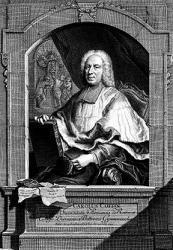
Charles Coffin

1676 - 1749 Author of "New Wonders of Thy Mighty Hand" in The Cyber Hymnal Coffin, Charles, born at Buzaney (Ardennes) in 1676, died 1749, was principal of the college at Beauvais, 1712 (succeeding the historian Rollin), and rector of the University of Paris, 1718. He published in 1727 some, of his Latin poems, for which he was already noted, and in 1736 the bulk of his hymns appeared in the Paris Breviary of that year. In the same year he published them as Hymni Sacri Auctore Carolo Coffin, and in 1755 a complete ed. of his Works was issued in 2 vols. To his Hymni Sacri is prefixed an interesting preface. The whole plan of his hymns, and of the Paris Breviary which he so largely influenced, comes out in his words. "In his porro scribendis Hymnis non tam poetico indulgendunv spiritui, quam nitoro et pietate consulendum esse existimavi. Pleraque igitur, argumentis convenientia e purissiinis Scripturae Sacrae fontibus deprompsi quac idoneis Ecclesiae cantui numeris alligarem." His hymns are described by a French critic as having less brilliancy than those of Santüil (q.v.), but more simplicity and unction. They number 100 in the edition of 1736. Translated into English by J. Chandler, I. Williams and others, are noted under their respective Latin first lines. [William T. Brooke] -- John Julian, Dictionary of Hymnology (1907)

John Chandler

1806 - 1876 Person Name: John Chandler & others Translator (from Latin) of "New Wonders of Thy Mighty Hand" in The Cyber Hymnal John Chandler, one of the most successful translators of hymns, was born at Witley in Surrey, June 16, 1806. He was educated at Corpus Christi College, Oxford, B.A. 1827, M.A. 1830. Ordained deacon in 1831 and priest in 1832, he succeeded his father as the patron and vicar of Whitley, in 1837. His first volume, entitled The Hymns of the Primitive Church, now first Collected, Translated and Arranged, 1837, contained 100 hymns, for the most part ancient, with a few additions from the Paris Breviary of 1736. Four years later, he republished this volume under the title of hymns of the Church, mostly primitive, collected, translated and arranged for public use, 1841. Other publications include a Life of William of Wykeham, 1842, and Horae sacrae: prayers and meditations from the writings of the divines of the Anglican Church, 1854, as well as numerous sermons and tracts. Chandler died at Putney on July 1, 1876. --The Hymnal 1940 Companion =============== Chandler, John, M.A.,one of the earliest and most successful of modern translators of Latin hymns, son of the Rev. John F. Chandler, was born at Witley, Godalming, Surrey, June 16, 1806, and educated at Corpus Christi College, Oxford, where he graduated in 1827. He took Holy Orders in 1831, and became Vicar of Witley in 1837. He died at Putney, July 1, 1876. Besides numerous Sermons and Tracts, his prose works include Life of William of Wykeham, 1842; and Horae Sacrae; Prayers and Meditations from the writings of the Divines of the Anglican Church, with an Introduction, 1844. His translations, he says, arose out of his desire to see the ancient prayers of the Anglican Liturgy accompanied by hymns of a corresponding date of composition, and his inability to find these hymns until he says, "My attention was a short time ago directed to some translations [by Isaac Williams] which appeared from time to time in the British Magazine, very beautifully executed, of some hymns extracted from the Parisian Breviary,with originals annexed. Some, indeed, of the Sapphic and Alcaic and other Horatian metres, seem to be of little value; but the rest, of the peculiar hymn-metre, Dimeter Iambics, appear ancient, simple, striking, and devotional—in a word in every way likely to answer our purpose. So I got a copy of the Parisian Breviary [1736], and one or two other old books of Latin Hymns, especially one compiled by Georgius Cassander, printed at Cologne, in the year 1556, and regularly applied myself to the work of selection and translation. The result is the collection I now lay before the public." Preface, Hymns of the Primitive Church, viii., ix. This collection is:— (1) The Hymns of the Primitive Church, now first Collected, Translated, and Arranged, by the Rev. J. Chandler. London, John W. Parker, 1837. These translations were accompanied by the Latin texts. The trsanslations rearranged, with additional translations, original hymns by Chandler and a few taken from other sources, were republished as (2) The Hymns of the Church, mostly Primitive, Collected, Translated, and Arranged/or Public Use, by the Rev. J. Chandler, M.A. London, John W. Parker, 1841. From these works from 30 to 40 translations have come gradually into common use, some of which hold a foremost place in modern hymnals, "Alleluia, best and sweetest;" "Christ is our Corner Stone;" "On Jordan's bank the Baptist's cry;" "Jesus, our Hope, our hearts' Desire;" "Now, my soul, thy voice upraising;" "Once more the solemn season calls;" and, "O Jesu, Lord of heavenly grace;" being those which are most widely used. Although Chandler's translations are somewhat free, and, in a few instances, doctrinal difficulties are either evaded or softened down, yet their popularity is unquestionably greater than the translations of several others whose renderings are more massive in style and more literal in execution. --John Julian, Dictionary of Hymnology (1907)

G. W. Briggs

1875 - 1959 Person Name: George Wallace Briggs Author of "The Church the Family of God" in Sing for Joy George Wallace Briggs is a Canon of Worcester Cathedral and one of the most distinguished British hymn writers and hymnologists of today. Six of his hymns appear in the Episcopal Hymnal of 1940 (American). Another hymn on the Bible entitled "Word of the living God" was written for the 25th Anniversary of the British Bible Reading Fellowship and was sung in Westminster Abbey on June 5, 1947. It has been widely used since that time. Canon Briggs is a leading member of the Hymn Society of Great Britain and Ireland. He is also the composer of several hymn times, six of which have appeared in British hymnals. In addition to his work as a clergy man of the Church of England and an hymnologist, he has interest himself actively in the field of religious education, being largely responsible for two books with wide circulation in Britain, "Prayers and Hymns for used in Schools" and "The Daily Service." These books have had great influence on the worship practices of British schools, public and private. It is of historic interest that he is the author of one of the prayers used at the time of the famous meeting of Churchill and Roosevelt on H.M.S. Prince of Wales in 1941 when the Atlantic Charter was framed. --Ten New Hymns on the Bible, 1952. Used by permission.

Johann Friedrich Herzog

1647 - 1699 Person Name: Johann Hertzog, 1647-1699 Author of "Once More a Day is at its Close" in Hymnal and Order of Service Hertzog, Johann Friedrich, LL.D., son of Johann Hertzog, diaconus of the Church of the Holy Cross, in Dresden, was born at Dresden, June 6, 1647. After the completion of his legal studies at the University of Wittenberg, he was, from 1671 to 1674, tutor to the sons of General-Lieutenant von Arnim. In 1674 he returned to Dresden to practise as an advocate, where he died March 21, 1699 (Koch, iii. 361-63; Allgemeine Deutsche Biographie, xii. 251). The only hymn by him which has been translated into English is:— Nun sich der Tag geendet hat, Und keine Sonn mehr scheint. [Evening.] Fischer, ii. 129, says that, according to the testimony of Hertzog's brother, this hymn was written one evening in 1670 while the author was still a student at Wittenberg. Stanza i. and the melody appear as No. 8 in the 1 Zehen of A. P. Krieger's News Arien. In 6 Zehen, Dresden, 1667 [Leipzig Town Library]. Hertzog seems to have adopted this stanza and added eight others, the form in 9 st. being found in Luppius's Andächtig Singender Christen-Mund, Wesel, 1692, p. 123, in 9 stanzas. Included as No. 622 in Freylinghausen's Geistreiches Gesang-Buch, 1704, with a 10th st., which, according to Fischer, first appeared in the Leipzig Gesang-Buch, 1693. Also in the Unverfälschter Liedersegen, 1851, No. 530. It speedily became popular, was often imitated, and still holds its place as one of the best German evening hymns. The translations in common use are:— 1. And now another day is gone. A good translation, omitting st. vii., by J. C. Jacobi in his Psalter Germanica, 1722, p. 1ll (ed. 1732, p. 174, altered). St. vii., "With cheerful heart I close my eyes," while parallel with the German is really stanza iv. of Watts's "And now another day is gone," in his Divine and Moral Songs. The 1732 text, slightly altered, is No. 479 in pt. i. of the Moravian Hymn Book, 1754, and stanzas i.-iii., vii., ix. altered are No. 391 in J. A. Latrobe's Collection, 1841. The form principally used is a cento beginning, "In mercy, Lord, remember me"; and being stanzas iii., vii., ix., x. slightly altered as No. 760 in the Moravian Hymn Book, 1789, and repeated, omitting st. x., in later editions (1886, No. 1183). This cento has recently been included in Windle's The Church Psalter & Hymn Book, 1862, in Dr. Thomas's Augustine Hymn Book, 1866, Dr. Martineau's Hymns of Praise & Prayer, 1873; and in America in the Methodist Episcopal Hymn Book, 1849; Hymns for the Church of Christ, Boston, 1853, &c. 2. And now another day is past. A version of stanzas i.-iv., vii.-ix., based on Jacobi, is found as No. 494 in the Appendix to the American German Reformed Psalms & Hymns, 1834, and also in the American Lutheran General Synod's Hymn Book, 1850. 3. The shades of night have banished day. A full and very good translation by Miss Dunn in her Hymns from the German, 1857, p. 16. Included, slightly altered and omitting stanzas vi., viii., in the Uppingham & Sherborne School Hymn Book, 1874, and thence in Thring's Collection, 1882. 4. Now that the sun doth shine no more. A good translation omitting stanzas iv., vi., x., by Miss Winkworth in her Chorale Book for England, 1863. 5. The day is done, the sun is set. A translation of stanzas i.-iii., vii., marked as by F. C. C, as No. 176 in Dr. Pagenstecher's Collection, 1864. 6. Since now the day hath readied its close. In full as No. 311 in the Ohio Lutheran Hymnnal, 1880, marked as a compilation. Other translations are: (1) "The waning day hath reached its close," by H. J. Buckoll, 1842, p. 84. (2) "The day is gone, and now no more," by Dr. G. Walker, 1860, p. 61. (3) "Now that the day from earth hath crept," by Miss Manington, 1863, p. 136. [Rev. James Mearns, M.A.] --John Julian, Dictionary of Hymnology (1907)

John Hampden Gurney

1802 - 1862 Person Name: John H. Gurney Author of "Great King of nations, hear our prayer" in The Hymnal Gurney, John Hampden, M.A., eldest son of Sir John Gurney, a Baron of the Exchequer, was born in Serjeants’ Inn, London, Aug. 15, 1802, and educated at Trinity College, Cambridge, where he graduated in 1824. On taking Holy Orders he became Curate of Lutterworth (1827-1844), and subsequently Rector of St. Mary's, Marylebone, and Prebendary of St. Paul's Cathedral. He died in London, March 8, 1862. The Society for Promoting Christian Knowledge and other religious societies had his cordial sympathy, and received his active support. His publications include several small volumes in prose, and the following:— (1) Church Psalmody; Hints for the improvement of a Collection of Hymns published by the Society for Promoting Christian Knowledge, 1853; (2) A Collection of Hymns for Public Worship. Lutterworth, 1838. This contains 300 hymns, and is known as his Lutterworth Collection; (3) Psalms and Hymns for Public Worship, selected for some of the Churches of Marylebone. London, 1851. This collection of 300 hymns and psalm versions is known as his Marylebone Collection. The Preface is signed by "Charles Baring," "Thomas Garnier," and "John Hampden Gurney," but the work was practically done by Gurney. To the Lutterworth Collection 1838, he contributed :— 1. Earth to earth, and dust to dust. Burial. 2. Great King of nations, hear our prayer. Fast Day. 3. Lord, as to Thy dear Cross we flee. Lent. 4. Lord, at Thy word the constant sun. Harvest. 5. Saviour, what wealth was Thine. Passiontide. 6. Soon to the dust we speed. Heaven anticipated. 7. Thou God of mercy and of might. Good Friday. 8. Thou plenteous source of light and love. Advent. 9. Thou Who of old didst raise. Ascension. 10. Through centuries of sin and woe. For Peace. 11. We praise Thee, everlasting God. Te Deum. These hymns were all signed "J. H. G.," and Nos. 1, 2, 3, 7, 8, 9 and 11, were repeated in the Marylebone Collection, 1851; and to these were added:— 12. Fair waved the golden corn. Child's Hymn. 13. How vast the debt we owe. Offertory. 14. Lord of the Harvest, Thee we hail. Harvest. This is No. 4 above rewritten. 15. Lord, we lift our eyes above. Love of Christ. In addition to these we are specially indebted to Gurney for, "We saw Thee not when Thou didst come" (q.v.), and "Yes, God is good," &c. (q.v.). Several of the above-named hymns are in extensive use in Great Britain and America. The most popular are annotated under their respective first lines. -- John Julian, Dictionary of Hymnology (1907)

Pages


Export as CSV
It looks like you are using an ad-blocker. Ad revenue helps keep us running. Please consider white-listing Hymnary.org or getting Hymnary Pro to eliminate ads entirely and help support Hymnary.org.