You help make Hymnary.org possible. More than 10 million people from 200+ countries found hymns, liturgical resources and encouragement on Hymnary.org in 2025, including you. Every visit affirms the global impact of this ministry.

If Hymnary has been meaningful to you this year, would you take a moment today to help sustain it? A gift of any size—paired with a note of encouragement if you wish—directly supports the server costs, research work and curation that keep this resource freely available to the world.

Give securely online today, or mail a check to:
Hymnary.org
Calvin University
3201 Burton Street SE
Grand Rapids, MI 49546

Thank you for your partnership, and may the hope of Advent fill your heart.

Person Results

Topics:epiphany+7
In:people

Planning worship? Check out our sister site, ZeteoSearch.org, for 20+ additional resources related to your search.
Showing 71 - 80 of 204Results Per Page: 102050

William Watkins Reid

1923 - 2007 Person Name: William Watkins Reid, Jr. Topics: Epiphany 7 Year C Author of "O God of Every Nation" in Voices United William W. Reid, Jr. (1923-2007), after graduating from Oberlin College and Seminary and Yale Divinity School served for more than fifty years as pastor in the Wyoming Conference in rural and inner-city Methodist churches. He served on the Executive Committee of The Hymn Society of America. He was involved in social issues, serving as a councilman and county commissioner. His hymns are widely published in hymnals of many denominations. Mary Louise VanDyke =============================== William W. Reid, Jr. is pastor of the Methodist Church Circuit at Carverton, Pennsylvania. He previously served in a similar capacity at Camptown in the same State. He is a graduate of the Yale Divinity School and Oberlin College. He served during World War II in the Medical Corps and was held prisoner by the Germans for eight months. He is the author of several hymns including those in "Fourteen New Rural Hymns" and "Twelve New World Order Hymns" published by the Hymn Society. ----Fifteen New Christian Education Hymns, 1959. Used by permission. ================================ William Watkins Reid, Jr., is currently pastor of Central United Methodist Church, Wilkes-Barre, Pennsylvania. He is a member of the Wyoming Annual Conference and has been active on its Social Concerns, Town and Country, and Evangelism boards, and on the Pennsylvania Council of Churches. ----Twelve New Lord’s Day Hymns, 1968. Used by permission. ================================ [Reid] is an executive committee member of the Hymn Society of America, and is the author of a number of hymns that have been published in hymnals in the United States, Canada, England, and in South Africa. As a council man he is concern with the ecology of Wyoming Valley (Penn. and N.Y.) and with the rebuilding of Wilkes-Barre after the disastrous flood of 1972. --16 New Hymns on the Stewardship of the Environment [Ecology] , 1973. Used by permission.

Andrew Reed

1787 - 1862 Topics: Epiphany 7 Year B Author of "Spirit Divine, Attend Our Prayers" in Voices United Reed, Andrew, D.D., son of Andrew Reed, was born in London on Nov. 27, 1787, and educated for the Congregational Ministry at Hackney College, London. He was first the pastor of the New Road Chapel, St. George's-in-the-East, and then of the Wycliffe Chapel, which was built through his exertions in 1830. His degree was conferred by Yule College, America. He died Feb. 25, 1862. As the founder of "The London Orphan Asylum," "The Asylum for Fatherless Children," “The Asylum for Idiots” "The Infant Orphan Asylum," and "The Hospital for Incurables," Dr. Reed is more fully known, and will be longer remembered than by his literary publications. His Hymn Book was the growth of years. The preparation began in 1817, when he published a Supplement to Watts, in which were a few originals. This was enlarged in 1825; and entirely superseded by his collection The Hymn Book, prepared from Dr. Watts's Psalms & Hymns and Other Authors, with some Originals, in 1842 (Preface). His hymns, mostly of a plain and practical character, numbering 21, were contributed to these various editions, and were republished with those of his wife in the Wycliffe Supplement, 1872. The best known are "Ah Jesus, let me hear Thy voice” and ”Spirit Divine, attend our prayer." All Dr. and Mrs. Reed's hymns are anonymous in The Hymn Book, 1842, but are given with their names in the Wyclife Supplement, 1872. His hymns now in common use include, in addition to those annotated under their respective first lines :— 1. Come, let us strike our harps afresh. Praise. 2. Come, my Redeemer, come. Desiring Christ's Presence. 3. Gentle Saviour, look on me. Christ's protection Desired. 4. Gracious Lord, as Thou hast taught us. Public Worship. 5. Hark, hark, the notes of joy. Missions. 6. Holy Ghost, with light divine (1817). Prayer to the Holy Spirit. Sometimes given as "Holy Ghost, Thou light divine;" and again as "Holy Spirit, Light divine." 7. Listen, sinner, mercy hails you. Invitation. Generally given as "Hear, O Sinner, mercy hails you." 8. Rich are the joys of solitude. Retirement. Some-times given as "How deep and tranquil is the joy." 9. There [comes] is an hour when I must part. Death anticipated. 10. Ye saints your music bring. Praise of the Cross. --John Julian, Dictionary of Hymnology (1907)

William Kethe

? - 1594 Topics: Epiphany 7 Year A Author (attributed to; English) of "Psalm 100: Vous, qui sur la terre habitez (All People That on Earth do Dwell)" in Voices United William Kethe (b. Scotland [?], d. Dorset England, c. 1594). Although both the time and place of Kethe's birth and death are unknown, scholars think he was a Scotsman. A Protestant, he fled to the continent during Queen Mary's persecution in the late 1550s. He lived in Geneva for some time but traveled to Basel and Strasbourg to maintain contact with other English refugees. Kethe is thought to be one of the scholars who translated and published the English-language Geneva Bible (1560), a version favored over the King James Bible by the Pilgrim fathers. The twenty-five psalm versifications Kethe prepared for the Anglo-Genevan Psalter of 1561 were also adopted into the Scottish Psalter of 1565. His versification of Psalm 100 (All People that on Earth do Dwell) is the only one that found its way into modern psalmody. Bert Polman ======================== Kethe, William, is said by Thomas Warton in his History of English Poetry, and by John Strype in his Annals of the Reformation, to have been a Scotsman. Where he was born, or whether he held any preferment in England in the time of Edward VI., we have been unable to discover. In the Brieff discours off the troubles begonne at Franckford, 1575, he is mentioned as in exile at Frankfurt in 1555, at Geneva in 1557; as being sent on a mission to the exiles in Basel, Strassburg, &c, in 1558; and as returning with their answers to Geneva in 1559. Whether he was one of those left behind in 1559 to "finishe the bible, and the psalmes bothe in meeter and prose," does not appear. The Discours further mentions him as being with the Earl of Warwick and the Queen's forces at Newhaven [Havre] in 1563, and in the north in 1569. John Hutchins in his County history of Dorset, 1774, vol. ii. p. 316, says that he was instituted in 1561 as Rector of Childe Okeford, near Blandford. But as there were two Rectors and only one church, leave of absence might easily be extended. His connection with Okeford seems to have ceased by death or otherwise about 1593. The Rev. Sir Talbot H. B. Baker, Bart., of Ranston, Blandford, who very kindly made researches on the spot, has informed me that the Registers at Childe Okeford begin with 1652-53, that the copies kept in Blandford date only from 1732 (the earlier having probably perished in the great fire there in 1731), that no will can be found in the district Probate Court, and that no monument or tablet is now to be found at Childe Okeford. By a communication to me from the Diocesan Registrar of Bristol, it appears that in a book professing to contain a list of Presentations deposited in the Consistory Court, Kethe is said to have been presented in 1565 by Henry Capel, the Patron of Childe Okeford Inferior. In the 1813 edition of Hutchins, vol. iii. pp. 355-6, William Watkinson is said to have been presented to this moiety by Arthur Capel in 1593. Twenty-five Psalm versions by Kethe are included in the Anglo-Genevan Psalter of 1561, viz. Ps. 27, 36, 47, 54, 58, 62, 70, 85, 88, 90, 91, 94, 100, 101, 104, 107, 111, 112, 113, 122, 125, 126, 134, 138, 142,—the whole of which were adopted in the Scottish Psalter of 1564-65. Only nine, viz. Ps. 104, 107, 111, 112, 113, 122, 125, 126, 134, were included in the English Psalter of 1562; Ps. 100 being however added in 1565. Being mostly in peculiar metres, only one, Ps. 100, was transferred to the Scottish Psalter of 1650. The version of Ps. 104, "My soul, praise the Lord," is found, in a greatly altered form, in some modern hymnals. Warton calls him ”a Scotch divine, no unready rhymer," says he had seen a moralisation of some of Ovid by him, and also mentions verses by him prefixed to a pamphlet by Christopher Goodman, printed at Geneva in 1558; a version of Ps. 93 added to Knox's Appellation to the Scottish Bishops, also printed at Geneva in 1558; and an anti-papal ballad, "Tye the mare Tom-boy." A sermon he preached before the Sessions at Blandford on Jan. 17, 1571, was printed by John Daye in 1571 (preface dated Childe Okeford, Jan. 29,157?), and dedicated to Ambrose Earl of Warwick. [Rev James Mearns, M.A]. -- John Julian, Dictionary of Hymnology (1907) ==================== Kethe, William, p. 624, i., line 30. The version which Warton describes as of Psalm 93 is really of Psalm 94, and is that noted under Scottish Hymnody, p. 1022, ii., as the version of Psalms 94 by W. Kethe. --John Julian, Dictionary of Hymnology, Appendix, Part II (1907)

Michael Praetorius

1571 - 1621 Topics: Epiphany 7 Year A Adapter of "PUER NOBIS NASCITUR" in Voices United Born into a staunchly Lutheran family, Michael Praetorius (b. Creuzburg, Germany, February 15, 1571; d. Wolfenbüttel, Germany, February 15, 1621) was educated at the University of Frankfort-an-der-Oder. In 1595 he began a long association with Duke Heinrich Julius of Brunswick, when he was appoint­ed court organist and later music director and secretary. The duke resided in Wolfenbüttel, and Praetorius spent much of his time at the court there, eventually establishing his own residence in Wolfenbüttel as well. When the duke died, Praetorius officially retained his position, but he spent long periods of time engaged in various musical appointments in Dresden, Magdeburg, and Halle. Praetorius produced a prodigious amount of music and music theory. His church music consists of over one thousand titles, including the sixteen-volume Musae Sionae (1605-1612), which contains Lutheran hymns in settings ranging from two voices to multiple choirs. His Syntagma Musicum (1614-1619) is a veritable encyclopedia of music and includes valuable information about the musical instruments of his time. Bert Polman

Catherine Winkworth

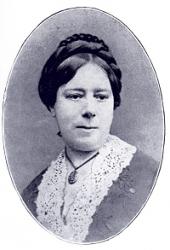
1827 - 1878 Topics: Epiphany 7 Year C Translator of "Jesus, Priceless Treasure" in Voices United Catherine Winkworth (b. Holborn, London, England, 1827; d. Monnetier, Savoy, France, 1878) is well known for her English translations of German hymns; her translations were polished and yet remained close to the original. Educated initially by her mother, she lived with relatives in Dresden, Germany, in 1845, where she acquired her knowledge of German and interest in German hymnody. After residing near Manchester until 1862, she moved to Clifton, near Bristol. A pioneer in promoting women's rights, Winkworth put much of her energy into the encouragement of higher education for women. She translated a large number of German hymn texts from hymnals owned by a friend, Baron Bunsen. Though often altered, these translations continue to be used in many modern hymnals. Her work was published in two series of Lyra Germanica (1855, 1858) and in The Chorale Book for England (1863), which included the appropriate German tune with each text as provided by Sterndale Bennett and Otto Goldschmidt. Winkworth also translated biographies of German Christians who promoted ministries to the poor and sick and compiled a handbook of biographies of German hymn authors, Christian Singers of Germany (1869). Bert Polman ======================== Winkworth, Catherine, daughter of Henry Winkworth, of Alderley Edge, Cheshire, was born in London, Sep. 13, 1829. Most of her early life was spent in the neighbourhood of Manchester. Subsequently she removed with the family to Clifton, near Bristol. She died suddenly of heart disease, at Monnetier, in Savoy, in July, 1878. Miss Winkworth published:— Translations from the German of the Life of Pastor Fliedner, the Founder of the Sisterhood of Protestant Deaconesses at Kaiserworth, 1861; and of the Life of Amelia Sieveking, 1863. Her sympathy with practical efforts for the benefit of women, and with a pure devotional life, as seen in these translations, received from her the most practical illustration possible in the deep and active interest which she took in educational work in connection with the Clifton Association for the Higher Education of Women, and kindred societies there and elsewhere. Our interest, however, is mainly centred in her hymnological work as embodied in her:— (1) Lyra Germanica, 1st Ser., 1855. (2) Lyra Germanica, 2nd Ser., 1858. (3) The Chorale Book for England (containing translations from the German, together with music), 1863; and (4) her charming biographical work, the Christian Singers of Germany, 1869. In a sympathetic article on Miss Winkworth in the Inquirer of July 20, 1878, Dr. Martineau says:— "The translations contained in these volumes are invariably faithful, and for the most part both terse and delicate; and an admirable art is applied to the management of complex and difficult versification. They have not quite the fire of John Wesley's versions of Moravian hymns, or the wonderful fusion and reproduction of thought which may be found in Coleridge. But if less flowing they are more conscientious than either, and attain a result as poetical as severe exactitude admits, being only a little short of ‘native music'" Dr. Percival, then Principal of Clifton College, also wrote concerning her (in the Bristol Times and Mirror), in July, 1878:— "She was a person of remarkable intellectual and social gifts, and very unusual attainments; but what specially distinguished her was her combination of rare ability and great knowledge with a certain tender and sympathetic refinement which constitutes the special charm of the true womanly character." Dr. Martineau (as above) says her religious life afforded "a happy example of the piety which the Church of England discipline may implant.....The fast hold she retained of her discipleship of Christ was no example of ‘feminine simplicity,' carrying on the childish mind into maturer years, but the clear allegiance of a firm mind, familiar with the pretensions of non-Christian schools, well able to test them, and undiverted by them from her first love." Miss Winkworth, although not the earliest of modern translators from the German into English, is certainly the foremost in rank and popularity. Her translations are the most widely used of any from that language, and have had more to do with the modern revival of the English use of German hymns than the versions of any other writer. -- John Julian, Dictionary of Hymnology (1907) ============================ See also in: Hymn Writers of the Church

Benjamin Webb

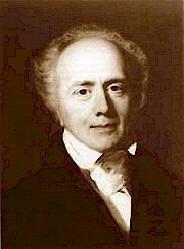
1819 - 1885 Person Name: Benjamin Webb, 1820-1885 Topics: Epiphany 7 Translator of "Oh, Love, How Deep" in Lutheran Book of Worship Benjamin Webb (b. London, England, 1819; d. Marylebone, London, 1885) originally translated the text in eight stanzas, although six only appear in Lift Up Your Hearts. It was published in The Hymnal Noted (1852), produced by his friend John Mason Neale. Webb received his education at Trinity College, Cambridge, England, and became a priest in the Church of England in 1843. Among the parishes he served was St. Andrews, Wells Street, London, where he worked from 1862 to 1881. Webb's years there coincided with the service of the talented choir director and organist Joseph Barnby, and the church became known for its excellent music program. Webb edited The Ecclesiologist, a periodi­cal of the Cambridge Ecclesiological Society (1842-1868). A composer of anthems, Webb also wrote hymns and hymn translations and served as one of the editors of The Hymnary (1872). Bert Polman ================== Webb, Benjamin, M.A., was born in London in 1820, and was educated in St. Paul's School; whence he passed to Trinity College, Cambridge, in 1838, B.A. 1842, M.A. 1845. Ordained by the Bishop [Monk] of Gloucester and Bristol he was Assistant Curate of Kemeston in Gloucestershire, 1843-44; of Christ Church, St. Pancras, 1847-49; and of Brasted, Kent, 1849-51; at which date he was presented to the P. C. of Sheen in Staffordshire, which he held until 1862, when he became Vicar of St. Andrews, Wells Street, London. In 1881 the Bishop [Jackson] of London collated him to the Prebend of Portpool in St. Paul's Cathedral. Mr. Webb was one of the Founders of the Cambridge Camden, afterwards the Ecclesiological Society; and the Editor of the Ecclesiologist from 1842 to 1868, as well as the General Editor of the Society's publications. His first appearance in print was as joint editor of Bishop Montague's Articles of Inquiry in 184; in 1843 he was joined with Mr. J. M. Neale in An Essay on Symbolism, and A Translation of Durandus; in 1847 he put forth his valuable work on Continental Ecclesiology; in 1848 he was joint editor with Dr. Mill of Frank’s Sermons, for the Anglo-Catholic Library, and with the Rev. J. Fuller-Russell of Hierurgia Anglicana. After the decease of his father-in-law (Dr. Mill), he edited Dr. Mill's Catechetical Lectures, 1856; a second edition of Dr. Mill's Christian Advocates Publications on the Mythical Interpretation of the Gospels, 1861; and of Dr. Mill's Sermons on our Lord's Temptation, 1873. He was also one of the editors of the Burntisland reprint of the Sarum Missal. One of his most valuable works is Instructions and Prayers for Candidates for Confirmation, of which the third edition was published in 1882. Mr. Webb was one of the original editors of the Hymnal Noted, and of the sub-Committee of the Ecclesiological Society, appointed to arrange the words and the music of that book; and was also the translator of some of the hymns. In conjunction with the Rev. Canon W. Cooke he was editor of the Hymnary, 1872, for which office his habitual reconstruction and composition of the words of the anthems used at St. Andrew's, Wells Street, as well as his connection with the Hymnal Noted, eminently qualified him. His original hymns contributed to the Hymnary, 1871 and 1872, were:-- 1. Assessor to thy King. St. Bartholomew. In the Hymnary, 1872. 2. Behold He comes, thy King most holy. Advent. Originally written to be sung in St. Andrew's Church, Wells Street, as an anthem to the music of Schumann's Advent-lied, and afterwards published in the Hymnary, 1872. 3. Praise God, the Holy Trinity. Hymn of Faith. Originally written for use in St. Andrew's, Wells Street, and subsequently in the Hymnary, 1872. 4. Praise the Rock of our salvation. Dedication of a Church. Published in the Hymnary, 1872. Mr. Webb's authorised text is in the Westminster Abbey Hymn Book, 1883. 5. Ye angel hosts above. Universal Praise to God. In the Hymnary, 1872. He died in London, Nov. 27, 1885. [Rev. William Cooke, M.A.] -- John Julian, Dictionary of Hymnology (1907)

William Shrubsole

1760 - 1806 Topics: Jesus Christ Praise and Thanksgiving; Adoration and Praise; Angels; Calling and Response; Choruses and Refrains; Christian Year All Saints; Church Triumphant; Eternal Life; Exultation; Funerals and Memorial Services; Grace; Humility; Jesus Christ Adoration and Praise; Jesus Christ Ascension and Reign; Jesus Christ Grace; Jesus Christ Kingship, Conqueror; Jesus Christ Lord of Life; Jesus Christ Love For; Jesus Christ name; Jesus Christ Praise; Jesus Christ Reign; Jesus Christ Son of God/Man (David); Music and Singing; Nation; Opening Hymns; Processionals (Opening of Worship); Saints; Salvation; Vocation; Worship; Zeal; Epiphany 4 Year A; Palm/Passion Sunday Year A; Ascension Year A; Proper 19 Year A; Proper 25 Year A; Epiphany 4 Year B; Epiphany Last/Transfig. Year B; Lent 2 Year B; Palm/Passion Sunday Year B; Easter 3 Year B; Easter 4 Year B; Ascension Year B; Easter 7 Year B; Proper 9 Year B; Proper 21 Year B; Proper 22 Year B; Epiphany 2 Year C; Lent 5 Year C; Easter 3 Year C; Easter 4 Year C; Ascension Year C; All Saints Year C; Reign of Christ Year C; Thanksgiving Year C Composer of "MILES LANE" in Voices United William Shrubsole (bap. 1760, d. 1806), organist. United Kingdom.When young, he sang in the choir at Canterbury Cathedral, He became organist at Bangor Cathedral, when he was dismissed for attending non-comformist meetings. He then became organist of Spa Fields Chapel, London, holding that post until his death. He was a successful teacher. He was an alto singer and sung at Westminster Abbey and Drury Lane churches. He knew Edward Perronet, who wrote the words to the hymn he composed music for. Perronet left Schrubsole property in his will. John Perry Not to be confused with W. (William) Shrubsole 1759-1829, bank clerk and hymn writer.

William Mercer

1811 - 1873 Topics: Epiphany 7 Year A Translator of "God, Reveal Your Presence" in Voices United Mercer, William, M.A., born at Barnard Castle, Durham, 1811, and educated at Trinity College, Cambridge (B.A., 1835). In 1840 he was appointed Incumbent of St. George's, Sheffield. He died at Leavy Greave, Sheffield, Aug. 21, 1873. His principal work was:—- The Church Psalter and Hymn Book, comprising The Psalter, or Psalms of David, together with the Canticles, Pointed for Chanting; Four Hundred Metrical Hymns and Six Responses to the Commandments; the whole united to appropriate Chants and Tunes, for the use of Congregations and Families, by the Rev. William Mercer, M.A. . .. Assisted by John Goss, Esq…., 1854; enlarged 1856; issued without music, 1857; quarto edition 1860; rearranged edition (Oxford edition) 1864; Appendix 1872. For many years this collection was at the head of all the hymn-books in the Church of England, both in circulation and influence. Its large admixture of Wesleyan hymns, and of translations from the German gave it a distinct character of its own, and its grave and solemn music was at one time exceedingly popular. To it Mercer contributed several translations and paraphrases from the Latin and German, the latter mainly from the Moravian hymn-books; but his hymn-writing was far less successful than his editing, and has done nothing to increase his reputation. -- John Julian, Dictionary of Hymnology (1907)

Graham Maule

1958 - 2019 Person Name: Graham Maule, b. 1958 Topics: Aid and development; Confirmation; Evangelism; Faith, Trust and Commitment; Lent; The Journey of Life; The Wholeness of Creation; Year A Epiphany 3; Year A Proper 5; Year A Third Sunday Before Advent; Year B Easter 7; Year B Epiphany 2; Year B Third Sunday Before Advent; Year C Bible Sunday; Year C Easter 7; Year C Epiphany 3; Year C Proper 8 Author of "Will you come and follow me (The Summons)" in Complete Anglican Hymns Old and New

Laurence Hull Stookey

1937 - 2016 Topics: Epiphany 7 Year A Adapter of "The Church's One Foundation" in Voices United res.: Rockville, Md.; prof., Wesley Theological Seminary, Wash. D.C. Rev. Stookey died October 16, 2016. --UM News

Pages


Export as CSV
It looks like you are using an ad-blocker. Ad revenue helps keep us running. Please consider white-listing Hymnary.org or getting Hymnary Pro to eliminate ads entirely and help support Hymnary.org.