You help make Hymnary.org possible. More than 10 million people from 200+ countries found hymns, liturgical resources and encouragement on Hymnary.org in 2025, including you. Every visit affirms the global impact of this ministry.

If Hymnary has been meaningful to you this year, would you take a moment today to help sustain it? A gift of any size—paired with a note of encouragement if you wish—directly supports the server costs, research work and curation that keep this resource freely available to the world.

Give securely online today, or mail a check to:
Hymnary.org
Calvin University
3201 Burton Street SE
Grand Rapids, MI 49546

Thank you for your partnership, and may the hope of Advent fill your heart.

Person Results

Topics:guide+-+guidance
In:people

Planning worship? Check out our sister site, ZeteoSearch.org, for 20+ additional resources related to your search.
Showing 81 - 90 of 572Results Per Page: 102050

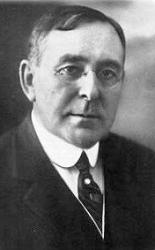
J. Wilbur Chapman

1859 - 1918 Topics: Jesus Christ Guide; Commitment; Forgiveness; Jesus Christ Creator; Jesus Christ Friend; Jesus Christ Guide; Jesus Christ Refuge; Praise of Jesus Christ Author of "Our Great Savior" in The Worshiping Church Rv John Wilbur Chapman DD LLD USA 1859-1918. Born in Richmond, IN, he attended Quaker Day School and Methodist Sunday school. At age 17 he made a public declaration of his Christian faith and joined the Richmond Presbyterian Church. He received his seminary degree from Lane Theoloical Seminary, Cincinnati, OH. He was later awarded a Doctorate in Divinity from the College of Wooster, and an LL.D. from Heidelberg University. In 1882 he married Irene Steddon. They had a daughter. His wife died in 1886. In 1888 he married Agnes Pruyn Strain, and they had four children. His second wife died in 1907. In 1910 he married Mabel Cornelia Moulton. He held six pastorates in OH, IN, NY, PA, NY, NY before becoming an evangelist, generally traveling with gospel singer, Charles Alexander. In 1893 he preached with D. L. Moody. Billy Sunday was one of his disciples on the circuit. In 1895 he was appointed Corresponding Secretary of the Presbyterian General Assembly's Committeee on Evangelism, overseeing activities of 51 evangelists in 470 cities. He developed campaign tactics to maximize evangelical successes, trying them first in Pittsburgh, then Syracuse. With funding from philanthropist, John H. Converse, a wealthy Presbyterian, Chapman joined with Alexander to launch evangelical campaigns in 1907. He assembled 21 evangelistic teams after that to cover 42 sections of Philadelphia, preaching for several weeks. 8000 conversions resulted. They repeated this in NC. In 1909 they started a worldwide campaign in Vancouver, BC, and took in cities in Australia, the Phillipines, China, Korea, and Japan. Chapman also held religious summer conferences at Winona Lake, IN, Montreat, NC, and Long Island, NY. Mass evangelism was losing favor in 1910, so he was back holding large revivals with Alexander in 1912. He was also elected moderator of the Presbyterian Church General Assembly, and under so much stress, he developed gall stones. The surgery was too much, and he died two days later. He was also a prolific writer of religious works and hymn lyrics. 19 works. John Perry

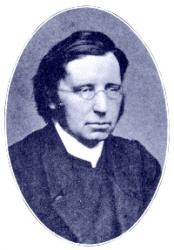
Christian H. Bateman

1813 - 1889 Topics: Jesus Christ Guide; Heaven; Jesus Christ Friend; Jesus Christ Guide; Love Christ’s Love fro Us; Music and Singing; Praise of Jesus Christ Author of "Come, Christians, Join to Sing" in The Worshiping Church Bateman, Christian Henry, son of John Bateman, was born Aug. 9, 1813, at Wyke, near Halifax. After studying in the Moravian Church and exercising his ministry there for a time, he became, in 1843, minister of Richmond Place Congregational Church, Edinburgh. After 1846 he was successively Congregational minister at Hopton, in Yorkshire, and Beading, in Berkshire. On taking Holy Orders in the Church of England he became, 1869-71, curate of St. Luke's, Jersey, and Chaplain to the Forces; 1871-75, Vicar of All Saints, Childshill, Middlesex; 1877-84, curate of St. John's, Penymynydd, Hawarden. His hymns appeared mainly in:— The Sacred Song Book (Edin., Gall & Inglis, subsequently published as Sacred Melodies for Children; and as 200 Sacred Melodies for Sunday Schools and Families, was edited by himself, with the Rev. James Gall, and latterly with Mr. Robert Inglis, the publisher. First pub. 1843 as 25; enlarged by a second part, 1846, to 60; revised and enlarged, 1854, to 80; 1862, to 130; and 1872, to 200; it reached a circulation of a million and a half before 1862, four millions before 1872, and above six millions before 1881. It was for many years the hymnbook for Sabbath School use in Scotland. (2) The Children's Hymnal and Christian Year (London., J. Hodges, 1872), including 11 original hymns, with others from many sources. His best known hymn is: “Come, children, join to sing" (q. v.). [Rev. James Mearns, M.A.] -- John Julian, Dictionary of Hymnology (1907) ======================= Bateman, C. H., p. 116, i. He finally resided at Carlisle without a charge, and died there in July, 1889. --John Julian, Dictionary of Hymnology, Appendix, Part II (1907)

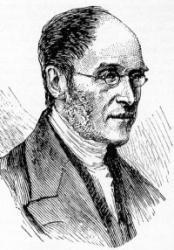
J. M. Neale

1818 - 1866 Person Name: John Mason Neale Topics: Jesus Christ Guide; Assurance; Burdens; Invitation to Discipleship; Invitation To Salvation; Jesus Christ Guide; Jesus Christ Passion; Jesus Christ Final Victory; Rest Author of "Are You Weary, Heavy Laden?" in The Worshiping Church John M. Neale's life is a study in contrasts: born into an evangelical home, he had sympathies toward Rome; in perpetual ill health, he was incredibly productive; of scholarly tem­perament, he devoted much time to improving social conditions in his area; often ignored or despised by his contemporaries, he is lauded today for his contributions to the church and hymnody. Neale's gifts came to expression early–he won the Seatonian prize for religious poetry eleven times while a student at Trinity College, Cambridge, England. He was ordained in the Church of England in 1842, but ill health and his strong support of the Oxford Movement kept him from ordinary parish ministry. So Neale spent the years between 1846 and 1866 as a warden of Sackville College in East Grinstead, a retirement home for poor men. There he served the men faithfully and expanded Sackville's ministry to indigent women and orphans. He also founded the Sisterhood of St. Margaret, which became one of the finest English training orders for nurses. Laboring in relative obscurity, Neale turned out a prodigious number of books and artic1es on liturgy and church history, including A History of the So-Called Jansenist Church of Holland (1858); an account of the Roman Catholic Church of Utrecht and its break from Rome in the 1700s; and his scholarly Essays on Liturgiology and Church History (1863). Neale contributed to church music by writing original hymns, including two volumes of Hymns for Children (1842, 1846), but especially by translating Greek and Latin hymns into English. These translations appeared in Medieval Hymns and Sequences (1851, 1863, 1867), The Hymnal Noted (1852, 1854), Hymns of the Eastern Church (1862), and Hymns Chiefly Medieval (1865). Because a number of Neale's translations were judged unsingable, editors usually amended his work, as evident already in the 1861 edition of Hymns Ancient and Modern; Neale claimed no rights to his texts and was pleased that his translations could contribute to hymnody as the "common property of Christendom." Bert Polman ======================== Neale, John Mason, D.D., was born in Conduit Street, London, on Jan. 24, 1818. He inherited intellectual power on both sides: his father, the Rev. Cornelius Neale, having been Senior Wrangler, Second Chancellor's Medallist, and Fellow of St. John's College, Cambridge, and his mother being the daughter of John Mason Good, a man of considerable learning. Both father and mother are said to have been "very pronounced Evangelicals." The father died in 1823, and the boy's early training was entirely under the direction of his mother, his deep attachment for whom is shown by the fact that, not long before his death, he wrote of her as "a mother to whom I owe more than I can express." He was educated at Sherborne Grammar School, and was afterwards a private pupil, first of the Rev. William Russell, Rector of Shepperton, and then of Professor Challis. In 1836 he went up to Cambridge, where he gained a scholarship at Trinity College, and was considered the best man of his year. But he did not inherit his father's mathematical tastes, and had, in fact, the greatest antipathy to the study; and as the strange rule then prevailed that no one might aspire to Classical Honours unless his name had appeared in the Mathematical Tripos, he was forced to be content with an ordinary degree. This he took in 1840; had he been one year later, he might have taken a brilliant degree, for in 1841 the rule mentioned above was rescinded. He gained, however, what distinctions he could, winning the Members' Prize, and being elected Fellow and Tutor of Downing College; while, as a graduate, he won the Seatonian Prize no fewer than eleven times. At Cambridge he identified himself with the Church movement, which was spreading there in a quieter, but no less real, way than in the sister University. He became one of the founders of the Ecclesiological, or, as it was commonly called, the Cambridge Camden Society, in conjunction with Mr. E. J. Boyce, his future brother-in-law, and Mr. Benjamin Webb, afterwards the well-known Vicar of St. Andrew's, Wells Street, and editor of The Church Quarterly Review. In 1842 he married Miss Sarah Norman Webster, the daughter of an evangelical clergyman, and in 1843 he was presented to the small incumbency of Crawley in Sussex. Ill health, however, prevented him from being instituted to the living. His lungs were found to be badly affected; and, as the only chance of saving his life, he was obliged to go to Madeira, where he stayed until the summer of 1844. In 1846 he was presented by Lord Delaware to the Wardenship of Sackville College, East Grinstead. This can hardly be considered as an ecclesiastical preferment, for both his predecessor and his successor were laymen. In fact the only ecclesiastical preferment that ever was offered to him was the Provostship of St. Ninian's, Perth. This was an honourable office, for the Provostship is equivalent to a Deanery in England, but it was not a lucrative one, being worth only £100 a year. He was obliged to decline it, as the climate was thought too cold for his delicate health. In the quiet retreat of East Grinstead, therefore, Dr. Neale spent the remainder of his comparatively short life, dividing his time between literary work, which all tended, directly or indirectly, to the advancement of that great Church revival of which he was so able and courageous a champion, and the unremitting care of that sisterhood of which he was the founder. He commenced a sisterhood at Rotherfield on a very small scale, in conjunction with Miss S. A. Gream, daughter of the rector of the parish; but in 1856 he transferred it to East Grinstead, where, under the name of St. Margaret's, it has attained its present proportions. Various other institutions gradually arose in connection with this Sisterhood of St. Margaret's, viz., an Orphanage, a Middle Class School for girls, and a House at Aldershot for the reformation of fallen women. The blessing which the East Grinstead Sisters have been to thousands of the sick and suffering cannot here be told. But it must be mentioned that Dr. Neale met with many difficulties, and great opposition from the outside, which, on one occasion, if not more, culminated in actual violence. In 1857 he was attending the funeral of one of the Sisters at Lewes, when a report was spread that the deceased had been decoyed into St. Margaret's Home, persuaded to leave all her money to the sisterhood, and then purposely sent to a post in which she might catch the scarlet fever of which she died. To those who knew anything of the scrupulously delicate and honourable character of Dr. Neale, such a charge would seem absurd on the face of it; but mobs are not apt to reflect, and it was very easy to excite a mob against the unpopular practices and sentiments rife at East Grinstead; and Dr. Neale and some Sisters who were attending the funeral were attacked and roughly handled. He also found opponents in higher quarters; he was inhibited by the Bishop of the Diocese for fourteen years, and the Aldershot House was obliged to be abandoned, after having done useful work for some years, in consequence of the prejudice of officials against the religious system pursued. Dr. Neale's character, however, was a happy mixture of gentleness and firmness; he had in the highest degree the courage of his convictions, which were remarkably definite and strong; while at the same time he maintained the greatest charity towards, and forbearance with, others who did not agree with him. It is not surprising, therefore, that he lived all opposition down; and that, while from first to last his relations with the community at East Grinstead were of the happiest description, he was also, after a time, spared any molestation from without. The institution grew upon his hands, and he became anxious to provide it with a permanent and fitting home. His last public act was to lay the foundation of a new convent for the Sisters on St. Margaret's Day (July 20), 1865. He lived long enough to see the building progress, but not to see it completed. In the following spring his health, which had always been delicate, completely broke down, and after five months of acute suffering he passed away on the Feast of the Transfiguration (Aug. 6), 1866, to the bitter regret of the little community at East Grinstead and of numberless friends outside that circle. One trait of his singularly lovable character must not pass unnoticed. His charity, both in the popular and in the truer Christian sense of the word, was unbounded; he was liberal and almost lavish with his money, and his liberality extended to men of all creeds and opinions; while it is pleasing to record that his relations with his ecclesiastical superiors so much improved that he dedicated his volume of Seatonian Poems to the bishop of the diocese. If however success in life depended upon worldly advantages, Dr. Neale's life would have to be pronounced a failure; for, as his old friend, Dr. Littledale, justly complains, "he spent nearly half his life where he died, in the position of warden of an obscure Almshouse on a salary of £27 a year." But, measured by a different standard, his short life assumes very different proportions. Not only did he win the love and gratitude of those with whom he was immediately connected, but he acquired a world-wide reputation as a writer, and he lived to see that Church revival, to promote which was the great object of his whole career, already advancing to the position which it now occupies in the land of his birth. Dr. Neale was an industrious and voluminous writer both in prose and verse; it is of course with the latter class of his writings that this sketch is chiefly concerned; but a few words must first be said about the former. I.— Prose Writings.— His first compositions were in the form of contributions to The Ecclesiologist, and were written during his graduate career at Cambridge. Whilst he was in Madeira he began to write his Commentary on the Psalms, part of which was published in 1860. It was afterwards given to the world, partly written by him and partly by his friend, Dr. Littledale, in 4 vols., in 1874, under the title of A Commentary on the Psalms, from Primitive and Mediaeval Writers. This work has been criticised as pushing the mystical interpretation to an extravagant extent. But Dr. Neale has anticipated and disarmed such criticism by distinctly stating at the commencement that "not one single mystical interpretation throughout the present Commentary is original;" and surely such a collection has a special value as a wholesome correction of the materialistic and rationalistic tendencies of the age. His next great work, written at Sackville College, was The History of the Holy Eastern Church. The General Introduction was published in 1847; then followed part of the History itself, The Patriarchate of Alexandria, in 2 vols.; and after his death another fragment was published, The History of the Patriarchate of Antioch, to which was added, Constantius's Memoirs of the Patriarchs of Antioch, translated from the Greek, edited by the Rev. G. Williams, 1 vol. The whole fragment was published in 5 vols. (1847-1873). The work is spoken very highly of, and constantly referred to, by Dean Stanley in his Lectures on the History of the Eastern Church. Dr. Neale was naturally in strong sympathy with the struggling Episcopal Church of Scotland, and to show that sympathy he published, in 1856, The Life and Times of Patrick Torry, D.D., Bishop of St. Andrews, &c, with an Appendix on the Scottish Liturgy. In the same direction was his History of the so-called Jansenist Church in Holland, 1858. Next followed Essays on Liturgiology and Church History, with an Appendix on Liturgical Quotations from the Isapostolical Fathers by the Rev. G. Moultrie, 1863, a 2nd edition of which, with an interesting Preface by Dr. Littledale, was published in 1867. It would be foreign to the purpose of this article to dwell on his other prose works, such as his published sermons, preached in Sackville College Chapel, his admirable little devotional work, Readings for the Aged, which was a selection from these sermons; the various works he edited, such as the Tetralogia Liturgica, the Sequentiae ex Missalibus Germanicis, Anglicis, Gallicis, aliisque Medii Aevi Collectae; his edition of The Primitive Liturgies of S. Mark, S. Clement, S. James, S. Chrysostom and S. Basil, with a Preface by Dr. Littledale; his Translation of the same; his many stories from Church History, his Voices from the East, translated from the Russ, and his various articles contributed to the Ecclesiologist, The Christian Remembrance, The Morning Chronicle, and The Churchman's Companion. It is time to pass on to that with which we are directly concerned. II. —Poetical Writings.— As a sacred poet, Dr. Neale may be regarded under two aspects, as an original writer and as a translator. i. Original Writer.—Of his original poetry, the first specimen is Hymns for Children, published in 1842, which reached its 10th edition the year after his death. It consists of 33 short hymns, the first 19 for the different days of the week and different parts of the day, the last 14 for the different Church Seasons. This little volume was followed in 1844 by Hymns for the Young, which was intended to be a sequel to the former, its alternative title being A Second Series of Hymns for Children; but it is designed for an older class than the former, for young people rather than for children. The first 7 hymns are "for special occasions," as "on goiug to work," “leaving home” &c.; the next 8 on "Church Duties and Privileges," "Confirmation," "First Holy Communion," &c, the last 13 on "Church Festivals,” which, oddly enough, include the Four Ember Seasons, Rogation Days, and the Sundays in Advent. In both these works the severe and rigid style, copied, no doubt, from the old Latin hymns, is very observable. Perhaps this has prevented them from being such popular favourites as they otherwise might have been; but they are quite free from faults into which a writer of hymns for children is apt to fall. They never degenerate into mere prose in rhyme; and in every case the purity as well as the simplicity of their diction is very remarkable. In the same year (1844) he also published Songs and Ballads for Manufacturers, which were written during his sojourn in Madeira, and the aim of which (he tells us) was "to set forth good and sound principles in metaphors which might, from their familiarity, come home to the hearts of those to whom they were addressed." They are wonderfully spirited both in matter and manner, and their freedom of style is as remarkable as the rigidity of the former works. They were followed eleven years later (1855) by a similar little work entitled Songs and Ballads for the People. This is of a more aggressive and controversial character than the previous ones, dealing boldly with such burning questions as "The Teetotallers," "Why don't you go to Meeting?" &c. Passing over the Seatonian Poems, most of which were of course written before those noticed above, we next come to the Hymns for the Side, which is a fitting companion to the Readings for the Aged, and then to Sequences, Hymns, and other Ecclesiastical Verses, which was published just after the author's death (1866), and may be regarded as a sort of dying legacy to the world. In fact, the writer almost intimates as much in the preface, where he speaks of himself as "one who might soon be called to have done with earthly composition for ever." Many of the verses, indeed, were written earlier, "forty years ago," he says, which is evidently intended for twenty. The preface is dated "In the Octave of S. James, 1866," and within a fortnight, on the Feast of the Transfiguration, “the veil” (to use the touching words of his old friend, Dr. Littledale) "was withdrawn from before his eyes, and the song hushed on earth is now swelling the chorus of Paradise." Was it an accident that these verses dwell so much on death and the life beyond the grave? or did the coming event cast its shadow before? Not that there is any sadness of tone about them; quite the reverse. He contemplates death, but it is with the eye of a Christian from whom the sting of death has been removed. Most of the verses are on subjects connected with the Church Seasons, especially with what are called the "Minor Festivals:" but the first and last poems are on different subjects. The first, the "Prologue," is "in dear memory of John Keble, who departed on Maundy Thursday, 1866, "and is a most touching tribute from one sacred poet to another whom he was about to follow within a few months to the "land that is very far off." The last is a poetical version of the legend of "the Seven Sleepers of Ephesus," and is, the writer thinks, "the first attempt to apply to primitive Christianity that which is, to his mind, the noblest of our measures." That measure is the hexameter, and undoubtedly Dr. Neale employed it, as he did all his measures, with great skill and effect; but it may be doubted whether the English language, in which the quantities of syllables are not so clearly defined as in Latin and Greek, is quite adapted for that measure. Throughout this volume, Dr. Neale rises to a far higher strain than he had ever reached before. ii. Translations.— It is in this species of composition that Dr. Neale's success was pre-eminent, one might almost say unique. He had all the qualifications of a good translator. He was not only an excellent classical scholar in the ordinary sense of the term, but he was also positively steeped in mediaeval Latin. An anecdote given in an appreciative notice by "G. M." [Moultrie] happily illustrates this:— Dr. Neale "was invited by Mr. Keble and the Bishop of Salisbury to assist them with their new hymnal, and for this purpose he paid a visit to Hursley Parsonage." On one occasion Mr. Keble "having to go to another room to find some papers was detained a short time. On his return Dr. Neale said, ‘Why, Keble, I thought you told me that the "Christian Year" was entirely original.' ‘Yes,' he answered, 'it certainly is.' ‘Then how comes this?' and Dr. Neale placed before him the Latin of one of Keble's hymns. Keble professed himself utterly confounded. He protested that he had never seen this 'original,' no, not in all his life. After a few minutes Neale relieved him by owning that he had just turned it into Latin in his absence." Again, Dr. Neale's exquisite ear for melody prevented him from spoiling the rhythm by too servile an imitation of the original; while the spiritedness which is a marked feature of all his poetry preserved that spring and dash which is so often wanting in a translation. (i.) Latin.— Dr. Neale's translations from the Latin include (1.) Mediaeval Hymns and Sequences (1851). He was the, first to introduce to the English reader Sequences, that is, as he himself describes them, " hymns sung between the Epistle and Gospel in the Mass," or, as he explains more definitely, "hymns whose origin is to be looked for in the Alleluia of the Gradual sung between the Epistle and the Gospel." He was quite an enthusiast about this subject:— "It is a magnificent thing,” he says, "to pass along the far-stretching vista of hymns, from the sublime self-containedness of S. Ambrose to the more fervid inspiration of S. Gregory, the exquisite typology of Venantius Fortunatus, the lovely painting of St. Peter Damiani, the crystal-like simplicity of S. Notker, the scriptural calm of Godescalcus, the subjective loveliness of St. Bernard, till all culminate in the full blaze of glory which surrounds Adam of S. Victor, the greatest of them all." Feeling thus what a noble task he had before him, it is no wonder that he spared no pains over it, or that he felt it his duty to adopt "the exact measure and rhyme of the original, at whatever inconvenience and cramping." That he succeeded in his difficult work, the verdict of the public has sufficiently proved. Of all the translations in the English language no one has ever been so popular as that of the Hora Novissima, in this volume, afterwards (1858) published separately, under the title of the Rhythm of Bernard de Morlaix, Monk of Cluny. Some original hymns may be as well known as "Jerusalem the Golden," "For thee, O dear, dear country," or "Brief life is here our portion,” but it would be hard to find any translations which come near them for extensive use. A second edition of the Mediaeval Hymns, much improved, came out in 1863, and a third, "with very numerous additions and corrections," in 1867. (2.) We next come to the Hymnal Noted, in which 94 out of the 105 hymns are the work of Dr. Neale. These are all translations from the Latin. The first part appeared in 1852, the second in 1854. Dr. Neale has himself given us an interesting account of his connection with this work:— "Some," he writes, "of the happiest and most instructive hours of my life were spent in the Sub-Committee of the Ecclesiological Society, appointed for the purpose of bringing out the Second Part of the Hymnal Noted It was my business to lay before them the translations I had prepared, and theirs to correct. The study which this required drew out the beauties of the original in a way which nothing else could have done, and the friendly collisions of various minds elicited ideas which a single translator would in all probability have missed." Preface, Mediaeval Hymns & Sequences (3.) The last volume of translations from the Latin published by Dr. Neale appeared in 1865, under the title of Hymns, chiefly Mediaeval, on the Joys and Glories of Paradise. It was intended to be a companion volume to the Rhythm of Bernard of Cluny. In this work the writer gives the general reader an opportunity of comparing the translation with the original by printing the two together in parallel pages. Before quitting the subject of Dr. Neale's translations from the Latin, it is only fair to notice that while they have been almost universally accepted by the English Church, and some of them adopted by dissenting congregations, they called down upon the translator a storm of indignation from an opposite quarter. The Roman Catholics accused him of deliberate deception because he took no pains to point out that he had either softened down or entirely ignored the Roman doctrines in those hymns. So far, they said, as the originals were concerned, these translations were deliberate misrepresentations. As however the translations were intended for the use of the Anglican Church, it was only to be expected that Neale should omit such hymns or portions of hymns as would be at variance with her doctrines and discipline. (ii.) Greek.— Dr. Neale conferred even a greater boon upon the lovers of hymnology than by his translations from the Latin, when he published, in 1862, his Hymns of the Eastern Church. In his translations from the Latin he did what others had done before; but in his translations from the Greek he was opening entirely new ground. "It is," he says in his preface to the first edition, "a most remarkable fact, and one which shows how very little interest has been hitherto felt in the Eastern Church, that these are literally, I believe, the only English versions of any part of the treasures of Oriental Hymnology." As early as 1853 he had printed a few of his versions in The Ecclesiastic, but it was not till the appearance of the complete volume that the interest of the general public was awakened in them. Then they became wonderfully popular. His translations "Christian, dost thou see them?" "The day is past and over," "'Tis the day of Resurrection," and his Greek-inspired "Art thou weary," and "O happy band of pilgrims," are almost as great favourites as "Jerusalem the golden," and the first in his Hymns of the Eastern Church, "Fierce was the wild billow," deserves to be. Dr. Neale had a far more difficult task before him when he undertook these Greek hymns than he had with the Latin, and he appeals to the reader "not to forget the immense difficulty of an attempt so perfectly new as the present, when I have had no predecessors and therefore could have no master." That difficulty in comparison with the Latin cannot be better stated than in his own words:— "Though the superior terseness and brevity of the Latin hymns renders a translation which shall represent those qualities a work of great labour, yet still the versifier has the help of the same metre; his version may be line for line; and there is a great analogy between the collects and the hymns, most helpful to the translator. Above all, we have examples enough of former translation by which we may take pattern. But in attempting a Greek canon, from the fact of its being in prose (metrical hymns are unknown) one is all at sea. What measure shall we employ? Why this more than that? Might we attempt the rhythmical prose of the original, and design it to be chanted? Again, the great length of the canons renders them un suitable for our churches as wholes. Is it better simply to form centos of the more beautiful passages? or can separate odes, each necessarily imperfect, be employed as separate hymns? . . . My own belief is that the best way to employ Greek hymnology for the uses of the English Church would be by centos." That, in spite of these difficulties, Dr. Neale succeeded, is obvious. His Greek hymns are, indeed, adaptations rather than translations; but, besides their intrinsic beauty, they at any rate give some idea of what the Greek hymn-writers were. In this case, as in his translations from the Latin, he omitted what he held was not good from his Anglican point of view, e.g., the Doxologies to the Blessed Virgin Mary. One point strikes us as very remarkable in these hymns, and indeed in all Dr. Neale's poetry, viz., its thorough manliness of tone. Considering what his surroundings were, one might have expected a feminine tone in his writings. Dr. Littledale, in his most vivid and interesting sketch of Dr. Neale's life, to which the present writer is largely indebted, has remarked the same with regard to his teaching: "Instead of committing the grave error of feminising his sermons and counsels [at St. Margaret's] because he had only women to deal with, he aimed at showing them the masculine side of Christianity also, to teach them its strength as well as its beauty." In conclusion, it may be observed that no one had a higher opinion of the value of Dr. Neale's labours in the field of ancient and mediaeval hymnology than the one man whose competency to speak with authority on such a point Dr. Neale himself would assuredly have rated above that of all others. Over and over again Dr. Neale pays a tribute to the services rendered by Archbishop Trench in this domain; and the present sketch cannot more fitly close than with the testimony which Archbishop Trench has given of his sense of the services rendered by Dr. Neale. The last words of his preface to his Sacred Latin Poetry (ed. 1864) are:—" I will only, therefore, mention that by patient researches in almost all European lands, he [Dr. Neale] has brought to light a multitude of hymns unknown before: in a treatise on sequences, properly so-called, has for the first time explained their essential character; while to him the English reader owes versions of some of the best hymns, such as often successfully overcome the almost insuperable difficulties which many among them present to the translator." [Rev. J. H. Overton, D.D.] Dr. Neale's original hymns and translations appeared in the following works, most of which are referred to in the preceding article, and all of which are grouped together here to facilitate reference:— (1) Hymns for Children. Intended chiefly for Village Schools. London, Masters, 1842. (2) Hymns for the Sick. London, Masters, 1843, improved ed. 1849. (3) Hymns for the Young. A Second Series of Hymns for Children. London, Masters, 1844. (4) Songs and Ballads for Manufacturers. London, Masters, 1844. (5) Hymns for Children. A Third Series. London, Masters, 1846. (6) Mediaeval Hymns and Sequences. London, Masters. 1851; 2nd ed. 1861; 3rd. ed. 1863. (7) Hymnal Noted. London, Masters & Novello, 1852: enlarged 1854. Several of the translations were by other hands. Musical editions edited by the Rev. T. Helmore. It is from this work that a large number of Dr. Neale's translations from the Latin are taken. (8) Carols for Christmas and Eastertide. 1853. (9) Songs and Ballads for the People. 1855. (10) The Rhythm of Bernard de Morlaix, Monk of Cluny, on the Celestial Country. London, Hayes, 1st ed. 1858: 3rd ed., with revision of text, 1861. It contains both the Latin and the English translation. (11) Hymns of The Eastern Church, Translated with Notes and an Introduction. London, Hayes, 1862: 2nd ed. 1862: 3rd ed. 1866 : 4th ed., with Music and additional notes, edited by The Very Rev. S. G. Hatherly, Mus. B., Archpriest of the Patriarchal (Ecumenical Throne. London, Hayes, 1882. Several of these translations and notes appeared in The Ecclesiastic and Theologian, in 1853. (12) Hymns, Chiefly Mediaeval, on the Joys and Glories of Paradise. London, Hayes, 1865. This work contains notes on the hymns, and the Latin texts of the older amongst them. (13) Original Sequences, Hymns, and other Ecclesiastical Verses. London, Hayes, 1866. This collection of Original verse was published posthumously by Dr. Littledale. In addition to these works Dr. Neale published collections of Latin verse as:— 1.) Hymni Ecclesiae e Breviariis quibusdam et Missalibus Gallicanis, Germanis, Hispanis, Lusitanis, desumpti. Oxford & Lond. J. H. Parker, 1851: and (2) Sequentiae e Missalibus Germanicis, Anglicis, Gallicis, aliisque Medii Aevi collectae. Oxford & Lond. J. H. Parker, 1852. A few of his translations appeared from time to time in The Ecclesiastic; and a few of his original hymns in The Christian Remembrancer. In the collection compiled for use at St. Margaret's, East Grinstead, St. Margaret's Hymnal, Printed Privately for the use of the Community only, 1875, there are several of his hymns not traceable elsewhere. [Many of his translations and original compositions are not listed here]. Some of the original hymns in common use which remain to be noted are:— i. From Hymns for Children, 1842. 1. No more sadness now, nor fasting. Christmas. 2. 0 Thou, Who through this holy week. Passiontide. 3. The day, 0 Lord, is spent. Evening. 4. The grass so green, the trees so tall. Morning of the Third Day. 5. Thou art gone up, 0 Lord, on high. Evening. 6. Thou, Who earnest from above. Whitsuntide. 7. With Thee, 0 Lord, begins the year. Circumcision, or, the New Year. ii. From Hymns for the Sick, 1843. 8. By no new path untried before. Support in Sickness. 9. Count not, the Lord's Apostle saith. Communion of the Sick. 10. Lord, if he sleepeth, he shall sure do well. Watching. 11. 0 Thou, Who rising long before the day. In a sleepless Night. 12. The Lord hath given, the Lord hath taken away. Death and Burial. 13. There is a stream, whose waters rise. In dangerous Sickness or Fever. 14. They slumber not nor sleep. Guardian Angels. 15. Thy servants militant below. In Affliction. iii. From Hymns for the Young, 2nd series, 1844. 16. Lord Jesus, Who shalt come with power. Ember Week in Advent. 17. 0 God, in danger and distress. In time of Trouble. 18. 0 God, we raise our hearts to Thee. Ember-Week in Advent. From this, "0 Lord, we come before Thee now” is taken. 19. 0 God, Who lovest to abide. Dedication of a Church. 20. 0 our Father, hear us now. Rogation. The first of three hymns on The Lord's Prayer. 21. 0 Saviour, Who hast call'd away. Death of a Minister. 22. 0 Thou, Who lov'st to send relief. In Sickness. 23. 0 Thou, Who once didst bless the ground. Ember-Week in September. 24. 0 Thou, Who, when Thou hadst begun. On going to Work. 25. Still, 0 Lord of hosts, we share. Rogation. The Second of his hymns on The Lord's Prayer. 26. Strangers and pilgrims here below. On entering a new Dwelling to reside there. 27. They whose course on earth is o'er. Communion of Saints. From this, "Those whom many a land divides," is taken. 2S. Till its holy hours are past. Rogation. The third of his hymns on The Lord's Prayer. iv. Songs and Ballads for Manufacturers, 1844. 29. Work is over; God must speed it. Evening. v. Hymns for Children, 3rd series, 1846. 30. Before Thy Face, 0 God of old. St. John the Baptist. 31. By pain, and weariness, and doubt. St. Stephen. 32. First of the twelvefold band that trod. St. James. 33. Four streams through happy Eden flow'd. St. Mark. 34. Is there one who sets his face. St. Bartholomew. From this "He, for man who suffered woe," is taken. 35. Not a single sight we view. St. Matthias. 36. 0 Great Physician of the soul. St. Luke. 37. 0 Heavenly Wisdom, hear our cry. Christmas. “0 Sapientia." 38. 0 Key of David, hailed by those. Christmas. "0 Clavis David." 39. 0 Root of Jesse, Thou on Whom. Christmas. “O Radix Jesse." 40. 0 Thou, on Whom the nations [Gentiles] wait. Christmas. "0 Rex Gentium." 41. 0 Thou, Who earnest down of old [to call] . Christmas. "0 Adonai." 42. 0 Thou, Whose Name is God with us. Christmas. "0 Emmanuel." 43. 0 Very God of Very God. Christmas. "0 Oriens." 44. Saints of God, whom faith united. SS. Simon and Jude. 45. Since the time that first we came. St. Andrew. From this, "Every bird that upward springs," is taken. 46. That love is mighty love indeed. St. Barnabas. 47. We cannot plead, as others may. St. Matthew. 48. We have not seen, we cannot see. St. Thomas. 49. Would we go when life is o'er? St. Peter. v. Carols for Christmas and Eastertide. 1853. 50. Gabriel's message does away. Christmas. 51. Joy and gladness be to king and peasant. Christmas. 52. Joy to thee, joy to thee, Day of our victory. Easter. 53. Sing Alleluia, all ye lands. Easter. 54. The world itself keeps Easter Day. Easter. From this "There stood three Marys by the tomb," is taken. 55. With Christ we share a mystic grave. Easter or Holy Baptism. vi. From Sequences, Hymns, &c, 1866. 56. Can it, Master, can it be? Maundy Thursday. 57. Need it is we raise our eyes. All Saints. 58. Prostrate fell the Lord of all things. Maundy Thursday. 59. Rear the column, high and stately. All Saints. 60. The Paschal moonlight almost past. Easter. 61. Though the Octave-rainbow sometimes. Low Sunday. 62. When the earth was full of darkness. St. Margaret. 63. Young and old must raise the lay. Christmas Carol. vi. From the St. Margaret's Hymnal, 1875. 64. O gracious God, Who bid'st me now. On Leaving Some. 65. Thou Who came to save Thy people. For a School. 66. Thy praise the holy Infants shewed. Holy Innocents. These 66 hymns now in common use by no means represent Dr. Neale's position in modern hymnody. Many others must be added thereto. Even then, although the total is very large, it but feebly represents and emphasises the enormous influence which Di. Neale has exercised over modern hymnody. --John Julian, Dictionary of Hymnology (1907)

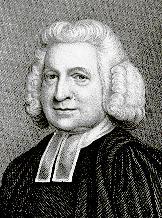
Charles Wesley

1707 - 1788 Person Name: C. Wesley, 1707-1788 Topics: Grace Reconciling; Heart Changed; Grace Reconciling; Heart Changed; Brother, Christ our; Christ Brother; Jesus (See also Christ) Brother; Saviour; Comforter, Holy Spirit, the; Holy Spirit Comforter, the; The Godhead The Son; Friend Jesus our; Way, Jesus the ; Jesus (See also Christ) Saviour; Jesus (See also Christ) Brother; Guide Holy Spirit our; Holy Spirit Guide; Holy Spirit Witness of; Jesus (See also Christ) Friend Author of "Jesus, my Saviour, Brother, Friend" in Methodist Hymn and Tune Book Charles Wesley, M.A. was the great hymn-writer of the Wesley family, perhaps, taking quantity and quality into consideration, the great hymn-writer of all ages. Charles Wesley was the youngest son and 18th child of Samuel and Susanna Wesley, and was born at Epworth Rectory, Dec. 18, 1707. In 1716 he went to Westminster School, being provided with a home and board by his elder brother Samuel, then usher at the school, until 1721, when he was elected King's Scholar, and as such received his board and education free. In 1726 Charles Wesley was elected to a Westminster studentship at Christ Church, Oxford, where he took his degree in 1729, and became a college tutor. In the early part of the same year his religious impressions were much deepened, and he became one of the first band of "Oxford Methodists." In 1735 he went with his brother John to Georgia, as secretary to General Oglethorpe, having before he set out received Deacon's and Priest's Orders on two successive Sundays. His stay in Georgia was very short; he returned to England in 1736, and in 1737 came under the influence of Count Zinzendorf and the Moravians, especially of that remarkable man who had so large a share in moulding John Wesley's career, Peter Bonier, and also of a Mr. Bray, a brazier in Little Britain. On Whitsunday, 1737, [sic. 1738] he "found rest to his soul," and in 1738 he became curate to his friend, Mr. Stonehouse, Vicar of Islington, but the opposition of the churchwardens was so great that the Vicar consented that he "should preach in his church no more." Henceforth his work was identified with that of his brother John, and he became an indefatigable itinerant and field preacher. On April 8, 1749, he married Miss Sarah Gwynne. His marriage, unlike that of his brother John, was a most happy one; his wife was accustomed to accompany him on his evangelistic journeys, which were as frequent as ever until the year 1756," when he ceased to itinerate, and mainly devoted himself to the care of the Societies in London and Bristol. Bristol was his headquarters until 1771, when he removed with his family to London, and, besides attending to the Societies, devoted himself much, as he had done in his youth, to the spiritual care of prisoners in Newgate. He had long been troubled about the relations of Methodism to the Church of England, and strongly disapproved of his brother John's "ordinations." Wesley-like, he expressed his disapproval in the most outspoken fashion, but, as in the case of Samuel at an earlier period, the differences between the brothers never led to a breach of friendship. He died in London, March 29, 1788, and was buried in Marylebone churchyard. His brother John was deeply grieved because he would not consent to be interred in the burial-ground of the City Road Chapel, where he had prepared a grave for himself, but Charles said, "I have lived, and I die, in the Communion of the Church of England, and I will be buried in the yard of my parish church." Eight clergymen of the Church of England bore his pall. He had a large family, four of whom survived him; three sons, who all became distinguished in the musical world, and one daughter, who inherited some of her father's poetical genius. The widow and orphans were treated with the greatest kindness and generosity by John Wesley. As a hymn-writer Charles Wesley was unique. He is said to have written no less than 6500 hymns, and though, of course, in so vast a number some are of unequal merit, it is perfectly marvellous how many there are which rise to the highest degree of excellence. His feelings on every occasion of importance, whether private or public, found their best expression in a hymn. His own conversion, his own marriage, the earthquake panic, the rumours of an invasion from France, the defeat of Prince Charles Edward at Culloden, the Gordon riots, every Festival of the Christian Church, every doctrine of the Christian Faith, striking scenes in Scripture history, striking scenes which came within his own view, the deaths of friends as they passed away, one by one, before him, all furnished occasions for the exercise of his divine gift. Nor must we forget his hymns for little children, a branch of sacred poetry in which the mantle of Dr. Watts seems to have fallen upon him. It would be simply impossible within our space to enumerate even those of the hymns which have become really classical. The saying that a really good hymn is as rare an appearance as that of a comet is falsified by the work of Charles Wesley; for hymns, which are really good in every respect, flowed from his pen in quick succession, and death alone stopped the course of the perennial stream. It has been the common practice, however for a hundred years or more to ascribe all translations from the German to John Wesley, as he only of the two brothers knew that language; and to assign to Charles Wesley all the original hymns except such as are traceable to John Wesley through his Journals and other works. The list of 482 original hymns by John and Charles Wesley listed in this Dictionary of Hymnology have formed an important part of Methodist hymnody and show the enormous influence of the Wesleys on the English hymnody of the nineteenth century. -- Excerpts from John Julian, Dictionary of Hymnology (1907) ================== Charles Wesley, the son of Samuel Wesley, was born at Epworth, Dec. 18, 1707. He was educated at Westminster School and afterwards at Christ Church, Oxford, where he graduated M.A. In 1735, he took Orders and immediately proceeded with his brother John to Georgia, both being employed as missionaries of the S.P.G. He returned to England in 1736. For many years he engaged with his brother in preaching the Gospel. He died March 29, 1788. To Charles Wesley has been justly assigned the appellation of the "Bard of Methodism." His prominence in hymn writing may be judged from the fact that in the "Wesleyan Hymn Book," 623 of the 770 hymns were written by him; and he published more than thirty poetical works, written either by himself alone, or in conjunction with his brother. The number of his separate hymns is at least five thousand. --Annotations of the Hymnal, Charles Hutchins, M.A., 1872.

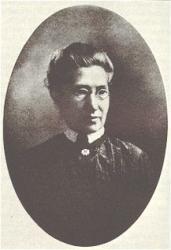
E. E. Hewitt

1851 - 1920 Person Name: Eliza E. Hewitt Topics: Christ Example; Christ Guide; Christ Example; Christ Guide Author of "Stepping in the Light" in Hymns of Faith Pseudonym: Li­die H. Ed­munds. Eliza Edmunds Hewitt was born in Philadelphia 28 June 1851. She was educated in the public schools and after graduation from high school became a teacher. However, she developed a spinal malady which cut short her career and made her a shut-in for many years. During her convalescence, she studied English literature. She felt a need to be useful to her church and began writing poems for the primary department. she went on to teach Sunday school, take an active part in the Philadelphia Elementary Union and become Superintendent of the primary department of Calvin Presbyterian Church. Dianne Shapiro, from "The Singers and Their Songs: sketches of living gospel hymn writers" by Charles Hutchinson Gabriel (Chicago: The Rodeheaver Company, 1916)

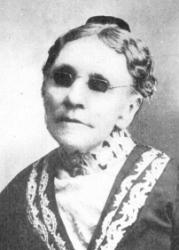
Fanny Crosby

1820 - 1915 Person Name: Fanny J. Crosby Topics: Christ Guide; Christ Guide Author of "All the Way My Savior Leads Me" in Hymns of Faith Pseudonymns: A.V., Mrs. A. E. Andrews, Mrs. E. A. Andrews, Mrs. E. L. Andrews, James L. Black, Henrietta E. Blair, Charles Bruce, Robert Bruce, Leah Carlton, Eleanor Craddock, Lyman G. Cuyler, D.H.W., Ella Dare, Ellen Dare, Mrs. Ellen Douglass, Lizzie Edwards. Miss Grace Elliot, Grace J. Frances, Victoria Frances, Jennie Garnett, Frank Gould, H. D. K., Frances Hope, Annie L. James, Martha J. Lankton [Langton], Grace Lindsey, Maud Marion, Sallie Martin, Wilson Meade, Alice Monteith, Martha C. Oliver, Mrs. N. D. Plume, Kate Smiley, Sallie Smith, J. L. Sterling, John Sterling, Julia Sterling, Anna C. Storey, Victoria Stuart, Ida Scott Taylor, Mary R. Tilden, Mrs. J. B. Thresher, Hope Tryaway, Grace Tureman, Carrie M. Wilson, W.H.D. Frances Jane Crosby, the daughter of John and Mercy Crosby, was born in Southeast, Putnam County, N. Y., March 24, 1820. She became blind at the age of six weeks from maltreatment of her eyes during a spell of sickness. When she was eight years old she moved with her parents to Ridgefield, Conn., the family remaining there four years. At the age of fifteen she entered the New York Institution for the Blind, where she received a good education. She became a teacher in the institution in 1847, and continued her work until March 1, 1858. She taught English grammar, rhetoric and American history. This was the great developing period in her life. During the vacations of 1852 and 1853, spent at North Reading, Mass., she wrote the words to many songs for Dr. Geo. F. Root, then the teacher of music at the blind institution. Among them were, "Hazel Dell,", "The Honeysuckle Glen," "Rosalie, the Prairie Flower," "Music in the Air," "Proud World, Good-bye, I'm Going Home," "All Together", "Never Forget the Dear Ones," and others. Subsequently she wrote the words for the cantatas of The Flower Queen and The Pilgrim Fathers, all of which were very popular in their day, though it was not generally known at the time that she was the author. While teaching at the institution she met Presidents Van Buren and Tyler, Hon. Henry Clay, Governor Wm. H. Seward, General Winfield Scott, and other distinguished characters of American history. Concerning Mr. Clay, she gives the following: "When Mr. Clay came to the institution during his last visit to New York, I was selected to welcome him with a poem. Six months before he had lost a son at the battle of Monterey, and I had sent him some verses. In my address I carefully avoided any allusion to them, in order not to wound him. When I had finished he drew my arm in his, and, addressing the audience, said through his tears: 'This is not the first poem for which I am indebted to this lady. Six months ago she sent me some lines on the death of my dear son.' Both of us were overcome for a few moments. Soon, by a splendid effort, Mr. Clay recovered himself, but I could not control my tears." In connection with her meeting these notable men, we might add that Miss Fanny Crosby had the honor of being the first woman whose voice was heard publicly in the Senate Chamber at Washington. She read a poem there on one occasion. In addition to the thousands of hymns that she has written (about eight thousand poems in all), many of which have not been set to music, she has published four volumes of verses. The first was issued in 1844 and was entitled The Blind Girl, and Other Poems, a second volume, Monterey, and Other Poems, followed in 1849, and the third, A Wreath of Columbia's Flowers, in 1858. The fourth, Bells at Evening and Other Verses, with a biographical sketch by Rev. Robert Lowry, and a fine half-tone portrait, in 1897, the sales of which have reached a fourth edition. The book is published by The Biglow & Main Co., New York. Though these show the poetical bent of her mind, they have little to do with her world-wide fame. It is as a writer of Sunday-school songs and gospel hymns that she is known wherever the English language is spoken, and, in fact, wherever any other language is heard. Fanny was married March 5, 1858, to Alex. Van Alstyne, who was also a scholar in the same institution in which she was educated. She began to write Sunday-school hymns for Wm. B. Bradbury in 1864. Her first hymn, "We are going, we are going To a home beyond the skies", was written at the Ponton Hotel on Franklin Street, New York City, on February 5th of that year. This hymn was sung at Mr. Bradbury's funeral in January, 1868. Since 1864 she supported herself by writing hymns. She resided in New York City nearly all her life, where, she says, she is "a member of the Old John Street M. E. Church in good standing." She spent regular hours on certain days at the office of The Biglow & Main Co., the firm for which she did most of her writing, and for whom she has composed over four thousand hymns. Her hymns have been in great demand and have been used by many of our most popular composers, among whom may be mentioned Wm. B. Bradbury, Geo. F. Root, W. H. Doane, Rev. Robert Lowry, Ira D. Sankey, J. R. Sweney, W. J. Kirkpatrick, H. P. Main, H. P. Danks, Philip Phillips, B. G. Unseld, and others. She could compose at any time and did not need to wait for any special inspiration, and her best hymns have come on the spur of the moment. She always composed with an open book in her hand, generally a copy of Golden Hymns, held closely over her eyes, bottom side up. She learned to play on the guitar and piano while at the institution, and has a clear soprano voice. She also received a technical training in music, and for this reason she could, and did, compose airs for some of her hymns. One of these is, "Jesus, dear, I come to Thee, Thou hast said I may," both words and music of which are wonderfully sweet. "Safe in the arms of Jesus", probably one of her best known hymns, was her own favorite. Fanny loved her work, and was happy in it. She was always ready either to sympathize or join in a mirthful conversation, as the case may be. The secret of this contentment dates from her first composition at the age of eight years. "It has been the motto of my life," she says. It is: "O what a happy soul am I! Although I cannot see, I am resolved that in this world Contented I will be;" This has continued to be her philosophy. She says that had it not been for her affliction she might not have so good an education, nor so great an influence, and certainly not so fine a memory. She knows a great many portions of the Bible by heart, and had committed to memory the first four books of the Old Testament, and also the four Gospels before she was ten years of age. Her scope of subjects is wide, embracing everything from a contemplation of heaven, as in "The Bright Forever" and "The Blessed Homeland", to an appeal to the work of this world, as in "To the Work" and "Rescue the Perishing." The most of Fanny's published hymns have appeared under the name of Fanny J. Crosby or Mrs. Yan Alstyne, but quite a large number have appeared under the nom de plumes of Grace J. Frances, Mrs. C. M. Wilson, Lizzie Edwards, Ella Dale, Henrietta E. Blair, Rose Atherton, Maud Marion, Leah Carlton, nearly two hundred different names. -Biographies of Gospel Song and Hymn Writers (excerpts) ======================= Van Alstyne, Frances Jane, née Crosby, a member of the Methodist Episcopal Church, was born at South East, Putnam County, New York, March 24, 1823. When six weeks old she lost her sight. About 1835 she entered the New York City Institution for the Blind. On completing her training she became a teacher therein from 1847 to 1858. In 1858 she was married to Alexander Van Alstyne, a musician, who was also blind. Her first poem was published in 1831; and her first volumes of verse as A Blind Girl, and Other Poems, 1844; Monteresy, and Other Poems, 1849; and A Wreath of Columbia's Flowers, 1858. Her first hymn was "We are going, we are going" (Death and Burial), which was written for Mr. Bradbury and published in the Golden Censer, 1864. From 1853 to 1858 she wrote 20 songs, which were set to music by G. F. Root. Her songs and hymns number some 2,000 or more, and have been published mainly in several of the popular American Sunday school collections, and often under a nom de plume. About 60 have come into common use in Great Britain. The majority of these are taken from the following American collections:— i. From The Shining Star, 1864. 1. Softly on the breath of evening. Evening. ii. From Fresh Laurels, 1867. 2. Beautiful Mansions, home of the blest. Heaven. 3. Jesus the Water of Life has given. The Water of Life. 4. Light and Comfort of my soul. In Affliction. 5. There's a cry from Macedonia. Missions. 6. We are marching on with shield and banner bright. Sunday School Anniversary. iii. From Musical Leaves, 1868. 7. 0 what are you going to do, brother? Youth for God. iv. From Sabbath Carols, 1868. 8. Dark is the night, and cold the wind is blowing. Affliction anticipated. 9. Lord, at Thy mercy seat, Humbly I fall. Lent. v. From Silver Spray, 1868. 10. If I come to Jesus, He will make me glad. Peace in Jesus. 11. 'Twill not be long—our journey here. Heaven anticipated. vi. From Notes of Joy, 1869. 12. Little beams of rosy light. The Divine Father. 13. Press on! press on! a glorious throng. Pressing towards the Prize. vii. From Bright Jewels, 1869. 14. Christ the Lord is risen today, He is risen indeed. Easter. 15. Holy, holy, holy is the Lord! Sing 0 ye people, &c. Holiness of God. 16. Jesus, keep me near the Cross. Near the Cross of Christ. 17. Saviour, bless a little child. A Child's Prayer. Written Feb. 6, 1869. viii. From Songs of Devotion, 1870. 18. Pass me not, 0 gentle Saviour. Lent. Written in 1868. 19. Rescue the perishing, care for the dying. Home Missions. ix. From Pure Gold, 1871. 20. Great is Jehovah. King of kings. Greatness of God. 21. I would be Thy little lamb. The Good Shepherd. 22. Lead me to Jesus, lead me to Jesus. Desiring Jesus. 23. To the work, to the work, we are servants of God. Home Missions. 24. Why labour for treasures that rust and decay? The Fadeless Crown. x. From the Royal Diadem, 1873. 25. I am Jesus' little friend. For Infant Schools. 26. Jesus I love Thee. Loving Jesus. 27. Mourner, wheresoe'er thou art. To the Sorrowing and Penitent. Written Oct. 3, 1871. 28. Never be faint or weary. Joy in Jesus. 29. Only a step to Jesus. Invitation. xi. From Winnowed Hymns, 1873-4. 30. Loving Saviour, hear my cry. Lent. xii. From Echoes of Zion, 1874. 31. Say, where is thy refuge, my brother? Home Missions. xiii. From Songs of Grace and Glory, 1874. 32. Thou my everlasting Portion. Christ the Portion of His People. xiv. From Brightest and Best, 1875. 33. All the way my Saviour leads me. Jesus the Guide. 34. I am Thine, O Lord: I have heard Thy voice. Holiness desired. 35. O come to the Saviour, believe in His name. Invitation. Written, Sep. 7, 1874. 36. O how sweet when we mingle. Communion of Saints. Written in 1866. 37. O my Saviour, hear me. Prayer to Jesus for blessing and love. 38. Only Jesus feels and knows. Jesus the Divine Friend. 39. Revive Thy work, O Lord. Home Missions. 40. Saviour, more than life to me. Jesus All and in All. 41. To God be the glory, great things He hath done. Praise for Redemption. xv. From Calvary Songs, 1875. 42. Come, O come with thy broken heart. Invitation. xvi. From Gospel Music, 1876. 43. Here from the world we turn. Divine Worship. 44. When Jesus comes to reward His servants. Watching, xvii. From Welcome Tidings, 1877. 45. O hear my cry, be gracious now to me. For Pardon and Peace. xviii. From The Fountain of Song, 1877. 46. Lord, my trust I repose on Thee. Trusting in Jesus. xix. From Good as Gold, 1880. 47. In Thy cleft, O Rock of Ages. Safety in Jesus. 48. Sound the alarm ! let the watchman cry. Home Missions. 49. Tenderly He leads us. Christ the Leader. 50. 'Tis the blessed hour of prayer. The Hour of Prayer. In addition to these hymns, all of which are in common use in Great Britain (mainly through I. D. Sankey's Sacred Songs and Solos, the Methodist Sunday School Hymn Book, the Silver Street Sunday Scholars Companion, and other collections for Sunday schools), there are also "A blessing for you, will you take it?" (Pardon through Jesus); "My song shall be of Jesus" (Praise of Jesus); “Now, just a word for Jesus"(Home Missions); "Onward, upward, Christian soldier" (Pressing Heavenward); 44 Sinner, how thy heart is troubled" (Invitation); "'Tis a goodly, pleasant land" (Heaven anticipated); and "When the dewy light was fading" (Death anticipated). All of these are in I. D. Sankey's Sacred Songs & Solos. Mrs. Van Alstyne's most popular composition is "Safe in the arms of Jesus" (Safety in Jesus). This was written in 1868, at the request of Mr. W. H. Doane, to his well-known melody with which it is inseparably associated, and published in Bright Jewels, 1869. Mrs. Van Alstyne's hymns have sometimes been published anonymously; but the greater part are signed by a bewildering number of initials. The combined sales of the volumes of songs and hymns named above have amounted in English-speaking countries to millions of copies. Notwithstanding the immense circulation thus given to Mrs. Van Alstyne's hymns, they are, with few exceptions, very weak and poor, their simplicity and earnestness being their redeeming features. Their popularity is largely due to the melodies to which they are wedded. Since the above was in type we have found that the following are also in common use in Great Britain:— 51. Suppose the little cowslip. Value of Little Things. 52. Sweet hour of prayer. The Hour of Prayer. These are in Bradbury's Golden Chain, 1861. 53. Never lose the golden rule. Love to our Neighbours. In Bradbury's Golden Censer, 1864. 54. I will not be afraid at night. Trust in God. In Bradbury's Fresh Laurels, 1867. 55. Praise Him, praise Him, Jesus our, &c. Praise of Jesus. In Biglow & Main's Bright Jewels, 1869. 56. More like Jesus would I be. More like Jesus. In Perkins & Taylor's Songs of Salvation, 1870. 57. Behold me standing at the door. Christ at the Door. In Biglow & Main's Christian Songs, 1872. 58. If I come to Jesus. Jesus the Children's Guide. 59. Jesus, Lord, I come to Thee. Trust in Jesus. 60. Let me learn of Jesus. Jesus the Children's Friend. 61. Singing for Jesus, O singing for Jesus. Singing for Jesus. 62. There is a Name divinely sweet Holy Name of Jesus. Of these hymns Nos. 58-62 we have not been able to trace. --Excerpts from John Julian, Dictionary of Hymnology (1907 ================ Van Alstyne, Frances J., p. 1203, ii. From the American collections of recent date we find that Mrs. Van Alstyne is still actively engaged in hymn-writing. In the Funk and Wagnalls Company Gloria Deo, 1903, there are about 30 of her hymns, most of which are new. They are all signed, and some are dated, but we have not space to quote the first lines and subjects, as this hymnal is not an official collection of any denomination. Another name, "Mrs. S. K. Bourne" is credited in the same hymnal with about 40 new hymns. If this signature is not another pen-name of Mrs. Van Alstyne's (and these pen-names and initials of hers are very numerous), we can only say that she has a very successful understudy in "Mrs. S. K. Bourne." --John Julian, Dictionary of Hymnology, New Supplement (1907)

Henry Francis Lyte

1793 - 1847 Topics: Aspiration; Church, The; God Guide; God Strength and Refuge; Pilgrimage of life Author of "Pleasant Are Thy Courts Above" in The Hymnbook Lyte, Henry Francis, M.A., son of Captain Thomas Lyte, was born at Ednam, near Kelso, June 1, 1793, and educated at Portora (the Royal School of Enniskillen), and at Trinity College, Dublin, of which he was a Scholar, and where he graduated in 1814. During his University course he distinguished himself by gaining the English prize poem on three occasions. At one time he had intended studying Medicine; but this he abandoned for Theology, and took Holy Orders in 1815, his first curacy being in the neighbourhood of Wexford. In 1817, he removed to Marazion, in Cornwall. There, in 1818, he underwent a great spiritual change, which shaped and influenced the whole of his after life, the immediate cause being the illness and death of a brother clergyman. Lyte says of him:— "He died happy under the belief that though he had deeply erred, there was One whose death and sufferings would atone for his delinquencies, and be accepted for all that he had incurred;" and concerning himself he adds:— "I was greatly affected by the whole matter, and brought to look at life and its issue with a different eye than before; and I began to study my Bible, and preach in another manner than I had previously done." From Marazion he removed, in 1819, to Lymington, where he composed his Tales on the Lord's Prayer in verse (pub. in 1826); and in 1823 he was appointed Perpetual Curate of Lower Brixham, Devon. That appointment he held until his death, on Nov. 20, 1847. His Poems of Henry Vaughan, with a Memoir, were published in 1846. His own Poetical works were:— (1) Poems chiefly Religious 1833; 2nd ed. enlarged, 1845. (2) The Spirit of the Psalms, 1834, written in the first instance for use in his own Church at Lower Brixham, and enlarged in 1836; (3) Miscellaneous Poems (posthumously) in 1868. This last is a reprint of the 1845 ed. of his Poems, with "Abide with me" added. (4) Remains, 1850. Lyte's Poems have been somewhat freely drawn upon by hymnal compilers; but by far the larger portion of his hymns found in modern collections are from his Spirit of the Psalms. In America his hymns are very popular. In many instances, however, through mistaking Miss Auber's (q. v.) Spirit of the Psalms, 1829, for his, he is credited with more than is his due. The Andover Sabbath Hymn Book, 1858, is specially at fault in this respect. The best known and most widely used of his compositions are "Abide with me, fast falls the eventide;” “Far from my heavenly home;" "God of mercy, God of grace;" "Pleasant are Thy courts above;" "Praise, my soul, the King of heaven;" and "There is a safe and secret place." These and several others are annotated under their respective first lines: the rest in common use are:— i. From his Poems chiefly Religious, 1833 and 1845. 1. Above me hangs the silent sky. For Use at Sea. 2. Again, 0 Lord, I ope mine eyes. Morning. 3. Hail to another Year. New Year. 4. How good, how faithful, Lord, art Thou. Divine care of Men. 5. In tears and trials we must sow (1845). Sorrow followed by Joy. 6. My [our] rest is in heaven, my [our] rest is not here. Heaven our Home. 7. 0 Lord, how infinite Thy love. The Love of God in Christ. 8. Omniscient God, Thine eye divine. The Holy Ghost Omniscient. 9. The leaves around me falling. Autumn. 10. The Lord hath builded for Himself. The Universe the Temple of God. 11. Vain were all our toil and labour. Success is of God. 12. When at Thy footstool, Lord, I bend. Lent. 13. When earthly joys glide swift away. Ps. cii. 14. Wilt Thou return to me, O Lord. Lent. 15. With joy we hail the sacred day. Sunday. ii. From his Spirit of the Psalms, 1834. 16. Be merciful to us, O God. Ps. lvii. 17. Blest is the man who knows the Lord. Ps. cxii. 18. Blest is the man whose spirit shares. Ps. xli. 19. From depths of woe to God I cry. Ps. cxxxx. 20. Gently, gently lay Thy rod. Ps. vi. 21. Glorious Shepherd of the sheep. Ps. xxiii. 22. Glory and praise to Jehovah on high. Ps. xxix. 23. God in His Church is known. Ps. lxxvi. 24. God is our Refuge, tried and proved. Ps. xlvi. 25. Great Source of my being. Ps. lxxiii. 26. Hear, O Lord, our supplication. Ps. lxiv. 27. How blest the man who fears the Lord. Ps.cxxviii. 28. Humble, Lord, my haughty spirit. Ps. cxxxi. 29. In this wide, weary world of care. Ps. cxxxii. 30. In vain the powers of darkness try. Ps.lii. 31. Jehovah speaks, let man be awed. Ps. xlix. 32. Judge me, O Lord, and try my heart. Ps. xxvi. 33. Judge me, O Lord, to Thee I fly. Ps. xliii. 34. Lord, I have sinned, but O forgive. Ps. xli. 35. Lord, my God, in Thee I trust. Ps. vii. 36. Lord of the realms above, Our Prophet, &c. Ps.xlv. 37. Lone amidst the dead and dying. Ps. lxii. 38. Lord God of my salvation. Ps. lxxxviii. 39. Lord, I look to Thee for all. Ps. xxxi. 40. Lord, I would stand with thoughtful eye. Ps. lxix. 41. Lord, my God, in Thee I trust. Ps. vii. 42. My God, my King, Thy praise I sing. Ps. cviii. 43. My God, what monuments I see. Ps. xxxvi. 44. My spirit on [to] Thy care. Ps. xxxi. 45. My trust is in the Lord. Ps. xi. 46. Not unto us, Almighty Lord [God]. Ps. cxv. 47. O God of glory, God of grace. Ps. xc. 48. O God of love, how blest are they. Ps. xxxvii. 49. O God of love, my God Thou art. Ps. lxiii. 50. O God of truth and grace. Ps. xviii. 51. O had I, my Saviour, the wings of a dove. Ps. lv. 52. O how blest the congregation. Ps. lxxxix. 53. O how safe and [how] happy he. Ps. xci. 54. O plead my cause, my Saviour plead. Ps. xxxv. 55. O praise the Lord, 'tis sweet to raise. Ps. cxlvii. 56. O praise the Lord; ye nations, pour. Ps. cxvii. 57. O praise ye the Lord With heart, &c. Ps. cxlix. 58. O that the Lord's salvation. Ps. xiv. 59. O Thou Whom thoughtless men condemn. Ps. xxxvi. 60. Of every earthly stay bereft. Ps. lxxiv. 61. Our hearts shall praise Thee, God of love. Ps. cxxxviii. 62. Pilgrims here on earth and strangers. Ps. xvi. 63. Praise for Thee, Lord, in Zion waits. Ps. lxv. 64. Praise to God on high be given. Ps. cxxxiv. 65. Praise ye the Lord, His servants, raise. Ps. cxiii. 66. Redeem'd from guilt, redeem'd from fears. Ps. cxvi. 67. Save me by Thy glorious name. Ps. liv. 68. Shout, ye people, clap your hands. Ps. xlvii. 69. Sing to the Lord our might. Ps. lxxxi. 70. Strangers and pilgrims here below. Ps. cix. 71. Sweet is the solemn voice that calls. Ps. cxxii. 72. The Church of God below. Ps. lxxxvii. 73. The Lord is King, let earth be glad. Ps. xcvii. 74. The Lord is on His throne. Ps. xciii. 75. The Lord is our Refuge, the Lord is our Guide. Ps. xlvii. 76. The mercies of my God and King. Ps. lxxxix. 77. The Lord Who died on earth for men. Ps. xxi. 78. Tis a pleasant thing to fee. Ps. cxxxiii. 79. Thy promise, Lord, is perfect peace. Ps. iii. 80. Unto Thee I lift mine [my] eyes. Ps. cxxiii. 81. Whom shall [should] we love like Thee? Ps. xviii. Lyte's versions of the Psalms are criticised where their sadness, tenderness and beauty are set forth. His hymns in the Poems are characterized by the same features, and rarely swell out into joy and gladness. --John Julian, Dictionary of Hymnology (1907) ================== Lyte, Henry Francis, p. 706, i. Additional versions of Psalms are in common use:-- 1. Lord, a thousand foes surround us. Psalms lix. 2. Praise, Lord, for Thee in Zion waits. Psalms lxv. 3. The Christian like his Lord of old. Psalms cxl. 4. The Lord of all my Shepherd is. Psalms xxiii. 5. The Lord of heaven to earth is come. Psalms xcviii. 6. Thy mercy, Lord, the sinner's hope. Psalms xxxvi. 7. To Thee, O Lord, in deep distress. Psalms cxlii. Sometimes given as "To God I turned in wild distress." 8. Uphold me, Lord, too prone to stray. Psalms i. 9. When Jesus to our [my] rescue came. Psalms cxxvi. These versions appeared in the 1st edition of Lyte's Spirit of the Psalms, 1834. It must be noted that the texts of the 1834, the 1836, and the 3rd ed., 1858, vary considerably, but Lyte was not responsible for the alterations and omissions in the last, which was edited by another hand for use at St. Mark's, Torquay. Lyte's version of Psalms xxix., "Glory and praise to Jehovah on high" (p. 706, ii., 22), first appeared in his Poems, 1st ed., 1833, p. 25. Read also No. 39 as "Lord, I look for all to Thee." --John Julian, Dictionary of Hymnology, Appendix, Part II (1907)

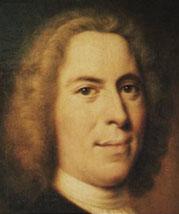
Nicolaus Ludwig, Graf von Zinzendorf

1700 - 1760 Person Name: Nicolaus Ludwig von Zinzendorf Topics: Constancy; Jesus Christ Guide and Leader; Pilgrimage; Struggle and Conflict; Year B Lent 1; Year C Proper 23 Author of "Jesus, Still Lead On" in The New Century Hymnal Zinzendorf, Count Nicolaus Ludwig, the founder of the religious community of Herrnhut and the apostle of the United Brethren, was born at Dresden May 26, 1700. It is not often that noble blood and worldly wealth are allied with true piety and missionary zeal. Such, however, was the case with Count Zinzendorf. In 1731 Zinzendorf resigned all public duties and devoted himself to missionary work. He traveled extensively on the Continent, in Great Britain, and in America, preaching "Christ, and him crucified," and organizing societies of Moravian brethren. John Wesley is said to have been under obligation to Zinzendorf for some ideas on singing, organization of classes, and Church government. Zinzendorf was the author of some two thousand hymns. Many of them are of little worth, but a few are very valuable, full of gospel sweetness and holy fervor. He died at Herrnhut May 6, 1760. —Hymn Writers of the Church by Charles Nutter ================ Zinzendorf, Nicolaus Ludwig, Count von, was born at Dresden, May 26, 1700; was educated at the Paedagogium at Halle (1710-1716), and at the University of Wittenberg (1716-1719); became Hof-und Justizrath at the Saxon court at Dresden in the autumn of 1721; received a license to preach from the Theological Faculty of the University of Tubingen in 1734; was consecrated Bishop of the Moravian Brethren's Unity at Berlin, May 10, 1737; and died at Herrnhut, May 9, 1760. An adequate sketch of the life and labours of this remarkable man would far exceed the limits of our space. The details of his life are fully given in his Leben, by A. G. Spangenberg, 8 vols., Barby, 1772-75 (English version, abridged, by Samuel Jackson, London, 1838); and good sketches, with references to the fuller biographies, will be found in Koch, v. 248, Herzog's Real-Encyklopädie, xvii. 513, &c. The English reader may also consult T. Kübler's Historical Notes to the Lyra Germanica, 1865, p. 107; Josiah Miller's Singers and Songs, 1869, p. 160; Miss Winkworth's Christian Singers of Germany, 1869, p. 305, &c. It is impossible to speak of Zinzendorf apart from the religious Communion of which he was the Second Founder. Zinzendorf's first hymn was written at Halle in 1712, and his last at Herrnhut, May 4, 1760. Between these dates he wrote more than 2000 hymns. He himself published an edition of his poems as his Teutsche Gedichte at Herrnhut, 1735 (2nd ed., Barby, 1766), but this only contains 128 hymns. The fullest representation of them is in Albert Knapp's Geistliche Gedichte des Graf en von Zinzendorf, published at Stuttgart in 1845 (hereafter, in this article, referred to as Knapp, 1845). This contains 770 pieces, arranged in three books, with an introduction and a biographical sketch by Knapp. In preparing this edition Knapp had access to much unpublished material in the archives at Herrnhut, and found there many of the hymns in Zinzendorf's autograph. But too much of the labour he bestowed thereon was spent in endeavouring, not so much to reconstruct the text from the original sources, as to modernise it. In various instances the hymns are altogether rewritten, so that the form in which they appear is not that in which, as a matter of fact, Zinzendorf did write them, but that in which he might have written them had he been Albert Knapp, and lived in the year of grace 1845. So much is this the case, that comparatively few of the hymns are given in Knapp's edition in their original form. If not altered they are often either abridged or else combined with others. The keynote of Zinzendorf's hymns, and of his religious character, was a deep and earnest personal devotion to and fellowship with the crucified Saviour. This is seen even in his worst pieces, where it is his perverted fervour that leads him into objectionable familiarity with sacred things both in thought and in expression. If his self-restraint had been equal to his imaginative and productive powers, he would have ranked as one of the greatest German hymnwriters. As it is, most even of his best pieces err in some way or other, for if they are reverent and in good taste, they are apt to lack concentration and to be far too diffuse. His best hymns, and those which have been most popular in German and English beyond the Moravian connection, are those of the period prior to 1734. Among the characteristically Moravian hymns of the period 1734 to 1742 there are also, various noble pieces. The later productions, especially from 1743 to 1750, are as a rule one-sided, unreal, and exaggerated in sentiment, and debased in style; exemplifying a tendency inherited from Scheffler, and suffered to run to riot. Without doubt he wrote too much (especially considering the limited range of subjects treated of in his hymns), and gave too little care to revision and condensation. Yet many of his hymns are worthy of note, and are distinguished by a certain noble simplicity, true sweetness, lyric grace, unshaken faith in the reconciling grace of Christ, entire self-consecration, willingness to spend and be spent in the Master's service, and fervent brotherly love. The more important hymnbooks in which Zinzendorf’s productions mainly appeared may for convenience be briefly noted here, as follows:— (1) Sammlung geistlicher und lieblicher Lieder, Leipzig, 1725, with 889 hymns. The 2nd edition was published circa 1728, and contains anAnhäng with Nos. 890-1078 [Berlin Library, Ei. 2017]; while some copies have a Zugabe with Nos. 1079-1149 [Berlin, Ei. 2016], and others have also an Andere Zugabe, circa 1730, with hymns 1-44, bound up with them [Berlin, Ei, 2014, and British Museum]. The 3rd edition, with 1416 hymns in all, was published at Görlitz in 1731. A copy of this, now in the Hamburg Library, has bound up with Nachlese einiger geistlicher Lieder, dated 1733. (2) Herrnhut Gesang-Buch 1735 (Das Gesang-Buch der Gemeine in Herrn-Huth) with its various Anhange and Zugaben up to 1748. (3) London Gesang-Buch 1753-54 (Etwas vom Liede Mosis ... das ist: Alt- und neuer Brüder-Gesang, &c), published at London, vol. i. 1753, ii. 1754. (4) Brüder Gesang-Buch 1778 (Gesangbuch zum Gebrauch der evangelischen Brüdergemeinen), published at Barby in 1778. Zinzendorf's hymns passed into German non-Moravian use mainly through the Ebersdorf Gesang-Buch, 1742 (Evangelisches Gesangbuch in einen hinlänglichen Auszug der Alten, Neuern und Neuesten Lieder, &c), and in recent times through Knapp's Evangelischer Lieder-Schatz, 1837-1865. Comparatively few are found in non-Moravian English hymnbooks prior to 1840, save in the versions made by John Wesley. The translations made by the English Moravians have been very little used by others, except by those who were connected by birth with the Moravians, such as James Montgomery (through whose influence several were included in Mercer's Church Psalter & Hymn Book, 1855 and 1857), J. A. Latrobe and C. H. Bateman. The versions made by English non-Moravians since 1840 have been mostly of hymns which the Moravians themselves had not thought good to translate. In the larger edition of the English Moravian Hymn Book of 1886, hymns which are by Zinzendorf may easily be traced, his name being added to them, and the first line of the original German prefixed. The others which have passed into use outside the Moravian connection, or have been translated by non-Moravians, are here noted as follows:— i. Ach Bein von meinen Beinen. Longing for Heaven. Written circa 1750 (Knapp, 1845, p. 176). Included in the Kleine Brüder Gesang-Buch, 2nd ed. Barby, 1761, No. 2110, in 2 stanzas of 8 lines; repeated, altered, in the Brüder Gesang-Buch,1778. No. 1681. Translated as:— 1. The seasons, Lord! are Thine—how soon. A free version as No. 479 in J. A. Latrobe's Psalms & Hymns, 1841. 2. How soon, exalted Jesus. This is No. 838 in the Moravian Hymn Book, 1789 (1886, No. 1233). ii. Ach! mein verwundter Fürste. Union with Christ. Written Aug. 1737 (Knapp, 1845, p. 125). First published in Appendix viii., circa 1738, to the Herrnhut Gesang-Buch as No. 1197, and in 4 stanzas of 6 lines. In the Brüder Gesang-Buch, 1778, No. 774, stanza iv. was omitted. The translation in common use is of stanzas i., ii. Another translation is, "My wounded Prince enthron'd on high," by C. Kinchen, as No. 85 in the Moravian Hymn Book, 1742. In the 1808 and later editions(1886, No. 352), stanza iii. altered to "Lord, take my sinful, worthless heart "is continued. iii. Der Gott von unserm Bunde. Supplication. Written in 1737 ( Knap , 1845, p. 231). First published in Appendix vii., circa 1738, to the Herrnhut Gesang-Buch, as No. 1201, in 5 stanzas of 6 lines, entitled, "Hymn for the Hours of Prayer." In the Brüder Gesang-Buch, 1778, No. 1474. The translation in common use is based on stanza i., ii. Other translations are (1) "The God to whom we homage pay." This is No. 97 in pt. iii. 1748 of the Moravian Hymn Book. (2) "O may the God of mercies." This is No. 592 in the Moravian Hymn Book, 1801. In the ed. of 1886, No. 706, it begins with stanza iii., "Lord, our High Priest and Saviour." iv. Die Bäume blühen ab. Autumn . In the Teutsche Gedichte, 1735, No. 12, dated Autumn, 1721, and entitled "Comforting thoughts on Death." It is in Knapp, 1845, p. 17. Further noted under "Wie wird mir einst doch sein". v. Du Vater aller Kreatur. Work for Christ. Written 1722 (Knapp, 1845, p. 26). First published in Appendix. vi., circa 1737, to the Herrnhut Gesang-Buch, as No. 1159, and in 13 stanzas of 4 lines. In the Brüder Gesang-Buch, 1778, No. 1717 consists of stanza viii.-xiii. beginning, "Des Lebens abgestecktes Ziel." Translated as:— Whether the period of this life. This is a translation of stanza viii.-x. as No. 847 in the Moravian Hymn Book, 1789. To this in later eds. (1886, No. 1235) No. 848 was added. This is "Lord may 1 live to Thee by faith," and is a translation of an anonymous 17th century stanza, "Herr Jesu! dir leb ich," which is No. 1686 in the Brüder Gesang-Buch, 1778. The full form is in J. A. Latrobe's Psalms & Hymns, 1841. vi. Geschwister! wir geben uns Herzen und Hände. Christian Work. Written 1737 (Knap p, 1845, p. 234). First published in Appendix vii., circa 1738, to the Herrnhut Gesang-Buch as No. 1217, and in 8 stanzas of 4 lines. In the Brüder Gesang-Buch, 1778, No. 1391, it is united, as in Knapp, with "Gesinde des Heilands". Translated as:— Grace! how good, how cheap, how free. This is a translation, by C. Kinchen, of stanza v., as No. 28 in the Moravian Hymn Book, 1742. Included in Spurgeon's Our Own Hymn Book, 1866. vii. Glanz der Ewigkeit. Morning. In the Teutsche Gedichte, 1735, p. 13, dated Berlin, May, 1721. First published as No. 470 in the Sammlung, 1725, in 15 stanzas of 6 lines. In Knapp, 1845, p. 16. The only stanza translated into English is stanza xi. as part of "Jesu, geh' voran”. viii. Grosser Bundes-Engel. Ascensiontide. Written for Ascension Day (his birthday), 1740 (Knapp, 1845, p. 144, dated May 26, 1740). First published in Appendix xi., circa 1741, to the Herrnhut Gesang-Buch as No. 1426, in 27 stanzas of 8 lines. In the Brüder Gesang-Buch, 1778, No. 603. Translated as:— Lord, when Thou saidst, So let it be. This is a translation, by C. G. Clemens, of stanza iii., as No. 156 in the Moravian Hymn Book , 1789 (1849, No. 190). Included in the Congregational Hymn Book, 1836, and in Dr. Martineau's Hymns, 1840 and 1873. ix. Heiliger, heiliger, heiliger Herr Zebaoth. Eternal Life. Heaven Anticipated. The Rev. J. T. Müller, of Herrnhut, informs me that this was written in 1723 on the occasion of the birthday (Oct.6) of Zinzendorf s grandmother, H. C. von Gersdorf. Knapp, 1845, p. 193, dates it Oct. 18, 1723. First published as No. 1078 (2) in the 2nd ed., circa 1728, of the Sammlung in 7 stanzas of 7 lines, entitled, Closing Hymn. In the Brüder Gesang-Buch, 1778, stanza ii., iii., beginning "Hatten wir," are included as stanzas i., ii., of No. 1739. Translated as:— Had we nought, had we nought. This is a translation of stanzas ii., iii., by W. O. Keley, as No. 1189 in the 1808 Supplement to the Moravian Hymn Book, 1801 (1849, No. 1186), and repeated in J. A. Latrobe's Psalms & Hymns, 1841, No. 475. x. Ich bin ein kleines Kindelein. Children. This is No. 1022 in the 3rd ed., 1731, of the Sammlung, in 13 stanzas of 4 lines. In the Brüder Gesang-Buch, 1778, No. 1214, and in the Hist. Nachricht thereto (1835, p. 188) marked as a catechetical hymn for children, and dated 1723. Knapp, 1845, p. 40, dates it June, 1723, and alters it to "Ich bin ein Kindlein, arm und klein." It is a simple and beautiful hymn, and is contained in a number of recent German non-Moravian collections, e.g. in the Berlin Geistliche Lieder, ed. 1863, No. 1408. Translated as:— 1. Saviour, who didst from Heaven come down. This is a free translation of stanzas ii.,iii., v., made by James Bullivant Tomalin in 1860, and contributed to Lord Selborne's Book of Praise, ed. 1866, Appendix, No. 27, with the note at p. 500, "I am indebted for this to the kindness of the translator." Repeated in S. D. Major's Book of Praise for Home & School, 1869, and in America in the Baptist Service of Song, 1871, &c. In M. W. Stryker's Christian Chorals, 1885, and Church Song, 1889, it is altered, beginning, "O Saviour, Who from Heav'n came down." 2. I am a little child you see. By C. Kinchen, as No. 49 in the Moravian Hymn Book 1742. This form is followed in the edition of 1886, No. 1038, and in the Bible Hymn Book, 1845. In the Moravian Hymn Book, 1789, it begins with stanza ii., "Thou, gracious Saviour, for my good;" and this form altered to, "My Saviour dear, Thou for my good," is in Montgomery's Christian Psalmist, 1825. xi. Kommt, Sünder, und blicket dem ewigen Sohne. Repentance or Lent. Mr. Müller informs me that this was written in Aug. 1736, at , 1845, p. 130, dates it Nov. 22,1738. First published in Appendix viii., circa 1739, to the Herrnhut Gesang-Buch as No. 1308, in 9 stanzas of 4 lines. In the Brüder Gesang-Buch 1778, No. 321. Translated as:— Sinners! come; the Saviour see. This a good and full translation by C. Kinchen, as No. 120, in the Moravian Hymn Book, 1742. Of this stanzas i., ii. are included in Spurgeon's Our Own Hymn Book, 1866. Other forms are (1) "Are you formed a creature new" (stanza vi.). In the Moravian Hymn Book, 1769 (1886, No. 1280), Montgomery's Christian Psalmist, 1825, &c. (2) "Rise, go forth to meet the Lamb" (stanza viii. alt.). In J. A. Latrobe's Psalms & Hymns, 1852, No. 457. xii. Kron' und Lohn behertzter Ringer. The Beatitudes. Founded on St. Matt. v. 3-12. In his Teutsche Gedichte, 1735. p. 41, dated, Sept. 7, 1722 (his marriage day), and entitled, "Thoughts on my own marriage." First published as No. 700 in the Sammlung, 1725, in 16 stanzas of 12 lines. In Knapp, 1845, p. 30. In the Brüder Gesang-Buch, 1778, No. 513, beginning, "Jesu, der du uns erworben." Translated as:— Jesu! Lord so great and glorious. This, omitting stanzas xiv., xv., is No. 226 in pt. ii. of the Moravian Hymn Book, 1754, as "Jesus, Lord most great and glorious"). The versions of stanzas i., ix., xvi., from the Moravian Hymn Book, 1789, were included in the Dalston Hospital Hymn Book, 1848. xiii. Naht heran, ihr lieben Glieder. Holy Communion. Written in 1731 (Knapp, 1845, p. 212). 1st published in the 3rd ed., 1731, of the Sammlung as No. 1416 in 16 stanzas of 4 lines. Also in the Brüder Gesang-Buch 1778, No. 1148. Translated as:— 1. Friends in Jesus, now draw near. This is a free translation, omitting stanza v., vi., viii.-x.,xiv., by Miss Borthwick in Hymns from the Land of Luther, 4th ser., 1862, p. 57, the German being quoted as "Kommt herein, ihr lieben Glieder." This translation is repeated in full in Lyra Eucharistica, 1863, p. 34, and abridged in G. S. Jellicoe's Collection 1867, Windle, No. 480, and Harland, 1876, No. 451. 2. Come, approach to Jesu's table. This is No. 556 in the Moravian Hymn Book, 1789 (1849, No. 965), xiv. 0 du Hüter Ephraim. Supplication for Grace. In his Teutsche Gedichte, 1735,p. 158, dated 1728,entitled, "On his wife's 28th birthday " (she was born Nov. 7, 1700), and with the note, "This poem was written for the birthday festival of the Countess, was sung by a company or coterie of friends, each member of which was indicated according to their circumstances at the time." It had previously appeared, without the first stanza, and this form, which begins, "Herz der göttlichen Natur". xv. Rath, Kraft, und Held, und Wunderbar. Christmas. Founded on Is. ix. 6. In his Teutsche Gedichte, 1735, p. 25, in 9 stanzas of 6 lines, entitled, "Christmas Thoughts," and dated 1721; and in the Herrnhut Gesang-Buch,1735, No. 827. In Knapp, 1845, p. 21. In the Brüder Gesang-Buch, 1778, No. 488, it begins with stanza vi., "Mein alles! mehr als alle Welt." Translated as:— My all things more than earth and sky. This is a translation of stanza vi., by C. G. Clemens, as No. 306 in the Moravian Hymn Book, 1789. In 1801 altered to "My all in all, my faithful Friend;" and to this in 1826, trs. of stanzas ii., vii.-ix.,by P. Latrobe, were added (1886.No. 399). From this form a cento in 5 stanzas of L. M., beginning, "O Lord! Thou art my rock, my guide," was included in Dr. Martineau's Hymns, 1840. xvi. Ruht aus von eurer Mühe. Christian Church. Written in 1737 (Knapp 1845, p. 232, as Du gestern und auch heute). First published in Appendix vi., circa 1737, to the Herrnhut Gesang-Buch, as No. 1183, in 8 stanzas of 8 lines, entitled, "Hymn of the witnesses." In the Brüder Gesang-Buch, 1778, stanza iv. is given as No. 1042. Translated as:— 0 Jesus Christ, most holy. This is a translation of stanza iv. by C. G. Clemens, as No. 487 in the Moravian Hymn Book, 1789 (1849, No. 807 ; 1886, No. 795, beginning, "Lord Jesus Christ") Included in Spurgeon's Our Own Hymn Book, 1866. xvii. Seligs Volk der Zeugenwolk. Holy Communion. Written in 1739 (Knapp, 1845, p. 138, beginning, "Christi Blut, Die Segensfluth," and p. 256, "Selig Volk.") First published in Appendix viii., circa 1739, to the Herrnhut Gesang-Buch, as No. 1340, in 14 stanzas of 8 lines, entitled, "Hymn at the Feast of Love." In the Brüder Gesang-Buch, 1778, as Nos. 1127 and 1422, the latter beginning, "Werther Tod und Wunden roth; " and including stanza xi. ("Wisst ihr was? So heisst der Pass"), xiii., xiv. Translated as:— 1. Would the world our passport see. This is a translation of stanza xi., xiii. as No. 1152 in the 1808 Supplement to the Moravian Hymn Book of 1801 (1886, No. 895). Included as No. 212 in J. A. Latrobe's Psalms & Hymns, 1841. 2. Flock of Grace, ye Witnesses. This is No. 40 in pt. iii. 1748 of the Moravian Hymn Book. 3. Happy race of witnesses. By C. Kinchen as No. 551 in the Moravian Hymn Book, 1789. In 1886 four stanzas are given as No. 951, and the other two beginning, "Eat and rest at this great feast" (stanza viii.) as No. 1022. xviii. Was hatten wir für Freude oder Ehre . Repentance. Written in 1739 (Knapp, 1845, p. 139). First published in Appendix viii., circa 1739, to the Herrnhut Gesang-Buch as No. 1349, and in 48 stanza of 2 lines. In the Brüder Gesang-Buch, 1778, No. 396, reduced to 19 stanzas. Translated as:— What Joy or Honour could we have. In full as No. 161 in the Moravian Hymn Book, 1742; abridged in 1789 to 12, and in 1801 to 7 stanzas. The 1801 version, which represents stanzas i.-iv., viii., ix., xi. was included in Montgomery's Christian Psalmist, 1825; and with the trs. of stanzas iii., xi. omitted, and a hortatory stanza added, as No. 268 in J. A. Latrobe's Psalms & Hymns, 1841. In the Moravian Hymn Book, 1886, No. 322, it begins with the translation of stanza iii., "None is so holy, pure, and just." xix. Wenn sich die Kinder freuen. Christian Work. Written about 1752 (Knapp, 1845, p. 179, as "Wenn wir uns kindlich freuen"). Included as No. 2101 in the London Gesang-Buch (Etwas vom Liede Mosis, &c), 1753, in 15 stanzas of 4 lines. In the Brüder Gesang-Buch, 1778, No. 490 consists of stanzas i.—iii., vi., ix., xiii.-xv. beginning, "Wenu wir uns kindlich freuen." Translated as:— 1. When we seek with loving heart. By Miss Borthwick, in full from the 1778 (with an original stanza as stanza ix.) in the Family Treasury, 1861, pt. ii., p. 112, and in Hymns from the Land of Luther, 1862, p. 89 (1884, p. 250). Repeated, abridged, in E. T. Prust's Supplemental Hymn Book, 1869. 2. When the children joyful are. This is No. 312 in pt. ii. of the Moravian Hymn Book, 1754. 3. When children are rejoicing . This is at p. 373 of pt. ii. in the Moravian Hymn Book, 1754. xx. Wir sind nur dazu. Christian Warfare. Written in 1734 (Knapp, 1845, p. 113). First published in Appendix iii., circa 1737, to the Herrnhut Gesang-Buch, as No. 1073, and in 21 stanzas of 6 lines. In the Brüder Gesang-Buch, 1778, No. 1330 has 13 stanzas; while stanza xvii. ("Die Streitertreue") is given as stanza v. of No. 1394. Translated as:— Warrior, on thy station stand. This is a translation of stanza xvii. as No. 1161 in the 1808 Supplement to the Moravian Hymn Book, 1801 (1886, No. 896). Adopted by Dr. Martineau in his Hymns, 1840 and 1873, altered to "Warrior! to thy duty stand." Hymns not in English common use:— xxi. Auf, auf, es ist geschehe. Holy Communion. This is No. 166 in the Sammlung, 1725, in 12 stanzas of 4 lines, and in the Teutsche Gedichte, 1735, p. 2. In the Brüder Gesang-Buch, 1778, No. 1188 it begins, "Ich eil in Jesu Armen" (5 stanzas being added, and stanzas viii., xi. omitted), and in the Hist. Nachricht thereto (ed. 1851, p. 188) is marked as written on the occasion of his first communion in 1714. In Knapp, 1845, p. 6, it begins, "Ist's ja, es ist geschehen," Translated as "Happy, thrice happy hour of grace." By L. T. Nyberg, of stanzas i., xii., as No. 693 in the Moravian Hymn Book, 1789 (1886, No. 1021) ; repeated in C. H. Bateman's Congregational Psalmist, 1846. xxii. Christen sind ein göttlich Volk. Christian Life. In the Teutsche Gedichte, 1735, p. 231, dated 1731, and entitled, "Hymn for a Royal Princess-apparent," viz. for Charlotte Amelia, daughter of King Christian VI. of Denmark. It had appeared in the Nachlese of 1733 to Knapp, 1845, p. 97, and in the Brüder Gesang-Buch, 1778, No. 491. Translated as “Christians are a holy band, Gathered by the Saviour's hand." This is by Dr. J. F. Hurst in his translation of K. R. Hagenbach's History of the Church in the 18th and 19th Centuries, N. Y., 1869, vol. i., p. 434. xxiii. Das äussre Schifflein wälgert sich. For those at Sea. First published in the Zugabe, circa 1744, to Appendix xi. to the Herrnhut Gesang-Buch as No. 1855, in 16 stanzas of 4 lines entitled, "Hymn for the ship's company, February, 1743." Written during a stormy passage from America to Germany. In Knapp, 1845, p. 164. The translations are: (1) "Our ship upon the surging sea." In the British Herald, Aug. 1866, p. 313, repeated in Reid's Praise Book, 1872. (2) "Our little bark, it rocks itself." In L. Rehfuess's Church at Sea, 1868, p. 18. xxiv. Die Christen gehn von Ort zu Ort. Burial of the Dead. In the Teutsche Gedichte, 1735, p. 113, as part of No. 45, which is entitled "Over the grave of the grandmother" (Henriette Catharine von Gersdorf. She died March 6, 1726), and dated March, 1726. The hymn itself is entitled, "Air after the funeral rites." It had appeared in the Andere Zugabe, circa 1730, to the Sammlung as No. 6 (ed. 1731, No. 1246), in 3 stanzas of 8 lines entitled, “Funeral Hymn." In Knapp, 1845, p. 72, and in the Brüder Gesang-Buch, 1778, No. 1701. The translations are : 1) "Believers go from place to place." By Dr. J. Hunt in his Spiritual Songs of Martin Luther, 1853, p. 146. (2) "Through scenes of woe, from place to place." By Dr. G. Walker, 1860, p. 50. (3) "From place to place the Christian goes." By J. D. Burns in his Memoir & Remains, 1869, p. 263. (4) “From land to land the Christian goes." This is No. 1251 in the Moravian Hymn Book, 1886. xxv. Du innig geliebter Erloser der Sünder. Readiness to serve Christ. Written in 1735 (Knapp, 1845, p. 222). First published in Appendix iv., circa 1737, to the Herrnhut Gesang-Buch, as No. 1080, and in 6 stanzas of 4 lines. In the Brüder Gesang-Buch, 1778, No. 1335. Translated as "Sinners' Redeemer whom we only love." This is a translation of stanzas i., iv., v., by C. Kinchen, as No. 121 in the Moravian Hymn Book, 1742. In the 1789 and later editions (1886, No. 861), it begins, "Sinners' Redeemer, gracious Lamb of God." The text of 1742, slightly altered, is No. 206 in Lady Huntingdon's Selection, 1780. xxvi. Du Vater aller Geister. Evening. In the Teutsche Gedichte, 1735, p. 15, entitled, "Evening Thoughts," and dated Oct. 1721. It is No. 497 in the Sammlung, 1725, in 6 stanzas of 8 lines. In Knapp, 1845, p. 16, and in the Brüder Gesang-Buch, 1778, No. 235. Translated as “Father of living Nature." By H. J. Buckoll, 1842, p. 102. xxvii. Gesinde des Heilands des seligen Gottes. Christian Work. Written in 1737 (Knapp, 1845, p. 234), first published in Appendix vii., circa 1738, to the Herrnhut Gesang-Buch as No. 1216, and in 10 stanzas of 4 lines. In the Brüder Gesang-Buch, 1778, No. 1391. Translated as "Ye blest Domestics of the slaughter'd Lamb." In full as No. 178 in the Moravian Hymn Book, 1742 (1754, pt. ii., No. 250). Repeated, abridged, in the Bible Hymn Book, 1845, No. 286. xxviii. Ich bitt dich, herzliches Gottes-Lamm! Love to Christ. Written in Oct. 1741 (Knapp, 1845, p. 152, as "Ein selig Herze führt diese Sprach"). First published in Appendix xi., circa 1743, to the Herrnhut Gesang-Buch, as No. 1724, and in 12 stanzas of 5 lines, In the Brüder Gesang-Buch, 1778, No. 704, it begins, with stanza ii., altered to "Ein selges Herze führt diese Sprach." Translated as "When heavenwards my best affections move." By Miss Borthwick (from the 1778), dated April, 1861, in the Family Treasury , 1861, p. 328. In Hymns from the Land of Luther, 4th ser., 1862, p. 60 (1884, p. 223), altered to "When towards heaven." xxix. 0 du Hüter Ephraim. Burial of the Dead. This is included at p. 10 in the Nachlese of 1733 to the 3rd ed. 1731 of the Sammlung, and is in 8 stanzas of 8 lines, entitled, "Of departure to the Father;" and in the Teutsche Gedichte, 1735, p. 256, entitled, "In the name of the community." Included as No. 695 in the Herrnhut Gesang-Buch, 1735, beginning with stanza ii. altered to "Tödten ist dem Herrn erlaubt." In the Brüder Gesang-Buch, 1778, No. 1715, it begins with stanza iii., "Ehmals sollts gestorben sein," and in the Hist. Nachricht thereto (1835, p. 190) is marked as written on the death of Matthaus Linner in 1732. In Knapp, 1845, p. 101. Translated as "Once the sentence justly sounded." By Miss Borthwick in Hymns from the Land of Luther, 1862, p. 92 (1884, p. 252). xxx. 0 Liebe, die in fremde Noth. On Unity. In the Teutsche Gedichte, 1735, p. 94, dated 1725, and entitled, "On the Saviour's faithfulness." First published as No. 198 (b) in the 1725 Sammlung, in 18 stanzas of 4 lines. In the London Gesang-Buch, 1753, No. 1764, stanzas ix., x., beginning, " Der du noch in der letzten Nacht," were given as a separate hymn; and this form is repeated in the Brüder Gesang-Buch, 1778, No. 714, the Berlin Geistliches Lieder, ed. 1863, No. 1037, &c. In Knapp, 1845, p. 70. The translations, all of stanza ix., x., are: (1) "Lord Jesus, who that very night." By P. H. Molther, as stanzas ii., iii. of No. 387 in the Moravian Hymn Book, 1789 (1886, No. 477, beginning, "Lord Jesus, in that"). (2) "Thou Who didst die for all and each." By Miss Cox, 1841, p. 147. (3) "O Thou, Who with Thy latest breath." By Lady E. Fortescue, 1843, p. 66. (4) "Thou who in that bitter night." By Miss Warner, 1858, p. 436. (5) "Thou who in that last sad night." By Miss Fry, 1859, p. 151. (6) "Thou who upon that last sad night." In the Family Treasury, 1859, p. 200. (7) "O Thou who didst on that last night." By R. Massie in the British Herald, Feb. 1865, p. 28. (8) "O Thou, who on that last sad eve." By E. Massie, 1866, p. 69. xxxi. O wie so gliicklich waren wir. Love to Christ. On the blessedness of union with Christ. First published in Appendix vii., circa 1738, to the Herrnhut Gesang-Buch as No. 1237, and in 8 stanzas of 8 lines. In the Brüder Gesang-Buch, 1778, No. 829, and in the Hist. Nachricht thereto (1835, p. 186) marked as written for J. A. Rothe (p. 978, i.), and dated 1737. In Knapp, 1845, p. 236. Translated as "How full our cup of joy would be." By Miss Burlingham in the British Herald, Sept. 1865, p. 131, and in Reid's Praise Book, 1872. xxxii. Reiner Bräutgam meiner Seelen. Desire for Holiness. Written in 1721 (Knapp, 1845, p. 21). Included in the 2nd edition, circa 1728, of the Sammlung as No. 1001, and in the Christ-Catholisches Singe- und Bet-Büchlein, 1727, p. 133, in 30 stanzas of 4 lines. In the Brüder Gesang-Buch, 1778, No. 798. Translated as "Jesu, to Thee my heart I bow." This is a free translation of stanzas i., x.-xii., xvi., xvii., by J. Wesley in Psalms & Hymns, Charlestown, 1736-7, and Hymns and Sacred Poems, 1739 (Poetical Works 1868-72, vol i., p. 109). Repeated in the Wesley Hymns & Spiritual Songs, 1753, Moravian Hymn Book, 1754, Bayley's Selection, Manchester, 1789, Bateman's Congregational Psalmist, 1846. xxxiii. Schau von deinem Thron. Supplication. Written in 1720 (Knapp, 1845, p. 14), and founded on the Lord's Prayer. In the Sammlung, 1725, No. 443, in 6 stanzas of 6 lines. Translated as "All glory to the Eternal Three." By J. Wesley in Hymns & Sacred Poems, 1739 (Poetical Works, 1868-72, vol. i., p. 130). xxxiv. Solche Leute will der König küssen. Humility. First published in Appendix vii., circa 1738, to the Herrnhut Gesang-Buch, as No. 1241, and in 4 stanzas of 4 lines. Mr. Müller informs me that it was written in 1738, and was dedicated to Eva Maria Immig née Ziegelbauer, who on March 5,1740, became the wife of A. G. Spangenberg. In the Brüder Gesang-Buch, 1778, No. 842, stanzas ii., iii. are stanzas i., iv. of this Knapp, 1845, p. 89 dates it 1728. The translations are:—(1) "To such the King will give a kiss of Love." This is No. 154 in the Moravian Hymn Book, 1742 (1754, pt. ii., No. 62). (2) "His loving kindness those shall richly share." This is No. 508 in the Moravian Hymn Book, 1801. (3) "Such the King will stoop to and embrace." By Miss Winkworth, 1869, p. 310. xxxv. Verliebter in die Sünderschaft. Love to Christ. First published in Appendix iii., circa 1737, to the Herrnhut Gesang-Buch, as No. 1072, in 4 stanzas of 8 lines. In the Brüder Gesang-Buch

Rowland Hugh Prichard

1811 - 1887 Person Name: Rowland H. Prichard Topics: Jesus Christ Guide; Commitment; Forgiveness; Jesus Christ Creator; Jesus Christ Friend; Jesus Christ Guide; Jesus Christ Refuge; Praise of Jesus Christ Composer of "HYFRYDOL" in The Worshiping Church Rowland H. Prichard (sometimes spelled Pritchard) (b. Graienyn, near Bala, Merionetshire, Wales, 1811; d. Holywell, Flintshire, Wales, 1887) was a textile worker and an amateur musician. He had a good singing voice and was appointed precentor in Graienyn. Many of his tunes were published in Welsh periodicals. In 1880 Prichard became a loom tender's assistant at the Welsh Flannel Manufacturing Company in Holywell. Bert Polman

David Evans

1874 - 1948 Topics: Jesus Christ Guide; Heaven; Jesus Christ Friend; Jesus Christ Guide; Love Christ’s Love fro Us; Music and Singing; Praise of Jesus Christ Arranger of "MADRID" in The Worshiping Church David Evans (b. Resolven, Glamorganshire, Wales, 1874; d. Rosllannerchrugog, Denbighshire, Wales, 1948) was an important leader in Welsh church music. Educated at Arnold College, Swansea, and at University College, Cardiff, he received a doctorate in music from Oxford University. His longest professional post was as professor of music at University College in Cardiff (1903-1939), where he organized a large music department. He was also a well-known and respected judge at Welsh hymn-singing festivals and a composer of many orchestral and choral works, anthems, service music, and hymn tunes. Bert Polman

Pages


Export as CSV
It looks like you are using an ad-blocker. Ad revenue helps keep us running. Please consider white-listing Hymnary.org or getting Hymnary Pro to eliminate ads entirely and help support Hymnary.org.