

 My Starred Hymns
 My FlexScores
 My Hymnals
 My Purchased Files
Planning worship?
Check out our sister site, ZeteoSearch.org,
for 20+ additional resources related to your search.
- |
User Links
Person Results
Frances Elizabeth Cox
1812 - 1897 Person Name: Frances E. Cox Translator of "Jesus Lives! No Longer Now" in American Lutheran Hymnal Cox, Frances Elizabeth, daughter of Mr. George V. Cox, born at Oxford, is well known as a successful translator of hymns from the German. Her translations were published as Sacred Hymns from the German, London, Pickering. The 1st edition, pub. 1841, contained 49 translations printed with the original text, together with biographical notes on the German authors. In the 2nd edition, 1864, Hymns from the German, London, Rivingtons, the translations were increased to 56, those of 1841 being revised, and with additional notes. The 56 translations were composed of 27 from the 1st ed. (22 being omitted) and 29 which were new. The best known of her translations are "Jesus lives! no longer [thy terrors] now" ; and ”Who are these like stars appearing ?" A few other translations and original hymns have been contributed by Miss Cox to the magazines; but they have not been gathered together into a volume.
-- John Julian, Dictionary of Hymnology (1907)
Frances Elizabeth Cox
Christian Fürchtegott Gellert
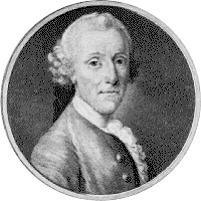
1715 - 1769 Person Name: C. F. Gellert Author of "Jesus Lives! No Longer Now" in American Lutheran Hymnal Gellert, Christian Fürchtegott, son of Christian Gellert, pastor at Hainichen in the Saxon Harz, near Freiberg, was born at Hainichen, July 4, 1715. In 1734 he entered the University of Leipzig as a student of theology, and after completing his course acted for some time as assistant to his father. But then, as now, sermons preached from manuscript were not tolerated in the Lutheran Church, and as his memory was treacherous, he found himself compelled to try some other profession. In 1739 he became domestic tutor to the sons of Herr von Lüttichau, near Dresden, and in 1741 returned to Leipzig to superintend the studies of a nephew at the University. He also resumed his own studies. He graduated M.A. 1744; became in 1745 private tutor or lecturer in the philosophical faculty; and was in 1751 appointed extraordinary professor of philosophy, lecturing on poetry and rhetoric, and then on moral philosophy. An ordinary professorship offered to him in 1761 he refused, as he did not feel strong enough to fulfil its duties, having been delicate from a child, and after 1752 suffering very greatly from hypochondria. He died at Leipzig, Dec. 13, 1769 (Koch, vi. 263-277; Allgemeine Deutsche Biographie, viii. 544-549, &c).
As a professor, Gellert was most popular, numbering Goethe and Lessing among his pupils, and won from his students extraordinary reverence and affection, due partly to the warm interest he took in their personal conduct and welfare. In his early life he was one of the contributors to the Bremer Beiträge; and was one of the leaders in the revolt against the domination of Gottsched and the writers of the French school. His Fables (1st Ser. 1746; 2nd 1748), by their charm of style, spirit, humour and point, may justly be characterised as epoch-making, won for him universal esteem and influence among his contemporaries of all classes, and still rank among the classics of German literature.
As a hymnwriter he also marks an epoch; and while in the revival of churchly feeling the hymns of the Rationalistic period of 1760 to 1820 have been ignored by many recent compilers, yet the greatest admirers of the old standard hymns have been fain to stretch their area of selection from Luther to Gellert. He prepared himself by prayer for their composition, and selected the moments when his mental horizon was most unclouded. He was distinguished by deep and sincere piety, blameless life, and regularity in attendance on the services of the Church. His hymns are the utterances of a sincere Christian morality, not very elevated or enthusiastic, but genuine expressions of his own feelings and experiences; and what in them he preached he also put in practice in his daily life. Many are too didactic in tone, reading like versifications of portions of his lectures on morals, and are only suited for private use. But in regard to his best hymns, it may safely be said that their rational piety and good taste, combined with a certain earnestness and pathos, entitle them to a place among the classics of German hymnody. They exactly met the requirements of the time, won universal admiration, and speedily passed into the hymnbooks in use over all Germany, Roman Catholic as well as Lutheran.
Two of Gellert's hymns are noted under their own first lines, viz., "Jesus lebt, mit ihm auch ich," and "Wie gross ist des All-mächtgen Güte." The following have also passed into English, almost all being taken from his Geistliche Oden und Lieder, a collection of 54 hymns first published at Leipzig, 1757, and which has passed through very numerous editions:—
I. Hymns in English common use:
i. An dir allein, an dir hab ich gesündigt. Lent. 1757, p. 102, in 6 stanzas of 4 lines, entitled "Hymn of Penitence." In Zollikofer's Gesange-Buch, 1766, and the Berlin Geistliche Lieder S., ed. 1863, No. 499. Translated as:—
Against Thee only have I sinn'd, I own it. A good and full version, by Miss Wink worth, as No. 42 in her Chorale Book for England, 1863.
Another translation is:— "Against Thee, Lord, Thee only my transgression," by N. L. Frothingham, 1870, p. 241.
ii. Dies ist der Tag, den Gott gemacht. Christmas. One of his best and most popular hymns. 1757, p. 72, in 11 stanzas of 4 lines, repeated in the Berlin Gesang-Buch, 1765, No. 55, and the Berlin Geistliche Lieder S. ed. 1863, No. 154. Translated as:—
This is the day the Lord hath made, O'er all the earth. A translation of stanzas i.-iii., x., by Miss Borthwick, as No. 22 in Dr. Pagenstecher's Collection, 1864, and included in Hymns from the Land of Luther, 1884, p. 256.
Other trs. are:—(1) "This is the day which God ordains," by Dr. G. Walker, 1860, p. 27. (2) "This day shall yet by God's command," in the Family Treasury, 1811, p. 278.
iii. Für alle Güte sei gepreist. Evening. 1757, p. 85, in 4 stanzas of 6 lines, included in Zollikofer's Gesang-Buch 1766, No. 78, and the Berlin Geistliche Lieder S., ed. 1863, No. 1160. Translated as:—
To Father, Son, and Spirit praise. A good and full translation by A. T. Russell, as No. 7 in his Psalms & Hymns, 1851.
Another translation is: — "For all Thy kindness laud I Thee," by H. J. Buckoll, 1842, p. 96.
iv. Gott ist mein Lied. Praise. On God's Might and Providence. 1757, p. 78, in 15 st. of 5 1. In the Berlin Geistliche Lieder S.., ed. 1863, No. 24. Translated as:—
God is my song, His praises I'll repeat, A free translation of stanzas i.-v., as No. 94 in Sir John Bowring's Hymns, 1825. Repeated, omitting stanza ii., as No. 114 in Dale's English Hymn Book, 1875.
Other translations are:— (1) “Of God I sing," by Dr. H. Mills, 1856, p. 11. (2) "God is my song, With sovereign," by N. L. Frothingham, 1870, p. 243.
v. Wenn ich, o Schöpfer, deine Macht. Praise. This fine hymn of Praise for Creation and Providence was first published 1757, p. 62, in 6 stanzas of 7 lines. In the Berlin Gesang-Buch, 1765, No. 25, and Berlin Geistliche Lieder S.ed. 1863, No. 72. Translated as:—-
Thou Great First Cause! when of Thy skill. In full in Dr. H. Mills's Horae Germanicae, 1845 (1856, p. 5). Stanzas ii., iii., v., vi., altered and beginning, "The earth, where'er I turn mine eye," are in the American Lutheran General Synod's Collection, 1852.
Other trs. are:— (1) "When, O my dearest Lord, I prove," by Miss Dunn, 1857, p. 80. (2) "Creator! when I see Thy might," in Madame de Pontes's Poets and Poetry of Germany, 1858, v. i. p. 472. (3) "When I, Creator, view Thy might," by Miss Manington, 1863.
vi. Wer Gottes Wort nicht halt, und spricht. Faith in Works. This didactic hymn on Faith proved by Works, was first published 1757, p. 49, in 5 stanzas of 6 lines. In Zollikofer's Gesang-Buch, 1766, and the Berlin Geistliche Lieder S. ed. 1863, No. 72. Translated as:—
Who keepeth not God's Word, yet saith. A good and full translation by Miss Winkworth, in her Lyra Germanica, 2nd Ser., 1858, p. 161. A greatly altered version of stanzas ii.—v., beginning, "True faith in holy life will shine," was included as No. 418 in Kennedy, 1863, and repeated in the Ibrox Hymnal 1871, J. L. Porter's Collection 1876, and others.
II. Hymns not in English common use:
vii. Auf Gott, und nicht auf meinen Rath. Trust in God's Providence. 1757, p. 134, in 6 stanzas. Translated as: (1) "Rule Thou my portion, Lord, my skill," by Dr. H. Mills, 1845 (1856, p. 164). (2) "On God and on no earthly trust," by J. D. Burns, in his Remains, 1869.
viii. Auf, schicke dich. Christmas. 1757, p. 109, in 1 stanza. Translated as, "Come, tune your heart," by Miss Cox, 1841, p. 17 (1864, p. 39).
ix. Dein Heil, o Christ! nicht zu verscherzen. Prayer. 1757, p. 6, in 14 stanzas of 8 lines. In J. A. Schlegel's Geistliche Gesänge, 3rd Ser., 1772, p. 193, recast as "Zu deinem Gotte beten," in 5 stanzas of 12 lines; and this in the Kaiserwerth Lieder-Buch für Kleinkinderschulen, 1842, No. 208, appears "Zu Gott im Himmel beten," in 8 stanzas of 4 lines. The 1842 was translated as, "O how sweet it is to pray," by Mrs. Bevan, 1859, p. 148.
x. Der Tag ist wieder hin, und diesen Theil des Lebens. Evening. 1757, p. 13, in 10 stanzas, as "Self-Examination at Eventide." Translated as,"Another day is ended," by Miss Warner, 1869 (1871, p. 9).
xi. Du klagst, und fühlest die Beschwerden. Contentment. 1757, p. 91, in 8 stanzas. Translated as "Thy wounded spirit feels its pain," by Dr. B. Maguire, 1883, p. 153.
xii. Erinnre dich, mein Geist, erfreut. Easter. 1757, p. 27, in 13 stanzas. Translated as, "Awake, my soul, and hail the day," in Dr. J. D. Lang's Aurora Australis, Sydney, 1826, p. 43.
xiii. Er ruft der Sonn, und schafft den Mond. New Year. 1757, p. 154, in 6 stanzas. In the Berlin Gesang-Buch, 1765, No. 233, as "Gott ruft." Translated as, “Lord, Thou that ever wast and art," in the British Magazine, Jan., 1838, p. 36.
xiv. Gott, deine Güte reicht so weit. Supplication. 1757, p. 1, in 4 stanzas, founded on 1 Kings iii. 5-14. The translations are: (1) "O God, Thy goodness doth extend, Far as," by Dr. J. D. Lang, 1826, p. 10. (2) "Behold! Thy goodness, oh my God," by Miss Fry, 1845, p. 78.
xv. Gott ist mein Hort. Holy Scripture. 1757, p. 70, in 8 stanzas. Translated as, "I trust the Lord, Upon His word," by Dr. H. Mills, 1845 (1856, p. 23).
xvi. Herr, der du mir das Leben. Evening. 1757, p. 121, in 5 stanzas. Translated as, "By Thee, Thou Lord of Heaven," by H. J. Buckoll, 1842, p. 97.
xvii. Herr, starke mich, dein Leiden su bedenken. Passiontide. 1757, p. 123, in 22 stanzas. Translated as, "Clothe me, oh Lord, with strength! that I may dwell” by Miss Fry, 1859, p. 153.
xviii. Ich hab in guten Stunden. For the Sick. 1757, p. 128, in 6 stanzas. [See the Story of a Hymn, in the Sunday at Home for Sept., 1865.] Translated as: (1) “I have had my days of blessing," by Mrs. Findlater, in Hymns from the Land of Luther, 1855, p. 60. (2) "Once, happy hours with blessings crowned," by A. B. H., in the Day of Rest, 1877, p. 405.
xix. Ich komme, Herr, und suche dich. Holy Communion. 1757, p. 89, in 5 stanzas. The translations are: (1) "I come, 0 Lord, and seek for Thee," by Miss Manington, 1863, p. 14. (2) “Weary and laden with my load, I come," by Dr. B. Maguire, 1872, p. 178.
xx. Ich komme vor dein Angesicht. Supplication. 1757, p. 140. in 13 stanzas. The translations are: (1) "Great God, I bow before Thy face," by Dr. J. D. Lang, 1826, p. 23. (2) “Now in Thy presence I appear," by Dr. H. Mills, 1845 (1856, p. 137).
xxi. Mein erst Gefühl sei Preis und Dank. Morning. 1757, p. 55, in 12 stanzas. Translated as, "I bless Thee, Lord, Thou God of might," beginning with st. vi., by H. J. Buckoll, 1842, p. 56.
xxii. Nach einer Prüfung kurzer Tage. Eternal Life. 1757, p. 158, in 12 stanzas, as "The Consolation of Eternal Life." Though hardly a hymn for congregational use and too individualised, it has been a very great favourite in Germany. In the Berlin Gesang-Buch, 1765, 132, and the Berlin Geistliche Liedersegen, ed. 1863, No. 1483. The translations are: (1) "A few short days of trial past," in Miss Knight's Prayers and Hymns from the German, 1812 (1832, p. 107). (2) "A few short hours of transient joy," by Dr. J. D. Lang, 1826, p. 123. (3) “When these brief trial-days are past," by J. Sheppard, 1857, p. 98. (4) “A few short days of trial here,” by Miss Burlingham, in the British Herald, July 1865, p. 98. (5) "Our few short years of trial o'er," by Dr. J. Guthrie, 1869, d. 124. (6) “When these brief trial-days are spent," by Miss Winkworth, 1869, p. 318. (7) "A few more days, a few more years," by Dr. R. Maguire, 1883, p. 165.
xxiii 0 Herr, mein Gott! durch den ich bin und lebe. Resignation to the will of God. 1757, p. 152. in 7 st. Translated as, "In Thee, my God, I live and move," by Dr. R. Maguire, 1883, p. 113.
xxiv. So hoff’ ich denn mit festem Muth . Assurance of the Grace of God. 1757, p. 115, in 4 stanzas. The translations are: (1) "Firm is my hope of future good," by Dr. H. Mills, 1845 (1856, p. 188). (2) “In Thee, O Lord, my hope hath stood," by Dr. R. Maguire, 1872.
zzv. Was ists dast ich mich quäle. Patience. 1757, p. 17, in 7 stanzas. The translations are: (1) "O foolish heart, be still," by Miss Warner, 1858 (1861, p. 452), repeated in Bishop Ryle's Collection, 1860, No. 181 (2) “What billows these that o'er thee roll," by Dr. R. Maguire, 1872.
xxvi. Wie sicher lebt der Mensch, der Staub. For the Dying. 1757, p. 149, in 14 stanzas. Translated as, "How heedless, how secure is man!" by Dr. H. Mills, 1845 (1856, p. 238).
One or two recasts from Gellert's Lehrgedichte und Erzählungen, Leipzig, 1754, came into German common use, and one has passed into English, viz.:—
xxvii. Mensch, der du Christus schmähst, was ist in ihrer Lehre. Love to Mankind. 1754, pp. 27-56, being a poem entitled “The Christian." A recast from portions of this made by J. S. Diterich, beginning "Gieb mir, O Gott, ein Herz," in 9 stanzas, appears as No. 219 in the Berlin Gesang-Buch, 1765; and has been translated as "Grant me, O God! a tender heart," by Miss Knight, 1812 (1832, p. 97). [Rev. James Mearns, M.A.]
-- John Julian, Dictionary of Hymnology (1907)
Christian Fürchtegott Gellert
Catherine Winkworth
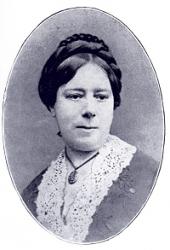
1827 - 1878 Translator of "Tender Shepherd, Thou hast Stilled" in The Lutheran Hymnal Catherine Winkworth (b. Holborn, London, England, 1827; d. Monnetier, Savoy, France, 1878) is well known for her English translations of German hymns; her translations were polished and yet remained close to the original. Educated initially by her mother, she lived with relatives in Dresden, Germany, in 1845, where she acquired her knowledge of German and interest in German hymnody. After residing near Manchester until 1862, she moved to Clifton, near Bristol. A pioneer in promoting women's rights, Winkworth put much of her energy into the encouragement of higher education for women. She translated a large number of German hymn texts from hymnals owned by a friend, Baron Bunsen. Though often altered, these translations continue to be used in many modern hymnals. Her work was published in two series of Lyra Germanica (1855, 1858) and in The Chorale Book for England (1863), which included the appropriate German tune with each text as provided by Sterndale Bennett and Otto Goldschmidt. Winkworth also translated biographies of German Christians who promoted ministries to the poor and sick and compiled a handbook of biographies of German hymn authors, Christian Singers of Germany (1869).
Bert Polman
========================
Winkworth, Catherine, daughter of Henry Winkworth, of Alderley Edge, Cheshire, was born in London, Sep. 13, 1829. Most of her early life was spent in the neighbourhood of Manchester. Subsequently she removed with the family to Clifton, near Bristol. She died suddenly of heart disease, at Monnetier, in Savoy, in July, 1878. Miss Winkworth published:—
Translations from the German of the Life of Pastor Fliedner, the Founder of the Sisterhood of Protestant Deaconesses at Kaiserworth, 1861; and of the Life of Amelia Sieveking, 1863.
Her sympathy with practical efforts for the benefit of women, and with a pure devotional life, as seen in these translations, received from her the most practical illustration possible in the deep and active interest which she took in educational work in connection with the Clifton Association for the Higher Education of Women, and kindred societies there and elsewhere. Our interest, however, is mainly centred in her hymnological work as embodied in her:—
(1) Lyra Germanica, 1st Ser., 1855. (2) Lyra Germanica, 2nd Ser., 1858. (3) The Chorale Book for England (containing translations from the German, together with music), 1863; and (4) her charming biographical work, the Christian Singers of Germany, 1869.
In a sympathetic article on Miss Winkworth in the Inquirer of July 20, 1878, Dr. Martineau says:—
"The translations contained in these volumes are invariably faithful, and for the most part both terse and delicate; and an admirable art is applied to the management of complex and difficult versification. They have not quite the fire of John Wesley's versions of Moravian hymns, or the wonderful fusion and reproduction of thought which may be found in Coleridge. But if less flowing they are more conscientious than either, and attain a result as poetical as severe exactitude admits, being only a little short of ‘native music'"
Dr. Percival, then Principal of Clifton College, also wrote concerning her (in the Bristol Times and Mirror), in July, 1878:—
"She was a person of remarkable intellectual and social gifts, and very unusual attainments; but what specially distinguished her was her combination of rare ability and great knowledge with a certain tender and sympathetic refinement which constitutes the special charm of the true womanly character."
Dr. Martineau (as above) says her religious life afforded "a happy example of the piety which the Church of England discipline may implant.....The fast hold she retained of her discipleship of Christ was no example of ‘feminine simplicity,' carrying on the childish mind into maturer years, but the clear allegiance of a firm mind, familiar with the pretensions of non-Christian schools, well able to test them, and undiverted by them from her first love."
Miss Winkworth, although not the earliest of modern translators from the German into English, is certainly the foremost in rank and popularity. Her translations are the most widely used of any from that language, and have had more to do with the modern revival of the English use of German hymns than the versions of any other writer.
-- John Julian, Dictionary of Hymnology (1907)
============================
See also in:
Hymn Writers of the Church
Catherine Winkworth
Benjamin Schmolck
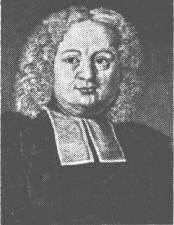
1672 - 1737 Person Name: Benjamin Schmolk Author of "Heavenward still our pathway tends" in Church Book Schmolck, Benjamin, son of Martin Schmolck, or Schmolcke, Lutheran pastor at Brauchitschdorf (now Chrόstnik) near Liegnitz in Silesia (now Poland) was born at Brauchitschdorf, Dec. 21, 1672. He entered the Gymnasium at Lauban in 1688, and spent five years there. After his return home he preached for his father a sermon which so struck the patron of the living that he made Benjamin an allowance for three years to enable him to study theology. He matriculated, at Michaelmas, 1693, at the University of Leipzig, where he came under the influence of J. Olearius, J. B. Carpzov, and others, and throughout his life retained the character of their teaching, viz. a warm and living practical Christianity, but Churchly in tone and not Pietistic. In the autumn of 1697, after completing his studies at Leipzig (during his last year there he supported himself mainly by the proceeds of occasional poems written for wealthy citizens, for which he was also, crowned as a poet), he returned to Brauchitzchdorf to help his father, and, in 1701, was ordained as his assistant.
On Feb. 12, 1702, he married Anna Rosina, daughter of Christoph Rehwald, merchant in Lauban and in the end of the same year was appointed diaconus of the Friedenskirche at Schweidnitz in Silesia. As the result of the Counter-Reformation in Silesia, the churches in the principality of Schweidnitz had been taken from the Lutherans, and for the whole district the Peace of Westphalia (1648) allowed only one church (and that only of timber and clay, without tower or bells), which the Lutherans had to build at Schweidnitz, outside the walls of the town; and the three clergy attached to this church had to minister to a population scattered over some thirty-six villages, and were moreover hampered by many restrictions, e.g. being unable to communicate a sick person without a permit from the local Roman Catholic priest. Here Schmolck remained till the close of his life, becoming in 1708 archidiaconus, in 1712 senior, and in 1714 pastor primarius and inspector. Probably as the result of his exhausting labours he had a stroke of paralysis on Laetare (Mid-Lent) Sunday, 1730, which for a time laid him aside altogether, and after which he never recovered the use of his right hand. For five years more he was still able to officiate, preaching for the last time on a Fastday in 1735. But two more strokes of paralysis followed, and then cataract came on, relieved for a time by a successful operation, but returning again incurably. For the last months of his life he was confined to bed, till the message of release came to him, on the anniversary of his wedding, Feb. 12, 1737. (Koch, v. 463; Bode, p. 144; Goedeke's Grundriss, vol. iii., 1887, p. 306; sketch prefixed to Ledderhose's edition of Schmolck's Geistliche Lieder, Halle, 1857, &c.)
Schmolck was well known in his own district as a popular and useful preacher, a diligent pastor, and a man of wonderful tact and discretion. It was however his devotional books, and the original hymns therein contained, that brought him into wider popularity, and carried his name and fame all over Germany. Long lists of his works and of the various editions through which many of them passed are given by Koch, Bode and Goedehe. It is rather difficult to trace the hymns, as they are copied from one book of his into another, &c. Schmolck was the most popular hymnwriter of his time, and was hailed as the "Silesian Rist," as the "second Gerhardt," &c. Nor was he altogether unworthy of such praise. It is true that he did not possess the soaring genius of Gerhardt. Nor had he even Gerhardt's concise, simple style, but instead was too fond of high-sounding expressions, of plays upon words, of far-fetched but often recurring contrasts, and in general of straining after effect, especially in the pieces written in his later years. In fact he wrote a great deal too much, and latterly without proper attention to concentration or to proportion. Besides Cantatas, occasional pieces for weddings, funerals, &c, he is the author of some 900 hymns, properly so called. These were written for all sorts of occasions, and range over the whole field of churchly, family, and individual life. Naturally they are not all alike good; and those in his first three collections are decidedly the best. A deep and genuine personal religion, and a fervent love to the Saviour, inspire his best hymns; and as they are not simply thought out but felt, they come from the heart to the heart. The best of them are also written in a clear, flowing, forcible, natural, popular style, and abound in sententious sayings, easily to be remembered. Even of these many are, however, more suited for family use than for public worship. Nevertheless they very soon came into extensive use, not only in Silesia, but all over Germany.
A number of Schmolck's hymns [that] have passed into English are:—
i. Der beste Freund ist in dem Himmel. Love of Jesus. First published in his Heilige Flammen (ed. 1709, p. 100), in 6 stanzas of 6 lines, entitled "The best Friend." The translation in common use is:—
A faithful friend is waiting yonder. This is a good translation, omitting stanza v., as No. 293, in Kennedy, 1863.
ii. Die Woche geht zum Ende. Saturday Evening. In his Andächtige Hertze, 1714, p. 116, in 10 stanzas of 8 lines, entitled "Evening Hymn," and appointed for Evening Prayer on Saturday. In the Berlin Geistliche Lieder, ed. 1863, No. 1158. Translated as:—
The week draws near its ending. This is a good translation of stanzas i., vi., vii., x., marked as by "A. G.," as No. 81 in the Dalston Hospital Hymn Book 1848.
Other trs. are: (1) “Though now the week is ending," by H. J. Buckoll, 1842, p. 107. (2) “The week at length is over," by Miss Manington, 1863, p. 137.
iii. Gott du hist selbst die Liehe. Holy Matrimony. Translated as:—
O God, "Who all providest. This is a good translation, omitting stanza iii., by J. M. Sloan, as No. 312 in J. H. Wilson's Service of Praise, 1865.
iv. Halleluja! Jesus lebt. Easter. In his Bochim und Elim, 1731, p. 67, in 5 stanzas of 6 lines, entitled "Hallelujah! at the grave of Jesus." In the Berlin Geistliche Lieder, ed. 1863, No. 296. Tr. as:—
Hallelujah! Lo, He wakes. By E. Cronenwett, omitting st. iv., as No. 79 in the Ohio Lutheran Hymnal 1880.
Another translation is: "Hallelujah! Jesus lives! Life, immortal life, He gives." This is a full and good translation, by Miss Warner, 1858, p. 486, repeated in the Treasury of Sacred Song, Kirkwall, n.d.
v. Heute mir und Morgen dir. Funeral Hymn. In his Schmuck und Asche, 1717, p. 252, in 6 stanzas of 6 lines, entitled "Daily Dying". The tr. in common use is:—
Today mine, tomorrow thine. This is a good and full translation, by Miss Warner, in her Hymns of the Church Militant, 1858, p. 260.
vi. Je grösser Kreuz, je näher Himmel. Cross and Consolation. In his Andächtige Hertz, 1714, p. 273, in 9 stanzas of 6 lines, entitled "Hymn of Cross and Consolation." By its sententiousness and its manifold illustrations of the power of the Cross it has been a favourite with many. Translated as:—
1. Greater the Cross, the nearer heaven.
2. The more the cross, the nearer heaven. Another translation is: "The heavier the cross, the nearer heaven," by J. D. Burns, in the Family Treasury, 1859, p. 160.
vii. Jesus soil die Losung sein. New Year. The translation in common use is:—
Jesus shall the watchword he. Another translation is: "Jesu's name shall be our watchword," by J. Kelly, in the Family Treasury, 1868, p. 689.
viii. Licht vom Licht, erleuchte mich. Sunday Morning. Translated as:—
Light of Light, enlighten me. This is a very good tr. omitting stanza vii., by Miss Winkworth, in her Lyra Germanica, 2nd Ser., 1858, p. 66, and thence in her Chorale Book for England, 1863, No. 17. Other translations are: (1) "Light of Light! illumine me," by H. J. Buckoll, 1842, p. 6. (2) "O thou blessed Light of Light," by Miss Dunn, 1857, p. 74.
ix. Meinen Jesum lass ich nicht, Ach was wollt ich hessres haben. Love to Christ. Translated as:—
I'll with Jesus never part. This is a translation of st. i., ii., iv., as stanzas iii.-v. of No. 378 in the Moravian Hymn Book, 1789. In the ed. of 1886, No. 452 (see p. 614, i.), the part from Schmolck begins, "He is mine and I am His" (the translation of stanza ii.).
Another tr. is: "I'll not leave Jesus—-never, never," by Miss Warner, 1858, p. 509.
x. Mein Gott, ich weiss wohl dass ich sterbe. For the Dying. Translated as:—
My God! I know that I must die, My mortal. Other trs. are: (1) "That I shall die full well 1 know," by Dr. H. Mills, 1845 (1856, p. 232). (2) "My God! I know full well that I must die," by Miss Warner, 1858, p. 344. (3) "My God, I know that I must die; I know," by G. Moultrie, in his Espousals of S. Dorothea, 1870.
xi. Mein Jesus lebt! was soil ich sterben. Easter. Translated as:—
My Saviour lives; I shall not perish.
xii. 0 wie fröhlich, o wie selig. Eternal Life. Translated as:—
Oh how joyous, oh how blessed. Another tr. is: "Oh, how blest beyond our telling."
xiii. Schmückt das Fest mit Maien. Whitsuntide. Translated as:—
Come, deck our feast today.
xiv. Thut mir auf die schöne Pforte. Sunday. Translated as:—
1. Open now thy gates of beauty. This is a good tr., omitting stanza iii., vii., by Miss Winkworth, in her Chorale Book for England, 1863, No. 15.
2. Open wide the gates of beauty. This is a translation of stanzas i., ii., iv., vi.-vii., by H. L. Hastings, dated 1885, as No. 1076, in his Songs of Pilgrimage, 1886.
Another tr. is: "Throw the glorious gates wide open," by Miss Manington, 1863, p. 146.
xv. Weine nicht, Gott lebet noch. Cross and Consolation. Tr. as:— "Weep not,-—Jesus lives on high. Another tr. is: "Weep not, for God, our God, doth live," by Dr. R. Maguire, 1883, p. 59.
xvi. Willkommen, Held im Streite. Easter. The translation in common use is:—
Welcome Thou victor in the strife. This is a good translation omitting st. ii.—iv., by Miss Winkworth, in her Lyra Germanica, 1st Ser., 1855, p. 91.
Hymns not in English common use:--
xvii. Ach wenn ich dich, mein Gott, nur habe. Love to God. Founded on Ps. lxxiii. 25, 26. Translated as "My God, if I possess but Thee," by G. Moultrie, in his Espousals of S. Dorothea, 1870.
xviii. An Gott will ich gedenken. Remembering God's Love and Care. In his Heilige Flammen (ed. 1707, p. 59; ed. 1709, p. 131), in 6 stanzas of 8 lines, and Burg's Gesang-Buch, Breslau, 1746, No. 112. Translated as "My God will I remember," by J. Kelly, in the Family Treasury, 1868.
xix. Der Sabbath ist vergangen. Sunday Evening. Tr. as "The Sabbath now is over," by Dr. H. Mills, 1856, p. 226.
xx. Du angenehmer Tag. Sunday. In his Lustige Sabbath, 1712, p. 1, in 8 stanzas of 6 lines. Tr. as “Thou ever welcome day," by J. Kelly, in the Family Treasury, 1868, p. 688.
xxi. Endlich, endlich, muss es doch. Cross and Consolation. Translated as "Yes, at last, our God shall make," in the Christian Examiner, Boston, U.S., Sept., 1860, p. 251.
xxii. Gedenke mein, mein Gott, gedenke mein. For the Dying. Translated as "Remember me, my God! remember me," by Miss Borthwick, in Hymns from the Land of Luther 1854, p. 9.
xxiii. Geh, müder Leib, zu deiner Euh. Evening. Translated as "Go, wearied body, to thy rest," by J. Kelly, in the Family Treasury, 1868. In his Lustige Sabbath, 1712, p. 35, in 10 stanzas of 6 lines, and Burg’s Gesang-Buch, Breslau, 1746, No. 403. Translated as "King, to Jews and Gentiles given," by Dr. H. Mills, 1845.
xxiv. Gott der Juden,Gott der Heiden. Epiphany. Translated as “King, to Jews and Gentiles given,” by Dr. H. Mills, 1845.
xxv. Gott lebt, wie kann ich traurig sein. Trust in God. Translated as "God lives! Can I despair," by Miss Warner, 1869, p. 44.
xxvi. Gott mit uns, Immanuel. New Year. Translated as "God with us! Immanuel, Open with the year before us," by Dr. R. P. Dunn, in Sacred Lyrics from the German, Philadelphia, U.S., 1859, p. 166.
xxvii. Hier ist Immanuel! New Year. Translated as "Here is Immanuel!" by Miss Manington, 1864, p. 24.
xxviii. Hilf, Heifer, hilf! ich muss verzagen. Cross and Consolation. Translated as "Help, Saviour, help, I sink, I die,” in the Monthly Packet, vol. xviii., 1859, p. 664.
xix. Ich habe Lust zu scheiden. For the Dying. Tr. as "Weary, waiting to depart," by Mrs. Findlater, in Hymns from the Land of Luther, 1855, p 130.
xxx. Ich sterbe täglich, und mein Leben. For the Dying. Translated as "Both life and death are kept by Thee" (st. iv.), by J. Kelly, in the Family Treasury, 1868, p. 689.
xxxi. Mein Gott, du hast mich eingeladen. Sunday. Translated as "My God, Thou hast the invite given," by Miss Manington, 1863, p. 150.
xxxii. Mein Gott! du wohnst in einem Lichte. Holy Scripture. Translated as "In glory bright, O God, Thou dwellest," by Dr. H. Mills, 1845.
xxxiii. Mein Gott, ich klopf an deine Pforte. Supplication. Tr.Translated as "given as "Mein Gott, mein Erstes und mein Alles." Translated as "My God! the Source of all my blessing," in the British Herald, August, 1866, p. 312; repeated in Reid's Praise Book, 1872.
xxxv. Mein Gott, weil ich in meinem Leben. The ChristiaWho, Lord, has any good whatever," by Dr. H. Mills, 1845, p. 91.
xxxiv. Mein Gott, mein Alles Uber Alles. Trust in God. Sometimes n Life. Translated as "Most High! with reverence to fear Thee," by Dr. H. Mills, 1845, p. 114.).
xxxvi. Nun hab ich überwunden; Zu guter Nacht, o Welt. For the Dying. Translated as "Now soon I shall have conquer'd," by Miss Manington, 1863, p. 87.
xxxvii. Seht welch ein Mensch ist das. Passiontide. The translations are (1) "See, what a man is this! How tearful is His glance," by J. Kelly, in the British Messenger, Feb., 1S68; repeated in the Family Treasury, 1868, p. 691. (2) "See what a man is this, O glances," by Miss Warner, 1869, p. 32.
xxxviii. Sei getreu bis in den Tod. Christian Faithfulness. Translated as "Be thou faithful unto death! Let not troubles nor distresses," by R. Massie, in the Day of Rest, 1878, vol. ix. p. 219.
xxxix. Theures Wort aus Gottes Munde. Holy Scripture. Translated as "Word by God the Father spoken," by Miss Manington, 1863.
xl. Was Gott thut das ist wohlgethan! Er giebt und nimmt auch wieder. On the Death of a Child. The trs. are (1) "What God does is well done, "Who takes what He gave," by W. Graham, in his The Jordan and the Rhine, London, 1854, p. 251. (2) "Whatever God doth is well done, He gives, &c," by J. Kelly, in the Family Treasury, 1868, p. 688.
xli. Wer will mich von der Liebe scheiden. Faith. Translated as "Who can my soul from Jesus sever," by Miss Manington, 1863, p. 39. [Rev. James Mearns, M.A.]
--Excerpts from John Julian, Dictionary of Hymnology (1907)
Benjamin Schmolck
Matthias Loy
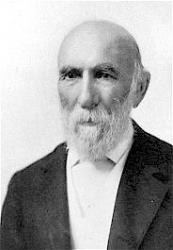
1828 - 1915 Person Name: Rev. Matthias Loy, D. D. Author of "God of grace, whose Word is sure" in Evangelical Lutheran hymnal Loy, M., President of the Capital University, Columbus, Ohio, contributed several original hymns, and translations from the German, to the Evangelical Lutheran Hymnal. Published by Order of the Evangelical Lutheran Joint Synod of Ohio and Other States. Columbus, Ohio, 1880.
The translations may be found through the Index of Authors, &c.; the original hymns are the following:—
1. An awful mystery is here. Holy Communion.
2. At Jesus' feet our infant sweet. Holy Baptism.
3. Come, humble soul, receive the food. Holy Communion.
4. Give me, 0 Lord, a spirit lowly. Humility desired.
5. God gave His word to holy men. Inspiration of Holy Scripture.
6. God of grace, Whose word is sure. Faithfulness.
7. How matchless is our Saviour's grace. Holy Baptism.
8. I thank Thee, Saviour, for the grief. Lent.
9. Jesus took the lambs and blest them. Holy Baptism.
10. Jesus, Thou art mine for ever. Jesus, All and in All.
11. Launch out into the deep. Call to Duty.
12. Listen to those happy voices. Christmas.
13. O Great High Priest, forget not me. Confirmation.
14. O Lord, Who hast my place assigned. Daily Duties.
15. Our Shepherd of His ransomed flock. Holy Communion.
16. The gospel shows the Father's grace. Holy Scripture.
17. The law of God is good and wise. Holy Scripture.
18. Though angels bright escape our eight. St. Michael and All Angels.
19. When Rome had shrouded earth in night. The Reformation.
20. When souls draw near the holy wave. Confirmation.
Several of these hymns, together with some of his translations, previously appeared in the Ohio Synod's preceding Collection of Hymns (3rd ed., 1858; 4th, 1863).
--John Julian, Dictionary of Hymnology (1907)
====================
Loy, Matthias, D.D., p. 700, i. Dr. Loy was born in Cumberland County, Pennsylvania, March 17, 1828. He studied at the Evangelical Lutheran Theological Seminary at Columbus, Ohio, of which he became Professor of Theology in 1365. He was appointed President of the Capital University in 1880.
--John Julian, Dictionary of Hymnology, Appendix, Part II (1907)
==================
See also in:
Wikipedia
Matthias Loy
Albert Knapp
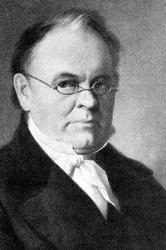
1798 - 1864 Person Name: Albert Knapp, 1798-1864 Author of "Daß ich dein auf ewig sei" in Gesangbuch Knapp, Albert, was born July 25, 1798, at Tübingen, where his father (1800, Oberamtmann at Alpirsbach in the Black Forest, and 1809, Oberamtmann at Rottweil) was then advocate at the Court of Appeal. In the autumn of 1814 he entered the Theological Seminary at Maulbronn, and in 1816 the Theological College at Tübingen, where he also graduated M.A. at the University. In November, 1820, he became assistant clergyman at Feuerbach, near Stuttgart; and in July, 1821, at Gaisburg, near Stuttgart. He was appointed, in Feb., 1825, diaconus (Heifer) at Sulz on the Neckar, and also pastor of the neighbouring village of Holzhausen; in June, 1831, archidiaconus at Kirchheim-unter-Teck, along with Bahnmaier (q.v.); in May, 1836, diaconus of the Hospitalkirche in Stuttgart ; and in October, 1837, archidiaconus of the Stiftskirche. He was finally appointed, in December, 1845, Stadtpfarrer at St. Leonhard's Church in Stuttgart, where, after having been for some time partially disabled by paralysis, he preached his last sermon, Feb. 13, 1863. He died at Stuttgart, June 18, 1864 (Koch, vii. 213; Allgemeine Deutsche Biographie xvi. 263, &c).
Knapp as a Poet possessed not merely very considerable talent, but also natural originality. He was preeminently a lyric poet; the best of his secular poems being those which celebrate the history and the scenery of his beloved Swabia. His poems are characterised by rich play of fancy, wealth of ideas and of figures, masterly word-painting, capacity of feeling, ease of expression, and sonorous and musical rhythm. Unfortunately the very flow of his imagination betrayed him, for the greatest fault of his poems is that they are at once too numerous and too long (and it must be added sometimes too rhetorical and too eager to point a moral); what was easy writing becomes hard reading.
As a Hymn-writer, among the recent hymn-writers of Germany, Knapp holds a high place, perhaps we might say the highest of all. To his hymn-writing he brought his powers as a poet, and the depth of his nature as an earnest and sincere disciple of Jesus Christ. In his hymns his aim was to make known the fulness of the grace of God, and to reveal the wealth and depth of Holy Scripture, and the love of God to all mankind. Their earnestness, their experimental Christianity, their Scripturalness and their beauty of form have gained for many of them a place in all recent German hymn-books. They have somewhat unaccountably been neglected by English translators. It is certainly surprising that in the Hymns from the Land of Luther not one version from Knapp finds a place. While all the hymns of Spitta's Psalter und Harfe have passed into English, and many of them in half a dozen different versions, comparatively few of Knapp's hymns have been translated, though they rank much higher as poetry, and are more suited for Church use than those by Spitta.
As a Hymnologist Knapp did good service by his Christoterpe [complete set in Berlin], an annual which he edited from 1833 to 1853, in which many of his own pieces appeared, and also many of the best poems and, hymns of Hey, Meta Heusser-Schweizer, and various others. He was also the compiler of the Evangelischer Lieder-Schatz (frequently referred to in this Dictionary as Knapp's Evangelischer Lieder-Schatz), the most elaborate German hymnbook of recent times. Of this the first edition, with 3590 hymns, appeared at Stuttgart in 1837, and a Supplement entitled Christenlieder, 1841, added 250 more. In his second edition, 1850 (3067 hymns) he omitted many of the third-rate hymns of his first edition, added many of a higher class, and gave the hymns more nearly (but by no means exactly) as the authors wrote them. The third edition, 1865 (3130 hymns, concluded by his son), was further im¬proved, and the notices of the authors of the hymns were revised and enlarged. As a comprehensive collection with a specially full representation of good modern hymns it has no rival in German. He was also one of the editors of the Württemberg Gesang-Buch of 1842. The editions which he prepared of the Hymns of Gottfried Arnold (1845) and N. L. von Zinzendorf (1845) are of interest, but he took most unwarrantable liberties with the originals; many pieces being not merely abridged but rewritten "to suit the requirements of the 19th century."
Knapp's original hymns appeared principally in his Christoterpe and Evangelischer Lieder-Schatz, as above; and also in his
(1) Christliche Gedichte, 2 vols., Basel, 1829. (2) Neuere Gedichte, 2 yols., Basel, 1834, some¬times ranked as vols. iii., iv. of No. 1. (3) Gedichte, Neueste Folge, Stuttgart, 1843. (4) Herbstblüthen, Stuttgart, 1859. Those which have passed into English common use are:—
i. Aus deiner Eltern Armen. Holy Baptism. This and No. iv. seem to have been written for the baptism of his own children. First published in his Christoterpe, 1850, p. 222, in 3 st. of 8 1., entitled "Baptismal Hymn," and repeated in his Evangelischer Lieder-Schatz, 1850, No. 846 (1865, No. 875). The translation in common use is
Thy parent's arms now yield thee. In the original metre by Miss Winkworth in her Lyra Germanica, 2nd Ser., 1858, p. 89; and thence in Kennedy, 1863. Slightly altered for metrical reasons in her Chorale Book for England, 1863, No. 89.
ii. Blick aus diesem Erdenthale (p. 150 i.).
iii. Einst fahren wir vom Vaterlande (p. 326 ii.).
iv. 0 Vaterherz, das Erd' und Himmel schuf. Holy Baptism. A beautiful hymn of supplication to (i.) God the Creator; (ii.) God the Redeemer; (iii.) God the Sanctifier; on behalf of the child, ending with a prayer to the Holy Trinity for guidance and blessing throughout its life. First published in his Christenlieder, 1841, No. 89, in 4 st. of 9 1., repeated in his Evangelischer Lieder-Schatz, 1850, No. 847 (1865, No. 876). The translation in common use is :—
0 Father-Heart, Who hast created all. A good and full translation by Miss Winkworth in herLyra Germanica, 2nd Ser., 1858, p. 87, repeated in the Schaff-Gilman Library of Religious Poetry, ed. 1883, p.437. In the hymnals it appears in the following forms, all beginning with st. i.:—
1. 0 Father, Thou Who hast created all. In Hymns Ancient & Modern, 1861 and 1875, and others.
2. Father! Who hast created all. In Adams's American Church Pastorals, 1864, being the Hymns Ancient & Modern version reduced to CM.
3. Father, Who hast created all. In the Pennsylvania Lutheran Church Book, 1868, in 8.6.8.6.8.8. metre.
4. Father of heaven, Who hast created all. In Kennedy, 1863; the Society for Promoting Christian Knowledge Church Hymns, 1871; Thring's Collection, 1882; and in America in M. W. Stryker's Christian Chorals, 1885.
Hymns not in English common use :—
v. Abend ist es; Herr, die Stunde. Evening. Written at Sulz, June 19, 1828 (Koch, vii. 224). First published in his Christliche Gedichte, 1829, i. p. 9, in 10 st. Translated as "It is evening, and the hour, Lord," by Miss Manington, 1863, p. 130.
vi. Eines wünsch ich mir vor allem Andern. Love to Christ. First published in his Christliche Gedichte, 1829, i. p. 151, in 4 st., entitled "My Wish." Lauxmann, in Koch, viii. 59, says it was written, April 23, 1823, while Knapp was at Gaisburg, for the use of a young girl at Stuttgart who was about to be confirmed. Dr. Schaff classes it as the finest and most popular church hymn of its author. Translated as "More than all, one thing my heart is craving," by T. C. Porter, April 13, 1868, for Schaff's Christ in Song, 1869, p. 625.
vii. Geh hin! der Herr hat dich gerufen. Burial of a child. Written, 1844, on the death of his son Manuel. First published in his Christoterpe, 1849, p. 139, in 4 st. Translated as “Go hence! the Lord hath called thee home," by Dr. J. Guthrie, in his Sacred Lyrics, 1869, p. 112.
viii. Geh zum Schlummer ohne Kummer. Burial. Written in memory of his first wife, who died April 11, 1835. First published in Evangelischer Lieder-Schatz, 1837, No. 3432 (1865, No. 3006), in 5 st. Translated as "Softly slumber, softly slumber," by E. Massie, in the Day of Rest, 1878.
ix. Geist des Lebens, heil'ge Gabe. Whitsuntide. Written at Sulz for Whitsuntide, 1828 (Koch, vii. 225). First published in his Christliche Gedichte, 1829, i. p. 86, in 13 st. Translated as "Thou Spirit, Who dost life impart," by J. Kelly, 1885, p. 63.
x. Hättest du Licht und Heil. The Blessings of Salvation. In his Christliche Gedichte, 1829, i. p. 149, in
7 st. Translated as “Ob, Jesus! had'st Thou not brought near," by C. T. Astley, 1860, p. 30,
xi. Heulend spielen Stürme mit den Schiffen. For
those at Sea. First published in his Christliche Gedicht, 1829, ii. p. 26, in 10 st., entitled "The Walk on the Sea, Matthew xiv. 24-32." Translated as "Howling storms are sporting with the vessel," in L. Rehfuess's Church at Sea, 1868, p. 38.
xii. Ihr Kinder lernt von Anfang gern. Children. Written 1839, and first published in his Christenlieder, 1841, No. 212, in 9 st., entitled "The Use of the Fourth (Fifth) Commandment." Translated as "Betimes O learn, ye children, well," by Dr. G. Walker, 1860, p. 68.
xiii. Jesus, ew'ge Sonne. The Glory of Christ. In his Neuere Gedichte, 1834, ii. p. 50, in 1 st. Translated as “Jesus, everlasting Sun," by J. Kelly, 1885, p. 35.
xiv. Schwellet sanft, ihr weissen Sege. For those at Sea. First published in his Evangelischer Lieder-Schatz,1837, No. 3109, in 5 st. Translated as "Gently swell, ye white sails, driven," in L. Rehfuess's Church at Sea, 1868, p. 13.
xv. Sohn des Vaters, Herr der Ehren. Waiting on God. In his Christliche Gedichte, 1829, i. p. 162, in 3 st. Translated as (1) "Son of the Father! mighty Lord, An answer," by C. T. Astley, 1860, p. 1. (2) "Lord of glory, God's dear Son, Let this thing," &c, by R. Massie, 1864, p. 124.
xvi. Streichet hin, ihr leisen Flügel. The Fleetness of Time. In his Evangelischer Lieder-Schatz, 1837, No. 2903, in 3 st. Translated as "O ye winds of time! still hieing," in L. Rehfuess's Church at Sea, 1868, p. 42.
xvii. Weh' mich vom sanften Mittag an. The Wait¬ing Soul. The original of this hymn is J. Newton's “Breathe from the gentle South, O Lord " (Olney Hymns, 1779, Bk. iii., No. 10). Knapp's translation is full and good, and is included in his Christoterpe, 1837, p. 294, and Evangelischer Lieder-Schatz, 1837, No. 2251. The text tr. is that in S. Hofer's Pilgerharfe, Basel, 1863, No. 118, which begins with st. iii. altered to "O Herr, ich möchte stille sein." Mr. R. Massie was quite unconscious that he was reproducing a hymn of Newton's by a process of double translation. His versions are, (1) "O Lord, I gladly would be still," in the British Herald, June, 1865, p. 85. (2) "Lord, I would still and patient be," in the Day of Rest, 1877, vol. viii. p. 379.
xviii. Wenn ich in stiller Frühe. Morning. In his Christliche Gedichte, 1829, i. p. 25, in 3 st., entitled "The Morning Star." Translated as, (1) "When in the cool, still morning," by R. Massie, in the British Herald, April, 1865, p. 56, and Reid's Praise Book, 1872. (2) "When from my sleep awaking," by R. Massie, in the Day of Res, 1877, p. 375.
xix. Wie hold ist diese Stille. Sunday Morning. Written 1842. In his Gedichte, Neueste Folge, 1843, p. 3, in 7 st. In his Evangelischer Lieder-Schatz, 1850, No 1176 (1865, No. 1217), it begins "Wie süss." Translated as O quiet, silent sweetness," in L. Rehfuess's Church at Sea, 1868, p. 27.
Five additional hymns by Knapp are translated by Dr. H. Mills in his Home Germanicae, 1845 and 1856. A version by Knapp from Caesar Malan is noted under "Non, ce nest pas mourir." [Rev. James Mearns, M.A.]
-- John Julian, Dictionary of Hymnology (1907)
Albert Knapp
Christian Keimann
1607 - 1662 Person Name: Christian Keymann, 1607-1662 Author of "No me aparto, no, de Ti" in Culto Cristiano Keimann, Christian, son of Zacharias Keimann, Lutheran pastor at Pankratz, in Bohemia, and after 1616 at Ober-Ullersdorf, was born at Pankratz, Feb. 27, 1607. In the autumn of 1627 he entered the University of Wittenberg, where he graduated M.A., March 19, 1634; and in the next month was appointed by the Town Council of Zittau as Conrector of their Gymnasium, of which he became Rector in 1638. He died at Zittau, Jan. 13, 1662 (Koch, iii. 369; Allgemeine Deutsche Biographie xv. 535, &c). Keimann was a distinguished teacher. He was the author of a number of scholastic publications, of a few Scriptural plays, and of some 13 hymns. Almost all of his hymns came into church use. They take high rank among those of the 17th century, being of genuine poetic ring, fresh, strong, full of faith under manifold and heavy trials, and deeply spiritual. Two have passed into English:—
i. Freuet euch, ihr Christen alle. Christmas. This beautiful hymn is included in 4 stanzas of 10 1. as No. 24 in pt. iv. of A. Hammerschmidt's Musikalische Andachten, published at Freiberg in Saxony, 1646; and is set to a tune by Hammerschmidt introduced by Hallelujah repeated twelve times. In the Unverfälschter Liedersegen, 1851, No. 34. According to Koch, viii. 25, it was composed as part of a piece written by Keimann for his scholars to perform at Christmastide, 1645, and published as Der neugeborne Jesus, at Görlitz, 1646. Stanza iv. may refer to the truce of 1645 between Saxony and Sweden. Translated as:—
0 rejoice, ye Christians, loudly. A good and full translation by Miss Winkworth, as No. 33 in her Chorale Book for England, 1863, where it is set to the original melody.
ii. Meinen Jesum lass ich nicht; Weil er sich fur mien gegeben. Love to Christ. First appeared in A. Hammerschmidt's Fest- Bus- und Dancklieder, Zittau and Leipzig, 1658 (engraved title, 1659), pt. iii., No. 4, in 6 stanzas of 6 lines. It is an acrostic on the dying words uttered on Oct. 8, 1656, by the Elector Johann Georg I. of Saxony: Meinen (i.), Jesum (ii.), lass (iii.) ich (iv.) nicht (v.); st. vi. giving in the initial letters of lines 1-5 (J. G. C. Z. S.) the name, viz. Johann Georg Churfürst zu Sachsen, and then in line 6 the motto in full. Founded on the words of Jacob in Gen. xxxii. 26, it has comforted and strengthened many in life and at the hour of death; and has served as the model of many later hymns. Included as No. 131 in the Berlin Geistliche Lieder, ed. 1863. Translated as:—
I will leave my Jesus never! A good translation, omitting st. iii., included as No. 448 in the Pennsylvania Lutheran Church Book, 1868, marked as Unknown translator, 1864.
Other translations are:—(1) "Never will I part with Christ," by J. C. Jacobi, 1722, p. 80 (1732, p. 132), and thence in the Moravian Hymn Book, 1754 (1886 as pt. of No. 452 altered, and beginning, "Jesus will I never leave"). (2) "I will not let Jesus go," by J. S. Stallybrass in the Tonic Solfa Reporter, Dec. 1860. (3) "Jesus will I ne'er forsake," by E. Massie, 1867, p. 117. (4) "My Redeemer quit I not," by N. L. Frothingham, 1870, P, 185. [Rev. James Mearns, M.A.]
-- John Julian, Dictionary of Hymnology (1907)
Christian Keimann
Rodolpho Hasse
1890 - 1968 Person Name: Rodolpho F. Hasse, 1890-1968 Translator of "Nosso guia és tu, Jesus" in Hinário Luterano Started Comunidade Evangélica Luterana da Paz, affiliated with Igreja Evangélica Luterana do Brasil in 1932. It was the first Lutheran congregation in Rio de Janeiro.
[Source?]
Rodolpho Hasse
Gudmund Jöran Adlerbeth

1751 - 1818 Person Name: G. G. Adlerbeth, d. 1818 Author of "Skapare! att nalkas dig" in Svenska Psalm-Boken af År 1819
Gudmund Jöran Adlerbeth
Johann Karl Gottlieb Mann
1766 - 1821 Person Name: Johann Carl Gottlieb Mann Author of "Gott ist unsre Zuversicht" in Gesangbuch der Evangelisch-reformierten Kirchen der deutschsprachigen Schweiz
Johann Karl Gottlieb Mann
Pages