

 My Starred Hymns
 My FlexScores
 My Hymnals
 My Purchased Files
Planning worship?
Check out our sister site, ZeteoSearch.org,
for 20+ additional resources related to your search.
- |
User Links
Person Results
Thomas Kelly
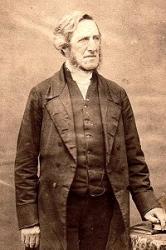
1769 - 1855 Person Name: T. Kelly Author of "King of Kings" in Songs of Love and Praise Kelly, Thomas, B.A., son of Thomas Kelly, a Judge of the Irish Court of Common Pleas, was born in Dublin, July 13, 1769, and educated at Trinity College, Dublin. He was designed for the Bar, and entered the Temple, London, with that intention; but having undergone a very marked spiritual change he took Holy Orders in 1792. His earnest evangelical preaching in Dublin led Archbishop Fowler to inhibit him and his companion preacher, Rowland Hill, from preaching in the city. For some time he preached in two unconsecrated buildings in Dublin, Plunket Street, and the Bethesda, and then, having seceded from the Established Church, he erected places of worship at Athy, Portarlington, Wexford, &c, in which he conducted divine worship and preached. He died May 14, 1854. Miller, in his Singers & Songs of the Church, 1869, p. 338 (from which some of the foregoing details are taken), says:—
"Mr. Kelly was a man of great and varied learning, skilled in the Oriental tongues, and an excellent Bible critic. He was possessed also of musical talent, and composed and published a work that was received witli favour, consisting of music adapted to every form of metre in his hymn-book. Naturally of an amiable disposition and thorough in his Christian piety, Mr. Kelly became the friend of good men, and the advocate of every worthy, benevolent, and religious cause. He was admired alike for his zeal and his humility; and his liberality found ample scope in Ireland, especially during the year of famine."
Kelly's hymns, 765 in all, were composed and published over a period of 51 years, as follows:—
(1) A Collection of Psalms and Hymns extracted from Various Authors, by Thomas Kelly, A.B., Dublin, 1802. This work contains 247 hymns by various authors, and an Appendix of 33 original hymns by Kelly.
(2) Hymns on Various Passages of Scripture, Dublin, 1804. Of this work several editions were published: 1st, 1804; 2nd, 1806; 3rd, 1809; 4th, 1812. This last edition was published in two divisions, one as Hymns on Various Passages of Scripture, and the second as Hymns adapted for Social Worship. In 1815 Kelly issued Hymns by Thomas Kelly, not before Published. The 5th edition, 1820, included the two divisions of 1812, and the new hymns of 1815, as one work. To the later editions of 1820, 1826, 1836, 1840, 1846, and 1853, new hymns were added, until the last published by M. Moses, of Dublin, 1853, contained the total of 765.
As a hymn-writer Kelly was most successful. As a rule his strength appears in hymns of Praise and in metres not generally adopted by the older hymn writers. His "Come, see the place where Jesus lay" (from "He's gone, see where His body lay"),"From Egypt lately come"; “Look, ye saints, the sight is glorious"; "On the mountain's top appearing"; "The Head that once was crowned with thorns"; "Through the day Thy love has spared us"; and “We sing the praise of Him Who died," rank with the first hymns in the English language. Several of his hymns of great merit still remain unknown through so many modern editors being apparently adverse to original investigation. In addition to the hymns named and others, which are annotated under their respective first lines, the following are also in common use:—
i. From the Psalms and Hymns, 1802:—
1. Grant us, Lord, Thy gracious presence. Commencement of Divine Worship.
2. Jesus, Immortal King, go on [display]. Missions.
3. Saviour, through the desert lead us. Divine Guidance Desired.
4. The day of rest once more [again] comes round. Sunday.
5. We've no abiding city here. Seeking Heaven.
ii. From the Hymns on Varous Passages of Scripture, first edition, 1804 :—
6. Boundless glory, Lord, be thine. Praise for the Gospel.
7. By whom shall Jacob now arise? Epiphany.
8. Glory, glory to our King. Praise to Christ as King.
9. How pleasant is the sound of praise. Praise for Redemption.
10. How sweet to leave the world awhile. In Retirement, or For a Retreat.
11. Inform I long had bowed the knee. Jesus, the Saviour, or Praise for Salvation.
12. It is finished! sinners, hear it. Good Friday.
13. Jesus, the Shepherd of the sheep. The Good Shepherd.
14. Let reason vainly boast her power. Death.
15. Poor and afflicted, Lord, are Thine. Affliction.
16. Praise we Him to Whose kind favour. Close of Service.
11. Spared a little longer. Safety in God.
18. Stricken, smitten, and afflicted. Passiontide.
ii. From the Hymns, &c, second edition, 1806:—
19. Far from us be grief and sadness. Joy of Believers.
20. Give us room that we may dwell. Missions.
21. Glory, glory everlasting. Praise of Jesus.
22. God has.turned my grief to gladness. Joy after Sorrow.
23. Happy they who trust in Jesus. Peace in Jesus.
24. Hark, the notes of angels singing. Angels praising Jesus.
25. Hark! 'tis a martial sound. Christian Life a Warfare.
26. I hear a sound [voice] that comes from far. The Gospel Message.
27. Jesus is gone up on high. Divine Worship.
28. Now [O] may the Gospel's conquering power. Home Missions. In the 1853 edition of the Hymns it begins “O may the Gospel's conqu'ring force."
29. O Zion, when I think on thee. Desiring Heaven.
30. Praise the Saviour, ye who know Him. Praise of Jesus.
31. See from Zion's sacred mountain. The Fountain of Life.
32. The atoning work is done. Jesus the High Priest.
33. Zion is Jehovah's dwelling. The Church of God.
34. Zion stands by hills surrounded. The Safety of the Church.
35. Zion's King shall reign victorious. Missions.
iv. From the Hymns, &c, 3rd edition, 1809:—
36. Behold the Temple of the Lord. The Church a Spiritual Temple.
37. Blessed Fountain, full of grace. Fountain for Sin.
38. Brethren, come, our Saviour bids us. Holy Communion.
39. Fly, ye seasons, fly still faster. Second Advent Desired.
40. God of Israel, we adore Thee. Evening.
41. Gracious Lord, my heart is fixed. Trust and Peace.
42. Hark, a voice! it comes from heaven. Death.
43. Hark, that shout of rapt'rous joy. Second Advent.
44. If our warfare be laborious. Labour and Rest .
45. Lo, He comes, let all adore Him. Missions.
46. Nothing know we of the season. Time of Second Advent uncertain.
47. O had I the wings of a dove. Holiness and Heaven desired.
48. O where is now that glowing love. Despondency.
49. Our Father sits on yonder throne. God the Father.
50. Ours is a rich and royal Feast. Holy Communion.
51. Shepherd of the chosen number. Safety in the
Good Shepherd.
52. We're bound for yonder land. Life, a Voyage.
53. Welcome sight! the Lord descending. The Advent.
54. What is life? 'tis but a vapour. Death anticipated.
55. Who is this that comes from Edom? Ascension.
56. Why those fears ? Behold 'tis Jesus. Stilling the Sea.
57. Without blood is no remission. Passiontide.
58. Yes, we trust the day is breaking. Missions.
v. FromHymns: Not before Published, 1815:—
59. Behold the Lamb with glory crowned. Exaltation of Christ.
60. God is love, His word has said it. God is Love.
61. God of our salvation, hear us. Opening or Close of Divine Worship.
62. In Thy Name, O Lord, assembling. Commencement of Divine Worship.
63. Keep us, Lord, O [and] keep us ever. Divine Worship.
64. Let sinners saved give thanks, and sing. Praise for Salvation.
65. Praise the Lord Who died to save us. Passiontide.
66. Salvation is of God alone. God the Author of Salvation.
67. Saviour, come, Thy [saints] friends await Thee [are waiting] . Second Advent desired.
68. Sweet were the sounds that reached our ears. Divine Mercy.
69. We'll sing of the Shepherd that died. The Lost Sheep.
70. When we cannot see our way. Trust and Peace.
71. Who is this that calms the ocean? Stilling the Sea.
vi. From the Hymns on F. Passages of Scripture, &c, eds. 1820 and 1826 :-—
72. Grace is the sweetest sound. Divine Grace.
73. Now let a great effectual door. Missions.
74. Now may the mighty arm awake. Missions.
75. Now may the Spirit from above. Home Missions.
76. Sing, sing His lofty praise. Praise of Jesus.
77. Sound, 6ound the truth abroad. Missions.
78. Speed Thy servants, Saviour, speed them. Departure of Missionaries.
vii. From the Hymns on Various Passages, &c, 1836:—
79. Come, O Lord, the heavens rending. Prayer for Blessings.
80. The night is far spent, the day is at hand. The Second Advent.
viii. From the Hymns on Various Passages, &c, circa 1845:—
81. Joyful be the hours today. Sunday.
82. Lord, behold us few and weak. Opening of Divine Service.
83. Meet Thy people, Saviour, meet us. Meetings for Prayer.
84. Saviour, send a blessing to us. Prayer for Blessings.
85. Sing of Jesus, sing for ever. Praise of Jesus.
ix. From the Hymns on Various Passages, &c, 1853:—
86. Precious volume, what thou doest. Holy Scripture.
87. Unfold to us, O Lord, unfold. Divine aid to reading Holy Scripture.
All these hymns, together with those annotated under their respective first lines are in the 1853 edition of Kelly's Hymns published in Dublin by M. Moses, and in London by Simpkin, Marshall & Co. Kelly's musical editions are issued by the same publishers.
-- John Julian, Dictionary of Hymnology (1907)
==================
Kelly, Thomas, p. 615, i. Other hymns in common use are:
1. Behold the Man! How glorious He. (1809.) Good Friday.
2. Jesus the [Thou] Shepherd of the Sheep. (1804.) Good Shepherd.
3. Saved ourselves by Jesu's blood. (1802.) For a Revival.
4. Saviour, 'tis to [unto] Thee. (1853*.) Lent.
5. See the vineyard lately planted. (1806.) Missions. Sometimes given as "See, O Lord, the vineyard planted."
6. Sing aloud to God our strength. (1809.) Praise to the Father.
7. Sing, sing His lofty praise. (1820.) Praise to Jesus. Sometimes as "Hail our eternal King" (p. 615, No. 76).
8. Sing of Him Who bore our guilt. (1853*.) Praise to Jesus.
9. Sing we praise to God above, God our Saviour, &c. (1815.) Praise for Divine Mercy.
10. Sing we praise to God above, Sing we praise, &c. (1853*.) Praise.
11. Sons of Zion, raise your songs. (1820-26) The Exalted Saviour.
12. The Lord Himself will keep. (1809.) From “We're bound for yonder land" (sec p. 615, No. 52.)
13. The God [Lord] of glory dwells on high. (1809.) Humility and Love of Christ.
14. The people of the Lord Are on their way, &c. (1820.) Life a Pilgrimage.
15. Thus saith God of His Anointed. (1809.) Missions.
16. 'Tis to us no cause of sorrow. (1815.) Resignation.
17. To the Ark away, or perish. (1815.) Safety in Jesus only.
18. To our Lord a throne is given. (1838.) Christ the King.
19. Trust ye in the Lord for ever. (1853*.) Trust in God.
20. We'll sing in spite of scorn. (1806.) Christmas. From this "The long-expected morn" is taken.
21. What tongue can tell, what fancy paint. (1806.) Saints in Glory
22. What were Sinai's awful wonders. (1809.) Advent.
23. Whence those sounds symphonious? (1815.) Christmas.
24. While in the [this] world we still [yet] remain. (1806.) Communion of Saints.
25. Yes, 'tis a rough and thorny road. (1809.) Resignation. Sometimes given as "Though rough and thorny be the way."
The dates given above are those of the various editions of Kelly's Hymns. The date 1853* indicates that the hymn is in the 1853 ed. of the Hymns, but had also appeared in a previous edition which we have not seen.
--John Julian, Dictionary of Hymnology, Appendix, Part II (1907)
Thomas Kelly
Nikolaus Herman
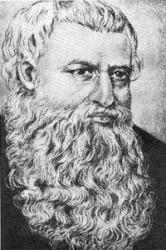
1500 - 1561 Person Name: N. Herrmann Composer of "[The head that once was crown'd with thorns]" in Songs of Love and Praise Herman, Nicolaus, is always associated with Joachimsthal in Bohemia, just over the mountains from Saxony. The town was not of importance till the mines began to be extensively worked about 1516. Whether Herman was a native of this place is not known, but he was apparently there in 1518, and was certainly in office there in 1524. For many years he held the post of Master in the Latin School, and Cantor or Organist and Choirmaster in the church. Towards the end of his life he suffered greatly from gout, and had to resign even his post as Cantor a number of years before his death. He died at Joachimsthal, May 3, 1561. (Koch, i. 390-398; Allgemeine Deutsche Biographie, xii. 186-188, &c.)
He was a great friend and helper of J. Mathesius (q.v.) (who in 1532 became rector of the school, but in 1541 diaconus and in 1545 pastor of the church), and it was said that whenever Mathesius preached a specially good sermon Herman straightway embodied its leading ideas in a hymn. His hymns, however, were not primarily written for use in church, but were intended for the boys and girls in the schools, to supplant profane songs in the mouths of the young men and women, or for the daily life of the “housefathers and housemothers" in Joachimsthal, at home, and in their work in the mines. He is a poet of the people, homely, earnest, and picturesque in style; by his naiveté reminding us of Hans Sachs. He was an ardent lover of music and a very good organist. The chorales which he published with his hymns are apparently all of his own composition, and are among the best of the Reformation period.
Many of Herman's hymns soon passed into Church use in Germany, and a number are found in almost all books in present use. About 190 in all, they appeared principally in:—
(1) Die Sontags Evangelia uber des gantze Jar, in Gesenge verfasset, für die Kinder und christlichen Haussvetter, &c, Wittenberg, 1560 (dedication by Herman dated Trinity Sunday, 1559), with 101 hymns and 17 melodies. The best are those interspersed specially meant for children and not directly founded on the Gospel for the day. (2) Die Historien von der Sindfludt, Joseph, Mose, Helia, Elisa und der Susanna, sampt etlichen Historien aus den Evangelisten, &c., Wittenberg, 1562 (preface by Herman dated St. Bartholomew's Day, 1560), with 73 hymns and 20 melodies. In this case also the general hymns are the best. A selection of 60 (really 61) of his hymns, with a memoir by K. F. Ledderhose, was published at Halle, 1855.
One of Herman's hymns is noted under “Wenn mein Stündlein vorhanden ist." The others which have passed into English are:—
i. Bescher uns, Herr, das täglioh Brod. Grace before Meat. 1562, as above, and thence in Wackernagel, iii. p. 1228, in 6 stanzas of 4 lines; in Ledderhose, p. 70; and in the Berlin Geistliche Lieder, ed. 1863, No. 1133. Translated as:—
1. Thou art our Father and our God. This, by P. H. Molther, a translation of stanza vi., as No. 180 in the Moravian Hymn Book, 1789 (1849, No. 220, st. v.).
2. As children we are owned by Thee, a translation of stanza vi., as st. iii. of No. 191 in the Moravian Hymn Book, 1801 (1849, No. 220, stanza iii.).
ii. Die helle Sonn leucht jetzt herfür. Morning. 1560, as above, and thence in Wackernagel, iii. p. 1184, in 4 stanzas of 4 lines, in Ledderhose, p. 87; and in the Unverfälschter Liedersegen, 1851, No. 450. Translated as:—
The morning beam revives our eyes, a good and full translation by. A. T. Russell, as No. 71 in the Dalston Hospital Hymn Book 1848.
iii. Erschienen ist der herrliche Tag. Easter. 1560, as above, in 14 stanzas of 4 lines, entitled, "A new Spiritual Song of the Joyful Resurrection of our Saviour Jesus Christ; for the maidens of the girls' school in Joachimsthal”; and thence in Wackernagel, iii. p. 1175; in Ledderhose p. 23, and Unverfälschter Liedersegen, 1851, No. 134. It has reminiscences of the "Erstanden ist der heil'ge Christ". Translated as:—
The day hath dawn'd—-the day of days, a good translation by A. T. Russell of stanzas i., ii., xiii., xiv., as No. 113 in his Psalms & Hymns, 1851.
Another tr. is, "At length appears the glorious day," by Dr. G. Walker, 1860, p. 28.
iv. Hinunter ist der Sonnen Schein. Evening. 1560, as above, and thence in Wackernagel, iii. p. 1184, in 4 stanzas of 4 lines; in Ledderhose, p. 88; and in the Unverfälschter Liedersegen1851, No. 523. Some of the phrases may have been suggested by the "Christe qui lux es et dies" (q. v.). Translated as:—
1. Sunk is the sun's last beam of light, a full and good translation by Miss Cox in her Sacred Hymns from the German, 1841, p. 57. Included in Alford's Psalms & Hymns, 1844, and Tear of Praise, 1867; in Dale's English Hymn Book, 1875; in the Pennsylvania Lutheran Church Book, 1868, and others. It is also given considerably altered and beginning, "Sunk is the Sun! the daylight gone," in W. J. Blew's Church Hymn and Tune Book, 1851-55.
2. The happy sunshine all is gone, in full, by Miss Winkworth in her Lyra Germanica, 1st Ser., 1855, p. 225; repeated in her Chorale Book for England, 1863, and the Ohio Lutheran Hymnal, 1880.
Other translations are: (1) "Did I perhaps Thee somewhat grieve," a translation of stanza iii. in the Moravian Hymn Book, 1789, No. 756. In the 1801 and later eds. (1886, No. 1181, st. iii.), it begins, "Where'er I Thee this day did grieve." (2) "The sun’s fair sheen is past and gone," by H. J. Buckoll, 1842, p. 68. (3) "The sun hath run his daily race," by Lady E. Fortescue, 1843, p. 14.
v. Lobt Gott, ihr Christen alle gleich. Christmas. Written c. 1554, but first published 1560 as above, as the first of "Three Spiritual Christmas Songs of the new-born child Jesus, for the children in Joachimsthal." Thence in Wackernagel iii. p. 1169, in 8 stanzas of 4 lines; in Ledderhose, p. 1; and in the Unverfälschter Liedersegen, 1851, No. 47. It is one of the most popular German Christmas hymns. The melody set to it in 1560 is also by Herman; in 1554 to his "Kommt her ihr liebsten Schwesterlein" [in the Hymnal Companioncalled "St. George's (old)"]. Translated as :—
1. Let all together praise our God, a good translation of stanzas i., iii., vi., viii., by A. T. Russell, as No. 52 in his Psalms & Hymns, 1851. Repeated in Kennedy, 1863, adding a translation of st. ii., and beginning, "Let all creation praise our God."
2. Praise ye the Lord, ye Christians I yea, in full, by E. Cronenwett, as No. 31 in the Ohio Lutheran Hymnal 1880.
Other translations are: (1) "A wondrous change He with us makes," a tr. of stanza viii., ix. as No. 438 in pt. i. of the Moravian Hymn Book, 1754, repeated 1789-1826. (2) "Come, brethren, lets the song arise," by Dr. G. Walker, 1860, p. 26. (3) "Praise God, now Christians, all alike," by Miss Manington, 1864, p. 9. (4) "Praise God, upon His throne on high," in the Sunday Magazine, 1874, p. 384, signed "P. J." The hymn “Shepherds rejoice, lift up your eyes," given by J. C. Jacobi in his Psalmodia Germanica, 1722, p. 8, to Herman's melody (which was first published 1554) is, as stated in his Preface, taken from Bk. i. of Isaac Watts's Horse Lyricae
vi. So wahr ich leb, spricht Gott der Herr. Absolution. 1560, as above, in 11 stanzas of 4 lines, entitled "A hymn on the power of the keys and the virtue of holy absolution; for the children in Joachimsthal." Thence in Wackernagel, iii. p. 1183; in Ledderhose, p. 47; and the Unverfälschter Liedersegen, 1851, No. 429. It probably suggested the better known hymn, "So wahr ich lebe," q. v., by Johann Heermann. Translated as:—
Yea, as I live, Jehovah saith, I do not wish the sinner's death, in full, by Dr. M. Loy, as No. 245, in the Ohio Lutheran Hymnal, 1880. [Rev. James Mearns, M.A.]
--John Julian, Dictionary of Hymnology (1907)
Nikolaus Herman
John Chandler
1806 - 1876 Translator of "O Christ, our hope, our heart's desire" in The Concordia Hymnal John Chandler, one of the most successful translators of hymns, was born at Witley in Surrey, June 16, 1806. He was educated at Corpus Christi College, Oxford, B.A. 1827, M.A. 1830. Ordained deacon in 1831 and priest in 1832, he succeeded his father as the patron and vicar of Whitley, in 1837. His first volume, entitled The Hymns of the Primitive Church, now first Collected, Translated and Arranged, 1837, contained 100 hymns, for the most part ancient, with a few additions from the Paris Breviary of 1736. Four years later, he republished this volume under the title of hymns of the Church, mostly primitive, collected, translated and arranged for public use, 1841. Other publications include a Life of William of Wykeham, 1842, and Horae sacrae: prayers and meditations from the writings of the divines of the Anglican Church, 1854, as well as numerous sermons and tracts. Chandler died at Putney on July 1, 1876.
--The Hymnal 1940 Companion
===============
Chandler, John, M.A.,one of the earliest and most successful of modern translators of Latin hymns, son of the Rev. John F. Chandler, was born at Witley, Godalming, Surrey, June 16, 1806, and educated at Corpus Christi College, Oxford, where he graduated in 1827. He took Holy Orders in 1831, and became Vicar of Witley in 1837. He died at Putney, July 1, 1876. Besides numerous Sermons and Tracts, his prose works include Life of William of Wykeham, 1842; and Horae Sacrae; Prayers and Meditations from the writings of the Divines of the Anglican Church, with an Introduction, 1844. His translations, he says, arose out of his desire to see the ancient prayers of the Anglican Liturgy accompanied by hymns of a corresponding date of composition, and his inability to find these hymns until he says,
"My attention was a short time ago directed to some translations [by Isaac Williams] which appeared from time to time in the British Magazine, very beautifully executed, of some hymns extracted from the Parisian Breviary,with originals annexed. Some, indeed, of the Sapphic and Alcaic and other Horatian metres, seem to be of little value; but the rest, of the peculiar hymn-metre, Dimeter Iambics, appear ancient, simple, striking, and devotional—in a word in every way likely to answer our purpose. So I got a copy of the Parisian Breviary [1736], and one or two other old books of Latin Hymns, especially one compiled by Georgius Cassander, printed at Cologne, in the year 1556, and regularly applied myself to the work of selection and translation. The result is the collection I now lay before the public." Preface, Hymns of the Primitive Church, viii., ix.
This collection is:—
(1) The Hymns of the Primitive Church, now first Collected, Translated, and Arranged, by the Rev. J. Chandler. London, John W. Parker, 1837. These translations were accompanied by the Latin texts. The trsanslations rearranged, with additional translations, original hymns by Chandler and a few taken from other sources, were republished as (2) The Hymns of the Church, mostly Primitive, Collected, Translated, and Arranged/or Public Use, by the Rev. J. Chandler, M.A. London, John W. Parker, 1841.
From these works from 30 to 40 translations have come gradually into common use, some of which hold a foremost place in modern hymnals, "Alleluia, best and sweetest;" "Christ is our Corner Stone;" "On Jordan's bank the Baptist's cry;" "Jesus, our Hope, our hearts' Desire;" "Now, my soul, thy voice upraising;" "Once more the solemn season calls;" and, "O Jesu, Lord of heavenly grace;" being those which are most widely used. Although Chandler's translations are somewhat free, and, in a few instances, doctrinal difficulties are either evaded or softened down, yet their popularity is unquestionably greater than the translations of several others whose renderings are more massive in style and more literal in execution.
--John Julian, Dictionary of Hymnology (1907)
John Chandler
Paul Gerhardt
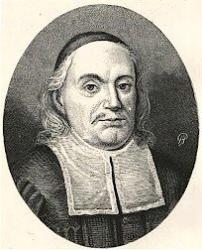
1607 - 1676 Person Name: P. Gerhardt Author of "Op alle, som paa Jorden bor" in M. B. Landstads Kirkesalmebog og "Nokre Salmar" ved Professor Dr. E. Blix, samt følgende tillæg Paul Gerhardt (b. Gräfenheinichen, Saxony, Germany, 1607; d. Lubben, Germany, 1676), famous author of Lutheran evangelical hymns, studied theology and hymnody at the University of Wittenberg and then was a tutor in Berlin, where he became friends with Johann Crüger. He served the Lutheran parish of Mittenwalde near Berlin (1651-1657) and the great St. Nicholas' Church in Berlin (1657-1666). Friederich William, the Calvinist elector, had issued an edict that forbade the various Protestant groups to fight each other. Although Gerhardt did not want strife between the churches, he refused to comply with the edict because he thought it opposed the Lutheran "Formula of Concord," which condemned some Calvinist doctrines. Consequently, he was released from his position in Berlin in 1666. With the support of friends he became archdeacon at Lubben in 1669 and remained there until his death. Gerhardt experienced much suffering in his life; he and his parishioners lived in the era of the Thirty Years' War, and his family experienced incredible tragedy: four of his five children died young, and his wife died after a prolonged illness. In the history of hymnody Gerhardt is considered a transitional figure-he wrote at a time when hymns were changing from a more objective, confessional, and corporate focus to a pietistic, devotional, and personal one. Like other German hymns, Gerhardt's were lengthy and intended for use throughout a service, a group of stanzas at a time. More than 130 of his hymns were published in various editions of Cruger's Praxis Pietatis Melica, the Crüger-Runge Gesangbuch (1653), and Ebeling's Das andere Dutzeud geistliche Andachtslieder Herrn Paul Gerhardts (1666-1667). John Wesley and Catherine Winkworth both made famous English translations of Gerhardt's texts.
Bert Polman
======================
Gerhardt, Paulus, son of Christian Gerhardt, burgomaster of Gräfenhaynichen, near Wittenberg, was born at Grafenhaynichen, Mar. 12, 1607. On January 2, 1628, he matriculated at the University of Wittenberg. In the registers of St. Mary's church, Wittenberg, his name appears as a godfather, on July 13, 1641, described still as "studiosus," and he seems to have remained in Wittenberg till at least the end of April, 1642. He appears to have gone to Berlin in 1642 or 1643, and was there for some time (certainly after 1648) a tutor in the house of the advocate Andreas Barthold, whose daughter (Anna Maria, b. May 19, 1622, d. March 5, 1668) became his wife in 1655. During this period he seems to have frequently preached in Berlin. He was appointed in 1651, at the recommendation of the Berlin clergy, Lutheran Probst (chief pastor) at Mittenwalde, near Berlin, and ordained to this post Nov. 18, 1651. In July, 1657, he returned to Berlin as third diaconus of St. Nicholas's church; but becoming involved in the contest between the Elector Friedrich Wilhelm (who was of the Reformed Church) and the Lutheran clergy of Berlin, he was deposed from his office in February, 1666, though he still remained in Berlin. In Nov. 1668, he accepted the post of archidiaconus at Lübben, on the Spree, was installed in June, 1669, and remained there till his death on June 7, 1676 (Koch, iii. 297-326; Allgemeine Deutsche Biographie, viii. 774-783, &c).
The outward circumstances of Gerhardt's life were for the most part gloomy. His earlier years were spent amid the horrors of the Thirty Years' War. He did not obtain a settled position in life till he was 44 years of age. He was unable to marry till four years later; and his wife, after a long illness, died during the time that he was without office in Berlin; while of the five children of the marriage only one passed the period of childhood. The sunniest period of his life was during the early years of his Berlin ministry (i.e. 1657-1663), when he enjoyed universal love and esteem; while his latter years at Lübben as a widower with one surviving child were passed among a rough and unsympathising people. The motto on his portrait at Lübben not unjustly styles him "Theologus in cribro Satanae versatus."
Gerhardt ranks, next to Luther, as the most gifted and popular hymnwriter of the Lutheran Church. Gervinus (ed. 1842, pt. iii. p. 366), the well-known historian of German literature, thus characterises him:—
"He went back to Luther's most genuine type of hymn in such manner as no one else had done, only so far modified as the requirements of his time demanded. In Luther's time the belief in Free Grace and the work of the Atonement, in Redemption and the bursting of the gates of Hell was the inspiration of his joyful confidence; with Gerhardt it is the belief in the Love of God. With Luther the old wrathful God of the Romanists assumed the heavenly aspect of grace and mercy; with Gerhardt the merciful Righteous One is a gentle loving Man. Like the old poets of the people he is sincerely and unconstrainedly pious, naive, and hearty; the bliss fulness of his faith makes him benign and amiable; in his way of writing he is as attractive, simple, and pleasing as in his way of thinking."
With a firm grasp of the objective realities of the Christian Faith, and a loyal adherence to the doctrinal standpoint of the Lutheran Church, Gerhardt is yet genuinely human; he takes a fresh, healthful view both of nature and of mankind. In his hymns we see the transition to the modern subjective tone of religious poetry. Sixteen of his hymns begin with, “I." Yet with Gerhardt it is not so much the individual soul that lays bare its sometimes morbid moods, as it is the representative member of the Church speaking out the thoughts and feelings he shares with his fellow members; while in style Gerhardt is simple and graceful, with a considerable variety of verse form at his command, and often of bell-like purity in tone.
From the first publication of Gerhardt's hymns they at once came into favour among all ranks and creeds; and a large proportion are among the hymns most cherished and most widely used by German-speaking Christians at the present day. They appeared principally in the various editions of Crüger's Praxis, and the Crüger-Runge Gesang-Buch, 1653. The first collected edition was prepared by J. G. Ebeling, and published in separate "Dozens" 1-4 in 1666, 5-10 in 1667, i.e. 120 in all. In the edition of J. H. Feustking, Zerbst, 1707, a few stanzas were intercalated (from manuscripts in the possession of Gerhardt's surviving son), but no new hymns were added.
Among modern editions of Gerhardt's hymns (mostly following the text of Ebeling) may be mentioned those by Langbecker, 1842; Schultz, 1842; Wackernagel, 1843; Becker, 1851; Goedeke, 1877, and Gerok, 1878. The Historico-Critical edition of Dr. J. F. Bachmann, 1866, is the most complete (with 11 additional pieces hardly Church hymns), and reverts to the pre-Ebeling text.
The length of many of Gerhardt's hymns ("Ein Lämmlein" is 10 stanzas of 10 lines; "Fröhlich soil," 15 stanzas of 8 lines, &c), and the somewhat intricate metres of others, have caused his hymns to be less used in English than otherwise might have been the case; but a considerable proportion have come in some form or other into English hymnbooks. A large selection, translated with scrupulous faithfulness but not retaining much of the lyric grace of the originals, was published by the Rev. John Kelly, in 1867, as Paul Gerhardt’s Spiritual Songs; while many individual hymns have been translated by John Wesley, Miss Winkworth, Miss Cox, Miss Borthwick, and many others. His translations from St. Bernard are noted under "O Haupt voll Blut." There are separate notes on 19 of his greater hymns. Besides these the following have passed into English:—
I. Hymns in English common use:
i. Auf den Nebel folgt die Sonn. Thanksgiving after great sorrow and affliction. In Crüger's Praxis, 1656, No. 249, in 15 stanzas of 7 1.; thence in Wackernagel’s ed. of his Geistliche Lieder, No. 87, and Bachmann's ed., No. 64. In the Unverfälschter Liedersegen, 1851, No. 402. Translated as:—
Cometh sunshine after rain. A good translation, omitting stanzas iv.-vii., x., xi., by Miss Winkworth, in her Lyra Germanica, 1st Ser., 1855, p. 100 (translations of x., xi. added to 2nd ed., 1856). Repeated, omitting the translations of stanzas ii., x.-xii., as No. 4 in her Chorale Book for England, 1863. In the Christian Hymn Book, Cincinnati, 1865, No. 799, begins with st. xiii., "Now as long as here I roam."
Another translation is:—"After clouds we see the sun," by J. Kelly, 1867, p. 261.
ii. Die Zeit ist nunmehr nah. Day of Judgment—Second Advent. Founded on Acts iii. 20. In the Crüger-Runge Gesang-Buch 1653, No. 367, iii 18 stanzas of 6 lines, and thence in Wackernagel's edition of his Geistliche Lieder, 1843, No. 119 (1874, No. 124), and Bachmann's edition, No. 40. In the Berlin Geistliche Lieder S., ed. 1863, No. 1517. Translated as:—
O Christ! how good and fair. Being a translation of stanzas iii., iv., vi., vii., x.-xiii., xvii., by Mrs. Charles, in her Voice of Christian Life in Song, 1858, p. 242. Her translations of stanzas iii., x., xii., are No. 150 in G. S. Jellicoe's Collection, 1867.
Other trs. are:—(1) "May I when time is o'er," of stanzas vii., viii. as part of No. 831 in the Moravian Hymn Book, 1789; in the 1801 and later eds. (1886, No. 1229), beginning, "I shall, when time is o'er." (2) “The time is very near," by J. Kelly, 1867, p. 341.
iii. Gottlob, nun ist erschollen. Peace. Thanksgiving for the Proclamation of the Peace of Westphalia, in 1648, after the Thirty Years’ War. In Crüger's Praxis 1656, No. 409, in 6 stanzas of 12 lines, and thence in Wackernagel's edition of his Geistliche Lieder, No. 64, and Bachmann's ed., No. 84; and in the Unverfälschter Liedersegen, 1851, No. 589. Translated as: —
Thank God it hath resounded. A full and good tr. by Miss Winkworth, in her Lyra Germanica, 2nd Ser., 1858, p. 156, repeated, omitting stanza ii., in her Chorale Book for England, 1863. St. i., v., vi., form No. 49 in M. W. Stryker's Christian Chorals, 1885.
Another tr. is: ”Praise God! for forth hath sounded," by J. Kelly, 1867, p. 251.
iv. Ich, der ich oft in tiefes Leid. Ps. cxlv. First published in J. G. Ebeling's edition of his Geistliche Andachten Dritte Dutzet, 1666, No. 27, in 18 stanzas of 7 lines. Thence in Wackernagel's ed., No. 95, and Bachmann's ed., No. 103; also in the Berlin Geistliche LiederSchatz, ed. 1863, No. 1004. Translated as:—
I who so oft in deep distress . A good translation, omitting stanzas ii.-iv., by Miss Winkworth, in her Lyra Germanica, 2nd Ser., 1858, p. 149. Her translations of stanzas i., xiii.-xvi., xviii., were included as No. 224, and of stanzas vi., viii., ix., xi. altered, and beginning, "O God! how many thankful songs," as No. 168, in Holy Song, 1869.
Another tr. is:—-"Who is so full of tenderness," of stanza viii. as stanza iv. of No. 1075 in the Supplement of 1808 to the Moravian Hymn Book, 1801 (1886, No. 537).
v. Ich steh an deiner Krippen bier. Christmas. Included in Crüger's Praxis, 1656, No. 105, in 15 stanzas of 7 lines. Thence in Wackernagel's ed., No. 9, and Bachmann's ed., No. 45; and in the Berlin Geistliche LiederSchatz, ed. 1863, No. 167. A beautiful hymn, in which the poet puts himself in the place of the shepherds and the wise men visiting Bethlehem; and in praise and adoration tenders his devotion, his love and his all, to the Infant Saviour in the manger. Translated as:—
My faith Thy lowly bed beholds. A translation of stanzas i., iv., vii., xv., by A. T. Russell, as No. 57 in his Psalms & Hymns, 1851.
Other trs. are:— (1) "I stand beside Thy manger-bed," by Miss Manington, 1864, p. 38. (2) "Now at the manger here I stand," by J. Kelly, 1867, p. 32.
vi. Ich weiss dass mein Erlöser lebt. Easter. Founded on Job xix. 25-27. First published in J. G. Ebeling's ed. of his Geistliche Andachten Zehende Dutzet, 1667, No. 119, in 9 stanzas of 7 lines; repeated in Wackernagel's ed., 1843, No. 118 (1874, No. 123); in Bachmann's ed., No. 119; and in the Berlin Geistliche Lieder S. ed. 1863, No. 301. Translated as:—
I know that my Redeemer lives, In this my faith is fast. A full and spirited translation by J. Oxenford, in Lays of the Sanctuary, 1859, p. 122. His translations of stanzas i., iii., vii.-ix., were included, altered, as No. 779 in Kennedy, 1863.
Another tr. is:— "I know that my Redeemer lives, This hope," &c, by Miss Manington, 1863, p. 78.
vii. Ich weiss, mein Gott, dass all mein Thun. Supplication. A prayer for success in all Christian works and purpose; founded on Jeremiah x. 23, and Acts v. 38, 39. Included in Crüger's Praxis, 1656, No. 332, in 18 stanzas of 5 lines. In Wackernagel's ed., No. 40; Bachmann's ed., No. 71, and the Berlin Geistliche Lieder S., ed. 1863. Translated as:—
I know, my God, and I rejoice. A good translation of stanzas i.-iii., viii., xi., ix., by Miss Winkworth, as No. 121 in her Chorale Book for England, 1863.
Another translation is:— "My God! my works and all I do” by J. Kelly, 1867, p. 102.
viii. Kommt, und lasst uns Christum ehren. Christmas. Founded on St. Luke ii. 15. First published in J. G. Ebeling's ed. of his Geistliche Andachten Fünffte Dutzet, 1667, No. 56, in 8 stanzas of 4 lines. Thence in Wackemagel's ed., No. 6; Bachmann's ed., No. 110; and the Unverfälschter Liedersegen, 1851, No. 43. Translated as:—
1. Come, unite in praise and singing. Omitting stanzas vi., vii., contributed by A. T. Russell to Maurice's Choral Hymnbook, 1861, No. 707.
2. Bring to Christ your best oblation. A full and good translation by P. Massie in his Lyra Domestica, 1864, p. 96; repeated in Snepp's Songs of Grace & Glory and Reid's Praise Book, 1872.
Other translations are:— (1) "Come, and let us Christ revere now," by Miss Manington, 1864, p. 25. (2) "Come, and Christ the Lord be praising," by J. Kelly, 1867, p. 24.
ix. Lobet den Herren, alle die ihn fürchten. Morning. Included in the Crüger-Runge Gesang-Buch 1653, No. 7, in 10 stanzas of 5 lines. In Wackernagel's ed., No. 100, and Bachmann's ed., No. 21, and in the Berlin Geistliche Lieder S. edition 1863, No. 1063. Translated as:—
Praise God! revere Him! all ye men that fear Him! This is from the version in Bunsen's Allgemeine Gesangbücher, 1846, No. 167, stanza i. being from Gerhardt, and st. ii., iii., from "Lobet den Herren, denn er ist sehr freundlich" (q. v.); and appeared in the Dalston Hospital Hymnbook, 1848, No. 55, signed "A. G."
Other translations are:— (1) "Our Lord be praising, All His glory raising," by H. J. Buckoll, 1842, p. 27. (2) "Praise ye Jehovah, all ye men who fear Him," by J. Kelly, 1867, p. 279.
x. Micht so traurig, nicht so sehr. Christian Contentment. In the 3rd edition, 1648, of Crüger's Praxis, No. 251, in 15 stanzas of 6 1., repeated in Wackernagel's ed., No. 53; Bachmann's ed., No. 16, and the Berlin Geistliche Lieder S., ed. 1863, No. 851. It is founded on Ps. cxvi. 7; Ps. xlii. 6-12; 1 Tim. vi. 6. Translated as:—
Ah! grieve not so, nor so lament. A free translation by Mrs. Findlater, of stanzas i., ii., vii.-x., xiii., xv., in the 1st Ser., 1854, of the Hymns from the Land of Luther, p. 48 (1884, p. 50). Repeated, abridged, in Holy Song, 1869, and Dale's English Hymnbook, 1875.
Other translations are:- (l) "Why this sad and mournful guise," by Miss Dunn, 1857, p. 85. (2) "Not so darkly, not so deep," by Miss Warner, 1858 (1861, p. 58). (3) “0 my soul, why dost thou grieve," by J. Kelly, 1867.
xi. Nun lasst uns gehn und treten. New Year. Included in the Crüger-Runge Gesang-Buch, 1653, No. 106, in 15 st. of 4 1. Thence in Wackernagel's ed., No. 12; Bachmann's ed., No. 24, and the Berlin Geistliche Lieder S., ed. 1863, No. 200. Evidently written during the Thirty Years' War. Translated as:—
In pray'r your voices raise ye. In full, by J. Kelly, 1867, p. 45. From this, 8 st. are included as No. 48 in the Ohio Lutheran Hymnal, 1880.
Other translations are:— (1) "Now let each humble Creature," in the Supplement to German Psalter, ed. 1765, p. 4, and Select Hymns from German Psalter, Tranquebar, 1754. p. 7. In the Moravian Hymnbook, 1789, No. 507 (1849, No. 1106), greatly altered, and beginning, “Year after year commenceth." (2) "0 come with prayer and singing," by R. Massie in the British Herald , Jan., 1865, p. 8. (3) “Christians all, with one accord," by E. Massie, 1867, p. 168. (4) "With notes of joy and songs of praise," by Dr. R. Maguire, 1883, p. 24.
xii. Schaut! Schaut! was ist für Wunder dar? Christmas. First published in J. G. Ebeling's ed. of his Geistliche Andachten Fünffte Dutzet, 1667, No. 55, in 18 stanzas of 4 1. Thence in Wackernagel’s ed., No. 4; Bachmann's ed., No. 109. Translated as:—
Behold! Behold! what wonders here. In full, by J. Kelly, 1867, p. 14. From this, 12 st. were included in the Ohio Lutheran Hymnal, 1880, as Nos. 25, 26: No. 26 beginning with the translation of st. xiii., "It is a time of joy today."
xiii. Warum willt du draussen stehen. Advent. Suggested by Gen. xxiv. 31. Appeared in the Crüger-Runge Gesang-Buch, 1653, No. 78, in 9 stanzas of 8 lines; viz., stanzas i.—vii., xi., xii., of the full form; st. viii.-x. being added in Ebeling's Geistliche Andachten Fünffte Dutzet, 1667, No. 50. The full text, in 12 stanzas, is also in Wackernagel's ed., No. 2; Bachmann's ed., No. 23, and Geistliche Lieder S., 1851, No. 20. Translated as:—
Wherefore dost Thou longer tarry. A good translation, omitting st. viii.-x., by Miss Winkworth, in her Lyrica Germanica, 2nd Ser., 1858, p. 6. In her Chorale Book for England, 1863, No. 153, the translations of st. iii., v., xi., are omitted.
Other trs. are:- (l) “Wherefore dost Thou, blest of God," by R. Massie, in Lyra Domestica, 1864, p. 90. (2) “Why, without, then, art Thou staying," by J. Kelly, 1867, p. 5.
xiv. Was alle Weisheit in der Welt. Trinity Sunday. In Crüger's Praxis, 1656, No. 212, in 8 stanzas of 9 lines. Thence in Wackernagel's ed., No. 1, and Bachmann's ed., No, 59, and the Berlin Geistliche Lieder S., ed. 1863, No. 50. Translated as:—
Scarce tongue can speak, ne'er human ken. In full, by J. Kelly, 1867, p. 1, repeated as No. 111 in the Ohio Lutheran Hymnal, 1880.
Another translation is:—"The mystery hidden from the eyes," by R. Massie, in Lyra Domestica, 1864, p. 87.
xv. Was Gott gefällt, mein frommes Kind. Resignation. This beautiful hymn, on resignation to “what pleases God," first appeared in the Crüger-Runge Gesang-Buch, 1653, No. 290, in 20 stanzas of 5 lines. Thence in Wackernagel's ed., No. 60; Bachmann's ed., No. 37, and the Unverfälschter Liedersegen, 1851, No. 723. Translated as:—-
What God decrees, child of His love. A good translation of stanzas i., ii., v., vi., viii., xii., xv., xviii., xx., by Mrs. Findlater, in the 3rd Ser., 1858, of the Hymns from the Land of Luther, p. 49 (1884, p. 170). Included, in full, in Bishop Ryle's Collection, 1860, No. 171; and abridged in Christian Hymns, Adelaide, 1872, and beginning, "What God decrees, take patiently," in Kennedy, 1863, No. 1344.
Other translations are:— (1) "What pleaseth God with joy receive," by Miss Dunn, 1857, p. 94. (2) “What pleases God, 0 pious soul," by Miss Winkworth, 1858, p. 193, (3) ”What pleaseth God, my faithful child," by J. Kelly, 1867, p. 189.
xvi. Wie schőn ists doch, Herr Jesu Christ. For Married Persons. Founded on Ps. cxxviii. First published in Ebeling's ed. of his Geistliche Andachten Vierte Dutzet, 1666, No. 38, in 8 st. of 12 1. Thence in Wackernagel's ed., 1843, No. 108 (1874, No. 109); Bachmann's ed., No. 105, and the Unverfälschter Liedersegen S., 1851, No. 680. Translated as:—
Oh, Jesus Christ! how bright and fair. In full, by J. Kelly, 1867, p. 307, repeated, altered, and omitting st. iii.—v., in the Ohio Lutheran Hymnal, 1880, No. 339.
II. Hymns not in English common use:
xvii. Also hat Gott die Welt geliebt. Good Friday. On St. John iii. 16. In Crüger's Praxis, 1661, No. 372, in 17 stanzas. Translated as, "Be of good cheer in all your wants,” by P. H. Molther, of stanza 16, as No. 181 in the Moravian Hymnbook, 1789 (1886, No. 217).
xviii. Auf, auf, mein Herz mit Freuden. Easter. In Crüger's Praxis, 1648, No. 141, in 9 stanzas. The translations are:-- (1) "Up! Up! my heart with gladness, See," by J. Kelly, 1867, p. 71. (2) "Up, up, my heart, with gladness; Receive," by N. L. Frothingham, 1870, p. 228.
xix. Du bist zwar mein und bleibest mein. For the Bereaved. A beautiful hymn of consolation for parents on the loss of a son. Written on the death of Constantin Andreas, younger son of Johannes Berkov, pastor of St. Mary's Church, Berlin, and first printed as one of the "Dulcia amicorum solatia" at the end of the funeral sermon by Georg Lilius, Berlin, 1650. Included in Ebeline's ed. of Gerhardt's Geistliche Andachten Sechste Dutzet, Berlin, 1667, No. 72, in 12 stanzas. The translations are: (1) "Thou'rt mine, yes, still thou art mine own”, by Miss Winkworth, 1858, p. 123. (2) "Yes, thou art mine, still mine, my son," by J. D. Burns, in the Family Treasury, 1861, p. 8, and his Remains, 1869, p. 249. (3) "Mine art thou still, and mine shalt be," by J. Kelly, 1867, p. 333. (4) "Thou art mine own, art still mine own," by Dr. J. Guthrie, 1869, p. 100.
xx. Du, meine Seele, singe. Ps. cxlvi. In the Crüger-Runge Gesang-Buch, Berlin, 1653, No. 183, in 10 stanzas. Translated as, “O come, my soul, with singing," by Miss Burlingham, in the British Herald, Jannary, 1866, p. 207, and as No. 423 in Reid's Praise Book, 1872.
xxi. Gieb dich zufrieden, und sei stille. Cross and Consolation—-Ps. xxxvii. 7. In Ebeling Erstes Dutzet, 1666, No. 11, in 15 stanzas. Translated as: (1) “Be thou content: be still before," by Miss Winkworth, 1855, p. 156, and in Bishop Ryle's Collection, 1860, No. 269. (2) “Be thou contented! aye relying," by J. Kelly, 1867, p. 202. (3) “Tranquilly lead thee, peace possessing," by N. L. Frothingham, 1870, p. 246.
xxii. Hőr an! mein Herz, die sieben Wort. Passiontide. On the Seven Words from the Cross. Founded on the hymn noted under Bőschenstein, J. (q.v.). In Crüger's Praxis, 1656, No. 137, in 15 stanzas. Translated as: (1) “Come now, my soul, thy thoughts engage," by Dr. H. Mills, 1845 (1856, p. 309). (2) "Seven times the Saviour spake my heart," by R. Massie, in the British Herald, Sept., 1865, p. 133. (3) "My heart! the seven words hear now," by J. Kelly, 1867, p. 63.
xxiii. Ich hab in Gottes Herz und Sinn. Resignation. In Crüger's Praxis, 1648, No. 249, in 12 st. Translated as: (1) "I into God's own heart and mind," by J. Kelly, 1867, p. 219. (2) "To God's all-gracious heart and mind”, by Miss Winkworth, 1869, p. 213, repeated in Statham's Collection, Edinburgh, 1869 and 1870.
xxiv. 0 Jesu Christ! dein Kripplein ist. Christmas. At the Manger of Bethlehem. In Crüger's Praxis, 1656, No. 101, in 15 stanzas. Translated as: (1) Be not dismay'd—-in time of need" (st. xi.) in the Moravian Hymnbook, 1789, No. 236. (2) "O blessed Jesus! This," by Miss Winkworth, 1858, p, 18. (3) "O Jesus Christ! Thy cradle is," by Miss Manington, 1864, p. 41. (4) "Thy manger is my paradise," by J. Kelly, 1867, p. 26.
xxv. Voller Wunder, voller Kunst. Holy Matrimony. In Ebeling Vierte Dutzet, 1666, No. 40, in 17 st. Often used in Germany at marriages on the way to church. Translated as: (1) "Full of wonder, full of skill," by Dr. H. Mills, 1845 (1856, p. 215). (2) "Full of wonder, full of skill," in Mrs. Stanley Carr's translation of Wildenhahn's Paul Gerhardt, ed. 1856, p. 52. (3) "Full of wonder, full of art," by J. Kelly, 1867, p. 302. (4) "Full of wonder, full of art," by Miss Winkworth, 1869, p. 215.
xxvi. Warum machet solche Schmerzen. New Year. On St. Luke ii. 21. In Crüger's Praxis, 1648, No. 97, in 4 stanzas. Bunsen, in his Versuch, 1833, No. 120, gives st. iii., iv. altered to "Freut euch, Sünder, allerwegen." Tr. as: (1) "Mortals, who have God offended," by Miss Cox, 1841, p. 21, from Bunsen. (2) "Why should they such pain e'er give Thee," by J. Kelly, 1867, p. 43.
xxvii. Weg, mein Herz, mit den Gedanken. Lent. On St. Luke xv. In Crüger's Praxis, 1648, No. 36, in 12 stanzas. Translated as: (1) "Let not such a thought e'er pain thee," by J. Kelly, 1867, p. 83. (2) "Hence, my heart, with such a thought," by Miss Winkworth, 1869, p. 210.
Besides the above, a considerable number of other hymns by Gerhardt have been translated by Mr. Kelly, and a few by Dr. Mills, Miss Manington, and others. The limits of our space forbid detailed notes on these versions. [Rev. James Mearns, M.A.]
-- John Julian, Dictionary of Hymnology (1907)
=============================
Gerhardt, Paulus, pp. 409, ii., 1565, i. The most recent edition of Gerhardt's hymns is in vol. iii. of the Fischer-Tümpel Deutsche evangelische Kirchenlied des Siebzehnten Jahr-hunderts, 1906, Nos. 389-495. In fixing the text the compilers have been enabled to use the recently discovered 1647, 1653 and 1657 Berlin editions of Cruger's Praxis Pietatis Melica. [Rev. James Mearns, M.A.]
--John Julian, Dictionary of Hymnology, New Supplement (1907)
Paul Gerhardt
Anonymous
Person Name: Ukj. Translator of "Op alle, som paa Jorden bor" in M. B. Landstads Kirkesalmebog og "Nokre Salmar" ved Professor Dr. E. Blix, samt følgende tillæg In some hymnals, the editors noted that a hymn's author is unknown to them, and so this artificial "person" entry is used to reflect that fact. Obviously, the hymns attributed to "Author Unknown" "Unknown" or "Anonymous" could have been written by many people over a span of many centuries.
Anonymous
George Taylor Rygh
1860 - 1942 Translator of "O happy day when we shall stand" in The Concordia Hymnal
George Taylor Rygh
Wilhelm Andreas Wexels
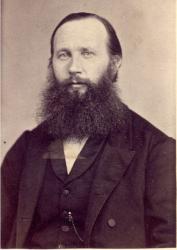
1797 - 1866 Author of "O happy day when we shall stand" in The Concordia Hymnal Wexels, Wilhelm Andreas. (Copenhagen, Denmark, March 29, 1797--May 14, 1866, Oslo, Norway). Lutheran. After studies in Copenhagen and Christiana (Oslo), became catechist and curate of Our Savior's Lutheran Church in Christiana. Preached against the inroads of rationalism, emphasizing the need for spiritual revival. Church historians claim that his ministry was the turning point in the Church of Norway. Failed in his attempt to give Norway a hymnal, but many of his hymns survived.
--J. Irving Erickson, DNAH Archives
Wilhelm Andreas Wexels