You help make Hymnary.org possible. More than 10 million people from 200+ countries found hymns, liturgical resources and encouragement on Hymnary.org in 2025, including you. Every visit affirms the global impact of this ministry.

If Hymnary has been meaningful to you this year, would you take a moment today to help sustain it? A gift of any size—paired with a note of encouragement if you wish—directly supports the server costs, research work and curation that keep this resource freely available to the world.

Give securely online today, or mail a check to:
Hymnary.org
Calvin University
3201 Burton Street SE
Grand Rapids, MI 49546

Thank you for your partnership, and may the hope of Advent fill your heart.

Person Results

Topics:strength+in+god
In:people

Planning worship? Check out our sister site, ZeteoSearch.org, for 20+ additional resources related to your search.
Showing 11 - 20 of 241Results Per Page: 102050

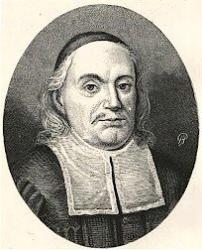
Paul Gerhardt

1607 - 1676 Topics: The Glory of the Triune God Providence; Sanctifiying and Perfecting Grace Strength in Triublation; The Sacraments and Rites of the Church Funeral and Memorial Service; Adoration and Praise; Courage; Faith; Providence; Trust Author of "Give to the Winds Thy Fears" in The United Methodist Hymnal Paul Gerhardt (b. Gräfenheinichen, Saxony, Germany, 1607; d. Lubben, Germany, 1676), famous author of Lutheran evangelical hymns, studied theology and hymnody at the University of Wittenberg and then was a tutor in Berlin, where he became friends with Johann Crüger. He served the Lutheran parish of Mittenwalde near Berlin (1651-1657) and the great St. Nicholas' Church in Berlin (1657-1666). Friederich William, the Calvinist elector, had issued an edict that forbade the various Protestant groups to fight each other. Although Gerhardt did not want strife between the churches, he refused to comply with the edict because he thought it opposed the Lutheran "Formula of Concord," which con­demned some Calvinist doctrines. Consequently, he was released from his position in Berlin in 1666. With the support of friends he became archdeacon at Lubben in 1669 and remained there until his death. Gerhardt experienced much suffering in his life;­ he and his parishioners lived in the era of the Thirty Years' War, and his family experi­enced incredible tragedy: four of his five children died young, and his wife died after a prolonged illness. In the history of hymnody Gerhardt is considered a transitional figure-he wrote at a time when hymns were changing from a more objective, confes­sional, and corporate focus to a pietistic, devotional, and personal one. Like other German hymns, Gerhardt's were lengthy and intended for use throughout a service, a group of stanzas at a time. More than 130 of his hymns were published in various editions of Cruger's Praxis Pietatis Melica, the Crüger-Runge Gesangbuch (1653), and Ebeling's Das andere Dutzeud geistliche Andachtslieder Herrn Paul Gerhardts (1666-1667). John Wesley and Catherine Winkworth both made famous English translations of Gerhardt's texts. Bert Polman ====================== Gerhardt, Paulus, son of Christian Gerhardt, burgomaster of Gräfenhaynichen, near Wittenberg, was born at Grafenhaynichen, Mar. 12, 1607. On January 2, 1628, he matriculated at the University of Wittenberg. In the registers of St. Mary's church, Wittenberg, his name appears as a godfather, on July 13, 1641, described still as "studiosus," and he seems to have remained in Wittenberg till at least the end of April, 1642. He appears to have gone to Berlin in 1642 or 1643, and was there for some time (certainly after 1648) a tutor in the house of the advocate Andreas Barthold, whose daughter (Anna Maria, b. May 19, 1622, d. March 5, 1668) became his wife in 1655. During this period he seems to have frequently preached in Berlin. He was appointed in 1651, at the recommendation of the Berlin clergy, Lutheran Probst (chief pastor) at Mittenwalde, near Berlin, and ordained to this post Nov. 18, 1651. In July, 1657, he returned to Berlin as third diaconus of St. Nicholas's church; but becoming involved in the contest between the Elector Friedrich Wilhelm (who was of the Reformed Church) and the Lutheran clergy of Berlin, he was deposed from his office in February, 1666, though he still remained in Berlin. In Nov. 1668, he accepted the post of archidiaconus at Lübben, on the Spree, was installed in June, 1669, and remained there till his death on June 7, 1676 (Koch, iii. 297-326; Allgemeine Deutsche Biographie, viii. 774-783, &c). The outward circumstances of Gerhardt's life were for the most part gloomy. His earlier years were spent amid the horrors of the Thirty Years' War. He did not obtain a settled position in life till he was 44 years of age. He was unable to marry till four years later; and his wife, after a long illness, died during the time that he was without office in Berlin; while of the five children of the marriage only one passed the period of childhood. The sunniest period of his life was during the early years of his Berlin ministry (i.e. 1657-1663), when he enjoyed universal love and esteem; while his latter years at Lübben as a widower with one surviving child were passed among a rough and unsympathising people. The motto on his portrait at Lübben not unjustly styles him "Theologus in cribro Satanae versatus." Gerhardt ranks, next to Luther, as the most gifted and popular hymnwriter of the Lutheran Church. Gervinus (ed. 1842, pt. iii. p. 366), the well-known historian of German literature, thus characterises him:— "He went back to Luther's most genuine type of hymn in such manner as no one else had done, only so far modified as the requirements of his time demanded. In Luther's time the belief in Free Grace and the work of the Atonement, in Redemption and the bursting of the gates of Hell was the inspiration of his joyful confidence; with Gerhardt it is the belief in the Love of God. With Luther the old wrathful God of the Romanists assumed the heavenly aspect of grace and mercy; with Gerhardt the merciful Righteous One is a gentle loving Man. Like the old poets of the people he is sincerely and unconstrainedly pious, naive, and hearty; the bliss fulness of his faith makes him benign and amiable; in his way of writing he is as attractive, simple, and pleasing as in his way of thinking." With a firm grasp of the objective realities of the Christian Faith, and a loyal adherence to the doctrinal standpoint of the Lutheran Church, Gerhardt is yet genuinely human; he takes a fresh, healthful view both of nature and of mankind. In his hymns we see the transition to the modern subjective tone of religious poetry. Sixteen of his hymns begin with, “I." Yet with Gerhardt it is not so much the individual soul that lays bare its sometimes morbid moods, as it is the representative member of the Church speaking out the thoughts and feelings he shares with his fellow members; while in style Gerhardt is simple and graceful, with a considerable variety of verse form at his command, and often of bell-like purity in tone. From the first publication of Gerhardt's hymns they at once came into favour among all ranks and creeds; and a large proportion are among the hymns most cherished and most widely used by German-speaking Christians at the present day. They appeared principally in the various editions of Crüger's Praxis, and the Crüger-Runge Gesang-Buch, 1653. The first collected edition was prepared by J. G. Ebeling, and published in separate "Dozens" 1-4 in 1666, 5-10 in 1667, i.e. 120 in all. In the edition of J. H. Feustking, Zerbst, 1707, a few stanzas were intercalated (from manuscripts in the possession of Gerhardt's surviving son), but no new hymns were added. Among modern editions of Gerhardt's hymns (mostly following the text of Ebeling) may be mentioned those by Langbecker, 1842; Schultz, 1842; Wackernagel, 1843; Becker, 1851; Goedeke, 1877, and Gerok, 1878. The Historico-Critical edition of Dr. J. F. Bachmann, 1866, is the most complete (with 11 additional pieces hardly Church hymns), and reverts to the pre-Ebeling text. The length of many of Gerhardt's hymns ("Ein Lämmlein" is 10 stanzas of 10 lines; "Fröhlich soil," 15 stanzas of 8 lines, &c), and the somewhat intricate metres of others, have caused his hymns to be less used in English than otherwise might have been the case; but a considerable proportion have come in some form or other into English hymnbooks. A large selection, translated with scrupulous faithfulness but not retaining much of the lyric grace of the originals, was published by the Rev. John Kelly, in 1867, as Paul Gerhardt’s Spiritual Songs; while many individual hymns have been translated by John Wesley, Miss Winkworth, Miss Cox, Miss Borthwick, and many others. His translations from St. Bernard are noted under "O Haupt voll Blut." There are separate notes on 19 of his greater hymns. Besides these the following have passed into English:— I. Hymns in English common use: i. Auf den Nebel folgt die Sonn. Thanksgiving after great sorrow and affliction. In Crüger's Praxis, 1656, No. 249, in 15 stanzas of 7 1.; thence in Wackernagel’s ed. of his Geistliche Lieder, No. 87, and Bachmann's ed., No. 64. In the Unverfälschter Liedersegen, 1851, No. 402. Translated as:— Cometh sunshine after rain. A good translation, omitting stanzas iv.-vii., x., xi., by Miss Winkworth, in her Lyra Germanica, 1st Ser., 1855, p. 100 (translations of x., xi. added to 2nd ed., 1856). Repeated, omitting the translations of stanzas ii., x.-xii., as No. 4 in her Chorale Book for England, 1863. In the Christian Hymn Book, Cincinnati, 1865, No. 799, begins with st. xiii., "Now as long as here I roam." Another translation is:—"After clouds we see the sun," by J. Kelly, 1867, p. 261. ii. Die Zeit ist nunmehr nah. Day of Judgment—Second Advent. Founded on Acts iii. 20. In the Crüger-Runge Gesang-Buch 1653, No. 367, iii 18 stanzas of 6 lines, and thence in Wackernagel's edition of his Geistliche Lieder, 1843, No. 119 (1874, No. 124), and Bachmann's edition, No. 40. In the Berlin Geistliche Lieder S., ed. 1863, No. 1517. Translated as:— O Christ! how good and fair. Being a translation of stanzas iii., iv., vi., vii., x.-xiii., xvii., by Mrs. Charles, in her Voice of Christian Life in Song, 1858, p. 242. Her translations of stanzas iii., x., xii., are No. 150 in G. S. Jellicoe's Collection, 1867. Other trs. are:—(1) "May I when time is o'er," of stanzas vii., viii. as part of No. 831 in the Moravian Hymn Book, 1789; in the 1801 and later eds. (1886, No. 1229), beginning, "I shall, when time is o'er." (2) “The time is very near," by J. Kelly, 1867, p. 341. iii. Gottlob, nun ist erschollen. Peace. Thanksgiving for the Proclamation of the Peace of Westphalia, in 1648, after the Thirty Years’ War. In Crüger's Praxis 1656, No. 409, in 6 stanzas of 12 lines, and thence in Wackernagel's edition of his Geistliche Lieder, No. 64, and Bachmann's ed., No. 84; and in the Unverfälschter Liedersegen, 1851, No. 589. Translated as: — Thank God it hath resounded. A full and good tr. by Miss Winkworth, in her Lyra Germanica, 2nd Ser., 1858, p. 156, repeated, omitting stanza ii., in her Chorale Book for England, 1863. St. i., v., vi., form No. 49 in M. W. Stryker's Christian Chorals, 1885. Another tr. is: ”Praise God! for forth hath sounded," by J. Kelly, 1867, p. 251. iv. Ich, der ich oft in tiefes Leid. Ps. cxlv. First published in J. G. Ebeling's edition of his Geistliche Andachten Dritte Dutzet, 1666, No. 27, in 18 stanzas of 7 lines. Thence in Wackernagel's ed., No. 95, and Bachmann's ed., No. 103; also in the Berlin Geistliche LiederSchatz, ed. 1863, No. 1004. Translated as:— I who so oft in deep distress . A good translation, omitting stanzas ii.-iv., by Miss Winkworth, in her Lyra Germanica, 2nd Ser., 1858, p. 149. Her translations of stanzas i., xiii.-xvi., xviii., were included as No. 224, and of stanzas vi., viii., ix., xi. altered, and beginning, "O God! how many thankful songs," as No. 168, in Holy Song, 1869. Another tr. is:—-"Who is so full of tenderness," of stanza viii. as stanza iv. of No. 1075 in the Supplement of 1808 to the Moravian Hymn Book, 1801 (1886, No. 537). v. Ich steh an deiner Krippen bier. Christmas. Included in Crüger's Praxis, 1656, No. 105, in 15 stanzas of 7 lines. Thence in Wackernagel's ed., No. 9, and Bachmann's ed., No. 45; and in the Berlin Geistliche LiederSchatz, ed. 1863, No. 167. A beautiful hymn, in which the poet puts himself in the place of the shepherds and the wise men visiting Bethlehem; and in praise and adoration tenders his devotion, his love and his all, to the Infant Saviour in the manger. Translated as:— My faith Thy lowly bed beholds. A translation of stanzas i., iv., vii., xv., by A. T. Russell, as No. 57 in his Psalms & Hymns, 1851. Other trs. are:— (1) "I stand beside Thy manger-bed," by Miss Manington, 1864, p. 38. (2) "Now at the manger here I stand," by J. Kelly, 1867, p. 32. vi. Ich weiss dass mein Erlöser lebt. Easter. Founded on Job xix. 25-27. First published in J. G. Ebeling's ed. of his Geistliche Andachten Zehende Dutzet, 1667, No. 119, in 9 stanzas of 7 lines; repeated in Wackernagel's ed., 1843, No. 118 (1874, No. 123); in Bachmann's ed., No. 119; and in the Berlin Geistliche Lieder S. ed. 1863, No. 301. Translated as:— I know that my Redeemer lives, In this my faith is fast. A full and spirited translation by J. Oxenford, in Lays of the Sanctuary, 1859, p. 122. His translations of stanzas i., iii., vii.-ix., were included, altered, as No. 779 in Kennedy, 1863. Another tr. is:— "I know that my Redeemer lives, This hope," &c, by Miss Manington, 1863, p. 78. vii. Ich weiss, mein Gott, dass all mein Thun. Supplication. A prayer for success in all Christian works and purpose; founded on Jeremiah x. 23, and Acts v. 38, 39. Included in Crüger's Praxis, 1656, No. 332, in 18 stanzas of 5 lines. In Wackernagel's ed., No. 40; Bachmann's ed., No. 71, and the Berlin Geistliche Lieder S., ed. 1863. Translated as:— I know, my God, and I rejoice. A good translation of stanzas i.-iii., viii., xi., ix., by Miss Winkworth, as No. 121 in her Chorale Book for England, 1863. Another translation is:— "My God! my works and all I do” by J. Kelly, 1867, p. 102. viii. Kommt, und lasst uns Christum ehren. Christmas. Founded on St. Luke ii. 15. First published in J. G. Ebeling's ed. of his Geistliche Andachten Fünffte Dutzet, 1667, No. 56, in 8 stanzas of 4 lines. Thence in Wackemagel's ed., No. 6; Bachmann's ed., No. 110; and the Unverfälschter Liedersegen, 1851, No. 43. Translated as:— 1. Come, unite in praise and singing. Omitting stanzas vi., vii., contributed by A. T. Russell to Maurice's Choral Hymnbook, 1861, No. 707. 2. Bring to Christ your best oblation. A full and good translation by P. Massie in his Lyra Domestica, 1864, p. 96; repeated in Snepp's Songs of Grace & Glory and Reid's Praise Book, 1872. Other translations are:— (1) "Come, and let us Christ revere now," by Miss Manington, 1864, p. 25. (2) "Come, and Christ the Lord be praising," by J. Kelly, 1867, p. 24. ix. Lobet den Herren, alle die ihn fürchten. Morning. Included in the Crüger-Runge Gesang-Buch 1653, No. 7, in 10 stanzas of 5 lines. In Wackernagel's ed., No. 100, and Bachmann's ed., No. 21, and in the Berlin Geistliche Lieder S. edition 1863, No. 1063. Translated as:— Praise God! revere Him! all ye men that fear Him! This is from the version in Bunsen's Allgemeine Gesangbücher, 1846, No. 167, stanza i. being from Gerhardt, and st. ii., iii., from "Lobet den Herren, denn er ist sehr freundlich" (q. v.); and appeared in the Dalston Hospital Hymnbook, 1848, No. 55, signed "A. G." Other translations are:— (1) "Our Lord be praising, All His glory raising," by H. J. Buckoll, 1842, p. 27. (2) "Praise ye Jehovah, all ye men who fear Him," by J. Kelly, 1867, p. 279. x. Micht so traurig, nicht so sehr. Christian Contentment. In the 3rd edition, 1648, of Crüger's Praxis, No. 251, in 15 stanzas of 6 1., repeated in Wackernagel's ed., No. 53; Bachmann's ed., No. 16, and the Berlin Geistliche Lieder S., ed. 1863, No. 851. It is founded on Ps. cxvi. 7; Ps. xlii. 6-12; 1 Tim. vi. 6. Translated as:— Ah! grieve not so, nor so lament. A free translation by Mrs. Findlater, of stanzas i., ii., vii.-x., xiii., xv., in the 1st Ser., 1854, of the Hymns from the Land of Luther, p. 48 (1884, p. 50). Repeated, abridged, in Holy Song, 1869, and Dale's English Hymnbook, 1875. Other translations are:- (l) "Why this sad and mournful guise," by Miss Dunn, 1857, p. 85. (2) "Not so darkly, not so deep," by Miss Warner, 1858 (1861, p. 58). (3) “0 my soul, why dost thou grieve," by J. Kelly, 1867. xi. Nun lasst uns gehn und treten. New Year. Included in the Crüger-Runge Gesang-Buch, 1653, No. 106, in 15 st. of 4 1. Thence in Wackernagel's ed., No. 12; Bachmann's ed., No. 24, and the Berlin Geistliche Lieder S., ed. 1863, No. 200. Evidently written during the Thirty Years' War. Translated as:— In pray'r your voices raise ye. In full, by J. Kelly, 1867, p. 45. From this, 8 st. are included as No. 48 in the Ohio Lutheran Hymnal, 1880. Other translations are:— (1) "Now let each humble Creature," in the Supplement to German Psalter, ed. 1765, p. 4, and Select Hymns from German Psalter, Tranquebar, 1754. p. 7. In the Moravian Hymnbook, 1789, No. 507 (1849, No. 1106), greatly altered, and beginning, “Year after year commenceth." (2) "0 come with prayer and singing," by R. Massie in the British Herald , Jan., 1865, p. 8. (3) “Christians all, with one accord," by E. Massie, 1867, p. 168. (4) "With notes of joy and songs of praise," by Dr. R. Maguire, 1883, p. 24. xii. Schaut! Schaut! was ist für Wunder dar? Christmas. First published in J. G. Ebeling's ed. of his Geistliche Andachten Fünffte Dutzet, 1667, No. 55, in 18 stanzas of 4 1. Thence in Wackernagel’s ed., No. 4; Bachmann's ed., No. 109. Translated as:— Behold! Behold! what wonders here. In full, by J. Kelly, 1867, p. 14. From this, 12 st. were included in the Ohio Lutheran Hymnal, 1880, as Nos. 25, 26: No. 26 beginning with the translation of st. xiii., "It is a time of joy today." xiii. Warum willt du draussen stehen. Advent. Suggested by Gen. xxiv. 31. Appeared in the Crüger-Runge Gesang-Buch, 1653, No. 78, in 9 stanzas of 8 lines; viz., stanzas i.—vii., xi., xii., of the full form; st. viii.-x. being added in Ebeling's Geistliche Andachten Fünffte Dutzet, 1667, No. 50. The full text, in 12 stanzas, is also in Wackernagel's ed., No. 2; Bachmann's ed., No. 23, and Geistliche Lieder S., 1851, No. 20. Translated as:— Wherefore dost Thou longer tarry. A good translation, omitting st. viii.-x., by Miss Winkworth, in her Lyrica Germanica, 2nd Ser., 1858, p. 6. In her Chorale Book for England, 1863, No. 153, the translations of st. iii., v., xi., are omitted. Other trs. are:- (l) “Wherefore dost Thou, blest of God," by R. Massie, in Lyra Domestica, 1864, p. 90. (2) “Why, without, then, art Thou staying," by J. Kelly, 1867, p. 5. xiv. Was alle Weisheit in der Welt. Trinity Sunday. In Crüger's Praxis, 1656, No. 212, in 8 stanzas of 9 lines. Thence in Wackernagel's ed., No. 1, and Bachmann's ed., No, 59, and the Berlin Geistliche Lieder S., ed. 1863, No. 50. Translated as:— Scarce tongue can speak, ne'er human ken. In full, by J. Kelly, 1867, p. 1, repeated as No. 111 in the Ohio Lutheran Hymnal, 1880. Another translation is:—"The mystery hidden from the eyes," by R. Massie, in Lyra Domestica, 1864, p. 87. xv. Was Gott gefällt, mein frommes Kind. Resignation. This beautiful hymn, on resignation to “what pleases God," first appeared in the Crüger-Runge Gesang-Buch, 1653, No. 290, in 20 stanzas of 5 lines. Thence in Wackernagel's ed., No. 60; Bachmann's ed., No. 37, and the Unverfälschter Liedersegen, 1851, No. 723. Translated as:—- What God decrees, child of His love. A good translation of stanzas i., ii., v., vi., viii., xii., xv., xviii., xx., by Mrs. Findlater, in the 3rd Ser., 1858, of the Hymns from the Land of Luther, p. 49 (1884, p. 170). Included, in full, in Bishop Ryle's Collection, 1860, No. 171; and abridged in Christian Hymns, Adelaide, 1872, and beginning, "What God decrees, take patiently," in Kennedy, 1863, No. 1344. Other translations are:— (1) "What pleaseth God with joy receive," by Miss Dunn, 1857, p. 94. (2) “What pleases God, 0 pious soul," by Miss Winkworth, 1858, p. 193, (3) ”What pleaseth God, my faithful child," by J. Kelly, 1867, p. 189. xvi. Wie schőn ists doch, Herr Jesu Christ. For Married Persons. Founded on Ps. cxxviii. First published in Ebeling's ed. of his Geistliche Andachten Vierte Dutzet, 1666, No. 38, in 8 st. of 12 1. Thence in Wackernagel's ed., 1843, No. 108 (1874, No. 109); Bachmann's ed., No. 105, and the Unverfälschter Liedersegen S., 1851, No. 680. Translated as:— Oh, Jesus Christ! how bright and fair. In full, by J. Kelly, 1867, p. 307, repeated, altered, and omitting st. iii.—v., in the Ohio Lutheran Hymnal, 1880, No. 339. II. Hymns not in English common use: xvii. Also hat Gott die Welt geliebt. Good Friday. On St. John iii. 16. In Crüger's Praxis, 1661, No. 372, in 17 stanzas. Translated as, "Be of good cheer in all your wants,” by P. H. Molther, of stanza 16, as No. 181 in the Moravian Hymnbook, 1789 (1886, No. 217). xviii. Auf, auf, mein Herz mit Freuden. Easter. In Crüger's Praxis, 1648, No. 141, in 9 stanzas. The translations are:-- (1) "Up! Up! my heart with gladness, See," by J. Kelly, 1867, p. 71. (2) "Up, up, my heart, with gladness; Receive," by N. L. Frothingham, 1870, p. 228. xix. Du bist zwar mein und bleibest mein. For the Bereaved. A beautiful hymn of consolation for parents on the loss of a son. Written on the death of Constantin Andreas, younger son of Johannes Berkov, pastor of St. Mary's Church, Berlin, and first printed as one of the "Dulcia amicorum solatia" at the end of the funeral sermon by Georg Lilius, Berlin, 1650. Included in Ebeline's ed. of Gerhardt's Geistliche Andachten Sechste Dutzet, Berlin, 1667, No. 72, in 12 stanzas. The translations are: (1) "Thou'rt mine, yes, still thou art mine own”, by Miss Winkworth, 1858, p. 123. (2) "Yes, thou art mine, still mine, my son," by J. D. Burns, in the Family Treasury, 1861, p. 8, and his Remains, 1869, p. 249. (3) "Mine art thou still, and mine shalt be," by J. Kelly, 1867, p. 333. (4) "Thou art mine own, art still mine own," by Dr. J. Guthrie, 1869, p. 100. xx. Du, meine Seele, singe. Ps. cxlvi. In the Crüger-Runge Gesang-Buch, Berlin, 1653, No. 183, in 10 stanzas. Translated as, “O come, my soul, with singing," by Miss Burlingham, in the British Herald, Jannary, 1866, p. 207, and as No. 423 in Reid's Praise Book, 1872. xxi. Gieb dich zufrieden, und sei stille. Cross and Consolation—-Ps. xxxvii. 7. In Ebeling Erstes Dutzet, 1666, No. 11, in 15 stanzas. Translated as: (1) “Be thou content: be still before," by Miss Winkworth, 1855, p. 156, and in Bishop Ryle's Collection, 1860, No. 269. (2) “Be thou contented! aye relying," by J. Kelly, 1867, p. 202. (3) “Tranquilly lead thee, peace possessing," by N. L. Frothingham, 1870, p. 246. xxii. Hőr an! mein Herz, die sieben Wort. Passiontide. On the Seven Words from the Cross. Founded on the hymn noted under Bőschenstein, J. (q.v.). In Crüger's Praxis, 1656, No. 137, in 15 stanzas. Translated as: (1) “Come now, my soul, thy thoughts engage," by Dr. H. Mills, 1845 (1856, p. 309). (2) "Seven times the Saviour spake my heart," by R. Massie, in the British Herald, Sept., 1865, p. 133. (3) "My heart! the seven words hear now," by J. Kelly, 1867, p. 63. xxiii. Ich hab in Gottes Herz und Sinn. Resignation. In Crüger's Praxis, 1648, No. 249, in 12 st. Translated as: (1) "I into God's own heart and mind," by J. Kelly, 1867, p. 219. (2) "To God's all-gracious heart and mind”, by Miss Winkworth, 1869, p. 213, repeated in Statham's Collection, Edinburgh, 1869 and 1870. xxiv. 0 Jesu Christ! dein Kripplein ist. Christmas. At the Manger of Bethlehem. In Crüger's Praxis, 1656, No. 101, in 15 stanzas. Translated as: (1) Be not dismay'd—-in time of need" (st. xi.) in the Moravian Hymnbook, 1789, No. 236. (2) "O blessed Jesus! This," by Miss Winkworth, 1858, p, 18. (3) "O Jesus Christ! Thy cradle is," by Miss Manington, 1864, p. 41. (4) "Thy manger is my paradise," by J. Kelly, 1867, p. 26. xxv. Voller Wunder, voller Kunst. Holy Matrimony. In Ebeling Vierte Dutzet, 1666, No. 40, in 17 st. Often used in Germany at marriages on the way to church. Translated as: (1) "Full of wonder, full of skill," by Dr. H. Mills, 1845 (1856, p. 215). (2) "Full of wonder, full of skill," in Mrs. Stanley Carr's translation of Wildenhahn's Paul Gerhardt, ed. 1856, p. 52. (3) "Full of wonder, full of art," by J. Kelly, 1867, p. 302. (4) "Full of wonder, full of art," by Miss Winkworth, 1869, p. 215. xxvi. Warum machet solche Schmerzen. New Year. On St. Luke ii. 21. In Crüger's Praxis, 1648, No. 97, in 4 stanzas. Bunsen, in his Versuch, 1833, No. 120, gives st. iii., iv. altered to "Freut euch, Sünder, allerwegen." Tr. as: (1) "Mortals, who have God offended," by Miss Cox, 1841, p. 21, from Bunsen. (2) "Why should they such pain e'er give Thee," by J. Kelly, 1867, p. 43. xxvii. Weg, mein Herz, mit den Gedanken. Lent. On St. Luke xv. In Crüger's Praxis, 1648, No. 36, in 12 stanzas. Translated as: (1) "Let not such a thought e'er pain thee," by J. Kelly, 1867, p. 83. (2) "Hence, my heart, with such a thought," by Miss Winkworth, 1869, p. 210. Besides the above, a considerable number of other hymns by Gerhardt have been translated by Mr. Kelly, and a few by Dr. Mills, Miss Manington, and others. The limits of our space forbid detailed notes on these versions. [Rev. James Mearns, M.A.] -- John Julian, Dictionary of Hymnology (1907) ============================= Gerhardt, Paulus, pp. 409, ii., 1565, i. The most recent edition of Gerhardt's hymns is in vol. iii. of the Fischer-Tümpel Deutsche evangelische Kirchenlied des Siebzehnten Jahr-hunderts, 1906, Nos. 389-495. In fixing the text the compilers have been enabled to use the recently discovered 1647, 1653 and 1657 Berlin editions of Cruger's Praxis Pietatis Melica. [Rev. James Mearns, M.A.] --John Julian, Dictionary of Hymnology, New Supplement (1907)

John S. B. Monsell

1811 - 1875 Person Name: John Samuel Bewley Monsell, 1811-1875 Topics: Believers; Christ, the Lord Jesus The Way, Truth and Life; Christian Race; God Our Strength; God Unchangeableness of; Life The Christ; The Christian Life Discipleship; Trust in God Author of "Fight the good fight" in The Book of Praise John Samuel Bewley Monsell (b. St. Colomb's, Londonderry, Ireland, 1811; d. Guilford, Surrey, England, 1875) was educated at Trinity College in Dublin and served as a chaplain and rector of several churches in Ireland after his ordination in 1835. Transferred to England in 1853, he became rector of Egham in Surrey and was rector of St. Nicholas Church in Guilford from 1870 until his death (caused by a construction accident at his church). A prolific poet, Monsell published his verse in eleven volumes. His three hundred hymns, many celebrating the seasons of the church year, were issued in collections such as Hymns and Miscellaneous Poems (1837), Spiritual Songs (1857), Hymns of Love and Praise (1863), and The Parish Hymnal (1873). Bert Polman =============================== Monsell, John Samuel Bewley, L.L.D., son of Thomas Bewley Monsell, Archdeacon of Londonderry, was born at St. Columb's, Londonderry, March 2,1811, and educated at Trinity College, Dublin (B.A. 1832, LL.D. 1856). Taking Holy Orders in 1834, "he was successively Chaplain to Bishop Mant, Chancellor of the diocese of Connor, Rector of Ramoan, Vicar of Egham, diocese Worcester, and Rector of St. Nicholas's, Guildford. He died in consequence of a fall from the roof of his church, which was in the course of rebuilding, April 9, 1875. His prose works include Our New Vicar, 1867; The Winton Church Catechist, &c. His poetical works are:— (1) Hymns and Miscellaneous Poems, Dublin, W. Curry, Jun., & Co., 1837; (2) Parish Musings, or Devotional Poems, 1850; (3) Spiritual Songs for the Sundays and Holy Days throughout the Year. 1857 (People's Ed., 1875); (4) His Presence, not His Memory, 1855, 1858; (5) Hymns of Love and Praise for the Church's Year, 1863 (2nd ed. 1866); (6) The Passing Bell; Ode to The Nightingales, and Other Poems, 1867; (7) Litany Hymns, 1869; (8) The Parish Hymnal after the Order of The Book of Common Prayer, 1873; (9)Watches by the Cross, 1874; (10) Simon the Cyrenian; and Other Poems; (11) Nursery Carols. In these works several hymns which appeared in the earlier books are repeated in the later, and thus at first sight his compositions seem to be more in number than they really are. The total amounts to nearly 300, and of these about one-fourth are in common use. The most popular of these are, "God is love; that anthem olden"; "God of that glorious gift of grace"; "Holy offerings, rich and rare"; “Lord of the living harvest"; "Mighty Father, Blessed Son"; and "Sing to the Lord a joyful song." In addition to those which are annotated under their respective first lines, the following are in common use:— i. Appeared in his Hymns and Miscellaneous Poems, Dublin, 1837. 1. Birds have their quiet nests. Humility of Christ. 2. Dark and dim the day-light rose. Good Friday. 3. Friend of the friendless and the lone. Jesus, the Friend. 4. My God, what wondrous love was Thine. Whitsuntide. 5. O for a heart more fervent. Holiness desired. 6. O for the time when on the world. Missions. 7. The springtide hour brings leaf and flower. Spring. 8. This day the Lord is risen. Easter. 9. When cold our hearts and far from Thee. Teach us to Pray. 10. Why restless, why so weary? Providence. 11. Yes, I do feel, my God, that I am Thine. Assurance. ii. Appeared in his Parish Musings, 1850. 12. In Thee, my [O] God, will we rejoice. Trust in God. 13. Lord, dependent on Thy promise. Holy Baptism. 14. Members of Christ, Children of God. Confirmation. 15. So teach me, Lord, to number. The Old and New Year. 16. Soon [soon] and for ever. Death anticipated. 17. The broken, contrite heart oppress'd. Promises of God. 18. Thou art near, yes, Lord, I feel it. Divine Support. 19. Would'st thou learn the depths of sin? Passiontide. iii. Appeared in his Spiritual Songs, 1857. 20. A few bright leaders of her host. All Saints. 21. A happy, happy [merry, merry] Christmas. New Year's Day. 22. Blessed hope, that we the fallen [sinful]. Hope. 23. Heart in heart, and hand in hand. SS. Simon and Jude. 24. Jesus, my loving Lord! I know. Resignation. 25. Last Sunday of the work-day year. Sunday after Christmas Day. 26. Loved by God the Father. Holy Baptism. 27. Mercy, mercy, God the Father. Lent. 28. My head is low, my heart is sad. Confirmation. (Penitential.) 29. Oft doth the Christian's heart inquire. Christian Duty. 30. 0 God, most mighty, listen now. Charities. From "When languid frame or throbbing pulse." 31. 0 holy Sabbath day. Sunday. 32. 0 Lord, what records of Thy love. St. Barnabas. Sometimes, “Lord God, what records of Thy love." 33. 0 love, divine and golden. Holy Matrimony. From this, "Love divine and tender" is taken. 34. One lesson more the Church must learn. Waiting on God. From this, “One lesson Christ His own would teach" is taken. 35. Proudly in his [the] hall of judgment. Tuesday before Easter. 36. Sinful, sighing to be blest. Lent. 37. The Church of God, with equal care. St. James. 38. The journey done; The rest begun. Burial. 39. The simple trust that can confide. Trust. 40. Weary and sad, a wanderer from Thee. Lent. iv. Appeared, in his Hymns of Love and Praise, 1863, and 2nd ed., 1866. 41. Bounteous blesser of the seedtime. Sexagesima. Seed Time. 42. Brightly hopeful for the future. God's mercy through life. 43. Christ is risen! Alleluia! Easter. 44. Come and deck the grave with flowers. Easter Eve. 45. Fight the good fight with all thy might. Fight of Faith. 46. Holy Spirit, long expected. Whitsuntide. 47. Hours and days and months and years. The Circumcision. 48. I have no comfort but Thy love. The Comfort of Love. 49. I knew Thee in the land of drought. A Song of Love. 60. I think of Thee, my God by night. Evening. 61. Jesu, gentle Sufferer, say. Good Friday. 52. Labouring and heavy-laden. Lent. 53. Light of the world, we hail Thee. Missions. 54. Lord, to whom except to Thee? Holy Communion. 55. My sins, my sins, my Saviour. Ash Wednesday. 56. O'er the distant mountains breaking. Second Advent. 57. Other Name than our dear Lord's. Jesus All and in All. 58. Pity on us, heavenly Father. Litany Hymn for Lent. 59. Praise the Lord, rejoice, ye Gentiles. Advent, or Missions. 60. Rest of the weary, joy of the sad. Jesus, the Saviour and Friend. 61. Shadow of a mighty Rock. Jesus, the Rock of Ages. 62. Sing, 0 heaven; 0 earth rejoice. Ascension. 63. Sweet is the gentle voice of spring. Seed Time. 64. Sweet is Thy mercy, Lord. Divine Mercy. 65. Teach me to do the thing that pleaseth Thee. Divine Teaching. 66. The good old times, how glorious. Advent. 67. The world may in its wealth delight. Rejoicing in the Lord. An altered form of "Let others in their wealth delight." 68. Though Thou slay me, I will trust. Faith. 69. To Christ the Lord! The Incarnate Word. Christmas. 70. When I had wandered from His fold. The Love of God. v. Appeared in his Litany Hymns, 1869. 71. Lay the precious body, In the quiet grave. Burial. 72. My sins have taken such a hold on me. Litany of Repentance. vi. Appeared in his Parish Hymnal, 1873. 73. I hunger and I thirst. Septuagesima. Dr. Monsell’s hymns are as a whole bright, joyous, and musical; but they lack massiveness, concentration of thought, and strong emotion. A few only are of enduring excellence. --John Julian, Dictionary of Hymnology 1907 ===================== Monsell, J, S. B., p. 762, ii. Additional hymns in common use include:— 1. Blessed Lord, Who, till the morning. Holy Scriptures. From his Spiritual Songs, 1857. 2. Christ incarnate in His poor. Christ in His Poor. From his Hymns of Love and Praise, 1863. 3. We ask for life, and mean thereby. Life and Work. From his Hymns of Love and Praise, 1863. --John Julian, Dictionary of Hymnology, Appendix, Part II (1907) ==================== Monsell, J. S. B. Since the article on pp. 762-3 was written, copies of the original editions of Dr. Monsell's works have come into our hands, and from them we have to make the following corrections, the numbers following being those given to the first lines of the hymns on pp. 762-3:— 15. So teach me, &c. Hymns and Misc. Poems, 1837, p. 30. 17. The broken, &c. Hymns and Misc. Poems, 1837, p. 49. 18. Thou art near, &c. Hymns and Misc. Poems, 1837, p. 21. 19. Would'st thou, &c. Hymns and Misc. Poems, 1837, p. 14. 26. Loved by God, &c. Parish Hymnal, 1873, No. 181. 27. Mercy, mercy, &c. Prayers and Litanies, 1861, p. 119. 28. My head is low, &c. Hymns of Love and Praise, 1866, p. 125. 33. O Love divine, &c. Hymns of Love and Praise, p. 131. 38. The journey done, &c. Hymns of Love and Praise, p. 134. 40. Weary and sad, &c. Parish Hymnal, 1873, No. 209. 41-50. Hymns of Love and Praise, 1863. 51. See "Day of loss," &c, p. 282, i. 52. Labouring, &c. Prayers and Litanies, 1861, p. 116. 53-57. Hymns of Love and Praise, 1863. 58. Pity on us, &c. Prayers and Litanies, 1861, p. 125. 59. Praise the Lord, &c. Hymns of Love and Praise, 1863, p. 13. 60. 61, 62, 64, 65. Prayers and Litanies, 1861. 63, 66-70. Hymns of Love and Praise, 1863. 72. My sins, &c. Hymns of Love and Praise, 1866, p. 34. 73. I hunger, &c. Hymns of Love and Praise, 1866, p. 128. It will be seen from this list of additions and corrections that Dr. Monsell multiplied his works by giving much the same material under new titles, and that his Prayers and Litanies of 1861 were unknown to us when the original article was written. "We can sincerely add that few hymn writers are so perplexing to the annotator as Dr. Monsell. [Rev. James Mearns, M.A.] --John Julian, Dictionary of Hymnology, New Supplement (1907)

Catherine Winkworth

1827 - 1878 Topics: Christian Year New Year; The Glory of the Triune God Providence; Sanctifiying and Perfecting Grace Strength in Triublation; Adoration and Praise; Christian Year New Year; Christian Year Lent; Comfort; Courage; Funerals and Memorial Services; Grief; Guidance; Hope; Pilgrimage; Providence; Trust Translator of "If Thou But Suffer God to Guide Thee" in The United Methodist Hymnal Catherine Winkworth (b. Holborn, London, England, 1827; d. Monnetier, Savoy, France, 1878) is well known for her English translations of German hymns; her translations were polished and yet remained close to the original. Educated initially by her mother, she lived with relatives in Dresden, Germany, in 1845, where she acquired her knowledge of German and interest in German hymnody. After residing near Manchester until 1862, she moved to Clifton, near Bristol. A pioneer in promoting women's rights, Winkworth put much of her energy into the encouragement of higher education for women. She translated a large number of German hymn texts from hymnals owned by a friend, Baron Bunsen. Though often altered, these translations continue to be used in many modern hymnals. Her work was published in two series of Lyra Germanica (1855, 1858) and in The Chorale Book for England (1863), which included the appropriate German tune with each text as provided by Sterndale Bennett and Otto Goldschmidt. Winkworth also translated biographies of German Christians who promoted ministries to the poor and sick and compiled a handbook of biographies of German hymn authors, Christian Singers of Germany (1869). Bert Polman ======================== Winkworth, Catherine, daughter of Henry Winkworth, of Alderley Edge, Cheshire, was born in London, Sep. 13, 1829. Most of her early life was spent in the neighbourhood of Manchester. Subsequently she removed with the family to Clifton, near Bristol. She died suddenly of heart disease, at Monnetier, in Savoy, in July, 1878. Miss Winkworth published:— Translations from the German of the Life of Pastor Fliedner, the Founder of the Sisterhood of Protestant Deaconesses at Kaiserworth, 1861; and of the Life of Amelia Sieveking, 1863. Her sympathy with practical efforts for the benefit of women, and with a pure devotional life, as seen in these translations, received from her the most practical illustration possible in the deep and active interest which she took in educational work in connection with the Clifton Association for the Higher Education of Women, and kindred societies there and elsewhere. Our interest, however, is mainly centred in her hymnological work as embodied in her:— (1) Lyra Germanica, 1st Ser., 1855. (2) Lyra Germanica, 2nd Ser., 1858. (3) The Chorale Book for England (containing translations from the German, together with music), 1863; and (4) her charming biographical work, the Christian Singers of Germany, 1869. In a sympathetic article on Miss Winkworth in the Inquirer of July 20, 1878, Dr. Martineau says:— "The translations contained in these volumes are invariably faithful, and for the most part both terse and delicate; and an admirable art is applied to the management of complex and difficult versification. They have not quite the fire of John Wesley's versions of Moravian hymns, or the wonderful fusion and reproduction of thought which may be found in Coleridge. But if less flowing they are more conscientious than either, and attain a result as poetical as severe exactitude admits, being only a little short of ‘native music'" Dr. Percival, then Principal of Clifton College, also wrote concerning her (in the Bristol Times and Mirror), in July, 1878:— "She was a person of remarkable intellectual and social gifts, and very unusual attainments; but what specially distinguished her was her combination of rare ability and great knowledge with a certain tender and sympathetic refinement which constitutes the special charm of the true womanly character." Dr. Martineau (as above) says her religious life afforded "a happy example of the piety which the Church of England discipline may implant.....The fast hold she retained of her discipleship of Christ was no example of ‘feminine simplicity,' carrying on the childish mind into maturer years, but the clear allegiance of a firm mind, familiar with the pretensions of non-Christian schools, well able to test them, and undiverted by them from her first love." Miss Winkworth, although not the earliest of modern translators from the German into English, is certainly the foremost in rank and popularity. Her translations are the most widely used of any from that language, and have had more to do with the modern revival of the English use of German hymns than the versions of any other writer. -- John Julian, Dictionary of Hymnology (1907) ============================ See also in: Hymn Writers of the Church

Martin Luther

1483 - 1546 Topics: The Glory of the Triune God God's Nature; The Glory of the Triune God God's Nature; Sanctifiying and Perfecting Grace Strength in Triublation; Particular Times of Worship Special Days; Adoration and Praise; Funerals and Memorial Services; Heritage; Kingdom of God; Presence (Holy Spirit) Author of "A Mighty Fortress Is Our God" in The United Methodist Hymnal Luther, Martin, born at Eisleben, Nov. 10, 1483; entered the University of Erfurt, 1501 (B.A. 1502, M.A.. 1503); became an Augustinian monk, 1505; ordained priest, 1507; appointed Professor at the University of Wittenberg, 1508, and in 1512 D.D.; published his 95 Theses, 1517; and burnt the Papal Bull which had condemned them, 1520; attended the Diet of Worms, 1521; translated the Bible into German, 1521-34; and died at Eisleben, Feb. 18, 1546. The details of his life and of his work as a reformer are accessible to English readers in a great variety of forms. Luther had a huge influence on German hymnody. i. Hymn Books. 1. Ellich cristlich lider Lobgesang un Psalm. Wittenberg, 1524. [Hamburg Library.] This contains 8 German hymns, of which 4 are by Luther. 2. Eyn Enchiridion oder Handbuchlein. Erfurt, 1524 [Goslar Library], with 25 German hymns, of which 18 are by Luther. 3. Geystliche Gesangk Buchleyn. Wittenberg, 1524 [Munich Library], with 32 German hymns, of which 24 are by Luther. 4. Geistliche Lieder auffs new gebessert. Wittenberg. J. Klug, 1529. No copy of this book is now known, but there was one in 1788 in the possession of G. E. Waldau, pastor at Nürnberg, and from his description it is evident that the first part of the Rostock Gesang-Buch, 1531, is a reprint of it. The Rostock Gesang-Buch, 1531, was reprinted by C. M. Wiechmann-Kadow at Schwerin in 1858. The 1529 evidently contained 50 German hymns, of which 29 (including the Litany) were by Luther. 5. Geistliche Lieder auffs new gebessert. Erfurt. A. Rauscher, 1531 [Helmstädt, now Wolfenbüttel Library], a reprint of No. 4. 6. Geistliche Lieder. Wittenberg. J. Klug, 1535 [Munich Library. Titlepage lost], with 52 German hymns, of which 29 are by Luther. 7. Geistliche Lieder auffs new gebessert. Leipzig. V. Schumann, 1539 [Wernigerode Library], with 68 German hymns, of which 29 are by Luther. 8. Geistliche Lieder. Wittenberg. J. Klug, 1543 [Hamburg Library], with 61 German hymns, of which 35 are by Luther. 9. Geystliche Lieder. Leipzig. V. Babst, 1545 [Gottingen Library]. This contains Luther's finally revised text, but adds no new hymns by himself. In pt. i. are 61 German hymns, in pt. ii. 40, of which 35 in all are by Luther. For these books Luther wrote three prefaces, first published respectively in Nos. 3, 4, 9. A fourth is found in his Christliche Geseng, Lateinisch und Deudsch, zum Begrebnis, Wittenberg, J. Klug, 1542. These four prefaces are reprinted in Wackernagel’s Bibliographie, 1855, pp. 543-583, and in the various editions of Luther's Hymns. Among modern editions of Luther's Geistliche Lieder may be mentioned the following:— Carl von Winterfeld, 1840; Dr. C. E. P. Wackernagel, 1848; Q. C. H. Stip, 1854; Wilhelm Schircks, 1854; Dr. Danneil, 1883; Dr. Karl Gerok, 1883; Dr. A. F. W. Fischer, 1883; A. Frommel, 1883; Karl Goedeke, 1883, &c. In The Hymns of Martin Luther. Set to their original melodies. With an English version. New York, 1883, ed. by Dr. Leonard Woolsey Bacon and Nathan H. Allen, there are the four prefaces, and English versions of all Luther's hymns, principally taken more or less altered, from the versions by A. T. Russell, R. Massie and Miss Winkworth [repub. in London, 1884]. Complete translations of Luther's hymns have been published by Dr. John Anderson, 1846 (2nd ed. 1847), Dr. John Hunt, 1853, Richard Massie, 1854, and Dr. G. Macdonald in the Sunday Magazine, 1867, and his Exotics, 1876. The other versions are given in detail in the notes on the individual hymns. ii. Classified List of Luther's Hymns. Of Luther's hymns no classification can be quite perfect, e.g. No. 3 (see below) takes hardly anything from the Latin, and No. 18 hardly anything from the Psalm. No. 29 is partly based on earlier hymns (see p. 225, i.). No. 30 is partly based on St. Mark i. 9-11, and xvi., 15, 16 (see p. 226, ii.). No. 35 is partly based on St. Luke ii. 10-16. The following arrangement, however, will answer all practical purposes. A. Translations from the Latin. i. From Latin Hymns: 1. Christum wir sollen loben schon. A solis ortus cardine 2. Der du bist drei in Einigkeit. O Lux beata Trinitas. 3. Jesus Christus unser Heiland, Der von. Jesus Christus nostra salus 4. Komm Gott Schopfer, heiliger Geist. Veni Creator Spiritus, Mentes. 5. Nun komm der Beidenheiland. Veni Redemptor gentium 6. Was flirchst du Feind Herodes sehr. A solis ortus cardine ii. From Latin Antiphons, &c.: 7. Herr Gott dich loben wir. Te Deum laudamus. 8. Verleih uns Frieden gnädiglich. Dapacem, Domine 9. Wir glauben all an einen Gott. iii. Partly from the Latin, the translated stanzas being adopted from Pre-Reformation Versions: 10. Komm, heiliger Geist, Herre Gott. 11. Mitten wir im Leben sind. Media vita in morte sumus. B. Hymns revised and enlarged from Pre-Reformation popular hymns. 12. Gelobet seist du Jesus Christ. 13. Gott der Vater wohn uns bei. 14. Gott sei gelobet und gebenedeiet. 15. Nun bitten wir den heiligen Geist. C. Psalm versions. 16. Ach Gott vom Himmel, sieh darein. 17. Aus tiefer Noth schrei ich zu dir. 18. Ein' feste Burg ist unser Gott. 19. Es spricht der Unweisen Mund wohl. 20. Es wollt uns Gott genädig sein. 21. War Gott nicht mit uns diese Zeit. 22. Wohl dem, der in Gotten Furcht steht. D. Paraphrases of other portions of Holy Scripture. 23. Diess sind die heilgen zehn Gebot. 24. Jesaia dem Propheten das geschah. 25. Mensch willt du leben seliglich. 26. Mit Fried und Freud ich fahr dahin. 27. Sie ist mir lieb die werthe Magd. 28. Vater unser im Himmelreich. E. Hymns mainly Original. 29. Christ lag in Todesbanden. 30. Christ unser Herr zum Jordan kam. 31. Ein neues Lied wir heben an. 32. Erhalt uns Herr bei deinem Wort. 33. Jesus Christus unser Heiland, Der den, 34. Nun freut euch lieben Christengemein. 35. Vom Himmel hoch da komm ich her. 36. Vom Himmel kam der Engel Schaar. In addition to these — 37. Fur alien Freuden auf Erden. 38. Kyrie eleison. In the Blätter fur Hymnologie, 1883, Dr. Daniel arranges Luther's hymns according to what he thinks their adaptation to modern German common use as follows:— i. Hymns which ought to be included in every good Evangelical hymn-book: Nos. 7-18, 20, 22, 28, 29, 30, 32, 34, 35, 36, 38. ii. Hymns the reception of which into a hymn-book might be contested: Nos. 2, 3, 4, 19, 21, 22, 23, 24, 25, 33. iii. Hymns not suited for a hymn-book: Nos. 1, 5, 6, 27, 31, 37. [Rev. James Mearns, M.A.] --John Julian, Dictionary of Hymnology (1907)

John H. Stockton

1813 - 1877 Topics: Alleluias; Biblical Names and Places Israel; Biblical Names and Places Jacob; Biblical Names and Places Jerusalem; Biblical Names and Places Zion; Broken-hearted; Church Year Christmas; Earth; Elements of Worship Gathering; Elements of Worship Praise and Adoration; God Trust in; God as Spirit; God as Creator; God's Sovereignty; God's Sustaining Power; God's Wisdom; God's Word; God's Deeds; God's Faithfulness; God's Greatness; God's Knowing; God's law; God's Love; God's Majesty; God's People (flock, sheep); God's Providence; God's Strength; God's Way; Grace; Guilt; Healing; Hope; Hymns of Praise; Jesus Christ Healer; Jesus Christ Mind of; Joy; Life Stages Generations; Love; Occasional Services Dedication / Consecration / Anniversary; Occasional Services Healing Service; Occasional Services Thanksgving Day / Harvest Festival; Pain; Peace; People of God / Church Family of God; People of God / Church Serving; Rejoicing; Remnant of Isarel; Shame; Sorrow; The Creation; Unity and Fellowship; Witness; Worship; Year A, B, C, Christmas, 2nd Sunday; Year B, Ordinary Time after Epiphany, 5th Sunday Composer of "MINERVA" in Psalms for All Seasons Stockton, John Hart, a Methodist minister, was born in 1813, and died in 1877. He was a member of the New Jersey Annual Conference of the Methodist Episcopal Church, and the successive pastoral charges that he filled as a member of that Conference are found in the Conference Journal. He was not only a preacher, but a musician and composer of tunes, as well as hymn writer. He published two gospel song books: Salvation Melodies, 1874, and Precious Songs, 1875. Hymn Writers of the Church by Charles Nutter, 1911 =============== Stockton, John Hart, b. April 19, 1813, and d. March 25, 1877, was the author of "Come, every soul by sin oppressed" (Invitation), in I.D. Sankey's Sacred Songs and Solos, 1878, and of "The Cross, the Cross, the blood¬stained Cross" (Good Friday) in the same collection. --John Julian, Dictionary of Hymnology, Appendix, Part II (1907) =============== Stockton, John Hart. (New Hope, Pennsylvania, April 19, 1813--March 25, 1877). Born of Presbyterian parents, he was converted at a Methodist camp meeting in 1838, being received into full membership in the New Jersey Conference in 1857. Because of ill health he twice took the "supernumerary relations." He withdrew from actual pastoral work in 1874 and engaged in compiling and publishing gospel hymn books, issuing Salvation Melodies that year and Precious Songs in 1875, writing both words and music for a number of the songs. He died suddenly after attending a Sunday morning service at Arch Street Church, Philadelphia. Our Hymnody, McCutchan, has, perhaps, the fullest account of him readily available. --Robert G. McCutchan, DNAH Archives

J. B. Herbert

1852 - 1927 Topics: Strength in God Composer of "[Why doth the wicked man]" in Bible Songs

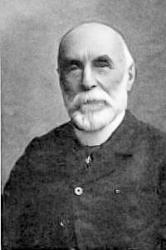
Arthur Henry Brown

1830 - 1926 Person Name: A. Browns Topics: Strength in God Composer of "EXMOUTH" in The Psalter Born: Ju­ly 24, 1830, Brent­wood, Es­sex, Eng­land. Died: Feb­ru­a­ry 15, 1926, Brent­wood, Es­sex, Eng­land. Almost com­plete­ly self taught, Brown be­gan play­ing the or­gan at the age 10. He was or­gan­ist of the Brent­wood Par­ish Church, Es­sex (1842-53); St. Ed­ward’s, Rom­ford (1853-58); Brent­wood Par­ish Church (1858-88); St. Pe­ter’s Church, South Weald (from 1889); and Sir An­tho­ny Browne’s School (to 1926). A mem­ber of the Lon­don Gre­gor­i­an As­so­ci­a­tion, he helped as­sem­ble the Ser­vice Book for the an­nu­al fes­tiv­al in St. Paul’s Ca­thed­ral. He sup­port­ed the Ox­ford Move­ment, and pi­o­neered the res­tor­a­tion of plain­chant and Gre­gor­i­an mu­sic in Ang­li­can wor­ship. Brown ed­it­ed var­i­ous pub­li­ca­tions, in­clud­ing the Al­tar Hym­nal. His other works in­clude set­tings of the Can­ti­cles and the Ho­ly Com­mun­ion Ser­vice, a Child­ren’s Fes­tiv­al Serv­ice, an­thems, songs, part songs, and over 800 hymn tunes and car­ols. Music: Alleluia! Sing the Tri­umph Arthur Dale Ab­bey Fields of Gold Are Glow­ing Gerran Holy Church Holy Rood If An­gels Sang Our Sav­ior’s Birth Lammas O, Sing We a Car­ol Purleigh Redemptor Mun­di Ring On, Ye Joy­ous Christ­mas Bells Saffron Wal­den St. An­a­tol­i­us St. Aus­tell St. John Dam­as­cene St. Ma­byn St. So­phro­ni­us Story of the Cross Sweet Child Di­vine --www.hymntime.com/tch

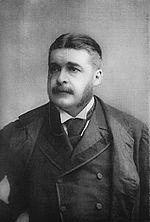
Arthur Sullivan

1842 - 1900 Person Name: Arthur S. Sullivan Topics: Strength in God Composer of "SAMUEL" in The Psalter Arthur Seymour Sullivan (b Lambeth, London. England. 1842; d. Westminster, London, 1900) was born of an Italian mother and an Irish father who was an army band­master and a professor of music. Sullivan entered the Chapel Royal as a chorister in 1854. He was elected as the first Mendelssohn scholar in 1856, when he began his studies at the Royal Academy of Music in London. He also studied at the Leipzig Conservatory (1858-1861) and in 1866 was appointed professor of composition at the Royal Academy of Music. Early in his career Sullivan composed oratorios and music for some Shakespeare plays. However, he is best known for writing the music for lyrics by William S. Gilbert, which produced popular operettas such as H.M.S. Pinafore (1878), The Pirates of Penzance (1879), The Mikado (1884), and Yeomen of the Guard (1888). These operettas satirized the court and everyday life in Victorian times. Although he com­posed some anthems, in the area of church music Sullivan is best remembered for his hymn tunes, written between 1867 and 1874 and published in The Hymnary (1872) and Church Hymns (1874), both of which he edited. He contributed hymns to A Hymnal Chiefly from The Book of Praise (1867) and to the Presbyterian collection Psalms and Hymns for Divine Worship (1867). A complete collection of his hymns and arrangements was published posthumously as Hymn Tunes by Arthur Sullivan (1902). Sullivan steadfastly refused to grant permission to those who wished to make hymn tunes from the popular melodies in his operettas. Bert Polman

Christopher M. Idle

b. 1938 Person Name: Christopher Idle Topics: Biblical Names and Places Massah; Biblical Names and Places Meribah; Church Year Christ the King; Daily Prayer Morning Prayer; Disciples / Calling; Earth; Elements of Worship Call to Worship; Elements of Worship Gathering; Elements of Worship Praise and Adoration; Elements of Worship Prayer for Illumination; Enthronement Psalms; Faith; God Light from; God Obedience to; God Trust in; God as Refuge; God as Shepherd; God as Creator; God as King; God's Reigning; God's Sovereignty; God's Anger; God's People (flock, sheep); God's Power; God's Presence; God's Promise of Redemption; God's Strength; God's Way; Grace; Hymns of Praise; Idols and Idolatry; Joy; Obedience; Occasional Services Christian Marriage; Peace; Prayer; Processions; Remembering; Rest; Ten Commandments 2nd Commandment (do not make graven emages); The Creation; Unity and Fellowship; Worship; Year A, Lent, 3rd Sunday; Year A, Reign of Christ, November 20-26 Author of "Come with All Joy to Sing to God" in Psalms for All Seasons Christopher Martin Idle (b. Bromley, Kent, England, 1938) was educated at Elthan College, St. Peter's College, Oxford, and Clifton Theological College in Bristol, and was ordained in the Church of England. He served churches in Barrow-in-­Furness, Cumbria; London; and Oakley, Suffolk; and recently returned to London, where he is involved in various hymnal projects. A prolific author of articles on the Christian's public responsibilities, Idle has also published The Lion Book of Favorite Hymns (1980) and at least one hundred of his own hymns and biblical paraphrases. Some of his texts first appeared in hymnals published by the Jubilate Group, with which he is associated. He was also editor of Anglican Praise (1987). In 1998 Hope Publishing released Light Upon the River, a collection of 279 of his psalm and hymn texts, along with suggested tunes, scripture references, and commentary. Bert Polman

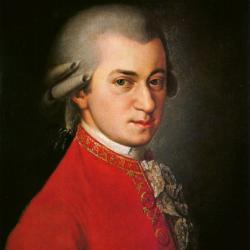
Wolfgang Amadeus Mozart

1756 - 1791 Person Name: W. A. Mozart, 1756-1791 Topics: Alleluias; Biblical Names and Places Israel; Biblical Names and Places Jacob; Biblical Names and Places Jerusalem; Biblical Names and Places Zion; Broken-hearted; Church Year Christmas; Earth; Elements of Worship Gathering; Elements of Worship Praise and Adoration; God Trust in; God as Spirit; God as Creator; God's Sovereignty; God's Sustaining Power; God's Wisdom; God's Word; God's Deeds; God's Faithfulness; God's Greatness; God's Knowing; God's law; God's Love; God's Majesty; God's People (flock, sheep); God's Providence; God's Strength; God's Way; Grace; Guilt; Healing; Hope; Hymns of Praise; Jesus Christ Healer; Jesus Christ Mind of; Joy; Life Stages Generations; Love; Occasional Services Dedication / Consecration / Anniversary; Occasional Services Healing Service; Occasional Services Thanksgving Day / Harvest Festival; Pain; Peace; People of God / Church Family of God; People of God / Church Serving; Rejoicing; Remnant of Isarel; Shame; Sorrow; The Creation; Unity and Fellowship; Witness; Worship; Year A, B, C, Christmas, 2nd Sunday; Year B, Ordinary Time after Epiphany, 5th Sunday Composer of "MOZART ALLELUIA" in Psalms for All Seasons Wolfgang Amadeus Mozart Austria 1756-1791. Born at Salzburg, Austria, the son of Leopold Mozart, a minor composer and violinist, and youngest of seven children, he showed amazing ability on violin and keyboard from earliest childhood, even starting to compose music at age four when his father would play a piece and Mozart would play it exactly as did his father. At five, he composed some of his own music, which he played to his father, who wrote it down. When Mozart was eight, he wrote his first symphony, probably transcribed by his father. In his early years his father was his only teacher, teaching his children languages and academic subjects, as well as fundamentals of their strict Catholic faith. Some of his early compositions came as a surprise to his father, who eventually gave up composing himself when he realized how talented his son was. His family made several European journeys and he and his sister, Nanneri, performed as child prodigies, at the court of Prince-elector Maximillian II of Bavaria in Munich, and at the Imperial Courts in Vienna and Prague. A long concert tour followed, for 3.5 years, taking the family to courts in Munich, Mannheim, Paris, London, Dover, The Hague, Amsterdam, Utrecht, Mechelen, and again to Paris, and back home via Zurich, Donaueschingen, and Munich. During these trips Mozart met many musicians, acquainting himself with the works of other composers. He met Johann Christian Bach in London in 1764. Family trips were challenging, and travel conditions were primitive. They had to wait for invitations and reimbursements from nobility, and they endured long, near-fatal illnesses far from home. First Leopold (1764) got sick, then both children (1765). They traveled again to Vienna in 1767 and stayed there over a year. After a year back in Salzburg, Leopold and Wolfgang went to Italy (1769-1771), Leopold wished to display his son’s abilities as a performer and maturing composer. In Bologna, Italy, Wolfgang was accepted as a member of the famous Academia Filamonica. In Rome he heard Gregorio Allegri’s Miserere twice in performance. Back in the Sistine Chapel, Mozart wrote the whole performance out from memory, thus producing the first unauthorized copy of this closely guarded property of the Vatican. In the next few years Mozart wrote several operas performed with success in Italy, but his father’s hopes of securing a professional appointment for his son were not realized. At age 17 he was engaged as a musician at the Salzburg court, but grew restless and traveled in search of a better position. After returning to Salzburg, Mozart was employed as a court musician by the ruler of Salzburg, Prince Archbishop Hieronymus Colloredo. This gave Mozart ample opportunity to develop relationships with other musicians and his admirers, resulting in his development of new symphonies, sonatas, string quartets, masses, serenades, and some minor operas. In 1775 he wrote his only violin concertos, five in all. Again, he was discontent with work in Salzburg and traveled to find more opportunity to write operas. He and his father again visited Munich and Vienna, but neither visit was successful with the exception of his opera ‘La finta giardiniera’ in Munich. In 1777 he resigned his Salzburg position and went to Augsburg, Mannheim, Paris, and Munich again. In Mannheim he met and fell in love with Aloysia Weber, one of four daughters of a musical family. He could find no real employment there and left for Paris in 1778. He might have had a position as organist at Versailles, but he was not interested in that. He fell into debt and started pawning valuables. During these events his mother died. Meanwhile his father was still trying to find him a position in Salzburg. After checking out several other European cities and Munich, he again encountered Aloysia, but she was no longer interested in him, so he returned to Salzburg, having written another symphony, concerto, and piano sonata, and took the new appointment his father had found. However, he was still in discontent. Visiting Vienna in 1781, he was dismissed from his Salzburg position. He wrote another opera, ‘Idomeneo’, in 1781, that was successful in Munich. Two months later he was summoned to Vienna, where his employer, Archbishop Colloredo, wanted him around due to his notoriety. Mozart wished to meet the emperor and perform for him, and finally got that opportunity. It resulted in a part-time position and substantial commissions. Colloredo became a nemesis to Mozart’s career, finally releasing Mozart from his employ with a literal kick in the pants, much against his father’s wishes. However, he was now independent. Mozart then decided to settle in Vienna as a free lance performer and composer. He lived with the Fridolin Weber family, who had moved from Mannheim to Vienna. Fridolin, the father, had died, and they were taking in lodgers to make ends meet. His career there went well, and he performed as a pianist before the Emperor, establishing himself as the finest keyboard player in Vienna. He wrote another opera in 1782, again achieving success. Mozart had now become a prolific and influential composer of the Classical period and was known throughout Europe. Aloysia was now married to actor, Joseph Lange, and Mozart’s interest shifted to her sister, Constanze. In 1782 he married Constanze Weber Mozart Nissen. The marriage started out with a brief separation, and there was a problem getting Mozart’s father’s permission, which finally came. They had six children, but only two survived infancy: Carl and Franz. He lived in Vienna and achieved some notoriety, composing many of his best-known symphonies, concertos, and operas. In 1782-83 he became intimately acquainted with Johann Sebastian Bach and George Friederic Handel, as his friend, Gottfried van Swieten, owned many manuscripts of the Baroque masters, which Mozart studied intently. He altered his style of composition as a result. That year Mozart and his wife visited his father and sister, and he composed a liturgical piece, a Mass, with a singing part for his wife. He also met Joseph Hadyn in Vienna in 1784 and they became friends. They even played together in a string quartet from time to time. Mozart wrote six quartets dedicated to Hadyn. In 1785 Hadyn told Leopold Mozart, “Your son is the greatest composer known to me by person and repute, he has taste, and what is more, the greatest skill in composition”. Over the next several years Mozart booked several piano concertos in various places as a sole performer to delighted audiences, making substantial remuneration for his work. He and his wife then adopted a more luxurious lifestyle. They moved to an expensive apartment and he bought a fine fortepiano and billiard table. They sent their son, Karl, to an expensive boarding school and also kept servants. In 1784 Mozart became a Freemason and even composed Masonic music. Over the next several years he did little operatic writing and focused on his career as a piano soloist and writer of concertos. He again began operatic collaboration in 1785, creating ‘The marriage of Figaro’, then ‘Don Giovanni’ in 1787. That year his father died. Also that year he obtained a steady post under Emperor Joseph II as his chamber composer. This was part-time employment that was important when hard times arrived. However, Joseph aimed at keeping Mozart from leaving Vienna for better work. The Austrio-Turkish War made life difficult for musicians, and his aristocracy support had declined. He moved to save on expenses, but that did not help much, and he was reduced to borrowing funds from his friends, and pleading for loans. During this period he produced his last three symphonies. In 1789 he then set up on a journey to Leipzig, Dresden, and Berlin hoping to improve his fortunes. In 1790 he was highly productive, producing concertos, an opera, ‘The magic flute’, a series of string quintets, a motet, and an (unfinished) Requiem. Finances began to improve and he begin paying back his debts. Public reaction to his works also brought him great satisfaction. In 1791, while in Prague for the premiere of his opera, ‘La clemenza di Tito’, he fell ill. He continued professional functions for a short time, but had to go home and be nursed by his wife over the next couple of months. He died at Vienna, Austria, at the age of 35, a small thin man with undistinguishing characteristics. He was buried in a modest grave, having had a small funeral. Beethoven composed his early works in the shadow of Mozart, and Joseph Hadyn wrote “posterity will not see such a talent (as Mozart) again in 100 years”. 600+ works. Side note: Mozart enjoyed billiards, dancing, and had a pet canary, a starling, a dog, and a horse for recreational riding. He liked off-color humor. He wore elegant clothing when performing and had a modest tenor voice. John Perry

Pages


Export as CSV
It looks like you are using an ad-blocker. Ad revenue helps keep us running. Please consider white-listing Hymnary.org or getting Hymnary Pro to eliminate ads entirely and help support Hymnary.org.