

 My Starred Hymns
 My FlexScores
 My Hymnals
 My Purchased Files
Planning worship?
Check out our sister site, ZeteoSearch.org,
for 20+ additional resources related to your search.
- |
User Links
Person Results
Andrew Reed
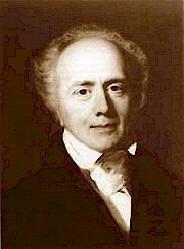
1787 - 1862 Topics: Tenth Sunday after Trinity Author of "Spirit Divine, attend our pray'r" in Evangelical Lutheran hymnal Reed, Andrew, D.D., son of Andrew Reed, was born in London on Nov. 27, 1787, and educated for the Congregational Ministry at Hackney College, London. He was first the pastor of the New Road Chapel, St. George's-in-the-East, and then of the Wycliffe Chapel, which was built through his exertions in 1830. His degree was conferred by Yule College, America. He died Feb. 25, 1862. As the founder of "The London Orphan Asylum," "The Asylum for Fatherless Children," “The Asylum for Idiots” "The Infant Orphan Asylum," and "The Hospital for Incurables," Dr. Reed is more fully known, and will be longer remembered than by his literary publications. His Hymn Book was the growth of years. The preparation began in 1817, when he published a Supplement to Watts, in which were a few originals. This was enlarged in 1825; and entirely superseded by his collection The Hymn Book, prepared from Dr. Watts's Psalms & Hymns and Other Authors, with some Originals, in 1842 (Preface). His hymns, mostly of a plain and practical character, numbering 21, were contributed to these various editions, and were republished with those of his wife in the Wycliffe Supplement, 1872. The best known are "Ah Jesus, let me hear Thy voice” and ”Spirit Divine, attend our prayer." All Dr. and Mrs. Reed's hymns are anonymous in The Hymn Book, 1842, but are given with their names in the Wyclife Supplement, 1872. His hymns now in common use include, in addition to those annotated under their respective first lines :—
1. Come, let us strike our harps afresh. Praise.
2. Come, my Redeemer, come. Desiring Christ's Presence.
3. Gentle Saviour, look on me. Christ's protection Desired.
4. Gracious Lord, as Thou hast taught us. Public Worship.
5. Hark, hark, the notes of joy. Missions.
6. Holy Ghost, with light divine (1817). Prayer to the Holy Spirit. Sometimes given as "Holy Ghost, Thou light divine;" and again as "Holy Spirit, Light divine."
7. Listen, sinner, mercy hails you. Invitation. Generally given as "Hear, O Sinner, mercy hails you."
8. Rich are the joys of solitude. Retirement. Some-times given as "How deep and tranquil is the joy."
9. There [comes] is an hour when I must part. Death anticipated.
10. Ye saints your music bring. Praise of the Cross.
--John Julian, Dictionary of Hymnology (1907)
Andrew Reed
W. H. Havergal
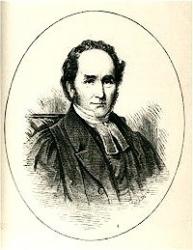
1793 - 1870 Person Name: William Henry Havergal Topics: Tenth Sunday after Trinity Arranger of "EVAN" in Evangelical Lutheran hymnal Havergal, William Henry, M.A, son of William Havergal, was born at High Wycombe, Buckinghamshire, 1793, and was educated at St. Edmund's Hall, Oxford (B.A. 1815, M.A. 1819). On taking Holy Orders he became in 1829 Rector of Astley, Worcestershire; in 1842, Rector of St. Nicholas, Worcester; and in 1860, Rector of Shareshill, near Wolverhampton. He was also Hon. Canon in Worcester Cathedral from 1845. He died April 18, 1870. His hymns, about 100 in all, were in many instances written for special services in his own church, and printed as leaflets. Several were included in W. Carus Wilson's Book of General Psalmody, 1840 (2nd ed., 1842); and in Metrical Psalms & Hymns for Singing in Churches, Worcester, Deighton, 1849, commonly known as the Worcester Diocesan Hymn Book, and of which he was the Editor. In Life Echoes, 1883, his hymns are given with those of Miss Havergal. Of those in common use the greater part are in Mercer, and Snepp's Songs of Grace & Glory. Although his hymns are all good, and two or three are excellent, it is not as a hymnwriter but as a musician that Canon Havergal is best known. His musical works and compositions included, in addition to numerous individual hymn tunes and chants, the Gresham Prize Service, 1836; the Gresham Prize Anthem, 1845; Old Church Psalmody, 1849; History of the Old 100th Psalm tune, 1854, &c. He also reprinted Ravenscroft’s Psalter of 1611. His hymns in common use include:—
1. Blessed Jesus, lord and Brother. School Festivals, 1833. Published in Life Echoes, 1883.
2. Brighter than meridian splendour. Christ the glory of His Church. 1830. Published in W. C. Wilson's Book of General Psalms, 1840; the Worcester Psalms & Hymns, 1849, &c.
3. Christians, awake to joy and praise. Christmas Carol, c. 1860. Printed on broadsheet, with music by the author, and sold on behalf of the Lancashire Cotton Distress Fund.
4. Come, Shepherds, come, 'tis just a year. Christmas Carol. 1860. Published in Snepp's Songs of Grace & Glory,
5. For ever and for ever, Lord. Missions, 1866, for the Church Mission Society. Published in Snepp's Songs of Grace & Glory, 1872, and the Life Echoes, 1883.
6. Hallelujah, Lord, our voices. Sunday. 1828. Published in W. C. Wilson's Book of General Psalms, 1840; the Worcester Psalms & Hymns, 1849; Life Echoes, 1883, &c.
7. Heralds of the Lord of glory. Missions. First sung in Astley Church, Sep. 23, 1827. Published in Miss Havergal's Starlight through the Shadows, 1880; Snepp's Songs of Grace & Glory, 1872, &c.
8. Hosanna, raise the pealing hymn. Praise to Christ, 1833, and first sung in Astley Church, June 9, 1833. Published in W. C. Wilson's Book of General Psalmody, 1840; the Worcester Psalms & Hymns, 1849; Life Echoes 1883, &c.
9. How vast the field of souls. Missions. 1858. Printed for Shareshill Church Miss. Anniversary, 1863, and published in Snepp's Songs of Grace & Glory, 1872, and the Life Echoes, 1883.
10. In doubt and dread dismay. Missions. Written in 1837, and published in W. C. Wilson's Book of General Psalmody, 1840; the Worcester Psalms & Hymns, 1849, &c.
11. Jerusalem the golden, The home of saints shall be. Heaven. Published in Life Echoes, 1883.
12. My times are in Thy hand, Their best, &c. 1860. Published in Snepp's Songs of Grace & Glory, 1872, the Records of the author's life and work, and Life Echoes, 1883. The editor of the Records says (p. 159) "this hymn has been much appreciated, and well illustrates the devotional and cheerful spirit of the writer."
13. No dawn of holy light. Sunday. 1825. Printed in 1831 on a leaflet, and published in W. C. Wilson's Book of General Psalmody, 1840; the Worcester Psalms & Hymns, 1849; Life Echoes, 1883, &c.
14. Our faithful God hath sent us. Harvest. Written at Shareshill in 1863, for a Harvest Festival. Published in Snepp's Songs of Grace & Glory 1872, and Life Echoes, 1883.
15. Shout, 0 earth! from silence waking. Praise to Jesus for Redemption. 1841. Published in the Worcester Psalms & Hymns, 1849; Snepp's Songs of Grace & Glory, 1872, &c.
16. So happy all the day. Christmas Carol, c. 1834. Published in Snepp's Songs of Grace & Glory, 1872.
17. Soon the trumpet of salvation. Missions. 1826. Published in Snepp's Songs of Grace & Glory, 1872.
18. To praise our Shepherd's [Saviour's] care. The Good Shepherd. Written after witnessing the death of Elizabeth Edwards, aged 12, of St. Nicholas, Worcester, and printed as a leaflet. Published in W. C. Wilson's Book of General Psalmody, 1840; the Worcester Psalms & Hymns, 1849; Life Echoes, &c, 1883. The author also published a Memoir of the child.
19. Widely 'midst the slumbering nations. Missions. 1828. Published in the Worcester Psalms & Hymns, 1849; Snepp's Songs of Grace & Glory, 1872, &c.
In addition to these hymns, his carols, "How grand, and how bright," "Our festal morn is come," and others are annotated under their respective first lines. Most of these carols and hymns were reprinted in Christmas Carols & Sacred Songs, Chiefly by the Rev. W. H. Havergal, London, Nisbet, 1869.
--John Julian, Dictionary of Hymnology (1907)
=====================
Havergal, W. H., p. 498, i. Other hymns are: —
1. Lord, if judgments now are waking. Second Advent. Published in W. Carus Wilson's Book of General Psalmody, 1840; in Kennedy, 1863, &c.
2. Remember, Lord, Thy word of old displayed. Missions. "Composed for a special prayer-meeting for missionary labourers, held in the author's schoolroom, in the parish of St. Nicholas's, Worcester." (W. F. Stevenson's Hymns for Church and Home, 1873, where the original text is also given.)
It must be noted that No. 17, at p. 498, ii., "Soon the trumpet of salvation," was first published in A Collection of Original Airs adapted to Hymns, &c, 1826.
--John Julian, Dictionary of Hymnology, Appendix, Part II (1907)
W. H. Havergal
Johann Heermann
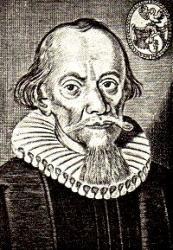
1585 - 1647 Topics: Tenth Sunday after Trinity Author of "Thine honor rescue, righteous Lord!" in Evangelical Lutheran hymnal Johann Heermann's (b. Raudten, Silesia, Austria, 1585; d. Lissa, Posen [now Poland], 1647) own suffering and family tragedy led him to meditate on Christ's undeserved suffering. The only surviving child of a poor furrier and his wife, Heermann fulfilled his mother's vow at his birth that, if he lived, he would become a pastor. Initially a teacher, Heermann became a minister in the Lutheran Church in Koben in 1611 but had to stop preaching in 1634 due to a severe throat infection. He retired in 1638. Much of his ministry took place during the Thirty Years' War. At times he had to flee for his life and on several occasions lost all his possessions. Although Heermann wrote many of his hymns and poems during these devastating times, his personal faith and trust in God continued to be reflected in his lyrics. He is judged to be the finest hymn writer in the era between Martin Luther and Paul Gerhardt, one whose work marks a transition from the objective hymns of the Reformation to the more subjective hymns of the seventeenth century. His hymn texts were published in collections such as Devoti Musica Cordis, Hauss- und Hertz-Musica (1630, expanded in 1636, 1644), and Sontags- und Fest-evangelia (1636).
Bert Polman
===================
Heermann, Johann, son of Johannes Heermann, furrier at Baudten, near Wohlau, Silesia, was born at Baudten, Oct. 11, 1585. He was the fifth but only surviving child of his parents, and during a severe illness in his childhood his mother vowed that if he recovered she would educate him for the ministry, even though she had to beg the necessary money. He passed through the schools at Wohlau; at Fraustadt (where he lived in the house of Valerius Herberger, q. v., who took a great interest in him); the St. Elizabeth gymnasium at Breslau; and the gymnasium at Brieg. At Easter, 1609, he accompanied two young noblemen (sons of Baron Wenzel von Rothkirch), to whom he had been tutor at Brieg, to the University of Strassburg; but an affection of the eyes caused him to return to Baudten in 1610. At the recommendation of Baron Wenzel he was appointed diaconus of Koben, a small town on the Oder, not far from Baudten, and entered on his duties on Ascension Day, 1611, and on St. Martin's Day, 1611, was promoted to the pastorate there. After 1623 he suffered much from an affection of the throat, which compelled him to cease preaching in 1634, his place being supplied by assistants. In October, 1638, he retired to Lissa in Posen, and died there on Septuagesima Sunday (Feb. 17), 1647. (Koch, iii. 16-36; Allgemeine Deutsche Biographie, xi. 247-249, &c.)
Much of Heermann's manhood was spent amid the distressing scenes of the Thirty Years' War; and by his own ill health and his domestic trials he was trained to write his beautiful hymns of “Cross and Consolation." Between 1629 and 1634, Koben was plundered four times by the Lichtenstein dragoons and the rough hordes under Wallenstein sent into Silesia by the King of Austria in order to bring about the Counter-Reformation and restore the Roman Catholic faith and practice; while in 1616 the town was devastated by fire, and in 1631 by pestilence. In these troublous years Heermann several times lost all his moveables; once he had to keep away from Koben for seventeen weeks; twice he was nearly sabred; and once, while crossing the Oder in a frail boat loaded almost to sinking, he heard the bullets of the pursuing soldiers whistle just over his head. He bore all with courage and patience, and he and his were wonderfully preserved from death and dishonour. He was thus well grounded in the school of affliction, and in his House and Heart Music some of his finest hymns are in the section entitled "Songs of Tears. In the time of the persecution and distress of pious Christians."
As a hymnwriter Heermann ranks with the beat of his century, some indeed regarding him as second only to Gerhardt. He had begun writing Latin poems about 1605, and was crowned as a poet at Brieg on Oct. 8, 1608. He marks the transition from the objective standpoint of the hymnwriters of the Reformation period to the more subjective and experimental school that followed him. His hymns are distinguished by depth and tenderness of feeling; by firm faith and confidence in face of trial; by deep love to Christ, and humble submission to the will of God. Many of them became at once popular, passed into the hymnbooks, and still hold their place among the classics of German hymnody. They appeared principally in—
(1) Devoti Musica Cordis. Hauss-und Hertz-Musica &c. Leipzig and Breslau, 1630, with 49 hymns (2nd edition 1636, with 64; 3rd edition 1644, with 69). The first section is entitled "Hymns of Penitence and Consolation from the words of the Ancient Fathers of the Church." Seven of these, however, have no mention in their individual titles of the sources from which they are derived; and the remainder are mostly based not on Latin hymns, but on the prose meditations in Martin Moller's Meditationes sanctorum patrum, or on the mediaeval compilations known as the Meditationes and the Manuale of St. Augustine. (2) Sontags-und Fest-Evangelia. Leipzig and Breslau, 1636, being hymns on the Gospels for Sundays and festivals. (3) Poetische Erquickstunden, Nürnberg, 1656; and its Fernere Fortsetzung, also Nürnberg, 1656 [both in Wernigerode], are poems rather than hymns. The hymns of the Hauss-und Hertz-Musica, with a representative selection from Heermann's other poetical works, were edited by C. E. P. Wackernagel, prefaced by a long biographical and critical introduction, and published at Stuttgart, 1855.
Six of the most important of Heermann's hymns are annotated under their respective first lines. The other hymns by Heermann which have passed into English are :—
I. Hymns in English common use:--
i. 0 Jesu, du mein Bräutigam. Holy Communion. In his Devoti Musica Cordis, Breslau, 1630, p. 78, in 12 stanzas of 4 lines. Thence in Mützell, 1858, No. 34, in Wackernagel's ed. of his Geistliche Lieder, No. 22, and the Unverfälschter Liedersegen, 1851, No. 283. Seems to be founded on Meditation xi. in the mediaeval compilation known as St. Augustine's Manuale. Translated as:—
0 Jesu, Lord, who once for me, a good translation of stanzas i., ii., iv., v., viii., by A. T. Russell, as No. 158 in his Psalms & Hymns, 1851.
Other translations are: (l) 0 Jesu! Bridegroom of my Soul," by J. C. Jacobi, 1722, p. 44 (1732, p. 73). (2) "Dear Saviour, who for me hast borne," by Miss Dunn, 1857.
ii. Rett, 0 Herr Jesu, rett dein Ehr. In Time of Trouble. A prayer for deliverance and peace for the Church. In his Devoti Musica Cordis, 1630, p. 119, in 5 stanzas of 4 lines, among the "Songs of Tears." Thence in Mützell, 1858, No. 48, in Wackernagel’s ed., No. 36, and the Unverfälschter Liedersegen, 1851, No. 245. Translated as:—
Thine honour rescue, righteous Lord, in full, by Dr. M. Loy, in the Ohio Lutheran Hymnal, 1880.
iii. Treuer Wächter Israel. In Time of War. 1630, p. 115, in 13 stanzas of 7 lines, among the "Songs of Tears." In Mützell, 1858, No. 47; in Wackernagel's edition, No. 35, and the Unverfälschter Liedersegen, 1851, No. 594. Lauxmann, in Koch, viii. 549, says of it:—
"It is a powerful hymn filled with that prevailing prayer that takes heaven by force," and relates of st. vii.,11. v-7, "Eine Mauer um uns bau," that on Jan. 6, 1814, the Allied Forces were about to enter Schleswig. A poor widow with her daughter and grandson lived in a little house near the entrance of the town. The grandson was reading in his hymnbook those in time of war, and when he came to this said, “It would be a good thing, grandmother, if our Lord God would build a wall around us." Next day all through the town cries of distress were heard, but all was still before their door. On the following morning they had courage to open the door, and lo a snowdrift concealed them from the view of the enemy. On this incident Clemens Brentano composed a beautiful poem "Draus vor Schleswig."
It is translated as:—
Jesu! as a Saviour, aid. A good tr. of st; vii., viii., xiii., by A. T. Russell, as No. 138 in his Psalms & Hymns, 1851.
iv. Zionklagt mit Angst und Schmerzen. Church of Christ. First published in his Devoti Musica Cordis, 2nd ed., 1636 (1644, p. 196), in 6 stanzas of 8 lines, entitled, "From the beautiful golden saying of Isaiah, Chapter xlix." In Mützell, 1858, No. 101, in Wackernagel’s ed., No. 53, and the Unverfälschter Liedersegen, 1851, No. 256. Translated as:—
Sion bow'd with anguish weepeth A good translation of stanzas i., iii., v., by A. T. Russell, as No. 141 in his Psalms & Hymns, 1851.
Another translation is: "Zion mourns in fear and anguish," by Miss Winkworth, 1869, p. 198.
II. Hymns not in English common use:--
v. Ach Jesu! dessen Treu. Love to Christ. 1630, p. 144, in 33 stanzas. One of his finest hymns, full of deep love to Christ, but from its great length very little used in Germany. Translated as, "Ah! Jesus! Lord! whose faithfulness," by Miss Burlingham, in the British Herald, May, 1867, p. 72.
vi. Der Tod klopft bei mir an. For the Dying. 1656, p. 22, in 121. Translated as, "That Death is at my door," by Miss Winkworth, 1869, p. 201.
vii. Du weinest für Jerusalem. Christ weeping over Jerusalem. 1630, p. 81, in 6 stanzas, entitled, "On the Tears of Christ." Founded on St. Luke xix. 41-44, part of the Gospel for the 10 Sundays after Trinity. The translations are: (1) "With tears o'er lost Jerusalem," by Miss Cox, 1841, p. 159. (2) "Our Lord wept o'er Jerusalem," by Dr. H. Mills, 1845 (1856, p. 295). (3) "Thou weepest o'er Jerusalem," by Miss Winkworth, 1855,p. 70.
viii. Herr Jesu Christe mein getreuer Hirte. Holy Communion. 1630, p. 74, in 9 stanzas, founded on M. Moller's Meditationes sanctorum patrum, pt. i. c. 11, and pt. v. c. 2. The translations are: (1) "Dear Saviour, Thou my faithful Shepherd, come” by Miss Dunn, 1857, p. 111. (2) "Lord Jesus Christ, my faithful Shepherd, hear," by Miss Winkworth, 1858, p. 93, repeated in Lyra Eucharistica, 1863-64.
ix. Herr unser Gott, lass nicht zu Schanden werden. Christ's Church. 1630, p. 114, as one of the "Songs of Tears," in 5 stanzas. Translated as, "Ah! Lord our God, let them not be confounded," by Miss Winkworth, 1869, p. 197.
x. Hilf mir, mein Oott, hilf dass nach dir. Christian Conduct. 1630, p. 32, in 7 stanzas, entitled, "For a better life. From the words of Augustine." Founded on No. i. of the Meditationes current under the name of St. Augustine. This meditation is apparently by St. Anselm of Canterbury. Translated as, "Lord, raise in me a constant Flame," by J. C. Jacobi, 1725, p. 27 (1732, p. 105).
xi. Jesu, der du tausend Schmerzen. In Sickness. 1656, in the Fernere Fortsetzung, p. 79, in 12 lines, entitled, "In great bodily pain." Translated as, “Jesu, who didst stoop to prove," by Miss Winkworth, 1869, p. 200.
xii. Jesu Tilger meiner Sünden. Lent. 1656, in the Fernere Fortsetzung, p. 1, in 10 lines, entitled, "For Victory in Temptation." Translated as, "Jesu, Victor over sin," by Miss Winkworth, 1869, p. 201.
xiii. 0 Jesu, Jesu, Gottes Sohn. Love to Christ, 1630, p. 83, in 7 stanzas, entitled, “Of the Love, which a Christian heart bears to Christ, and will still bear." A beautiful expansion of his motto "Mihi omnia Jesus." The translations are: (1) "What causes me to mourn is this," a translation of stanza ii. by P. H. Molther, as No. 371, in the Moravian Hymn Book, 1789 (1886, No. 461). (2) "O Jesus, Jesus, Son of God," by Miss Burlingham, in the British Herald, Oct. 1865, p. 153, and in Reid's Praise Book, 1872.
xiv. Treuer Gott ich muss dir klagen. In Trouble. 1630, p. 103, in 12 stanzas, entitled, "Hymn of a sorrowful heart for increase of faith." Translated as, "Faithful God! I lay before Thee," by J. C. Jacobi, 1720, p. 9(1722, p. 70; 1732, p. 117), and as No. 538 in pt. i. of the Moravian Hymn Book, 1754.
xv. Wollt ihr euch nicht, o ihr frommen Christen. Second Advent. 1636, p. 210, in 9 stanzas, entitled, "On the day of the Holy Bishop Nicolaus. Gospel of Luke, 12 Chapter." Translated as: (l) "0 dear Christians, as 'tis needful, wou'd ye," as No. 153 in pt. i. of the Moravian Hymn Book, 1754. (2) “Help us, 0 Christ, to watch and pray," a tr. of st. ix. as st. iii. of No. 868 in the Moravian Hymn Book, 1789 (1849, No. 1221).
xvi. Wo soll ich fliehen hin. Lent. 1630, p. 20, in 11 stanzas, entitled, "A hymn of consolation in which a troubled heart lays all its sins in true faith upon Christ. From Tauler." Based on M. Moller's Meditationes, vol. i. pt. i., No. 10. Translated as, "0 whither shall I fly," as No. 447 in pt. i. of the Moravian Hymn Book, 1754. In 1886, No. 279, it begins with "0 Jesus, source of Grace" (stanza ii.). [Rev. James Mearns, M.A.]
--John Julian, Dictionary of Hymnology (1907)
Johann Heermann
Lowell Mason
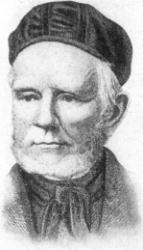
1792 - 1872 Person Name: Lowell Mason, Mus. Doc. Topics: Tenth Sunday after Trinity Composer of "HEBRON" in Evangelical Lutheran hymnal Dr. Lowell Mason (the degree was conferred by the University of New York) is justly called the father of American church music; and by his labors were founded the germinating principles of national musical intelligence and knowledge, which afforded a soil upon which all higher musical culture has been founded. To him we owe some of our best ideas in religious church music, elementary musical education, music in the schools, the popularization of classical chorus singing, and the art of teaching music upon the Inductive or Pestalozzian plan. More than that, we owe him no small share of the respect which the profession of music enjoys at the present time as contrasted with the contempt in which it was held a century or more ago. In fact, the entire art of music, as now understood and practiced in America, has derived advantage from the work of this great man.
Lowell Mason was born in Medfield, Mass., January 8, 1792. From childhood he had manifested an intense love for music, and had devoted all his spare time and effort to improving himself according to such opportunities as were available to him. At the age of twenty he found himself filling a clerkship in a banking house in Savannah, Ga. Here he lost no opportunity of gratifying his passion for musical advancement, and was fortunate to meet for the first time a thoroughly qualified instructor, in the person of F. L. Abel. Applying his spare hours assiduously to the cultivation of the pursuit to which his passion inclined him, he soon acquired a proficiency that enabled him to enter the field of original composition, and his first work of this kind was embodied in the compilation of a collection of church music, which contained many of his own compositions. The manuscript was offered unavailingly to publishers in Philadelphia and in Boston. Fortunately for our musical advancement it finally secured the attention of the Boston Handel and Haydn Society, and by its committee was submitted to Dr. G. K. Jackson, the severest critic in Boston. Dr. Jackson approved most heartily of the work, and added a few of his own compositions to it. Thus enlarged, it was finally published in 1822 as The Handel and Haydn Society Collection of Church Music. Mason's name was omitted from the publication at his own request, which he thus explains, "I was then a bank officer in Savannah, and did not wish to be known as a musical man, as I had not the least thought of ever making music a profession." President Winchester, of the Handel and Haydn Society, sold the copyright for the young man. Mr. Mason went back to Savannah with probably $500 in his pocket as the preliminary result of his Boston visit.
The book soon sprang into universal popularity, being at once adopted by the singing schools of New England, and through this means entering into the church choirs, to whom it opened up a higher field of harmonic beauty. Its career of success ran through some seventeen editions. On realizing this success, Mason determined to accept an invitation to come to Boston and enter upon a musical career. This was in 1826. He was made an honorary member of the Handel and Haydn Society, but declined to accept this, and entered the ranks as an active member. He had been invited to come to Boston by President Winchester and other musical friends and was guaranteed an income of $2,000 a year. He was also appointed, by the influence of these friends, director of music at the Hanover, Green, and Park Street churches, to alternate six months with each congregation. Finally he made a permanent arrangement with the Bowdoin Street Church, and gave up the guarantee, but again friendly influence stepped in and procured for him the position of teller at the American Bank.
In 1827 Lowell Mason became president and conductor of the Handel and Haydn Society. It was the beginning of a career that was to win for him as has been already stated the title of "The Father of American Church Music." Although this may seem rather a bold claim it is not too much under the circumstances. Mr. Mason might have been in the average ranks of musicianship had he lived in Europe; in America he was well in advance of his surroundings. It was not too high praise (in spite of Mason's very simple style) when Dr. Jackson wrote of his song collection: "It is much the best book I have seen published in this country, and I do not hesitate to give it my most decided approbation," or that the great contrapuntist, Hauptmann, should say the harmonies of the tunes were dignified and churchlike and that the counterpoint was good, plain, singable and melodious.
Charles C. Perkins gives a few of the reasons why Lowell Mason was the very man to lead American music as it then existed. He says, "First and foremost, he was not so very much superior to the members as to be unreasonably impatient at their shortcomings. Second, he was a born teacher, who, by hard work, had fitted himself to give instruction in singing. Third, he was one of themselves, a plain, self-made man, who could understand them and be understood of them."
The personality of Dr. Mason was of great use to the art and appreciation of music in this country. He was of strong mind, dignified manners, sensitive, yet sweet and engaging.
Prof. Horace Mann, one of the great educators of that day, said he would walk fifty miles to see and hear Mr. Mason teach if he could not otherwise have that advantage.
Dr. Mason visited a number of the music schools in Europe, studied their methods, and incorporated the best things in his own work. He founded the Boston Academy of Music. The aim of this institution was to reach the masses and introduce music into the public schools. Dr. Mason resided in Boston from 1826 to 1851, when he removed to New York. Not only Boston benefited directly by this enthusiastic teacher's instruction, but he was constantly traveling to other societies in distant cities and helping their work. He had a notable class at North Reading, Mass., and he went in his later years as far as Rochester, where he trained a chorus of five hundred voices, many of them teachers, and some of them coming long distances to study under him. Before 1810 he had developed his idea of "Teachers' Conventions," and, as in these he had representatives from different states, he made musical missionaries for almost the entire country. He left behind him no less than fifty volumes of musical collections, instruction books, and manuals.
As a composer of solid, enduring church music. Dr. Mason was one of the most successful this country has introduced. He was a deeply pious man, and was a communicant of the Presbyterian Church. Dr. Mason in 1817 married Miss Abigail Gregory, of Leesborough, Mass. The family consisted of four sons, Daniel Gregory, Lowell, William and Henry. The two former founded the publishing house of Mason Bros., dissolved by the death of the former in 1869. Lowell and Henry were the founders of the great organ manufacturer of Mason & Hamlin. Dr. William Mason was one of the most eminent musicians that America has yet produced.
Dr. Lowell Mason died at "Silverspring," a beautiful residence on the side of Orange Mountain, New Jersey, August 11, 1872, bequeathing his great musical library, much of which had been collected abroad, to Yale College.
--Hall, J. H. (c1914). Biography of Gospel Song and Hymn Writers. New York: Fleming H. Revell Company.
Lowell Mason
John Needham
? - 1786 Topics: Tenth Sunday after Trinity Author of "Behold, the Prince of Peace" in Church Book Needham, John, was the son of John Needham, Baptist Minister, of Hitchin, Herts, but the date of his birth is unknown. He would doubtless be educated by his father, who was a tutor and in repute as a learned man. In 1750 Needham became co-pastor with John Beddome at the Baptist meetinghouse in the Pithay, Bristol; but, two years later, Beddome having retired through age, a violent controversy arose in the Church with regard to a continuance of the plan of co-pastorship. As the result, Needham and a number of his friends removed to a Baptist meetinghouse in Callowhill Street, where a Mr. Foot was pastor. For a time the two societies used the same builing at different hours, but in 1755 they were united, with Mr. Needham and Mr. Foot as co-pastors. It is known that up to 1774 this arrangement continued, and it is also known that in 1787, both Mr. Needham and Mr. Foot having died, the Callowhill Street Church became extinct, but which of the two pastors was the survivor is not known. The date of Needham's death is unknown. It was probably circa 1786. In 1768 he published Hymns Devotional and Moral on various Subjects, collected chiefly from the Holy Scriptures, &c, Bristol, S. Farley, 1768. These hymns are 263 in all, and whilst none of them possess great excellence, yet several are of a pleasing and useful character. During the past 120 years several have appeared in Nonconformist hymnbooks, and specially in those of the Baptists. Of these the following are still in common use:—
1. Ashamed of Christ! my soul disdains. Not ashamed of Christ.
2. Awake, my tongue, thy tribute bring. The Divine Perfections.
3. Glory to God, Who reigns above. Jesus, the Messiah.
4. Great author of the immortal mind. Imitation of God's Moral Perfections. From "flow matchless, Lord, Thy glories are."
5. Happy the man whose cautious steps. Christian Moderation.
6. Holy and reverend is the Name. Reverence in Worship.
7. Kind are the words that Jesus speaks. Christ the Strengthener.
8. Lord,ere [Now Lord] the heavenly seed is sown. Parable of the Sower.
9. Methinks the last great day is come. The Judgment.
10. Rise, O my soul, pursue the path. The Example of the Saints.
11. See how the little toiling ant. Youth for Christ.
12. Thou art, O God, a Spirit pure. God a Spirit.
13. To praise the ever bounteous Lord. Harvest.
14. When some kind shepherd from his fold. The Lost Sheep. From this “O how divine, how sweet the joy," in Hatfield's Church Hymn Book, New York, 1872, is taken. [Rev. W. R. Stevenson, M.A.]
--John Julian, Dictionary of Hymnology (1907)
John Needham
Timothy Dwight
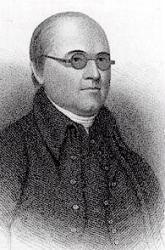
1752 - 1817 Topics: Tenth Sunday after Trinity Author of "I love Thy Zion, Lord" in Evangelical Lutheran hymnal Timothy Dwight (b. Northampton, MA, 1752; d. Philadelphia, PA, 1817) was a grandson of Jonathan Edwards who became a Congregationalist pastor, a Revolutionary War army chaplain, a tutor and professor at Yale College, and president of Yale from 1795 to 1817. As president he continued to teach and serve as chaplain and was instrumental in improving both the academic and the spiritual life of the college.
Bert Polman
===============
Dwight, Timothy, D.D. This is the most important name in early American hymnology, as it is also one of the most illustrious in American literature and education. He was born at Northampton, Massachusetts, May 14, 1752, and graduated at Yale College, 1769; was a tutor there from 1771 to 1777. He then became for a short time a chaplain in the United States Army, but passed on in 1783 to Fairfield, Connecticut, where he held a pastorate, and taught in an Academy, till his appointment, in 1795, as President of Yale College. His works are well known, and need no enumeration. He died at New Haven, Jan. 11, 1817. In 1797 the General Association of Connecticut, being dissatisfied with Joel Barlow's 1785 revision of Watts, requested Dwight to do the work de novo. This he did liberally, furnishing in some instances several paraphrases of the same psalm, and adding a selection of hymns, mainly from Watts. The book appeared as—
"The Psalms of David, &c.... By I. Watts, D.D. A New Edition in which the Psalms omitted by Dr. Watts are versified, local passages are altered, and a number of Psalms are versified anew in proper metres. By Timothy Dwight, D.D., &c….To the Psalms is added a Selection of Hymns," 1800.
Dwight's lyrics are all professedly psalms, but they are by no means literal versions. His original compositions number 33. Of these many are still in common use, the most important being:—
1. Blest be the Lord, Who heard my prayer. Psalm xxviii. This is the second part of Psalm xxviii., in 5 stanzas of 4 lines. It is in the English New Congregational Hymn Book, 1859.
2. I Love Thy kingdom, Lord. Psalm cxxxvii. This is version three of Ps. 137, in 8 stanzas of 4 lines, and is in extensive use at the present time throughout the States. It is also included in many English, Irish, and Scottish collections, sometimes in the original form, as in Alford's Year of Praise, 1867; again as, "I love Thy Church, 0 God," which opens with the second stanza, as in the Scottish Evangelical Union Hymnal, 1878, in 3 stanzas, and "We love Thy kingdom, Lord," in the Irish Church Hymnal, 1873. In Cleveland's Lyra Sacra Americana six stanzas only are given from the original.
Next to this in popularity are his 2nd and 3rd renderings of Psalm lxxxviii.:—
3. Shall man, 0 God of life and light. (3rd stanza)
4. While life prolongs its precious light. (2nd stanza) Both of which are in extensive use. From his 4th version of the same Psalm (88), the following hymns have been compiled, each opening with the stanza indicated:—
5. Just o'er the grave I hung. Stanza ii.
6. I saw beyond the tomb. Stanza iv.
7. Ye sinners, fear the Lord. Stanza xii. This last is found in Spurgeon's 0ur Own Hymnbook. The original version consists of 13 stanzas.
8. 0 Thou Whose sceptre earth and seas obey. Psalm lxxii. This is his second version of this Psalm, and was given in the Comprehensive Rippon, 1844.
The following, most of which are of a more jubilant character, are well known:—
9. How pleasing is Thy voice. Psalm lxv.
10. In Zion's sacred gates. Psalm cl.
11. Lord of all worlds, incline Thy gracious [bounteous] ear. Psalm llii.
12. Now to Thy sacred house. Psalm xliii., st. 3.
13. Sing to the Lord most high. Psalm c.
14. In barren wilds shall living waters spring. Psalm liii.
15. Lord, in these dark and dismal days. Psalm cxxxvii.
No. 9 is found in Lyra Sacra Americana, pp. 101-2, the seven stanzas of the original being abbreviated to five.
In addition to the Psalms, Dr. Dwight published three poems, "The Conquest of Canaan," 1785; "Greenfield Hill," 1794; "Triumph of Infidelity," 1788. [Rev. F. M. Bird, M.A.]
- John Julian, Dictionary of Hymnology (1907)
Timothy Dwight
Catherine Winkworth
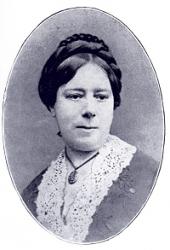
1827 - 1878 Person Name: Miss Winkworth Topics: Tenth Sunday after Trinity Translator of "O Christ, our true and only Light" in Church Book Catherine Winkworth (b. Holborn, London, England, 1827; d. Monnetier, Savoy, France, 1878) is well known for her English translations of German hymns; her translations were polished and yet remained close to the original. Educated initially by her mother, she lived with relatives in Dresden, Germany, in 1845, where she acquired her knowledge of German and interest in German hymnody. After residing near Manchester until 1862, she moved to Clifton, near Bristol. A pioneer in promoting women's rights, Winkworth put much of her energy into the encouragement of higher education for women. She translated a large number of German hymn texts from hymnals owned by a friend, Baron Bunsen. Though often altered, these translations continue to be used in many modern hymnals. Her work was published in two series of Lyra Germanica (1855, 1858) and in The Chorale Book for England (1863), which included the appropriate German tune with each text as provided by Sterndale Bennett and Otto Goldschmidt. Winkworth also translated biographies of German Christians who promoted ministries to the poor and sick and compiled a handbook of biographies of German hymn authors, Christian Singers of Germany (1869).
Bert Polman
========================
Winkworth, Catherine, daughter of Henry Winkworth, of Alderley Edge, Cheshire, was born in London, Sep. 13, 1829. Most of her early life was spent in the neighbourhood of Manchester. Subsequently she removed with the family to Clifton, near Bristol. She died suddenly of heart disease, at Monnetier, in Savoy, in July, 1878. Miss Winkworth published:—
Translations from the German of the Life of Pastor Fliedner, the Founder of the Sisterhood of Protestant Deaconesses at Kaiserworth, 1861; and of the Life of Amelia Sieveking, 1863.
Her sympathy with practical efforts for the benefit of women, and with a pure devotional life, as seen in these translations, received from her the most practical illustration possible in the deep and active interest which she took in educational work in connection with the Clifton Association for the Higher Education of Women, and kindred societies there and elsewhere. Our interest, however, is mainly centred in her hymnological work as embodied in her:—
(1) Lyra Germanica, 1st Ser., 1855. (2) Lyra Germanica, 2nd Ser., 1858. (3) The Chorale Book for England (containing translations from the German, together with music), 1863; and (4) her charming biographical work, the Christian Singers of Germany, 1869.
In a sympathetic article on Miss Winkworth in the Inquirer of July 20, 1878, Dr. Martineau says:—
"The translations contained in these volumes are invariably faithful, and for the most part both terse and delicate; and an admirable art is applied to the management of complex and difficult versification. They have not quite the fire of John Wesley's versions of Moravian hymns, or the wonderful fusion and reproduction of thought which may be found in Coleridge. But if less flowing they are more conscientious than either, and attain a result as poetical as severe exactitude admits, being only a little short of ‘native music'"
Dr. Percival, then Principal of Clifton College, also wrote concerning her (in the Bristol Times and Mirror), in July, 1878:—
"She was a person of remarkable intellectual and social gifts, and very unusual attainments; but what specially distinguished her was her combination of rare ability and great knowledge with a certain tender and sympathetic refinement which constitutes the special charm of the true womanly character."
Dr. Martineau (as above) says her religious life afforded "a happy example of the piety which the Church of England discipline may implant.....The fast hold she retained of her discipleship of Christ was no example of ‘feminine simplicity,' carrying on the childish mind into maturer years, but the clear allegiance of a firm mind, familiar with the pretensions of non-Christian schools, well able to test them, and undiverted by them from her first love."
Miss Winkworth, although not the earliest of modern translators from the German into English, is certainly the foremost in rank and popularity. Her translations are the most widely used of any from that language, and have had more to do with the modern revival of the English use of German hymns than the versions of any other writer.
-- John Julian, Dictionary of Hymnology (1907)
============================
See also in:
Hymn Writers of the Church
Catherine Winkworth
Jane Borthwick
1813 - 1897 Topics: Tenth Sunday after Trinity Translator of "Lord, remove the veil away" in Church Book Miss Jane Borthwick, the translator of this hymn and many others, is of Scottish family. Her sister (Mrs. Eric Findlater) and herself edited "Hymns from the Land of Luther" (1854). She also wrote "Thoughts for Thoughtful Hours (1859), and has contributed numerous poetical pieces to the "Family Treasury," under the signature "H.L.L."
--Annotations of the Hymnal, Charles Hutchins, M.A. 1872.
=================================
Borthwick, Jane, daughter of James Borthwick, manager of the North British Insurance Office, Edinburgh, was born April 9, 1813, at Edinburgh, where she still resides. Along with her sister Sarah (b. Nov. 26, 1823; wife of the Rev. Eric John Findlater, of Lochearnhead, Perthshire, who died May 2, 1886) she translated from the German Hymns from the Land of Luther, 1st Series, 1854; 2nd, 1855; 3rd, 1858; 4th, 1862. A complete edition was published in 1862, by W. P. Kennedy, Edinburgh, of which a reprint was issued by Nelson & Sons, 1884.
These translations, which represent relatively a larger proportion of hymns for the Christian Life, and a smaller for the Christian Year than one finds in Miss Winkworth, have attained a success as translations, and an acceptance in hymnals only second to Miss Winkworth's. Since Kennedy's Hymnologia Christiana, 1863, in England, and the Andover Sabbath Hymn Book, 1858, in America, made several selections therefrom, hardly a hymnal in England or America has appeared without containing some of these translations. Miss Borthwick has kindly enabled us throughout this Dictionary to distinguish between the 61 translations by herself and the 53 by her sister. Among the most popular of Miss Borthwick's may be named "Jesus still lead on," and "How blessed from the bonds of sin;" and of Mrs. Findlater's "God calling yet!" and "Rejoice, all ye believers."
Under the signature of H. L. L. Miss Borthwick has also written various prose works, and has contributed many translations and original poems to the Family Treasury, a number of which were collected and published in 1857, as Thoughts for Thoughtful Hours (3rd edition, enlarged, 1867). She also contributed several translations to Dr. Pagenstecher's Collection, 1864, five of which are included in the new edition of the Hymns from the Land of Luther, 1884, pp. 256-264. Of her original hymns the best known are “Come, labour on” and "Rest, weary soul.” In 1875 she published a selection of poems translated from Meta Heusser-Schweizer, under the title of Alpine Lyrics, which were incorporated in the 1884 edition of the Hymns from the Land of Luther. She died in 1897. [Rev. James Mearns, M.A.]
-- John Julian, Dictionary of Hymnology (1907)
========================
Borthwick, Jane, p. 163, ii. Other hymns from Miss Borthwick's Thoughtful Hours, 1859, are in common use:—
1. And is the time approaching. Missions.
2. I do not doubt Thy wise and holy will. Faith.
3. Lord, Thou knowest all the weakness. Confidence.
4. Rejoice, my fellow pilgrim. The New Year.
5. Times are changing, days are flying. New Year.
Nos. 2-5 as given in Kennedy, 1863, are mostly altered from the originals.
--John Julian, Dictionary of Hymnology, Appendix, Part II (1907)
=============
Works:
Hymns from the Land of Luther
Jane Borthwick
J. M. Neale
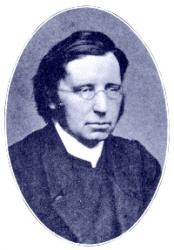
1818 - 1866 Person Name: John Mason Neale Topics: Tenth Sunday after Trinity Author of "O very God of very God" in Church Book John M. Neale's life is a study in contrasts: born into an evangelical home, he had sympathies toward Rome; in perpetual ill health, he was incredibly productive; of scholarly temperament, he devoted much time to improving social conditions in his area; often ignored or despised by his contemporaries, he is lauded today for his contributions to the church and hymnody. Neale's gifts came to expression early–he won the Seatonian prize for religious poetry eleven times while a student at Trinity College, Cambridge, England. He was ordained in the Church of England in 1842, but ill health and his strong support of the Oxford Movement kept him from ordinary parish ministry. So Neale spent the years between 1846 and 1866 as a warden of Sackville College in East Grinstead, a retirement home for poor men. There he served the men faithfully and expanded Sackville's ministry to indigent women and orphans. He also founded the Sisterhood of St. Margaret, which became one of the finest English training orders for nurses.
Laboring in relative obscurity, Neale turned out a prodigious number of books and artic1es on liturgy and church history, including A History of the So-Called Jansenist Church of Holland (1858); an account of the Roman Catholic Church of Utrecht and its break from Rome in the 1700s; and his scholarly Essays on Liturgiology and Church History (1863). Neale contributed to church music by writing original hymns, including two volumes of Hymns for Children (1842, 1846), but especially by translating Greek and Latin hymns into English. These translations appeared in Medieval Hymns and Sequences (1851, 1863, 1867), The Hymnal Noted (1852, 1854), Hymns of the Eastern Church (1862), and Hymns Chiefly Medieval (1865). Because a number of Neale's translations were judged unsingable, editors usually amended his work, as evident already in the 1861 edition of Hymns Ancient and Modern; Neale claimed no rights to his texts and was pleased that his translations could contribute to hymnody as the "common property of Christendom."
Bert Polman
========================
Neale, John Mason, D.D., was born in Conduit Street, London, on Jan. 24, 1818. He inherited intellectual power on both sides: his father, the Rev. Cornelius Neale, having been Senior Wrangler, Second Chancellor's Medallist, and Fellow of St. John's College, Cambridge, and his mother being the daughter of John Mason Good, a man of considerable learning. Both father and mother are said to have been "very pronounced Evangelicals." The father died in 1823, and the boy's early training was entirely under the direction of his mother, his deep attachment for whom is shown by the fact that, not long before his death, he wrote of her as "a mother to whom I owe more than I can express." He was educated at Sherborne Grammar School, and was afterwards a private pupil, first of the Rev. William Russell, Rector of Shepperton, and then of Professor Challis. In 1836 he went up to Cambridge, where he gained a scholarship at Trinity College, and was considered the best man of his year. But he did not inherit his father's mathematical tastes, and had, in fact, the greatest antipathy to the study; and as the strange rule then prevailed that no one might aspire to Classical Honours unless his name had appeared in the Mathematical Tripos, he was forced to be content with an ordinary degree. This he took in 1840; had he been one year later, he might have taken a brilliant degree, for in 1841 the rule mentioned above was rescinded. He gained, however, what distinctions he could, winning the Members' Prize, and being elected Fellow and Tutor of Downing College; while, as a graduate, he won the Seatonian Prize no fewer than eleven times. At Cambridge he identified himself with the Church movement, which was spreading there in a quieter, but no less real, way than in the sister University. He became one of the founders of the Ecclesiological, or, as it was commonly called, the Cambridge Camden Society, in conjunction with Mr. E. J. Boyce, his future brother-in-law, and Mr. Benjamin Webb, afterwards the well-known Vicar of St. Andrew's, Wells Street, and editor of The Church Quarterly Review. In 1842 he married Miss Sarah Norman Webster, the daughter of an evangelical clergyman, and in 1843 he was presented to the small incumbency of Crawley in Sussex. Ill health, however, prevented him from being instituted to the living. His lungs were found to be badly affected; and, as the only chance of saving his life, he was obliged to go to Madeira, where he stayed until the summer of 1844. In 1846 he was presented by Lord Delaware to the Wardenship of Sackville College, East Grinstead. This can hardly be considered as an ecclesiastical preferment, for both his predecessor and his successor were laymen. In fact the only ecclesiastical preferment that ever was offered to him was the Provostship of St. Ninian's, Perth. This was an honourable office, for the Provostship is equivalent to a Deanery in England, but it was not a lucrative one, being worth only £100 a year. He was obliged to decline it, as the climate was thought too cold for his delicate health. In the quiet retreat of East Grinstead, therefore, Dr. Neale spent the remainder of his comparatively short life, dividing his time between literary work, which all tended, directly or indirectly, to the advancement of that great Church revival of which he was so able and courageous a champion, and the unremitting care of that sisterhood of which he was the founder. He commenced a sisterhood at Rotherfield on a very small scale, in conjunction with Miss S. A. Gream, daughter of the rector of the parish; but in 1856 he transferred it to East Grinstead, where, under the name of St. Margaret's, it has attained its present proportions. Various other institutions gradually arose in connection with this Sisterhood of St. Margaret's, viz., an Orphanage, a Middle Class School for girls, and a House at Aldershot for the reformation of fallen women. The blessing which the East Grinstead Sisters have been to thousands of the sick and suffering cannot here be told. But it must be mentioned that Dr. Neale met with many difficulties, and great opposition from the outside, which, on one occasion, if not more, culminated in actual violence. In 1857 he was attending the funeral of one of the Sisters at Lewes, when a report was spread that the deceased had been decoyed into St. Margaret's Home, persuaded to leave all her money to the sisterhood, and then purposely sent to a post in which she might catch the scarlet fever of which she died. To those who knew anything of the scrupulously delicate and honourable character of Dr. Neale, such a charge would seem absurd on the face of it; but mobs are not apt to reflect, and it was very easy to excite a mob against the unpopular practices and sentiments rife at East Grinstead; and Dr. Neale and some Sisters who were attending the funeral were attacked and roughly handled. He also found opponents in higher quarters; he was inhibited by the Bishop of the Diocese for fourteen years, and the Aldershot House was obliged to be abandoned, after having done useful work for some years, in consequence of the prejudice of officials against the religious system pursued. Dr. Neale's character, however, was a happy mixture of gentleness and firmness; he had in the highest degree the courage of his convictions, which were remarkably definite and strong; while at the same time he maintained the greatest charity towards, and forbearance with, others who did not agree with him. It is not surprising, therefore, that he lived all opposition down; and that, while from first to last his relations with the community at East Grinstead were of the happiest description, he was also, after a time, spared any molestation from without. The institution grew upon his hands, and he became anxious to provide it with a permanent and fitting home. His last public act was to lay the foundation of a new convent for the Sisters on St. Margaret's Day (July 20), 1865. He lived long enough to see the building progress, but not to see it completed. In the following spring his health, which had always been delicate, completely broke down, and after five months of acute suffering he passed away on the Feast of the Transfiguration (Aug. 6), 1866, to the bitter regret of the little community at East Grinstead and of numberless friends outside that circle. One trait of his singularly lovable character must not pass unnoticed. His charity, both in the popular and in the truer Christian sense of the word, was unbounded; he was liberal and almost lavish with his money, and his liberality extended to men of all creeds and opinions; while it is pleasing to record that his relations with his ecclesiastical superiors so much improved that he dedicated his volume of Seatonian Poems to the bishop of the diocese. If however success in life depended upon worldly advantages, Dr. Neale's life would have to be pronounced a failure; for, as his old friend, Dr. Littledale, justly complains, "he spent nearly half his life where he died, in the position of warden of an obscure Almshouse on a salary of £27 a year." But, measured by a different standard, his short life assumes very different proportions. Not only did he win the love and gratitude of those with whom he was immediately connected, but he acquired a world-wide reputation as a writer, and he lived to see that Church revival, to promote which was the great object of his whole career, already advancing to the position which it now occupies in the land of his birth.
Dr. Neale was an industrious and voluminous writer both in prose and verse; it is of course with the latter class of his writings that this sketch is chiefly concerned; but a few words must first be said about the former.
I.— Prose Writings.— His first compositions were in the form of contributions to The Ecclesiologist, and were written during his graduate career at Cambridge. Whilst he was in Madeira he began to write his Commentary on the Psalms, part of which was published in 1860. It was afterwards given to the world, partly written by him and partly by his friend, Dr. Littledale, in 4 vols., in 1874, under the title of A Commentary on the Psalms, from Primitive and Mediaeval Writers. This work has been criticised as pushing the mystical interpretation to an extravagant extent. But Dr. Neale has anticipated and disarmed such criticism by distinctly stating at the commencement that "not one single mystical interpretation throughout the present Commentary is original;" and surely such a collection has a special value as a wholesome correction of the materialistic and rationalistic tendencies of the age. His next great work, written at Sackville College, was The History of the Holy Eastern Church. The General Introduction was published in 1847; then followed part of the History itself, The Patriarchate of Alexandria, in 2 vols.; and after his death another fragment was published, The History of the Patriarchate of Antioch, to which was added, Constantius's Memoirs of the Patriarchs of Antioch, translated from the Greek, edited by the Rev. G. Williams, 1 vol. The whole fragment was published in 5 vols. (1847-1873). The work is spoken very highly of, and constantly referred to, by Dean Stanley in his Lectures on the History of the Eastern Church. Dr. Neale was naturally in strong sympathy with the struggling Episcopal Church of Scotland, and to show that sympathy he published, in 1856, The Life and Times of Patrick Torry, D.D., Bishop of St. Andrews, &c, with an Appendix on the Scottish Liturgy. In the same direction was his History of the so-called Jansenist Church in Holland, 1858. Next followed Essays on Liturgiology and Church History, with an Appendix on Liturgical Quotations from the Isapostolical Fathers by the Rev. G. Moultrie, 1863, a 2nd edition of which, with an interesting Preface by Dr. Littledale, was published in 1867. It would be foreign to the purpose of this article to dwell on his other prose works, such as his published sermons, preached in Sackville College Chapel, his admirable little devotional work, Readings for the Aged, which was a selection from these sermons; the various works he edited, such as the Tetralogia Liturgica, the Sequentiae ex Missalibus Germanicis, Anglicis, Gallicis, aliisque Medii Aevi Collectae; his edition of The Primitive Liturgies of S. Mark, S. Clement, S. James, S. Chrysostom and S. Basil, with a Preface by Dr. Littledale; his Translation of the same; his many stories from Church History, his Voices from the East, translated from the Russ, and his various articles contributed to the Ecclesiologist, The Christian Remembrance, The Morning Chronicle, and The Churchman's Companion. It is time to pass on to that with which we are directly concerned.
II. —Poetical Writings.— As a sacred poet, Dr. Neale may be regarded under two aspects, as an original writer and as a translator.
i. Original Writer.—Of his original poetry, the first specimen is Hymns for Children, published in 1842, which reached its 10th edition the year after his death. It consists of 33 short hymns, the first 19 for the different days of the week and different parts of the day, the last 14 for the different Church Seasons. This little volume was followed in 1844 by Hymns for the Young, which was intended to be a sequel to the former, its alternative title being A Second Series of Hymns for Children; but it is designed for an older class than the former, for young people rather than for children. The first 7 hymns are "for special occasions," as "on goiug to work," “leaving home” &c.; the next 8 on "Church Duties and Privileges," "Confirmation," "First Holy Communion," &c, the last 13 on "Church Festivals,” which, oddly enough, include the Four Ember Seasons, Rogation Days, and the Sundays in Advent. In both these works the severe and rigid style, copied, no doubt, from the old Latin hymns, is very observable. Perhaps this has prevented them from being such popular favourites as they otherwise might have been; but they are quite free from faults into which a writer of hymns for children is apt to fall. They never degenerate into mere prose in rhyme; and in every case the purity as well as the simplicity of their diction is very remarkable. In the same year (1844) he also published Songs and Ballads for Manufacturers, which were written during his sojourn in Madeira, and the aim of which (he tells us) was "to set forth good and sound principles in metaphors which might, from their familiarity, come home to the hearts of those to whom they were addressed." They are wonderfully spirited both in matter and manner, and their freedom of style is as remarkable as the rigidity of the former works. They were followed eleven years later (1855) by a similar little work entitled Songs and Ballads for the People. This is of a more aggressive and controversial character than the previous ones, dealing boldly with such burning questions as "The Teetotallers," "Why don't you go to Meeting?" &c. Passing over the Seatonian Poems, most of which were of course written before those noticed above, we next come to the Hymns for the Side, which is a fitting companion to the Readings for the Aged, and then to Sequences, Hymns, and other Ecclesiastical Verses, which was published just after the author's death (1866), and may be regarded as a sort of dying legacy to the world. In fact, the writer almost intimates as much in the preface, where he speaks of himself as "one who might soon be called to have done with earthly composition for ever." Many of the verses, indeed, were written earlier, "forty years ago," he says, which is evidently intended for twenty. The preface is dated "In the Octave of S. James, 1866," and within a fortnight, on the Feast of the Transfiguration, “the veil” (to use the touching words of his old friend, Dr. Littledale) "was withdrawn from before his eyes, and the song hushed on earth is now swelling the chorus of Paradise." Was it an accident that these verses dwell so much on death and the life beyond the grave? or did the coming event cast its shadow before? Not that there is any sadness of tone about them; quite the reverse. He contemplates death, but it is with the eye of a Christian from whom the sting of death has been removed. Most of the verses are on subjects connected with the Church Seasons, especially with what are called the "Minor Festivals:" but the first and last poems are on different subjects. The first, the "Prologue," is "in dear memory of John Keble, who departed on Maundy Thursday, 1866, "and is a most touching tribute from one sacred poet to another whom he was about to follow within a few months to the "land that is very far off." The last is a poetical version of the legend of "the Seven Sleepers of Ephesus," and is, the writer thinks, "the first attempt to apply to primitive Christianity that which is, to his mind, the noblest of our measures." That measure is the hexameter, and undoubtedly Dr. Neale employed it, as he did all his measures, with great skill and effect; but it may be doubted whether the English language, in which the quantities of syllables are not so clearly defined as in Latin and Greek, is quite adapted for that measure. Throughout this volume, Dr. Neale rises to a far higher strain than he had ever reached before.
ii. Translations.— It is in this species of composition that Dr. Neale's success was pre-eminent, one might almost say unique. He had all the qualifications of a good translator. He was not only an excellent classical scholar in the ordinary sense of the term, but he was also positively steeped in mediaeval Latin. An anecdote given in an appreciative notice by "G. M." [Moultrie] happily illustrates this:—
Dr. Neale "was invited by Mr. Keble and the Bishop of Salisbury to assist them with their new hymnal, and for this purpose he paid a visit to Hursley Parsonage." On one occasion Mr. Keble "having to go to another room to find some papers was detained a short time. On his return Dr. Neale said, ‘Why, Keble, I thought you told me that the "Christian Year" was entirely original.' ‘Yes,' he answered, 'it certainly is.' ‘Then how comes this?' and Dr. Neale placed before him the Latin of one of Keble's hymns. Keble professed himself utterly confounded. He protested that he had never seen this 'original,' no, not in all his life. After a few minutes Neale relieved him by owning that he had just turned it into Latin in his absence."
Again, Dr. Neale's exquisite ear for melody prevented him from spoiling the rhythm by too servile an imitation of the original; while the spiritedness which is a marked feature of all his poetry preserved that spring and dash which is so often wanting in a translation.
(i.) Latin.— Dr. Neale's translations from the Latin include
(1.) Mediaeval Hymns and Sequences (1851). He was the, first to introduce to the English reader Sequences, that is, as he himself describes them, " hymns sung between the Epistle and Gospel in the Mass," or, as he explains more definitely, "hymns whose origin is to be looked for in the Alleluia of the Gradual sung between the Epistle and the Gospel." He was quite an enthusiast about this subject:—
"It is a magnificent thing,” he says, "to pass along the far-stretching vista of hymns, from the sublime self-containedness of S. Ambrose to the more fervid inspiration of S. Gregory, the exquisite typology of Venantius Fortunatus, the lovely painting of St. Peter Damiani, the crystal-like simplicity of S. Notker, the scriptural calm of Godescalcus, the subjective loveliness of St. Bernard, till all culminate in the full blaze of glory which surrounds Adam of S. Victor, the greatest of them all."
Feeling thus what a noble task he had before him, it is no wonder that he spared no pains over it, or that he felt it his duty to adopt "the exact measure and rhyme of the original, at whatever inconvenience and cramping." That he succeeded in his difficult work, the verdict of the public has sufficiently proved. Of all the translations in the English language no one has ever been so popular as that of the Hora Novissima, in this volume, afterwards (1858) published separately, under the title of the Rhythm of Bernard de Morlaix, Monk of Cluny. Some original hymns may be as well known as "Jerusalem the Golden," "For thee, O dear, dear country," or "Brief life is here our portion,” but it would be hard to find any translations which come near them for extensive use. A second edition of the Mediaeval Hymns, much improved, came out in 1863, and a third, "with very numerous additions and corrections," in 1867.
(2.) We next come to the Hymnal Noted, in which 94 out of the 105 hymns are the work of Dr. Neale. These are all translations from the Latin. The first part appeared in 1852, the second in 1854. Dr. Neale has himself given us an interesting account of his connection with this work:—
"Some," he writes, "of the happiest and most instructive hours of my life were spent in the Sub-Committee of the Ecclesiological Society, appointed for the purpose of bringing out the Second Part of the Hymnal Noted It was my business to lay before them the translations I had prepared, and theirs to correct. The study which this required drew out the beauties of the original in a way which nothing else could have done, and the friendly collisions of various minds elicited ideas which a single translator would in all probability have missed." Preface, Mediaeval Hymns & Sequences
(3.) The last volume of translations from the Latin published by Dr. Neale appeared in 1865, under the title of Hymns, chiefly Mediaeval, on the Joys and Glories of Paradise. It was intended to be a companion volume to the Rhythm of Bernard of Cluny. In this work the writer gives the general reader an opportunity of comparing the translation with the original by printing the two together in parallel pages.
Before quitting the subject of Dr. Neale's translations from the Latin, it is only fair to notice that while they have been almost universally accepted by the English Church, and some of them adopted by dissenting congregations, they called down upon the translator a storm of indignation from an opposite quarter. The Roman Catholics accused him of deliberate deception because he took no pains to point out that he had either softened down or entirely ignored the Roman doctrines in those hymns. So far, they said, as the originals were concerned, these translations were deliberate misrepresentations. As however the translations were intended for the use of the Anglican Church, it was only to be expected that Neale should omit such hymns or portions of hymns as would be at variance with her doctrines and discipline.
(ii.) Greek.— Dr. Neale conferred even a greater boon upon the lovers of hymnology than by his translations from the Latin, when he published, in 1862, his Hymns of the Eastern Church. In his translations from the Latin he did what others had done before; but in his translations from the Greek he was opening entirely new ground. "It is," he says in his preface to the first edition, "a most remarkable fact, and one which shows how very little interest has been hitherto felt in the Eastern Church, that these are literally, I believe, the only English versions of any part of the treasures of Oriental Hymnology." As early as 1853 he had printed a few of his versions in The Ecclesiastic, but it was not till the appearance of the complete volume that the interest of the general public was awakened in them. Then they became wonderfully popular. His translations "Christian, dost thou see them?" "The day is past and over," "'Tis the day of Resurrection," and his Greek-inspired "Art thou weary," and "O happy band of pilgrims," are almost as great favourites as "Jerusalem the golden," and the first in his Hymns of the Eastern Church, "Fierce was the wild billow," deserves to be. Dr. Neale had a far more difficult task before him when he undertook these Greek hymns than he had with the Latin, and he appeals to the reader "not to forget the immense difficulty of an attempt so perfectly new as the present, when I have had no predecessors and therefore could have no master." That difficulty in comparison with the Latin cannot be better stated than in his own words:—
"Though the superior terseness and brevity of the Latin hymns renders a translation which shall represent those qualities a work of great labour, yet still the versifier has the help of the same metre; his version may be line for line; and there is a great analogy between the collects and the hymns, most helpful to the translator. Above all, we have examples enough of former translation by which we may take pattern. But in attempting a Greek canon, from the fact of its being in prose (metrical hymns are unknown) one is all at sea. What measure shall we employ? Why this more than that? Might we attempt the rhythmical prose of the original, and design it to be chanted? Again, the great length of the canons renders them un suitable for our churches as wholes. Is it better simply to form centos of the more beautiful passages? or can separate odes, each necessarily imperfect, be employed as separate hymns? . . . My own belief is that the best way to employ Greek hymnology for the uses of the English Church would be by centos."
That, in spite of these difficulties, Dr. Neale succeeded, is obvious. His Greek hymns are, indeed, adaptations rather than translations; but, besides their intrinsic beauty, they at any rate give some idea of what the Greek hymn-writers were. In this case, as in his translations from the Latin, he omitted what he held was not good from his Anglican point of view, e.g., the Doxologies to the Blessed Virgin Mary.
One point strikes us as very remarkable in these hymns, and indeed in all Dr. Neale's poetry, viz., its thorough manliness of tone. Considering what his surroundings were, one might have expected a feminine tone in his writings. Dr. Littledale, in his most vivid and interesting sketch of Dr. Neale's life, to which the present writer is largely indebted, has remarked the same with regard to his teaching: "Instead of committing the grave error of feminising his sermons and counsels [at St. Margaret's] because he had only women to deal with, he aimed at showing them the masculine side of Christianity also, to teach them its strength as well as its beauty."
In conclusion, it may be observed that no one had a higher opinion of the value of Dr. Neale's labours in the field of ancient and mediaeval hymnology than the one man whose competency to speak with authority on such a point Dr. Neale himself would assuredly have rated above that of all others. Over and over again Dr. Neale pays a tribute to the services rendered by Archbishop Trench in this domain; and the present sketch cannot more fitly close than with the testimony which Archbishop Trench has given of his sense of the services rendered by Dr. Neale. The last words of his preface to his Sacred Latin Poetry (ed. 1864) are:—" I will only, therefore, mention that by patient researches in almost all European lands, he [Dr. Neale] has brought to light a multitude of hymns unknown before: in a treatise on sequences, properly so-called, has for the first time explained their essential character; while to him the English reader owes versions of some of the best hymns, such as often successfully overcome the almost insuperable difficulties which many among them present to the translator." [Rev. J. H. Overton, D.D.]
Dr. Neale's original hymns and translations appeared in the following works, most of which are referred to in the preceding article, and all of which are grouped together here to facilitate reference:—
(1) Hymns for Children. Intended chiefly for Village Schools. London, Masters, 1842. (2) Hymns for the Sick. London, Masters, 1843, improved ed. 1849. (3) Hymns for the Young. A Second Series of Hymns for Children. London, Masters, 1844. (4) Songs and Ballads for Manufacturers. London, Masters, 1844. (5) Hymns for Children. A Third Series. London, Masters, 1846. (6) Mediaeval Hymns and Sequences. London, Masters. 1851; 2nd ed. 1861; 3rd. ed. 1863. (7) Hymnal Noted. London, Masters & Novello, 1852: enlarged 1854. Several of the translations were by other hands. Musical editions edited by the Rev. T. Helmore. It is from this work that a large number of Dr. Neale's translations from the Latin are taken. (8) Carols for Christmas and Eastertide. 1853. (9) Songs and Ballads for the People. 1855. (10) The Rhythm of Bernard de Morlaix, Monk of Cluny, on the Celestial Country. London, Hayes, 1st ed. 1858: 3rd ed., with revision of text, 1861. It contains both the Latin and the English translation. (11) Hymns of The Eastern Church, Translated with Notes and an Introduction. London, Hayes, 1862: 2nd ed. 1862: 3rd ed. 1866 : 4th ed., with Music and additional notes, edited by The Very Rev. S. G. Hatherly, Mus. B., Archpriest of the Patriarchal (Ecumenical Throne. London, Hayes, 1882. Several of these translations and notes appeared in The Ecclesiastic and Theologian, in 1853. (12) Hymns, Chiefly Mediaeval, on the Joys and Glories of Paradise. London, Hayes, 1865. This work contains notes on the hymns, and the Latin texts of the older amongst them. (13) Original Sequences, Hymns, and other Ecclesiastical Verses. London, Hayes, 1866. This collection of Original verse was published posthumously by Dr. Littledale.
In addition to these works Dr. Neale published collections of Latin verse as:—
1.) Hymni Ecclesiae e Breviariis quibusdam et Missalibus Gallicanis, Germanis, Hispanis, Lusitanis, desumpti. Oxford & Lond. J. H. Parker, 1851: and (2) Sequentiae e Missalibus Germanicis, Anglicis, Gallicis, aliisque Medii Aevi collectae. Oxford & Lond. J. H. Parker, 1852.
A few of his translations appeared from time to time in The Ecclesiastic; and a few of his original hymns in The Christian Remembrancer. In the collection compiled for use at St. Margaret's, East Grinstead, St. Margaret's Hymnal, Printed Privately for the use of the Community only, 1875, there are several of his hymns not traceable elsewhere. [Many of his translations and original compositions are not listed here].
Some of the original hymns in common use which remain to be noted are:—
i. From Hymns for Children, 1842.
1. No more sadness now, nor fasting. Christmas.
2. 0 Thou, Who through this holy week. Passiontide.
3. The day, 0 Lord, is spent. Evening.
4. The grass so green, the trees so tall. Morning of the Third Day.
5. Thou art gone up, 0 Lord, on high. Evening.
6. Thou, Who earnest from above. Whitsuntide.
7. With Thee, 0 Lord, begins the year. Circumcision, or, the New Year.
ii. From Hymns for the Sick, 1843.
8. By no new path untried before. Support in Sickness.
9. Count not, the Lord's Apostle saith. Communion of the Sick.
10. Lord, if he sleepeth, he shall sure do well. Watching.
11. 0 Thou, Who rising long before the day. In a sleepless Night.
12. The Lord hath given, the Lord hath taken away. Death and Burial.
13. There is a stream, whose waters rise. In dangerous Sickness or Fever.
14. They slumber not nor sleep. Guardian Angels.
15. Thy servants militant below. In Affliction.
iii. From Hymns for the Young, 2nd series, 1844.
16. Lord Jesus, Who shalt come with power. Ember Week in Advent.
17. 0 God, in danger and distress. In time of Trouble.
18. 0 God, we raise our hearts to Thee. Ember-Week in Advent. From this, "0 Lord, we come before Thee now” is taken.
19. 0 God, Who lovest to abide. Dedication of a Church.
20. 0 our Father, hear us now. Rogation. The first of three hymns on The Lord's Prayer.
21. 0 Saviour, Who hast call'd away. Death of a Minister.
22. 0 Thou, Who lov'st to send relief. In Sickness.
23. 0 Thou, Who once didst bless the ground. Ember-Week in September.
24. 0 Thou, Who, when Thou hadst begun. On going to Work.
25. Still, 0 Lord of hosts, we share. Rogation. The Second of his hymns on The Lord's Prayer.
26. Strangers and pilgrims here below. On entering a new Dwelling to reside there.
27. They whose course on earth is o'er. Communion of Saints. From this, "Those whom many a land divides," is taken.
2S. Till its holy hours are past. Rogation. The third of his hymns on The Lord's Prayer.
iv. Songs and Ballads for Manufacturers, 1844.
29. Work is over; God must speed it. Evening.
v. Hymns for Children, 3rd series, 1846.
30. Before Thy Face, 0 God of old. St. John the Baptist.
31. By pain, and weariness, and doubt. St. Stephen.
32. First of the twelvefold band that trod. St. James.
33. Four streams through happy Eden flow'd. St. Mark.
34. Is there one who sets his face. St. Bartholomew. From this "He, for man who suffered woe," is taken.
35. Not a single sight we view. St. Matthias.
36. 0 Great Physician of the soul. St. Luke.
37. 0 Heavenly Wisdom, hear our cry. Christmas. “0 Sapientia."
38. 0 Key of David, hailed by those. Christmas. "0 Clavis David."
39. 0 Root of Jesse, Thou on Whom. Christmas. “O Radix Jesse."
40. 0 Thou, on Whom the nations [Gentiles] wait. Christmas. "0 Rex Gentium."
41. 0 Thou, Who earnest down of old [to call] . Christmas. "0 Adonai."
42. 0 Thou, Whose Name is God with us. Christmas. "0 Emmanuel."
43. 0 Very God of Very God. Christmas. "0 Oriens."
44. Saints of God, whom faith united. SS. Simon and Jude.
45. Since the time that first we came. St. Andrew. From this, "Every bird that upward springs," is taken.
46. That love is mighty love indeed. St. Barnabas.
47. We cannot plead, as others may. St. Matthew.
48. We have not seen, we cannot see. St. Thomas.
49. Would we go when life is o'er? St. Peter.
v. Carols for Christmas and Eastertide. 1853.
50. Gabriel's message does away. Christmas.
51. Joy and gladness be to king and peasant. Christmas.
52. Joy to thee, joy to thee, Day of our victory. Easter.
53. Sing Alleluia, all ye lands. Easter.
54. The world itself keeps Easter Day. Easter. From this "There stood three Marys by the tomb," is taken.
55. With Christ we share a mystic grave. Easter or Holy Baptism.
vi. From Sequences, Hymns, &c, 1866.
56. Can it, Master, can it be? Maundy Thursday.
57. Need it is we raise our eyes. All Saints.
58. Prostrate fell the Lord of all things. Maundy Thursday.
59. Rear the column, high and stately. All Saints.
60. The Paschal moonlight almost past. Easter.
61. Though the Octave-rainbow sometimes. Low Sunday.
62. When the earth was full of darkness. St. Margaret.
63. Young and old must raise the lay. Christmas Carol.
vi. From the St. Margaret's Hymnal, 1875.
64. O gracious God, Who bid'st me now. On Leaving Some.
65. Thou Who came to save Thy people. For a School.
66. Thy praise the holy Infants shewed. Holy Innocents.
These 66 hymns now in common use by no means represent Dr. Neale's position in modern hymnody. Many others must be added thereto. Even then, although the total is very large, it but feebly represents and emphasises the enormous influence which Di. Neale has exercised over modern hymnody.
--John Julian, Dictionary of Hymnology (1907)
J. M. Neale
William Gardiner
1770 - 1853 Topics: Tenth Sunday after Trinity Composer of "BELMONT" in Evangelical Lutheran hymnal William Gardiner (b. Leicester, England, 1770; d. Leicester, 1853) The son of an English hosiery manufacturer, Gardiner took up his father's trade in addition to writing about music, composing, and editing. Having met Joseph Haydn and Ludwig van Beethoven on his business travels, Gardiner then proceeded to help popularize their compositions, especially Beethoven's, in England. He recorded his memories of various musicians in Music and Friends (3 volumes, 1838-1853). In the first two volumes of Sacred Melodies (1812, 1815), Gardiner turned melodies from composers such as Haydn, Mozart, and Beethoven into hymn tunes in an attempt to rejuvenate the singing of psalms. His work became an important model for American editors like Lowell Mason (see Mason's Boston Handel and Haydn Collection, 1822), and later hymnbook editors often turned to Gardiner as a source of tunes derived from classical music.
Bert Polman
William Gardiner
Pages




