You help make Hymnary.org possible. More than 10 million people from 200+ countries found hymns, liturgical resources and encouragement on Hymnary.org in 2025, including you. Every visit affirms the global impact of this ministry.

If Hymnary has been meaningful to you this year, would you take a moment today to help sustain it? A gift of any size—paired with a note of encouragement if you wish—directly supports the server costs, research work and curation that keep this resource freely available to the world.

Give securely online today, or mail a check to:
Hymnary.org
Calvin University
3201 Burton Street SE
Grand Rapids, MI 49546

Thank you for your partnership, and may the hope of Advent fill your heart.

Person Results

Topics:epiphany+7
In:people

Planning worship? Check out our sister site, ZeteoSearch.org, for 20+ additional resources related to your search.
Showing 11 - 20 of 204Results Per Page: 102050

William Henry Monk

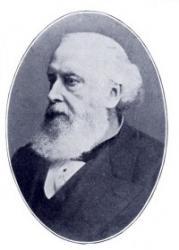
1823 - 1889 Topics: Epiphany 7 Year C Adapter of "VICTORY" in Voices United William H. Monk (b. Brompton, London, England, 1823; d. London, 1889) is best known for his music editing of Hymns Ancient and Modern (1861, 1868; 1875, and 1889 editions). He also adapted music from plainsong and added accompaniments for Introits for Use Throughout the Year, a book issued with that famous hymnal. Beginning in his teenage years, Monk held a number of musical positions. He became choirmaster at King's College in London in 1847 and was organist and choirmaster at St. Matthias, Stoke Newington, from 1852 to 1889, where he was influenced by the Oxford Movement. At St. Matthias, Monk also began daily choral services with the choir leading the congregation in music chosen according to the church year, including psalms chanted to plainsong. He composed over fifty hymn tunes and edited The Scottish Hymnal (1872 edition) and Wordsworth's Hymns for the Holy Year (1862) as well as the periodical Parish Choir (1840-1851). Bert Polman

Lowell Mason

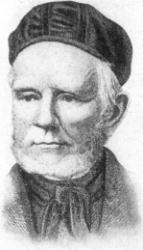
1792 - 1872 Topics: Epiphany 7 Year B Adapter and Harmonizer of "AZMON" in Voices United Dr. Lowell Mason (the degree was conferred by the University of New York) is justly called the father of American church music; and by his labors were founded the germinating principles of national musical intelligence and knowledge, which afforded a soil upon which all higher musical culture has been founded. To him we owe some of our best ideas in religious church music, elementary musical education, music in the schools, the popularization of classical chorus singing, and the art of teaching music upon the Inductive or Pestalozzian plan. More than that, we owe him no small share of the respect which the profession of music enjoys at the present time as contrasted with the contempt in which it was held a century or more ago. In fact, the entire art of music, as now understood and practiced in America, has derived advantage from the work of this great man. Lowell Mason was born in Medfield, Mass., January 8, 1792. From childhood he had manifested an intense love for music, and had devoted all his spare time and effort to improving himself according to such opportunities as were available to him. At the age of twenty he found himself filling a clerkship in a banking house in Savannah, Ga. Here he lost no opportunity of gratifying his passion for musical advancement, and was fortunate to meet for the first time a thoroughly qualified instructor, in the person of F. L. Abel. Applying his spare hours assiduously to the cultivation of the pursuit to which his passion inclined him, he soon acquired a proficiency that enabled him to enter the field of original composition, and his first work of this kind was embodied in the compilation of a collection of church music, which contained many of his own compositions. The manuscript was offered unavailingly to publishers in Philadelphia and in Boston. Fortunately for our musical advancement it finally secured the attention of the Boston Handel and Haydn Society, and by its committee was submitted to Dr. G. K. Jackson, the severest critic in Boston. Dr. Jackson approved most heartily of the work, and added a few of his own compositions to it. Thus enlarged, it was finally published in 1822 as The Handel and Haydn Society Collection of Church Music. Mason's name was omitted from the publication at his own request, which he thus explains, "I was then a bank officer in Savannah, and did not wish to be known as a musical man, as I had not the least thought of ever making music a profession." President Winchester, of the Handel and Haydn Society, sold the copyright for the young man. Mr. Mason went back to Savannah with probably $500 in his pocket as the preliminary result of his Boston visit. The book soon sprang into universal popularity, being at once adopted by the singing schools of New England, and through this means entering into the church choirs, to whom it opened up a higher field of harmonic beauty. Its career of success ran through some seventeen editions. On realizing this success, Mason determined to accept an invitation to come to Boston and enter upon a musical career. This was in 1826. He was made an honorary member of the Handel and Haydn Society, but declined to accept this, and entered the ranks as an active member. He had been invited to come to Boston by President Winchester and other musical friends and was guaranteed an income of $2,000 a year. He was also appointed, by the influence of these friends, director of music at the Hanover, Green, and Park Street churches, to alternate six months with each congregation. Finally he made a permanent arrangement with the Bowdoin Street Church, and gave up the guarantee, but again friendly influence stepped in and procured for him the position of teller at the American Bank. In 1827 Lowell Mason became president and conductor of the Handel and Haydn Society. It was the beginning of a career that was to win for him as has been already stated the title of "The Father of American Church Music." Although this may seem rather a bold claim it is not too much under the circumstances. Mr. Mason might have been in the average ranks of musicianship had he lived in Europe; in America he was well in advance of his surroundings. It was not too high praise (in spite of Mason's very simple style) when Dr. Jackson wrote of his song collection: "It is much the best book I have seen published in this country, and I do not hesitate to give it my most decided approbation," or that the great contrapuntist, Hauptmann, should say the harmonies of the tunes were dignified and churchlike and that the counterpoint was good, plain, singable and melodious. Charles C. Perkins gives a few of the reasons why Lowell Mason was the very man to lead American music as it then existed. He says, "First and foremost, he was not so very much superior to the members as to be unreasonably impatient at their shortcomings. Second, he was a born teacher, who, by hard work, had fitted himself to give instruction in singing. Third, he was one of themselves, a plain, self-made man, who could understand them and be understood of them." The personality of Dr. Mason was of great use to the art and appreciation of music in this country. He was of strong mind, dignified manners, sensitive, yet sweet and engaging. Prof. Horace Mann, one of the great educators of that day, said he would walk fifty miles to see and hear Mr. Mason teach if he could not otherwise have that advantage. Dr. Mason visited a number of the music schools in Europe, studied their methods, and incorporated the best things in his own work. He founded the Boston Academy of Music. The aim of this institution was to reach the masses and introduce music into the public schools. Dr. Mason resided in Boston from 1826 to 1851, when he removed to New York. Not only Boston benefited directly by this enthusiastic teacher's instruction, but he was constantly traveling to other societies in distant cities and helping their work. He had a notable class at North Reading, Mass., and he went in his later years as far as Rochester, where he trained a chorus of five hundred voices, many of them teachers, and some of them coming long distances to study under him. Before 1810 he had developed his idea of "Teachers' Conventions," and, as in these he had representatives from different states, he made musical missionaries for almost the entire country. He left behind him no less than fifty volumes of musical collections, instruction books, and manuals. As a composer of solid, enduring church music. Dr. Mason was one of the most successful this country has introduced. He was a deeply pious man, and was a communicant of the Presbyterian Church. Dr. Mason in 1817 married Miss Abigail Gregory, of Leesborough, Mass. The family consisted of four sons, Daniel Gregory, Lowell, William and Henry. The two former founded the publishing house of Mason Bros., dissolved by the death of the former in 1869. Lowell and Henry were the founders of the great organ manufacturer of Mason & Hamlin. Dr. William Mason was one of the most eminent musicians that America has yet produced. Dr. Lowell Mason died at "Silverspring," a beautiful residence on the side of Orange Mountain, New Jersey, August 11, 1872, bequeathing his great musical library, much of which had been collected abroad, to Yale College. --Hall, J. H. (c1914). Biography of Gospel Song and Hymn Writers. New York: Fleming H. Revell Company.

Bland Tucker

1895 - 1984 Person Name: Francis Bland Tucker Topics: Jesus Christ Praise and Thanksgiving; Adoration and Praise; Freedom; Funerals and Memorial Services; God Grace; God Image (Father); Hallelujah; Jesus Christ Adoration and Praise; Jesus Christ Grace; Jesus Christ Kingship, Conqueror; Jesus Christ Lord of Life; Jesus Christ Love of; Jesus Christ name; Jesus Christ Praise; Jesus Christ Saviour; Poverty; Processionals (Opening of Worship); Salvation; Service Music Doxologies; Proper 5 Year A; Proper 8 Year A; Epiphany Last/Transfig. Year B; Lent 2 Year B; Easter 5 Year B; Easter 7 Year B; Proper 15 Year B; Proper 22 Year B; Lent 2 Year C; Reign of Christ Year C Author of "All Praise to Thee" in Voices United Francis Bland Tucker (born Norfolk, Virginia, January 6, 1895). The son of a bishop and brother of a Presiding bishop of the Episcopal Church, he was educated at the University of Virginia, B.A., 1914, and at Virginia Theological Seminary, B.D., 1920; D.D., 1944. He was ordained deacon in 1918, priest in 1920, after having served as a private in Evacuation Hospital No.15 of the American Expeditionary Forces in France during World War I. His first charge was as a rector of Grammer Parish, Brunswick County, in southern Virginia. From 1925 to 1945, he was rector of historic St. John's Church, Georgetown, Washington, D.C. Then until retirement in 1967 he was rector of John Wesley's parish in Georgia, old Christ Church, Savannah. In "Reflections of a Hymn Writer" (The Hymn 30.2, April 1979, pp.115–116), he speaks of never having a thought of writing a hymn until he was named a member of the Joint Commission on the Revision of the Hymnal in 1937 which prepared the Hymnal 1940

Martin Luther

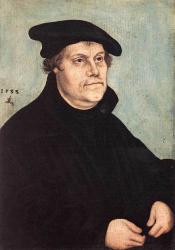
1483 - 1546 Person Name: Martin Luther, 1483-1546 Topics: Epiphany 7 Author of "Lord, Keep Us Steadfast in Your Word" in Lutheran Book of Worship Luther, Martin, born at Eisleben, Nov. 10, 1483; entered the University of Erfurt, 1501 (B.A. 1502, M.A.. 1503); became an Augustinian monk, 1505; ordained priest, 1507; appointed Professor at the University of Wittenberg, 1508, and in 1512 D.D.; published his 95 Theses, 1517; and burnt the Papal Bull which had condemned them, 1520; attended the Diet of Worms, 1521; translated the Bible into German, 1521-34; and died at Eisleben, Feb. 18, 1546. The details of his life and of his work as a reformer are accessible to English readers in a great variety of forms. Luther had a huge influence on German hymnody. i. Hymn Books. 1. Ellich cristlich lider Lobgesang un Psalm. Wittenberg, 1524. [Hamburg Library.] This contains 8 German hymns, of which 4 are by Luther. 2. Eyn Enchiridion oder Handbuchlein. Erfurt, 1524 [Goslar Library], with 25 German hymns, of which 18 are by Luther. 3. Geystliche Gesangk Buchleyn. Wittenberg, 1524 [Munich Library], with 32 German hymns, of which 24 are by Luther. 4. Geistliche Lieder auffs new gebessert. Wittenberg. J. Klug, 1529. No copy of this book is now known, but there was one in 1788 in the possession of G. E. Waldau, pastor at Nürnberg, and from his description it is evident that the first part of the Rostock Gesang-Buch, 1531, is a reprint of it. The Rostock Gesang-Buch, 1531, was reprinted by C. M. Wiechmann-Kadow at Schwerin in 1858. The 1529 evidently contained 50 German hymns, of which 29 (including the Litany) were by Luther. 5. Geistliche Lieder auffs new gebessert. Erfurt. A. Rauscher, 1531 [Helmstädt, now Wolfenbüttel Library], a reprint of No. 4. 6. Geistliche Lieder. Wittenberg. J. Klug, 1535 [Munich Library. Titlepage lost], with 52 German hymns, of which 29 are by Luther. 7. Geistliche Lieder auffs new gebessert. Leipzig. V. Schumann, 1539 [Wernigerode Library], with 68 German hymns, of which 29 are by Luther. 8. Geistliche Lieder. Wittenberg. J. Klug, 1543 [Hamburg Library], with 61 German hymns, of which 35 are by Luther. 9. Geystliche Lieder. Leipzig. V. Babst, 1545 [Gottingen Library]. This contains Luther's finally revised text, but adds no new hymns by himself. In pt. i. are 61 German hymns, in pt. ii. 40, of which 35 in all are by Luther. For these books Luther wrote three prefaces, first published respectively in Nos. 3, 4, 9. A fourth is found in his Christliche Geseng, Lateinisch und Deudsch, zum Begrebnis, Wittenberg, J. Klug, 1542. These four prefaces are reprinted in Wackernagel’s Bibliographie, 1855, pp. 543-583, and in the various editions of Luther's Hymns. Among modern editions of Luther's Geistliche Lieder may be mentioned the following:— Carl von Winterfeld, 1840; Dr. C. E. P. Wackernagel, 1848; Q. C. H. Stip, 1854; Wilhelm Schircks, 1854; Dr. Danneil, 1883; Dr. Karl Gerok, 1883; Dr. A. F. W. Fischer, 1883; A. Frommel, 1883; Karl Goedeke, 1883, &c. In The Hymns of Martin Luther. Set to their original melodies. With an English version. New York, 1883, ed. by Dr. Leonard Woolsey Bacon and Nathan H. Allen, there are the four prefaces, and English versions of all Luther's hymns, principally taken more or less altered, from the versions by A. T. Russell, R. Massie and Miss Winkworth [repub. in London, 1884]. Complete translations of Luther's hymns have been published by Dr. John Anderson, 1846 (2nd ed. 1847), Dr. John Hunt, 1853, Richard Massie, 1854, and Dr. G. Macdonald in the Sunday Magazine, 1867, and his Exotics, 1876. The other versions are given in detail in the notes on the individual hymns. ii. Classified List of Luther's Hymns. Of Luther's hymns no classification can be quite perfect, e.g. No. 3 (see below) takes hardly anything from the Latin, and No. 18 hardly anything from the Psalm. No. 29 is partly based on earlier hymns (see p. 225, i.). No. 30 is partly based on St. Mark i. 9-11, and xvi., 15, 16 (see p. 226, ii.). No. 35 is partly based on St. Luke ii. 10-16. The following arrangement, however, will answer all practical purposes. A. Translations from the Latin. i. From Latin Hymns: 1. Christum wir sollen loben schon. A solis ortus cardine 2. Der du bist drei in Einigkeit. O Lux beata Trinitas. 3. Jesus Christus unser Heiland, Der von. Jesus Christus nostra salus 4. Komm Gott Schopfer, heiliger Geist. Veni Creator Spiritus, Mentes. 5. Nun komm der Beidenheiland. Veni Redemptor gentium 6. Was flirchst du Feind Herodes sehr. A solis ortus cardine ii. From Latin Antiphons, &c.: 7. Herr Gott dich loben wir. Te Deum laudamus. 8. Verleih uns Frieden gnädiglich. Dapacem, Domine 9. Wir glauben all an einen Gott. iii. Partly from the Latin, the translated stanzas being adopted from Pre-Reformation Versions: 10. Komm, heiliger Geist, Herre Gott. 11. Mitten wir im Leben sind. Media vita in morte sumus. B. Hymns revised and enlarged from Pre-Reformation popular hymns. 12. Gelobet seist du Jesus Christ. 13. Gott der Vater wohn uns bei. 14. Gott sei gelobet und gebenedeiet. 15. Nun bitten wir den heiligen Geist. C. Psalm versions. 16. Ach Gott vom Himmel, sieh darein. 17. Aus tiefer Noth schrei ich zu dir. 18. Ein' feste Burg ist unser Gott. 19. Es spricht der Unweisen Mund wohl. 20. Es wollt uns Gott genädig sein. 21. War Gott nicht mit uns diese Zeit. 22. Wohl dem, der in Gotten Furcht steht. D. Paraphrases of other portions of Holy Scripture. 23. Diess sind die heilgen zehn Gebot. 24. Jesaia dem Propheten das geschah. 25. Mensch willt du leben seliglich. 26. Mit Fried und Freud ich fahr dahin. 27. Sie ist mir lieb die werthe Magd. 28. Vater unser im Himmelreich. E. Hymns mainly Original. 29. Christ lag in Todesbanden. 30. Christ unser Herr zum Jordan kam. 31. Ein neues Lied wir heben an. 32. Erhalt uns Herr bei deinem Wort. 33. Jesus Christus unser Heiland, Der den, 34. Nun freut euch lieben Christengemein. 35. Vom Himmel hoch da komm ich her. 36. Vom Himmel kam der Engel Schaar. In addition to these — 37. Fur alien Freuden auf Erden. 38. Kyrie eleison. In the Blätter fur Hymnologie, 1883, Dr. Daniel arranges Luther's hymns according to what he thinks their adaptation to modern German common use as follows:— i. Hymns which ought to be included in every good Evangelical hymn-book: Nos. 7-18, 20, 22, 28, 29, 30, 32, 34, 35, 36, 38. ii. Hymns the reception of which into a hymn-book might be contested: Nos. 2, 3, 4, 19, 21, 22, 23, 24, 25, 33. iii. Hymns not suited for a hymn-book: Nos. 1, 5, 6, 27, 31, 37. [Rev. James Mearns, M.A.] --John Julian, Dictionary of Hymnology (1907)

William Williams

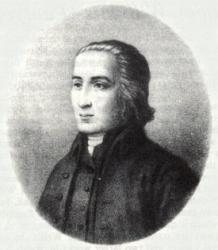
1717 - 1791 Topics: The Church in the World Commitment: Pilgrimage; Assurance; Commitment; Deliverance; Eternal Life; Funerals and Memorial Services; God Deliverance; God Eternity and Power; God Power/Might; God Providence; Guidance; Mission and Outreach; Pilgrimage and Conflict; Recessionals; Water; Epiphany Last/Transfig. Year A; Lent 3 Year A; Easter 1 Year A; Proper 12 Year A; Proper 16 Year A; Proper 19 Year A; Proper 19 Year A; Proper 20 Year A; Proper 21 Year A; Proper 12 Year B; Proper 13 Year B; Proper 14 Year B; Proper 16 Year B; Proper 24 Year B; Baptism of Jesus Year C; Lent 3 Year C; Proper 7 Year C; Proper 13 Year C; Proper 13 Year C; Thanksgiving Year C; Ash Wednesday Year ABC Author (Welsh) and Translator (Englsih) of "Guide Me, O Thou Great Jehovah (Guide-moi, Berger fidèle)" in Voices United William Williams, called the "Watts of Wales," was born in 1717, at Cefn-y-coed, near Llandovery, Carmarthenshire. He originally studied medicine, but abandoned it for theology. He was ordained Deacon in the Church of England, but was refused Priest's Orders, and subsequently attached himself to the Calvinistic Methodists. For half a century he travelled in Wales, preaching the Gospel. He died in 1791. Williams composed his hymns chiefly in the Welsh language; they are still largely used by various religious bodies in the principality. Many of his hymns have appeared in English, and have been collected and published by Sedgwick. His two principal poetical works are "Hosannah to the Son of David," and "Gloria in Excelsis." --Annotations of the Hymnal, Charles Hutchins, M.A. 1872. ===================== Williams, William, of Pantycelyn, was the Sweet Singer of Wales. He was born at Cefn-y-Coed, in the Parish of Llanfair-y-bryn, near Llandovery, in 1717. He was ordained a deacon of the Established Church in 1740, by Dr. Claget, Bishop of St. Davids, and for three years he served the Curacies of Llan-wrtyd and Llanddewi-Abergwesyn. He never received Priest's Orders. He became early acquainted with the revivalist Daniel Rowlands, and for thirty-five years he preached once a month at Llanllian and Caio and Llansawel, besides the preaching journeys he took in North and South Wales. He was held in great esteem as a preacher. In 1744 his first book of hymns appeared under the title of Halleluiah, and soon ran through three editions. In1762, he published another book under the title of Y Môr o Wydr, which soon went through five editions. His son John published an excellent edition of his hymns in the year 181lines In addition to his Welsh hymns Williams also published several in English as:— (1.) Hosannah to the Son of David; or, Hymns of Praise to God, For our glorious Redemption by Christ. Some few translated from the Welsh Hymn-Book, but mostly composed on new Subjects. By William Williams. Bristol: Printed by John Grabham, in Narrow-Wine Street, 1759. This contains 51 hymns of which 11 are translated from his Welsh hymns. This little book was reprinted by D. Sedgwick in 1859. (2.) Gloria in Excelsis: or, Hymns of Praise to God and the Lamb. By W. Williams . . . Carmarthen. Printed for the Author by John Ross, removed to Priory Street, near the Church, M.DCC.LXXI. This contains 70 hymns, not including parts. From these volumes the following hymns are in common use:— i. From the Hosannah, 1759:— 1. Jesus, my Saviour is enough. Jesus, All in All. 2. My God, my God, Who art my all. Communion with God desired. 3. The enormous load of human guilt. God's love unspeakable. ii. From the Gloria in Excelsis, 1772. 4. Awake, my soul, and rise. Passiontide. 5. Beneath Thy Cross I lay me down. Passiontide. 6. Hark! the voice of my Beloved. The Voice of Jesus. 7. Jesus, lead us with Thy power. Divine Guidance Desired. Sometimes given as "Father, lead us with Thy power." 8. Jesus, Whose Almighty sceptre. Jesus as King. 9. Saviour, look on Thy beloved. The Help of Jesus desired. 10. White and ruddy is my Beloved. Beauties of Jesus. Williams is most widely known through his two hymns, "Guide me, O Thou great Jehovah," and "O'er those gloomy hills of darkness." Williams died at Pantycelyn, Jan. 11, 1791. [Rev. W. Glanffrwd Thomas] -- John Julian, Dictionary of Hymnology (1907) ================= See also in: Hymn Writers of the Church

Richard Gillard

b. 1953 Topics: Epiphany 7 Year A Author of "We Are Pilgrims (The Servant Song)" in Voices United Gillard, Richard. (Malmesbury, Wiltshire County, England, May 22, 1953- ). The eldest of six children, he emigrated to New Zealand with his family when he was three years old. Writes, "I've had almost no formal musical training. I'm a self-taught guitarist and play mostly in a folk style." Regarding "The Servant Song," he says it "was first published in 1978 on a record album by Scripture in Song called "Father Make Us One" and has appeared subsequently in other Scripture in Song publications including a song book entitled "Songs of Praise" which is widely used by New Zealand congregations. It has also been recorded by the St. Pauls Singers of St Pauls Anglican Church. This album, called New Harvest introduces songs and hymns from their own songbook of the same name." --Letter from Richard Gillard to Mary Louise VanDyke, 25 March 1987, DNAH Archives

George William Warren

1828 - 1902 Topics: The Christian Year Pentecost; Calling and Response; Challenge; Church Community in Christ; Church Ecumenism; Church Triumphant; Closing Hymns; Compassion; Confession; Discipleship and Service; Faith; Holy Spirit; Holy Spirit Images; Holy Spirit Movement; Holy Spirit Power; Inspiration; Installation Services; Jesus Christ Friend; Mission and Outreach; Peace (Inner, Calmness, Serenity; Unity; Witness; Easter 4 Year A; Pentecost Year A; Epiphany 2 Year C; Easter 7 Year C Composer of "NATIONAL HYMN" in Voices United George W. Warren (b. Albany, NY, 1828; d. New York, 1902) received his general education at Racine College in Wisconsin, but as a musician he was largely self-trained. An organist in a number of Episcopal churches, he played the organ for thirty years (1870-1900) at St. Thomas Church in New York City. Warren composed anthems and liturgical service music; his hymn tunes were collected in Warren's Hymns and Tunes as Sung in St. Thomas Church (1888). Bert Polman

Giovanni Pierluigi da Palestrina

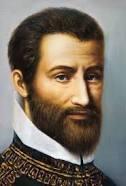
1525 - 1594 Person Name: Giovanni Palestrina Topics: Epiphany 7 Year C Composer of "VICTORY" in Voices United Giovanni Pierluigi (da Palestrina) Italy 1525-1594. Born at Palestrina, Italy, near Rome, then part of the Papal States to Neopolitan parents. As a youth he became a chorister at the Santa Maria Maggiore basilica in the Rome Diocese. This allowed him to learn literature and music. In 1540 he moved to Rome, where he studied in the school ofr the Hugenot, Claude Goudimel. He also studied with Robin Mallapert and Firmin Lebel. Orlando Di Lasso was also a musical advisor to him. From 1544-1551 he was organist at the Cathedral of St Agapito, the principle church of his native city. In 1547 he married Lucrezia Gori, and they had four children: Rodolfo, Angelo, Iginio, and a daughter. In 1551 Pope Julius III (previously Bishop of Palestrina) appointed him ‘maestro di cappella’, or musical director of the Cappella Giulia (choir). Pierluigi dedicated his first published compositions to Pope Julius III (1554), known as ‘the book of Masses’. It was the first book of masses by a native composer, since most sacred works in those days were from low countries (France or Spain). In 1555 Pope Paul IV ordered that all papal choristers should be clerical. As Pierluigi married early in life and had four children, he was unable to continue in the chapel as a layman. During the next decade he held positions similar to his Julian Chapel appointment at other chapels and churches in Rome, including St John Lateran (1555-1560), and Santa Maria Maggiore (1561-1566). In 1571 he returned to the Julian Chapel and remained at St Peter’s for the rest of his life. The 1570s was a decade of difficulty for him, as he lost his brother, two sons, and his wife in three separate outbreaks of plague (1572-1575-1580). In 1578 he was given the title of ‘Master of Music’ at the Vatican Basilica. He thought of becoming a priest at this time, but instead married a wealthy widow, Virginia Formoli, in 1581, widow of a wealthy merchant, which gave him financial independence (he was not well-paid as choirmaster). He spent considerable time administering to her fortune, but also was able to compose prolifically until his death. He also helped to found an association of professional musicians called the Vertuosa Compagnia dei Musici. He died in Rome of pleurisy. He left hundreds of compositions, including 1045 masses, 68 offertories, 140 madrigals, 300+ motets, 72 hymns, 35 magnificats, 11 litanies and several sets of lamentations. There are two comprehensive editions of his works: a 33-volume edition published by Breitkopf and Hartel, in Leigzig, Germany, between 1862-1894, edited by Franz Xaver Habert, and a 34-volume edition published in the mid 20th century by Fratelli Scalera, in Rome, Italy, edited by R Casimiri and others. As a Renaissance musician and composer of sacred music he was the best known 16th century representative of the Roman School of musical composition. He had a long-lasting influence on the development of church and secular music in Europe, especially on the development of counterpoint, his work considered the culmination of Renaissance polyphony. Very famous in his day, he was considered by some the legendary ‘savior of church music’. A 2009 film was produced by German television about him, titled: ‘Palestrina – Prince of Music’. John Perry

Henry Thomas Smart

1813 - 1879 Person Name: Henry T. Smart Topics: Year A Epiphany 7 Composer of "REGENT SQUARE" in The New Century Hymnal Henry Smart (b. Marylebone, London, England, 1813; d. Hampstead, London, 1879), a capable composer of church music who wrote some very fine hymn tunes (REGENT SQUARE, 354, is the best-known). Smart gave up a career in the legal profession for one in music. Although largely self taught, he became proficient in organ playing and composition, and he was a music teacher and critic. Organist in a number of London churches, including St. Luke's, Old Street (1844-1864), and St. Pancras (1864-1869), Smart was famous for his extemporiza­tions and for his accompaniment of congregational singing. He became completely blind at the age of fifty-two, but his remarkable memory enabled him to continue playing the organ. Fascinated by organs as a youth, Smart designed organs for impor­tant places such as St. Andrew Hall in Glasgow and the Town Hall in Leeds. He composed an opera, oratorios, part-songs, some instrumental music, and many hymn tunes, as well as a large number of works for organ and choir. He edited the Choralebook (1858), the English Presbyterian Psalms and Hymns for Divine Worship (1867), and the Scottish Presbyterian Hymnal (1875). Some of his hymn tunes were first published in Hymns Ancient and Modern (1861). Bert Polman

Frederick Lucian Hosmer

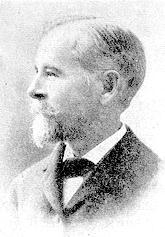
1840 - 1929 Topics: Year C Epiphany 7 Author of "Giver of Life, Where'er They Be" in The New Century Hymnal Hosmer, Frederick Lucian, B.A., was born at Framingham, Mass., in 1840, and educated at Harvard, where he graduated B.A. in 1869. Entering the Unitarian Ministry in 1872 he has held charges in Quincy, Ill., 1872-77; Cleveland, Ohio, 1878-92; St. Louis, 1894-99; and since 1899, at Berkeley, Cal. His Way of Life, 1877, was a compilation of Prayers and Responsive Services for Sunday Schools. Of Unity Hymns and Carols, 1880, he was joint editor with W. C. Gannett and J. V. Blake. His hymns were published jointly by him and W. C. Gannett (q.v.), as The Thought of God in Hymns and Poems (Boston: Little, Brown & Co.), 1st Series, 1885; 2nd Series, 1894. Of his 56 hymns in this work the following have come into common use, for the most part during the past ten years:— 1. Father, to Thee we look in all our sorrow. [Trust in God.] Written in 1881 upon the death of a member of the author's congregation, and published in The Thought of God, 1st Series, 1885. 2. From age to age how grandly rise. [Unity.] Written for the annual festival of the Free Religious Assoc, Boston, June 2, 1899, and first published in Souvenir Festival Hymns, 1899. Subsequently altered by the author to "From age to age the prophet's vision." 3. From age to age they gather, all the brave of heart and strong. [Victory of Truth.] "Written in 1891 for the Dedication of Unity Church, Decorah, Iowa, and published in The Thought of God, 2nd Series, 1894. 4. From many ways and wide apart. [College or School Reunion.] Dated in The Thought of God, 2nd Series, 1894, as having been written in 1890. 5. Go not, my soul, in search of Him. [God Within.] Written in 1879, printed in the Boston Christian Register, May 31, 1879, and included in The Thought of God, 1st Series, 1885, with the title, "The Indwelling God." 6. I cannot think of them as dead. [Eternal Life.] Written in 1882, and first published in The Thought of God, 1st Series, 1885, and entitled "My Dead." in the English collections it is usually given as "We cannot think of them as dead." 7. I little see, I little know. [Trust.] "A Psalm of Trust," written in 1883, first appeared in the Boston Christian Register, and again in The Thought of God, 1st Series, 1885. 8. Immortal by their deed and word. [The Spirit of Jesus.] Written in 1880, and first published in Unity Hymns and Carols, Chicago, Ill., 1880, and then in The Thought of God, 1st Series, 1885. 9. Many things in life there are. [Mystery in all Things.] Written in 1885, and first published in The Thought of God, 1st Series, 1885, with the title "Passing Understanding," and the quotation "The Peace of God which passeth all understanding." 10. Not always on the mount may we. [On the Mount.] This lesson from the Transfiguration was written in 1882, and published in the Chicago Unity, April 1, 1884. After revision by the author, it was included in the 1st Series of The Thought of God, 1885. 11. Not when, with self dissatisfied. [Lent.] Written in 1891, and given in The Thought of God, 2nd series, 1894, p. 33. It is in The Public School Hymn Book, 1903, and others. 12. O beautiful, my country. [National Hymn.] As “Our Country," written in 1884, and published in the Chicago Unity Festivals, 1884; and again in The Thought of God, 1885. 13. O Light, from age to age the same. [Dedication Anniversary.] Written in 1890 for the fiftieth anniversary of the Second Congregational Church (Unitarian), Quincy, 111. Included in The Thought of God, 2nd Series, 1894, and entitled "From Generation to Generation." 14. O Lord of Life, where'er they be. [Life in God.] "Written in 1888 for Easter service in Author's own church," and first published in the Chicago Unit, and again in The Thought of God, 2nd Series, 1894. The "Alleluia!" refrain, which is added in some collections to each verse, is appended, in the original, to the last verse only. 15. O Name, all other names above. [Trust in God.] Under the title "Found. 'They that know Thy name will put their trust in Thee!’ this hymn, written in 1878, was given in The Thought of God, 1st Series, 1885. 16. O Prophet souls of all the years. [Unity.] “Written in 1893 for, and sung at, the Unitarian gathering in connection with The World's Parliament of Religions (World's Fair), Chicago, Sep., 1893," and included in The Thought of God, 2nd Series, 1894, and entitled "One Law, One Life, one Love." 17. O Thou, in all Thy might so far. [God All in All.] This hymn, given in The Thought of God, 1st Series, 1885, with the title "The Mystery of God," was written in 1876, and first published in the New York Inquirer. 18. O thou in lonely vigil led. This encouragement for lonely workers was written for the "Emerson Commemoration, W. U. C, 1888," and included in The Thought of God, 2nd Series, 1894. 19. O Thou, Who art of all that is. [Divine Guidance.] Under the title "Through unknown paths," this hymn was included in The Thought of God, 1st Series, 1885. It was written in 1877. 20. O Thou, Whose Spirit witness bears. [Dedication of a Place of Worship.] Written for the Dedication of First Unitarian Church, Omaha, Feb. 6, 1891, and published in The Thought of God, 2nd Series, 1894, with the title "The Inward Witness," and the subscription "For T. K., Omaha, 1801." 21. On eyes that watch through sorrow's night. [Easter] A Carol for Easter Morn, written in 1890 for the author's congregation, and published in The Thought of God, 2nd Series, 1894. 22. One thought I have, my ample creed. [The Thought of God.] This is the initial hymn to the collection The Thought of God, 1st Series, 1885, and supplies the title to the work. It was written in 1880, and first published in the Chicago Unity Hymns and Carols, 1880, and then in The Thought of God, 1885. 23. The rose is queen among the flowers. [Flower Service.] "Written in 1875, first published in The Sunnyside, a song book for Sunday Schools, and again in The Thought of God, 1st Series, 1885, under the title "Flower Sunday." 24. Thy kingdom come, — on bended knee. [Missions.] "Written in 1891 for the Commencement of the Meadville Theological School (Meadville, Pa.), June 12, 1891, and published in The Thought of God, 2nd Series, 1894," under the title "The Day of God," and the subscription, "M. T. S., June 12, 1891." 25. We pray no more, made lowly wise, For miracle and sign. [Greater Faith Desired.] Written in 1879, and first published in The Christian Register (Boston), Mar. 22 of that year, under the title 'The Larger Faith.'" Included under the same title in The Thought of God, 1st Series, 1885. Sometimes given as "Made lowly wise, we pray no more." 26. When courage fails, and faith burns low. [Victory of Truth.] Under the title "Loyalty," this hymn was given in The Thought of God, 1st Series, 1885. It was written in 1881. 27. Where men on mounts of vision Have passed the veil within. [Dedication of a Place of Worship.] "Written in 1891 for the Dedication of First Unitarian Church, Oakland, California." Included in The Thought of God, 2nd Series, 1894, entitled "Holy Places," and subscribed " For C. W. W., Oakland, Cal., 1891." These annotations are from manuscript notes supplied to us by the author. Of these hymns all are in common use in America, and more than one half in Great Britain, mainly by Unitarians and Congregationalists. Amongst Unitarian hymn-writers of the last twenty years Mr. Hosmer is the most powerful and original known to us. --John Julian, Dictionary of Hymnology, New Supplement (1907)

Pages


Export as CSV
It looks like you are using an ad-blocker. Ad revenue helps keep us running. Please consider white-listing Hymnary.org or getting Hymnary Pro to eliminate ads entirely and help support Hymnary.org.