

 My Starred Hymns
 My FlexScores
 My Hymnals
 My Purchased Files
Planning worship?
Check out our sister site, ZeteoSearch.org,
for 20+ additional resources related to your search.
- |
User Links
Person Results
Josiah Conder
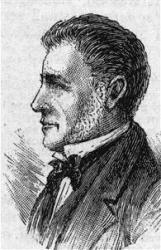
1789 - 1855 Person Name: Conder Author of "This is my Body" in Psalms and Hymns and Spiritual Songs Josiah Conder was born in London, in 1789. He became a publisher, and in 1814 became proprietor of "The Eclectic Review." Subsequently to 1824, he composed a series of descriptive works, called the "Modern Traveller," which appeared in thirty volumes. He also published several volumes of poems and hymns. He was the author of the first "Congregational Hymn Book" (1836). He died in 1855.
--Annotations of the Hymnal, Charles Hutchins, M.A. 1872.
==========================
Conder, Josiah, fourth son of Thomas Conder, engraver and bookseller, and grandson of the Rev. John Conder, D.D., first Theological Tutor of Homerton College, was born in Falcon Street (City); London, Sept. 17, 1789, and died Dec. 27, 1855. As author, editor and publisher he was widely known. For some years he was the proprietor and editor of the Eclectic Review, and also editor of the Patriot newspaper. His prose works were numerous, and include:—
The Modern Traveller, 1830; Italy, 1831; Dictionary of Ancient and Modern Geography, 1834; Life of Bunyan, 1835; Protestant Nonconformity, 1818-19; The Law of the Sabbath, 1830; Epistle to the Hebrews (a translation), 1834; Literary History of the New Testament, 1845, Harmony of History with Prophecy, 1849, and others.
His poetical works are:—
(1) The Withered Oak,1805; this appeared in the Athenceum. (2) The Reverie, 1811. (3) Star in the East, 1824. (4) Sacred Poems, Domestic Poems, and Miscellaneous Poems, 1824. (5) The Choir and the Oratory; or, Praise and Prayer, 1837. Preface dated Nov. 8, 1836. (6) Hymns of Praise, Prayer, and Devout Meditation, 1856. This last work was in the press at the time of his death, and was revised and published by his son, the Rev. E. R. Conder, M.A. He also contributed many pieces to the magazines and to the Associated Minstrels, 1810, under the signature of " C." In 1838, selections from The Choir and Oratory were published with music by Edgar Sanderson, as Harmonia Sacra. A second volume was added in 1839. To Dr. Collyer’s (q.v.) Hymns, &c, he contributed 3 pieces signed "C"; and to Dr. Leifchild's Original Hymns, 1843, 8 hymns.
As a hymn-book editor he was also well known. In 1836 he edited The Congregational Hymn Book: a Supplement to Dr. Watts’s Psalms and Hymns (2nd ed. 1844). To this collection he contributed fifty-six of his own hymns, some of which had previously appeared in The Star in the East, &c. He also published in 1851 a revised edition of Dr. Watts's Psalms and Hymns, and in the game year a special paper on Dr. Watte as The Poet of the Sanctuary, which was read before the Congregational Union at Southampton. The value of his work as Editor of the Congregational Hymn Book is seen in the fact that eight out of every ten of the hymns in that collection are still in use either in Great Britain or America.
As a hymn writer Conder ranks with some of the best of the first half of the present century. His finest hymns are marked by much elevation of thought expressed in language combining both force and beauty. They generally excel in unity, and in some the gradual unfolding of the leading idea is masterly. The outcome of a deeply spiritual mind, they deal chiefly with the enduring elements of religion. Their variety in metre, in style, and in treatment saves them from the monotonous mannerism which mars the work of many hymn writers. Their theology, though decidedly Evangelical, is yet of a broad and liberal kind. Doubtless Conder's intercourse with many phases of theological thought as Editor of the Eclectic Review did much to produce this catholicity, which was strikingly shewn by his embodying many of the collects of the Book of Common Prayer, rendered into verse, in his Choir and Oratory. Of his versions of the Psalms the most popular are "How honoured, how dear" (84th), and "O be joyful in the Lord" (100th). His hymns in most extensive use are," Bread of heaven, on Thee I feed; " “Beyond, beyond that boundless sea;" "The Lord is King, lift up thy voice" (this last is one of his best); "Day by day the manna fell;" "How shall I follow him I serve;" "Heavenly Father, to whose eye" (all good specimens of his subdued and pathetic style); and "O shew me not my Saviour dying." This last is full of lyric feeling, and expresses the too often forgotten fact that the Church has a living though once crucified Lord. The popularity of Conder's hymns may be gathered from the fact that at the present time more of them are in common use in Great Britain and America than those of any other writer of the Congregational body, Watts and Doddridge alone excepted. [Rev. W. Garrett Horder]
In addition to the hymns named above and others which are annotated under their respective first lines, the following, including two already named (4,16), are also in common use:—
i. From Dr. Collyer's Hymns, &c, 1812.
1. When in the hours of lonely woe. Lent.
ii. From The Star in the East, &c, 1824.
2. Be merciful, O God of grace. Ps. lxvii.
3. For ever will I bless the Lord. Ps. xxxiv.
4. How honoured, how dear. Ps. lxxxiv.
5. Now with angels round the throne. Doxology.
6. O Thou God, Who hearest prayer. Lent. Dated Sept. 1820. Usually abbreviated.
iii. From The Congregational Hymn Book, 1836.
7. Blessed be God, He is not strict. Longsuffering of God.
8. Followers of Christ of every name. Communion of Saints.
9. Grant me, heavenly Lord, to feel. Zeal in Missions desired.
10. Grant, 0 Saviour, to our prayers. Collect 5th S. after Trinity.
11. Head of the Church, our risen Lord. Church Meetings.
12. Holy, holy, holy Lord, in the highest heaven, &c. Praise to the Father.
13. Jehovah's praise sublime. Praise.
14. Leave us not comfortless. Holy Communion.
15. Lord, for Thv Name's sake! such the plea. In National Danger.
16. O be joyful in the Lord. Ps. c.
17. 0 breathe upon this languid frame. Baptism of Holy Spirit desired.
18. 0 give thanks to Him Who made. Thanksgiving for Daily Mercies.
19. 0 God, Protector of the lowly. New Year.
20. 0 God, to whom the happy dead. Burial.
21. 0 God, Who didst an equal mate. Holy Matrimony.
22. 0 God, Who didst Thy will unfold. Holy Scriptures.
23. 0 God, Who dost Thy sovereign might. Prayer Meetings.
24. 0 how shall feeble flesh and blood. Salvation through Christ.
25. 0 how should those be clean who bear. Purity desired for God's Ministers.
26. 0 say not, think not in thy heart. Pressing Onward.
27. 0 Thou divine High Priest. Holy Communion.
28. 0 Thou Who givest all their food. Harvest.
29. 0 Thou Whose covenant is sure. Holy Baptism.
30. Praise on Thee, in Zion-gates. Sunday.
31. Praise the God of all creation. Doxology
32. See the ransomed millions stand. Praise to Christ.
33. The heavens declare His glory. Ps. xix.
34. Thou art the Everlasting Word. Praise to Christ.
35. Thy hands have made and fashioned me. Thanks for Daily Mercies.
36. To all Thy faithful people, Lord. For Pardon.
37. To His own world He came. Ascension.
38. To our God loud praises give. Ps. cxxxvi.
39. Upon a world of guilt and night. Purification of B.V.M.
40. Welcome, welcome, sinner, hear. Invitation to Christ.
41. Wheresoever two or three. Continued Presence of Christ desired.
iv. From The Choir and the Oratory, 1837.
42. Baptised into our Saviour's death. Holy Baptism.
43. In the day of my [thy] distress. Ps. xx.
44. 0 comfort to the dreary. Christ the Comforter.
v. From Leifchild's Original Hymns, 1843.
45. I am Thy workmanship, 0 Lord. God the Maker and Guardian.
46. 0 Lord, hadst Thou been here! But when. The Resurrection of Lazarus.
47. 'Tis not that I did choose Thee. Chosen of God. This is altered in the Church Praise Book, N. Y., 1882, to “Lord, 'tis not that I did choose Thee," thereby changing the metre from 7.6 to 8.5.
vi. From Hymns of Praise, Prayer, &c, 1856.
48. Comrades of the heavenly calling. The Christian race.
When to these 48 hymns those annotated under their respective first lines are added, Conder’s hymns in common use number about 60 in all.
--John Julian, Dictionary of Hymnology (1907)
===================
Conder, Josiah, p. 256, i. Other hymns are:—
1. O love beyond the reach of thought. The love of God.
2. O Thou, our Head, enthroned on high. Missions.
3. Son of David, throned in light. Divine Enlightenment desired.
4. Thou Lamb of God for sinners slain. Christ the Head of the Church. From "Substantial Truth, 0 Christ, Thou art."
These hymns are all from his Hymns of Praise, &c, 1856.
--John Julian, Dictionary of Hymnology, Appendix, Part II (1907)
Josiah Conder
Horatius Bonar
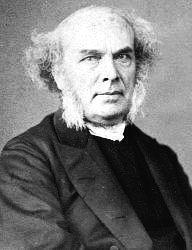
1808 - 1889 Person Name: Bonar Author of "O, these eyes, how dark and blind!" in Worship in the School Room Horatius Bonar was born at Edinburgh, in 1808. His education was obtained at the High School, and the University of his native city. He was ordained to the ministry, in 1837, and since then has been pastor at Kelso. In 1843, he joined the Free Church of Scotland. His reputation as a religious writer was first gained on the publication of the "Kelso Tracts," of which he was the author. He has also written many other prose works, some of which have had a very large circulation. Nor is he less favorably known as a religious poet and hymn-writer. The three series of "Hymns of Faith and Hope," have passed through several editions.
--Annotations of the Hymnal, Charles Hutchins, M.A. 1872
================================
Bonar, Horatius, D.D. Dr. Bonar's family has had representatives among the clergy of the Church of Scotland during two centuries and more. His father, James Bonar, second Solicitor of Excise in Edinburgh, was a man of intellectual power, varied learning, and deop piety.
Horatius Bonar was born in Edinburgh, Dec. 19th, 1808; and educated at the High School and the University of Edinburgh. After completing his studies, he was "licensed" to preach, and became assistant to the Rev. John Lewis, minister of St. James's, Leith. He was ordained minister of the North Parish, Kelso, on the 30th November, 1837, but left the Established Church at the "Disruption," in May, 1848, remaining in Kelso as a minister of the Free Church of Scotland. The University of Aberdeen conferred on him the doctorate of divinity in 1853. In 1866 he was translated to the Chalmers Memorial Church, the Grange, Edinburgh; and in 1883 he was chosen Moderator of the General Assembly of of the Free Church of Scotland.
Dr. Bonar's hymns and poems were, he tells us, composed amid a great variety of circumstances; in many cases he cannot himself recall these circumstances; they also appeared in several publications, but nearly all have boen published or republished in the following:— (i) Songs for the Wilderness, 1843-4. (2) The Bible Hymn Book, 1845. (3) Hymns, Original and Selected, 1846. (4) Hymns of Faith and Hope, First Series, 1857; Second Series, 1861; Third Series, 1866. (5) The Song of the New Creation, 1872. (6) My Old Letters, a long poem, 1877. (7) Hymns of the Nativity, 1879. (8) Communion Hymns, 1881. In addition to numerous prose works, he has also edited The New Jerusalem; a Hymn of the Olden Time, 1852, &c.
Dr. Bonar's poems—-including many beautiful lyrics, several psalm versions, and translations from the Greek and Latin, a large number of hymns, and a long meditative poem—-are very numerous, too numerous, perhaps, for their permanent fame as a whole.
Dr. Bonar's scholarship is thorough and extensive; and his poems display the grace of style and wealth of allusion which are the fruit of ripe culture. Affected very slightly by current literary moods, still less by the influence of other religious poetry, they reveal extreme susceptibility to the emotional power which the phases of natural and of spiritual life exercise; the phases of natural life being recognised chiefly as conveying and fashioning spiritual life, used chiefly for depicting spiritual life, and handled for this purpose with greater delicacy of touch than in the Olney Hymns, and with less conscious purpose than in the Christian Year. As a result of this susceptibility, and from habitual contemplation of the Second Advent as the era of this world's true bliss, his hymns and poems are distinguished by a tone of pensive reflection, which some might call pessimism. But they are more than the record of emotion; another element is supplied by his intellectual and personal grasp of Divine truth, these truths particularly:—The gift of a Substitute, our Blessed Saviour; Divine grace, righteous, yet free and universal in offer; the duty of immediate reliance upon the privilege of immediate assurance through that grace; communion with God, especially in the Lord's Supper, respecting which he insists on the privilege of cherishing the highest conceptions which Scripture warrants; and finally, the Second Advent of our Lord: by his vigorous celebration of these and other truths as the source and strength of spiritual life, his hymns are protected from the blight of unhealthy, sentimental introspection.
To sum up: Dr. Bonar's hymns satisfy the fastidious by their instinctive good taste; they mirror the life of Christ in the soul, partially, perhaps, but with vivid accuracy; they win the heart by their tone of tender sympathy; they sing the truth of God in ringing notes; and although, when taken as a whole, they are not perfect ; although, in reading them, we meet with feeble stanzas, halting rhythm, defective rhyme, meaningless Iteration; yet a singularly large number have been stamped with approval, both in literary circles and by the Church.
In Great Britain and America nearly 100 of Dr. Bonar's hymns are in common use. They are found in almost all modern hymnals from four in Hymns Ancient & Modern to more than twenty in the American Songs for the Sanctuary, N. Y., 1865-72. The most widely known are, "A few more years shall roll;" "Come, Lord, and tarry not;" "Here, O my Lord, I see Thee face to face;" "I heard the Voice of Jesus say;" "The Church has waited long;" and "Thy way, not mine, O Lord."
In addition to these and others which are annotated under their respective first lines, the following are also in common use:—
From Songs for the Wilderness, No. 1, 1843.
1. For Thee we long and pray. Sunday Morning.
2. Holy Father, hear my cry. A Child's Prayer.
3. I thought upon my sins and I was sad. Christ our Peace.
4. Peace to the world, our Lord is come. A Millennial Song.
5. Spirit of everlasting grace. The Vision of Dry Bones.
ii. From Songs for the Wilderness, No. 2,1844.
6. Ho, ye thirsty, parched and fainting. Invitation.
7. 0 'tis not what we fancied it. The world renounced.
8. Sing them, my children, sing them still. Children exhorted to Praise.
9. Time's sun is fast setting. Advent.
10. Weep, pilgrim, weep, yet 'tis not for the sorrow. Faith.
11. Yes, for me, for me He careth. Christ the Elder Brother .
iii. From The Bible Hymn Book, 1845.
12. Jesus, my sorrow lies too deep. Jesus, the Great High Priest.
13. There is a Morning Star, my soul. The Morning Star.
14. This is not my place of resting. Pressing towards heaven.
iv. From Hymns, Original and Selected, 1845.
15. Let there be light, Jehovah said. Creation.
v. From Hymns of Faith and Hope, 1st series, 1857.
16. Be brave, my brother. The Fight of Faith.
17. Blessed be God, our God. Good Friday.
18. Everlasting praises. Doxology.
19. Go up, go up, my heart. Heavenly aspirations desired.
20. I close my heavy eye. Evening. Sometimes given as "We close our heavy eyes."
21. I see the crowd in Pilate's hall. Good Friday.
22. Jesus, while this rongh desert soil. Strength by the Way.
23. Jesus, Whom angel-hosts adore. The Word made Flesh. From "The Son of God, in mighty love."
24. Make haste, 0 man, to live. Exhortation to lay hold of Life.
25. No seas again shall sever. Heaven.
26. Oppressed with noonday's scorching heat. Shadow of the Cross.
27. Rest for the toiling hand. Burial. From "Lie down, frail body, here."
28. Shall this life of mine be wasted? Exhortation to Duty.
29. These are the crowns that we shall wear. Heaven.
30. Thy works, not mine, O Christ [Lord]. The Sin-bearer.
31. Where the faded flower shall freshen. Heaven.
vi. From Hymns of Faith and Hope. 2nd series, 1861.
32. Be still, my soul, Jehovah loveth Thee. Rest in the Love of God.
33. Christ has done the mighty work. Good Friday.
34. Come, mighty Spirit, penetrate. Whitsuntide.
35. Deep down beneath the unresting surge. Burial at Sea.
36. Fear not the foe, thou flock of God [thou little flock]. Battle-Song of the Church.
37. For lack of love I languish. Lent.
38. From this bleak hill of storms. Eternal Rest desired.
39. He liveth long who liveth well. The True Life.
40. Here shall death's triumph end: the rock-barred door. Easter. From "The tomb is empty: wouldst thou have it full."
41. Jesus, Sun and Shield art Thou. Jesus the First and Last.
42. Jesus, the Christ of God. Praise to Christ.
43. Light of the world, for ever, ever shining. Christ the Light of the World. From "Why walk in darkness? Has the dear light vanished?"
44. Make use of me, my God. Duty desired.
45. Not what I am, 0 Lord, but what Thou art. The Love of God.
46. 0 Light of Light, shine in. Cry of the Weary.
47. 0 love of God, how strong and true. Love of God.
48. 0 love that casts out fear. Love of God.
49. 0 strong to save and bless. Lent.
50. 0 this soul, how dark and blind. Lent.
51. Safe across the waters. Thanksgiving at end of a journey.
52. Silent, like men in solemn haste. Pressing onwards.
53. Speak, lips of mine. Exhortation to Praise.
54. The Bridegroom comes. Advent.
vii. From Hymns of Faith and Hope. 3rd series, 1866.
55. Bear Thou my burden, Thou Who bar'st my sin. Lent or Passiontide.
56. Done is the work that saves. Easter.
57. Father, our children keep. Prayer on behalf of Children.
58. Fill Thou my life, 0 Lord my God. Life's Praise.
59. Finish Thy work, the time is short. Earnest labour to the end.
60. From the Cross the blood is falling. Good Friday.
61. He called them, and they left. Obedience.
62. Help me, my [0] God to speak. Truth desired.
63. Holy Father, Mighty God. Holy Trinity.
64. How are my troubles multiplied. Ps. iii.
65. How sweetly doth He show His face Flower Service.
66. Light hath arisen, we walk in its brightness. Sustaining power of Faith.
67. Lo, God, our God has come. Christmas.
68. Lord, give me light to do Thy work. Divine guidance desired.
69. No, not despairingly. Lent.
70. Not to ourselves again. Life in Christ, or, Living unto God.
71. Now in parting, Father, bless us. Post Communion.
72. Sounds the trumpet from afar. Battle-Song of the Church.
73. Thee in the loving bloom of morn. God in all.
74. Through good report and evil, Lord. Faithfulness.
75. To Jehovah, God of might. Praise to the Father.
76. To the name of God on high. Doxology.
77. Upward, where the stars are burning. Heavenward Aspirations.
78. We take the peace which He hath won. The Gift of Peace.
79. When the weary, seeking rest. Intercession for all Conditions of Men.
viii. From The Song of the New Creation,1872.
80. For the Bread and for the Wine. Holy Communion.
81. Light of life so softly shining. Light of Life.
82. Yet there is room. The Lamb's bright hall of song. Home Missions.
ix. From Hymns of the Nativity, 1879.
83. Great Ruler of the land and sea. Sailors' Liturgy. From Communion Hymns, 1881.
84. Beloved, let us love. Brotherly Love.
In several instances these hymns are given in an abbreviated form, and sometimes alterations are also introduced. In this latter respect however Dr. Bonar has suffered less than most modern hymn-writers. [Rev. James Mearns, M.A.]
-- John Julian, Dictionary of Hymnology (1907)
====================
Bonar, Horatius, p. 161, i. He died at Edinburgh, July 31, 1889. In 1890 his son published a posthumous volume of his poetical pieces as Until the Day Break and other Hymns and Poems left behind. The following additional hymns are in common use:—
1. Almighty Comforter and Friend. (1866.) Whitsuntide.
2. Father, make use of me. An altered form of No. 44, p. 162, ii.
3. I ask a perfect creed. (1861.) Creed not Opinions. From this is also taken "O True One, give me truth."
4. Long, long deferred, now come at last. Marriage of the Lamb. Part of "Ascend, Beloved, to the joy." (1861.)
5. Nay 'tis not what we fancied it. (1857.) Vanity of the World.
6. No blood, no altar now. (1861.) The Finished Sacrifice.
7. No shadows yonder. (1857.) Heaven Anticipated.
8. Not with the light and vain. (1857.) Godly Companionship.
9. O Love invisible, yet infinite. (1866.) Divine Love.
10. On the great love of God I lean. (1866.) Love of God our Resting-place.
11. On Thee, O Jesus, strongly leaning. (1866.) Fellowship with Christ.
12. Peace upon peace, like wave on wave. (1866.) Divine Peace.
13. Sower divine, sow the good seed in me. (1857.) Heavenly Sowing.
14. Speaketh the sinner's sin within my heart. (1866.) Ps. xxxvi.
15. Still one in life and one in death. (1857.) Communion of Saints. Part of "'Tis thus they press the hand and part."
16. Surely, yon heaven, where angels see God's face. (1857.) Heaven Anticipated.
17. That city with the jewelled crest. (1857.) Heaven. Part of "These are the crowns that we shall wear." Another cento from the same is "Yon city, with the jewelled crest."
18. That clime is not like this dull clime of ours. (1843.) Heaven.
19. The Free One makes you free: He breaks the rod. (1857.) Freedom in Christ. From "Of old they sang the song of liberty."
20. There is a Morning-star, my soul. (1357.) Christ the Morning Star.
21. This is the day of toil. (1866.) Pressing Onwards.
22. Thy thoughts are here, my God. (1866.) Holy Scripture.
23. Till the day dawn. (1857.) Life's Journey.
24. To Him Who spread the skies. (1866.) Creation's Song.
25. Trustingly, trustingly. (1866.) Trust.
26. Unto th' eternal hills. (1866.) Ps. cxxi.
The above dates are: 1843, Songs in the Wilderness; 1857, Hymns of Faith and Hope, 1st Series; 1861, same, 2nd Ser. (not 1864); 1866, same, 3rd Ser. (not 1867), The dates 1857, 1864,1867, were given by Dr. Bonar, but the British Museum copies are 1857, 1861, 1866 respectively.
--John Julian, Dictionary of Hymnology, Appendix, Part II (1907)
==============
Bonar, H., pp. 161, i.; 1554, i. The Rev. H. N. Bonar, Dr. Bonar's son, published in 1904, Hymns by Horatius Bonar, Selected and Arranged by his Son H. N. Bonar, With a brief History of some of the Hymns, &c. (London: H. Frowde). From this work we must correct the date of his Song of the New Creation to 1872. We have also enriched our pages by additional and expanded notes on several of Dr. Bonar's most widely used hymns. In his biographical notes, Mr. Bonar refers to Dr. Bonar's work as editor of the Quarterly Journal of Prophecy, begun in 1848, to which he contributed a hymn for each number. We find that the number of hymns contributed thereto is 101.
With Dr. Bonar's poetical productions great difficulty has been encountered by the historian and annotator because of his absolute indifference to dates and details. It was enough for him that he had written, and that the Church of Christ approved and gladly used what, out of the fulness of his heart, he had given her.
--Excerpt from John Julian, Dictionary of Hymnology, New Supplement (1907)
Horatius Bonar
H. W. Baker
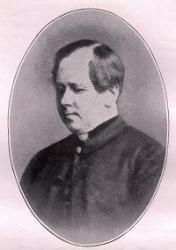
1821 - 1877 Person Name: Henry W. Baker Author of "Praise, O praise our God and King" in Hymni Ecclesiae Baker, Sir Henry Williams, Bart., eldest son of Admiral Sir Henry Loraine Baker, born in London, May 27, 1821, and educated at Trinity College, Cambridge, where he graduated, B.A. 1844, M.A. 1847. Taking Holy Orders in 1844, he became, in 1851, Vicar of Monkland, Herefordshire. This benefice he held to his death, on Monday, Feb. 12, 1877. He succeeded to the Baronetcy in 1851. Sir Henry's name is intimately associated with hymnody. One of his earliest compositions was the very beautiful hymn, "Oh! what if we are Christ's," which he contributed to Murray's Hymnal for the Use of the English Church, 1852. His hymns, including metrical litanies and translations, number in the revised edition of Hymns Ancient & Modern, 33 in all. These were contributed at various times to Murray's Hymnal, Hymns Ancient & Modern and the London Mission Hymn Book, 1876-7. The last contains his three latest hymns. These are not included in Hymns Ancient & Modern. Of his hymns four only are in the highest strains of jubilation, another four are bright and cheerful, and the remainder are very tender, but exceedingly plaintive, sometimes even to sadness. Even those which at first seem bright and cheerful have an undertone of plaintiveness, and leave a dreamy sadness upon the spirit of the singer. Poetical figures, far-fetched illustrations, and difficult compound words, he entirely eschewed. In his simplicity of language, smoothness of rhythm, and earnestness of utterance, he reminds one forcibly of the saintly Lyte. In common with Lyte also, if a subject presented itself to his mind with striking contrasts of lights and shadows, he almost invariably sought shelter in the shadows. The last audible words which lingered on his dying lips were the third stanza of his exquisite rendering of the 23rd Psalm, "The King of Love, my Shepherd is:"—
Perverse and foolish, oft I strayed,
But yet in love He sought me,
And on His Shoulder gently laid,
And home, rejoicing, brought me."
This tender sadness, brightened by a soft calm peace, was an epitome of his poetical life.
Sir Henry's labours as the Editor of Hymns Ancient & Modern were very arduous. The trial copy was distributed amongst a few friends in 1859; first ed. published 1861, and the Appendix, in 1868; the trial copy of the revised ed. was issued in 1874, and the publication followed in 1875. In addition he edited Hymns for the London Mission, 1874, and Hymns for Mission Services, n.d., c. 1876-7. He also published Daily Prayers for those who work hard; a Daily Text Book, &c. In Hymns Ancient & Modern there are also four tunes (33, 211, 254, 472) the melodies of which are by Sir Henry, and the harmonies by Dr. Monk. He died Feb. 12, 1877.
--John Julian, Dictionary of Hymnology (1907)
H. W. Baker
Juan Bautista Cabrera Ivars
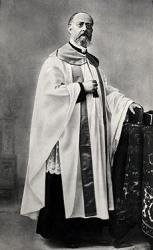
1837 - 1916 Person Name: J. B. Cabrera Translator of "Hijos del Celeste Rey" in El Himnario Juan Bautista Cabrera Ivars was born in Benisa, Spain, April 23, 1837. He attended seminary in Valencia, studying Hebrew and Greek, and was ordained as a priest. He fled to Gibraltar in 1863 due to religious persecution where he abandoned Catholicism. He worked as a teacher and as a translator. One of the works he translated was E.H. Brown's work on the thirty-nine articles of the Anglican Church, which was his introduction to Protestantism. He was a leader of a Spanish Reformed Church in Gibraltar. He continued as a leader in this church when he returned to Spain after the government of Isabel II fell, but continued to face legal difficulties. He then organized the Spanish Reformed Episcopal Church and was consecrated as bishop in 1894. He recognized the influence of music and literature on evangelism which led him to write and translate hymns.
Dianne Shapiro, from Real Academia de la Historia (https://dbe.rah.es/biografias/39825/juan-bautista-cabrera-ivars) and Himnos Cristanos (https://www.himnos-cristianos.com/biografia-juan-bautista-cabrera/) (accessed 7/30/2021)
Juan Bautista Cabrera Ivars
Elizabeth Rundle Charles
1828 - 1896 Person Name: Mrs. Elizabeth Charles Author of "Never further than thy cross" in The Woman's Hymnal Charles, Elizabeth, née Rundle, is the author of numerous and very popular works intended to popularize the history of early Christian life in Great Britain; of Luther and his times; of Wesley and his work; the struggles of English civil wars; and kindred subjects as embodied in the Chronicles of the Schönherg-Cotta Family, the Diary of Kitty Trevelyan, &c, was born at Tavistock, Devonshire, Her father was John Rundle, M.P., and her husband, Andrew Paton Charles, Barrister-at-Law. Mrs. Charles has made some valuable contributions to hymnology, including original hymns and translations from the Latin and German. These were given in her:—
(1) The Voice of Christian Life in Song; or, Hymns and Hymn-writers of Many Lands and Ages, 1858; (2) The Three Wakings, and other Poems, 1859; and (3) The Chronicles of the Schönberg-Cotta Family; (4) Poems, New York, 1867. This has some additional pieces.
Her hymn on the Annunciation, "Age after age shall call thee [her] blessed," appeared in her Three Wakings, &c., 1859.
--John Julian, Dictionary of Hymnology (1907)
=========================
Charles, Elizabeth, née Rundle. Mrs. Charles has assumed the name of "Rundle-Charles," as given in the 1890 edition of the Hymnal Companion. Other hymns in common use are:—
1. Around a Table, not a tomb. Holy Communion. Dated Oct. 1862. In her Poems, 1868, in 6 stanzas of 4 lines.
2. Come, and rejoice with me. Joy in Christ. Some-times dated 1846. From her Three Wakings, 1859, p. 146, in 7 stanzas of 4 lines, and headed "Eureka."
3. Jesus, what once Thou wast. Jesus the Unchangeable One. In Mrs. Brock's Children's Hymn Book, 1881.
4. Never further than Thy Cross. Passiontide. In The Family Treasury, Feb. 1860.
5. What marks the dawning of the Year? New Year. From her Three Wakings, 1859, p. 155.
--John Julian, Dictionary of Hymnology, Appendix, Part II (1907)
======================
Charles, Elizabeth, née Rundle, pp. 218, ii.; 1556, i. Mrs. Rundle-Charles was born Jan. 2, 1828, married in 1851, and died March 28, 1896. Her hymn, "The little birds fill all the air with their glee" (Thankfulness), was published in her Three Waitings, 1859, p. 165, as a "Song for an Infant School." It is found in The Sunday School Hymnary, 1905, and others. [Rev. James Mearns, M.A.]
--John Julian, Dictionary of Hymnology, New Supplement (1907)
Elizabeth Rundle Charles
Reginald Heber

1783 - 1826 Author of "In the sun, and moon, and stars" in The Seventh-Day Adventist Hymn and Tune Book Reginald Heber was born in 1783 into a wealthy, educated family. He was a bright youth, translating a Latin classic into English verse by the time he was seven, entering Oxford at 17, and winning two awards for his poetry during his time there. After his graduation he became rector of his father's church in the village of Hodnet near Shrewsbury in the west of England where he remained for 16 years. He was appointed Bishop of Calcutta in 1823 and worked tirelessly for three years until the weather and travel took its toll on his health and he died of a stroke. Most of his 57 hymns, which include "Holy, Holy, Holy," are still in use today.
-- Greg Scheer, 1995
====================
Heber, Reginald, D.D. Born at Malpas, April 21, 1783, educated at Brasenose College, Oxford; Vicar of Hodnet, 1807; Bishop of Calcutta, 1823; died at Trichinopoly, India, April 3, 1826. The gift of versification shewed itself in Heber's childhood; and his Newdigate prize poem Palestine, which was read to Scott at breakfast in his rooms at Brazenose, Oxford, and owed one of its most striking passages to Scott's suggestion, is almost the only prize poem that has won a permanent place in poetical literature. His sixteen years at Hodnet, where he held a halfway position between a parson and a squire, were marked not only by his devoted care of his people, as a parish priest, but by literary work. He was the friend of Milman, Gifford, Southey, and others, in the world of letters, endeared to them by his candour, gentleness, "salient playfulness," as well as learning and culture. He was on the original staff of The Quarterly Review; Bampton Lecturer (1815); and Preacher at Lincoln's Inn (1822). His edition of Jeremy Taylor is still the classic edition. During this portion of his life he had often had a lurking fondness for India, had traced on the map Indian journeys, and had been tempted to wish himself Bishop of Calcutta. When he was forty years old the literary life was closed by his call to the Episcopate. No memory of Indian annals is holier than that of the three years of ceaseless travel, splendid administration, and saintly enthusiasm, of his tenure of the see of Calcutta. He ordained the first Christian native—Christian David. His first visitation ranged through Bengal, Bombay, and Ceylon; and at Delhi and Lucknow he was prostrated with fever. His second visitation took him through the scenes of Schwartz's labours in Madras Presidency to Trichinopoly, where on April 3,1826, he confirmed forty-two persons, and he was deeply moved by the impression of the struggling mission, so much so that “he showed no appearance of bodily exhaus¬tion." On his return from the service
”He retired into his own room, and according to his invariable custom, wrote on the back of the address on Confirmation 'Trichinopoly, April 3, 1826.' This was his last act, for immediately on taking off his clothes, he went into a large cold bath, where he had bathed the two preceding mornings, but which was now the destined agent of his removal to Paradise. Half an hour after, his servant, alarmed at his long absence, entered the room and found him a lifeless corpse." Life, &c, 1830, vol. ii. p. 437.
Heber's hymns were all written during the Hodnet period. Even the great missionary hymn, "From Greenland's icy mountains," notwithstanding the Indian allusions ("India's coral strand," "Ceylon's isle"), was written before he received the offer of Calcutta. The touching funeral hymn, "Thou art gone to the grave," was written on the loss of his first babe, which was a deep grief to him. Some of the hymns were published (1811-16) in the Christian Observer, the rest were not published till after his death. They formed part of a ms. collection made for Hodnet (but not published), which contained, besides a few hymns from older and special sources, contributions by Milman. The first idea of the collection appears in a letter in 1809 asking for a copy of the Olney Hymns, which he "admired very much." The plan was to compose hymns connected with the Epistles and Gospels, to be sung after the Nicene Creed. He was the first to publish sermons on the Sunday services (1822), and a writer in The Guardian has pointed out that these efforts of Heber were the germs of the now familiar practice, developed through the Christian Year (perhaps following Ken's Hymns on the Festivals), and by Augustus Hare, of welding together sermon, hymnal, and liturgy. Heber tried to obtain from Archbishop Manners Sutton and the Bishop of London (1820) authorization of his ms. collection of hymns by the Church, enlarging on the "powerful engine" which hymns were among Dissenters, and the irregular use of them in the church, which it was impossible to suppress, and better to regulate. The authorization was not granted. The lyric spirit of Scott and Byron passed into our hymns in Heber's verse; imparting a fuller rhythm to the older measures, as illustrated by "Oh, Saviour, is Thy promise fled," or the martial hymn, "The Son of God goes forth to war;" pressing into sacred service the freer rhythms of contemporary poetry (e.g. "Brightest and best of the sons of the morning"; "God that madest earth and heaven"); and aiming at consistent grace of literary expression.. Their beauties and faults spring from this modern spirit. They have not the scriptural strength of our best early hymns, nor the dogmatic force of the best Latin ones. They are too flowing and florid, and the conditions of hymn composition are not sufficiently understood. But as pure and graceful devotional poetry, always true and reverent, they are an unfailing pleasure. The finest of them is that majestic anthem, founded on the rhythm of the English Bible, "Holy, Holy, Holy, Lord God Almighty." The greatest evidence of Heber's popularity as a hymnwriter, and his refined taste as a compiler, is found in the fact that the total contents of his ms. collection which were given in his posthumous Hymns written and adapted to the Weekly Church Service of the Year. London, J. Murray, 1827; which included 57 hymns by Heber, 12 by Milman, and 29 by other writers, are in common in Great Britain and America at the present time. [Rev. H. Leigh Bennett, M.A.]
Of Bishop Heber's hymns, about one half are annotated under their respective first lines. Those given below were published in Heber's posthumous Hymns, &c, 1827. Some of them are in extensive use in Great Britain and America; but as they possess no special histories they are grouped together as from the Hymns, &c, 1827:—
1. Beneath our feet, and o'er our head. Burial.
2. Creator of the rolling flood. St. Peter's Day, or, Gospel for 6th Sunday after Trinity.
3. Lo, the lilies of the field. Teachings of Nature: or, Gospel for 15th Sunday after Trinity.
4. 0 God, by Whom the seed is given. Sexagesima.
6. 0 God, my sins are manifold. Forgiveness, or,
Gospel for 22nd S. after Trinity.
6. 0 hand of bounty, largely spread. Water into Wine, or, Gospel for 2nd S. after Epiphany.
7. 0 King of earth, and air, and sea. Feeding the Multitude; or, Gospel for 4th S. in Lent.
8. 0 more than merciful, Whose bounty gave. Good Friday.
9. 0 most merciful! 0 most bountiful. Introit Holy Communion.
10. 0 Thou, Whom neither time nor space. God unsearchable, or, Gospel for 5th Sunday in Lent.
11. 0 weep not o'er thy children's tomb. Innocents Day.
12. Room for the proud! Ye sons of clay. Dives and Lazarus, or, Gospel for 1st Sunday after Trinity.
13. Sit thou on my right hand, my Son, saith the Lord. Ascension.
14. Spirit of truth, on this thy day. Whit-Sunday.
15. The feeble pulse, the gasping breath. Burial, or, Gospel for 1st S. after Trinity.
16. The God of glory walks His round. Septuagesima, or, the Labourers in the Marketplace.
17. The sound of war in earth and air. Wrestling against Principalities and Powers, or, Epistle for 2lst Sunday after Trinity.
18. The world is grown old, her pleasures are past. Advent; or, Epistle for 4th Sunday in Advent.
19. There was joy in heaven. The Lost Sheep; or, Gospel for 3rd S. after Trinity.
20. Though sorrows rise and dangers roll. St. James's Day.
21. To conquer and to save, the Son of God. Christ the Conqueror.
22. Virgin-born, we bow before Thee. The Virgin Mary. Blessed amongst women, or, Gospel for 3rd S. in Lent.
23. Wake not, 0 mother, sounds of lamentation. Raising the Widow's Son, or, Gospel for 16th S. after Trinity.
24. When on her Maker's bosom. Holy Matrimony, or, Gospel for 2nd S. after Epiphany.
25. When through the torn sail the wild tempest is streaming. Stilling the Sea, or, Gospel for 4th Sunday after Epiphany.
26. Who yonder on the desert heath. The Good Samaritan, or, Gospel for 13th Sunday after Trinity.
This list is a good index of the subjects treated of in those of Heber's hymns which are given under their first lines, and shows that he used the Gospels far more than the Epistles in his work.
--John Julian, Dictionary of Hymnology (1907)
Reginald Heber
Robert Campbell
1814 - 1868 Person Name: Robert Campbell (1799?-1868) Author of "At the Lamb's high feast we sing" in Many Voices; or, Carmina Sanctorum, Evangelistic Edition with Tunes Robert Campbell was an advocate residing in Edinburgh. He is not much known as an author, but some of his hymns have been adopted in several hymnals. He was Roman Catholic. His death occurred in 1868.
--Annotations of the Hymnal, Charles Hutchins, M.A. 1872.
====================
Campbell, Robert. Advocate, of Sherrington, Scotland, was born at Trochmig, Ayrshire, Dec. 19, 1814. When quite a boy he attended the University of Glasgow. Though showing from his earliest years a strong predilection for Theological studies, eventually he fixed upon the Scottish law as a profession. To this end he entered the Law Classes of the University of Edinburgh, and in due course entered upon the duties of an advocate. Originally a Presbyterian, at an early age he joined the Episcopal Church of Scotland. He became a zealous and devoted Churchman, directing his special attention to the education of the children of the poor. His classical attainments were good, and his general reading extensive. In 1848 he began a series of translations of Latin hymns. These he submitted to Dr. Neale, Dr. Mills of Ely, and other competent judges. In 1850, a selection therefrom, together with a few of his original hymns, and a limited number from other writers, was published as Hymns and Anthems for Use in the Holy Services of the Church within the United Diocese of St. Andrews, Dunkeld, and Dunblane. Edinburgh, R. Lendrum & Co.
This collection, known as the St. Andrews Hymnal, received the special sanction of Bishop Torry, and was used throughout the Diocese for some years. Two years after its publication he joined the Roman Catholic Church. During the next sixteen years he devoted much time to the young and poor. He died at Edinburgh, Dec. 29, 1868.
From his collection of 1850, four translations were given in Hymns Ancient & Modern, 1861, "At the Lamb's high feast we sing;" “Come, pure hearts, in sweetest measures;" "Ye Choirs of New Jerusalem;" " Ye servants of a martyr'd God" (altered). Attention was thereby directed to his translations. They are smooth, musical, and well sustained. A large number, not included in his 1850 collection, were left by him in manuscript. From these Mr. O.Shipley has printed several in his Annus Sanctus, 1884. (C. MSS.)
--John Julian, Dictionary of Hymnology (1907)
Robert Campbell
Ray Palmer
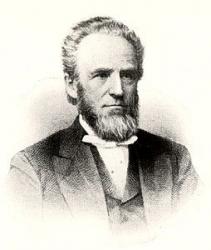
1808 - 1887 Author of "Stealing from the world away" in Old and New Welsh and English Hymns Ray Palmer (b. Little Compton, RI, 1808; d. Newark, NJ, 1887) is often considered to be one of America's best nineteenth-century hymn writers. After completing grammar school he worked in a Boston dry goods store, but a religious awakening prodded him to study for the ministry. He attended Yale College (supporting himself by teaching) and was ordained in 1835. A pastor in Congregational churches in Bath, Maine (1835-1850), and Albany, New York (1850-1865), he also served as secretary of the American Congregational Union (1865-1878). Palmer was a popular preacher and author, writing original poetry as well as translating hymns. He published several volumes of poetry and hymns, including Sabbath Hymn Book (1858), Hymns and Sacred Pieces (1865), and Hymns of My Holy Hours (1868). His complete poetical works were published in 1876.
Bert Polman
===================
Palmer, Ray, D.D., son of the Hon. Thomas Palmer, a Judge in Rhode Island, was born at Little Compton, Rhode Island, Nov. 12, 1808. His early life was spent at Boston, where he was for some time clerk in a dry-goods store. At Boston he joined the Park Street Congregational Church, then under the pastoral care of Dr. S. E. Dwight. After spending three years at Phillips Academy, Andover, he entered Yale College, New Haven, where he graduated in 1830. In 1835 he became pastor of the Central Congregational Church, Bath, Maine. During his pastorate there he visited Europe in 1847. In 1850 he was appointed to the First Congregational Church, at Albany, New York, and in 1865 Corresponding Secretary to the American Congregational Union, New York. He resigned in 1878, and retired to Newark, New Jersey. He died at Newark, Mar. 29, 1887. Dr. Palmer's published works in prose and verse include:--
(1) Memoirs and Select Remains of Charles Pond, 1829; (2) The Spirit's Life, a Poem, 1837; (3) How to Live, or Memoirs of Mrs. C. L. Watson, 1839; (4) Doctrinal Text Book, 1839; (5) Spiritual Improvement, 1839, republished as Closet Hours in 185; (6) What is Truth? or Hints on the Formation of Religious Opinions, 1860; (7) Remember Me, or The Holy Communion, 1865; (8) Hymns and Sacred Pieces, with Miscellaneous Poems, 1865; (9) Hymns of my Holy Hours, and Other Pieces, 1868; (10) Home, or the Unlost Paradise, 1873; and (11) Voices of Hope and Gladness, 1881.
Most of Dr. Palmer's hymns have passed into congregational use, and have won great acceptance. The best of them by their combination of thought, poetry, and devotion, are superior to almost all others of American origin. The first which he wrote has become the most widely known of all. It is:—
1. My faith looks up to Thee. Faith in Christ. This hymn was written by the author when fresh from College, and during an engagement in teaching in New York. This was in 1830. The author says concerning its composition, "I gave form to what I felt, by writing, with little effort, the stanzas. I recollect I wrote them with very tender emotion, and ended the last line with tears." A short time afterwards the hymn was given to Dr. Lowell Mason for use, if thought good, in a work then being compiled by him and Dr. T. Hastings. In 1831 that work was published as Spiritual Songs for Social Worship: adapted to the use of Families, &c. Words and Music arranged by Thomas Hastings, of New York, and Lowell Mason of Boston. It is No. 141 in 4 stanzas of 8 lines, entitled "Self Consecration," and accompanied with the tune by Dr. L. Mason, there given as "My faith looks up to Thee, "but subsequently known as Olivet. (Orig. text of hymn in Thring's Collection, 1882.) It has passed into most modern collections in all English-speaking countries, and has been rendered into numerous languages. That in Latin, by H. M. Macgill (p. 708, ii.), begins "Fides Te mea spectat."
2. Fount of everlasting love. Praise for renewed Spiritual Life. This also appeared in the Spiritual Songs, &c, 1831, No. 191, in 4 stanzas of 4 lines, and headed "Praise for a Revival."
The hymns which are given below are all in Dr. Palmer's Poetical Works, N. Y., 1876, and the dates appended in brackets are those given by him in that work.
3. Thou who roll'st the year around. (1832.) Close of the Year. In several American collections.
4. Away from earth my spirit turns. (1833.) Holy Communion. Appeared in Lowell Mason's Union Hymns, in 4 stanzas of 4 lines. In the Church Praise Book, N. Y.. 1882, it begins with st. ii., "Thou, Saviour, art the Living Bread."
5. Before Thy throne with tearful eyes. (1834.) Liberty of Faith.
6. Stealing from the world away. (1834.) Evening. Written at New Haven in 1834, and is very popular in America.
7. Thine [Thy] holy day's returning. (1834.) Sunday Morning.
8. Wake thee, 0 Zion. (1862.) Zion Exultant.
9. We stand in deep repentance. (1834.) Lent.
This last, No. 9, in common with Nos. 10, 11, 12, is marked "original," in the Presbyterian Parish Hymns, 1843. Probably they were given to the editors of that book in manuscript, and had not previously appeared.
10. And is there, Lord, a rest? (1843.) Rest in Heaven. Written at Bath, Maine, in 1843.
11. 0 sweetly breathe the lyres above. Consecration to Christ. This was accidentally omitted from Dr. Palmer's Poetical Works, 18?6. S. W. Duffield says:—
"It was written in the winter of 1842-43, at a time of revival. At the previous Communion several had been received under circumstances that made Doddridge's hymn, ‘0 happy day that fixed my choice 'a most appropriate selection. Not caring to repeat it, and needing something similar, Dr. Palmer composed the present hymn." English Hymns, N. Y., 1886, p. 432.
12. When downward to the darksome tomb. (1842.) Death Contemplated. Written at Bath, Maine, 1842.
From 1843 there comes a long break, and Dr. Palmer seems to have done no more hymn-writing until called upon by Professors Park and Phelps, of Andover, for contributions to their Sabbath Hymn-Book, 1858. His hymns written for that important collection rank amongst the best that America has produced. This is specially true of the first four (Nos. 13-16) from the Latin.
13. Jesus, Thou joy of loving hearts. (l858.) Translation of a cento from "Jesu dulcis memoria" (p. 588, ii.).
14. 0 Bread to Pilgrims given. (1858.) Translation of “O esca viatorum" (q.v.).
15. 0 Christ our King, Creator Lord. (1858.) Translation of “Rex Christe, factor omnium "
16. Come Holy Ghost, in love. (1858.) Translation of “Veni Sancte Spiritus" (q.v.)
17. Jesus, these eyes have never seen. (1858.) Christ loved, though unseen. This hymn is accounted by many as next in merit and beauty to "My faith looks up to Thee."
18. Lord, my weak thought in vain would climb. (1858.) God Unsearchable. This hymn deals with the mysteries of Predestination in a reverent and devout manner.
19. Thy Father's house! thine own bright home. (1858.) Heaven.
The next group, Nos. 20-27, appeared in Dr. Robinson's Songs for the Sanctuary, 1865.
20. Lord, Thou wilt bring the joyful day. (1864.) Contemplation of Heaven. Written in New York City.
21. Eternal Father, Thou hast said. (i860.) Missions.
22. Jesus, Lamb of God, for me. (1863.) Jesus, the Way of Salvation. Written in Albany, New York.
23. Take me, 0 my Father, take me. (1864.) Lent.
24. Wouldst thou eternal life obtain. (1864.) Good Friday.
25. Come Jesus, Redeemer, abide Thou with me. (1864.) Holy Communion.
26. Lord, Thou on earth didst love Thine own. (1864.) Fellowship with Christ.
27. Thou, Saviour, from Thy throne on high. (1864.) Prayer.
The next four (Nos. 28-31) present another group. They appeared in D. E. Jones's Songs for the New Life, 1869, and the Reformed Dutch Hymns of the Church, N. Y., 1869. The dates of composition are from Dr. Palmer's Poems, 1876.
28. Lord, Thou hast taught our hearts to glow. (1865.) Ordination, or Meeting of Ministers.
29. When inward turns my searching gaze. (1868.) Evening.
30. 0 Jesus, sweet the tears I shed. (1867.) Good Friday.
31. Jesus, this [my] heart within me burns. (1868.) Love.
The hymns which follow are from various sources.
32. 0 Christ, the Lord of heaven, to Thee. (1867.) Universal Praise to Christ. Appeared in the author's Hymns of my Holy Hours, 1867. It is a hymn of great merit, and is widely used.
33. Behold the shade of night is now receding. (1869.) A translation of "Ecce jam noctis." (p. 320, i., and Various).
34. Hid evening shadows let us all be waking. (1869.) A translation of "Nocte surgentes" (p. 809, i.).
35. I give my heart to Thee. (Aug. 20, 1868.) A translation of "Cor meum Tibi dedo," p. 262, ii.
36. Holy Ghost, that promised came. (1873.) Whitsuntide. From the author's Poems, 1876.
37. 0 Holy Comforter, I hear. The Comforter. Appeared in the Boston Congregationalist, September 7th, 1867.
38. Lord, when my soul her secrets doth reveal. (1865.) Holy Communion.
Most of the foregoing hymns are in common in Great Britain, and all are found in one or more American hymnbooks of importance. [Rev. F. M. Bird, M.A.]
-- John Julian, Dictionary of Hymnology (1907)
===================
Palmer, Ray, D.D., p. 877, i. The following original hymns by Dr. Palmer are also in common use:—
1. O Rock of Ages, since on Thee. Faith. From his Poetical Works, 1876, p. 27, where it is dated 1869. Bp. Bickersteth says "This hymn"... is "worthy of Luther." (Note Hymnal Companion, ed. 1876.)
2. Thy holy will, my God, be mine. Resignation. From his Hymns of my Holy Hours, &c, 1868, p. 47. Also in his P. Works, 1876, dated 1867.
3. We praise Thee, Saviour, for Thy grace. Holy Communion. From his Hymns and Sacred Pieces, &c, 1865. Also in P. Works, 1876, dated 1864.
--John Julian, Dictionary of Hymnology, Appendix, Part II (1907)
==========
Ray Palmer was born at Little Compton, Rhode Island, in 1808. He studied at Phillip's Academy, Andover, Mass., and graduated at Yale College in 1830. In 1835, he was ordained pastor of a Congregational Society in Bath, Maine, from which he removed, in 1850, to the pastorate of a Congregational Society in Albany, N.Y. He has published many hymns, some of his own authorship, and some translations. He has published some sermons and reviews.
--Annotations of the Hymnal, Charles Hutchins, M.A. 1872.
Ray Palmer
Thomas Kelly
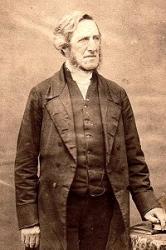
1769 - 1855 Author of "When we cannot see our way" in Evangelical Lutheran hymnal Kelly, Thomas, B.A., son of Thomas Kelly, a Judge of the Irish Court of Common Pleas, was born in Dublin, July 13, 1769, and educated at Trinity College, Dublin. He was designed for the Bar, and entered the Temple, London, with that intention; but having undergone a very marked spiritual change he took Holy Orders in 1792. His earnest evangelical preaching in Dublin led Archbishop Fowler to inhibit him and his companion preacher, Rowland Hill, from preaching in the city. For some time he preached in two unconsecrated buildings in Dublin, Plunket Street, and the Bethesda, and then, having seceded from the Established Church, he erected places of worship at Athy, Portarlington, Wexford, &c, in which he conducted divine worship and preached. He died May 14, 1854. Miller, in his Singers & Songs of the Church, 1869, p. 338 (from which some of the foregoing details are taken), says:—
"Mr. Kelly was a man of great and varied learning, skilled in the Oriental tongues, and an excellent Bible critic. He was possessed also of musical talent, and composed and published a work that was received witli favour, consisting of music adapted to every form of metre in his hymn-book. Naturally of an amiable disposition and thorough in his Christian piety, Mr. Kelly became the friend of good men, and the advocate of every worthy, benevolent, and religious cause. He was admired alike for his zeal and his humility; and his liberality found ample scope in Ireland, especially during the year of famine."
Kelly's hymns, 765 in all, were composed and published over a period of 51 years, as follows:—
(1) A Collection of Psalms and Hymns extracted from Various Authors, by Thomas Kelly, A.B., Dublin, 1802. This work contains 247 hymns by various authors, and an Appendix of 33 original hymns by Kelly.
(2) Hymns on Various Passages of Scripture, Dublin, 1804. Of this work several editions were published: 1st, 1804; 2nd, 1806; 3rd, 1809; 4th, 1812. This last edition was published in two divisions, one as Hymns on Various Passages of Scripture, and the second as Hymns adapted for Social Worship. In 1815 Kelly issued Hymns by Thomas Kelly, not before Published. The 5th edition, 1820, included the two divisions of 1812, and the new hymns of 1815, as one work. To the later editions of 1820, 1826, 1836, 1840, 1846, and 1853, new hymns were added, until the last published by M. Moses, of Dublin, 1853, contained the total of 765.
As a hymn-writer Kelly was most successful. As a rule his strength appears in hymns of Praise and in metres not generally adopted by the older hymn writers. His "Come, see the place where Jesus lay" (from "He's gone, see where His body lay"),"From Egypt lately come"; “Look, ye saints, the sight is glorious"; "On the mountain's top appearing"; "The Head that once was crowned with thorns"; "Through the day Thy love has spared us"; and “We sing the praise of Him Who died," rank with the first hymns in the English language. Several of his hymns of great merit still remain unknown through so many modern editors being apparently adverse to original investigation. In addition to the hymns named and others, which are annotated under their respective first lines, the following are also in common use:—
i. From the Psalms and Hymns, 1802:—
1. Grant us, Lord, Thy gracious presence. Commencement of Divine Worship.
2. Jesus, Immortal King, go on [display]. Missions.
3. Saviour, through the desert lead us. Divine Guidance Desired.
4. The day of rest once more [again] comes round. Sunday.
5. We've no abiding city here. Seeking Heaven.
ii. From the Hymns on Varous Passages of Scripture, first edition, 1804 :—
6. Boundless glory, Lord, be thine. Praise for the Gospel.
7. By whom shall Jacob now arise? Epiphany.
8. Glory, glory to our King. Praise to Christ as King.
9. How pleasant is the sound of praise. Praise for Redemption.
10. How sweet to leave the world awhile. In Retirement, or For a Retreat.
11. Inform I long had bowed the knee. Jesus, the Saviour, or Praise for Salvation.
12. It is finished! sinners, hear it. Good Friday.
13. Jesus, the Shepherd of the sheep. The Good Shepherd.
14. Let reason vainly boast her power. Death.
15. Poor and afflicted, Lord, are Thine. Affliction.
16. Praise we Him to Whose kind favour. Close of Service.
11. Spared a little longer. Safety in God.
18. Stricken, smitten, and afflicted. Passiontide.
ii. From the Hymns, &c, second edition, 1806:—
19. Far from us be grief and sadness. Joy of Believers.
20. Give us room that we may dwell. Missions.
21. Glory, glory everlasting. Praise of Jesus.
22. God has.turned my grief to gladness. Joy after Sorrow.
23. Happy they who trust in Jesus. Peace in Jesus.
24. Hark, the notes of angels singing. Angels praising Jesus.
25. Hark! 'tis a martial sound. Christian Life a Warfare.
26. I hear a sound [voice] that comes from far. The Gospel Message.
27. Jesus is gone up on high. Divine Worship.
28. Now [O] may the Gospel's conquering power. Home Missions. In the 1853 edition of the Hymns it begins “O may the Gospel's conqu'ring force."
29. O Zion, when I think on thee. Desiring Heaven.
30. Praise the Saviour, ye who know Him. Praise of Jesus.
31. See from Zion's sacred mountain. The Fountain of Life.
32. The atoning work is done. Jesus the High Priest.
33. Zion is Jehovah's dwelling. The Church of God.
34. Zion stands by hills surrounded. The Safety of the Church.
35. Zion's King shall reign victorious. Missions.
iv. From the Hymns, &c, 3rd edition, 1809:—
36. Behold the Temple of the Lord. The Church a Spiritual Temple.
37. Blessed Fountain, full of grace. Fountain for Sin.
38. Brethren, come, our Saviour bids us. Holy Communion.
39. Fly, ye seasons, fly still faster. Second Advent Desired.
40. God of Israel, we adore Thee. Evening.
41. Gracious Lord, my heart is fixed. Trust and Peace.
42. Hark, a voice! it comes from heaven. Death.
43. Hark, that shout of rapt'rous joy. Second Advent.
44. If our warfare be laborious. Labour and Rest .
45. Lo, He comes, let all adore Him. Missions.
46. Nothing know we of the season. Time of Second Advent uncertain.
47. O had I the wings of a dove. Holiness and Heaven desired.
48. O where is now that glowing love. Despondency.
49. Our Father sits on yonder throne. God the Father.
50. Ours is a rich and royal Feast. Holy Communion.
51. Shepherd of the chosen number. Safety in the
Good Shepherd.
52. We're bound for yonder land. Life, a Voyage.
53. Welcome sight! the Lord descending. The Advent.
54. What is life? 'tis but a vapour. Death anticipated.
55. Who is this that comes from Edom? Ascension.
56. Why those fears ? Behold 'tis Jesus. Stilling the Sea.
57. Without blood is no remission. Passiontide.
58. Yes, we trust the day is breaking. Missions.
v. FromHymns: Not before Published, 1815:—
59. Behold the Lamb with glory crowned. Exaltation of Christ.
60. God is love, His word has said it. God is Love.
61. God of our salvation, hear us. Opening or Close of Divine Worship.
62. In Thy Name, O Lord, assembling. Commencement of Divine Worship.
63. Keep us, Lord, O [and] keep us ever. Divine Worship.
64. Let sinners saved give thanks, and sing. Praise for Salvation.
65. Praise the Lord Who died to save us. Passiontide.
66. Salvation is of God alone. God the Author of Salvation.
67. Saviour, come, Thy [saints] friends await Thee [are waiting] . Second Advent desired.
68. Sweet were the sounds that reached our ears. Divine Mercy.
69. We'll sing of the Shepherd that died. The Lost Sheep.
70. When we cannot see our way. Trust and Peace.
71. Who is this that calms the ocean? Stilling the Sea.
vi. From the Hymns on F. Passages of Scripture, &c, eds. 1820 and 1826 :-—
72. Grace is the sweetest sound. Divine Grace.
73. Now let a great effectual door. Missions.
74. Now may the mighty arm awake. Missions.
75. Now may the Spirit from above. Home Missions.
76. Sing, sing His lofty praise. Praise of Jesus.
77. Sound, 6ound the truth abroad. Missions.
78. Speed Thy servants, Saviour, speed them. Departure of Missionaries.
vii. From the Hymns on Various Passages, &c, 1836:—
79. Come, O Lord, the heavens rending. Prayer for Blessings.
80. The night is far spent, the day is at hand. The Second Advent.
viii. From the Hymns on Various Passages, &c, circa 1845:—
81. Joyful be the hours today. Sunday.
82. Lord, behold us few and weak. Opening of Divine Service.
83. Meet Thy people, Saviour, meet us. Meetings for Prayer.
84. Saviour, send a blessing to us. Prayer for Blessings.
85. Sing of Jesus, sing for ever. Praise of Jesus.
ix. From the Hymns on Various Passages, &c, 1853:—
86. Precious volume, what thou doest. Holy Scripture.
87. Unfold to us, O Lord, unfold. Divine aid to reading Holy Scripture.
All these hymns, together with those annotated under their respective first lines are in the 1853 edition of Kelly's Hymns published in Dublin by M. Moses, and in London by Simpkin, Marshall & Co. Kelly's musical editions are issued by the same publishers.
-- John Julian, Dictionary of Hymnology (1907)
==================
Kelly, Thomas, p. 615, i. Other hymns in common use are:
1. Behold the Man! How glorious He. (1809.) Good Friday.
2. Jesus the [Thou] Shepherd of the Sheep. (1804.) Good Shepherd.
3. Saved ourselves by Jesu's blood. (1802.) For a Revival.
4. Saviour, 'tis to [unto] Thee. (1853*.) Lent.
5. See the vineyard lately planted. (1806.) Missions. Sometimes given as "See, O Lord, the vineyard planted."
6. Sing aloud to God our strength. (1809.) Praise to the Father.
7. Sing, sing His lofty praise. (1820.) Praise to Jesus. Sometimes as "Hail our eternal King" (p. 615, No. 76).
8. Sing of Him Who bore our guilt. (1853*.) Praise to Jesus.
9. Sing we praise to God above, God our Saviour, &c. (1815.) Praise for Divine Mercy.
10. Sing we praise to God above, Sing we praise, &c. (1853*.) Praise.
11. Sons of Zion, raise your songs. (1820-26) The Exalted Saviour.
12. The Lord Himself will keep. (1809.) From “We're bound for yonder land" (sec p. 615, No. 52.)
13. The God [Lord] of glory dwells on high. (1809.) Humility and Love of Christ.
14. The people of the Lord Are on their way, &c. (1820.) Life a Pilgrimage.
15. Thus saith God of His Anointed. (1809.) Missions.
16. 'Tis to us no cause of sorrow. (1815.) Resignation.
17. To the Ark away, or perish. (1815.) Safety in Jesus only.
18. To our Lord a throne is given. (1838.) Christ the King.
19. Trust ye in the Lord for ever. (1853*.) Trust in God.
20. We'll sing in spite of scorn. (1806.) Christmas. From this "The long-expected morn" is taken.
21. What tongue can tell, what fancy paint. (1806.) Saints in Glory
22. What were Sinai's awful wonders. (1809.) Advent.
23. Whence those sounds symphonious? (1815.) Christmas.
24. While in the [this] world we still [yet] remain. (1806.) Communion of Saints.
25. Yes, 'tis a rough and thorny road. (1809.) Resignation. Sometimes given as "Though rough and thorny be the way."
The dates given above are those of the various editions of Kelly's Hymns. The date 1853* indicates that the hymn is in the 1853 ed. of the Hymns, but had also appeared in a previous edition which we have not seen.
--John Julian, Dictionary of Hymnology, Appendix, Part II (1907)
Thomas Kelly
John Newton
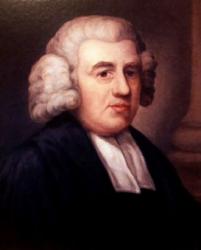
1725 - 1807 Author of "Sinner, art thou still secure?" in The Sacred Harp John Newton (b. London, England, 1725; d. London, 1807) was born into a Christian home, but his godly mother died when he was seven, and he joined his father at sea when he was eleven. His licentious and tumultuous sailing life included a flogging for attempted desertion from the Royal Navy and captivity by a slave trader in West Africa. After his escape he himself became the captain of a slave ship. Several factors contributed to Newton's conversion: a near-drowning in 1748, the piety of his friend Mary Catlett, (whom he married in 1750), and his reading of Thomas à Kempis' Imitation of Christ. In 1754 he gave up the slave trade and, in association with William Wilberforce, eventually became an ardent abolitionist. After becoming a tide-surveyor in Liverpool, England, Newton came under the influence of George Whitefield and John and Charles Wesley and began to study for the ministry. He was ordained in the Church of England and served in Olney (1764-1780) and St. Mary Woolnoth, London (1780-1807). His legacy to the Christian church includes his hymns as well as his collaboration with William Cowper (PHH 434) in publishing Olney Hymns (1779), to which Newton contributed 280 hymns, including “Amazing Grace.”
Bert Polman
==================
Newton, John, who was born in London, July 24, 1725, and died there Dec. 21, 1807, occupied an unique position among the founders of the Evangelical School, due as much to the romance of his young life and the striking history of his conversion, as to his force of character. His mother, a pious Dissenter, stored his childish mind with Scripture, but died when he was seven years old. At the age of eleven, after two years' schooling, during which he learned the rudiments of Latin, he went to sea with his father. His life at sea teems with wonderful escapes, vivid dreams, and sailor recklessness. He grew into an abandoned and godless sailor. The religious fits of his boyhood changed into settled infidelity, through the study of Shaftesbury and the instruction of one of his comrades. Disappointing repeatedly the plans of his father, he was flogged as a deserter from the navy, and for fifteen months lived, half-starved and ill-treated, in abject degradation under a slave-dealer in Africa. The one restraining influence of his life was his faithful love for his future wife, Mary Catlett, formed when he was seventeen, and she only in her fourteenth year. A chance reading of Thomas à Kempis sowed the seed of his conversion; which quickened under the awful contemplations of a night spent in steering a water-logged vessel in the face of apparent death (1748). He was then twenty-three. The six following years, during which he commanded a slave ship, matured his Christian belief. Nine years more, spent chiefly at Liverpool, in intercourse with Whitefield, Wesley, and Nonconformists, in the study of Hebrew and Greek, in exercises of devotion and occasional preaching among the Dissenters, elapsed before his ordination to the curacy of Olney, Bucks (1764).
The Olney period was the most fruitful of his life. His zeal in pastoral visiting, preaching and prayer-meetings was unwearied. He formed his lifelong friendship with Cowper, and became the spiritual father of Scott the commentator. At Olney his best works—-Omicron's Letters (1774); Olney Hymns (1779); Cardiphonia, written from Olney, though published 1781—were composed. As rector of St. Mary Woolnoth, London, in the centre of the Evangelical movement (1780-1807) his zeal was as ardent as before. In 1805, when no longer able to read his text, his reply when pressed to discontinue preaching, was, "What, shall the old African blasphemer stop while he can speak!" The story of his sins and his conversion, published by himself, and the subject of lifelong allusion, was the base of his influence; but it would have been little but for the vigour of his mind (shown even in Africa by his reading Euclid drawing its figures on the sand), his warm heart, candour, tolerance, and piety. These qualities gained him the friendship of Hannah More, Cecil, Wilberforce, and others; and his renown as a guide in experimental religion made him the centre of a host of inquirers, with whom he maintained patient, loving, and generally judicious correspondence, of which a monument remains in the often beautiful letters of Cardiphonia. As a hymnwriter, Montgomery says that he was distanced by Cowper. But Lord Selborne's contrast of the "manliness" of Newton and the "tenderness" of Cowper is far juster. A comparison of the hymns of both in The Book of Praise will show no great inequality between them. Amid much that is bald, tame, and matter-of-fact, his rich acquaintance with Scripture, knowledge of the heart, directness and force, and a certain sailor imagination, tell strongly. The one splendid hymn of praise, "Glorious things of thee are spoken," in the Olney collection, is his. "One there is above all others" has a depth of realizing love, sustained excellence of expression, and ease of development. "How sweet the name of Jesus sounds" is in Scriptural richness superior, and in structure, cadence, and almost tenderness, equal to Cowper's "Oh! for a closer walk with God." The most characteristic hymns are those which depict in the language of intense humiliation his mourning for the abiding sins of his regenerate life, and the sense of the withdrawal of God's face, coincident with the never-failing conviction of acceptance in The Beloved. The feeling may be seen in the speeches, writings, and diaries of his whole life. [Rev. H. Leigh Bennett, M.A.]
A large number of Newton's hymns have some personal history connected with them, or were associated with circumstances of importance. These are annotated under their respective first lines. Of the rest, the known history of which is confined to the fact that they appeared in the Olney Hymns, 1779, the following are in common use:—
1. Be still, my heart, these anxious cares. Conflict.
2. Begone, unbelief, my Saviour is near. Trust.
3. By the poor widow's oil and meal. Providence.
4. Chief Shepherd of Thy chosen sheep. On behalf of Ministers.
5. Darkness overspreads us here. Hope.
6. Does the Gospel-word proclaim. Rest in Christ.
7. Fix my heart and eyes on Thine. True Happiness.
8. From Egypt lately freed. The Pilgrim's Song.
9. He Who on earth as man was Known. Christ the Rock.
10. How blest are they to whom the Lord. Gospel Privileges.
11. How blest the righteous are. Death of the Righteous.
12. How lost was my [our] condition. Christ the Physician.
13. How tedious and tasteless the hours. Fellowship with Christ.
14. How welcome to the saints [soul] when pressed. Sunday.
15. Hungry, and faint, and poor. Before Sermon.
16. In mercy, not in wrath, rebuke. Pleading for Mercy.
17. In themselves, as weak as worms. Power of Prayer.
18. Incarnate God, the soul that knows. The Believer's Safety.
19. Jesus, Who bought us with His blood. The God of Israel. "Teach us, 0 Lord, aright to plead," is from this hymn.
20. Joy is a [the] fruit that will not grow. Joy.
21. Let hearts and tongues unite. Close of the Year. From this "Now, through another year," is taken.
22. Let us adore the grace that seeks. New Year.
23. Mary to her [the] Saviour's tomb. Easter.
24. Mercy, 0 Thou Son of David. Blind Bartimeus.
25. My harp untun'd and laid aside. Hoping for a Revival. From this "While I to grief my soul gave way" is taken.
26. Nay, I cannot let thee go. Prayer. Sometimes, "Lord, I cannot let Thee go."
27. Now may He Who from the dead. After Sermon.
28. 0 happy they who know the Lord, With whom He deigns to dwell. Gospel Privilege.
29. O Lord, how vile am I. Lent.
30. On man in His own Image made. Adam.
31. 0 speak that gracious word again. Peace through Pardon.
32. Our Lord, Who knows full well. The Importunate Widow. Sometimes altered to "Jesus, Who knows full well," and again, "The Lord, Who truly knows."
33. Physician of my sin-sick soul. Lent.
34. Pleasing spring again is here. Spring.
35. Poor, weak, and worthless, though I am. Jesus the Friend.
36. Prepare a thankful song. Praise to Jesus.
37. Refreshed by the bread and wine. Holy Communion. Sometimes given as "Refreshed by sacred bread and wine."
38. Rejoice, believer, in the Lord. Sometimes “Let us rejoice in Christ the Lord." Perseverance.
39. Salvation, what a glorious plan. Salvation.
40. Saviour, shine and cheer my soul. Trust in Jesus. The cento "Once I thought my mountain strong," is from this hymn.
41. Saviour, visit Thy plantation. Prayer for the Church.
42. See another year [week] is gone. Uncertainty of Life.
43. See the corn again in ear. Harvest.
44. Sinner, art thou still secure? Preparation for the Future.
45. Sinners, hear the [thy] Saviour's call. Invitation.
46. Sovereign grace has power alone. The two Malefactors.
47. Stop, poor sinner, stop and think. Caution and Alarm.
48. Sweeter sounds than music knows. Christmas.
49. Sweet was the time when first I felt. Joy in Believing.
50. Ten thousand talents once I owed. Forgiveness and Peace.
51. The grass and flowers, which clothe the field. Hay-time.
52. The peace which God alone reveals. Close of Service.
53. Thy promise, Lord, and Thy command. Before Sermon.
54. Time, by moments, steals away. The New Year.
55. To Thee our wants are known. Close of Divine Service.
56. We seek a rest beyond the skies. Heaven anticipated.
57. When any turn from Zion's way. Jesus only.
58. When Israel, by divine command. God, the Guide and Sustainer of Life.
59. With Israel's God who can compare? After Sermon.
60. Yes, since God Himself has said it. Confidence.
61. Zion, the city of our God. Journeying Zionward.
-- John Julian, Dictionary of Hymnology (1907)
=================
Newton, J., p. 803, i. Another hymn in common use from the Olney Hymns, 1779, is "Let me dwell on Golgotha" (Holy Communion).
--John Julian, Dictionary of Hymnology, Appendix, Part II (1907)
-----
John Newton was born in London, July 24, 1725. His mother died when he was seven years old. In his eleventh year he accompanied his father, a sea captain, on a voyage. For several years his life was one of dissipation and crime. He was disgraced while in the navy. Afterwards he engaged in the slave trade. Returning to England in 1748, the vessel was nearly wrecked in a storm. This peril forced solemn reflection upon him, and from that time he was a changed man. It was six years, however, before he relinquished the slave trade, which was not then regarded as an unlawful occupation. But in 1754, he gave up sea-faring life, and holding some favourable civil position, began also religious work. In 1764, in his thirty-ninth year, he entered upon a regular ministry as the Curate of Olney. In this position he had intimate intercourse with Cowper, and with him produced the "Olney Hymns." In 1779, Newton became Rector of S. Mary Woolnoth, in London, in which position he became more widely known. It was here he died, Dec. 21, 1807, His published works are quite numerous, consisting of sermons, letters, devotional aids, and hymns. He calls his hymns "The fruit and expression of his own experience."
--Annotations of the Hymnal, Charles Hutchins, M.A. 1872
See also in:
Hymn Writers of the Church
=======================
John Newton
Pages




