You help make Hymnary.org possible. More than 10 million people from 200+ countries found hymns, liturgical resources and encouragement on Hymnary.org in 2025, including you. Every visit affirms the global impact of this ministry.

If Hymnary has been meaningful to you this year, would you take a moment today to help sustain it? A gift of any size—paired with a note of encouragement if you wish—directly supports the server costs, research work and curation that keep this resource freely available to the world.

Give securely online today, or mail a check to:
Hymnary.org
Calvin University
3201 Burton Street SE
Grand Rapids, MI 49546

Thank you for your partnership, and may the hope of Advent fill your heart.

Person Results

Text Identifier:"^readings$"
In:people

Planning worship? Check out our sister site, ZeteoSearch.org, for 20+ additional resources related to your search.
Showing 21 - 30 of 116Results Per Page: 102050

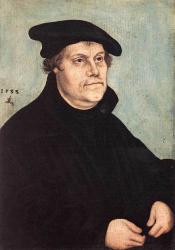
Martin Luther

1483 - 1546 Person Name: Martin Luther (1483-1546) Author of "God's Word--Our Comfort and Joy" in The Sing! Hymnal Luther, Martin, born at Eisleben, Nov. 10, 1483; entered the University of Erfurt, 1501 (B.A. 1502, M.A.. 1503); became an Augustinian monk, 1505; ordained priest, 1507; appointed Professor at the University of Wittenberg, 1508, and in 1512 D.D.; published his 95 Theses, 1517; and burnt the Papal Bull which had condemned them, 1520; attended the Diet of Worms, 1521; translated the Bible into German, 1521-34; and died at Eisleben, Feb. 18, 1546. The details of his life and of his work as a reformer are accessible to English readers in a great variety of forms. Luther had a huge influence on German hymnody. i. Hymn Books. 1. Ellich cristlich lider Lobgesang un Psalm. Wittenberg, 1524. [Hamburg Library.] This contains 8 German hymns, of which 4 are by Luther. 2. Eyn Enchiridion oder Handbuchlein. Erfurt, 1524 [Goslar Library], with 25 German hymns, of which 18 are by Luther. 3. Geystliche Gesangk Buchleyn. Wittenberg, 1524 [Munich Library], with 32 German hymns, of which 24 are by Luther. 4. Geistliche Lieder auffs new gebessert. Wittenberg. J. Klug, 1529. No copy of this book is now known, but there was one in 1788 in the possession of G. E. Waldau, pastor at Nürnberg, and from his description it is evident that the first part of the Rostock Gesang-Buch, 1531, is a reprint of it. The Rostock Gesang-Buch, 1531, was reprinted by C. M. Wiechmann-Kadow at Schwerin in 1858. The 1529 evidently contained 50 German hymns, of which 29 (including the Litany) were by Luther. 5. Geistliche Lieder auffs new gebessert. Erfurt. A. Rauscher, 1531 [Helmstädt, now Wolfenbüttel Library], a reprint of No. 4. 6. Geistliche Lieder. Wittenberg. J. Klug, 1535 [Munich Library. Titlepage lost], with 52 German hymns, of which 29 are by Luther. 7. Geistliche Lieder auffs new gebessert. Leipzig. V. Schumann, 1539 [Wernigerode Library], with 68 German hymns, of which 29 are by Luther. 8. Geistliche Lieder. Wittenberg. J. Klug, 1543 [Hamburg Library], with 61 German hymns, of which 35 are by Luther. 9. Geystliche Lieder. Leipzig. V. Babst, 1545 [Gottingen Library]. This contains Luther's finally revised text, but adds no new hymns by himself. In pt. i. are 61 German hymns, in pt. ii. 40, of which 35 in all are by Luther. For these books Luther wrote three prefaces, first published respectively in Nos. 3, 4, 9. A fourth is found in his Christliche Geseng, Lateinisch und Deudsch, zum Begrebnis, Wittenberg, J. Klug, 1542. These four prefaces are reprinted in Wackernagel’s Bibliographie, 1855, pp. 543-583, and in the various editions of Luther's Hymns. Among modern editions of Luther's Geistliche Lieder may be mentioned the following:— Carl von Winterfeld, 1840; Dr. C. E. P. Wackernagel, 1848; Q. C. H. Stip, 1854; Wilhelm Schircks, 1854; Dr. Danneil, 1883; Dr. Karl Gerok, 1883; Dr. A. F. W. Fischer, 1883; A. Frommel, 1883; Karl Goedeke, 1883, &c. In The Hymns of Martin Luther. Set to their original melodies. With an English version. New York, 1883, ed. by Dr. Leonard Woolsey Bacon and Nathan H. Allen, there are the four prefaces, and English versions of all Luther's hymns, principally taken more or less altered, from the versions by A. T. Russell, R. Massie and Miss Winkworth [repub. in London, 1884]. Complete translations of Luther's hymns have been published by Dr. John Anderson, 1846 (2nd ed. 1847), Dr. John Hunt, 1853, Richard Massie, 1854, and Dr. G. Macdonald in the Sunday Magazine, 1867, and his Exotics, 1876. The other versions are given in detail in the notes on the individual hymns. ii. Classified List of Luther's Hymns. Of Luther's hymns no classification can be quite perfect, e.g. No. 3 (see below) takes hardly anything from the Latin, and No. 18 hardly anything from the Psalm. No. 29 is partly based on earlier hymns (see p. 225, i.). No. 30 is partly based on St. Mark i. 9-11, and xvi., 15, 16 (see p. 226, ii.). No. 35 is partly based on St. Luke ii. 10-16. The following arrangement, however, will answer all practical purposes. A. Translations from the Latin. i. From Latin Hymns: 1. Christum wir sollen loben schon. A solis ortus cardine 2. Der du bist drei in Einigkeit. O Lux beata Trinitas. 3. Jesus Christus unser Heiland, Der von. Jesus Christus nostra salus 4. Komm Gott Schopfer, heiliger Geist. Veni Creator Spiritus, Mentes. 5. Nun komm der Beidenheiland. Veni Redemptor gentium 6. Was flirchst du Feind Herodes sehr. A solis ortus cardine ii. From Latin Antiphons, &c.: 7. Herr Gott dich loben wir. Te Deum laudamus. 8. Verleih uns Frieden gnädiglich. Dapacem, Domine 9. Wir glauben all an einen Gott. iii. Partly from the Latin, the translated stanzas being adopted from Pre-Reformation Versions: 10. Komm, heiliger Geist, Herre Gott. 11. Mitten wir im Leben sind. Media vita in morte sumus. B. Hymns revised and enlarged from Pre-Reformation popular hymns. 12. Gelobet seist du Jesus Christ. 13. Gott der Vater wohn uns bei. 14. Gott sei gelobet und gebenedeiet. 15. Nun bitten wir den heiligen Geist. C. Psalm versions. 16. Ach Gott vom Himmel, sieh darein. 17. Aus tiefer Noth schrei ich zu dir. 18. Ein' feste Burg ist unser Gott. 19. Es spricht der Unweisen Mund wohl. 20. Es wollt uns Gott genädig sein. 21. War Gott nicht mit uns diese Zeit. 22. Wohl dem, der in Gotten Furcht steht. D. Paraphrases of other portions of Holy Scripture. 23. Diess sind die heilgen zehn Gebot. 24. Jesaia dem Propheten das geschah. 25. Mensch willt du leben seliglich. 26. Mit Fried und Freud ich fahr dahin. 27. Sie ist mir lieb die werthe Magd. 28. Vater unser im Himmelreich. E. Hymns mainly Original. 29. Christ lag in Todesbanden. 30. Christ unser Herr zum Jordan kam. 31. Ein neues Lied wir heben an. 32. Erhalt uns Herr bei deinem Wort. 33. Jesus Christus unser Heiland, Der den, 34. Nun freut euch lieben Christengemein. 35. Vom Himmel hoch da komm ich her. 36. Vom Himmel kam der Engel Schaar. In addition to these — 37. Fur alien Freuden auf Erden. 38. Kyrie eleison. In the Blätter fur Hymnologie, 1883, Dr. Daniel arranges Luther's hymns according to what he thinks their adaptation to modern German common use as follows:— i. Hymns which ought to be included in every good Evangelical hymn-book: Nos. 7-18, 20, 22, 28, 29, 30, 32, 34, 35, 36, 38. ii. Hymns the reception of which into a hymn-book might be contested: Nos. 2, 3, 4, 19, 21, 22, 23, 24, 25, 33. iii. Hymns not suited for a hymn-book: Nos. 1, 5, 6, 27, 31, 37. [Rev. James Mearns, M.A.] --John Julian, Dictionary of Hymnology (1907)

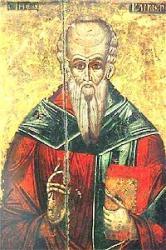
Clement of Alexandria

170 - 215 Person Name: Clement of Alexandria (ca. AD 200) Author of "The Divine Love Feast" in The Sing! Hymnal Clemens, Titus Flavins (Clemens Alexandrinus), St. Clement of Alexandria, was born possibly at Athens (although on this point there is no certain information) about A.D. 170. His full name, Titus Flavins Clemens, is given by Eusebius (H. E., vi. 13) and Photius (Cod. Ill), but of his parentage there is no record. Studious, and anxious to satisfy his mind on the highest subjects, he is said to have been a Stoic and Eclectic, and a seeker after truth amongst Greek, Assyrian, Egyptian, and Jewish teachers. He himself enumerates six teachers of eminence under whom he studied the "true tradition of the blessed doctrine of the holy apostles." At Alexandria he came under the teaching of Pantsenus, and embraced Christianity, Pantsenus being at the time the master of the Catechetical School in that city. On the retirement of Pantsenus from the school for missionary work, Clement became its head, cir. 190, and retained the position to 203. His pupils were numerous, and some of them of note, including Origen, and Alexander, afterwards Bishop of Jerusalem. Driven from Alexandria by the persecution under Severus (202-203), he wandered forth, it is not known whither. The last notice wo have of him in history is in a letter of congratulation by his old pupil, Alexander, then Bp. of Cappadocia, to the Church of Antioch, on the appointment of Asclepiades to the bishopric of that city. This letter, dated 211, seems to have been conveyed to Antioch by Clement. Beyond this nothing is known, either concern¬ing his subsequent life or death, although the latter is sometimes dated A.D. 220. The works of Clement are ten in all. Of these, the only work with which we have to do is The Tutor, in three books. The first book describes the Tutor, who is the Word Himself, the children whom He trains (Christian men and women), and his method of instruction. The second book contains general instructions as to daily life in eating, drinking, furniture, sleep, &c.; and the third, after an inquiry into the nature of true beauty, goes onto condemn extravagance in dress, &c, both in men and women. Appended to this work, in the printed editions, are two poems; the first, "A Hymn of the Saviour), and the second, an address "To the Tutor". The first, beginning is attributed to Clement in those manuscripts in which it is found; but it is supposed by some to be of an earlier date: the second is generally regarded as by a later hand . The “Hymn of the Saviour," the earliest known Christian hymn, has been translated into English: The earliest translation is "Shepherd of tender youth.” This is by Dr. H. M. Dexter (q. v.). It was written in 1846, first published in The Congregationalist [of which Dexter was editor], Dec. 21, 1849, and is in extensive use in the United States. In Great Britain it is also given in several collections, including the New Congregational Hymn Book, 1859; Baptist Psalms & Hymns, 1858; the R. T. Society's Collection, &c. There are also translations not in common use, viz.: (1) "Bridle of colts untamed," by Dr. W. L. Alexander, in the Ante-Nicene Christian Library, vol. iv. p. 343; (2) "Bridle of colts untaught," by Dr. H. Bonar, in The Sunday at Home, 1878, p. 11. (3) Another translation is by the Rev. A. W. Chatfield, in his Songs and Hymns of the Earliest Greek Christian Poets, 1876. Mr. Chatfield, following the Anth. Graeca Car. Christ., 1871, p. 37, begins with the eleventh line: "O Thou, the King of Saints, all-conquering Word." His translation extends to 40 lines. --Excerpts from John Julian, Dictionary of Hymnology (1907)

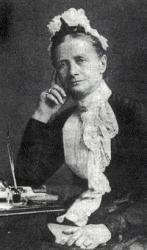
Cecil Frances Alexander

1818 - 1895 Person Name: Cecil Frances Alexander (1818-1895) Author of "Impress on Their Minds" in The Sing! Hymnal As a small girl, Cecil Frances Humphries (b. Redcross, County Wicklow, Ireland, 1818; Londonderry, Ireland, 1895) wrote poetry in her school's journal. In 1850 she married Rev. William Alexander, who later became the Anglican primate (chief bishop) of Ireland. She showed her concern for disadvantaged people by traveling many miles each day to visit the sick and the poor, providing food, warm clothes, and medical supplies. She and her sister also founded a school for the deaf. Alexander was strongly influenced by the Oxford Movement and by John Keble's Christian Year. Her first book of poetry, Verses for Seasons, was a "Christian Year" for children. She wrote hymns based on the Apostles' Creed, baptism, the Lord's Supper, the Ten Commandments, and prayer, writing in simple language for children. Her more than four hundred hymn texts were published in Verses from the Holy Scripture (1846), Hymns for Little Children (1848), and Hymns Descriptive and Devotional ( 1858). Bert Polman ================== Alexander, Cecil Frances, née Humphreys, second daughter of the late Major John Humphreys, Miltown House, co. Tyrone, Ireland, b. 1823, and married in 1850 to the Rt. Rev. W. Alexander, D.D., Bishop of Derry and Raphoe. Mrs. Alexander's hymns and poems number nearly 400. They are mostly for children, and were published in her Verses for Holy Seasons, with Preface by Dr. Hook, 1846; Poems on Subjects in the Old Testament, pt. i. 1854, pt. ii. 1857; Narrative Hymns for Village Schools, 1853; Hymns for Little Children, 1848; Hymns Descriptive and Devotional, 1858; The Legend of the Golden Prayers 1859; Moral Songs, N.B.; The Lord of the Forest and his Vassals, an Allegory, &c.; or contributed to the Lyra Anglicana, the S.P.C.K. Psalms and Hymns, Hymns Ancient & Modern, and other collections. Some of the narrative hymns are rather heavy, and not a few of the descriptive are dull, but a large number remain which have won their way to the hearts of the young, and found a home there. Such hymns as "In Nazareth in olden time," "All things bright and beautiful," "Once in Royal David's city," "There is a green hill far away," "Jesus calls us o'er the tumult," "The roseate hues of early dawn," and others that might be named, are deservedly popular and are in most extensive use. Mrs. Alexander has also written hymns of a more elaborate character; but it is as a writer for children that she has excelled. - John Julian, Dictionary of Hymnology (1907) =============== Alexander, Cecil F., née Humphreys, p. 38, ii. Additional hymns to those already noted in this Dictionary are in common use:— 1. Christ has ascended up again. (1853.) Ascension. 2. His are the thousand sparkling rills. (1875.) Seven Words on the Cross (Fifth Word). 3. How good is the Almighty God. (1S48.) God, the Father. 4. In [a] the rich man's garden. (1853.) Easter Eve. 5. It was early in the morning. (1853.) Easter Day. 6. So be it, Lord; the prayers are prayed. (1848.) Trust in God. 7. Saw you never in the twilight? (1853.) Epiphany. 8. Still bright and blue doth Jordan flow. (1853.) Baptism of Our Lord. 9. The angels stand around Thy throne. (1848.) Submission to the Will of God. 10. The saints of God are holy men. (1848.) Communion of Saints. 11. There is one Way and only one. (1875.) SS. Philip and James. 12. Up in heaven, up in heaven. (1848.) Ascension. 13. We are little Christian children. (1848.) Holy Trinity. 14. We were washed in holy water. (1848.) Holy Baptism. 15. When of old the Jewish mothers. (1853.) Christ's Invitation to Children. 16. Within the Churchyard side by side. (1848.) Burial. Of the above hymns those dated 1848 are from Mrs. Alexander's Hymns for Little Children; those dated 1853, from Narrative Hymns, and those dated 1875 from the 1875 edition of Hymns Ancient & Modern. Several new hymns by Mrs. Alexander are included in the 1891 Draft Appendix to the Irish Church Hymnal. --John Julian, Dictionary of Hymnology, Appendix, Part II (1907) ============= Alexander, Cecil F. , p. 38, ii. Mrs. Alexander died at Londonderry, Oct. 12, 1895. A number of her later hymns are in her Poems, 1896, which were edited by Archbishop Alexander. --John Julian, Dictionary of Hymnology, New Supplement (1907) See also in:Hymn Writers of the Church

Isaac Watts

1674 - 1748 Person Name: Isaac Watts (1674-1748) Author of "Praise for Creation and Providence" in The Sing! Hymnal Isaac Watts was the son of a schoolmaster, and was born in Southampton, July 17, 1674. He is said to have shown remarkable precocity in childhood, beginning the study of Latin, in his fourth year, and writing respectable verses at the age of seven. At the age of sixteen, he went to London to study in the Academy of the Rev. Thomas Rowe, an Independent minister. In 1698, he became assistant minister of the Independent Church, Berry St., London. In 1702, he became pastor. In 1712, he accepted an invitation to visit Sir Thomas Abney, at his residence of Abney Park, and at Sir Thomas' pressing request, made it his home for the remainder of his life. It was a residence most favourable for his health, and for the prosecution of his literary labours. He did not retire from ministerial duties, but preached as often as his delicate health would permit. The number of Watts' publications is very large. His collected works, first published in 1720, embrace sermons, treatises, poems and hymns. His "Horae Lyricae" was published in December, 1705. His "Hymns" appeared in July, 1707. The first hymn he is said to have composed for religious worship, is "Behold the glories of the Lamb," written at the age of twenty. It is as a writer of psalms and hymns that he is everywhere known. Some of his hymns were written to be sung after his sermons, giving expression to the meaning of the text upon which he had preached. Montgomery calls Watts "the greatest name among hymn-writers," and the honour can hardly be disputed. His published hymns number more than eight hundred. Watts died November 25, 1748, and was buried at Bunhill Fields. A monumental statue was erected in Southampton, his native place, and there is also a monument to his memory in the South Choir of Westminster Abbey. "Happy," says the great contemporary champion of Anglican orthodoxy, "will be that reader whose mind is disposed, by his verses or his prose, to imitate him in all but his non-conformity, to copy his benevolence to men, and his reverence to God." ("Memorials of Westminster Abbey," p. 325.) --Annotations of the Hymnal, Charles Hutchins, M.A., 1872. ================================= Watts, Isaac, D.D. The father of Dr. Watts was a respected Nonconformist, and at the birth of the child, and during its infancy, twice suffered imprisonment for his religious convictions. In his later years he kept a flourishing boarding school at Southampton. Isaac, the eldest of his nine children, was born in that town July 17, 1674. His taste for verse showed itself in early childhood. He was taught Greek, Latin, and Hebrew by Mr. Pinhorn, rector of All Saints, and headmaster of the Grammar School, in Southampton. The splendid promise of the boy induced a physician of the town and other friends to offer him an education at one of the Universities for eventual ordination in the Church of England: but this he refused; and entered a Nonconformist Academy at Stoke Newington in 1690, under the care of Mr. Thomas Rowe, the pastor of the Independent congregation at Girdlers' Hall. Of this congregation he became a member in 1693. Leaving the Academy at the age of twenty, he spent two years at home; and it was then that the bulk of the Hymns and Spiritual Songs (published 1707-9) were written, and sung from manuscripts in the Southampton Chapel. The hymn "Behold the glories of the Lamb" is said to have been the first he composed, and written as an attempt to raise the standard of praise. In answer to requests, others succeeded. The hymn "There is a land of pure delight" is said to have been suggested by the view across Southampton Water. The next six years of Watts's life were again spent at Stoke Newington, in the post of tutor to the son of an eminent Puritan, Sir John Hartopp; and to the intense study of these years must be traced the accumulation of the theological and philosophical materials which he published subsequently, and also the life-long enfeeblement of his constitution. Watts preached his first sermon when he was twenty-four years old. In the next three years he preached frequently; and in 1702 was ordained pastor of the eminent Independent congregation in Mark Lane, over which Caryl and Dr. John Owen had presided, and which numbered Mrs. Bendish, Cromwell's granddaughter, Charles Fleetwood, Charles Desborough, Sir John Hartopp, Lady Haversham, and other distinguished Independents among its members. In this year he removed to the house of Mr. Hollis in the Minories. His health began to fail in the following year, and Mr. Samuel Price was appointed as his assistant in the ministry. In 1712 a fever shattered his constitution, and Mr. Price was then appointed co-pastor of the congregation which had in the meantime removed to a new chapel in Bury Street. It was at this period that he became the guest of Sir Thomas Abney, under whose roof, and after his death (1722) that of his widow, he remained for the rest of his suffering life; residing for the longer portion of these thirty-six years principally at the beautiful country seat of Theobalds in Herts, and for the last thirteen years at Stoke Newington. His degree of D.D. was bestowed on him in 1728, unsolicited, by the University of Edinburgh. His infirmities increased on him up to the peaceful close of his sufferings, Nov. 25, 1748. He was buried in the Puritan restingplace at Bunhill Fields, but a monument was erected to him in Westminster Abbey. His learning and piety, gentleness and largeness of heart have earned him the title of the Melanchthon of his day. Among his friends, churchmen like Bishop Gibson are ranked with Nonconformists such as Doddridge. His theological as well as philosophical fame was considerable. His Speculations on the Human Nature of the Logos, as a contribution to the great controversy on the Holy Trinity, brought on him a charge of Arian opinions. His work on The Improvement of the Mind, published in 1741, is eulogised by Johnson. His Logic was still a valued textbook at Oxford within living memory. The World to Come, published in 1745, was once a favourite devotional work, parts of it being translated into several languages. His Catechisms, Scripture History (1732), as well as The Divine and Moral Songs (1715), were the most popular text-books for religious education fifty years ago. The Hymns and Spiritual Songs were published in 1707-9, though written earlier. The Horae Lyricae, which contains hymns interspersed among the poems, appeared in 1706-9. Some hymns were also appended at the close of the several Sermons preached in London, published in 1721-24. The Psalms were published in 1719. The earliest life of Watts is that by his friend Dr. Gibbons. Johnson has included him in his Lives of the Poets; and Southey has echoed Johnson's warm eulogy. The most interesting modern life is Isaac Watts: his Life and Writings, by E. Paxton Hood. [Rev. H. Leigh Bennett, M.A.] A large mass of Dr. Watts's hymns and paraphrases of the Psalms have no personal history beyond the date of their publication. These we have grouped together here and shall preface the list with the books from which they are taken. (l) Horae Lyricae. Poems chiefly of the Lyric kind. In Three Books Sacred: i.To Devotion and Piety; ii. To Virtue, Honour, and Friendship; iii. To the Memory of the Dead. By I. Watts, 1706. Second edition, 1709. (2) Hymns and Spiritual Songs. In Three Books: i. Collected from the Scriptures; ii. Composed on Divine Subjects; iii. Prepared for the Lord's Supper. By I. Watts, 1707. This contained in Bk i. 78 hymns; Bk. ii. 110; Bk. iii. 22, and 12 doxologies. In the 2nd edition published in 1709, Bk. i. was increased to 150; Bk. ii. to 170; Bk. iii. to 25 and 15 doxologies. (3) Divine and Moral Songs for the Use of Children. By I. Watts, London, 1715. (4) The Psalms of David Imitated in the Language of the New Testament, And apply'd to the Christian State and Worship. By I. Watts. London: Printed by J. Clark, at the Bible and Crown in the Poultry, &c, 1719. (5) Sermons with hymns appended thereto, vol. i., 1721; ii., 1723; iii. 1727. In the 5th ed. of the Sermons the three volumes, in duodecimo, were reduced to two, in octavo. (6) Reliquiae Juveniles: Miscellaneous Thoughts in Prose and Verse, on Natural, Moral, and Divine Subjects; Written chiefly in Younger Years. By I. Watts, D.D., London, 1734. (7) Remnants of Time. London, 1736. 454 Hymns and Versions of the Psalms, in addition to the centos are all in common use at the present time. --Excerpts from John Julian, Dictionary of Hymnology (1907) ================================== Watts, I. , p. 1241, ii. Nearly 100 hymns, additional to those already annotated, are given in some minor hymn-books. --John Julian, Dictionary of Hymnology, Appendix, Part II (1907) ================= Watts, I. , p. 1236, i. At the time of the publication of this Dictionary in 1892, every copy of the 1707 edition of Watts's Hymns and Spiritual Songs was supposed to have perished, and all notes thereon were based upon references which were found in magazines and old collections of hymns and versions of the Psalms. Recently three copies have been recovered, and by a careful examination of one of these we have been able to give some of the results in the revision of pp. 1-1597, and the rest we now subjoin. i. Hymns in the 1709 ed. of Hymns and Spiritual Songs which previously appeared in the 1707 edition of the same book, but are not so noted in the 1st ed. of this Dictionary:— On pp. 1237, L-1239, ii., Nos. 18, 33, 42, 43, 47, 48, 60, 56, 58, 59, 63, 75, 82, 83, 84, 85, 93, 96, 99, 102, 104, 105, 113, 115, 116, 123, 124, 134, 137, 139, 146, 147, 148, 149, 162, 166, 174, 180, 181, 182, 188, 190, 192, 193, 194, 195, 197, 200, 202. ii. Versions of the Psalms in his Psalms of David, 1719, which previously appeared in his Hymns and Spiritual Songs, 1707:— On pp. 1239, U.-1241, i., Nos. 241, 288, 304, 313, 314, 317, 410, 441. iii. Additional not noted in the revision:— 1. My soul, how lovely is the place; p. 1240, ii. 332. This version of Ps. lxiv. first appeared in the 1707 edition of Hymns & Spiritual Songs, as "Ye saints, how lovely is the place." 2. Shine, mighty God, on Britain shine; p. 1055, ii. In the 1707 edition of Hymns & Spiritual Songs, Bk. i., No. 35, and again in his Psalms of David, 1719. 3. Sing to the Lord with [cheerful] joyful voice, p. 1059, ii. This version of Ps. c. is No. 43 in the Hymns & Spiritual Songs, 1707, Bk. i., from which it passed into the Ps. of David, 1719. A careful collation of the earliest editions of Watts's Horae Lyricae shows that Nos. 1, 7, 9, 10, 11, 12, 14, 16, p. 1237, i., are in the 1706 ed., and that the rest were added in 1709. Of the remaining hymns, Nos. 91 appeared in his Sermons, vol. ii., 1723, and No. 196 in Sermons, vol. i., 1721. No. 199 was added after Watts's death. It must be noted also that the original title of what is usually known as Divine and Moral Songs was Divine Songs only. --John Julian, Dictionary of Hymnology, New Supplement (1907) =========== See also in: Hymn Writers of the Church

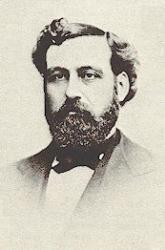
P. P. Bliss

1838 - 1876 Person Name: Philip P. Bliss (1838-1876) Author of "If There Is One Song I Can Sing" in The Sing! Hymnal Philip P. Bliss (b. Clearfield County, PA, 1838; d. Ashtabula, OH, 1876) left home as a young boy to make a living by working on farms and in lumber camps, all while trying to continue his schooling. He was converted at a revival meeting at age twelve. Bliss became an itinerant music teacher, making house calls on horseback during the winter, and during the summer attending the Normal Academy of Music in Genesco, New York. His first song was published in 1864, and in 1868 Dwight L. Moody advised him to become a singing evangelist. For the last two years of his life Bliss traveled with Major D. W. Whittle and led the music at revival meetings in the Midwest and Southern United States. Bliss and Ira D. Sankey published a popular series of hymn collections entitled Gospel Hymns. The first book of the series, Gospel Songs, was published in 1874. Bliss's tragic death at the age of thirty-eight happened near the end of 1876. Philip P. Bliss and his wife were traveling to Chicago to sing for the evangelistic services led by Daniel W. Whittle at Dwight L. Moody's Tabernacle. But a train wreck and fire en route claimed their lives. Bert Polman ================= Bliss, Philip, b. at Clearfield County, Pennsylvania, July 9, 1838. In 1864 he went to Chicago in the employ of Dr. George F. Root, the musician, where he was engaged in conducting musical Institutes, and in composing Sunday School melodies. Originally a Methodist, he became, about 1871, a choirman of the First Congregational Church, Chicago, and the Superintendent of its Sunday Schools. In 1874 he joined D. W. Whittle in evangelical work. To this cause he gave (although a poor man) the royalty of his Gospel Songs, which was worth some thirty thousand dollars. His death was sudden. It occurred in the railway disaster at Ashtabula, Ohio, Dec. 30, 1876. ... Some of his verses have obtained wide popularity in most English-speaking countries. The more widely known, and specially those which are found in collections in use in G. Britain, are in the following American works:— i. The Prize, 1870. 1. I should like to die. Death anticipated. This is one of his earliest compositions, and is unworthy of the position it holds. 2. Through the valley of the shadow I must go. Death anticipated. 3. Whosoever heareth, shout, shout the sound. Jesus the Way. Written during the winter of 1869-70 after hearing Mr. H. Moorhouse (from England) preach on St. John iii. 16. ii. The Charm, 1871. 4. Almost persuaded now to believe. Procrastination. This was suggested by the following passage in a sermon by the Rev. Mr. Brundnge, Bliss being present at its delivery:—" He who is almost persuaded is almost saved, but to be almost saved is to be entirely lost." 5. Ho! my comrades! see the signal. Faithfulness. 6. O! Jerusalem, the golden city, bright, &c. Heaven. 7. On what Foundation do [did] you build? Christ the Foundation. iii. The Song Tree, 1872. 8. Light in the darkness, sailor, day is at hand. Safety. This hymn, “The Life-Boat," has attained to great popularity. The incident upon which it is based, that of the rescue of a ship's crew by a life-boat, is given in detail by Mr. Sankey in his Sacred Songs, &c, No. 99 (large ed.). It is sometimes known by its refrain, "Pull for the shore," &c. iv. The Joy, 1873. 9. In me ye may have peace. Peace. 10. To die is gain. Death anticipated. v. Sunshine, 1873. 11. Down life's dark vale we wander. Death anticipated. 12. More holiness give me. For Holiness. 13. Only an armour-bearer. Soldiers of the Cross. 14. Standing by a purpose true. Faithfulness. 15. This loving Saviour stands patiently. Invitation. vi. Gospel Songs, 1874. 16. A long time I wandered. Peace and Joy. 17. Brightly beams our Father's mercy. Mercy. 18. Come, brethren, as we march along. Praise. 19. Free from the law, O happy condition. Redemption. 20. Have you on the Lord believed? Fullness of Grace. This hymn arose out of the following circumstances :—" A vast fortune was left in the hands of a minister for one of his poor parishioners. Fearing that it might be sqmandered if suddenly bestowed upon him, the wise minister sent him a little at a time, with a note saying, “This is thine; use it wisely; there is more to follow.” Hence also the refrain ‘More to follow,’ by which the hymn is known." 21. How much owest thou? Divine Claims. 22. I know not the hour when my Lord will come. Death anticipated. Suggested by reading the book, The Gates Ajar. 23. See the gentle Shepherd standing. The Good Shepherd. 24. Though the way be sometimes dreary. Divine Leading. 25. Will you meet me at the fountain? Fountain of Living Water. The incident out of which this hymn arose is thus stated in The Christian, No. 365, "At the Industrial Exposition at Chicago it was an everyday appointment to meet at the Central Fountain. Mr. P. P. Bliss, whose mind seemed always set on things above, caught up the words, and wrote this hymn, 'Meet me at the Fountain.'" vii. Gospel Hymns, No. 1, 1875. 26. One offer of salvation. The Name of Jesus. 27. Wandering afar from the dwellings of men. The Lepers. viii. The International Lesson Monthly, 1875. 28. Weary gleaner, whence comest thou? Duty. 29. The whole world was lost in the darkness of Sin. Light of the world. 30. Man of sorrows! what a name. Redemption. 31. The Spirit, O sinner, in mercy doth move. Holy Spirit. ix. Gospel Hymns, No. 2, 1876. 32. At the feet of Jesus. The good choice. 33. Come, sing the Gospel's joyful sound. Salvation. 34. Cut it down, cut it down. Justice and Mercy. 35. Do you see the Hebrew captive? Prayer. 36. Hallelujah, He is risen. Easier. Written in the spring of 1876 and first sung by Bliss on Easter afternoon, 1876, in the Court House Square, Augusta, Georgia, to 5900 people. 37. In Zion's rock abiding. Safety. 38. Repeat the story o'er and o'er. Grace and Peace. 39. Tenderly the Shepherd. The Good Shepherd. x. Gospel Hymns, No. 3, 1878. 40. Hear ye the glad good news from heaven. Faith and Salvation. 41. I will sing of my Redeemer. Praise. xi. Gospel Hymns, No. 4, 1881. 42. 'Tis known on earth and heaven too. More about Jesus. xii. Various. 43. Sing over again to me. Words of Life. This appeared in a paper entitled Words of Life, 1874, The following are undated:— 44. March to the battle-field. Duty and Victory. 45. There is sin in the camp. Hinderances. 46. 'Tis the promise of God. Praise. 47. While the silvery moon-beams, fall, New Birth. 48. God is always near me. Omnipresence. Two hymns," I am so glad that our Father in heaven," and " Sowing the seed by the daylight [dawnlight] fair," (sometimes given as " Sowing our seed in the morning fair ") are usually attributed to Mr. Bliss. In his Gospel Songs, Cincinnati, 1874, however, he lays claim to the music only. Mr. Sankey attributes this last to "E. A. Oakey." With the exception of No. 48, these hymns are given in Mr. Sankey's Sacred Songs & Solos, Pts. i. and ii. Their popularity is far beyond their literary merits, and is mainly due to the simple melodies to which they are wedded. As a writer of hymns of this class Mr. Bliss is second only to Mrs. Van Alstyne. Many anecdotes concerning hymns of this class are given in American Evangelists; an Account of their work in England and America, by the Rev. Elias Nason, Boston, U.S., Lathrop & Co., 1877. Mr. Bliss is usually known as "P. P. Bliss." This is found on the title-pages of his collections. On his own authority, however, we are enabled to say that his name originally stood thus : “Philipp Bliss.” Early in life he separated the final p from his Christian name, constituted it a capital P, and thus produced "P. P. Bliss." (For this article we are mainly indebted to Professor F. M. Bird, and Mr. H. P. Main.) -John Julian, Dictionary of Hymnology (1907) ======================== Bliss, Philip , p. 151, i. "Sowing the seed by the daylight fair" is in the Family Treasury , Edinburgh, 1861, pt. i., p. 84. It is said to be by Miss Emily Sullivan Oakey; born at Albany, N. York, Oct. 8, 1829, died May 11, 1883. Note also that Bliss's hymn, No. 43. on p. 150, ii., should read, "Sing them over again to me." --John Julian, Dictionary of Hymnology, Appendix, Part II (1907) ===================== Bliss, P., p. 150, i. Two works have been brought to our notice, since the issue of our first edition of this Dictionary, which concern this author, viz.:— 1. Memoirs of Philip P. Bliss. Edited by D. W. Whittle. Contributions by Rev. E. P. Goodwin, Ira D. Sankey, and Geo. F. Root. Introduction by D. L. Moody. New York, &c.: A. S. Barnes & Co., 1877. 2. My Life and Sacred Songs. By Ira D. Sankey. With an Introduction by Theodore L. Cuyler, D.D). London: Hodder & Stoughton, and Morgan & Scott, 1906. These works have a special interest for those who use I. D. Sankey's Sacred Songs & Solos, and all of P. Bliss's publications. To Mr. Sankey's My Life, &c, we direct special attention for P. Bliss's hymns:— “Do you see the Hebrew captive kneeling?" p. 294. "Down life's dark vale we wander." p. 285. "Ho! my comrades, see the signal." p. 105. "'Tis the promise of God full salvation to give." p. 99. --John Julian, Dictionary of Hymnology, New Supplement (1907)

C. H. Spurgeon

1834 - 1892 Person Name: Charles Spurgeon (1834-1892) Author of "Wings and Words" in The Sing! Hymnal Spurgeon, Charles Haddon, the world-famous preacher, was born June 19, 1834, at Kelvedon, in Essex, where his father was Congregational minister. He was educated at Colchester, and at an Agricultural College at Maidstone, after which he was for a few years usher in schools at Newmarket and Cambridge. In 1851 he became minister of a small Baptist church at Waterbeach, near Cambridge, and soon attained great popularity. In 1854 he removed to New Park Street, London, the place where Drs. Gill and Rippon had formerly ministered, and ere long the thronging of people to hear him led, first, to the temporary occupation of Exeter Hall, and of the Surrey Music Hall, and then to the erection of the great Metropolitan Tabernacle, where he still ministers. Mr. Spurgeon is chiefly known as a preacher and as the author of many vols. of sermons, expositions, and other homiletical literature; but he is also a hymn writer, and the compiler of a well-known hymn book. This book was prepared, in 1866, primarily for the use of the congregation at the Tabernacle. Hence its title Our Own Hymnbook, a collection of Psalms & Hymns for public, social, and private worship. It contains 220 versions of the Psalms, and 910 hymns. Of Mr. Spurgeon's contributions noted below, only one, "Sweetly the holy hymn," can be regarded as possessing any particular merit. The others do not rise above respectable mediocrity. His psalm-versions and hymns, all dated 1866, are:— 1. Amidst us our Beloved stands. Holy Communion. 2. Behold, O Lord, my days are made. Ps. xxxix. 3. Blessed is the man that feareth. Ps. cxii. 4. Here, O ye faithful, see. Holy Baptism. 5. I will exalt Thee, Lord of hosts. Ps. xxx. 6. Jesus, poorest of the poor. Ps. xli. 7. Lord, I would dwell with Thee. Ps. xv. 8. Lord, make my conversation chaste. Ps. lxviii. 9. Lord, Thy church without a pastor. Election of a Minister. 10. Make haste, O Lord, my soul to bless. Ps. lxx. 11. O God, be Thou no longer still. Ps. lxxxiii. 12. O God, Thou hast cast off Thy saints. Ps. lx. 13. Our ears have heard, O glorious God. Ps. xliv. 14. Praise the Lord with exultation, My whole heart, &c. Ps. cxi. 15. Risen Lord, Thou hast received. Election of a Minister. 16. Sweetly the holy hymn. Prayer Meetings. 17. The foes of Zion quake for fright. Ps. liii. 18. The Holy Ghost is here. Prayer. 19. The Kings of earth are in the hands. Ps. lxxxii. 20. Thy strength, 0 Lord, makes glad our King. Ps. xxi. In addition to these Mr. Spurgeon re-wrote or added to the hymns of others, as "Come ye who bow to sovereign grace"; "Great King of Zion, now"; "O God, before whose radiant throne"; and "Woe's me that I in Mesech am"; and composed two Graces for before, and two for after Meat. [Rev. W. R. Stevenson, M.A.] -- John Julian, Dictionary of Hymnology (1907)

Edward Caswall

1814 - 1878 Person Name: Edward Caswall (1814-1878) Author of "See, amid the Winter's Snow" in The Sing! Hymnal Edward Caswall was born in 1814, at Yately, in Hampshire, where his father was a clergyman. In 1832, he went to Brasenose College, Oxford, and in 1836, took a second-class in classics. His humorous work, "The Art of Pluck," was published in 1835; it is still selling at Oxford, having passed through many editions. In 1838, he was ordained Deacon, and in 1839, Priest. He became perpetural Curate of Stratford-sub-Castle in 1840. In 1841, he resigned his incumbency and visited Ireland. In 1847, he joined the Church of Rome. In 1850, he was admitted into the Congregation of the Oratory at Birmingham, where he has since remained. He has published several works in prose and poetry. --Annotations of the Hymnal, Charles Hutchins, M.A. 1872 ===================== Caswall, Edward, M.A., son of the Rev. R. C. Caswall, sometime Vicar of Yately, Hampshire, born at Yately, July 15, 1814, and educated at Brasenose College, Oxford, graduating in honours in 1836. Taking Holy Orders in 1838, he became in 1840 Incumbent of Stratford-sub-Castle, near Salisbury, and resigned the same in 1847. In 1850 (Mrs. Caswall having died in 1849) he was received into the Roman Catholic communion, and joined Dr. Newman at the Oratory, Edgbaston. His life thenceforth, although void of stirring incidents, was marked by earnest devotion to his clerical duties and a loving interest in the poor, the sick, and in little children. His original poems and hymns were mostly written at the Oratory. He died at Edgbaston, Jan. 2, 1878, and was buried on Jan. 7 at Redwall, near Bromsgrove, by his leader and friend Cardinal Newman. Caswall's translations of Latin hymns from the Roman Breviary and other sources have a wider circulation in modern hymnals than those of any other translator, Dr. Neale alone excepted. This is owing to his general faithfulness to the originals, and the purity of his rhythm, the latter feature specially adapting his hymns to music, and for congregational purposes. His original compositions, although marked by considerable poetical ability, are not extensive in their use, their doctrinal teaching being against their general adoption outside the Roman communion. His hymns appeared in:— (1) Lyra Catholica, which contained 197 translations from the Roman Breviary, Missal, and other sources. First ed. London, James Burns, 1849. This was reprinted in New York in 1851, with several hymns from other sources added thereto. This edition is quoted in the indices to some American hymn-books as Lyra Cath., as in Beecher's Plymouth Collection, 1855, and others. (2) Masque of Mary, and Other Poems, having in addition to the opening poem and a few miscellaneous pieces, 53 translations, and 51 hymns. 1st ed. Lon., Burns and Lambert, 1858. (3) A May Pageant and Other Poems, including 10 original hymns. Lon., Burns and Lambert, 1865. (4) Hymns and Poems, being the three preceding volumes embodied in one, with many of the hymns rewritten or revised, together with elaborate indices. 1st ed. Lon., Burns, Oates & Co., 1873. Of his original hymns about 20 are given in the Roman Catholic Crown of Jesus Hymn Book, N.D; there are also several in the Hymns for the Year, N.D., and other Roman Catholic collections. --John Julian, Dictionary of Hymnology (1907) ====================== Caswall, E. , p. 214, ii. Additional original hymns by Caswall are in the Arundel Hymns, 1902, and other collections. The following are from the Masque of Mary, &c, 1858:— 1. Christian soul, dost thou desire. After Holy Communion. 2. Come, let me for a moment cast. Holy Communion. 3. O Jesu Christ [Lord], remember. Holy Communion. 4. Oft, my soul, thyself remind. Man's Chief End. 5. Sleep, Holy Babe. Christmas. Appeared in the Rambler, June 1850, p. 528. Sometimes given as "Sleep, Jesus, sleep." 6. The glory of summer. Autumn. 7. This is the image of the queen. B. V. M. His "See! amid the winter's snow,” p. 1037, i., was published in Easy Hymn Tunes, 1851, p. 36. In addition the following, mainly altered texts or centos of his translations are also in common use:— 1. A regal throne, for Christ's dear sake. From "Riches and regal throne," p. 870, ii. 2. Come, Holy Ghost, Thy grace inspire. From "Spirit of grace and union," p. 945, i. 3. Hail! ocean star, p. 99, ii,, as 1873. In the Birmingham Oratory Hymn Book, 1850, p. 158. 4. Lovely flow'rs of martyrs, hail. This is the 1849 text. His 1873 text is "Flowers of martyrdom," p. 947, i. 5. None of all the noble cities. From "Bethlehem! of noblest cities," p. 946, ii. 6. O Jesu, Saviour of the World. From “Jesu, Redeemer of the world," p. 228, ii. 7. 0 Lady, high in glory raised. From "O Lady, high in glory, Whose," p. 945, i. The Parochial Hymn Book, 1880, has also the following original hymns by Caswall. As their use is confined to this collection, we give the numbers only:— IS os. 1, 2, 3, 159 (Poems, 1873, p. 453), 209 (1873, p. 288), 299, 324 (1873, p. 323), 357, 402, 554, 555, 558, 569 (1873, p. 334). These are from his Masque of Mary 1858. Nos. 156, 207 (1873, p. 296), 208 (1873, p. 297), 518. These are from his May Pageant, 1865. As several of these hymns do not begin with the original first lines, the original texts are indicated as found in his Poems, 1873. [Rev. James Mearns, M.A.] --John Julian, Dictionary of Hymnology, New Supplement (1907)

Christopher M. Idle

b. 1938 Person Name: Christopher Idle Author of "To Look for Wisdom" in The Sing! Hymnal Christopher Martin Idle (b. Bromley, Kent, England, 1938) was educated at Elthan College, St. Peter's College, Oxford, and Clifton Theological College in Bristol, and was ordained in the Church of England. He served churches in Barrow-in-­Furness, Cumbria; London; and Oakley, Suffolk; and recently returned to London, where he is involved in various hymnal projects. A prolific author of articles on the Christian's public responsibilities, Idle has also published The Lion Book of Favorite Hymns (1980) and at least one hundred of his own hymns and biblical paraphrases. Some of his texts first appeared in hymnals published by the Jubilate Group, with which he is associated. He was also editor of Anglican Praise (1987). In 1998 Hope Publishing released Light Upon the River, a collection of 279 of his psalm and hymn texts, along with suggested tunes, scripture references, and commentary. Bert Polman

Aurelius Clemens Prudentius

348 - 410 Person Name: Aurelius Prudentius (348-413) Author of "Glad Epiphany" in The Sing! Hymnal Marcus Aurelius Clemens Prudentius, "The Christian Pindar" was born in northern Spain, a magistrate whose religious convictions came late in life. His subsequent sacred poems were literary and personal, not, like those of St. Ambrose, designed for singing. Selections from them soon entered the Mozarabic rite, however, and have since remained exquisite treasures of the Western churches. His Cathemerinon liber, Peristephanon, and Psychomachia were among the most widely read books of the Middle Ages. A concordance to his works was published by the Medieval Academy of America in 1932. There is a considerable literature on his works. --The Hymnal 1940 Companion ============= Prudentius, Aurelius Clemens , with the occasional prefix of Marcus (cf. Migne, vol. lix. p. 593, and Dressel, p. ii. n), is the name of the most prominent and most prolific author of sacred Latin poetry in its earliest days. Of the writer himself we know nothing, or next to nothing, beyond what he has himself told us in a short introduction in verse to his works. From that source we learn that he was a Spaniard, of good family evidently, and that he was born A.D. 348 somewhere in the north of Spain, either at Saragossa, Tarragona, or Calahorra, but at which is left uncertain, by his applying the same expression to all, which if applied only to one would have fixed his place of birth. After receiving a good education befitting his social status he applied himself for some years to practising as a pleader in the local courts of law, until he received promotion to a judgeship in two cities successively:— "Bis legum moderanrine Frenos nobilium reximus urbium Jus civile bonis reddidimus, terruimus reos;" and afterwards to a post of still higher authority: "Tandem militiae gradu Evectum pietas principis extulit." Archbishop Trench considers this last to have been "a high military appointment at court," and such the poet's own words would seem to describe; but it may well be doubted whether a civilian and a lawyer would be eligible for such employment; in which case we may adopt the solution of the difficulty offered in the Prolegomena to our author's works (Migne, vol. lix. p. 601):— "Evectus indeest ad superiorem rnilitia? gradum, nimirum militia? civil is, palatinae, aut praesidialis, non bellicae, castrensis, aut cohortalis; nam ii qui officiis jure consultorum praesidum, rectorum et similium funguntur, vulgo in cod. Theod. militare et ad superiores militias ascendere dicuntur." It was after this lengthened experience at a comparatively early age of positions of trust and power that Prudentius, conscience-smitten on account of the follies and worldliness that had marked his youth and earlier manhood, determined to throw up all his secular employments, and devote the remainder of his life to advancing the interests of Christ's Church by the power of his pen rather than that of his purse and personal position. Accordingly we find that he retired in his 57th year into poverty and private life, and began that remarkable succession of sacred poems upon which his fame now entirely rests. We have no reason however to regard him as another St. Augustine, rescued from the "wretchedness of most unclean living" by this flight from the temptations and engrossing cares of official life into the calm seclusion of a wholly devotional leisure. He had probably rather learnt from sad experience the emptiness and vanity for an immortal soul of the surroundings of even the high places of this world. As he himself expresses it:— "Numquid talia proderunt Carnis post obitum vel bona, vel mala, Cum jam, quicquid id est, quod fueram, mors aboleverit?" and sought, at the cost of all that the world holds dear, those good things which God hath prepared for them that love Him. Beyond the fact of his retirement from the world in this way, and the fruits which it produced in the shape of his voluminous contributions to sacred poetry, we have no further information about our author. To judge from the amount he wrote, his life must have been extended many years after he began his new career, but how long his life was or where he died we are not told. Probably he died circa 413. His works are:— (1) Liber Cathemerinon. "Christian Day, as we may call it" W. S. Lilly, "Chapters in European History," vol. i. p. 208). (2) Liber Peristephanon. "Martyrs' Garlands" (id.). (3) Apotheosis. A work on the Divine Nature, or the Deification of Human Nature in Christ. (4) Hamartigenia. A treatise on the Origin of Sin, directed against the Marcionites. (5) Psychomachia or "The Spiritual Combat"-—an allegorical work. (6) Libri contra Symmachum. A controversial work against the restoration in the Senate House at Rome of the altar of Victory which Gratian had removed. Symmachus had petitioned Valentinian II. for its restoration in 384, but the influence of St. Ambrose had prevailed against him at that time. In 392 the altar was restored, but removed again by Theodosius in 394. After the death of the latter the attempt to restore it was renewed by Arcadius and Honorius, and it was at that time that Prudentius wrote his first book. The second (for there are two) was written in 405. Fague considers that the first may date in 395. (7) The Dittochseon = the double food or double Testament, is a wordy collection of 49 sets of four verses each, on Old and New Testament scenes. Of these different works the most important are the first two, and it is from them that the Liturgical hymns enumerated below have been chiefly compiled. The general character of Prudentius's writings it is not easy fairly to estimate, and to judge by the wholesale laudation he obtains from some of his critics, and the equally unsparing censure of others, his judges have so found it. In venturing upon any opinion upon such a subject, the reader must bear in mind the peculiar position in which the period at which he was writing found the poet. The poetry of classical Rome in all its exact beauty of form had long passed its meridian, and was being replaced by a style which was yet in its infancy, but which burst forth into new life and beauty in the hands of the Mediaeval hymnologists. Prudentius wrote before rhyming Latin verse was thought of, but after attention had ceased to be given to quantities. Under such circumstances it were vain to look for very finished work from him, and such certainly we do not find. But amidst a good deal of what one must confess is tasteless verbiage or clumsy rhetorical ornament-—however varied the metres he employs, numbering some 17—-there are also passages to be found, not unfrequently, of dramatic vigour and noble expression, which may well hold their own with the more musical utterances of a later date. He writes as a man intensely in earnest, and we may gather much from his writings concerning the points of conduct which were deemed the most important in Christian living at a time when a great portion of mankind were still the victims or slaves of a morality which, heathen at the best, was lowered and corrupted the more as the universality of its influence was more and more successfully challenged by the spread of the Gospel of Christ. If, there¬fore, we can scarcely go as far in our author's praise as Barth—-much given to lavish commendation—-who describes him as "Poeta eximius eruditissimus et sanctissimus scriptor; nemo divinius de rebus Christianis unquam scripsit"; or as Bentley—-not given to praise--who calls him the "Horace and Virgil of the Christians," we shall be as loath, considering under what circumstances he wrote, to carp at his style as not being formed on the best ancient models but as confessedly impure; feeling with Archbishop Trench that it is his merit that "whether consciously or unconsciously, he acted on the principle that the new life claimed new forms in which to manifest itself; that he did not shrink from helping forward that great transformation of the Latin language, which it needed to undergo, now that it should be the vehicle of truths which, were all together novel to it." (Sacred Latin Poetry, 1874, p. 121.) The reader will find so exhaustive an account of the various writings of Prudentius in the account given of him and them in Smith and Wace's Dictionary of Christian Biography, and Smith's Dictionary of Greek and Roman Biography, that it is only necessary in this work to refer very briefly to them as above. The poems have been constantly reprinted and re-edited, till the editor who produced the best edition we have of them, Albert Dressel (Leipsic, 1860), is able to say that his is the sixty-third. The use made of Prudentius's poems in the ancient Breviaries and Hymnaries was very extensive. In the form of centos stanzas and lines wore compiled and used as hymns; and it is mainly from these centos, and not from the original poems, that the translations into English were made. Daniel, i., Nos. 103-115, gives 13 genuine hymns as having been in use for "Morning," "Christmas," "Epiphany," "Lent," "Easter," "Transfiguration," "Burial," &c, in the older Breviaries. ….Many more which were used in like manner have been translated into English. When to these are added the hymns and those which have not been translated into English, we realise the position and power of Prudentius in the hymnody of the Church. [Rev. Digby S. Wrangham, M.A.] --John Julian, Dictionary of Hymnology (1907) ============== Prudentius, A. C, p. 915, ii. Two somewhat full versions of Prudentius are: (1) The Cathemerinon and other Poems of Aurelius Prudentius Clemens in English Verse, Lond., Rivington, 1845; and (2) Translations from Prudentius. By Francis St. John Thackeray, M.A.. F.S.A. Lond., Bell & Sons, 1890. --John Julian, Dictionary of Hymnology, Appendix, Part II (1907)

John Bunyan

1628 - 1688 Person Name: John Bunyan (1628-1688) Author of "The Glory of the New Jerusalem" in The Sing! Hymnal Bunyan, John. This great allegorist cannot be included amongst hymn writers, except on the ground that the piece, “He that is down needs fear no fall," from pt. ii. of his Pilgrim's Progress, 1684, is given in a limited number of hymnals. The son of a mechanic, he was born at Elstow, 1628; was a Baptist minister at Bedford; and died in London, Aug. 1688. -- John Julian, Dictionary of Hymnology (1907) =================================== Bunyan, John, p. 193, ii. Another piece by him is "Valiant's song" in the Pilgrim's Progress, pt. ii., 1684 (2nd edition 1686, p. 177). There, and in E. P. Hood's Our Hymn Book1873, no. 398, it begins "Who would true valour see" (A Pilgrim's Song). In the English Hymnal, 1906, No. 402, it is partly rewritten, and begins "He who would valiant be." [Rev. James Mearns. M.A.] --John Julian, Dictionary of Hymnology, New Supplement (1907)

Pages


Export as CSV
It looks like you are using an ad-blocker. Ad revenue helps keep us running. Please consider white-listing Hymnary.org or getting Hymnary Pro to eliminate ads entirely and help support Hymnary.org.