You help make Hymnary.org possible. More than 10 million people from 200+ countries found hymns, liturgical resources and encouragement on Hymnary.org in 2025, including you. Every visit affirms the global impact of this ministry.

If Hymnary has been meaningful to you this year, would you take a moment today to help sustain it? A gift of any size—paired with a note of encouragement if you wish—directly supports the server costs, research work and curation that keep this resource freely available to the world.

Give securely online today, or mail a check to:
Hymnary.org
Calvin University
3201 Burton Street SE
Grand Rapids, MI 49546

Thank you for your partnership, and may the hope of Advent fill your heart.

Person Results

Meter:8.8.8.8 with refrain
In:people

Planning worship? Check out our sister site, ZeteoSearch.org, for 20+ additional resources related to your search.
Showing 21 - 30 of 319Results Per Page: 102050

Henri F. Hemy

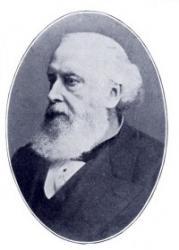
1818 - 1888 Person Name: H. F. Hemy Meter: 8.8.8.8 with refrain Composer (melody) of "ST. CATHERINE" in Rejoice in the Lord Henri F. Hemy, born in the United Kingdom. Hemy spent time at sea as a young man, emigrating to Australia in 1850 with his family. Unable to make a decent living in Melbourne, he returned to Newcastle England. He was organist at St. Andrews Roman Catholic Church in Newcastle, later teaching professor of music at Tynemouth and at St. Cuthbert's College in Durham. He was pianist to Lord Ravensworth, Music Director of Ushaw College, and his orchestra played at fashionable venues in the region. He sang baritone as well. He composed waltzes, polkas, quadrilles, and galops. 3 music works: Easy Hymn Tunes for Catholic Schools; Royal Modern Tutor for Pianoforte; Crown of Jesus. He was active in local politics and published a manifesto in the daily newspaper. He lost a ward election. He also painted artwork. He set most of Longfellow's works to music. John Perry

William Henry Monk

1823 - 1889 Person Name: William Henry Monk, 1823-1889 Meter: 8.8.8.8 with refrain Composer of "ST. MATTHIAS" in The Hymnary of the United Church of Canada William H. Monk (b. Brompton, London, England, 1823; d. London, 1889) is best known for his music editing of Hymns Ancient and Modern (1861, 1868; 1875, and 1889 editions). He also adapted music from plainsong and added accompaniments for Introits for Use Throughout the Year, a book issued with that famous hymnal. Beginning in his teenage years, Monk held a number of musical positions. He became choirmaster at King's College in London in 1847 and was organist and choirmaster at St. Matthias, Stoke Newington, from 1852 to 1889, where he was influenced by the Oxford Movement. At St. Matthias, Monk also began daily choral services with the choir leading the congregation in music chosen according to the church year, including psalms chanted to plainsong. He composed over fifty hymn tunes and edited The Scottish Hymnal (1872 edition) and Wordsworth's Hymns for the Holy Year (1862) as well as the periodical Parish Choir (1840-1851). Bert Polman

Dmitriĭ Stepanovich Bortnianskiĭ

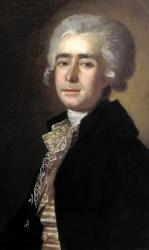
1751 - 1825 Person Name: Dimitri Bortniansky Meter: 8.8.8.8 with refrain Composer of "ST. PETERSBURG" in The New Christian Hymnal Dimitri Stepanovitch Bortniansky (1751-1825) Ukraine 1751-1825 Born in Glukhov, Ukraine, he joined the imperial choir at age 8 and studied with Galuppi, who later took the lad with him to Italy, where he studied for 10 years, becoming a composer, harpsichordist, and conductor. While in Italy he composed several operas and other instrumental music, composing more operas and music later in Russia. In 1779 he returned to Russia, where he was appointed Director to the Imperial Chapel Choir, the first as a native citizen. In 1796 he was appointed music director. With such a great instrument at his disposal, he produced many compositions, 100+ religious works, sacred concertos, cantatas, and hymns. He influenced Rachmaninoff and Tchaikovshy, the latter editing Bortniansky's sacred work, amassing 10 volumnes. He died in St. Petersburg. He was so popular in Russia that a bronze statue was erected in his honor in the Novgorod Kremlin. He composed in different musical styles, including choral works in French, Italian, Latin, German, and Church Slavonic. John Perry

Winfred Douglas

1867 - 1944 Person Name: C. Winfred Douglas, 1867-1944 Meter: 8.8.8.8 with refrain Arranger of "VENI EMMANUEL" in Lutheran Service Book Charles Winfred Douglas (b. Oswego, NY, 1867; d. Santa Rosa, CA, 1944), an influential leader in Episcopalian liturgical and musical life. Educated at Syracuse University and St. Andrews Divinity School, Syracuse, New York, he moved to Colorado for his health. There he studied at St. Matthew's Hall, Denver, and founded the Mission of the Transfiguration in Evergreen (1897). Ordained a priest in the Episcopal Church in 1899, he also studied in France, Germany and England, where he spent time with the Benedictines of Solesmes on the Island of Wight from 1903 to 1906. For much of his life, Douglas served as director of music at the Community of St. Mary in Peekskill, New York, and had associations with cathedrals in Denver, Colorado, and Fond du Lac, Wisconsin. He promoted chanting and plainsong in the Episcopal Church through workshops and publications such as The American Psalter (1929), the Plainsong Psalter (1932), and the Monastic Diurnal (1932). His writings include program notes for the Denver Symphony Orchestra, various hymn preludes; organ, as well as the book, Church Music in History and Practice (1937). He was editor of both the Hymnal 1916 and its significant successor, Hymnal 1940, of the Episcopal Church. Douglas's other achievements include a thorough knowledge of the life and culture of Hopi and Navajo natives, among whom he lived for a number of years. Bert Polman

John Stainer

1840 - 1901 Person Name: John Stainer, 1840-1901 Meter: 8.8.8.8 with refrain Composer of "MAGDALEN" in Lutheran Service Book

James McGranahan

1840 - 1907 Meter: 8.8.8.8 with refrain Composer of "SOMETIME WE'LL UNDERSTAND" in The Church Hymnal James McGranahan USA 1840-1907. Born at West Fallowfield, PA, uncle of Hugh McGranahan, and son of a farmer, he farmed during boyhood. Due to his love of music his father let him attend singing school, where he learned to play the bass viol. At age 19 he organized his first singing class and soon became a popular teacher in his area of the state. He became a noted musician and hymns composer. His father was reluctant to let him pursue this career, but he soon made enough money doing it that he was able to hire a replacement farmhand to help his father while he studied music. His father, a wise man, soon realized how his son was being used by God to win souls through his music. He entered the Normal Music School at Genesco, NY, under William B Bradbury in 1861-62. He met Miss Addie Vickery there. They married in 1863, and were very close to each other their whole marriage, but had no children. She was also a musician and hymnwriter in her own right. For a time he held a postmaster’s job in Rome, PA. In 1875 he worked for three years as a teacher and director at Dr. Root’s Normal Music Institute. He because well-known and successful as a result, and his work attracted much attention. He had a rare tenor voice, and was told he should train for the operatic stage. It was a dazzling prospect, but his friend, Philip Bliss, who had given his wondrous voice to the service of song for Christ for more than a decade, urged him to do the same. Preparing to go on a Christmas vacation with his wife, Bliss wrote McGranahan a letter about it, which McGranahan discussed with his friend Major Whittle. Those two met in person for the first time at Ashtubula, OH, both trying to retrieve the bodies of the Bliss’s, who died in a bridge-failed train wreck. Whittle thought upon meeting McGranahan, that here is the man Bliss has chosen to replace him in evangelism. The men returned to Chicago together and prayed about the matter. McGranahan gave up his post office job and the world gained a sweet gospel singer/composer as a result. McGranahan and his wife, and Major Whittle worked together for 11 years evangelizing in the U.S., Great Britain, and Ireland. They made two visits to the United Kingdom, in 1880 and 1883, the latter associated with Dwight Moody and Ira Sankey evangelistic work. McGranahan pioneered use of the male choir in gospel song. While holding meetings in Worcester, MA, he found himself with a choir of only male voices. Resourcefully, he quickly adapted the music to those voices and continued with the meetings. The music was powerful and started what is known as male choir and quartet music. Music he published included: “The choice”, “Harvest of song”, “Gospel Choir”,, “Gospel hymns #3,#4, #5, #6” (with Sankey and Stebbins), “Songs of the gospel”, and “Male chorus book”. The latter three were issued in England. In 1887 McGranahan’s health compelled him to give up active work in evangelism. He then built a beautiful home, Maplehurst, among friends at Kinsman, OH, and settled down to the composition of music, which would become an extension of his evangelistic work. Though his health limited his hours, of productivity, some of his best hymns were written during these days. McGranahan was a most lovable, gentle, modest, unassuming, gentleman, and a refined and cultured Christian. He loved good fellowship, and often treated guests to the most delightful social feast. He died of diabetes at Kinsman, OH, and went home to be with his Savior. John Perry

Nolan Williams

Person Name: Nolan Williams, Jr. b. 1969 Meter: 8.8.8.8 with refrain Arranger of "BLESSED NAME" in African American Heritage Hymnal

Anonymous

Meter: 8.8.8.8 with refrain Author (Chorus) of "O Happy Day That Fixed My Choice" in Baptist Hymnal 2008 In some hymnals, the editors noted that a hymn's author is unknown to them, and so this artificial "person" entry is used to reflect that fact. Obviously, the hymns attributed to "Author Unknown" "Unknown" or "Anonymous" could have been written by many people over a span of many centuries.

George C. Stebbins

1846 - 1945 Meter: 8.8.8.8 with refrain Composer of "SAVED BY GRACE" in The Church Hymnal Stebbins studied music in Buffalo and Rochester, New York, then became a singing teacher. Around 1869, he moved to Chicago, Illinois, to join the Lyon and Healy Music Company. He also became the music director at the First Baptist Church in Chicago. It was in Chicago that he met the leaders in the Gospel music field, such as George Root, Philip Bliss, & Ira Sankey. At age 28, Stebbins moved to Boston, Massachusetts, where he became music director at the Claredon Street Baptist Church; the pastor there was Adoniram Gordon. Two years later, Stebbins became music director at Tremont Temple in Boston. Shortly thereafter, he became involved in evangelism campaigns with Moody and others. Around 1900, Stebbins spent a year as an evangelist in India, Egypt, Italy, Palestine, France and England. (www.hymntime.com/tch)

Federico J. Pagura

1923 - 2016 Person Name: Federico J. Pagura, b. 1923 Meter: 8.8.8.8 with refrain Translator (Spanish, v. 2, 7) of "O Come, O Come, Emmanuel (Oh Ven, Oh Ven, Emanuel)" in Oramos Cantando = We Pray In Song Federico José Pagura was an Argentine Methodist bishop and author and translator of hymns. Leland Bryant Ross

Pages


Export as CSV
It looks like you are using an ad-blocker. Ad revenue helps keep us running. Please consider white-listing Hymnary.org or getting Hymnary Pro to eliminate ads entirely and help support Hymnary.org.