

 My Starred Hymns
 My FlexScores
 My Hymnals
 My Purchased Files
Planning worship?
Check out our sister site, ZeteoSearch.org,
for 20+ additional resources related to your search.
- |
User Links
Person Results
Percy Dearmer
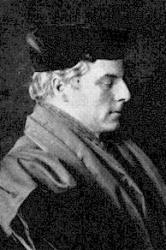
1867 - 1936 Topics: Kingdom of God on Earth, The Missions Author of "Remember All the People" in The Hymnbook Dearmer, Percy, M.A., son of Thomas Dearmer, was born in London, Feb. 27, 1867, and educated at Westminster School and at Christ Church, Oxford (B.A. 1890, M.A. 1896). He was ordained D. 1891, P. 1892, and has been since 1901 Vicar of S. Mary the Virgin, Primrose Hill, London. He has been Secretary of the London Branch of the Christian Social Union since 1891, and is the author of The Parson's Handbook, 1st edition, 1899, and other works. He was one of the compilers of the English Hymnal, 1906, acting as Secretary and Editor, and contributed to it ten translations (38, 95, 150, 160, 165, 180, 215, 237, 352, 628) and portions of two others (242, 329), with the following originals:—
1. A brighter dawn is breaking. Easter. Suggested by the Aurora lucis, p. 95, but practically original.
2. Father, Who on man dost shower. Temperance.
3. God, we thank Thee, not in vain. Burial.
4. Holy God, we offer here. Holy Communion.
5. Jesu, good above all other. For Children.
6. Lord, the wind and sea obey Thee. For those at Sea.
7. The winter's sleep was long and deep. St. Philip and St. James. [Rev. James Mearns, M.A.]
--John Julian, Dictionary of Hymnology, New Supplement (1907)
Percy Dearmer
A. Ewing
1830 - 1895 Person Name: Alexander Ewing, 1830-1895 Topics: The Kingdom of God on Earth The Nation, Peace Composer of "EWING" in The Hymnal Alexander C (Rex) Ewing United Kingdom 1830-1895. Born at Aberdeen,Scotland, he studied music and German at Heidelberg University and law in Aberdeen. However, he did not qualify as a lawyer. A member of the Aberdeen Harmonic Choir and the Hadyn Society of Aberdeen, he was regarded as the most talented young musician in the city. He became an author, musician, editor, composer, and translator. He married Juliana Horatia Gatty in 1867. She died in 1885, and he remarried Elizabeth Margaret Cumby in 1886. He was a career officer in the British Army's Commissariat Department and subsequently the Army Pay Corps. He served at Constantinople during the Crimean War, thereafter in China for six years, then in Ireland during the Fenian Uprising. He was then in New Brunswick just after England created the British North American Act, creating the Dominion of Canada. He then went to Fredericton, where he played the organ and sang at Christ Church Cathedral. He was transferred to Aldershot. In 1879 he went to Malta, then served in Ceylon before returning to England. He reached the rank of Lt. Col. He translated several works by other authors. He retired and spent the last six years of his life in Taunton, England, where he died.
John Perry
A. Ewing
John S. B. Monsell
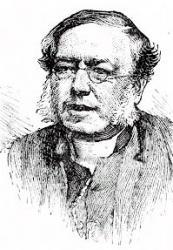
1811 - 1875 Person Name: Rev. John S. B. Monsell Topics: The Kingdom of God on Earth World Friendship and Peace Author of "Light of the world, we hail Thee" in The Hymnal John Samuel Bewley Monsell (b. St. Colomb's, Londonderry, Ireland, 1811; d. Guilford, Surrey, England, 1875) was educated at Trinity College in Dublin and served as a chaplain and rector of several churches in Ireland after his ordination in 1835. Transferred to England in 1853, he became rector of Egham in Surrey and was rector of St. Nicholas Church in Guilford from 1870 until his death (caused by a construction accident at his church). A prolific poet, Monsell published his verse in eleven volumes. His three hundred hymns, many celebrating the seasons of the church year, were issued in collections such as Hymns and Miscellaneous Poems (1837), Spiritual Songs (1857), Hymns of Love and Praise (1863), and The Parish Hymnal (1873).
Bert Polman
===============================
Monsell, John Samuel Bewley, L.L.D., son of Thomas Bewley Monsell, Archdeacon of Londonderry, was born at St. Columb's, Londonderry, March 2,1811, and educated at Trinity College, Dublin (B.A. 1832, LL.D. 1856). Taking Holy Orders in 1834, "he was successively Chaplain to Bishop Mant, Chancellor of the diocese of Connor, Rector of Ramoan, Vicar of Egham, diocese Worcester, and Rector of St. Nicholas's, Guildford. He died in consequence of a fall from the roof of his church, which was in the course of rebuilding, April 9, 1875. His prose works include Our New Vicar, 1867; The Winton Church Catechist, &c. His poetical works are:—
(1) Hymns and Miscellaneous Poems, Dublin, W. Curry, Jun., & Co., 1837; (2) Parish Musings, or Devotional Poems, 1850; (3) Spiritual Songs for the Sundays and Holy Days throughout the Year. 1857 (People's Ed., 1875); (4) His Presence, not His Memory, 1855, 1858; (5) Hymns of Love and Praise for the Church's Year, 1863 (2nd ed. 1866); (6) The Passing Bell; Ode to The Nightingales, and Other Poems, 1867; (7) Litany Hymns, 1869; (8) The Parish Hymnal after the Order of The Book of Common Prayer, 1873; (9)Watches by the Cross, 1874; (10) Simon the Cyrenian; and Other Poems; (11) Nursery Carols.
In these works several hymns which appeared in the earlier books are repeated in the later, and thus at first sight his compositions seem to be more in number than they really are. The total amounts to nearly 300, and of these about one-fourth are in common use. The most popular of these are, "God is love; that anthem olden"; "God of that glorious gift of grace"; "Holy offerings, rich and rare"; “Lord of the living harvest"; "Mighty Father, Blessed Son"; and "Sing to the Lord a joyful song." In addition to those which are annotated under their respective first lines, the following are in common use:—
i. Appeared in his Hymns and Miscellaneous Poems, Dublin, 1837.
1. Birds have their quiet nests. Humility of Christ.
2. Dark and dim the day-light rose. Good Friday.
3. Friend of the friendless and the lone. Jesus, the Friend.
4. My God, what wondrous love was Thine. Whitsuntide.
5. O for a heart more fervent. Holiness desired.
6. O for the time when on the world. Missions.
7. The springtide hour brings leaf and flower. Spring.
8. This day the Lord is risen. Easter.
9. When cold our hearts and far from Thee. Teach us to Pray.
10. Why restless, why so weary? Providence.
11. Yes, I do feel, my God, that I am Thine. Assurance.
ii. Appeared in his Parish Musings, 1850.
12. In Thee, my [O] God, will we rejoice. Trust in God.
13. Lord, dependent on Thy promise. Holy Baptism.
14. Members of Christ, Children of God. Confirmation.
15. So teach me, Lord, to number. The Old and New Year.
16. Soon [soon] and for ever. Death anticipated.
17. The broken, contrite heart oppress'd. Promises of God.
18. Thou art near, yes, Lord, I feel it. Divine Support.
19. Would'st thou learn the depths of sin? Passiontide.
iii. Appeared in his Spiritual Songs, 1857.
20. A few bright leaders of her host. All Saints.
21. A happy, happy [merry, merry] Christmas. New Year's Day.
22. Blessed hope, that we the fallen [sinful]. Hope.
23. Heart in heart, and hand in hand. SS. Simon and Jude.
24. Jesus, my loving Lord! I know. Resignation.
25. Last Sunday of the work-day year. Sunday after Christmas Day.
26. Loved by God the Father. Holy Baptism.
27. Mercy, mercy, God the Father. Lent.
28. My head is low, my heart is sad. Confirmation. (Penitential.)
29. Oft doth the Christian's heart inquire. Christian Duty.
30. 0 God, most mighty, listen now. Charities. From "When languid frame or throbbing pulse."
31. 0 holy Sabbath day. Sunday.
32. 0 Lord, what records of Thy love. St. Barnabas. Sometimes, “Lord God, what records of Thy love."
33. 0 love, divine and golden. Holy Matrimony. From this, "Love divine and tender" is taken.
34. One lesson more the Church must learn. Waiting on God. From this, “One lesson Christ His own would teach" is taken.
35. Proudly in his [the] hall of judgment. Tuesday before Easter.
36. Sinful, sighing to be blest. Lent.
37. The Church of God, with equal care. St. James.
38. The journey done; The rest begun. Burial.
39. The simple trust that can confide. Trust.
40. Weary and sad, a wanderer from Thee. Lent.
iv. Appeared, in his Hymns of Love and Praise, 1863, and 2nd ed., 1866.
41. Bounteous blesser of the seedtime. Sexagesima. Seed Time.
42. Brightly hopeful for the future. God's mercy through life.
43. Christ is risen! Alleluia! Easter.
44. Come and deck the grave with flowers. Easter Eve.
45. Fight the good fight with all thy might. Fight of Faith.
46. Holy Spirit, long expected. Whitsuntide.
47. Hours and days and months and years. The Circumcision.
48. I have no comfort but Thy love. The Comfort of Love.
49. I knew Thee in the land of drought. A Song of Love.
60. I think of Thee, my God by night. Evening.
61. Jesu, gentle Sufferer, say. Good Friday.
52. Labouring and heavy-laden. Lent.
53. Light of the world, we hail Thee. Missions.
54. Lord, to whom except to Thee? Holy Communion.
55. My sins, my sins, my Saviour. Ash Wednesday.
56. O'er the distant mountains breaking. Second Advent.
57. Other Name than our dear Lord's. Jesus All and in All.
58. Pity on us, heavenly Father. Litany Hymn for Lent.
59. Praise the Lord, rejoice, ye Gentiles. Advent, or Missions.
60. Rest of the weary, joy of the sad. Jesus, the Saviour and Friend.
61. Shadow of a mighty Rock. Jesus, the Rock of Ages.
62. Sing, 0 heaven; 0 earth rejoice. Ascension.
63. Sweet is the gentle voice of spring. Seed Time.
64. Sweet is Thy mercy, Lord. Divine Mercy.
65. Teach me to do the thing that pleaseth Thee. Divine Teaching.
66. The good old times, how glorious. Advent.
67. The world may in its wealth delight. Rejoicing in the Lord. An altered form of "Let others in their wealth delight."
68. Though Thou slay me, I will trust. Faith.
69. To Christ the Lord! The Incarnate Word. Christmas.
70. When I had wandered from His fold. The Love of God.
v. Appeared in his Litany Hymns, 1869.
71. Lay the precious body, In the quiet grave. Burial.
72. My sins have taken such a hold on me. Litany of Repentance.
vi. Appeared in his Parish Hymnal, 1873.
73. I hunger and I thirst. Septuagesima.
Dr. Monsell’s hymns are as a whole bright, joyous, and musical; but they lack massiveness, concentration of thought, and strong emotion. A few only are of enduring excellence.
--John Julian, Dictionary of Hymnology 1907
=====================
Monsell, J, S. B., p. 762, ii. Additional hymns in common use include:—
1. Blessed Lord, Who, till the morning. Holy Scriptures. From his Spiritual Songs, 1857.
2. Christ incarnate in His poor. Christ in His Poor. From his Hymns of Love and Praise, 1863.
3. We ask for life, and mean thereby. Life and Work. From his Hymns of Love and Praise, 1863.
--John Julian, Dictionary of Hymnology, Appendix, Part II (1907)
====================
Monsell, J. S. B. Since the article on pp. 762-3 was written, copies of the original editions of Dr. Monsell's works have come into our hands, and from them we have to make the following corrections, the numbers following being those given to the first lines of the hymns on pp. 762-3:—
15. So teach me, &c. Hymns and Misc. Poems, 1837, p. 30.
17. The broken, &c. Hymns and Misc. Poems, 1837, p. 49.
18. Thou art near, &c. Hymns and Misc. Poems, 1837, p. 21.
19. Would'st thou, &c. Hymns and Misc. Poems, 1837, p. 14.
26. Loved by God, &c. Parish Hymnal, 1873, No. 181.
27. Mercy, mercy, &c. Prayers and Litanies, 1861,
p. 119.
28. My head is low, &c. Hymns of Love and Praise, 1866,
p. 125.
33. O Love divine, &c. Hymns of Love and Praise, p. 131.
38. The journey done, &c. Hymns of Love and Praise, p. 134.
40. Weary and sad, &c. Parish Hymnal, 1873, No. 209.
41-50. Hymns of Love and Praise, 1863.
51. See "Day of loss," &c, p. 282, i.
52. Labouring, &c. Prayers and Litanies, 1861, p. 116. 53-57. Hymns of Love and Praise, 1863.
58. Pity on us, &c. Prayers and Litanies, 1861, p. 125.
59. Praise the Lord, &c. Hymns of Love and Praise, 1863,
p. 13.
60. 61, 62, 64, 65. Prayers and Litanies, 1861.
63, 66-70. Hymns of Love and Praise, 1863.
72. My sins, &c. Hymns of Love and Praise, 1866, p. 34.
73. I hunger, &c. Hymns of Love and Praise, 1866, p. 128.
It will be seen from this list of additions and corrections that Dr. Monsell multiplied his works by giving much the same material under new titles, and that his Prayers and Litanies of 1861 were unknown to us when the original article was written. "We can sincerely add that few hymn writers are so perplexing to the annotator as Dr. Monsell. [Rev. James Mearns, M.A.]
--John Julian, Dictionary of Hymnology, New Supplement (1907)
John S. B. Monsell
Winfred Douglas
1867 - 1944 Person Name: Charles Winfred Douglas Topics: Kingdom of God on Earth, The City, The Harmonizer of "MORNING SONG" in The Hymnbook Charles Winfred Douglas (b. Oswego, NY, 1867; d. Santa Rosa, CA, 1944), an influential leader in Episcopalian liturgical and musical life. Educated at Syracuse University and St. Andrews Divinity School, Syracuse, New York, he moved to Colorado for his health. There he studied at St. Matthew's Hall, Denver, and founded the Mission of the Transfiguration in Evergreen (1897). Ordained a priest in the Episcopal Church in 1899, he also studied in France, Germany and England, where he spent time with the Benedictines of Solesmes on the Island of Wight from 1903 to 1906. For much of his life, Douglas served as director of music at the Community of St. Mary in Peekskill, New York, and had associations with cathedrals in Denver, Colorado, and Fond du Lac, Wisconsin. He promoted chanting and plainsong in the Episcopal Church through workshops and publications such as The American Psalter (1929), the Plainsong Psalter (1932), and the Monastic Diurnal (1932). His writings include program notes for the Denver Symphony Orchestra, various hymn preludes; organ, as well as the book, Church Music in History and Practice (1937). He was editor of both the Hymnal 1916 and its significant successor, Hymnal 1940, of the Episcopal Church. Douglas's other achievements include a thorough knowledge of the life and culture of Hopi and Navajo natives, among whom he lived for a number of years.
Bert Polman
Winfred Douglas
Nicolaus Decius
1485 - 1541 Person Name: N. Decius, 1490?-1541 Topics: The Kingdom of God on Earth Community Life and Brotherhood Composer of "ELBERFORD" in The Hymnal Decius, Nicolaus (Nicolaus a Curia or von Hofe, otherwise Hovesch, seems to have been a native of Hof, in Upper Franconia, Bavaria, and to have been originally called Tech. He became a monk, and was in 1519 Probst of the cloister at Steterburg, near Wolfenbüttel. Becoming favourable to the opinions of Luther, he left Steterburg in July, 1522, and went to Brunswick, where he was appointed a master in the St. Katherine and Egidien School. In 1523 he was invited by the burgesses of Stettin to labour there as an Evangelical preacher along with Paulus von Rhode. He became preacher at the Church of St. Nicholas; was probably instituted by the Town Council in 1526, when von Rhode was instituted to St. Jacob's; and at the visitation in 1535 was recognized as pastor of St. Nicholas'. He died suddenly at Stettin, March 21, 1541, with some suspicion of being poisoned by his enemies of the Roman Catholic faction (Koch, i. 419-421, 471, 472; ii. 483; Allg. Deutsche Biography, iii. 791-793).He seems to have been a popular preacher and a good musician. Three hymns are ascribed to him. These are versions of the “Sanctus," the "Gloria in excelsis," and the "Agnus Dei." The second and third are noted under these Latin first lines. He is also said to have composed or adapted the melodies set to them. [Rev. James Mearns, M.A.]
-- John Julian, Dictionary of Hymnology (1907)
Nicolaus Decius
William Boyd
1847 - 1928 Person Name: Rev. William Boyd Topics: The Kingdom of God on Earth Missions Composer of "PENTECOST" in The Hymnal William Boyd Jamaica 1847-1928. Born at Montego Bay, he studied under Sabine-Baring Gould, and attended Worcester College,Oxford. He was ordained an Anglican priest in 1877, eventually becoming Vicar at All Saints Church, Norfolk Square, London.
John Perry
William Boyd
George James Webb
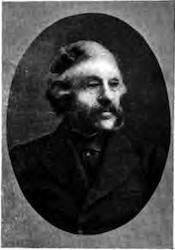
1803 - 1887 Person Name: George J. Webb Topics: Kingdom of God on Earth, The Missions Composer of "WEBB" in The Hymnbook George James Webb, b. 1803,England; d. 1887, Orange, N. J.
Evangelical Lutheran Hymnal, 1908
George James Webb
John Baptiste Calkin
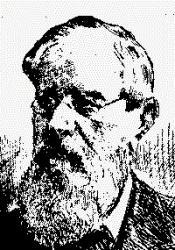
1827 - 1905 Topics: Kingdom of God on Earth, The Missions Composer of "WALTHAM" in The Hymnbook John Baptiste Calkin United Kingdom 1827-1905. Born in London, he was reared in a musical atmosphere. Studying music under his father, and with three brothers, he became a composer, organist, and music teacher. At 19, he was appointed organist, precenter, and choirmaster at St. Columbia's College, Dublin, Ireland, 1846 to 1853. From 1853 to 1863 we was organist and choirmaster at Woburn Chapel, London. From 1863 to 1868, he was organist of Camden Road Chapel. From 1870 to 1884 he was organist at St. Thomas's Church, Camden Town. In 1883 he became professor at Guildhall School of Music and concentrated on teaching and composing. He was also a professor of music and on the council of Trinity College, London, and a member of the Philharmonic Society (1862). In 1893 he was a fellow of the College of Organists. John and wife, Victoire, had four sons, each following a musical carer. He wrote much music for organ and scored string arrangements, sonatas, duos, etc. He died at Hornsey Rise Gardens.
John Perry
John Baptiste Calkin
Katharine Lee Bates
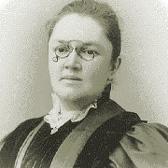
1859 - 1929 Person Name: Katherine Lee Bates Topics: The Kingdom of God on Earth The Nation Author of "O beautiful for spacious skies" in The Hymnal Katharine Lee Bates was born in Falmouth, Mass., August 12, 1859. Her father was a pastor in the Congregational Church; he died when she was an infant. Her mother moved the family to Wellesley. She received a B.A. (1880) and M.A. (1891) from Wellesley College. She taught high school from 1880-1885 and then was a professor of English literature at Wellesley. She wrote poetry, children's stories, textbooks and travel books. In the summer if 1893 when she was lecturing at Colorado College she went to the top of Pike's Peak. Inspired by the beauty of the view she wrote all four verses of "America the Beautiful" which was an instant hit when it was published. She had an intimate relationship with Katharine Coman, dean of Wellesley, who she lived with for 25 years, until Coman's death. "Yellow Clover: A Book of Remembrance" celebrates their love and partnership.She enjoyed traveling, the out of doors, reading and friends,
Dianne Shapiro from Woman's Who's who in America, 1914-1915 by John William Leonard, New York: The American Commonwealth Company and Harvard Square Library, Digital Library of Unitarian Universalist Biographies, History, Books and Media (http://harvardsquarelibrary.org/cambridge-harvard/katharine-lee-bates/) (accessed 7-4-2018
Katharine Lee Bates
Henry Alford
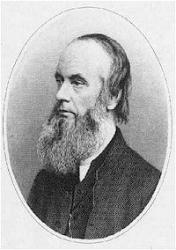
1810 - 1871 Person Name: Rev. Henry Alford Topics: The Kingdom of God on Earth Discipleship and Service Author of ""Forward!" be our watchword" in The Hymnal Alford, Henry, D.D., son of the Rev. Henry Alford, Rector of Aston Sandford, b. at 25 Alfred Place, Bedford Row, London, Oct. 7, 1810, and educated at Trinity College, Cambridge, graduating in honours, in 1832. In 1833 he was ordained to the Curacy of Ampton. Subsequently he held the Vicarage of Wymeswold, 1835-1853,--the Incumbency of Quebec Chapel, London, 1853-1857; and the Deanery of Canterbury, 1857 to his death, which took. place at Canterbury, Jan. 12, 1871. In addition he held several important appointments, including that of a Fellow of Trinity, and the Hulsean Lectureship, 1841-2. His literary labours extended to every department of literature, but his noblest undertaking was his edition of the Greek Testament, the result of 20 years' labour. His hymnological and poetical works, given below, were numerous, and included the compiling of collections, the composition of original hymns, and translations from other languages. As a hymn-writer he added little to his literary reputation. The rhythm of his hymns is musical, but the poetry is neither striking, nor the thought original. They are evangelical in their teaching, but somewhat cold and conventional. They vary greatly in merit, the most popular being "Come, ye thankful people, come," "In token that thou shalt not fear," and "Forward be our watchword." His collections, the Psalms and Hymns of 1844, and the Year of Praise, 1867, have not achieved a marked success. His poetical and hymnological works include—
(1) Hymns in the Christian Observer and the Christian Guardian, 1830. (2) Poems and Poetical Fragments (no name), Cambridge, J. J. Deighton, 1833. (3) The School of the Heart, and other Poems, Cambridge, Pitt Press, 1835. (4) Hymns for the Sundays and Festivals throughout the Year, &c.,Lond., Longman ft Co., 1836. (5) Psalms and Hymns, adapted for the Sundays and Holidays throughout the year, &c, Lond., Rivington, 1844. (6) Poetical Works, 2 vols., Lond., Rivington, 1845. (7) Select Poetical Works, London, Rivington, 1851. (8) An American ed. of his Poems, Boston, Ticknor, Reed & Field, 1853(9) Passing away, and Life's Answer, poems in Macmillan's Magazine, 1863. (10) Evening Hexameters, in Good Words, 1864. (11) On Church Hymn Books, in the Contemporary Review, 1866. (12) Year of Praise, London, A. Strahan, 1867. (13) Poetical Works, 1868. (14) The Lord's Prayer, 1869. (15) Prose Hymns, 1844. (16) Abbot of Muchelnaye, 1841. (17) Hymns in British Magazine, 1832. (18) A translation of Cantemus cuncti, q.v.
-- John Julian, Dictionary of Hymnology (1907)
==================
Alford, Henry, p. 39, ii. The following additional hymns by Dean Alford are in common use:—
1. Herald in the wilderness. St. John Baptist. (1867.)
2. Let the Church of God rejoice. SS. Simon and Jude. (1844, but not in his Psalms & Hymns of that year.)
3. Not in anything we do. Sexagesima. (1867.)
4. O Thou at Whose divine command. Sexagesima. (1844.)
5. 0 why on death so bent? Lent. (1867.)
6. Of all the honours man may wear. St. Andrew's Day. (1867.)
7. Our year of grace is wearing to a close. Close of the Year. (1867.)
8. Saviour, Thy Father's promise send. Whit-sunday. (1844.)
9. Since we kept the Saviour's birth. 1st Sunday after Trinity. (1867.)
10. Thou that art the Father's Word. Epiphany. (1844.)
11. Thou who on that wondrous journey. Quinquagesima. (1867.)
12. Through Israel's coasts in times of old. 2nd Sunday after Epiphany. (1867.)
13. Thy blood, O Christ, hath made our peace. Circumcision . (1814.)
14. When in the Lord Jehovah's name. For Sunday Schools. (1844.)
All these hymns are in Dean Alford's Year of Praise, 1867, and the dates are those of their earliest publication, so far as we have been able to trace the same.
--Excerpts from John Julian, Dictionary of Hymnology, Appendix, Part II (1907)
Henry Alford
Pages




