

 My Starred Hymns
 My FlexScores
 My Hymnals
 My Purchased Files
Planning worship?
Check out our sister site, ZeteoSearch.org,
for 20+ additional resources related to your search.
- |
User Links
Person Results
Isaac Watts
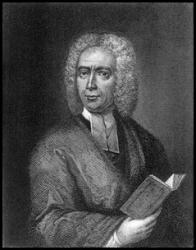
1674 - 1748 Topics: First Sunday after Trinity Author of "Teach me the measure of my days" in Evangelical Lutheran hymnal Isaac Watts was the son of a schoolmaster, and was born in Southampton, July 17, 1674. He is said to have shown remarkable precocity in childhood, beginning the study of Latin, in his fourth year, and writing respectable verses at the age of seven. At the age of sixteen, he went to London to study in the Academy of the Rev. Thomas Rowe, an Independent minister. In 1698, he became assistant minister of the Independent Church, Berry St., London. In 1702, he became pastor. In 1712, he accepted an invitation to visit Sir Thomas Abney, at his residence of Abney Park, and at Sir Thomas' pressing request, made it his home for the remainder of his life. It was a residence most favourable for his health, and for the prosecution of his literary labours. He did not retire from ministerial duties, but preached as often as his delicate health would permit.
The number of Watts' publications is very large. His collected works, first published in 1720, embrace sermons, treatises, poems and hymns. His "Horae Lyricae" was published in December, 1705. His "Hymns" appeared in July, 1707. The first hymn he is said to have composed for religious worship, is "Behold the glories of the Lamb," written at the age of twenty. It is as a writer of psalms and hymns that he is everywhere known. Some of his hymns were written to be sung after his sermons, giving expression to the meaning of the text upon which he had preached. Montgomery calls Watts "the greatest name among hymn-writers," and the honour can hardly be disputed. His published hymns number more than eight hundred.
Watts died November 25, 1748, and was buried at Bunhill Fields. A monumental statue was erected in Southampton, his native place, and there is also a monument to his memory in the South Choir of Westminster Abbey. "Happy," says the great contemporary champion of Anglican orthodoxy, "will be that reader whose mind is disposed, by his verses or his prose, to imitate him in all but his non-conformity, to copy his benevolence to men, and his reverence to God." ("Memorials of Westminster Abbey," p. 325.)
--Annotations of the Hymnal, Charles Hutchins, M.A., 1872.
=================================
Watts, Isaac, D.D. The father of Dr. Watts was a respected Nonconformist, and at the birth of the child, and during its infancy, twice suffered imprisonment for his religious convictions. In his later years he kept a flourishing boarding school at Southampton. Isaac, the eldest of his nine children, was born in that town July 17, 1674. His taste for verse showed itself in early childhood. He was taught Greek, Latin, and Hebrew by Mr. Pinhorn, rector of All Saints, and headmaster of the Grammar School, in Southampton. The splendid promise of the boy induced a physician of the town and other friends to offer him an education at one of the Universities for eventual ordination in the Church of England: but this he refused; and entered a Nonconformist Academy at Stoke Newington in 1690, under the care of Mr. Thomas Rowe, the pastor of the Independent congregation at Girdlers' Hall. Of this congregation he became a member in 1693.
Leaving the Academy at the age of twenty, he spent two years at home; and it was then that the bulk of the Hymns and Spiritual Songs (published 1707-9) were written, and sung from manuscripts in the Southampton Chapel. The hymn "Behold the glories of the Lamb" is said to have been the first he composed, and written as an attempt to raise the standard of praise. In answer to requests, others succeeded. The hymn "There is a land of pure delight" is said to have been suggested by the view across Southampton Water. The next six years of Watts's life were again spent at Stoke Newington, in the post of tutor to the son of an eminent Puritan, Sir John Hartopp; and to the intense study of these years must be traced the accumulation of the theological and philosophical materials which he published subsequently, and also the life-long enfeeblement of his constitution.
Watts preached his first sermon when he was twenty-four years old. In the next three years he preached frequently; and in 1702 was ordained pastor of the eminent Independent congregation in Mark Lane, over which Caryl and Dr. John Owen had presided, and which numbered Mrs. Bendish, Cromwell's granddaughter, Charles Fleetwood, Charles Desborough, Sir John Hartopp, Lady Haversham, and other distinguished Independents among its members. In this year he removed to the house of Mr. Hollis in the Minories. His health began to fail in the following year, and Mr. Samuel Price was appointed as his assistant in the ministry. In 1712 a fever shattered his constitution, and Mr. Price was then appointed co-pastor of the congregation which had in the meantime removed to a new chapel in Bury Street. It was at this period that he became the guest of Sir Thomas Abney, under whose roof, and after his death (1722) that of his widow, he remained for the rest of his suffering life; residing for the longer portion of these thirty-six years principally at the beautiful country seat of Theobalds in Herts, and for the last thirteen years at Stoke Newington. His degree of D.D. was bestowed on him in 1728, unsolicited, by the University of Edinburgh. His infirmities increased on him up to the peaceful close of his sufferings, Nov. 25, 1748. He was buried in the Puritan restingplace at Bunhill Fields, but a monument was erected to him in Westminster Abbey.
His learning and piety, gentleness and largeness of heart have earned him the title of the Melanchthon of his day. Among his friends, churchmen like Bishop Gibson are ranked with Nonconformists such as Doddridge. His theological as well as philosophical fame was considerable. His Speculations on the Human Nature of the Logos, as a contribution to the great controversy on the Holy Trinity, brought on him a charge of Arian opinions. His work on The Improvement of the Mind, published in 1741, is eulogised by Johnson. His Logic was still a valued textbook at Oxford within living memory. The World to Come, published in 1745, was once a favourite devotional work, parts of it being translated into several languages. His Catechisms, Scripture History (1732), as well as The Divine and Moral Songs (1715), were the most popular text-books for religious education fifty years ago. The Hymns and Spiritual Songs were published in 1707-9, though written earlier. The Horae Lyricae, which contains hymns interspersed among the poems, appeared in 1706-9. Some hymns were also appended at the close of the several Sermons preached in London, published in 1721-24. The Psalms were published in 1719. The earliest life of Watts is that by his friend Dr. Gibbons. Johnson has included him in his Lives of the Poets; and Southey has echoed Johnson's warm eulogy. The most interesting modern life is Isaac Watts: his Life and Writings, by E. Paxton Hood. [Rev. H. Leigh Bennett, M.A.]
A large mass of Dr. Watts's hymns and paraphrases of the Psalms have no personal history beyond the date of their publication. These we have grouped together here and shall preface the list with the books from which they are taken.
(l) Horae Lyricae. Poems chiefly of the Lyric kind. In Three Books Sacred: i.To Devotion and Piety; ii. To Virtue, Honour, and Friendship; iii. To the Memory of the Dead. By I. Watts, 1706. Second edition, 1709. (2) Hymns and Spiritual Songs. In Three Books: i. Collected from the Scriptures; ii. Composed on Divine Subjects; iii. Prepared for the Lord's Supper. By I. Watts, 1707. This contained in Bk i. 78 hymns; Bk. ii. 110; Bk. iii. 22, and 12 doxologies. In the 2nd edition published in 1709, Bk. i. was increased to 150; Bk. ii. to 170; Bk. iii. to 25 and 15 doxologies. (3) Divine and Moral Songs for the Use of Children. By I. Watts, London, 1715. (4) The Psalms of David Imitated in the Language of the New Testament, And apply'd to the Christian State and Worship. By I. Watts. London: Printed by J. Clark, at the Bible and Crown in the Poultry, &c, 1719. (5) Sermons with hymns appended thereto, vol. i., 1721; ii., 1723; iii. 1727. In the 5th ed. of the Sermons the three volumes, in duodecimo, were reduced to two, in octavo. (6) Reliquiae Juveniles: Miscellaneous Thoughts in Prose and Verse, on Natural, Moral, and Divine Subjects; Written chiefly in Younger Years. By I. Watts, D.D., London, 1734. (7) Remnants of Time. London, 1736.
454 Hymns and Versions of the Psalms, in addition to the centos are all in common use at the present time.
--Excerpts from John Julian, Dictionary of Hymnology (1907)
==================================
Watts, I. , p. 1241, ii. Nearly 100 hymns, additional to those already annotated, are given in some minor hymn-books.
--John Julian, Dictionary of Hymnology, Appendix, Part II (1907)
=================
Watts, I. , p. 1236, i. At the time of the publication of this Dictionary in 1892, every copy of the 1707 edition of Watts's Hymns and Spiritual Songs was supposed to have perished, and all notes thereon were based upon references which were found in magazines and old collections of hymns and versions of the Psalms. Recently three copies have been recovered, and by a careful examination of one of these we have been able to give some of the results in the revision of pp. 1-1597, and the rest we now subjoin.
i. Hymns in the 1709 ed. of Hymns and Spiritual Songs which previously appeared in the 1707 edition of the same book, but are not so noted in the 1st ed. of this Dictionary:—
On pp. 1237, L-1239, ii., Nos. 18, 33, 42, 43, 47, 48, 60, 56, 58, 59, 63, 75, 82, 83, 84, 85, 93, 96, 99, 102, 104, 105, 113, 115, 116, 123, 124, 134, 137, 139, 146, 147, 148, 149, 162, 166, 174, 180, 181, 182, 188, 190, 192, 193, 194, 195, 197, 200, 202.
ii. Versions of the Psalms in his Psalms of David, 1719, which previously appeared in his Hymns and Spiritual Songs, 1707:—
On pp. 1239, U.-1241, i., Nos. 241, 288, 304, 313, 314, 317, 410, 441.
iii. Additional not noted in the revision:—
1. My soul, how lovely is the place; p. 1240, ii. 332. This version of Ps. lxiv. first appeared in the 1707 edition of Hymns & Spiritual Songs, as "Ye saints, how lovely is the place."
2. Shine, mighty God, on Britain shine; p. 1055, ii. In the 1707 edition of Hymns & Spiritual Songs, Bk. i., No. 35, and again in his Psalms of David, 1719.
3. Sing to the Lord with [cheerful] joyful voice, p. 1059, ii. This version of Ps. c. is No. 43 in the Hymns & Spiritual Songs, 1707, Bk. i., from which it passed into the Ps. of David, 1719.
A careful collation of the earliest editions of Watts's Horae Lyricae shows that Nos. 1, 7, 9, 10, 11, 12, 14, 16, p. 1237, i., are in the 1706 ed., and that the rest were added in 1709. Of the remaining hymns, Nos. 91 appeared in his Sermons, vol. ii., 1723, and No. 196 in Sermons, vol. i., 1721. No. 199 was added after Watts's death. It must be noted also that the original title of what is usually known as Divine and Moral Songs was Divine Songs only.
--John Julian, Dictionary of Hymnology, New Supplement (1907)
===========
See also in:
Hymn Writers of the Church
Isaac Watts
John Goss
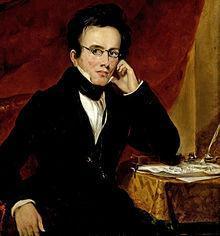
1800 - 1880 Person Name: Sir John Goss, Mus. Doc., 1800-1880 Topics: Twenty First Sunday after Trinity Harmonizer of "DOVER" in Evangelical Lutheran hymnal John Goss (b. Fareham, Hampshire, England, 1800; d. London, England, 1880). As a boy Goss was a chorister at the Chapel Royal and later sang in the opera chorus of the Covent Garden Theater. He was a professor of music at the Royal Academy of Music (1827-1874) and organist of St. Paul Cathedral, London (1838-1872); in both positions he exerted significant influence on the reform of British cathedral music. Goss published Parochial Psalmody (1826) and Chants, Ancient and Modern (1841); he edited William Mercer's Church Psalter and Hymn Book (1854). With James Turle he published a two-volume collection of anthems and Anglican service music (1854).
Bert Polman
John Goss
Joseph P. Holbrook
1822 - 1888 Topics: Twenty First Sunday after Trinity Composer of "JESUS, LOVER OF MY SOUL" in Evangelical Lutheran hymnal Joseph P. Holbrook was a tune writer in the parlor music style, and used the popular melodies of Mason and Hastings, Bradbury and Root, Greatorex and Kingsley in his collections. He furnished settings for the choir hymns in Songs for the Sanctuary in his Quartet and chorus Choir (New York, 1871, and sought more recogniation than had been given him in a hymnal of his own, Worship in Song (New York, 1880); a book that found no welcome.
from The English hymn: its development and use in worship
By Louis FitzGerald Benson
Joseph P. Holbrook
Hans Adolf Brorson
1694 - 1764 Person Name: Brorson Topics: First Sunday after Trinity Sunday; First Sunday after Trinity Sunday; First Sunday after Trinity Sunday Translator of "Bort Verden, af mit Sind og Øie" in Salmebog for Lutherske Kristne i Amerika
Hans Adolf Brorson
Joachim Neander
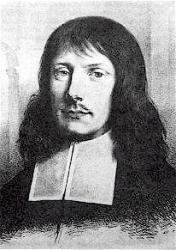
1650 - 1680 Person Name: J. Neander Topics: Twenty-first Sunday after Trinity Sunday High Mass Author of "Jeg er rede til at bede" in M. B. Landstads Kirkesalmebog og "Nokre Salmar" ved Professor Dr. E. Blix, samt følgende tillæg Neander, Joachim, was born at Bremen, in 1650, as the eldest child of the marriage of Johann Joachim Neander and Catharina Knipping, which took place on Sept. 18, 1649, the father being then master of the Third Form in the Paedagogium at Bremen. The family name was originally Neumann (Newman) or Niemann, but the grandfather of the poet had assumed the Greek form of the name, i.e. Neander. After passing through the Paedagogium he entered himself as a student at the Gymnasium illustre (Academic Gymnasium) of Bremen in Oct. 1666. German student life in the 17th century was anything but refined, and Neander seems to have been as riotous and as fond of questionable pleasures as most of his fellows. In July 1670, Theodore Under-Eyck came to Bremen as pastor of St. Martin's Church, with the reputation of a Pietist and holder of conventicles. Not long after Neander, with two like-minded comrades, went to service there one Sunday, in order to criticise and find matter of amusement. But the earnest words of Under-Eyck touched his heart; and this, with his subsequent conversations with Under-Eyck, proved the turning-point of his spiritual life. In the spring of 1671 he became tutor to five young men, mostly, if not all, sons of wealthy merchants at Frankfurt-am-Main, and accompanied them to the University of Heidelberg, where they seem to have remained till the autumn of 1673, and where Neander learned to know and love the beauties of Nature. The winter of 1673-74 he spent at Frankfurt with the friends of his pupils, and here he became acquainted with P. J. Spener (q.v.) and J. J. Schütz (q.v.) In the spring of 1674 he was appointed Rector of the Latin school at Düsseldorf (see further below). Finally, in 1679, he was invited to Bremen as unordained assistant to Under-Eyck at St. Martin's Church, and began his duties about the middle of July. The post was not inviting, and was regarded merely as a stepping stone to further preferment, the remuneration being a free house and 40 thalers a year, and the Sunday duty being a service with sermon at the extraordinary hour of 5 a.m. Had he lived, Under-Eyck would doubtless have done his best to get him appointed to St. Stephen's Church, the pastorate of which became vacant in Sept., 1680. But meantime Neander himself fell into a decline, and died at Bremen May 31, 1680 (Joachim Neander, sein Leben und seine Lieder. With a Portrait. By J. F. Iken, Bremen, 1880; Allgemeine Deutsche Biographie, xxiii. 327, &c.)
Neander was the first important hymn-writer of the German Reformed Church since the times of Blaurer and Zwick. His hymns appear to have been written mostly at Düsseldorf, after his lips had been sealed to any but official work. The true history of his unfortunate conflict has now been established from the original documents, and may be summarized thus.
The school at Düsseldorf was entirely under the control of the minister and elders of the Reformed Church there. The minister from about July, 1673, to about May, 1677, was Sylvester Lürsen (a native of Bremen, and only a few years older than Neander), a man of ability and earnestness, but jealous, and, in later times at least, quarrelsome. With him Neander at first worked harmoniously, frequently preaching in the church, assisting in the visitation of the sick, &c. But he soon introduced practices which inevitably brought on a conflict. He began to hold prayer meetings of his own, without informing or consulting minister or elders; he began to absent himself from Holy Communion, on the ground that he could not conscientiously communicate along with the unconverted, and also persuaded others to follow this example; and became less regular in his attendance at the ordinary services of the Church. Besides these causes of offence he drew out a new timetable for the school, made alterations on the school buildings, held examinations and appointed holidays without consulting any one. The result of all this was a Visitation of the school on Nov. 29, 1676, and then his suspension from school and pulpit on Feb. 3, 1677. On Feb. 17 he signed a full and definite declaration by which "without mental reservations" he bound himself not to repeat any of the acts complained of; and thereupon was permitted to resume his duties as rector but not as assistant minister. The suspension thus lasted only 14 days, and his salary was never actually stopped. The statements that he was banished from Düsseldorf, and that he lived for months in a cave in the Neanderthal near Mettmann are therefore without foundation. Still his having had to sign such a document was a humiliation which he must have felt keenly, and when, after Lürsen's departure, the second master of the Latin school was appointed permanent assistant pastor, this feeling would be renewed.
Neander thus thrown back on himself, found consolation in communion with God and Nature, and in the composition of his hymns. Many were without doubt inspired by the scenery of the Neanderthal (a lovely valley with high rocky sides, between which flows the little river Düssel); and the tradition is probable enough that some of them were composed in a cave there. A number were circulated among his friends at Düsseldorf in MS., but they were first collected and published after his removal to Bremen, and appeared as:—
A und Ώ, Joachimi Neandri Glaub-und Liebesübung: — auffgemuntert durch ein fällige Bundes Lieder und Danck-Psalmen, Bremen, Hermann Brauer, 1680; 2nd ed. Bremen, 1683 ; 3rd ed. Bremen, 1687; 4th ed. Frankfurt, 1689. These editions contain 57 hymns. In the 5th ed., Frankfurt and Leipzig, 1691, edited by G. C. Strattner, eight hymns were added as being also by Neander. [The whole of these eds. are in the Royal Library, Berlin. The so-called 3rd. ed. at Wesel, 1686, also found in Berlin, was evidently pirated.] Other editions rapidly followed till we find the complete set (i.e. 57 or 58) formally incorporated as part of a hymnbook, e.g. in the Marburg Reformed Gesang-Buch, 1722, where the first part consists of Lobwasser's Psalter, the second of Neander's Bundeslieder, and the third of other hymns. Neander's Bundeslieder also form a division of the Lemgo Reformed Gesang-Buch, 1722; and of a favourite book used in the meetings conducted by G. Tersteegen, which in the 5th ed., Solingen, 1760, has the title Gott-geheiligtes Harfen-Spiel der Kinder Zion; bestehend in Joachimi Neandri sämtlichen Bundes-Liedern, &c. In this way, especially in the district near Düsseldorf and on the Ruhr, Neander's name was honoured and beloved long after it had passed out of memory at Bremen.
Many of Neander's hymns were speedily received into the Lutheran hymnbooks, and are still in universal use. The finest are the jubilant hymns of Praise and Thanksgiving, such as his "Lobe den Herren”, and those setting forth the Majesty of God in His works of beauty and wonder in Nature, such as his "Himmel, Erde", and "Unbegreiflich Gut"; while some of his hymns of Penitence, such as his "Sieh hier bin ich, Ehrenkönig" (q.v.), are also very beautiful. Many are of a decidedly subjective cast, but for this the circumstances of their origin, and the fact that the author did not expect them to be used in public worship, will sufficiently account. Here and there there are doubtless harshnesses, and occasionally imagery which is rather jarring; and naturally enough the characteristic expressions and points of view of German 17th cent. Pietism and of the "Covenant Theology" are easily enough detected. But the glow and sweetness of his better hymns, their firm faith, originality, Scripturalness, variety and mastery of rhythmical forms, and genuine lyric character fully entitled them to the high place they hold.
Of the melodies in the original edition of 1680 there are 19 by Neander himself, the best known being those to Nos. viii. and xi. below.
The hymns by Neander which have passed into English, and have not already been referred to, are:—
Hymns in English common use:
i. Meine Hoffnung stehet feste. Thanksgiving. Founded on 1 Tim. vi. 17. 1680 as above, p. 115, in 5 stanzas of 7 lines, entitled "Grace after meat." In the Unverfälschter Liedersegen, 1851, No. 712. Translated as:—
All my hope is grounded surely. A full and good translation by Miss Winkworth, as No. 8 in her Chorale Book for England, 1863.
Another translation is: "All my Hope is fix'd and grounded." By J. C. Jacobi, 1720, p. 17, repeated in his ed., 1732, p. 64, altered and beginning, "All my Hope is firmly grounded."
ii. Unbegreiflich Gut, wahrer Gott alleine. Summer. According to tradition this was written in the summer of 1677, in a cave in the Neanderthal near Düsseldorf, while Neander was in enforced absence from his school duties (Koch, vi. 20). It is founded on Ps. civ. 24. 1680, p. 165, in 12 stanzas of 6 lines, and entitled, "The Joys of Summer and Autumn in Field and Forest." The following note shows that the "Feeling for Nature" is not entirely modern.
“It is also a travelling hymn in summer or autumn for those who, on their way to Frankfurt on the Main, go up and down the river Rhine, where between Cologne and Mainz, mountains, cliffs, brooks and rocks are to be beheld with particular wonder; also in the district of Berg in the rocky region [the ‘Gestein' now called the Neanderthal], not far from Düsseldorf."
The hymn is in Knapp's Evangelischer Lieder-Schatz 1850, No. 2163 (1865, No. 2231), omitting st. x. Translated as:-—
0 Thou true God alone. A very good translation, omitting st. x., by Miss Winkworth, in her Christian Singers, 1869, p. 286. Her translation of st. i., iii.-v. altered in metre, and beginning "Thou true God alone," are No. 53 in M. W. Stryker's Christian Chorals, 1885.
Hymns not in English common use:——
iii. Auf, auf, mein Geist, erhebe dich zum Himmel. Holy Communion. Founded on Ps. xxiii. 6. 1860, as above, p. 27, in 5 stanzas, entitled, "The soul strengthened and refreshed. After the reception of the Holy Communion." In Porst's Gesang-Buch, ed. 1855, No. 218. In the Moravian London Gesang-Buch, 1753, No. 697, it begins, "Den Himmels-Vorschmack hab' ich auf der Erde," and in the Brüder Gesang-Buch, 1778, No. 1178, it was further recast (by C. Gregor?) and altered to "hab'ich schon hinieden." Translated as "Heav'n's foretaste I may here already have." By F W. Foster & J. Miller, as No. 596, in the Moravian Hymn Book, 1789. In the 1801 ed. (1849, No. 1003) it begins, “Since Jesus dy'd, my guilty soul to save."
iv. Der Tag ist hin, mein Jesu, bei mir bleibe. Evening. Founded on St. Luke xxiv. 29. 1680, p. 15, in 6 stanzas entitled, "The Christian returning thanks at eventide." In the Unverfälschter Liedersegen, 1851, No. 512. The translations are: (1) "The Day is gone, come Jesu my Protector." In the Supplement to German Psalmody, ed. 1765, p. 72. (2) "The day is past, Thou Saviour dear, still dwell my breast within." By H. J. Buckoll, 1842, p. 82. (3) "The day is gone, abide with me tonight." By E. Massie, 1867, p. 192. (4) "The day is gone, abide with me, 0 Jesus." By R. Massie, in the Day of Rest, 1877.
v. Grosser Prophete, mein Herze begehret. Love to Christ. Founded on 1 Cor. xvi. 22. 1680, p. 191, in 4 stanzas. Translated as “Heavenly Prophet, my Heart is desiring." By J. C. Jacobi, 1720, p. 40.
vi. Jehovah ist mein Licht und Gnadensonne. God's Perfections. Founded on 1 John i. 7. 1680, p. 19 in 4 stanzas, entitled, "Walking in the Light." Translated as, "Jehovah is my light, salvation showing." By Dr. H. Mills, 1845 (1856, p. 6).
vii. 0 allerhöchster Menschenhüter. Morning. A hymn of praise to our Almighty Preserver. 1680, p. 11, in 6 stanzas, founded on Ps. lix. 16; and entitled, "The Christian singing at Morning." Translated as, "O Thou Most Highest! Guardian of mankind." By Miss Winkworth, 1858, p. 72.
viii. Unser Herrscher, unser König. Thanksgiving. Founded on Acts
viii. 2. 1680, p. 147, in 6 stanzas, entitled, "The glorious Jehovah." In the Unverfälschter Liedersegen 1851, No. 344. The well-known melody (in the Society for Promoting Christian Knowledge Church Hymns called Munich) is also by Neander, and appeared along with the hymn. Translated as, "Sovereign Ruler, King victorious," in the British Herald, Dec, 1865, p. 185, and Reid's Praise Book, 1872.
ix. Wie fleucht dahin der Menschenzeit. For the Dying. A powerful hymn on the vanity of the earthly, founded on Ps. xc. 12. 1680, p. 174, in 7 stanzas, entitled, "He that counts his days." In the Unverfälschter Liedersegen, 1851, No. 845. The translations are: (1) "This life is like a flying dream" (beginning with st. ii. "Das Leben ist gleich wie ein Traum"). By Mrs. Findlater, in Hymns from the Land of Luther, 1858, p. 24 (1884, p. 146). (2) "Though hastening onward to the grave." By E. Massie, 1867, p. 36.
x. Wo soil ich hin? wer helfet mir? Lent. Founded on Romans vii. 24. 1680, p. 51, in 5 st. entitled “The distressed one longing for Redemption." In the Unverfälschter Liedersegen, 1851, No. 393. The translations are: (1) "For help, O whither shall I flee." By Dr. H. Mills, 1845 (1856, p. 146). (2) "How shall I get there? who will aid?" By Miss Warner, 1858, p. 52.
xi. Wunderbarer König. Thanksgiving. Founded on Ps. cl. 6. 1680, p. 159, in 4 stanzas, entitled, "Inciting oneself to the Praise of God." In the Unverfälschter Liedersegen, 1851, No. 787. The melody, a very fine one (called by Mr. Mercer Groningen), is also by Neander, and appeared along with the hymn. The translations are: (1) "Wonderful Creator." By J. C. Jacobi, 1722, p. 88. (2) "Wonderful and blessed." By J. D. Burns in his Memoir and Remains, 1869, p. 230. (3) "Wondrous King Almighty." By N. L. Frothingham, 1870, p. 266. [Rev. James Mearns, M.A.]
--John Julian, Dictionary of Hymnology (1907)
Joachim Neander
Ludvig Mathias Lindeman
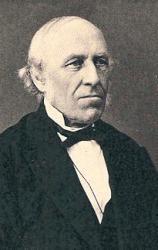
1812 - 1887 Person Name: Ludv. M. Lindeman Topics: First Sunday after Trinity Sunday For Evening Composer of "[Hvor salig er den lille Flok]" in M. B. Landstads Kirkesalmebog og "Nokre Salmar" ved Professor Dr. E. Blix, samt følgende tillæg Ludvig M. Lindeman (b. 1812; d. 1887) was a Norwegian composer and organist. Born in Trondheim, he studied theology in Oslo where he remained the rest of his life. In 1839 he succeeded his brother as the organist and cantor of Oslo Cathedral, a position he held for 48 years up until his death. Lindeman was appointed Knight of the Royal Norwegian Order of St. Olav, and was invited to both help christen the new organ in Royal Albert Hall in London, as well as compose for the coronation of King Oscar II and Queen Sophie of Sweden. In 1883, he and his son started the Organist School in Oslo. Lindeman is perhaps best known for his arrangements of Norwegiam folk tales; over the course of his life he collected over 3000 folk melodies and tunes.
Laura de Jong
Ludvig Mathias Lindeman
David Denicke
1603 - 1680 Topics: First Sunday after Trinity Sunday Author of "O Jesus, Troens dyre Skat" in Salmebog for Lutherske Kristne i Amerika Denicke, David, son of B. D. Denicke, Town Judge of Zittau, Saxony, was born at Zittau, January 31, 1603. After studying philosophy and law at the Universities of Wittenberg and Jena, he was for a time tutor of law at Königsberg, and, 1624-1628, travelled in Holland, England and France. In 1629 he became tutor to the sons of Duke Georg of Brunswick-Lüneburg, and under father and sons held various important offices, such as, 1639, the direction of the foundation of Bursfeld, and in 1642 a member of the Consistory at Hannover. He died at Hannover, April 1, 1680 (Koch, iii. 237; Bode, p. 58). His hymns, which for that time were in good taste, and are simple, useful, warm, and flowing, appeared in the various Hannoverian hymnbooks, 1646-1659, which he edited along with J. Gesenius (q.v.). All appeared there without his name. Those translated are:—i. Wenn ich die heilgen zehn Gebot. Ten Commandments. Contributed to the Hannover Gesang Buch, 1652, No. 69, as a hymn on the Ten Commandments, in 22 stanza of 4 1., stanzas i.-x. being a confession of sins against them, and stanzas xi.-xxii. a medi¬tation and prayer for God's mercy. Included in Crüger's Praxis pietatis melica, 1661, in Freylinghausen's Gesang Buch, 1714, and recently in a few collections, as Sarnighausen's Gesang Buch, 1855, No. 164, and the Ohio Gesang Buch, 1865, No. 182. It is translated as Almighty Lord of earth and heaven. By C. H. L. Schnette, as No. 206 in the Ohio Lutheran Hymnal, 1880. Stanzas i.-iv. are literal; stanzas v.-vii. seem based on v., vii., xvi., xvii.
Hymns not in English common use:—
ii. Ach treuer Gott! ich ruf zu dir . [Christian Life .] 1st published in the Hannover Gesang Buch, 1652, No. 135, in 17 st. This is translated as:—(1) “My God! I call upon Thy name," by Miss Cox, 1841, p. 177. (2) "Most holy God! to thee I cry," by Lady E. Fortescue, 1843 (1847, p. 69).
iii. Kommt, lasst euch den Herren lehren . [ The Beatitudes,] 1st published in the Hannover Gesang Buch , 1648, in 11 st., No. 133. It may have been suggested by J. Heermann's "Kommt ihr Christen, kommt und höret" (9 st. in his Sontags- und Fest-Evangelia, Leipzig, 1638; Mützell, 1858, No. 94), but has only 3 lines in common with it. In the Nürnberg Gesang Buch , 1676, No. 962, and many later hymnbooks, it begins : "kommt und lasst uns Jesum lehren." It is translated as "Come and hear our blessed Saviour," by J. C. Jacobi, 1722, p. 46. In his 2nd edition, 1732, p. 75, altered and beginning “Come, and hear the sacred story," and thence in the Moravian Hymnbook, 1754, pt. i., No. 469; stanzas x., xi. beginning, "Jesus, grant me to inherit," being repeated in later editions and as No. 423 in J. A. Latrobe's Collection, 1841.
iv. Was kann ich doch fiir Dank. [Praise and Thanksgiving] 1st publised in the Hannover Gesang Buch, 1648, in 8 st., No. 154. Stanza vii. is altered from “Herr Jesu, führe mich," by J. Heermann (Devoti Musica Cordis); Breslau, 1630; Mützell, 1858, No. 57. Translated as "What, thanks can I repay?" by J. C. Jacobi, 1725, p. 46 (1732, p. 147).
v. Wir Menschen sein zu dem, O Gott. [Holy Scripture."] 1st published in the Hannover Gesang Buch, 1659, No. 180, in 10 stanzas. Founded on the Gospel for Sexagesima Sunday—St. Luke viii. 4, &c. Translated as:—(1) "Give us Thy Spirit, Lord, that we," a translation of stanza iii. by J. Swertner, as No. 8 in the Moravian Hymnbook, 1789 (1886, No. 9). (2) "Let the splendour of Thy word," a translation of stanza ix. by J. Swertner, as No. 15, in the Moravian Hymnbook, 1789. (1886, No. 17). [Rev. James Mearns, M.A.]
-- John Julian, Dictionary of Hymnology
David Denicke
Johann Wilhelm Petersen
1649 - 1727 Person Name: Joh. Petersen Topics: Trettende Søndag efter Trefoldigheds Fest Til Aftengudstjeneste; Thirteenth Sunday after Trinity Sunday; Første Søndag I Advent Til Aftengudstjeneste - Til Tredje Tekstrækkes Lektie; First Sunday in Advent; Nyaarsdag Til Høimesse -Til Sekund Tekstrækkes Evangelium; New Years Day; Søndag efter Nyaar Til Aftengudstjeneste; Sunday after New Years; Fifth Sunday after Epiphany; Sexagesima Sunday; Fifth Sunday after Easter; Sixth Sunday aftet Trinity Sunday; Syttende Søndag efter Trefoldiheds Fest Til Aftengudstjeneste - Til Tredje Tekstrækkes Epistel; Seventeenth Sunday after Trinity Sunday; Evangeliets Kraft; Power of the Gospel; Frihed; Freedom; Lov og Evangelium; Law and Gospel; Pagt, den gamle og nye; Covenant, the old and the new; Femte Søndag efter Hellig 3 Kongers Dag Til Høimesse -Til Tredje Tekstrækkes Evangelium; Femte Søndag efter Paaske Til Aftengudstjeneste - Til Anden Tekstrækkes Epistel; Sjette Søndag efter Trefoldiheds Fest Til Aftengudstjeneste - Til Anden Tekstrækkes Epistel; Søndag Seksagesima Til Aftengudstjeneste - Til Anden Tekstrækkes Epistel Author of "Hvor lystelig og yndig" in Salmebog for Lutherske Kristne i Amerika Petersen, Johann Wilhelm, was born June 1, 1649, at Osnabrück; his father Georg Petersen, Kanzlei-beamter at Lubeck, having gone to reside at Osnabrück as representing Lübeck in the negotiations which ended in the Peace of Westphalia. Petersen matriculated at the University of Giessen, in 1669; "went in 1671 to Rostock, and was then for short periods at Leipzig, Wittenberg, and Jena; the degree of M.A. being conferred on him by Giessen in absentia. He returned to Giessen in 1673, and began to lecture on philosophy and rhetoric as private docent. About 1675 he visited Spener, at Frankfurt. This proved an important turning-point in his life. In 1677 he began to lecture at Rostock, as Professor of Poetry (D.D. from Rostock 1686), but in the same year accepted the pastorate of the St. Aegidien church at Hannover. He was then, in May, 1678, appointed by Duke August Friedrich of Holstein, as Court preacher at Eutin, and general superintendent of the diocese of Lübeck. In Advent, 1688, he became pastor of St. John's church and superintendent at Lüneburg. Here he made himself obnoxious to his fellow clergy by refusing to take fees for hearing confessions; received into his house Fraulein Rosamunde Juliane von Asseburg, and began publicly to teach her ideas of the Millennial Kingdom. Being accused of Chiliasm and having his opinions condemned by the theological faculty of Helmstädt, he was removed from his office in the end of January, 1692. Thereafter he resided at various places, made tours over Germany, during which he propagated his views, and expounded his peculiar doctrines by books and pamphlets. He finally bought a small estate at Thymer, near Zerbst, and died there, Jan. 31, 1727 (Koch vi. 121; Allgemeine Deutsche Biographie xxv. 508, &c).
Apart from his importance as a theological writer, Petersen deserves attention as the author of several hymns. A considerable number of them are in Latin, his manuscript being entitled Cithara sacra. Of these he contributed seven to Freylinghausen's Geistreiches Gesang-Buch , 1704. Two of these have passed into English, viz.: "Cerne lapsum servulum", and "Salve crux beata, salve" (q.v.). His German hymns were published as (1) Stimmen aus Zion, in two parts, Halle, 1698 and 1701 [Wernigerode Library]. These are hymns in prose and not versions of the Psalter; and 8 passed into Freylinghausen's Gesang-Buch 1704. (2) ccc. Stimmen aus Zion, N. P. 1721 [British Museum and Wernigerode]. These are obscure, mystical, and diffuse, and do not appear to have come at all into use. (3) Others of his hymns appeared in the Pietistic hymn-books of the period, 1692-1704. One of this last class is translated into English, viz:—
Liebster Jesu, liebstes Leben. Spiritual Watchfulness. In A. Luppius's Andächtig Singender Christen-Mund, Wesel, 1692, p. 150, in 5 st., repeated in Freylinghausen, 1704, and the Berlin Geistliche Lieder, ed. 1863, No. 651. Translated as, "Jesus, Lord of life and glory" (st. v.), as No. 1188 in the Supplement of 1808 to the Moravian Hymn Book 1801 (1886, No. 980). [Rev. James Mearns, M.A.]
-- John Julian, Dictionary of Hymnology (1907)
Johann Wilhelm Petersen
Timothy Dwight
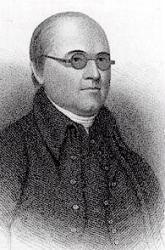
1752 - 1817 Topics: The Catechism The Church; First Sunday after Epiphany; Tenth Sunday after Trinity Author of "I love Thy Zion, Lord" in Evangelical Lutheran hymnal Timothy Dwight (b. Northampton, MA, 1752; d. Philadelphia, PA, 1817) was a grandson of Jonathan Edwards who became a Congregationalist pastor, a Revolutionary War army chaplain, a tutor and professor at Yale College, and president of Yale from 1795 to 1817. As president he continued to teach and serve as chaplain and was instrumental in improving both the academic and the spiritual life of the college.
Bert Polman
===============
Dwight, Timothy, D.D. This is the most important name in early American hymnology, as it is also one of the most illustrious in American literature and education. He was born at Northampton, Massachusetts, May 14, 1752, and graduated at Yale College, 1769; was a tutor there from 1771 to 1777. He then became for a short time a chaplain in the United States Army, but passed on in 1783 to Fairfield, Connecticut, where he held a pastorate, and taught in an Academy, till his appointment, in 1795, as President of Yale College. His works are well known, and need no enumeration. He died at New Haven, Jan. 11, 1817. In 1797 the General Association of Connecticut, being dissatisfied with Joel Barlow's 1785 revision of Watts, requested Dwight to do the work de novo. This he did liberally, furnishing in some instances several paraphrases of the same psalm, and adding a selection of hymns, mainly from Watts. The book appeared as—
"The Psalms of David, &c.... By I. Watts, D.D. A New Edition in which the Psalms omitted by Dr. Watts are versified, local passages are altered, and a number of Psalms are versified anew in proper metres. By Timothy Dwight, D.D., &c….To the Psalms is added a Selection of Hymns," 1800.
Dwight's lyrics are all professedly psalms, but they are by no means literal versions. His original compositions number 33. Of these many are still in common use, the most important being:—
1. Blest be the Lord, Who heard my prayer. Psalm xxviii. This is the second part of Psalm xxviii., in 5 stanzas of 4 lines. It is in the English New Congregational Hymn Book, 1859.
2. I Love Thy kingdom, Lord. Psalm cxxxvii. This is version three of Ps. 137, in 8 stanzas of 4 lines, and is in extensive use at the present time throughout the States. It is also included in many English, Irish, and Scottish collections, sometimes in the original form, as in Alford's Year of Praise, 1867; again as, "I love Thy Church, 0 God," which opens with the second stanza, as in the Scottish Evangelical Union Hymnal, 1878, in 3 stanzas, and "We love Thy kingdom, Lord," in the Irish Church Hymnal, 1873. In Cleveland's Lyra Sacra Americana six stanzas only are given from the original.
Next to this in popularity are his 2nd and 3rd renderings of Psalm lxxxviii.:—
3. Shall man, 0 God of life and light. (3rd stanza)
4. While life prolongs its precious light. (2nd stanza) Both of which are in extensive use. From his 4th version of the same Psalm (88), the following hymns have been compiled, each opening with the stanza indicated:—
5. Just o'er the grave I hung. Stanza ii.
6. I saw beyond the tomb. Stanza iv.
7. Ye sinners, fear the Lord. Stanza xii. This last is found in Spurgeon's 0ur Own Hymnbook. The original version consists of 13 stanzas.
8. 0 Thou Whose sceptre earth and seas obey. Psalm lxxii. This is his second version of this Psalm, and was given in the Comprehensive Rippon, 1844.
The following, most of which are of a more jubilant character, are well known:—
9. How pleasing is Thy voice. Psalm lxv.
10. In Zion's sacred gates. Psalm cl.
11. Lord of all worlds, incline Thy gracious [bounteous] ear. Psalm llii.
12. Now to Thy sacred house. Psalm xliii., st. 3.
13. Sing to the Lord most high. Psalm c.
14. In barren wilds shall living waters spring. Psalm liii.
15. Lord, in these dark and dismal days. Psalm cxxxvii.
No. 9 is found in Lyra Sacra Americana, pp. 101-2, the seven stanzas of the original being abbreviated to five.
In addition to the Psalms, Dr. Dwight published three poems, "The Conquest of Canaan," 1785; "Greenfield Hill," 1794; "Triumph of Infidelity," 1788. [Rev. F. M. Bird, M.A.]
- John Julian, Dictionary of Hymnology (1907)
Timothy Dwight
Johann Heinrich Schröder
1667 - 1699 Person Name: J. H. Schröder Topics: Twenty-first Sunday after Trinity Sunday For Evening Author of "Jesu, giv Seier! Livs-Fyrste og Kilde!" in M. B. Landstads Kirkesalmebog og "Nokre Salmar" ved Professor Dr. E. Blix, samt følgende tillæg Schröder, Johann Heinrich, was born Oct. 4,1667, at Springe (Hallerspringe) near Hannover. He studied at the University of Leipzig, where he experienced the awakening effects of A. H. Francke's lectures. In 1696 he was appointed pastor at Meseberg, near Neuhaldensleben; and in the registers there records of himself (writing in the third person), " 1696, on the 17th Sunday after Trinity, viz. on Oct. 4, on which day he was born, with the beginning of his 30th year, he entered on the pastorate of this parish." He died at Meseberg, June 30, 1699 (Koch, iv., 381; Blatter für Hymnologie, 1883, p. 192, &c).
Schröder is best known by the four hymns which he contributed to the Geistreiches Gesang-Buch, Halle, 1697; and which are repeated in the Geistreiches Gesang-Buch, Darmstadt, 1698; and in Freylinghausen's Gesang-Buch, 1704. They are very good examples of the early hymns of the Pietists, being genuine and earnest outpourings of Love to Christ, not unmixed with Chiliastic hopes for the victory of Zion and the overthrow of Babylon. In the same books are two hymns by his wife (Tranquilla Sophia née Wolf), who died at Meseberg, April 29, 1697.
Two of Schröder's hymns have passed into English, viz.:—
i. Eins ist noth, aoh Herr, dies eine. Love to Christ. This is included in the Geistreiches Gesang-Buch, Halle, 1097, p. 505, in 10 stanzas of 8 lines, entitled, "One thing is needful. Luke x. 42. Jesus, Who of God is made unto us wisdom, and righteousness, and sanctification, and redemption. 1 Cor. i. 30."
Its popularity has been due, not only to its own beauty and power, but also to the taking character of the melody to which it is set. This is by J. Neander, in his Bundes Lieder, Bremen, 1680, as the melody of Grosser Prophete; and was altered in Freylinghausen to suit Schroder's hymn. The full form from Freylinghausen is in Mercer's The Church Psalter & Hymn Book, and there called Landsberg. The second part is given in the Bristol Tune Book as Ems. A greatly altered form, as Ratisbon, has passed through W. H. Havergal's Old Church Psalmody into the Irish Church Hymnal, the Scottish Presbyterian Hymnal and others.
The translation in common use from Schröder is:—
One thing's needful, then, Lord Jesus. This is a good and full tr., by Miss Cox, in her Sacred Hymns from the German, 1841, p. 137. Other translations are:—
(1) "One thing is needful! Let me deem." By Miss Winkworth, 1855, p. 183. (2) "One thing's needful:— this rich treasure." By Dr. H. Mills, 1856, p. 92.
ii. Jesu, hilf siegen, du Furste des Lebens. Christian Warfare…It is said to have been written, in 1696, as a companion to his wife's hymn, "Trautster Jesu, Ehrenkonig". It was accused of Chiliasm, by the Theological Faculty of Wittenberg, but still holds an honoured place in German collections. The translations are:—(1) "Jesus, help conquer ! Thou Prince everliving." By Dr. H. Mills, 1856, p. 126. (2) "Jesus, help conquer. Thou Prince of my being." By Miss Manington, 1863, p. 2.
The hymn beginning, "Jesus, help conquer! my spirit is sinking," by Miss Warner, in 6 stanzas, in her Hymns of the Church Militant, N. Y., 1858, p. 161, borrows little more than the first line from the German. It is repeated in Boardman's Selection, Philadelphia, 1861, No. 463. [Rev. James Mearns, M.A.]
--Excerpts from John Julian, Dictionary of Hymnology (1907)
Johann Heinrich Schröder
Pages




