

 My Starred Hymns
 My FlexScores
 My Hymnals
 My Purchased Files
Planning worship?
Check out our sister site, ZeteoSearch.org,
for 20+ additional resources related to your search.
- |
User Links
Person Results
Rowland Hugh Prichard

1811 - 1887 Person Name: Rowland H. Prichard Topics: Brokenness; Brokenness Composer of "HYFRYDOL" in Worship and Song Rowland H. Prichard (sometimes spelled Pritchard) (b. Graienyn, near Bala, Merionetshire, Wales, 1811; d. Holywell, Flintshire, Wales, 1887) was a textile worker and an amateur musician. He had a good singing voice and was appointed precentor in Graienyn. Many of his tunes were published in Welsh periodicals. In 1880 Prichard became a loom tender's assistant at the Welsh Flannel Manufacturing Company in Holywell.
Bert Polman
Rowland Hugh Prichard
Greg Scheer

b. 1966 Topics: Broken-hearted Author of "As the Deer Pants for the Water" in Psalms for All Seasons Greg Scheer is a composer, author, and speaker. His life’s work includes two sons (Simon and Theo), two books (The Art of Worship, 2006, and Essential Worship, 2016), and hundreds of compositions, songs, and arrangements in a dizzying variety of styles.
Greg is also co-founder of Hymnary.org and source of many ideas and inspirations, some good.
Greg Scheer
Greg Scheer
Susan Palo Cherwien
1953 - 2021 Person Name: Susan Palo Cherwien, 1953- Topics: Brokenness Author of "Holy Woman, Graceful Giver" in Community of Christ Sings
Susan Palo Cherwien
Thomas Moore
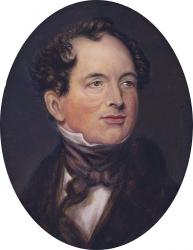
1779 - 1852 Person Name: Moore Topics: "He Healeth the Broken in Heart, and Bindeth up their Wounds" Author of "O thou who diest the mourner's tear" in Hymns for Christian Devotion Thomas Moore United Kingdom 1779-1852. Born at Dublin, Ireland, the son of a grocer, he showed an early interest in music and acting. He was educated at a private school and Trinity College, Dublin. He read at the Middle Temple for the Bar. Moore did not profess religious piety. His translations of ‘Anacreon’ (celebrating wine, women, and song) were published in 1800, with a dedication to the Prince of Wales. He also wrote a comic opera, “the gypsy prince”, staged that year. In 1801 he published a collection of his own verse, “Poetical works of the late Thomas Little Esq”. A Catholic patriot, he defended the Church of Ireland, especially in later politics. In 1803 he held a post under the Government in Bermuda as registrar of the Admiralty Prize Court. He was bored of it within six months and appointed a deputy to take his place while he left for a tour of North America. He secured high society introductions and even met with President, Thomas Jefferson. Returning to England in 1804, he published “Epistles, Odes, & other poems” in 1806. Moore criticized American slavery and was accused of licentious writings, veiled as refinement. Francis Jeffrey denounced Moore’s writings in the ‘Edinburgh Review’, and Moore challenged him to a duel, but it never happened, and they became friends. Between 1808-1810 he was found acting in various plays, favoring comic roles. He met the sister of one of the actresses and, in 1811, they married. Elizabeth ‘Bessy’ Dyke, was an actress. She had no dowry, and Moore kept their marriage secret from his parents for some time, as his wife was Protestant. Bessie shrank from fashionable society, but those who met her held her in high regard. They had five children, but none survived to adulthood. Three girls died young, and both sons lost their lives as young men. One son, Tom, died in some disgrace in the French Foreign Legion in Algeria. Despite these losses, their marriage was said to be a happy one. He also had political trouble. The man he appointed as his replacement in Bermuda was found to have embezzled 6000 pounds sterling, a large sum, for which Moore was liable. He left for France in 1819 to escape debtor’s prison. He also met Lord Byron in Venice and was entrusted with a manuscript of his memoirs, which he promised to have published after Byron’s death. Moore’s wife and children joined him in Paris, where he learned that some of the debt was repaid with help from Lord Lansdowne, whom Moore had given a draft of money from payment by his publisher. The family returned to England a year later. To support his family Moore entered the field of ‘squib writing’ on behalf of his Whig friends. This resulted in years of political debate about Catholics and Protestants in government. Nearly persuaded to forego his Catholic allegiance in favor of Protestantism, he finally concluded that Protestants did not make a sound case for their faith, as they denounced Catholics so vociferously for erroneous teaching. From 1835 -1846 Moore published a four volume “History of Ireland”, which was basically an indictment of English rule over Ireland. He was primarily a writer, poet, entertainer, and composer, considered politically as a writer for the aristocratic Whigs. His “Sacred songs” (32) were published in 1816, and again, in his “collected works” in 1866. His “Memoirs, Journal, and Correspondence” were published by Lord John Russell in 1855. Moore is essentially remembered for his highly-praised lyrics written for Irish melodies, as requested by his publishers, and his memoirs of Lord Byron, his friend. He died at Bromham, Wilshire, England.
John Perry
==================
Moore, Thomas, son of John Moore, a small tradesman at Dublin, was born in that city, May 28, 1779, educated at a private school and Trinity College, Dublin; read at the Middle Temple for the Bar; held a post under the Government in Bermuda for a short time, and died Feb. 26, 1852. His Memoirs, Journal, and Correspondence were published by Lord John Russell in 1855. In that work every detail concerning himself and his numerous publications, most of them of high poetical merit, will be found. His connection with hymnody is confined to his Sacred Songs, which were published in 1816, and again in his Collected Works, 1866. These Songs were 32 in all, and were written to popular airs of various nations. Of these Songs the following have passed into a few hymnbooks, mainly in America:—
1. As down in the sunless retreats of the ocean. Private Prayer.
2. But who shall see the glorious day. The Final Bliss of Man.
3. Come, ye disconsolate, where'er you languish. Belief in Prayer. In American hymnbooks the text is sometimes as in T. Hastings and Lowell Mason's Spiritual Songs, 1831. This may be distinguished from the original by the third stanza, which reads, "Here see the Bread of life; see waters flowing," &c.
4. Fallen is thy throne, O Israel. Israel in Exile.
5. Like morning when her early breeze. Power of Divine Grace.
6. O Thou Who driest the mourner's tear. Lent.
7. Since first Thy word [grace] awaked my heart. God All and in All.
8. Sound the loud timbrel o'er Egypt's dark sea. Deliverance of Israel.
9. The bird [dove] let loose in eastern skies. Prayer for Constancy.
10. The turf shall be my fragrant shrine. The Temple of Nature. From this "There's nothing bright above, below" is taken.
11. Thou art, O God, the Life and Light. God, the Light and Life of Men.
12. Were not the sinful Mary's tears? Lent.
Of these hymns No. 11 has attained the greatest popularity.
--John Julian, Dictionary of Hymnology (1907)
Thomas Moore
Nolan Williams
Person Name: Nolan Williams Jr., b. 1969 Topics: Broken-hearted Arranger of "[I'm not asking fo the riches of the land]" in Psalms for All Seasons
Nolan Williams
Louis Bourgeois
1510 - 1561 Person Name: Louis Bourgeois, ca. 1510-1561 Topics: Broken-hearted Composer of "FREU DICH SEHR (GENEVAN 42)" in Psalms for All Seasons Louis Bourgeois (b. Paris, France, c. 1510; d. Paris, 1561). In both his early and later years Bourgeois wrote French songs to entertain the rich, but in the history of church music he is known especially for his contribution to the Genevan Psalter. Apparently moving to Geneva in 1541, the same year John Calvin returned to Geneva from Strasbourg, Bourgeois served as cantor and master of the choristers at both St. Pierre and St. Gervais, which is to say he was music director there under the pastoral leadership of Calvin. Bourgeois used the choristers to teach the new psalm tunes to the congregation.
The extent of Bourgeois's involvement in the Genevan Psalter is a matter of scholarly debate. Calvin had published several partial psalters, including one in Strasbourg in 1539 and another in Geneva in 1542, with melodies by unknown composers. In 1551 another French psalter appeared in Geneva, Eighty-three Psalms of David, with texts by Marot and de Beze, and with most of the melodies by Bourgeois, who supplied thirty four original tunes and thirty-six revisions of older tunes. This edition was republished repeatedly, and later Bourgeois's tunes were incorporated into the complete Genevan Psalter (1562). However, his revision of some older tunes was not uniformly appreciated by those who were familiar with the original versions; he was actually imprisoned overnight for some of his musical arrangements but freed after Calvin's intervention. In addition to his contribution to the 1551 Psalter, Bourgeois produced a four-part harmonization of fifty psalms, published in Lyons (1547, enlarged 1554), and wrote a textbook on singing and sight-reading, La Droit Chemin de Musique (1550). He left Geneva in 1552 and lived in Lyons and Paris for the remainder of his life.
Bert Polman
Louis Bourgeois
Ken Medema
b. 1943 Person Name: Ken Medema, 1943- Topics: Brokenness Author of "Is There One Who Feels Unworthy?" in Community of Christ Sings Ken Medema (b. Grand Rapids, Michigan, 1943) is a song writer, composer, recording artist, and story-teller through music. Blind from birth, Ken began playing the piano at age five and studied classical music by reading Braille. He graduated from Grand Rapids Christian High School and studied music therapy at Michigan State University in Lansing, Michigan. As a music therapist in both Indiana and New Jersey, he began writing songs for hurting teenagers, an experience that helped to launch a career of writing songs on Christian life that has taken him to venues large and small all over North America and beyond. He responds to what he hears and sees in his heart at particular events, often improvising songs on the spot, offering compassion, honesty and desire for integrity in both worship and life. In 1985 he began Brier Patch Music, which continues to publish his music and recordings, including 26 CDs.
Bert Polman
Ken Medema
Michel Guimont
b. 1950 Person Name: Michael Guimont Topics: Broken-hearted Composer (stanza) of "[Misericordia, Señor]" in Psalms for All Seasons
Michel Guimont
Dinah Reindorf
Person Name: Dinah Reindorf, b. 20th c. Topics: Broken-hearted Composer of "[Lord, have mercy]" in Psalms for All Seasons
Dinah Reindorf
Rufino Zaragoza
b. 1957 Person Name: Rufino Zaragoza, OFM, 1957- Topics: Brokenness Author of "Come Now, You Hungry" in Community of Christ Sings
Rufino Zaragoza
Pages