

 My Starred Hymns
 My FlexScores
 My Hymnals
 My Purchased Files
Planning worship?
Check out our sister site, ZeteoSearch.org,
for 20+ additional resources related to your search.
- |
User Links
Person Results
Timothy Dudley-Smith
1926 - 2024 Person Name: Timothy Dudley-Smith, b. 1926 Topics: Conversion and New Life Author of "As water to the thirsty" in Singing the Faith Timothy Dudley-Smith (b. 1926) Educated at Pembroke College and Ridley Hall, Cambridge, Dudley-Smith has served the Church of England since his ordination in 1950. He has occupied a number of church positions, including parish priest in the diocese of Southwark (1953-1962), archdeacon of Norwich (1973-1981), and bishop of Thetford, Norfolk, from 1981 until his retirement in 1992. He also edited a Christian magazine, Crusade, which was founded after Billy Graham's 1955 London crusade. Dudley-Smith began writing comic verse while a student at Cambridge; he did not begin to write hymns until the 1960s. Many of his several hundred hymn texts have been collected in Lift Every Heart: Collected Hymns 1961-1983 (1984), Songs of Deliverance: Thirty-six New Hymns (1988), and A Voice of Singing (1993). The writer of Christian Literature and the Church (1963), Someone Who Beckons (1978), and Praying with the English Hymn Writers (1989), Dudley-Smith has also served on various editorial committees, including the committee that published Psalm Praise (1973).
Bert Polman
Timothy Dudley-Smith
Keith Getty
b. 1974 Person Name: Keith Getty, b. 1974 Topics: Conversion and New Life Author of "Beneath the cross of Jesus" in Singing the Faith Keith Getty (b. December 16, 1974) is a world-renowned modern hymn writer. Keith developed a passion for writing good songs for the church in his twenties, and began writing for his small Baptist church. He writes and performs with his wife, Kristyn and they regularly tour the United States and the United Kingdom. (Also known as Julian Keith Getty)
Laura de Jong
Keith Getty
William Crotch
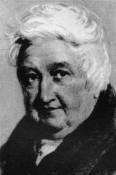
1775 - 1847 Person Name: William Crotch, 1775-1847 Topics: Conversion and New Life Adapter of "ST. MICHAEL (OLD 134TH)" in Singing the Faith William Crotch (5 July 1775 – 29 December 1847) was an English composer, organist and artist.
Born in Norwich, Norfolk to a master carpenter he showed early musical talent as a child prodigy. The three and a half year old Master William Crotch was taken to London by his ambitious mother, where he not only played on the organ of the Chapel Royal in St James's Palace, but for King George III. The London Magazine of April 1779 records:
He appears to be fondest of solemn tunes and church musick, particularly the 104th Psalm. As soon as he has finished a regular tune, or part of a tune, or played some little fancy notes of his own, he stops, and has some of the pranks of a wanton boy; some of the company then generally give him a cake, an apple, or an orange, to induce him to play again...
Crotch was later to observe that this experience led him to become a rather spoiled child, excessively indulged so that he would perform.
He was for a time organist at Christ Church, Oxford, from which he was later to graduate with a Bachelor of Music degree.
His composition The Captivity of Judah was played at Trinity Hall, Cambridge, on 4 June 1789; his most successful composition in adulthood was the oratorio Palestine (1812). He may have composed the Westminster Chimes in 1793.
In 1797 Crotch was given a professorship at Oxford University, and in 1799 he acquired a doctorate in music. While at Oxford, he became acquainted with the musician and artist John Malchair, and took up sketching. He followed Malchair's style in recording the exact time and date of each of his pictures, and when he met John Constable in London in 1805, he passed the habit along to the more famous artist.
In 1834, to commemorate the installation of the Duke of Wellington as chancellor of the University of Oxford, Crotch penned a second oratorio titled The Captivity of Judah. The 1834 work bears little resemblance to the oratorio he wrote as a child in 1789.
In 1822, Crotch was appointed to the Royal Academy of Music as its first Principal, but resigned ten years later.[2] He spent his last years at his son's house in Taunton, Somerset, where he died suddenly in 1847. Among his notable pupils were William Sterndale Bennett, Lucy Anderson, Stephen Codman, George Job Elvey, Cipriani Potter, and Charles Kensington Salaman
--en.wikipedia.org/
William Crotch
Howard Hughes
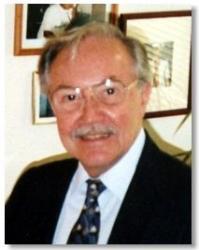
b. 1930 Person Name: Howard Hughes, SM Topics: Conversion and New Life Composer of "BAPTIZED IN CHRIST" in Voices Together In his letter of invitation to Brother Howard Hughes, the President of NPM, J. Michael McMahon, declared, “Board Members agreed unanimously that you have created compositions for the liturgy that are beautiful, delightful, and spirited, and that have fostered strong participation by the worshiping assembly as they pray the texts you have set to music.”
The Marianist composer’s first published work was “Mass for Peace” which appeared in Peoples Mass Book, 1964 edition, released by World Library Publications. As liturgical celebration developed in the English vernacular following the Second Vatican Council, Brother Howard produced a wide range of liturgical compositions published by WLP, GIA, ICEL, OCP, LTP, CFCW, FDLC, USCC, RP, NPM, Presbyterian Church USA, and The United Methodist Hymnal Companion. And at the age of 81 he is still composing and accepting commissions for special events.
A Marianist religious for 64 years, this distinguished liturgical musician and composer began as a high teacher of French and director of high school choral groups. In addition Brother Howard also sang in symphonic choruses in New York and in Baltimore. He commented that “conducting high school choral concerts and singing with adult symphonic choruses have been a great help in learning to write music.”
The National Association of Pastoral Musicians will honor Brother Howard Hughes, S.M., as Pastoral Musician of the Year when it gathers for its national convention in Washington, DC, July 29 – August 2, 2012.
Currently the awardee serves as organist and music director for the Marianist Center in Cupertino, CA.
--http://www.dsj.org/being-catholic/worship
Howard Hughes
Paul Leddington Wright
b. 1951 Person Name: Paul Leddington Wright, b. 1951 Topics: Conversion and New Life Composer of "AMAZING GRACE (NEW BRITAIN)" in Singing the Faith
Paul Leddington Wright
Dan Damon
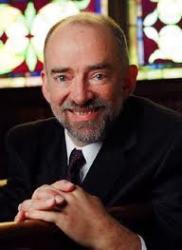
b. 1955 Person Name: Daniel Charles Damon, b. 1955 Topics: Conversion and New Life Author of "When listening prophets dare to speak" in Singing the Faith Daniel Charles Damon (b. 1955) is an internationally published writer of hymn texts and tunes and is Associate Editor of Hymnody for Hope Publishing Company, Carol Stream, Illinois. Damon is also a jazz pianist and has played in many hotels and clubs in the San Francisco Bay area. He holds degrees from Greenville College, Greenville, Illinois (BME, 1977) and Pacific School of Religion, Berkeley, California (MDiv, 1987). He is an ordained Elder in the United Methodist Church in the San Francisco Bay area and a life member of the Hymn Society in the United States and Canada.
Several single-author collections of Damon's hymns have been published: Faith Will Sing (Carol Stream, 1993), The Sound of Welcome (Carol Stream, 1998), To the Thirsty World (Nashville, 2002), Fields of Mercy (Carol Stream, 2007), and Garden of Joy (Carol Stream, 2011). He collaborated with text writer Gracia Grindal in A Treasury of Faith: Lectionary Hymns Series A (Colfax. 2012). Damon's hymns have been included in several major hymnals and supplements. He has also written hymn translations from Vietnamese, Portuguese, and Shona languages, and, with Patrick Matsikenyiri, edited Njalo, A Collection of 16 Hymns in the African Tradition (Nashville, 1996). He has released three recordings of hymns, carols, and traditional songs, and a solo piano recording of jazz standards (available at www.damonstuneshop.com).
Damon has presented his work at national conferences of the Hymn Society in the United States and Canada and the Fellowship of United Methodists in Music and Worship Arts. He is a contributor to the Canterbury Dictionary of Hymnology.
In 2016, Damon was made a Fellow of the hymn Society, the highest honor The Hymn Society can confer.
Dan Damon
Dan Damon
Tony Alonso
b. 1980 Topics: Conversion and New Life Composer of "INDIGO" in Voices Together Tony Alonso has published several collections of liturgical music and his music appears in many hymnals throughout the world. He has an Bachelor of Music degree from Northwestern University and a M.A. degree in theology from Loyola Marymount University.
Tony Alonso
Richard Runciman Terry
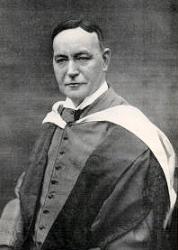
1865 - 1938 Person Name: Richard Runciman Terry, 1865-1938 Topics: Conversion and New Life Composer of "BILLING" in Singing the Faith Terry, Richard R., was born at Morpeth, Jan. 3, 1868, and was Tate Choral Scholar at King's College, Cambridge. In 1896 he became organist and music-master at Downside R. C. College and Abbey, Bath; and in 1901 organist and director of the choir at Westminster Cathedral (R. C.) London. He contributed to A. E. Tozer's Catholic Hymns, 1898, thirteen tunes and the words of two hymns:—
1. Christ, the Lord, is my true Shepherd. Ps. xxiii.
2. Peaceful eve, so still and holy. Christmas Carol. It is marked as D. C. B., i.e. for Downside Coll., Bath.
The tune by Mr. Tozor was published in 1881 to a carol beginning with the same first line, but otherwise entirely different.
--John Julian, Dictionary of Hymnology, New Supplement (1907)
Richard Runciman Terry
Jean Janzen
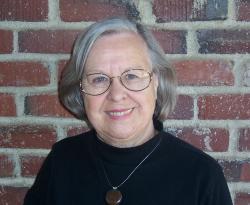
b. 1933 Topics: Conversion and New Life Translator of "Herr, füll mich neu (Fill Me Anew)" in Voices Together Jean Janzen was born on December 5, 1933, the seventh of Henry Peter Wiebe and Anna Schultz Wiebe's eventual eight children (Three Mennonite Poets 5). For the first five years of her life, Janzen lived in Dalmeny, Saskatchewan (A Cappella 25). In 1938, she moved to Mountain Lake, Minnesota when her schoolteacher father began his second ministry as a pastor (“Coming into Voice”). A year later, the family moved to Kansas (“Coming into Voice”).
Janzen says she cannot remember when she wrote her first poem, but the first evidence of her work is a handwritten book of five poems that she made in third or fourth grade, which was saved by her mother through the family’s many moves (E-mail Interview). She had very little exposure to poetry and literature as a child, except for hymns and Bible stories. She values these elements of her childhood and “treasure[s] the artful rhythms of the King James [Bible]” (E-mail Interview).
Janzen attended Meade Bible Academy, Tabor College, and Grace College (A Cappella 25). It was in college that she had her first real exposure to literature. She was “thrilled, and became a literature major.” She remembers being “enamored” with Emily Dickinson and writing papers about her whenever given the chance. However, she never considered writing poetry as a possible career (E-mail Interview).
Janzen--then Jean Wiebe--married Louis Janzen, a medical student, and the couple moved to Chicago where she worked as a medical secretary while taking courses at Northwestern University (Hostetler, A Cappella 25). Janzen cites this period of her life as the beginning of her love for visual art, calling the Chicago Art Institute the “open gate” for her and her husband where they “became hooked” (Mennonite Life Interview). In 1961, they moved to Fresno, Cal., where Louis worked as a pediatrician in a private practice. Here they raised their two daughters and two sons.
When her youngest child was in school, Janzen “joined a writer’s group at the encouragement of [her] husband and nephew after they read some poems [she] had written as a gift to [her] husband” (E-mail Interview). As her children became older, Janzen went back to college, earning a BA in English from Fresno Pacific College and an MA in Creative Writing and English from California State University at Fresno in 1982. There she studied with poets Peter Everwine, Philip Levine, and C.G. Hanzlicek. Janzen says that after one semester of writing poetry in college, she took the work “seriously” and “imagined the possibility of growing into a poet,” but it took her several years “to be willing to say that out loud” (E-mail Interview).
Rudy Wiebe, a Mennonite novelist, served as a mentor who influenced Janzen's writing career. She received a grant from the National Endowment for the Arts in 1995 (“Coming into Voice”). Janzen grew up in the Evangelical Mennonite Brethren Church and many of her relatives, including her father, were pastors (“Coming into Voice”). This strong connection with the church has had a significant influence on her poetry.
Music has also played an important role in Janzen’s life. Her mother loved music and music was an important part of worship in her church. She learned to play the piano when she was young, later studying music in college and teaching piano for many years (“Coming into Voice”). Janzen finds harmony between the religious and artistic elements of her life, integrating them in a way that enriches both. She also uses her gifts in the church, serving as a minister of worship at the College Community Mennonite Brethren Church in Clovis, Cal., as well as writing hymn texts, which have been set to music and are included in several hymn books.
Other prominent themes in her work include art, history, family, the earth, and her Russian Mennonite ancestors (“Coming into Voice”). Janzen says that “the sensual and spiritual are inevitably intertwined” (Mennonite Life Interview) and it is this element of her work that has attracted the most attention from critics and readers. She emphasizes “the presence of spirit in the flesh,” using rich description of physical objects to reveal deeper emotions and truths. Janzen has taught poetry writing at Fresno Pacific University and Eastern Mennonite University in Virginia.
--www.goshen.edu/mennonitepoetry/
Jean Janzen
Adam M. L. Tice
b. 1979 Topics: Conversion and New Life Author of "What Can I Leave Behind" in Voices Together
Adam M. L. Tice
Pages