You help make Hymnary.org possible. More than 10 million people from 200+ countries found hymns, liturgical resources and encouragement on Hymnary.org in 2025, including you. Every visit affirms the global impact of this ministry.

If Hymnary has been meaningful to you this year, would you take a moment today to help sustain it? A gift of any size—paired with a note of encouragement if you wish—directly supports the server costs, research work and curation that keep this resource freely available to the world.

Give securely online today, or mail a check to:
Hymnary.org
Calvin University
3201 Burton Street SE
Grand Rapids, MI 49546

Thank you for your partnership, and may the hope of Advent fill your heart.

Person Results

Topics:christian+year -return+of+christ
In:people

Planning worship? Check out our sister site, ZeteoSearch.org, for 20+ additional resources related to your search.
Showing 51 - 60 of 707Results Per Page: 102050

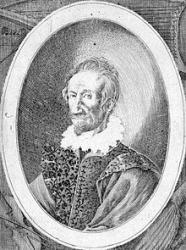
Claude Goudimel

1514 - 1572 Topics: The Christian Year Reign of Christ; Church Ecumenism; Compassion; Courage; Discipleship and Service; Empowerment; Gift(s); Guidance; Healing; Hope; Hunger; Jesus Christ Cross; Jesus Christ Example; Jesus Christ Guide and Leader; Jesus Christ Images of; Jesus Christ Kingship, Conqueror; Jesus Christ Life In; Jesus Christ Reign; Light; Manna, Bread of Life; Mercy; Ministry; Mission and Outreach; Opening Hymns; Peace (World); Providence; Service Music Offering; Sin; Social Concerns; Struggle and Conflict; Temptation; Trust; Unity; Walking with God/Jesus Christ; World; Advent 2 Year A; Epiphany 5 Year A; Epiphany 6 Year A; Ascension Year A; Proper 6 Year A; Proper 12 Year A; Proper 17 Year A; Proper 23 Year A; Proper 28 Year A; Epiphany 4 Year B; Easter 7 Year B; Proper 10 Year B; Proper 11 Year B; Proper 13 Year B; Proper 22 Year B; Proper 23 Year B; Advent 4 Year C; Epiphany 6 Year C; Lent 5 Year C; All Saints Year C; Proper 28 Year C; Ash Wednesday Year ABC Harmonizer of "DONNE SECOURS" in Voices United The music of Claude Goudimel (b. Besançon, France, c. 1505; d. Lyons, France, 1572) was first published in Paris, and by 1551 he was composing harmonizations for some Genevan psalm tunes-initially for use by both Roman Catholics and Protestants. He became a Calvinist in 1557 while living in the Huguenot community in Metz. When the complete Genevan Psalter with its unison melodies was published in 1562, Goudimel began to compose various polyphonic settings of all the Genevan tunes. He actually composed three complete harmonizations of the Genevan Psalter, usually with the tune in the tenor part: simple hymn-style settings (1564), slightly more complicated harmonizations (1565), and quite elaborate, motet-like settings (1565-1566). The various Goudimel settings became popular throughout Calvinist Europe, both for domestic singing and later for use as organ harmonizations in church. Goudimel was one of the victims of the St. Bartholomew's Day massacre of Huguenots, which oc­curred throughout France. Bert Polman

W. Chatterton Dix

1837 - 1898 Person Name: William Chatterton Dix (1837-1898) Topics: Life in Christ Christ Incarnate - Christmas and Epiphany; Christian Year Season of Epiphany Author of "As with gladness men of old" in Church Hymnary (4th ed.) Most British hymn writers in the nineteenth century were clergymen, but William C. Dix (b. Bristol, England, 1837; d. Cheddar, Somerset, England, 1898) was a notable exception. Trained in the business world, he became the manager of a marine insurance company in Glasgow, Scotland. Dix published various volumes of his hymns, such as Hymns of Love and Joy (1861) and Altar Songs: Verses on the Holy Eucharist (1867). A number of his texts were first published in Hymns Ancient and Modern (1861). Bert Polman ======================== Dix, William Chatterton, son of John Dix, surgeon, of Bristol, author of the Life of Chatterton; Local Legends, &c, born at Bristol, June 14, 1837, and educated at the Grammar School of that city. Mr. Chatterton Dix's contributions to modern hymnody are numerous and of value. His fine Epiphany hymn, "As with gladness men of old,” and his plaintive ”Come unto Me, ye weary," are examples of his compositions, many of which rank high amongst modern hymns. In his Hymns of Love and Joy, 1861, Altar Songs, Verses on the Holy Eucharist, 1867; Vision of All Saints, &c, 1871; and Seekers of a City, 1878, some of his compositions were first published. The greater part, however, were contributed to Hymns Ancient & Modern; St. Raphaels Hymnbook, 1861; Lyra Eucharidica, 1863; Lyra Messianica, 1864; Lyra Mystica, 1865; The People's Hymns, 1867; The Hymnary, 1872; Church Hymns, 1871, and others. Many of his contributions are renderings in metrical form of Dr. Littledale's translation from the Greek in his Offices . . . of the Holy Eastern Church, 1863; and of the Rev. J. M. Rodwell's translation of hymns of the Abyssinian Church. These renderings of the "songs of other Churches" have not received the attention they deserve, and the sources from whence they come are practically unknown to most hymnal compilers. Mr. Dix has also written many Christmas and Easter carols, the most widely known of which is "The Manger Throne."   In addition to detached pieces in prose and verse for various magazines, he has published two devotional works, Light; and The Risen Life, 1883; and a book of instructions for children entitled The Pattern Life, 1885. The last-named contains original hymns by Mr. Dix not given elsewhere. In addition to the more important of Mr. Dix's hymns which are annotated under their respective first lines, the following are also in common use:- 1. God cometh, let the heart prepare.  Advent. In his Vision of All Saints, &c, 1871.      2. Holy, holy, holy, to Thee our vows we pay.  Holy Communion.   Published in his Altar Songs, 1867, in 6 stanzas of 6 lines, and headed "Eucharistic Processional for Dedication Feast."    In the Society for Promoting Christian Knowledge Church Hymns, 1871, and others in an abridged form.      3. How long, O Lord, how long, we ask.   Second Advent.   Appeared in the Appendix to the Society for Promoting Christian Knowledge Psalms & Hymns, 1869, and repeated in several collections.        4. In our work and in our play.    Children's Hymn. Published in his Hymns and Carols for Children, 1869, and is largely adopted  in  children's  hymnbooks, as  Mrs. Brock's Children's Hymnbook, 1881, and others.   Also in the Society for Promoting Christian Knowledge Church Hymns, 1871.      5.  In the hollow of Thine hand.   For Fair Weather. Appeared in the People's Hymns, 1867, and repeated in several others.      6.  Joy fills our inmost heart today.    Christmas. Printed in the Church Times, and  then on a Flysheet by Gr. J. Palmer, as the third of Four Joyful Hymns for Christmas, circa 1865. It is in the Society for Promoting Christian Knowledge Church Hymns, 1871, and other hymnals. It is also one of Mr. Dix's Christmas Customs & Christmas Carols, not dated.      7. Lift up your songs, ye thankful.   St. Ambrose. Contributed to the People's Hymns, 1867.  8. Now in numbers softly flowing.    St. Cecilia. Contributed to the People's Hymns, 1867.    9.  Now, our Father, we adore Thee.   Praise to the Father.   Appeared in the Appendix to the S. P. C. K. Psalms & Hymns, 1869.   10.  O Christ, Thou Son of Mary.   St. Crispin.   First printed in the Union Review, Sept., 1866, and thence into the People's Hymns, 1887.   11. O Cross which only canst allay.   Glorying and Trusting in the Cross.   Published in the People's Hymns, 1867.   12. O Thou the Eternal Son of God.   Good Friday. Appeared in Lyra Messianica, 1864; the author's Hymns and Carols for Children, 1869; the S. P. C. K. Church Hymns, 1871, &c.   13. On the waters dark and drear.   For use at Sea. Published in Hymns for Public Worship, &c. (St. Raphael's, Bristol), 1861; the S. P. C. K. Church Hymns, 1871, &c.   14. Only one prayer to-day.   Ash Wednesday.   Contributed to the People's Hymns, 1867.   15. Sitting at receipt of custom.  St. Matthew.  Appeared in the People's Hymns, 1867.   16. The Cross is on thy brow.   Confirmation.   In the 1869 Appendix to the S. P. C. K. Psalms & Hymns.   17.  The stars above our head.   Work and Humility. In the 1869 Appendix to the S. P. C. K. Psalms & Hymns.  18. When the shades of night are falling.   Evening Hymn to the Good Shepherd.   In the author's Seekers of a City, &c. [1878]. Most of Mr. Dix's best-known hymns, and also some of those named above, are in common use in America and other English-speaking countries. In Great Britain and America from 30 to 40 are in common use.  He died Sept. 9, 1898. -- John Julian, Dictionary of Hymnology (1907) ====================== Dix, William Chatterton, p. 302, ii. Additional hymns by Mr. Dix now in common use are:— 1. Lift up your songs, ye angel choirs. Ascension. 2. Now, my soul rehearse the story. Christ Feeding the Multitude. 3. Within the temple's hallowed courts. Blessed Virgin Mary. These hymns are from his Altar Songs, 1867. --John Julian, Dictionary of Hymnology, Appendix, Part II (1907)

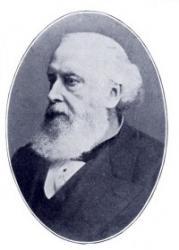
William Henry Monk

1823 - 1889 Person Name: William Henry Monk (1823-1889) Topics: Life in Christ Christ Incarnate - Christmas and Epiphany; Christian Year Season of Epiphany Arranger of "DIX" in Church Hymnary (4th ed.) William H. Monk (b. Brompton, London, England, 1823; d. London, 1889) is best known for his music editing of Hymns Ancient and Modern (1861, 1868; 1875, and 1889 editions). He also adapted music from plainsong and added accompaniments for Introits for Use Throughout the Year, a book issued with that famous hymnal. Beginning in his teenage years, Monk held a number of musical positions. He became choirmaster at King's College in London in 1847 and was organist and choirmaster at St. Matthias, Stoke Newington, from 1852 to 1889, where he was influenced by the Oxford Movement. At St. Matthias, Monk also began daily choral services with the choir leading the congregation in music chosen according to the church year, including psalms chanted to plainsong. He composed over fifty hymn tunes and edited The Scottish Hymnal (1872 edition) and Wordsworth's Hymns for the Holy Year (1862) as well as the periodical Parish Choir (1840-1851). Bert Polman

John Barnard

b. 1948 Topics: The Christian Year Christmas; Angels; Biblical Characters Mary, Mother of Jesus; Biblical Characters Wisemen/Sages/Kings; Choruses and Refrains; Christian Year Christmas; Glory; Jesus Christ Birth and Infancy Arranger of "THE VIRGIN MARY" in Voices United

Edward Shippen Barnes

1887 - 1958 Topics: The Christian Year Christmas; Adoration and Praise; Angels; Biblical Characters Joseph; Biblical Characters Mary, Mother of Jesus; Biblical Characters Shepherds; Biblical Places Bethlehem; Christian Year Christmas; Glory; God Glory; Humility; Jesus Christ Birth and Infancy; Jesus Christ Incarnation; Jesus Christ Kingship, Conqueror; Responses Antiphonal; Christmas Eve Year A; Christmas Eve Year B; Christmas Day 1 Year C Arranger of "GLORIA" in Voices United Edward Shippen Barnes was an American organist and composer. He was born 9 September 1887 in Seabright, NJ and died 2 February 1958 in Idyllwild, CA. He studied at Yale University with Horatio Parker and Harry Jepson, then continued his studies in Paris. He worked as an organist at Church of the Incarnation in New York, Rutgers Presbyterian Chruch in New York, St. Stephen's Episcopal Church in Philadelphia and the First Presbyterian Church in Santa Monica. He is known for his organ symphonies. Dianne Shapiro

Carl Schalk

1929 - 2021 Person Name: Carl Schalk, b. 1929 Topics: Amor de Jesucristo; Love of Jesus Christ; Año Cristiano Bautismo del Señor; Christian Year Baptism of the Lord; Año Cristiano Cuaresma; Christian Year Lent; Año Cristiano Semana Santa; Christian Year Easter; Año Cristiano Ascensión; Christian Year Ascension; Jesucristo Muerte de; Jesus Christ Death of; Jesucristo Sufrimiento de; Jesus Christ Suffering of; Jesucristo Tentación y Desierto; Jesus Christ Temptation and Wilderness; Jesucristo Vida y Ministerio; Jesus Christ Life and Ministry; Trinidad; Trinity Harmonizer of "DEO GRACIAS" in Santo, Santo, Santo Carl F. Schalk (b. Des Plaines, IL, 1929; d. 2021) is professor of music emeritus at Concordia University, River Forest, Illinois, where he taught church music since 1965. He completed gradu­ate work at the Eastman School of Music in Rochester, New York, and at Concordia Seminary, St. Louis, Missouri. From 1952 to 1956 he taught and directed music at Zion Lutheran Church in Wausau, Wisconsin, and from 1958 to 1965 served as director of music for the International Lutheran Hour. Honored as a Fellow of the Hymn Society in the United States and Canada in 1992, Schalk was editor of the Church Music journal (1966-1980), a member of the committee that prepared the Lutheran Book of Worship (1978), and a widely published composer of church music. Included in his publications are The Roots of Hymnody in The Lutheran Church-Missouri Synod (1965), Key Words in Church Music (1978), and Luther on Music: Paradigms of Praise (1988). His numerous hymn tunes and carols are collected in the Carl Schalk Hymnary (1989) and its 1991 Supplement. Bert Polman

Robert Williams

1782 - 1818 Topics: Christ's Gracious Life Resurrection and Exaltation; Christian Year Easter; Christian Year Ascension; Jesus Christ; Jesus Christ Love of; Processionals Composer of "LLANFAIR" in The United Methodist Hymnal Robert Williams United Kingdom 1782-1818. Born at Mynydd Ithel, Anglesey, Wales, blind from birth, he became a basket weaver. He had great innate musical ability. Although blind, he could write out a tune after hearing it just once. He sang hymns at public occasions. No information found regarding family. He died at Mynydd Ithel, Anglesey, Wales. John Perry

Thomas H. Troeger

1945 - 2022 Topics: Christian Year Baptism of Jesus; Christian Year Transfiguration; Jesus Christ Life; Healing; Personal Peace Author of "Silence! Frenzied, Unclean Spirit" in Glory to God Thomas Troeger (1945-2022), professor of Christian communication at Yale Divinity school, was a well known preacher, poet, and musician. He was a fellow of Silliman College, held a B.A. from Yale University; B.D. Colgate Rochester Divinity School; S.T. D. Dickinson College, and was awarded an honorary D.D. from Virginia Theological Seminary. He was ordained in the Presbyterian Church in 1970 and the Episcopal Church in 1999, and remained dually aligned with both traditions. Troerger led conferences and lectures in worship and preaching throughout North America, as well as in Denmark, Holland, Australia, Japan, and Africa. He served as national chaplain to the American Guild of Organists, and for at least three years he hosted the Season of Worship broadcast for Cokesbury. He was president of the Academy of Homiletics as well as Societas Homiletica. He had, as of 2009, written 22 books in the areas of preaching, poetry, hymnody, and worship. Many of his hymn texts are found in New Hymns for the Lectionary (Oxford, 1992), and God, You Made All Things for Singing (Oxford, 2009). Laura de Jong

Thomas á Kempis

1380 - 1471 Person Name: Thomas á Kempis, 1380-1471 Topics: Amor de Jesucristo; Love of Jesus Christ; Año Cristiano Bautismo del Señor; Christian Year Baptism of the Lord; Año Cristiano Cuaresma; Christian Year Lent; Año Cristiano Semana Santa; Christian Year Easter; Año Cristiano Ascensión; Christian Year Ascension; Jesucristo Muerte de; Jesus Christ Death of; Jesucristo Sufrimiento de; Jesus Christ Suffering of; Jesucristo Tentación y Desierto; Jesus Christ Temptation and Wilderness; Jesucristo Vida y Ministerio; Jesus Christ Life and Ministry; Trinidad; Trinity Author (attributed to) of "O Love, How Deep, How Broad, How High (Cuán alto, vasto y hondo amor)" in Santo, Santo, Santo Thomas of Kempen, commonly known as Thomas à Kempis, was born at Kempen, about fifteen miles northwest of Düsseldorf, in 1379 or 1380. His family name was Hammerken. His father was a peasant, whilst his mother kept a dame's school for the younger children of Kempen. When about twelve years old he became an inmate of the poor-scholars' house which was connected with a "Brother-House" of the Brethren of the Common Life at Deventer, where he was known as Thomas from Kempen, and hence his well-known name. There he remained for six years, and then, in 1398, he was received into the Brotherhood. A year later he entered the new religious house at Mount St. Agnes, near Zwolle. After due preparation he took the vows in 1407, was priested in 1413, became Subprior in 1425, and died according to some authorities on July 26. and others on Aug. 8, 1471. Much of his time was occupied in copying Missals, Breviaries, and other devotional and religious works. His original writings included a chronicle of the monastery of St. Agnes, several biographies, tracts and hymns, and, but not without some doubt as to his authorship the immortal Imitatio Christi, which has been translated into more languages than any other book, the Bible alone excepted. His collected works have been repeatedly published, the best editions being Nürnberg, 1494, Antwerp in 1607 (Thomae Malleoli à Kempis . . . Opera omnia), and Paris in 1649. An exhaustive work on St. Thomas is Thomas à Kempis and the Brothers of the Common Life, by S. W. Kettlewell, in 2 vols., Lond., 1882. In this work the following of his hymns are translated by the Rev. S. J. Stone:— i. From his Vita Boni Monachi, ii.:— 1. Vitam Jesu Christi. Imitation of Christ. Be the life of Christ thy Saviour. 2. Apprehende anna. Christian Armour. Take thy weapons, take thy shield. 3. Sustine dolores. Resignation. Bear thy sorrows with Laurentius. ii. From his Cantica Spiritualia:— 4. 0 dulcissime Jesu. Jesus the most Dear. 0 [Child] Christ Jesu, closest, dearest. 5. 0 Vera summa Trinitas. Holy Trinity. Most true, most High, 0 Trinity. 6. Ad versa mundi tolera. Resignation. Bear the troubles of thy life. 7. 0 qualis quantaque laetitia. Eternal Life. 0 joy the purest, noblest. Of these translations Mr. Stone has repeated Nos. 5, 6, and 7 in his Hymns, 1886, and No. 4 in a rewritten form as "Jesus, to my heart most precious," in the same. Pastor O. A. Spitzen has recently published from a manuscript circa 1480, ten additional hymns by Thomas, in his “Nalezing op mijn Thomas à Kempis," Utrecht, 1881. Six of these had previously been printed anonymously by Mone. The best known are "Jerusalem gloriosa", and "Nec quisquam oculis vidit". We may add that Thomas's hymnwriting is not regarded as being of the highest standard, and that the modern use of his hymns in any form is very limited. -- John Julian, Dictionary of Hymnology (1907)

Miriam Therese Winter

b. 1938 Topics: Christian Year Reign of Christ; Evangelism; Justice; Kingdom of God; A New Heaven and a New Earth; World Peace; Reconciliation; Unity Author of "O for a World" in Glory to God

Pages


Export as CSV
It looks like you are using an ad-blocker. Ad revenue helps keep us running. Please consider white-listing Hymnary.org or getting Hymnary Pro to eliminate ads entirely and help support Hymnary.org.