You help make Hymnary.org possible. More than 10 million people from 200+ countries found hymns, liturgical resources and encouragement on Hymnary.org in 2025, including you. Every visit affirms the global impact of this ministry.

If Hymnary has been meaningful to you this year, would you take a moment today to help sustain it? A gift of any size—paired with a note of encouragement if you wish—directly supports the server costs, research work and curation that keep this resource freely available to the world.

Give securely online today, or mail a check to:
Hymnary.org
Calvin University
3201 Burton Street SE
Grand Rapids, MI 49546

Thank you for your partnership, and may the hope of Advent fill your heart.

Person Results

Topics:trust+in+jesus+christ
In:people

Planning worship? Check out our sister site, ZeteoSearch.org, for 20+ additional resources related to your search.
Showing 91 - 100 of 379Results Per Page: 102050

Evelyn Simpson-Curenton

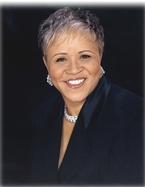
b. 1953 Person Name: Evelyn Simpson-Curenton, b. 1953 Topics: Trust in Jesus Christ Adapter of "LIFT HIM UP" in Lead Me, Guide Me (2nd ed.) Evelyn Simpson Curenton (born 1953) is a leading African-American composer, pianist, organist, and vocalist. Simpson Curenton began piano lessons at age 5, began to perform with the Singing Simpsons of Philadelphia, a family group, and earned a B.M., Music Education and Voice from Temple University. She has been commissioned to write works for the American Guild of Organists, George Shirley, the late Duke Ellington, and her sister, the late Joy Simpson, arranged music for Kathleen Battle, Jessye Norman, and the Porgy and Bess Chorus of the New York Metropolitan Opera, and has performed with musical organizations such as Philadelphia's National Opera Ebony (later renamed Opera North). Based in the Washington, D.C., area, Curenton is Music Director of the Washington Performing Arts Society's Men and Women of the Gospel and an associate of the Smithsonian Institution. She has given lectures and participated in workshops on early 18th-century black religious music and the music of African-Americans during the Civil Rights era. --en.wikipedia.org

Janet Wyatt

b. 1934 Topics: The Church in the World Commitment: Peace and Justice; Christian Perfecction; Commitment; Guidance; Hope; Jesus Christ Kingship, Conqueror; Jesus Christ Lord of Life; Jesus Christ Reign; Justice; Kingdom of God; Love for Others; Peace (World); Reconciliation; Social Concerns; Trust; Truth; World; Advent 1 Year A; Advent 2 Year A; All Saints Year B; Advent 3 Year C; Proper 25 Year C; Proper 28 Year C Arranger of "JERUSALEM" in Voices United

Helen Otte

b. 1931 Person Name: Helen Otte, b. 1931 Topics: Affliction; Atonement; Biblical Names and Places Jerusalem; Church Year All Saints' Day; Church Year Baptism of the Lord; Church Year Easter; Church Year Maundy Thursday; Commitment; Darkness; Despair; Discipleship; Doubt; Elements of Worship Lord's Supper; Elements of Worship Praise and Adoration; Elements of Worship Testimony; Fear; Freedom; God Obedience to; God Trust in; God's Word; God's Forgiveness; God's Goodness; God's Love; God's Name; God's People (flock, sheep); God's Promises; Grace; Gratitude; Grave; Guilt; Jesus Christ Incarnation; Life Stages Death; Loneliness; Love for God; Mercy; Occasional Services Dedication to Discipleship; Offering of Sacrifice; Prayer Answer to; Prayer; Rejoicing; Remnant of Isarel; Rest; Sorrow; Suffering; The Fall; The Incarnation; Vows; Year A, B, C, Holy Week, Maundy Thursday; Year A, Easter, 3rd Sunday; Year A, Ordinary Time after Pentecost, June 12-18 (if ater Trinity Sunday); Year B, Ordinary Time after Pentecost, September 11-17 Author of "I Love You, LORD, for You Have Heard My Voice" in Psalms for All Seasons Helen Ann (Brink) Otte Walter (b. Grand Rapids, MI, 1931) versified this psalm in 1982 for the Psalter Hymnal. She received her education at Calvin College, Grand Rapids, Michigan, and has worked as a teacher, proofreader, and librarian. She was a member of the Poets' Workshop that worked with the revision committee to prepare psalm versifications for the 1987 Psalter Hymnal. After her first husband died and she remarried, she remained active as a freelance writer, especially of children's stories and dramas, some of which have been published in Reformed Worship under the name Helen Walter. Bert Polman

Chas. H. Marsh

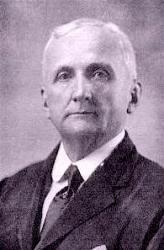
1885 - 1956 Person Name: Charles H. Marsh, 1886-1956 Topics: Trust in Jesus Christ Composer of "[Living he loved me, dying he saved me]" in Lead Me, Guide Me (2nd ed.) Born: April 8, 1886, Magnolia, Iowa. Died: April 12, 1956, La Jolla, California. Buried: Riverview Cemetery, Brawley, California. Marsh’s father was pastor of the Congregational Church in Magnolia, Iowa. His gift for the piano was evident at an early age, and after he graduated from high school, Wilbur Chapman asked him to play for the Winona Lake Chautauqua and Bible Conference in Indiana. He later taught at the Bible Institute of Los Angeles (1915-19) and the University of Redlands (1919-26). He studied music in France in the 1920’s, and became president of the European School of Music and Art in Fort Wayne, Indiana. From 1928 to 1932, he played the organ at the First Presbyterian Church. In 1932, he moved to Florida to become professor of organ at the University of Florida, Gainesville, and to serve as organist and choir director at the First Baptist Church. In 1935, he moved to California, where he worked as district supervisor for the Federal Music Project in San Diego until 1939. He also played the organ and directed the choir at St. James-by-the-Sea Episcopal Church in La Jolla (1936-56). Sources: Erickson, pp. 345-46 Hustad, p. 281 http://www.hymntime.com/tch/bio/m/a/r/s/marsh_ch.htm

Charles Albert Tindley

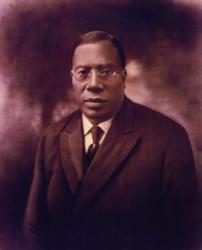
1851 - 1933 Topics: Sanctifiying and Perfecting Grace Prayer, Trust, Hope; Sanctifiying and Perfecting Grace Strength in Triublation; Comfort; Grief; Jesus Christ Presence Author of "Stand By Me" in The United Methodist Hymnal

Claude Goudimel

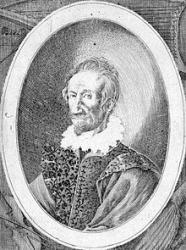
1514 - 1572 Topics: The Christian Year Reign of Christ; Church Ecumenism; Compassion; Courage; Discipleship and Service; Empowerment; Gift(s); Guidance; Healing; Hope; Hunger; Jesus Christ Cross; Jesus Christ Example; Jesus Christ Guide and Leader; Jesus Christ Images of; Jesus Christ Kingship, Conqueror; Jesus Christ Life In; Jesus Christ Reign; Light; Manna, Bread of Life; Mercy; Ministry; Mission and Outreach; Opening Hymns; Peace (World); Providence; Service Music Offering; Sin; Social Concerns; Struggle and Conflict; Temptation; Trust; Unity; Walking with God/Jesus Christ; World; Advent 2 Year A; Epiphany 5 Year A; Epiphany 6 Year A; Ascension Year A; Proper 6 Year A; Proper 12 Year A; Proper 17 Year A; Proper 23 Year A; Proper 28 Year A; Epiphany 4 Year B; Easter 7 Year B; Proper 10 Year B; Proper 11 Year B; Proper 13 Year B; Proper 22 Year B; Proper 23 Year B; Advent 4 Year C; Epiphany 6 Year C; Lent 5 Year C; All Saints Year C; Proper 28 Year C; Ash Wednesday Year ABC Harmonizer of "DONNE SECOURS" in Voices United The music of Claude Goudimel (b. Besançon, France, c. 1505; d. Lyons, France, 1572) was first published in Paris, and by 1551 he was composing harmonizations for some Genevan psalm tunes-initially for use by both Roman Catholics and Protestants. He became a Calvinist in 1557 while living in the Huguenot community in Metz. When the complete Genevan Psalter with its unison melodies was published in 1562, Goudimel began to compose various polyphonic settings of all the Genevan tunes. He actually composed three complete harmonizations of the Genevan Psalter, usually with the tune in the tenor part: simple hymn-style settings (1564), slightly more complicated harmonizations (1565), and quite elaborate, motet-like settings (1565-1566). The various Goudimel settings became popular throughout Calvinist Europe, both for domestic singing and later for use as organ harmonizations in church. Goudimel was one of the victims of the St. Bartholomew's Day massacre of Huguenots, which oc­curred throughout France. Bert Polman

Civilla D. Martin

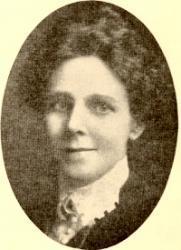
1866 - 1948 Person Name: Civilla D. Martin, 1860-1948 Topics: Trust in Jesus Christ Author of "His Eye Is on the Sparrow" in Lead Me, Guide Me (2nd ed.) Martin, Civilla Durfee (Jordan Falls, Nova Scotia, August 21, 1866--March 9, 1948, Atlanta, Georgia). Daughter of James N. and Irene (Harding) Holden. She married Rev. John F. Geddes, Congregational minister of Coventryvilee, N.Y. at Jordan Falls Methodist Church, Shelbourne Co., Nova Scotia, on May 19, 1891. There is thus far no information about their marriage and its end. After several years of teaching school, she married Walter Stillman Martin, a Baptist minister, and traveled with him in evangelistic work. However, because of frail health, she was compelled to remain home much of the time. In 1916, they became members of the Christian Church (Disciples of Christ). They had one son, A.G. Martin. In her writing, she used only her initials, "C.D." rather than her full name of that of her composer-husband. She is reputed to have written several hundred hymns and religious songs. Her first one, "God Will Take Care of You," written in 1904 became world-famous. Her husband wrote the music for this and many of her other hymns. "His Eye is on the Sparrow" written in 1906 and set to music by Charles H. Gabriel, has also received wide acclaim. In addition to the above, "Like As A Father," "A Welcome for Me," and "The Blood Will Never Lose Its Power" are among her better-known hymns. Her husband and collaborator, W.S. Martin (1862-1935) preceded her in death. For the last 29 years of her life, she made her home in Atlanta, Georgia, where she was a member of the First Christian Church. Her funeral was held on March 10, 1948 at Spring Hill and the interment was in the West View Cemetery in Atlanta. --Carlton C. Buck, DNAH Archives and email from Rev. Lester M. Settle (Glenholme, Nova Scotia) to Mary Louise VanDyke 18 September 2008, DNAH Archives.

John Henry Newman

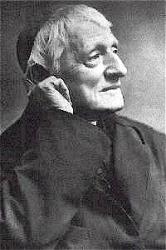
1801 - 1890 Person Name: John Henry Newman, 1801-90 Topics: Church; Confession of Faith; Confirmation Service; Jesus Christ Humanity; Providence; Saints Days and Holy Days Doctors and Confessors; Trinity Sunday; Trust in God Author of "Firmly I believe and truly" in Together in Song Newman, John Henry , D.D. The hymnological side of Cardinal Newman's life and work is so small when compared with the causes which have ruled, and the events which have accompanied his life as a whole, that the barest outline of biographical facts and summary of poetical works comprise all that properly belongs to this work. Cardinal Newman was the eldest son of John Newman, and was born in London, Feb. 21, 1801. He was educated at Ealing under Dr. John Nicholas, and at Trinity College, Oxford, where he graduated in honours in 1820, and became a Fellow of Oriel in 1822. Taking Holy Orders in 1824, he was for a short time Vice-Principal of St. Alban's Hall, and then Tutor of Oriel. His appointment to St. Mary's, Oxford, was in the spring of 1828. In 1827 he was Public Examiner, and in 1830 one of the Select University Preachers. His association with Keble, Pusey, and others, in what is known as "The Oxford Movement," together with the periodical publication of the Tracts for the Times, are matters of history. It is well known how that Tract 90, entitled Bernards on Certain Passages in the Thirty-nine Articles, in 1841, was followed by his retirement to Littlemore; his formal recantation, in February, 1843, of all that he had said against Rome; his resignation in September of the same year of St. Mary's and Littlemore; and of his formal application to be received into the communion of the Church of Rome, Oct. 8, 1845. In 1848 he became Father Superior of the Oratory of St. Philip Neri, at Birmingham; in 1854 Rector of the newly founded Roman Catholic University at Dublin; and in 1858 he removed to the Edgbaston Oratory, Birmingham. In 1879 he was created a Cardinal, and thus received the highest dignity it is in the power of the Pope to bestow. Cardinal Newman's prose works are numerous, and his Parochial Sermons especially being very popular. His Apologia pro Vita Sua, 1864, is a lucid exposition and masterly defence of his life and work. Cardinal Newman's poetical work began with poems and lyrical pieces which he contributed to the British Magazine, in 1832-4 (with other pieces by Keble and others), under the title of Lyra Apostolica. In 1836 these poems were collected and published under the same title, and Greek letters were added to distinguish the authorship of each piece, his being δ. Only a few of his poems from this work have come into use as hymns. The most notable is, "Lead, kindly Light". His Tract for the Times, No. 75, On the Roman Breviary, 1836, contained translations of 14 Latin hymns. Of these 10 were repeated in his Verses on Religious Subjects, 1853, and his Verses on Various Occasions, 1865, and translations of 24 additional Latin hymns were added. Several of these translations are in common use, the most widely known being "Nunc Sancte nobis" ("Come, Holy Ghost, Who ever One"). His collection of Latin hymns from the Roman and Paris Breviaries, and other sources was published as Hymni Ecclesiae, in 1838, and again in 1865. His Dream of Gerontius, a poem from which his fine hymn, "Praise to the Holiest in the height," is taken, appeared in his Verses on Various Occasions, in 1868. Cardinal Newman's influence on hymnology has not been of a marked character. Two brilliant original pieces, and little more than half a dozen translations from the Latin, are all that can claim to rank with his inimitable prose. --John Julian, Dictionary of Hymnology (1907) ================= Newman, John Henry, p. 822, ii. He died at Edgbaston, Birmingham, Aug. 11, 1890. --John Julian, Dictionary of Hymnology, Appendix, Part II (1907) ============== Newman, Card. J. H., pp. 802, ii.; 1581, ii. The following are also in use at the present time, but, except No. 13, almost exclusively in R. C. collections. The dates in brackets are those given in Newman's Verses, 1868; all thus marked were composed in the Birmingham Oratory at these dates:— i. In the Rambler, 1850. 1. In the far North our lot is cast. [S. Philip Neri.] (1850.) March, 1850, p. 250. In the Birmingham Oratory Hymn Book, 1857 and 1906, it begins, " On Northern coasts," and in the Parochial Hymn Book, 1880, with st. ii. " Founder and Sire! to mighty Rome." 2. The Angel-lights of Christmas morn. [Candlemas.] (1849.) March, 1850, p. 251. 3. There sat a Lady all on the ground. [B. V. M.] (1849.) May, 1850, p. 425. ii. Verses, 1853. 4. All is Divine which the Highest has made. [For an inclement May.] (1850.) 1853, p. 128. 5. Green are the leaves, and sweet the flowers. [May.] (1850.) 1853, p. 125. 6. My oldest friend, mine from the hour. [Guardian Angel] (1853.) 1853, p. 12. 7. The holy monks conceal'd from men. [S. Philip Neri.] (1850.) 1853, p. 134. 8. The one true Faith, the ancient Creed. [The Catholic Faith.] 1853, p. 140. 9. This is the saint of sweetness and compassion. [S. Philip Neri.] 1853, p. 136. Rewritten (1857) as "This is the saint of gentleness and kindness" in the Birmingham Oratory Hymn Book, 1857, No. 49. iii. Birmingham Oratory Hymn Book, 1857. 10. Help, Lord, the souls which Thou hast made. [The Faithful Departed.] (1857.) 1857, No. 76. iv. Birmingham Oratory H. Book, 1862. 11. I ask not for fortune, for silken attire. [S. Philip Neri.] (1857.) 1862, No. 54. 12. Thou champion high. [S. Michael.] (1862.) 1862, No. 41. v. Dream of Gerontius, 1866. 13. Firmly I believe and truly. [The Faith of a Christian.] 1866, p. 9; Verses, 1868, p. 318; The English Hymnal 1906. [Rev. James Mearns, M.A.] --John Julian, Dictionary of Hymnology, New Supplement (1907) ----- John Henry Newman was born in London, in 1801. He studied at Trinity College, Oxford, graduating B.A. in 1820, and was subsequently Fellow of Oriel College. In 1825, he became Vice Principal of S. Alban's Hall, and was Tutor of his college for several years. In 1828, he became incumbent of S. Mary's, Oxford, with the chaplaincy of Littlemore. In 1842, he went to preside over a Brotherhood he had established at Littlemore. He was the author of twenty-four of the "Tracts for the Times," amongst them the celebrated Tract No. 90, which brought censure upon its author. In 1845, he left the Church of England and entered the Church of Rome. He was appointed Father Superior of the Oratory of S. Philip Neri, at Birmingham, and in 1854, Rector of the new Roman Catholic University at Dublin, an office he filled till 1858. He has published a large number of works. --Annotations of the Hymnal, Charles Hutchins, M.A. 1872. ====================

A. J. Showalter

1858 - 1924 Person Name: Anthony J. Showalter, 1858-1924 Topics: Trust in Jesus Christ Composer of "SHOWALTER" in Lead Me, Guide Me (2nd ed.) Anthony Johnson Showalter USA 1858-1924/ Born in Cherry Grove, VA, he became an organist, gospel music composer, author, teacher, editor, and publisher. He was taught by his father and in 1876 received training at the Ruebush-Kieffer School of Music, Dayton, VA. He also attended George Root’s National Normal school at Erie, PA, and Dr Palmer’s International Normal at Meadville, PA. He was teaching music in shape note singing schools by age 14. He taught literary school at age 19, and normal music schools at age 22, when he also published his first book. In 1881 he married Lucy Carolyn (Callie) Walser of TX, and they had seven children: Tennie, Karl, Essie, Jennie, Lena, Margaret, and Nellie. At age 23 he published his “Harmony & composition” book, and years later his “Theory of music”. In 1884 he moved to Dalton, GA, and in 1890 formed the Showalter Music Company of Dalton. His company printed and published hymnals, songbooks, schoolbooks, magazines, and newspapers, and had offices in Texarkana, AR, and Chattanooga, TN. In 1888 he became a member of the M T N A (Music Teachers National Association) and was vice-president for his state for several years. In 1895 he went abroad to study methods of teachers and conductors in Europe. He held sessions of his Southern Normal Music Institute in a dozen or more states. He edited “The music teacher & home magazine” for 20 years. In 1895 he issued his “New harmony & composition” book. He authored 60+ books on music theory, harmony, and song. He published 130+ music books that sold over a million copies. Not only was he president of the A J Showalter Music Company of Dalton, GA, but also of the Showalter-Patton Company of Dallas, TX, two of the largest music publishing houses in the American south. He was a choir leader and an elder in the First Presbyterian Church in Dalton (and his daughter, Essie, played the organ there). He managed his fruit farm, looking after nearly 20,000 trees , of which 15,000 are the famous Georgia Elberta peaches, the rest being apples, plums, pecans, and a dozen other varieties of peaches. He was also a stockholder and director of the Cherokee Lumber Company of Dalton, GA, furnishing building materials to a large trade in many southern, central and eastern states. He died in Chattanooga, TN, and is buried in Dalton, GA. He loved hymns, and kept up with many of his students over the years, writing them letters of counsel and encouragement. In 2000 Showalter was inducted into the Southern Gospel Music Hall of Fame. Note: Showalter received two letters one evening from former music students, both of who were grieving over the death of their wives. He had heard a sermon about the arms of Moses being held up during battle, and managed to form a tune and refrain for a hymn, but struggled to find words for the verses that fit. He wrote to his friend in OH, Rev Elisha Hoffman, who had already composed many hymns and asked if he could write some lyrics, which he gladly did. John Perry

Matthias Greiter

1495 - 1550 Person Name: Matthäus Greiter, ca. 1500-1552 Topics: Alleluias; Biblical Names and Places Jacob; Biblical Names and Places Zion; Church Year Advent; Elements of Worship Gathering; Elements of Worship Praise and Adoration; God Light from; God Trust in; God as Refuge; God as Creator; God as King; God's Generosity; God's Justice; Grace; Gratitude; Hymns of Praise; Jesus Christ Healer; Joy; Life Stages Orphans; Life Stages Widows; Lord's Prayer 4th petition (give us today our daily bread); Mercy; Occasional Services Funerals; People of God / Church Citizens of Heaven; People of God / Church Suffering; Poverty; Prayer; Social Justice; The Creation; Year A, Advent, 34d Sunday; Year B, Ordinary Time after Pentecost, October 30-November 5; Year B, Ordinary Time after Pentecost, September 4-10; Year C, Ordinary Time after Pentecost, June 5-11 (if after Trinity Sunday); Year C, Ordinary Time after Pentecost, September 25-October 1 Composer of "OLD 113TH" in Psalms for All Seasons Greitter, Matthäus, was a monk and chorister of Strassburg Cathedral, but in 1524 espoused the cause of the Reformation. In 1528 he was appointed assistant pastor of St. Martin's Church, and afterwards at St. Stephen's. When the Interim [Agricola] was forced on Strassburg, he was the only one of the Lutheran pastors that sought to further it, a course which he afterwards deeply regretted. His death is dated by Wetzel, i. 349, as Dec. 20, 1550; by the Allgemeine Deutsche Biographie, ix. 636, as Nov. 20, 1550; while Koch, ii. 104, says he died of the pestilence in 1552. Greitter was a distinguished musician, and with his friend Dachstein (q.v.) edited the Strassburg Kirchen ampt, 1524-5. Four psalm tunes by Greitter, and one by Dachstein were inserted by Calvin in his first Hymnbook published at Strassburg, 1539. All these were transferred to the first edition of the French-Genevan Psalter in 1542, and two of them, both by Greitter (the tunes to psalms 36 and 91), were retained in the final edition of 1562. Of his seven Psalm versions 4 have been translated into English :— i. Ach Gott, wie lang vergissest mein. Ps. xiii. 1524. Wackernagel, iii. p. 89, in 4 st. Translated as, "O Lord, how lang forever wil thow foirget," in the Gude and Godly Ballates, ed. 1568, folio 46 (1868, p. 78). ii. Da Israel aus Egypten zog. Ps. cxiv. In Die Zwen Psalmen: In exitu Israel, &c, Strassburg, 1527, thence in Wackernagel, iii. p. 93, in 2 stanzas. Translated as, "Quhen, fra Egypt departit Israeli," In the Gude & Godly Ballates, ed. 1568, folio 56 (1868, p. 95). iii. Nicht uns, nicht uns, o ewiger Herr. Ps. cxv, 1527, as ii., and Wackernagel, iii. p. 93, in 4 st. Translated as, “Not unto us, not unto us, O Lord," in the G. & G. Ballates, ed. 1568, folio 56 (1868, p. 95). iv. 0 Herre Gott, begnade mich. Ps. li. 1525. Wackernagel, iii. p. 90, in 5 st. Translated as, "O Lorde God, have mercy on me," by Bishop Coverdale, 1539 (Remains, 1846, p. 574). [Rev.James Mearns, M.A.] --John Julian, Dictionary of Hymnology (1907)

Pages


Export as CSV
It looks like you are using an ad-blocker. Ad revenue helps keep us running. Please consider white-listing Hymnary.org or getting Hymnary Pro to eliminate ads entirely and help support Hymnary.org.