You help make Hymnary.org possible. More than 10 million people from 200+ countries found hymns, liturgical resources and encouragement on Hymnary.org in 2025, including you. Every visit affirms the global impact of this ministry.

If Hymnary has been meaningful to you this year, would you take a moment today to help sustain it? A gift of any size—paired with a note of encouragement if you wish—directly supports the server costs, research work and curation that keep this resource freely available to the world.

Give securely online today, or mail a check to:
Hymnary.org
Calvin University
3201 Burton Street SE
Grand Rapids, MI 49546

Thank you for your partnership, and may the hope of Advent fill your heart.

Search Results

Text Identifier:"^o_would_my_god_that_i_could_praise_thee$"

Planning worship? Check out our sister site, ZeteoSearch.org, for 20+ additional resources related to your search.

Texts

text icon
Text authorities

O would, my God, that I could praise Thee

Author: Johann Mentzer; Catherine Winkworth Appears in 14 hymnals

Tunes

tune icon
Tune authorities
Page scansAudio

Elbe

Appears in 157 hymnals Tune Key: F Major Incipit: 53565 43213 21234 Used With Text: O would, my God, that I could praise Thee
Page scansAudio

WER WEISS, WIE NAHE MIR MEIN ENDE

Meter: 9.8.9.8.8.8 Appears in 103 hymnals Tune Sources: Bronner's Choral-Buch, 1715. Tune Key: B Flat Major Incipit: 51566 54313 43256 Used With Text: O Would, My God, That I Could Praise Thee
Page scansAudio

[O would, my God, that I could praise Thee]

Meter: 9.8.9.8.8.8 Appears in 28 hymnals Composer and/or Arranger: J. D. Meier ; Chr. Möck, d. 1818 Tune Key: G Major Incipit: 17123 43212 32176 Used With Text: O would, my God, that I could praise Thee

Instances

instance icon
Published text-tune combinations (hymns) from specific hymnals
TextPage scan

Oh would, my God, that I could praise Thee

Author: J. Mentzer Hymnal: Chorale Book for England, The #5 (1863) Meter: 9.8.9.8.8.8 Lyrics: Oh would, my God, that I could praise Thee With thousand tongues, by day and night! How many a song my lips should raise Thee, Who order'st all things here aright. My thankful heart would ever be Telling what God hath done for me. O all ye powers that He implanted, Arise, keep silence thus no more, Put forth the strength that He hath granted, Your noblest work is to adore; O soul and body, make ye meet With heartfelt praise your Lord to greet. Ye forest leaves so green and tender, That dance for joy in summer air; Ye meadow grasses bright and slender, Ye flowers, so wondrous sweet and fair; Ye live to show His praise alone, Help me to make His glory known. O all things that have breath and motion, That throng with life earth, sea, and sky, Now join me in my heart's devotion, Help me to raise His praises high, My utmost powers can ne'er aright Declare the wonders of His might. But I will tell, while I am living, His goodness forth with every breath, And greet each morning with thanksgiving, Until my heart is still in death, Nay, when at last my lips grow cold, His praise shall in my sighs be told. O Father, deign Thou, I beseech Thee, To listen to my earthly lays; A nobler strain in heaven shall reach Thee, When I with angels hymn Thy praise, And learn amid their choirs to sing Loud hallelujahs to my King. Languages: English
TextPage scan

O would, my God, that I could praise Thee

Author: J. Mentzer Hymnal: The Lutheran Hymnary #443 (1913) Meter: 9.8.9.8.8.8 Lyrics: 1 O would, my God, that I could praise Thee With thousand tongues, by day and night! How many a song my lips should raise Thee, Who order'st all things here aright! My thankful heart would ever be Telling what God hath done for me. 2 O all ye powers that He implanted, Arise, keep silence thus no more, Put forth the strength that He hath granted, Your noblest work is to adore; O soul and body, make ye meet With heartfelt praise your Lord to greet. 3 Ye forest leaves so green and tender, That dance for joy in summer air; Ye meadow-grasses bright and slender, Ye flowers so wondrous sweet and fair; Ye live to show His praise alone, Help me to make His glory known. 4 O all things that have breath and motion; That throng with life, earth, sea, and sky, Now join me in my heart's devotion, Help me to raise His praises high. My utmost powers can ne'er aright Declare the wonders of His might. 5 But I will tell, while I am living, His goodness forth with every breath, And greet each morning with thanksgiving, Until my heart is still in death. Nay, when at last my lips grow cold, His praise shall in my sighs be told. O Father, deign Thou, I beseech Thee, To listen to my earthly lays; A nobler strain in heaven shall reach Thee, When I with angels hymn Thy praise, And learn amid their choirs to sing Loud Hallelujahs to my King. Topics: The Church Year Twelfth Sunday after Trinity; The Church Year Twelfth Sunday after Trinity; Praise and Prayer; Thanksgiving Tune Title: [O would, my God, that I could praise Thee]
Text

O Would, My God, That I Could Praise Thee

Author: Johann Mentzer Hymnal: The Hymnal and Order of Service #178 (1937) Lyrics: 1 O would, my God, that I could praise Thee With thousand tongues by day and night! How many a song my lips should raise Thee, Who order'st all things here aright! My thankful heart would ever be Telling what God hath done for me. 2 O all ye powers that He implanted, Arise, keep silence thus no more; Put forth the strength that He hath granted, Your noblest work is to adore; O soul and body, make ye meet With heartfelt praise your Lord to greet. 3 O Father, deign Thou, I beseech Thee, To listen to my earthly lays; A nobler strain in heaven shall reach Thee, When I with angels hymn Thy praise, And learn amid their choirs to sing Loud hallelujahs to my King. Amen.

People

person icon
Authors, composers, editors, etc.

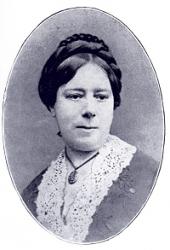
Catherine Winkworth

1827 - 1878 Person Name: Catherine Winkworth, 1827-1878 Translator of "O would, my God, that I could praise Thee" in The Evangelical Hymnal with Tunes Catherine Winkworth (b. Holborn, London, England, 1827; d. Monnetier, Savoy, France, 1878) is well known for her English translations of German hymns; her translations were polished and yet remained close to the original. Educated initially by her mother, she lived with relatives in Dresden, Germany, in 1845, where she acquired her knowledge of German and interest in German hymnody. After residing near Manchester until 1862, she moved to Clifton, near Bristol. A pioneer in promoting women's rights, Winkworth put much of her energy into the encouragement of higher education for women. She translated a large number of German hymn texts from hymnals owned by a friend, Baron Bunsen. Though often altered, these translations continue to be used in many modern hymnals. Her work was published in two series of Lyra Germanica (1855, 1858) and in The Chorale Book for England (1863), which included the appropriate German tune with each text as provided by Sterndale Bennett and Otto Goldschmidt. Winkworth also translated biographies of German Christians who promoted ministries to the poor and sick and compiled a handbook of biographies of German hymn authors, Christian Singers of Germany (1869). Bert Polman ======================== Winkworth, Catherine, daughter of Henry Winkworth, of Alderley Edge, Cheshire, was born in London, Sep. 13, 1829. Most of her early life was spent in the neighbourhood of Manchester. Subsequently she removed with the family to Clifton, near Bristol. She died suddenly of heart disease, at Monnetier, in Savoy, in July, 1878. Miss Winkworth published:— Translations from the German of the Life of Pastor Fliedner, the Founder of the Sisterhood of Protestant Deaconesses at Kaiserworth, 1861; and of the Life of Amelia Sieveking, 1863. Her sympathy with practical efforts for the benefit of women, and with a pure devotional life, as seen in these translations, received from her the most practical illustration possible in the deep and active interest which she took in educational work in connection with the Clifton Association for the Higher Education of Women, and kindred societies there and elsewhere. Our interest, however, is mainly centred in her hymnological work as embodied in her:— (1) Lyra Germanica, 1st Ser., 1855. (2) Lyra Germanica, 2nd Ser., 1858. (3) The Chorale Book for England (containing translations from the German, together with music), 1863; and (4) her charming biographical work, the Christian Singers of Germany, 1869. In a sympathetic article on Miss Winkworth in the Inquirer of July 20, 1878, Dr. Martineau says:— "The translations contained in these volumes are invariably faithful, and for the most part both terse and delicate; and an admirable art is applied to the management of complex and difficult versification. They have not quite the fire of John Wesley's versions of Moravian hymns, or the wonderful fusion and reproduction of thought which may be found in Coleridge. But if less flowing they are more conscientious than either, and attain a result as poetical as severe exactitude admits, being only a little short of ‘native music'" Dr. Percival, then Principal of Clifton College, also wrote concerning her (in the Bristol Times and Mirror), in July, 1878:— "She was a person of remarkable intellectual and social gifts, and very unusual attainments; but what specially distinguished her was her combination of rare ability and great knowledge with a certain tender and sympathetic refinement which constitutes the special charm of the true womanly character." Dr. Martineau (as above) says her religious life afforded "a happy example of the piety which the Church of England discipline may implant.....The fast hold she retained of her discipleship of Christ was no example of ‘feminine simplicity,' carrying on the childish mind into maturer years, but the clear allegiance of a firm mind, familiar with the pretensions of non-Christian schools, well able to test them, and undiverted by them from her first love." Miss Winkworth, although not the earliest of modern translators from the German into English, is certainly the foremost in rank and popularity. Her translations are the most widely used of any from that language, and have had more to do with the modern revival of the English use of German hymns than the versions of any other writer. -- John Julian, Dictionary of Hymnology (1907) ============================ See also in: Hymn Writers of the Church

Johann Mentzer

1658 - 1734 Author of "O would, my God, that I could praise Thee" in The Evangelical Hymnal with Tunes Mentzer, Johann, was born July 27, 1658, at Jahmen, near Rothenburg, in Silesia, and became a student of theology at Wittenberg, In 1691 he was appointed pastor at Merzdorf; in 1693 at Hauswalde, near Bischofswerda; and in 1696 at Kemnitz, near Bernstadt, Saxony. He died at Kemnitz, Feb. 24, 1734 (G. F. Otto's Lexicon . . . Oberlausizischer Schriftsteller, ii., 581; ms. from Pastor Richter of Kemnitz, &c). He was a great friend of J. C. Schwedler, of Henrietta Catherine von Gersdorf, and of N. L. von Zinzendorf, all hymnwriters, and all his near neighbours. He was himself greatly tried in the furnace of affliction. He wrote a large number of hymns, over 30 of which appeared in the various hymnbooks of his time. Many of them, especially those of Praise and Thanksgiving, and those of Cross and Consolation, are of high merit, though sometimes exaggerated and not very refined in their imagery, and are full of ardent love to Christ, Scriptural, poetical, and also popular in style. The only one in English common use is:— 0 dass ich tausend Zungen hatte. Praise and Thanksgiving. His best hymn. First published as No. 496, in Freylinghausen's Gesang-Buch, 1704, in 15 st. of 6 1., and repeated in many later collections as the Unverfälschter Liedersegen, 1851, No. 719. Lauxmann, in Koch viii. 350, says this hymn was written in 1704 after his house was burned down. In reply to enquiries addressed to Kemnitz, pastor Richter informs me that the parsonage house there was built in the years 1696 and 1697, and has never been burned down. In 1697 a farmhouse near was destroyed by lightning, and possibly Mentzer may have been living there at the time; or at any rate this may have suggested the hymn and the story. Lauxmann speaks of the hymn as having been a great favourite of Caroline Perthes of Hamburg, and of J. C. Schlipalius of Dresden, and relates various incidents regarding its blessed and comforting effects. The translations in common use are:— 1. Oh that I had a thousand voices! A mouth. A full translation by Dr. H. Mills, in his Horae Germanica, 1845 (1856, p. 189); repeated, abridged, in the American Lutheran General Synod's Collection, 1850-52, the Ohio Lutheran Hymnal, 1880, &c. 2. Oh be unceasing praise ascending. A good translation of st. i., vii., viii., by A. T. Russell, as No. 203, in his Psalms & Hymns, 1851. 3. Oh would I had a thousand tongues. A good translation, omitting stanzas ix., x., xiii., by Miss Winkworth, in her Lyra Germanica, 1st Ser., 1855, p. 170; and repeated, abridged, in the Methodist New Congregational Hymn Book, 1863. 4. 0 would, my God, that I could praise Thee. A good translation, in the original metre, by Miss Winkworth, in her Chorale Book for England, 1863, No. 5, being of stanzas i., iii.—v, xiv., xv. This was repeated in the Evangelical Hymnal, N. Y., 1830. A filtered form, beginning with st. iii., "0 all ye powers that God implanted” is in Dr. Knight's Collection, Dundee, 1871 and 1874. 5. I praise Thee, 0 my God and Father. By Miss Winkworth, in her Chorale Book for England, 1863, No. 6. This is of st. vi.-viii., xi., xii., and fol¬lows the text of Bunsen's Versuch, 1833, No. 846, this stanza beginning there, "Lob sei dir, treuer Gott und Vater." Her translation is repeated in Dr. Thomas's Augustine Hymn Book, 1866. Other translations are:— (1) "0 that a thousand tongues were granted," by N. L. Frothingham, 1810, p. 155. (2) "0 that a thousand tongues were mine, And each," by Dr. Alexander Mair in the Family Treasury, 1872, p. 462. Other hymns by Mentzer, translated into English but not in common use are:— ii. Du gehest in den Garten beten. Passiontide. First published in the Löbau Gesang-Buch, 1725, as No. 370, in 12 stanzas of 6 lines, marked as by Mentzer and entitled "The true school of prayer of Jesus, praying on the Mount of Olives, Matt. xxvi. 36-46." In the Berlin Geistliche Lieder, ed. 1863, No. 223, beginning "Du gehst zum Garten urn zu beten," and wrongly ascribed to B. Schmolck. Translated as "Into the garden shade to pray," by J. Kelly, in the Family Treasury, 1868, p. 691. iii. Wer das Kleinod will erlangen. Christian Warfare. A call to spiritual energy, founded on 1 Cor. ix. 24, 25. Included as No. 783 in the Neuvermehrtes Geistreiches Gesang-Buch Berlin, 1711, in 6 stanzas of 8 lines; and previously in Schlechtiger's Gesang-Buch, Berlin, 1704. In the Berlin Geistliche Lieder, ed. 1863, No. 679. Translated as "Who would make the prize his own." By Miss Winkworth, 1858, p. 167. [Rev. James Mearns, M.A.] -- John Julian, Dictionary of Hymnology (1907)

Johann Balthasar König

1691 - 1758 Person Name: Johann Balthasar König, 1691-1758 Composer (melody) of "TAUSEND ZUNGEN" in Hymnal and Liturgies of the Moravian Church Johann Balthasar König; b. 1691, Waltershausen, near Gotha; d. 1758, Frankfort Evangelical Lutheran Hymnal, 1908
It looks like you are using an ad-blocker. Ad revenue helps keep us running. Please consider white-listing Hymnary.org or getting Hymnary Pro to eliminate ads entirely and help support Hymnary.org.