

 My Starred Hymns
 My FlexScores
 My Hymnals
 My Purchased Files
Planning worship?
Check out our sister site, ZeteoSearch.org,
for 20+ additional resources related to your search.
- |
User Links
Person Results
John Chandler
1806 - 1876 Person Name: J. Chandler Translator of "O Holy Spirit, Lord of Grace" in Rejoice in the Lord John Chandler, one of the most successful translators of hymns, was born at Witley in Surrey, June 16, 1806. He was educated at Corpus Christi College, Oxford, B.A. 1827, M.A. 1830. Ordained deacon in 1831 and priest in 1832, he succeeded his father as the patron and vicar of Whitley, in 1837. His first volume, entitled The Hymns of the Primitive Church, now first Collected, Translated and Arranged, 1837, contained 100 hymns, for the most part ancient, with a few additions from the Paris Breviary of 1736. Four years later, he republished this volume under the title of hymns of the Church, mostly primitive, collected, translated and arranged for public use, 1841. Other publications include a Life of William of Wykeham, 1842, and Horae sacrae: prayers and meditations from the writings of the divines of the Anglican Church, 1854, as well as numerous sermons and tracts. Chandler died at Putney on July 1, 1876.
--The Hymnal 1940 Companion
===============
Chandler, John, M.A.,one of the earliest and most successful of modern translators of Latin hymns, son of the Rev. John F. Chandler, was born at Witley, Godalming, Surrey, June 16, 1806, and educated at Corpus Christi College, Oxford, where he graduated in 1827. He took Holy Orders in 1831, and became Vicar of Witley in 1837. He died at Putney, July 1, 1876. Besides numerous Sermons and Tracts, his prose works include Life of William of Wykeham, 1842; and Horae Sacrae; Prayers and Meditations from the writings of the Divines of the Anglican Church, with an Introduction, 1844. His translations, he says, arose out of his desire to see the ancient prayers of the Anglican Liturgy accompanied by hymns of a corresponding date of composition, and his inability to find these hymns until he says,
"My attention was a short time ago directed to some translations [by Isaac Williams] which appeared from time to time in the British Magazine, very beautifully executed, of some hymns extracted from the Parisian Breviary,with originals annexed. Some, indeed, of the Sapphic and Alcaic and other Horatian metres, seem to be of little value; but the rest, of the peculiar hymn-metre, Dimeter Iambics, appear ancient, simple, striking, and devotional—in a word in every way likely to answer our purpose. So I got a copy of the Parisian Breviary [1736], and one or two other old books of Latin Hymns, especially one compiled by Georgius Cassander, printed at Cologne, in the year 1556, and regularly applied myself to the work of selection and translation. The result is the collection I now lay before the public." Preface, Hymns of the Primitive Church, viii., ix.
This collection is:—
(1) The Hymns of the Primitive Church, now first Collected, Translated, and Arranged, by the Rev. J. Chandler. London, John W. Parker, 1837. These translations were accompanied by the Latin texts. The trsanslations rearranged, with additional translations, original hymns by Chandler and a few taken from other sources, were republished as (2) The Hymns of the Church, mostly Primitive, Collected, Translated, and Arranged/or Public Use, by the Rev. J. Chandler, M.A. London, John W. Parker, 1841.
From these works from 30 to 40 translations have come gradually into common use, some of which hold a foremost place in modern hymnals, "Alleluia, best and sweetest;" "Christ is our Corner Stone;" "On Jordan's bank the Baptist's cry;" "Jesus, our Hope, our hearts' Desire;" "Now, my soul, thy voice upraising;" "Once more the solemn season calls;" and, "O Jesu, Lord of heavenly grace;" being those which are most widely used. Although Chandler's translations are somewhat free, and, in a few instances, doctrinal difficulties are either evaded or softened down, yet their popularity is unquestionably greater than the translations of several others whose renderings are more massive in style and more literal in execution.
--John Julian, Dictionary of Hymnology (1907)
John Chandler
Thomas Tallis
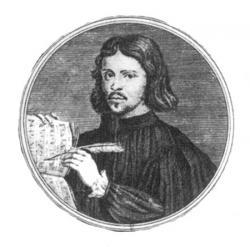
1505 - 1585 Composer of "TALLIS' ORDINAL" in The Hymnal Thomas Tallis (b. Leicestershire [?], England, c. 1505; d. Greenwich, Kent, England 1585) was one of the few Tudor musicians who served during the reigns of Henry VIII: Edward VI, Mary, and Elizabeth I and managed to remain in the good favor of both Catholic and Protestant monarchs. He was court organist and composer from 1543 until his death, composing music for Roman Catholic masses and Anglican liturgies (depending on the monarch). With William Byrd, Tallis also enjoyed a long-term monopoly on music printing. Prior to his court connections Tallis had served at Waltham Abbey and Canterbury Cathedral. He composed mostly church music, including Latin motets, English anthems, settings of the liturgy, magnificats, and two sets of lamentations. His most extensive contrapuntal work was the choral composition, "Spem in alium," a work in forty parts for eight five-voice choirs. He also provided nine modal psalm tunes for Matthew Parker's Psalter (c. 1561).
Bert Polman
Thomas Tallis
John J. Overholt
1918 - 2000 Person Name: Compiler Alterer of "Stand Up, and Bless the Lord, Your God" in The Christian Hymnary John J. Overholt was born to an Amish family of limited means in the state of Ohio in 1918. As a child he was soon introduced to his father's personal collection of gospel songs and hymns, which was to have a marked influence on his later life. With his twin brother Joe, he early was exposed to the Amish-Mennonite tradition hymn-singing and praising worship.
An early career in Christian service led to a two-year period of relief work in the country of Poland following World War II. During that interim he began to gather many European songs and hymns as a personal hobby, not realizing that these selections would become invaluable to The Christian Hymnary which was begun in 1960 and completed twelve years later in 1972, with a compilation of 1000 songs, hymns and chorales. (The largest Menn. hymnal).
A second hymnal was begun simultaneously in the German language entitled Erweckungs Lieder Nr.1 which was brought to completion in 1986. This hymnal has a total of 200 selections with a small addendum of English hymns.
Mr. Overholt married in 1965 to an accomplished soprano Vera Marie Sommers, who was not to be outdone by her husband's creativity and compiled a hymnal of 156 selections entitled Be Glad and Sing, directed to children and youth and first printed in 1986.
During this later career of hymn publishing, Mr. Overholt also found time for Gospel team work throughout Europe. At this writing he is preparing for a 5th consecutive tour which he arranges and guides. The countries visited will be Belgium, Switzerland, France, Germany, Poland, USSR and Romania.
Mr. Overholt was called to the Christian ministry in 1957 and resides at Sarasota, Florida where he is co-minister of a Beachy Amish-Mennonite Church.
Five children were born to this family and all enjoy worship in song.
--Letter from Hannah Joanna Overholt to Mary Louise VanDyke, 10 October 1990, DNAH Archives. Photo enclosed.
John J. Overholt
Charles Wesley
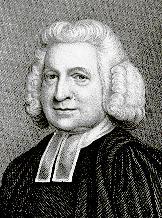
1707 - 1788 Person Name: Charles Wesley, 1707-1788 Author of "Come, Holy Ghost, our hearts inspire" in The Book of Praise Charles Wesley, M.A. was the great hymn-writer of the Wesley family, perhaps, taking quantity and quality into consideration, the great hymn-writer of all ages. Charles Wesley was the youngest son and 18th child of Samuel and Susanna Wesley, and was born at Epworth Rectory, Dec. 18, 1707. In 1716 he went to Westminster School, being provided with a home and board by his elder brother Samuel, then usher at the school, until 1721, when he was elected King's Scholar, and as such received his board and education free. In 1726 Charles Wesley was elected to a Westminster studentship at Christ Church, Oxford, where he took his degree in 1729, and became a college tutor. In the early part of the same year his religious impressions were much deepened, and he became one of the first band of "Oxford Methodists."
In 1735 he went with his brother John to Georgia, as secretary to General Oglethorpe, having before he set out received Deacon's and Priest's Orders on two successive Sundays. His stay in Georgia was very short; he returned to England in 1736, and in 1737 came under the influence of Count Zinzendorf and the Moravians, especially of that remarkable man who had so large a share in moulding John Wesley's career, Peter Bonier, and also of a Mr. Bray, a brazier in Little Britain. On Whitsunday, 1737, [sic. 1738] he "found rest to his soul," and in 1738 he became curate to his friend, Mr. Stonehouse, Vicar of Islington, but the opposition of the churchwardens was so great that the Vicar consented that he "should preach in his church no more." Henceforth his work was identified with that of his brother John, and he became an indefatigable itinerant and field preacher. On April 8, 1749, he married Miss Sarah Gwynne. His marriage, unlike that of his brother John, was a most happy one; his wife was accustomed to accompany him on his evangelistic journeys, which were as frequent as ever until the year 1756," when he ceased to itinerate, and mainly devoted himself to the care of the Societies in London and Bristol. Bristol was his headquarters until 1771, when he removed with his family to London, and, besides attending to the Societies, devoted himself much, as he had done in his youth, to the spiritual care of prisoners in Newgate. He had long been troubled about the relations of Methodism to the Church of England, and strongly disapproved of his brother John's "ordinations." Wesley-like, he expressed his disapproval in the most outspoken fashion, but, as in the case of Samuel at an earlier period, the differences between the brothers never led to a breach of friendship. He died in London, March 29, 1788, and was buried in Marylebone churchyard. His brother John was deeply grieved because he would not consent to be interred in the burial-ground of the City Road Chapel, where he had prepared a grave for himself, but Charles said, "I have lived, and I die, in the Communion of the Church of England, and I will be buried in the yard of my parish church." Eight clergymen of the Church of England bore his pall. He had a large family, four of whom survived him; three sons, who all became distinguished in the musical world, and one daughter, who inherited some of her father's poetical genius. The widow and orphans were treated with the greatest kindness and generosity by John Wesley.
As a hymn-writer Charles Wesley was unique. He is said to have written no less than 6500 hymns, and though, of course, in so vast a number some are of unequal merit, it is perfectly marvellous how many there are which rise to the highest degree of excellence. His feelings on every occasion of importance, whether private or public, found their best expression in a hymn. His own conversion, his own marriage, the earthquake panic, the rumours of an invasion from France, the defeat of Prince Charles Edward at Culloden, the Gordon riots, every Festival of the Christian Church, every doctrine of the Christian Faith, striking scenes in Scripture history, striking scenes which came within his own view, the deaths of friends as they passed away, one by one, before him, all furnished occasions for the exercise of his divine gift. Nor must we forget his hymns for little children, a branch of sacred poetry in which the mantle of Dr. Watts seems to have fallen upon him. It would be simply impossible within our space to enumerate even those of the hymns which have become really classical. The saying that a really good hymn is as rare an appearance as that of a comet is falsified by the work of Charles Wesley; for hymns, which are really good in every respect, flowed from his pen in quick succession, and death alone stopped the course of the perennial stream.
It has been the common practice, however for a hundred years or more to ascribe all translations from the German to John Wesley, as he only of the two brothers knew that language; and to assign to Charles Wesley all the original hymns except such as are traceable to John Wesley through his Journals and other works.
The list of 482 original hymns by John and Charles Wesley listed in this Dictionary of Hymnology have formed an important part of Methodist hymnody and show the enormous influence of the Wesleys on the English hymnody of the nineteenth century.
-- Excerpts from John Julian, Dictionary of Hymnology (1907)
==================
Charles Wesley, the son of Samuel Wesley, was born at Epworth, Dec. 18, 1707. He was educated at Westminster School and afterwards at Christ Church, Oxford, where he graduated M.A. In 1735, he took Orders and immediately proceeded with his brother John to Georgia, both being employed as missionaries of the S.P.G. He returned to England in 1736. For many years he engaged with his brother in preaching the Gospel. He died March 29, 1788. To Charles Wesley has been justly assigned the appellation of the "Bard of Methodism." His prominence in hymn writing may be judged from the fact that in the "Wesleyan Hymn Book," 623 of the 770 hymns were written by him; and he published more than thirty poetical works, written either by himself alone, or in conjunction with his brother. The number of his separate hymns is at least five thousand.
--Annotations of the Hymnal, Charles Hutchins, M.A., 1872.
Charles Wesley
Joseph Addison
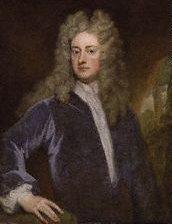
1672 - 1719 Author of "When all Thy mercies, O my God" in The Hymnal Addison, Joseph, born at Milston, near Amesbury, Wiltshire, May 1, 1672, was the son of the Rev. Lancelot Addison, sometime Dean of Lichfield, and author of Devotional Poems, &c, 1699. Addison was educated at the Charterhouse, and at Magdalen College, Oxford, graduating B.A. 1691 and M.A. 1693. Although intended for the Church, he gave himself to the study of law and politics, and soon attained, through powerful influence, to some important posts. He was successively a Commissioner of Appeals, an Under Secretary of State, Secretary to the Lord Lieutenant of Ireland, and Chief Secretary for Ireland. He married, in 1716, the Dowager Countess of Warwick, and died at Holland House, Kensington, June 17, 1719. Addison is most widely known through his contributions to The Spectator, The Toiler, The Guardian, and The Freeholder. To the first of these he contributed his hymns. His Cato, a tragedy, is well known and highly esteemed. Addison's claims to the authorship of the hymns usually ascribed to him, or to certain of them, have been called in question on two occasions. The first was the publication, by Captain Thompson, of certain of those hymns in his edition of the Works of Andrew Marvell, 1776, as the undoubted compositions of Marvell; and the second, a claim in the Athenaeum, July 10th, 1880, on behalf of the Rev. Richard Richmond. Fully to elucidate the subject it will be necessary, therefore, to give a chronological history of the hymns as they appeared in the Spectator from time to time.
i. The History of the Hymns in The Spectator. This, as furnished in successive numbers of the Spectator is :—
1. The first of these hymns appeared in the Spectator of Saturday, July 26, 1712, No. 441, in 4 stanzas of 6 lines. The article in which it appeared was on Divine Providence, signed “C." The hymn itself, "The Lord my pasture shall prepare," was introduced with these words:—
"David has very beautifully represented this steady reliance on God Almighty in his twenty-third psalm, which is a kind of pastoral hymn, and filled with those allusions which are usual in that kind of writing As the poetry is very exquisite, I shall present my readers with the following translation of it." (Orig. Broadsheet, Brit. Mus.)
2. The second hymn appeared in the Spectator on Saturday, Aug. 9, 1712, No. 453, in 13 st. of 4 1., and forms the conclusion of an essay on " Gratitude." It is also signed " C," and is thus introduced:—
“I have already obliged the public with some pieces of divine poetry which have fallen into my hands, and as they have met with the reception which they deserve, I shall, from time to time, communicate any work of the same nature which has not appeared in print, and may be acceptable to my readers." (Orig. Broadsheet, British Museum)
Then follows the hymn:—"When all Thy mercies, 0 my God."
3. The number of the Spectator for Tuesday, Aug. 19, 1712, No. 461, is composed of three parts. The first is an introductory paragraph by Addison, the second, an unsigned letter from Isaac Watts, together with a rendering by him of Ps. 114th; and the third, a letter from Steele. It is with the first two we have to deal. The opening paragraph by Addison is:—
“For want of time to substitute something else in the Boom of them, I am at present obliged to publish Compliments above my Desert in the following Letters. It is no small Satisfaction, to have given Occasion to ingenious Men to employ their Thoughts upon sacred Subjects from the Approbation of such Pieces of Poetry as they have seen in my Saturday's papers. I shall never publish Verse on that Day but what is written by the same Hand; yet shall I not accompany those Writings with Eulogiums, but leave them to speak for themselves." (Orig. Broadsheet, British Museum
Joseph Addison
John Ellerton

1826 - 1893 Author of "Behold us, Lord, a little space" in Christian Praise John Ellerton (b. London, England, 1826; d. Torquay, Devonshire, England, 1893) Educated at King William's College on the Isle of Man and at Trinity College, Cambridge, England, he was ordained in the Church of England in 1851. He served six parishes, spending the longest time in Crewe Green (1860-1872), a church of steelworkers and farmers. Ellerton wrote and translated about eighty hymns, many of which are still sung today. He helped to compile Church Hymns and wrote its handbook, Notes and Illustrations to Church Hymns (1882). Some of his other hymn texts were published in The London Mission Hymn Book (1884).
Bert Polman
=========================
Ellerton, John, M.A., son of George Ellerton, was born in London, Dec. 16, 1826, and educated at Trinity College, Cambridge (B.A. 1849; M.A. 1854). Taking Holy Orders he was successively Curate of Easebourne, Sussex, 1850; Brighton, and Lecturer of St. Peter's, Brighton, 1852; Vicar of Crewe Green, and Chaplain to Lord Crewe, 1860; Rector of Hinstock, 1872; of Barnes, 1876; and of White Roding, 1886. Mr. Ellerton's prose writings include The Holiest Manhood, 1882; Our Infirmities, 1883, &c. It is, however, as a hymnologist, editor, hymnwriter, and translator, that he is most widely known. As editor he published: Hymns for Schools and Bible Classes, Brighton, 1859. He was also co-editor with Bishop How and others of the Society for Promoting Christian Knowledge Church Hymns, 1871. His Notes and Illustrations of Church Hymns, their authors and translators, were published in the folio edition of 1881. The notes on the hymns which are special to the collection, and many of which were contributed thereto, are full, accurate, and of special value. Those on the older hymns are too general for accuracy. They are written in a popular form, which necessarily precludes extended research, fulness, and exactness of detail. The result is acceptable to the general public, but disappointing to the hymnological expert. Mr. Ellerton's original hymns number about fifty, and his translations from the Latin ten or more. Nearly every one of these are in common use and include:—
1. Before the day draws near its ending. Afternoon. Written April 22, 1880, for a Festival of Choirs at Nantwich, and first published in the Nantwich Festival Book, 1880. In 1883 it passed into the Westminster Abbey Hymn Book.
2. Behold us, Lord, a little space. General for Weekdays. Written in 1870 for a mid-day service in a City Church, and published in Church Hymns in 1871. It has passed into several collections.
3. Come forth, 0 Christian brothers. Processional for Choral Festival. Written for a Festival of Parochial Choirs held at Chester, May, 1870, and 1st printed in the Service-book of the same. In 1871 it passed into Church Hymns.
4. Father, Name of love and fear. Confirmation. Written in 1871 for a Confirmation in the North of England, and published in Church Hymns, 1871, and other collections.
5. God, Creator and Preserver. In Time of Scarcity. Written for and first published in The Hymnary, 1870; and again in the revised edition, 1872, and other hymnbooks.
6. Hail to the Lord Who comes. Presentation of Christ in the Temple. Written Oct. 6, 1880, for Mrs. Brock's Children's Hymn Book, and published therein, 1881.
7. In the Name which earth and heaven. Foundation of a Church. Written for and first published in Church Hymns, 1871, and repeated in several collections. The hymn sung at the re-opening of the Nave of Chester Cathedral, January 25, 1872, was compiled by Mr. Ellerton from this hymn, and his "Lift the strain of high thanksgiving.”
8 King Messiah, long expected. The Circumcision. Written Jan. 14, 1871, and first published in Church Hymns, 1871. It has passed into other collections.
9. King of Saints, to Whom the number. St. Bartholomew. Written for and first published in Church Hymns., 1871. It is very popular, and has been repeated in many hymnals.
10. Mary at the Master's feet. Catechizing. Written for and first published in Church Hymns, 1871.
11. O Father, all-creating. Holy Matrimony. Written Jan. 29, 1876, at the request of the Duke of Westminster, for the marriage of his daughter to the Marquess of Ormonde. It was published in Thring's Collection, 1880 and 1882.
12 O! how fair the morning broke. Septuagesima. Written March 13, 1880, for Mrs. Brock's Children's Hymn Book, and included therein, 1881.
13. O Lord of life and death, welcome. In Time of Pestilence. Written for and first published in Church Hymns, 1871.
14. O shining city of our God. Concerning the Hereafter. First published in the Rev. R. Brown-Borthwick's Sixteen Hymns with Tunes, &c, 1870; and again in Church Hymns, 1871.
15. O Son of God, our Captain of Salvation. St. Barnabas. Written April 5, 1871, and first published in Church Hymns, 1871; and again in Hymns Ancient & Modern, 1875, Thring's Collection, 1882, and others.
16. O Thou in Whom Thy saints repose. Consecration of a Burial Ground. Written for the consecration of an addition to the Parish Churchyard of Tarporley, Cheshire, 1870, and published in Church Hymns, 1871.
17. O Thou Whose bounty fills the earth. Flower Services. Written for a Flower Service at St. Luke's Church, Chelsea, June 6, 1880, and published in Mrs. Brock's Children's Hymn Book, 1881.
18. Praise to our God, Whose bounteous hand. National Thanksgiving. Written in 1870 for Church Hymns, but first published in the Rev. R. Brown-Borthwick's Select Hymns, &c., 1871, and then in Church Hymns later the same year.
19. The day Thou gavest, Lord, is ended. The darkness, &c. Evening. Written in 1870 for A Liturgy for Missionary Meetings (Frome, Hodges), and revised for Church Hymns, 1871. The revised form has passed into other collections.
20. The Lord be with us when we bend. Close of Afternoon Service. Written [in 1870] at the request of a friend for use at the close of Service on Sunday afternoons when (as in summer) strictly Evening hymns would be unsuitable. It was published in Church Hymns, 1871, Thring's Collection, 1882, and others.
21. This day the Lord's disciples met. Whitsuntide. "Originally written in 1855 for a class of children, as a hymn of 8 verses of 5 lines each, beginning, 'The Fiftieth day was come at last.’ It was abridged, revised, and compressed into C.M. for Mrs. Brock's Children's Hymn Book, 1880," and published therein, 1881.
22. Thou in Whose Name the two or three. Wednesday. Appeared in the Parish Magazine, May, 1871, as a hymn for Wednesday. After revision it was included in Church Hymns, 1871, and repeated in other collections.
23. Thou Who sentest Thine Apostles. SS. Simon and Jude. Written in June, 1874, for the revised edition of Hymns Ancient & Modern, and published in the same in 1875.
24. We sing the glorious conquest. Conversion of St. Paul. Written Feb. 28, 1871, for and published later the same year in Church Hymns. It was repeated in Hymns Ancient & Modern, 1875.
25. When the day of toil is done. Eternal Best. Written in Jan., 1870, and first published in the Rev. R. Brown-Borthwick's Sixteen Hymns with Tunes, &c. 1870, Church Hymns, 1871, and subsequently in several Scottish hymn-books. The tune "Preston," in Church Hymns was written for this hymn.
To these hymns must be added those which are annotated under their respective first lines, and the translations from the Latin. The grandest of his original compositions is, "Throned upon the awful tree," and the most beautiful and tender, "Saviour, again to Thy dear Name we raise"; and of his translations, "Sing Alleluia forth in duteous praise," and "Welcome, happy morning, age to age shall say," are the most successful and popular. The subjects of Mr. Ellerton's hymns, and the circumstances under which they were written, had much to do with the concentration of thought and terseness of expression by which they are characterized. The words which he uses are usually short and simple; the thought is clear and well stated; the rhythm is good and stately. Ordinary facts in sacred history and in daily life are lifted above the commonplace rhymes with which they are usually associated, thereby rendering the hymns bearable to the cultured, and instructive to the devout. His antitheses are frequent and terse, almost too much so for devotional verse, and are in danger of interrupting the tranquil flow of devotion. His sympathy with nature, especially in her sadder moods, is great; he loves the fading light and the peace of eve, and lingers in the shadows. Unlike many writers who set forth their illustrations in detail, and then tie to them the moral which they are to teach, he weaves his moral into his metaphor, and pleases the imagination and refreshes the spirit together. Now and again he falls into the weakness of ringing changes on words; but taken as a whole his verse is elevated in tone, devotional in spirit, and elegant in diction.
-- John Julian, Dictionary of Hymnology (1907)
=====================
Ellerton, John, p. 326, i. Other hymns are:—
1. O Father, bless the children. Holy Baptism. Written in 1886, and published in his Hymns, &c, 1888, in 4 stanzas of 8 lines. Also in the 1889 Suppl. Hymns to Hymns Ancient & Modern.
2. O Thou Who givest food to all. Temperance. Written Aug. 30, 1882, and printed in the Church of England Temperance Chronicle, Sept. 1882. Also in his Hymns, &c, 1888.
3. Praise our God for all the wonders. St. Nicholas's Day. Dated in his Hymns, 1888, "December 1882." It was written for the Dedication Festival of St. Nicholas's Church, Brighton, and first printed as a leaflet in 1882.
4. Praise our God, Whose open hand. Bad Harvest. Written as a hymn for the bad harvest of 1881, and printed in the Guardian in August of that year. Also in his Hymns, &c, 1888.
5. Praise to the Heavenly Wisdom. St. Matthias's Day. Dated in his Hymns, &c, 1888, "January, 1888." Also in the 1889 Suppl. Hymns to Hymns Ancient & Modern.
6. Shine Thou upon us, Lord. For a Teachers' Meeting. Contributed to the 1889 Suppl. Hymns to Hymns Ancient & Modern.
7. Thou Who wearied by the well. Temperance. Written for the Opening of a Workmen's Coffee Tavern, and dated in his Hymns, &c, 1888, "September 23, 1882." It was printed in the Church of England Temperance Chronicle the same year.
8. Throned upon the awful Tree. Good Friday. Written in 1875, and published in the 1875 ed. of Hymns Ancient & Modern. It has passed into many collections, and is one of the finest of Mr. Ellerton's productions.
Mr. Ellerton's original and translated hymns to the number of 76 were collected, and published by Skeffington & Son in 1888, as Hymns, Original and Translated. By John Ellerton, Rector of White Roding.
--John Julian, Dictionary of Hymnology, Appendix, Part II (1907)
===================
Ellerton, J., pp. 326, ii.; 1561, ii. He was appointed Hon. Canon of St. Albans in 1892. and died June 15, 1893. His Life and Works, by H. Housman, was published in 1896.
--John Julian, Dictionary of Hymnology, New Supplement (1907)
John Ellerton
Anna Letitia Waring
1823 - 1910 Person Name: Anna L. Waring Author of "My Heart Is Resting" in The Church Hymnal See also in:
Hymn Writers of the Church
================
Waring, Anna Laetitia, daughter of Elijah Waring, and niece of Samuel Miller Waring, was born at Neath, Glamorganshire, in 1820. In 1850 she published her Hymns and Meditations, by A. L. W., a small book of 19 hymns. The 4th edition was published in 1854. The 10th edition, 1863, is enlarged to 38 hymns. She also published Additional Hymns, 1858, and contributed some pieces to the Sunday Magazine, 1871. Her most widely known hymns are: "Father, I know that all my life," "Go not far from me, O my Strength," and "My heart is resting, O my God." The rest in common use include:—
1. Dear Saviour of a dying world. Resurrection. (1854.)
2. In heavenly love abiding. Safety in God. (1850.)
3. Jesus, Lord of heaven above. Love to Jesus desired. (1854.)
4. Lord, a happy child of Thine. Evening. (1850.)
5. My Saviour, on the [Thy] words of truth. Hope in the Word of God. (1850.) Sometimes stanza iv., "It is not as Thou wilt with me," is given separately.
6. O this is blessing, this is rest. Rest in the Love of Jesus. (1854.)
7. O Thou Lord of heaven above. The Resurrection.
8. Source of my life's refreshing springs. Rest in God. (1850.)
9. Sunlight of the heavenly day. New Year (1854.)
10. Sweet is the solace of Thy love. Safety and Comfort in God. (1850.)
11. Tender mercies on my way. Praise of Divine Mercies. (1850.)
12. Thanksgiving and the voice of melody. New Year (1854).
13. Though some good things of lower worth. Love of God in Christ, (1860.)
These hymns are marked by great simplicity, concentration of thought, and elegance of diction. They are popular, and deserve to be so. [George Arthur Crawford, M.A.]
-- John Julian, Dictionary of Hymnology (1907)
===============
Waring, Anna L., p. 1233, ii. Of her hymns we have found the following in Lovell Squire's Selection of Scriptural Poetry, 3rd ed., 1848:
1. Father, I know that all my life, p. 367, ii.
2. Sweet is the solace of Thy love, p. 1233, ii. 10.
3. Though some good things of, &c., p. 1233, ii. 13.
The statement in J. Telford's The Methodist Hymn Book Illustrated, 1906, p. 271, that Miss Waring contributed to her uncle's (S. M. Waring's) Sacred Melodies, 182G, cannot be correct, as she was then only six years old. [Rev. James Mearns, M.A.]
--John Julian, Dictionary of Hymnology, New Supplement (1907)
Anna Letitia Waring
John Greenleaf Whittier
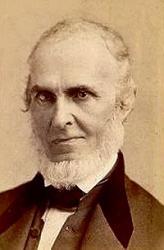
1807 - 1892 Person Name: John G. Whittier Author of "The Harp at Nature's Advent Strung" in The Cyber Hymnal Whittier, John Greenleaf, the American Quaker poet, was born at Haverhill, Massachusetts, Dec. 17, 1807. He began life as a farm-boy and shoemaker, and subsequently became a successful journalist, editor and poet. In 1828 he became editor of the American Manufacturer (Boston), in 1830 of the New England Review, and an 1836 (on becoming Secretary to the American Anti-Slavery Society) of the Pennsylvania Freeman. He was also for some time, beginning with 1847, the corresponding editor of the National Era. In 1840 he removed to Amesbury, Massachusetts, where most of his later works have been written. At the present time [1890] he lives alternately at Amesbury and Boston. His first poetical piece was printed in the Newburyport Free Press in 1824. Since then his publications have been numerous, including:—
Voices of Freedom, 1833; Songs of Labour, and other Poems, 1850; Ballads and other Poems, London, 1844; The Panorama, and other Poems, 1856; In War Time, 1863; Occasional Poems, 1865; Poetical Works, 1869; Complete Poetical Works, 1876; The Bay of the Seven Islands, and other Poems, 1883, &c.
From his numerous poems the following hymns have been compiled, and have come into common use, more especially amongst the American Unitarians:—
1. All as God wills, Who wisely heeds. Trust. This begins with stanza xi. of Whittier's poem, "My Psalm." in his workThe Panorama, and other Poems, 1856 (Complete Poetical Works, Boston, 1876, p. 179), and is given in Lyra Sacra Americana , 1868; Border's Congregational Hymns, 1884, &c.
2. All things are Thine: no gift have we. Opening of a Place of Worship. Written for the Opening of Plymouth Church, Minnesota, 1872 ( Complete Poetical Works , p. 281). In Horder's Congregational Hymns, 1884.
3. Another hand is beckoning us. Bereavement. From his poem " Gone," written in 1845 (Complete Poetical Works, p. 106). In Horder's Congregational Hymns, 1884.
4. Dear Lord and Father of mankind. Calmness in God desired. From his poem “The Brewing of Soma," beginning with stanza xii. (Complete Poetical Works p. 266). In Horder's Congregational Hymns, 1884.
5. God giveth quietness at last. Death and Burial. This begins with stanza xvii. of his poem, “The Singer," written in 1871 (Author's MS.), and included in the Complete Poetical Works, 1876, p. 265. In Martineau's Hymns, 1875.
6. Hast thou, 'midst life's empty noises. The Purpose of Life. Written in 1842. It is in Longfellow and Johnson's Unitarian Book of Hymns, Boston, 1846, and several other later American collections. Also in Lyra Sacra Americana, 1864.
7. I ask not now for gold to gild. Resignation. From his poem "The Wish of To-Day." Written in 1848 (Author's MS.). In Hedge and Huntingdon's Unitarian Hymns for the Church of Christ, Boston, 1853; the Laudes Domini, 1884, and other collections.
8. Immortal love, for ever full. The Love of Jesus. This poem, entitled “Our Master," appeared in Whittier's work, The Panorama, and other Poems, 1856, in 35 stanzas of 4 lines; in Schaff’s Christ in Song, 1869-70, p. 117; and in the Complete Poetical Works, 1876, p. 231, and others. From this poem the following centos have come into common use:—
(1) Immortal love for ever full. In the 1890 edition of the Hymnal Companion and others.
(2) 0 Lord and Master of us all. Begins with stanza xvi.
(3) 0 Love! O Life! our faith and sight. Begins with stanza xxiv. In several American hymnals, including the Unitarian Hymn [and Tune Book ], Boston, 1868, and others.
(4) Our Friend, our Brother, and our Lord. Begins with stanza xxxiv. In Horder's Congregational Hymns, 1884, &c.
(5) We faintly hear, we dimly see. Begins with stanza xxvi. In Barrett's Congregational Church Hymnal, 1887.
(6) We may not climb the heavenly steeps. Begins with stanza v. In Laudes Domini, 1884; the Primitive Methodist Hymnal, 1887, &c.
The use of these centos shows that the hymnic element in the original poem is of a high and enduring order.
9. It may not be our lot to wield. Duty and its Reward. This begins with stanza iv. of his poem "Seedtime and Harvest." Written circa 1850 (Author's MS.). Given in his Complete Poetical Works, p. 114. The hymn is in Laudes Domini, 1884, and other American collections.
10. May freedom speed onward, wherever the blood. Freedom. In the 1848 Supplement to the Boston Book of Hymns, Boston, No. 582, Hymns of the Spirit, 1864, and other collections. In Whittier's Poetical Works, Boston, 1869, p. 68, it is given as, “Right onward, O speed it! Wherever the blood”.
11. Now is the seed-time; God alone. Self-Sacrifice. In the Boston Hymns of the Spirit, 1864, No. 683.
12. 0 backward-looking son of time. New and Old. This begins with stanza xix. of his poem "The Reformer," and is given in this form in the Boston Hymns for the Church of Christ, Boston, 1853, No. 835, and again in later collections. In full in the Complete Poetical Works, p. 78.
13. 0 beauty, old yet ever new. The Law of Love. This in the Boston Hymns of the Spirit, 1864, begins with stanza xxi. of his poem on “The Shadow and the Light,” given in full in the Complete Poetical Works , p. 173.
14. 0 fairest-born of love and light. American National Hymn. This is from his poem "Democracy," which is dated "Election Day, 1843," and is in his Ballads and other Poems, London, 1844, p. 214, and his Complete Poetical Works, p. 82.
15. 0, he whom Jesus loves has truly spoken. True Worship. This in the 1848 Supplement to the Boston Book of Hymns, 1848, No. 578, begins with stanza xi. of his poem on “Worship," given in full in his Complete Poetical Works, p. 96. The poem is dated by the Author, 1848 (Author's MS.).
16. 0 holy Father, just and true. Freedom. "Lines written for the Celebration of the third Anniversary of British Emancipation at the Broadway Tabernacle, N. Y., First of August, 1837." (Complete Poetical Works, p. 47.) It was included in the Unitarian Christian Hymns, Boston, 1844, and has been repeated in later collections.
17. 0 Maker of the Fruits and Flowers. Flower Services. This begins with stanza iv. of his "Lines for the Agricultural and Horticultural Exhibition at Amesbury and Salisbury, Sep. 28, 1858," as given in his Complete Poetical Works , p. 183. It is in the Boston Hymns of the Spirit, 1864, and as "O Painter of the fruits and flowers," in Horder's Congregational Hymns, 1884.
18. O not alone with outward sign. Divine Invitation. This begins with stanza ii. of his poem, "The Call of the Christian," given in his Ballads and other Poems, London, 1844, p. 185, and his Complete Poetical Works, p. 73. The hymn appeared in the Boston Book of Hymns, 1846, and again in later collections.
19. O pure Reformers, not in vain. Freedom. This begins with stanza xii. of his poem "To the Reformers of England," as given in his Complete Poetical Works, p. 77. The hymn was included in the Boston Book of Hymns, 1846, and has been repeated in later collections.
20. O sometimes gleams upon our sight. Old and New. This is taken from his poem "The Chapel of the Hermits," 1852 (in 94 stanzas of 4 lines), and begins with stanza xi. (Comp. Poetical Works, p. 115.) The cento was given in the Boston Hymns of the Spirit, 1864, and repeated in later collections.
21. O Thou, at Whose rebuke the grave. Mercy. This was given in the Boston Book of Hymns, 1848, No. 44l.
22. O [God] Thou, Whose presence went before. National Hymn. This hymn is dated by the author 1834 (Author's MS.), and was written for the Anti-slavery Meeting at Chatham Street Chapel, New York, "on the 4th of the 7th month, 1831." It is No. 750 in the Unitarian Christian Hymns, 1844. It is sometimes given as “0 God, whose presence went before."
23. 0, what though our feet may not tread where Christ trod. Presence of Christ's Spirit. The author dates this 1837 (Author's MS.). It is No. 150 in the Boston Book of Hymns, 1846. In their Hymns of the Spirit, 1864, No. 652, it begins: "0, wherefore the dream of the earthly abode." Both centos are from his poem “Poledom."
24. Shall we grow weary in our watch? Patience, or Resignation. This begins with stanza x. of his poem "The Cypress-Tree of Ceylon." (Complete Poetical Works, p. 84.) This form of the text was given in the Boston Book of Hymns, 1846, No. 278, in 7 stanzas of 4 lines, and again in Horder's Congregational Hymns, 1884, in 3 stanzas.
25. Sport of the changeful multitude. Persecution. This begins with line 6 of stanza x. of his poem "Ezekiel," and was given in the Boston Hymns of the Spirit, 1864, No. 65lines In full in Complete Poetical Works, p. 67.
26. The green earth sends its incense up. Worship of Nature. The author dates this 1845 (Author's MS.). It is from his poem “The Worship of Nature," and was given in this form in the Boston Hymns for the Church of Christ, 1853, No. 193. The cento "The harp at Nature's advent strung," in the Unitarian Hymn [and Tune] Book, Boston, 1868, No. 195, is from the same poem. The cento No. 321 in the Boston Hymns of the Spirit, 1864, is also (altered) from this poem.
27. The path of life we walk today. The Shadowing Rock. This in the Boston Hys. of the Spirit, 1864, begins with stanza i. of his poem on "The Rock in El Gh'or," which the author dates 1859 (Author's MS.). In full in Complete Poetical Works, p. 180.
28. Thine are all the gifts, 0 God. Children's Missions, or Ragged Schools. Written for the Anniversary of the Children's Mission, Boston, 1878. It is given in Horder's Congregational Hymns, 1884.
29. Thou hast fallen in thine armour. Death. From his poem "To the memory of Charles B. Storrs, late President of Western Reserve College," published in his Ballads and other Poems, London, 1844, p. 84. Dated by the author 1835 (Author's MS.). Abridged form in the Hymns of the Spirit, 1864.
30. To-day, beneath Thy chastening eye. Seeking Rest. This begins with stanza iv. of his poem, "The Wish of To-Day," dated by the author 1847 (Author's MS.), and given in full in his Complete Poetical Works, p. 114. The cento is in Martineau's Hymns, 1873, and others.
31. We see not, know not; all our way. Resignation. "Written at the opening of the Civil War, 1861" (Author's MS.), and included in his In War Time, 1863, and his Complete Poetical Works, p. 190. In full in the Prim. Methodist Hymnal, 1887.
32. When on my day of life the night is falling. Old Age. Written in 1882 (Author's MS.), and included in his work The Bay of the Seven Islands, and other Poems, 1883. In Horder's Congregational Hymns, 1884.
33. With silence only as their benediction. Death. 1845. "Written on the death of Sophia Sturge, sister of Joseph Sturge, of Birmingham, England" (Author's MS.). It is in several collections, including Martineau's Hymns, &c, 1873; Horder's Congregational Hymns, 1884, and others.
Notwithstanding this extensive use of portions of Mr. Whittier's poems as hymns for congregational use, he modestly says concerning himself: "I am really not a hymn-writer, for the good reason that I know nothing of music. Only a very few of my pieces were written for singing. A good hymn is the best use to which poetry can be devoted, but I do not claim that I have succeeded in composing one." (Author's MS.) We must add, however, that these pieces are characterized by rich poetic beauty, sweet tenderness, and deep sympathy with human kind.
-- John Julian, Dictionary of Hymnology (1907)
========================
Whittier, J. G, p. 1277, i. In addition to the large number of this author's hymns already annotated from his own manuscript, the following have also come into use, mainly in the form of centos from his poems, during the past ten years:—
i. From Poems, 1850:—
1. O brother man! Fold to thy heart thy brother. [Brotherly Love.] From his poem, “Worship." Written in 1848, and published in Poems, 1850.
ii. From Songs of Labour, and Other Poems, 1850;—
2. Bowed down in lowliness of min. [Resignation.] From the poem “The Wish of To-day."
iii. From The Chapel of the Hermits, and Other Poems, 1853:—
3. O, sometimes glimpses on our sight. [Light in Darkness.] First published in The National Era, 1851, and again as above, 1853. In The Pilgrim Hymnal, N.Y. 1904, it begins " 0 sometimes gleams upon our sight," and in Hymns of the Ages, 1904, "Yet sometimes glimpses on my sight"; see p. 1277, ii. 20.
iv. From The Panorama, and Other Poems, 1856:—
4. Thou, 0 most compassionate. [Divine Compassion.] This cento is from the poem "My Dream," and is dated 1855.
v. From Home Ballads and Poems, 1860:—
5. I mourn no more my vanished years. [Life's Review.] A cento from "My Psalm," dated 1859, opening with st. i.
6. No longer forward nor behind. This begins with st. iii. of "My Psalm."
7. O hearts of love, O souls that turn. [Life from, Christ.] A cento from the poem, "The Overheart."
8. O Love Divine, Whose constant beam. [Divine Love Universal.] From the poem, "The Shadow and the Light." The form in which it is given in The Pilgrim Hymnal, 1904, first appeared in The Independent, Nov. 1860.
9. Once more the liberal year laughs out. [Autumn.] From his "For an Autumn Festival," 1859.
vi. From In War Time, and Other Poems, 1864:—
10. I can only urge the plea. [Cry for Mercy.] A cento from “Andrew Rykman’s Prayer,” dated 1863.
11. What Thou wilt, O Father, give. Also from “Andrew Kykman's Prayer."
vii. From The Tent on the Beach, and Other Poems, 1867:—
12. I bow my forehead to [in] the dust. St. ix., &c.
13. I know not what the future hath. St. xvi., &c.
14. I long for household voices gone. St. xv., &c.
15. I see the wrong that round me lies. St. x., &c.
16. Who fathoms the Eternal Thought. St. iv., &c.
17. Yet, in the maddening maze of things. St. xi., &c.
These centos are taken from the poem, "The Eternal Goodness," which is dated 1865.
viii. From Among the Hills, and Other Poems, 1869:—
18. For ever round the mercy-seat. [God's Love and Man's Unfaithfulness.] From the poem, “The Answer."
ix. From The Pennsylvania Pilgrim, and Other Poems, 1873:—
19. Best for the weary hands is good. [Daily Renewal.] This is from "My Birthday," which appeared in the Atlantic Monthly, 1871, and again as above, 1873.
x. From Hazel Blossoms, 1875:—
20. All things [gifts] are Thine, p. 1277, i. 2. The church for which this was written, in 1873, was Plymouth Church, St. Paul, Minn. The hymn was included in Hazel Blossoms, 1875.
21. We need love's tender lessons taught. [Love.] From Child-Songs," in Hazel Blossoms, opening with st. ix.
xi. From The Bay of the Seven Islands, 1883:—
22. As from the lighted hearths behind me. [Anticipation of the Future.] This begins with st. iii. of the poem, "What the Traveller said at Sunset."
xii. Additional Notes:—
23. Lord, for the things we see. [Public Gatherings.] This hymn is from "Poledom," 1837.
24. Not always as the whirlwind's rush. [Call to the Ministry.] Published in The Poetical Writings, 1857, Vol. i., p. 254, and again in the Oxford edition of his Poetical Works, 1904, p. 455. It is dated 1833.
25. Sound over all waters, [The Coming Kingdom.)
This, in Horder's Worship Song, 1905, is from Whittier's Complete Poetical Works, Boston, 1876, p. 280, where it is dated 1873.
26. Take courage, Temperance workers. [Temperance.] Mr. Pickard, Whittier's literary executor, cannot trace this hymn in any of the author's writings, and we also are at fault.
27. The harp at Nature's advent strung. [Nature's acknowledgement of God.] Dr. Charles L. Noyes, one of the editors of The Pilgrim Hymnal, 1904, writes us concerning this hymn: "It was first published in its present form [as in the American hymn-books] in 1867 in The Tent on the Beach." But a hymn almost identical was written when Whittier was in his teens, and published in the Haverhill Gazette, October 5, 1827. The same poem appeared in The Palladium, 1829. It was revised for The Tent on the Beach, 1867 (p. 1278, i. 26).
28. We see not, know not; all our way, p. 1278, i. 31. This hymn, written in 1861, first appeared in the Atlantic Monthly, 1862, vol. 10, p. 235.
29. Wherever through the ages rise. [Love is universal.] Opens with line 1 of a section in the poem "Miriam," in Miriam, and Other Poems, 1871, p. 13.
30. Who calls Thy glorious service hard? [Duty.] This begins with st. iii. of his poem "Seedtime and Harvest," noted on p. 1277, ii. 9.
31. O Lord and Father of mankind. This is a slightly altered form of "Dear Lord and Father of mankind." p. 1277, i. 4.
The poem, “Our Master," stated on p. 1277, i., No. 8, as having appeared in The Panorama, 1856, in error, was given in The Tent on the Beach, and Other Poems, Boston, 1867, pp. 143-152.
In compiling the foregoing, we have been materially assisted by Mr. Pickard, the poet's literary executor, and the Rev. Dr. Charles L. Noyes, of Somerville, Mass. Whittier died at Hampton Falls, New Hampshire, Sep. 7, 1892.
--John Julian, Dictionary of Hymnology, New Supplement (1907)
=======================
See also in:
Hymn Writers of the Church
John Greenleaf Whittier
Henry Alford
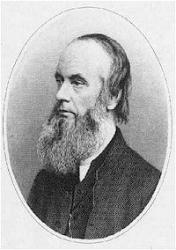
1810 - 1871 Author of "In token that thou shalt not fear" in The Hymnal Alford, Henry, D.D., son of the Rev. Henry Alford, Rector of Aston Sandford, b. at 25 Alfred Place, Bedford Row, London, Oct. 7, 1810, and educated at Trinity College, Cambridge, graduating in honours, in 1832. In 1833 he was ordained to the Curacy of Ampton. Subsequently he held the Vicarage of Wymeswold, 1835-1853,--the Incumbency of Quebec Chapel, London, 1853-1857; and the Deanery of Canterbury, 1857 to his death, which took. place at Canterbury, Jan. 12, 1871. In addition he held several important appointments, including that of a Fellow of Trinity, and the Hulsean Lectureship, 1841-2. His literary labours extended to every department of literature, but his noblest undertaking was his edition of the Greek Testament, the result of 20 years' labour. His hymnological and poetical works, given below, were numerous, and included the compiling of collections, the composition of original hymns, and translations from other languages. As a hymn-writer he added little to his literary reputation. The rhythm of his hymns is musical, but the poetry is neither striking, nor the thought original. They are evangelical in their teaching, but somewhat cold and conventional. They vary greatly in merit, the most popular being "Come, ye thankful people, come," "In token that thou shalt not fear," and "Forward be our watchword." His collections, the Psalms and Hymns of 1844, and the Year of Praise, 1867, have not achieved a marked success. His poetical and hymnological works include—
(1) Hymns in the Christian Observer and the Christian Guardian, 1830. (2) Poems and Poetical Fragments (no name), Cambridge, J. J. Deighton, 1833. (3) The School of the Heart, and other Poems, Cambridge, Pitt Press, 1835. (4) Hymns for the Sundays and Festivals throughout the Year, &c.,Lond., Longman ft Co., 1836. (5) Psalms and Hymns, adapted for the Sundays and Holidays throughout the year, &c, Lond., Rivington, 1844. (6) Poetical Works, 2 vols., Lond., Rivington, 1845. (7) Select Poetical Works, London, Rivington, 1851. (8) An American ed. of his Poems, Boston, Ticknor, Reed & Field, 1853(9) Passing away, and Life's Answer, poems in Macmillan's Magazine, 1863. (10) Evening Hexameters, in Good Words, 1864. (11) On Church Hymn Books, in the Contemporary Review, 1866. (12) Year of Praise, London, A. Strahan, 1867. (13) Poetical Works, 1868. (14) The Lord's Prayer, 1869. (15) Prose Hymns, 1844. (16) Abbot of Muchelnaye, 1841. (17) Hymns in British Magazine, 1832. (18) A translation of Cantemus cuncti, q.v.
-- John Julian, Dictionary of Hymnology (1907)
==================
Alford, Henry, p. 39, ii. The following additional hymns by Dean Alford are in common use:—
1. Herald in the wilderness. St. John Baptist. (1867.)
2. Let the Church of God rejoice. SS. Simon and Jude. (1844, but not in his Psalms & Hymns of that year.)
3. Not in anything we do. Sexagesima. (1867.)
4. O Thou at Whose divine command. Sexagesima. (1844.)
5. 0 why on death so bent? Lent. (1867.)
6. Of all the honours man may wear. St. Andrew's Day. (1867.)
7. Our year of grace is wearing to a close. Close of the Year. (1867.)
8. Saviour, Thy Father's promise send. Whit-sunday. (1844.)
9. Since we kept the Saviour's birth. 1st Sunday after Trinity. (1867.)
10. Thou that art the Father's Word. Epiphany. (1844.)
11. Thou who on that wondrous journey. Quinquagesima. (1867.)
12. Through Israel's coasts in times of old. 2nd Sunday after Epiphany. (1867.)
13. Thy blood, O Christ, hath made our peace. Circumcision . (1814.)
14. When in the Lord Jehovah's name. For Sunday Schools. (1844.)
All these hymns are in Dean Alford's Year of Praise, 1867, and the dates are those of their earliest publication, so far as we have been able to trace the same.
--Excerpts from John Julian, Dictionary of Hymnology, Appendix, Part II (1907)
Henry Alford
John Keble
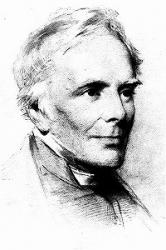
1792 - 1866 Person Name: John Keble (1792-1866) Author of "There Is a Book" in The Church Hymnal Keble, John, M.A., was born at Fairford, in Gloucestershire, on St. Mark's Day, 1792. His father was Vicar of Coln St. Aldwin's, about three miles distant, but lived at Fairford in a house of his own, where he educated entirely his two sons, John and Thomas, up to the time of their entrance at Oxford. In 1806 John Keble won a Scholarship at Corpus Christi College, and in 1810 a Double First Class, a distinction which up to that time had been gained by no one except Sir Robert Peel. In 1811 he was elected a Fellow of Oriel, a very great honour, especially for a boy under 19 years of age; and in 1811 he won the University Prizes both for the English and Latin Essays. It is somewhat remarkable that amid this brilliantly successful career, one competition in which the future poet was unsuccessful was that for English verse, in which he was defeated by Mr. Rolleston. After his election at Oriel, he resided in College, and engaged in private tuition. At the close of 1813 he was appointed Examining Master in the Schools, and was an exceedingly popular and efficient examiner. On Trinity Sunday, 1815, he was ordained Deacon, and in 1816 Priest, by the Bishop of Oxford, and became Curate of East Leach and Burthorpe, though he still continued to reside at Oxford. In 1818 he was appointed College Tutor at Oriel, which office he retained until 1823. On the death of his mother in the same year, he left Oxford, and returned to live with his father and two surviving sisters at Fairford. In addition to East Leach and Burthorpe, he also accepted the Curacy of Southrop, and the two brothers, John and Thomas, undertook the duties between them, at the same time helping their father at Coln. It should be added, as an apology for Keble thus becoming a sort of pluralist among "the inferior clergy," that the population of all his little cures did not exceed 1000, nor the income £100 a year. In 1824 came the only offer of a dignity in the Church, and that a very humble one, which he ever received. The newly-appointed Bishop of Barbadoes (Coleridge) wished Keble to go out with him as Archdeacon, and but for his father's delicate state of health, he would probably have accepted the offer. In 1825 he became Curate of Hursley, on the recommendation of his old pupil, Sir William Heathcote; but in 1826, on the death of his sister, Mary Ann, he returned to Fairford, feeling that he ought not to separate himself from his father and only surviving sister. He supplied his father's place at Coln entirely. 1827 was memorable for the publication of The Christian Year, and 1828 for the election to the Provostship of Oriel, which his friends, rather than himself, seem to have been anxious to secure for him. In 1829 the living of Hursley was offered to him by Sir William Heathcote, but declined on the ground that he could not leave his father. In 1830 he published his admirable edition of Hooker's Works. In 1831 the Bishop of Exeter (Dr. Philpotts) offered him the valuable living of Paignton, but it was declined for the same reason that Hursley had been declined. In the same year he was also elected to the Poetry Professorship at Oxford. His Praelectiones in that capacity were much admired. In 1833 he preached his famous Assize Sermon at Oxford, which is said by Dr. Newman to have given the first start to the Oxford Movement. Very soon after the publication of this sermon the Tracts for the Times began to be issued. Of these Tracts Keble wrote Nos. 4, 13, 40, and 89. In 1835 his father died, and Keble and his sister retired from Fairford to Coln. In the same year he married Miss Clarke and the Vicarage of Hursley, again becoming vacant, was again offered to him by Sir W. Heathcote, and as the reason for his previous refusal of it no longer existed, he accepted the offer, and in 1836 settled at Hursley for the remainder of his life. That life was simply the life of a devoted and indefatigable parish priest, varied by intellectual pursuits. In 1864 his health began to give way, and on March 29, 1866, he passed away, his dearly loved wife only surviving him six weeks. Both are buried, side by side, in Hursley churchyard.
In his country vicarage he was not idle with his pen. In 1839 he published his Metrical Version of the Psalms. The year before, he began to edit, in conjunction with Drs. Pusey and Newman, the Library of the Fathers. In 1846 he published the Lyra Innocentium, and in 1847 a volume of Academical and Occasional Sermons. His pen then seems to have rested for nearly ten years, when the agitation about the Divorce Bill called forth from him in 1851 an essay entitled, An Argument for not proceeding immediately to repeal the Laws which treat the Nuptial Bond as Indissoluble; and in the same year the decision of Archbishop Sumner in the Denison case elicited another essay, the full title of which is The Worship of Our Lord and Saviour in the Sacrament of the Holy Communion, but which is shortly entitled, Eucharistical Adoration. In 1863 he published his last work, The Life of Bishop Wilson (of Sodor and Man). This cost him more pains than anything he wrote, but it was essentially a labour of love.
In the popular sense of the word "hymn," Keble can scarcely be called a hymnwriter at all. Very many of his verses have found their way into popular collections of Hymns for Public Worship, but these are mostly centos. Often they are violently detached from their context in a way which seriously damages their significance. Two glaring instances of this occur in the Morning and Evening hymns. In the former the verse "Only, O Lord, in Thy dear love, Fit us for perfect rest above," loses half its meaning when the preceding verse, ending "The secret this of rest below," is excised, as it generally is in collections for public worship, and the same may be said of that most familiar of all Keble's lines, "Sun of my soul, thou Saviour dear," which has of course especial reference to the preceding verse, "'Tis gone, that bright and orbed blaze," &c. The Lyra Innocentium has furnished but few verses which have been adopted into hymn collections; the Psalter has been more fortunate, but the translations from the Latin are almost unknown.
Taking, however, the word "hymn" in the wider sense in which Dr. Johnson defines it, as "a song of adoration to some superior being," Keble stands in the very first rank of hymnwriters. His uneventful life was the very ideal life for such a poet as Keble was, but not the sort of life which would be best adapted to train a popular hymnwriter. The Christian Year and the Lyra Innocentium reflect in a remarkable degree the surroundings of the writer. They are essentially the works of a refined and cultured mind, and require a refined and cultured mind to enter into their spirit. Keble, all his life long, and never more than in the earlier portion of it, before he wrote, and when he was writing The Christian Year, breathed an atmosphere of culture and refinement. He had imbibed neither the good nor the evil which the training of a public or even of a private, school brings. It was not even the ordinary home education which he had received. He had been trained, up to the very time of his going to college, by his father, who was clearly a man of culture and refinement, and had been himself successively Scholar and Fellow of Corpus. When he went to Oxford, he can scarcely be said to have entered into the whirl of university life. The Corpus of those days has been admirably described by Keble's own biographer, Sir John Coleridge, and by Dean Stanley in his Life of Dr. Arnold; and the impression which the two vivid pictures leave upon the mind is that of a home circle, on rather a large scale, composed of about twenty youths, all more or less scholarly and refined, and some of them clearly destined to become men of mark. When he removed across the road to Oriel, he found himself in the midst of a still more distinguished band. Whether at home or at college he had never come into contact with anything rude or coarse. And his poetry is just what one would expect from such a career. Exquisitely delicate and refined thoughts, expressed in the most delicate and refined language, are characteristic of it all. Even the occasional roughnesses of versification may not be altogether unconnected with the absence of a public school education, when public schools laid excessive stress upon the form of composition, especially in verse. The Christian Year again bears traces of the life which the writer led, in a clerical atmosphere, just at the eve of a great Church Revival, "cujus pars magna fuit." “You know," he writes to a friend, “the C. Y. (as far as I remember it) everywhere supposes the Church to be in a state of decay." Still more obviously is this the case in regard to the Lyra Innocentium. It was being composed during the time when the writer was stricken by what he always seems to have regarded as the great sorrow of his life. Not the death of his nearest relations—-and he had several trials of this kind—-not the greatest of his own personal troubles dealt to him so severe a blow as the secession of J. H. Newman to the Church of Rome. The whole circumstances of the fierce controversy connected with the Tract movement troubled and unsettled him; and one can well understand with what a sense of relief he turned to write, not for, but about, little children, a most important distinction, which has too often been unnoticed. If the Lyra had been written for children it would have been an almost ludicrous failure, for the obscurity which has been frequently complained of in The Christian Year, is still more conspicuous in the latter work. The title is somewhat misleading, and has caused it to be regarded as a suitable gift-book for the young, who are quite incapable of appreciating it. For the Lyra is written in a deeper tone, and expresses the more matured convictions of the author; and though it is a far less successful achievement as a whole, it rises in places to a higher strain of poetry than The Christian Year does.
Another marked feature of Keble's poetry is to a great extent traceable to his early life, viz. the wonderful accuracy and vividness of his descriptions of natural scenery. The ordinary schoolboy or undergraduate cares little for natural scenery. The country is to him a mere playing field. But Keble's training led him to love the country for its own sake. Hence, as Dean Stanley remarks, “Oxford, Bagley Wood, and the neighbourhood of Hursley might be traced through hundreds of lines, both in The Christian Year and the Lyra Innocentium.” The same writer testifies, with an authority which no other Englishman could claim, to "the exactness of the descriptions of Palestine, which he [Keble] had never visited.” And may not this remarkable fact be also traced to some extent to his early training? Brought up under the immediate supervision of a pious father, whom he venerated and loved dearly, he had been encouraged to study intelligently his Bible in a way in which a boy differently educated was not likely to do. Hence, as Sir John Coleridge remarks,
"The Christian Year is so wonderfully scriptural. Keble's mind was, by long, patient and affectionate study of Scripture, so imbued with it that its language, its train of thought, its mode of reasoning, seems to flow out into his poetry, almost, one should think, unconsciously to himself."
To this may we not add that the same intimate knowledge of the Bible had rendered the memory of the Holy Land so familiar to him that he was able to describe it as accurately as if he had seen it? One other early influence of Keble's life upon his poetry must be noticed. Circumstances brought him into contact with the "Lake poets." The near relation of one of the greatest of them had been his college friend, and John Coleridge introduced him to the writings not only of his uncle, S. T. Coleridge, but also of Wordsworth, to whom he dedicated his Praelectiones, and whose poetry and personal character he admired enthusiastically. To the same college friend he was indebted for an introduction to Southey, whom he found to be "a noble and delightful character," and there is no doubt that the writings of these three great men, but especially Wordsworth, had very much to do with the formation of Keble's own mind as a poet. It has been remarked that in Keble's later life his poetical genius seemed to have, to a great extent, forsaken him; and that the Miscellaneous Poems do not show many traces of the spirit which animated The Christian Year and the Lyra Innocentium. Perhaps one reason for this change may be found in the increased interest "which Keble took in public questions which were not conducive to the calm, introspective state of mind so necessary to the production of good poetry. The poet should live in a world of his own, not in a world perpetually wrangling about University Reform, about Courts of Final Appeal, about Marriage with Deceased Wife's Sister, and other like matters into which Keble, in his later years, threw himself—heart and soul.
It is not needful to say much about Keble's other poetical works, The Psalter was not a success, and Keble did not expect it to be. It was undertaken," he tells us, "in the first instance with a serious apprehension, which has since grown into a full conviction, that the thing attempted is, strictly speaking, impossible." At the same time, if Keble did not achieve what he owned to be impossible, he produced a version which has the rare merit of never offending against good taste; one which in every line reflects the mind of the cultured and elegant scholar, who had been used to the work of translating from other languages into English. Hymnal compilers have hitherto strangely neglected this volume; but it is a volume worth the attention of the hymn compiler of the future. There is scarcely a verse in it which would do discredit to any hymnbook; while there are parts which would be an acquisition to any collection. His translations from the Latin have not commended themselves to hymnal compilers. Some of his detached hymns have been more popular. But it is after all as writer of The Christian Year that Keble has established his claim to be reckoned among the immortals. It would be hardly too much to say that what the Prayer Book is in prose, The Christian Year is in poetry. They never pall upon one; they realise Keble's own exquisite simile:—
"As for some dear familiar strain
Untired we ask, and ask again;
Ever in its melodious store
Finding a spell unheard before."
And it would hardly be too bold to prophesy that The Christian Year will live as long as the Prayer Book, whose spirit Keble had so thoroughly imbibed, and whose "soothing influence" it was his especial object to illustrate and commend. [Rev. John H. 0verton, D.D.]
Keble's hymns, poetical pieces, and translations appeared in the following works :—
(1.) The Christian Year: Thoughts in Verse for the Sundays and Holy days Throughout the Year. Oxford: John Henry Parker, 1827. Preface dated "May 30th, 1827." The last poem, that on the “Commination," is dated March 9, 1827. The poems on the "Forms of Prayer to be used at Sea," "Gunpowder Treason," "King Charles the Martyr," "The Restoration of the Royal Family," "The Accession," and "Ordination," were added to the 4th edition, 1828. The Messrs. Parker have pub. a large number of editions to date, including a facsimile reprint of the first edition, and an edition with the addition of the dates of composition of each poem. A facsimile of Keble's manuscript as it existed in 1822 was also lithographed in 1882, by Eliot Stock, but its publication was suppressed by a legal injunction, and only a few copies came into the hands of the public. Since the expiration of the first copyright other publishers have issued the work in various forms.
(2.) Contributions to the British Magazine, which were included in Lyra Apostolica, 1836, with the signature of "γ."
(3.) The Psalter or Psalms of David; In English Verse; By a Member of the University of Oxford. Adapted for the most part, to Tunes in Common Use; and dedicated by permission to the Lord Bishop of Oxford. . . . Oxford, John Henry Parker: J. G. & F. Rivington, London, MDCCCXXXIX. Preface dated “Oxford, May 29, 1839."
(4.) The Child's Christian Year: Hymns for every Sunday and Holy-Day. Compiled for the use of Parochial Schools. Oxford: John Henry Parker, 1841. This was compiled by Mrs. Yonge. Keble wrote the Preface, dated “Hursley, Nov. 6, 1841," and signed it “J. K." To it he contributed the four poems noted below.
(5.) Lyra Innocentium: Thoughts in Verse on Christian Children, their Ways and their Privileges . . . Oxford: John Henry Parker : F. & J. Rivington, London, 1846. The Metrical Address (in place of Preface) “To all Friendly Readers," is dated "Feb. 8, 1846."
(6.) Lays of the Sanctuary, and otter Poems. Compiled and Edited by G. Stevenson de M. Rutherford... London: Hamilton, Adams & Co., 1859. This was a volume of poems published on behalf of Mrs. Elizabeth Good. To it Keble contributed the three pieces noted below.
(7.) The Salisbury Hymn-Book 1857. Edited by Earl Nelson. To this be contributed a few hymns, some translations from the Latin, and some rewritten forms of well-known hymns, as "Guide me, 0 Thou great Jehovah," &c.
(8.) Miscellaneous Poems by the. Rev. J. Keble, M.A., Vicar of Hursley. Oxford and London: Parker & Co., 1869. The excellent Preface to this posthumous work is dated "Chester, Feb. 22, 1869," and is signed "G.M," i.e. by George Moberly, late Bishop of Salisbury. This volume contains Keble's Ode written for the Installation of the Duke of Wellington as Chancellor of the University of Oxford, in 1834, his poems from the Lyra Apostolica, his hymns named above, his translations from the Latin, and other pieces not published in his works.
The most important centos from The Christian Year, which are in common use as hymns, and also the hymns contributed to the Salisbury Hymn Book, 1857, are annotated in full under the first lines of the original poems. The translations from the Latin and Greek are given under the first lines of the originals. There are also several of his more important pieces noted in the body of this work. Those that …have no special history, are the following (the dates given being those of the composition of each piece):—
i. From The Christian Year, 1827 and 1828.
1. Creator, Saviour, strengthening Guide. Trinity Sunday. (March 3, 1826.)
2. Father, what treasures of sweet thought. Churching of Women. (March 13, 1827.)
3. God is not in the earthquake: but behold. 9th Sunday after Trinity. The still mall voice. (Aug. 13,1822.)
4. In troublous days of anguish and rebuke. 9th S. after Trinity. The still small voice. (Aug. 13, 1822.)
5. Lessons sweet of spring returning. 1st Sunday after Epiphany. Spring. (May 17,1824.)
6. My Saviour, can it ever be? 4th Sunday after Easter. The promised Comforter.
7. 0 Father of long suffering grace. 18th Sunday after Trinity. God's longsuffering. (Oct. 6, 1823.)
8. 0 God of mercy, God of might, How should, &c. Holy Communion. (Jan. 31, 1827.)
9. 0 Lord my God, do Thou Thy holy will. Wednesday before Easter. Resignation. (Aug. 13, 1821.)
10. 0 say not, dream [think] not, heavenly notes. Catechism. (Feb. 16, 1827.)
11. 0 shame upon thee, listless heart. SS. Philip & James. (Aug. 3, 1825.)
12. 0 who shall dare in this frail scene? St. Mark's Day. (1820.)
13. Red o'er the forest peers the setting sun. 23rd Sunday after Trinity. The Resurrection of the body. (Nov. 12, 1825.)
14. Spirit of Christ, Thine earnest give. Ordination. (March 28, 1828.)
15. Spirit of light and truth, to Thee. Ordination. (March 28, 1828.)
16. Spirit of might and sweetness too. Confirmation. (Feb. 21, 1827.)
17. Sweet nurslings of the vernal skies. 15th S. after Trinity. Consider the lilies. Live for today. (Feb. 3, 1826)
18. The days of hope and prayer are past. 4th Sunday after Easter. The promised Comforter.
19. The live-long night we've toiled in vain. 5th Sunday after Trinity. Miracle of the Fishes. (1821.)
20. The midday sun with fiercest glare. Conversion of St. Paul. (Mar. 2,1822.)
21. The shadow of the Almighty's cloud. Confirmation. (Feb. 22, 1827.)
22. The silent joy that sinks so deep. 2nd Sunday after Epiphany. Turning Water into Wine.
23. Then, fainting soul, arise and sing. 4th Sunday after Easter. The promised Comforter.
24. When brothers part for manhood's race. St. Andrew's Day. (Jan. 27, 1822.)
25. Who is God’s chosen priest ? St. Matthias's Day.
26. Why doth my Saviour weep? 10th Sunday after Trinity. Christ weeping over Jerusalem. (1819.)
27. Why should we faint and fear to live alone? 24th Sunday after Trinity. God's goodness in veiling the future. (June 7, 1825.)
28. Wish not, dear friends, my pain away. 16th Sunday after Trinity. Resignation. (1824.)
ii. From The Psalter, 1839.
29. From deeps so wild and drear. Ps. cxxx.
30. God our Hope and Strength abiding. Ps. xlvi.
31. How pleasant, Lord of hosts, how dear. Ps. lxxxiv.
32. Lord, be my Judge, for I have trod. Ps. xxvi.
33. Lord, Thy heart in love hath yearned. Ps. lxxxv.
34. Lord, Thou hast search'd me out and known. Ps. cxxxix
35. My God, my God, why hast Thou me? Ps. xxii.
36. My Shepherd is the living God. Ps. xxiii.
37. My Shepherd is the Lord; J know. Ps. xxiii.
38. Praise the Lord, for He is love. Ps. cxxxvi.
39. Praise ye the Lord from heaven. Ps.cxlviii.
40. Sing the song unheard before. Ps. xcvi.
41. Sound high Jehovah's Name. Ps. cxxxv.
42. The earth is all the Lord's, with all. Ps. xxiv.
43. The mercies of the Lord my God. Ps. lxxxix.
44. The seed of Jacob, one and all. Ps. xxii.
iii. From The Child's Christian Year, 1841, and later editions.
45. Bethlehem, above all cities blest. Innocents’ Day.
46. Lo, from the Eastern hills the Lord. l0th Sunday after Trinity. The Gospel. (Late editions.)
47. Our God in glory sits on high. 1st Sunday after Easter. The Epistle.
48. When Christ to village comes or town. 16th Sunday after Trinity. The Gospel. (Late editions.)
iv. From Lyra Innocentium, 1846.
49. Christ before thy door is waiting. Presence of Christ in His poor; or, Offertory.
50. How [When] the new-born saints, assembling. Offertory.
51. Once in His Name Who made thee. Holy Baptism.
52. Who for the like of me will care? Naamans' Servant-maid
v. From Lays of the Sanctuary, 1859.
53. Lord, lift my heart to Thee at morn. Emigrant's Midnight Hymn.
54. O Love unseen, we know Thee nigh. Cento from No. 53.
55. Slowly the gleaming stars retire. Morning Hymn for Emigrants at Sea.
56. The twilight hour is sweet at home. Evening hymn for Emigrants at Sea.
The editor of Keble's Miscellaneous Poems says concerning Nos. 53, 55, and 56:—
"The three hymns for Emigrants, for use at Midnight, Morning, and Evening, were written at the request of his friend Sir Frederic Rogers, at that time Emigration Commissioner. They were printed in the first edition of the ‘Prayers for Emigrants, which he had compiled, but were subsequently omitted, perhaps as being thought not sufficiently simple for the class of people for whose use the Book of Prayers was chiefly intended." Preface, p. vi.
It is found that nearly 100 hymns (counting centos as such) by Keble are in common use at the present time, and of these some rank with the finest and most popular in the English language.
-- John Julian, Dictionary of Hymnology (1907)
John Keble
Pages




