

 My Starred Hymns
 My Hymnals
 My Purchased Files
Planning worship?
Check out our sister site, ZeteoSearch.org,
for 20+ additional resources related to your search.
- |
User Links
Search Results


VATER UNSER IM HIMMELREICH, DER DU
Meter: 8.8.8.8.8.8 Appears in 207 hymnals Composer and/or Arranger: Martin Luther, 1483-1546 Tune Key: g minor Incipit: 55345 32155 47534 Used With Text: Jesus, Your Boundless Love to Me
VATER UNSER IM HIMMELREICH, DER DU


Vater Unser Im Himmelreich
Author: Martin Luther Meter: 8.8.8.8.8.8 Appears in 61 hymnals Lyrics: 1 Vater unser im Himmelreich,
Der du uns alle heißest gleich
Brüder sein und dich rufen an
Und willst das Beten von uns hab’n,
Gib, daß nicht bet’ allein der Mund,
Hilf, daß es geh’ von Herzensgrund!
2 Geheiligt werd’ der Name dein,
Dein Wort bei uns hilf halten rein,
Daß auch wir leben heiliglich,
Nach deinem Namen würdiglich.
Behüt uns, Herr, vor falscher Lehr’,
Das arm’ verführte Volk bekehr!
3 Es komm’ dein Reich zu dieser Zeit
Und dort hernach in Ewigkeit;
Der Heil’ge Geist uns wohne bei
Mit seinen Gaben mancherlei;
Des Satans Zorn und groß’ Gewalt
Zerbrich, vor ihm dein’ Kirch’ erhalt!
4 Dein Will’ gescheh, Herr Gott, zugleich
Auf Erden wie im Himmelreich;
Gib uns Geduld in Leidenszeit,
Gehorsam sein in Lieb’ und Leid;
Wehr und steur allem Fleisch und Blut,
Das wider deinen Willen tut!
5 Gib uns heut’ unser täglich Brot,
Und was man braucht zur Leibesnot;
B’hüt uns, Herr, vor Unfried’ und Streit,
Vor Seuchen und vor teurer Zeit,
Daß wir in gutem Frieden stehn,
Der Sorg’ und Geizes müßig gehn!
6 All unsre Schuld vergib uns, Herr,
Daß sie uns nicht betrübe mehr,
Wie wir auch unsern Schuldigern
Ihr’ Schuld und Fehl’ vergeben gern;
Zu dienen mach uns all’ bereit
In rechter Lieb’ und Einigkeit!
7 Führ uns, Herr, in Versuchung nicht;
Wenn uns der böse Geist anficht
Zur linken und zur rechten Hand,
Hilf uns tun starken Widerstand,
Im Glauben fest und wohlgerüst’t
Und durch des Heil’gen Geistes Trost.
8 Von allem Übel uns erlös,
Es sind die Zeit und Tage bös;
Erlös uns von dem ew’gen Tod
Und tröst uns in der letzten Not;
Bescher uns auch ein selig End’,
Nimm unsre Seel’ in deine Händ’!
Amen, das ist, es werde wahr!
Stärk unsern Glauben immerdar,
Auf daß wir ja nicht zweifeln dran,
Was wir hiermit gebeten hab’n
Auf dein Wort in dem Namen dein;
So sprechen wir das Amen fein. Used With Tune: VATER UNSER
Vater Unser Im Himmelreich


Thou Hidden Love of God
Author: Gerhard Tersteegen; John Wesley Meter: 8.8.8.8.8.8 Appears in 271 hymnals Lyrics: 1. Thou hidden love of God, whose height,
whose depth unfathomed no one knows,
I see from far thy beauteous light,
and inly sigh for thy repose;
my heart is pained, nor can it be
at rest, till it finds rest in thee.
2. 'Tis mercy all that thou hast brought
my mind to seek its peace in thee;
yet while I seek, but find thee not,
no peace my wandering soul shall see.
O when shall all my wanderings end,
and all my steps to thee-ward tend?
3. Is there a thing beneath the sun
that strives with thee my heart to share?
Ah, tear it thence and reign alone,
the Lord of every motion there;
then shall my heart from earth be free,
when it hath found repose in thee.
4. O Love, thy sovereign aid impart
to save me from low-thoughted care;
chase this self-will from all my heart,
from all its hidden mazes there;
make me thy duteous child that I
ceaseless may "Abba, Father" cry.
5. Each moment draw from earth away
my heart that lowly waits thy call;
speak to my inmost soul and say,
"I am thy love, thy God, thy all!"
To feel thy power, to hear thy voice,
to taste thy love, be all my choice.
Topics: Sanctifiying and Perfecting Grace Personal Holiness; Christian Perfection; Heritage; Love Scripture: Galatians 2:20 Used With Tune: VATER UNSER
Thou Hidden Love of God
Great God of Wonders!
Author: Samuel Davies, 1734-1761 Meter: 8.8.8.8.8.8 Appears in 115 hymnals First Line: Great God of wonders! all thy ways Lyrics: 1 Great God of wonders! all thy ways
are matchless, godlike and divine;
but the fair glories of thy grace
More godlike and unrivaled shine.
Who is a pardoning God like thee?
And who has grace so rich and free?
2 Such dire offenses to forgive,
such guilty, daring souls to spare:
this is thy grand prerogative,
and none shall in the honor share!
Who is a pardoning God like thee?
And who has grace so rich and free?
3 O may this strange, this matchless grace,
this god-like miracle of love
fill the whole earth with grateful praise,
And all th'angelic choirs above,
Who is a pardoning God like thee?
And who has grace so rich and free?
Topics: Who Pardons All Your Iniquities Scripture: Daniel 9:9 Used With Tune: VATER UNSER
Great God of Wonders!

Vater unser im Himmelreich
Author: Martin Luther Hymnal: Evangelisches Gesangbuch (Bayern, Mitteldeutschland, Thüringen) #344 (2014) Lyrics: 1 Vater unser im Himmelreich,
der du uns alle heißest gleich
Brüder sein und dich rufen an
und willst das Beten von uns han:
Gib, daß nicht bet allein der Mund,
hilf, daß es geh von Herzensgrund.
2 Geheiligt werd der Name dein,
dein Wort bei uns hilf halten rein,
daß auch wir leben heiliglich,
nach deinem Namen würdiglich.
Behüt uns, Herr, vor falscher Lehr,
das arm verführet Volk bekehr.
3 Es komm dein Reich zu dieser Zeit
und dort hernach in Ewigkeit.
Der Heilig Geist uns wohne bei
mit seinen Gaben mancherlei;
des Satans Zorn und groß Gewalt
zerbrich, vor ihm dein Kirch erhalt.
4 Dein Will gescheh, Herr Gott, zugleich
auf Erden wie im Himmelreich.
Gib uns Geduld in Leidenszeit,
gehorsam sein in Lieb und Leid;
wehr und steu'r allem Fleisch und Blut,
das wider deinen Willen tut.
5 Gib uns heut unser täglich Brot
und was man b'darf zur Leibesnot;
behüt uns, Herr, vor Unfried, Streit,
vor Seuchen und vor teurer Zeit,
daß wir in gutem Frieden stehn,
der Sorg und Geizens müßig gehn.
6 All unsre Schuld vergib uns, Herr,
daß sie uns nicht betrübe mehr,
wie wir auch unsern Schuldigern
ihr Schuld und Fehl vergeben gern.
Zu dienen mach uns all bereit
in rechter Lieb und Einigkeit.
7 Führ uns, Herr, in Versuchung nicht,
wenn uns der böse Geist anficht;
zur linken und zur rechten Hand
hilf uns tun starken Widerstand
im Glauben fest und wohlgerüst'
und durch des Heilgen Geistes Trost.
8 Von allem Übel uns erlös;
es sind die Zeit und Tage bös.
Erlös uns vom ewigen Tod
und tröst uns in der letzten Not.
Bescher uns auch ein seligs End,
nimm unsre Seel in deine Händ.
9 Amen, das ist: Es werde wahr.
Stärk unsern Glauben immerdar,
auf daß wir ja nicht zweifeln dran,
was wir hiermit gebeten han
auf dein Wort, in dem Namen dein.
So sprechen wir das Amen fein. Topics: Glaube - Liebe - Hoffnung Rechtfertigung und Zuversicht Scripture: Matthew 6:9-13 Languages: German Tune Title: [Vater unser im Himmelreich]
Vater unser im Himmelreich
Vater Unser Im Himmelreich
Author: Martin Luther Hymnal: The Cyber Hymnal #13565 Meter: 8.8.8.8.8.8 Lyrics: 1 Vater unser im Himmelreich,
Der du uns alle heißest gleich
Brüder sein und dich rufen an
Und willst das Beten von uns hab’n,
Gib, daß nicht bet’ allein der Mund,
Hilf, daß es geh’ von Herzensgrund!
2 Geheiligt werd’ der Name dein,
Dein Wort bei uns hilf halten rein,
Daß auch wir leben heiliglich,
Nach deinem Namen würdiglich.
Behüt uns, Herr, vor falscher Lehr’,
Das arm’ verführte Volk bekehr!
3 Es komm’ dein Reich zu dieser Zeit
Und dort hernach in Ewigkeit;
Der Heil’ge Geist uns wohne bei
Mit seinen Gaben mancherlei;
Des Satans Zorn und groß’ Gewalt
Zerbrich, vor ihm dein’ Kirch’ erhalt!
4 Dein Will’ gescheh, Herr Gott, zugleich
Auf Erden wie im Himmelreich;
Gib uns Geduld in Leidenszeit,
Gehorsam sein in Lieb’ und Leid;
Wehr und steur allem Fleisch und Blut,
Das wider deinen Willen tut!
5 Gib uns heut’ unser täglich Brot,
Und was man braucht zur Leibesnot;
B’hüt uns, Herr, vor Unfried’ und Streit,
Vor Seuchen und vor teurer Zeit,
Daß wir in gutem Frieden stehn,
Der Sorg’ und Geizes müßig gehn!
6 All unsre Schuld vergib uns, Herr,
Daß sie uns nicht betrübe mehr,
Wie wir auch unsern Schuldigern
Ihr’ Schuld und Fehl’ vergeben gern;
Zu dienen mach uns all’ bereit
In rechter Lieb’ und Einigkeit!
7 Führ uns, Herr, in Versuchung nicht;
Wenn uns der böse Geist anficht
Zur linken und zur rechten Hand,
Hilf uns tun starken Widerstand,
Im Glauben fest und wohlgerüst’t
Und durch des Heil’gen Geistes Trost.
8 Von allem Übel uns erlös,
Es sind die Zeit und Tage bös;
Erlös uns von dem ew’gen Tod
Und tröst uns in der letzten Not;
Bescher uns auch ein selig End’,
Nimm unsre Seel’ in deine Händ’!
Amen, das ist, es werde wahr!
Stärk unsern Glauben immerdar,
Auf daß wir ja nicht zweifeln dran,
Was wir hiermit gebeten hab’n
Auf dein Wort in dem Namen dein;
So sprechen wir das Amen fein. Languages: German Tune Title: VATER UNSER
Vater Unser Im Himmelreich
Vater unser im Himmelreich
Author: Martin Luther Hymnal: Gesangbuch der Evangelisch-reformierten Kirchen der deutschsprachigen Schweiz #62 (1952) Languages: German Tune Title: [Vater unser im Himmelreich]
Vater unser im Himmelreich


Martin Luther
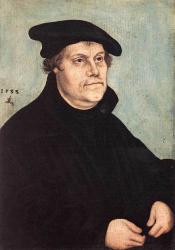
1483 - 1546 Author of "Vater Unser Im Himmelreich" in The Cyber Hymnal Luther, Martin, born at Eisleben, Nov. 10, 1483; entered the University of Erfurt, 1501 (B.A. 1502, M.A.. 1503); became an Augustinian monk, 1505; ordained priest, 1507; appointed Professor at the University of Wittenberg, 1508, and in 1512 D.D.; published his 95 Theses, 1517; and burnt the Papal Bull which had condemned them, 1520; attended the Diet of Worms, 1521; translated the Bible into German, 1521-34; and died at Eisleben, Feb. 18, 1546. The details of his life and of his work as a reformer are accessible to English readers in a great variety of forms. Luther had a huge influence on German hymnody.
i. Hymn Books.
1. Ellich cristlich lider Lobgesang un Psalm. Wittenberg, 1524. [Hamburg Library.] This contains 8 German hymns, of which 4 are by Luther.
2. Eyn Enchiridion oder Handbuchlein. Erfurt, 1524 [Goslar Library], with 25 German hymns, of which 18 are by Luther.
3. Geystliche Gesangk Buchleyn. Wittenberg, 1524 [Munich Library], with 32 German hymns, of which 24 are by Luther.
4. Geistliche Lieder auffs new gebessert. Wittenberg. J. Klug, 1529. No copy of this book is now known, but there was one in 1788 in the possession of G. E. Waldau, pastor at Nürnberg, and from his description it is evident that the first part of the Rostock Gesang-Buch, 1531, is a reprint of it. The Rostock Gesang-Buch, 1531, was reprinted by C. M. Wiechmann-Kadow at Schwerin in 1858. The 1529 evidently contained 50 German hymns, of which 29 (including the Litany) were by Luther.
5. Geistliche Lieder auffs new gebessert. Erfurt. A. Rauscher, 1531 [Helmstädt, now Wolfenbüttel Library], a reprint of No. 4.
6. Geistliche Lieder. Wittenberg. J. Klug, 1535 [Munich Library. Titlepage lost], with 52 German hymns, of which 29 are by Luther.
7. Geistliche Lieder auffs new gebessert. Leipzig. V. Schumann, 1539 [Wernigerode Library], with 68 German hymns, of which 29 are by Luther.
8. Geistliche Lieder. Wittenberg. J. Klug, 1543 [Hamburg Library], with 61 German hymns, of which 35 are by Luther.
9. Geystliche Lieder. Leipzig. V. Babst, 1545 [Gottingen Library]. This contains Luther's finally revised text, but adds no new hymns by himself. In pt. i. are 61 German hymns, in pt. ii. 40, of which 35 in all are by Luther.
For these books Luther wrote three prefaces, first published respectively in Nos. 3, 4, 9. A fourth is found in his Christliche Geseng, Lateinisch und Deudsch, zum Begrebnis, Wittenberg, J. Klug, 1542. These four prefaces are reprinted in Wackernagel’s Bibliographie, 1855, pp. 543-583, and in the various editions of Luther's Hymns. Among modern editions of Luther's Geistliche Lieder may be mentioned the following:—
Carl von Winterfeld, 1840; Dr. C. E. P. Wackernagel, 1848; Q. C. H. Stip, 1854; Wilhelm Schircks, 1854; Dr. Danneil, 1883; Dr. Karl Gerok, 1883; Dr. A. F. W. Fischer, 1883; A. Frommel, 1883; Karl Goedeke, 1883, &c. In The Hymns of Martin Luther. Set to their original melodies. With an English version. New York, 1883, ed. by Dr. Leonard Woolsey Bacon and Nathan H. Allen, there are the four prefaces, and English versions of all Luther's hymns, principally taken more or less altered, from the versions by A. T. Russell, R. Massie and Miss Winkworth [repub. in London, 1884]. Complete translations of Luther's hymns have been published by Dr. John Anderson, 1846 (2nd ed. 1847), Dr. John Hunt, 1853, Richard Massie, 1854, and Dr. G. Macdonald in the Sunday Magazine, 1867, and his Exotics, 1876. The other versions are given in detail in the notes on the individual hymns.
ii. Classified List of Luther's Hymns. Of Luther's hymns no classification can be quite perfect, e.g. No. 3 (see below) takes hardly anything from the Latin, and No. 18 hardly anything from the Psalm. No. 29 is partly based on earlier hymns (see p. 225, i.). No. 30 is partly based on St. Mark i. 9-11, and xvi., 15, 16 (see p. 226, ii.). No. 35 is partly based on St. Luke ii. 10-16. The following arrangement, however, will answer all practical purposes.
A. Translations from the Latin.
i. From Latin Hymns:
1. Christum wir sollen loben schon. A solis ortus cardine
2. Der du bist drei in Einigkeit. O Lux beata Trinitas.
3. Jesus Christus unser Heiland, Der von. Jesus Christus nostra salus
4. Komm Gott Schopfer, heiliger Geist. Veni Creator Spiritus, Mentes.
5. Nun komm der Beidenheiland. Veni Redemptor gentium
6. Was flirchst du Feind Herodes sehr. A solis ortus cardine
ii. From Latin Antiphons, &c.:
7. Herr Gott dich loben wir. Te Deum laudamus.
8. Verleih uns Frieden gnädiglich. Dapacem, Domine
9. Wir glauben all an einen Gott.
iii. Partly from the Latin, the translated stanzas being adopted from Pre-Reformation Versions:
10. Komm, heiliger Geist, Herre Gott.
11. Mitten wir im Leben sind. Media vita in morte sumus.
B. Hymns revised and enlarged from Pre-Reformation popular hymns.
12. Gelobet seist du Jesus Christ.
13. Gott der Vater wohn uns bei.
14. Gott sei gelobet und gebenedeiet.
15. Nun bitten wir den heiligen Geist.
C. Psalm versions.
16. Ach Gott vom Himmel, sieh darein.
17. Aus tiefer Noth schrei ich zu dir.
18. Ein' feste Burg ist unser Gott.
19. Es spricht der Unweisen Mund wohl.
20. Es wollt uns Gott genädig sein.
21. War Gott nicht mit uns diese Zeit.
22. Wohl dem, der in Gotten Furcht steht.
D. Paraphrases of other portions of Holy Scripture.
23. Diess sind die heilgen zehn Gebot.
24. Jesaia dem Propheten das geschah.
25. Mensch willt du leben seliglich.
26. Mit Fried und Freud ich fahr dahin.
27. Sie ist mir lieb die werthe Magd.
28. Vater unser im Himmelreich.
E. Hymns mainly Original.
29. Christ lag in Todesbanden.
30. Christ unser Herr zum Jordan kam.
31. Ein neues Lied wir heben an.
32. Erhalt uns Herr bei deinem Wort.
33. Jesus Christus unser Heiland, Der den,
34. Nun freut euch lieben Christengemein.
35. Vom Himmel hoch da komm ich her.
36. Vom Himmel kam der Engel Schaar.
In addition to these —
37. Fur alien Freuden auf Erden.
38. Kyrie eleison.
In the Blätter fur Hymnologie, 1883, Dr. Daniel arranges Luther's hymns according to what he thinks their adaptation to modern German common use as follows:—
i. Hymns which ought to be included in every good Evangelical hymn-book: Nos. 7-18, 20, 22, 28, 29, 30, 32, 34, 35, 36, 38.
ii. Hymns the reception of which into a hymn-book might be contested: Nos. 2, 3, 4, 19, 21, 22, 23, 24, 25, 33.
iii. Hymns not suited for a hymn-book: Nos. 1, 5, 6, 27, 31, 37.
[Rev. James Mearns, M.A.]
--John Julian, Dictionary of Hymnology (1907)
Martin Luther
Johann Sebastian Bach
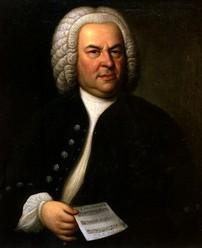
1685 - 1750 Person Name: J. S. Bach Harmonizer of "VATER UNSER" in The Cyber Hymnal Johann Sebastian Bach was born at Eisenach into a musical family and in a town steeped in Reformation history, he received early musical training from his father and older brother, and elementary education in the classical school Luther had earlier attended.
Throughout his life he made extraordinary efforts to learn from other musicians. At 15 he walked to Lüneburg to work as a chorister and study at the convent school of St. Michael. From there he walked 30 miles to Hamburg to hear Johann Reinken, and 60 miles to Celle to become familiar with French composition and performance traditions. Once he obtained a month's leave from his job to hear Buxtehude, but stayed nearly four months. He arranged compositions from Vivaldi and other Italian masters. His own compositions spanned almost every musical form then known (Opera was the notable exception).
In his own time, Bach was highly regarded as organist and teacher, his compositions being circulated as models of contrapuntal technique. Four of his children achieved careers as composers; Haydn, Mozart, Beethoven, Mendelssohn, Schumann, Brahms, and Chopin are only a few of the best known of the musicians that confessed a major debt to Bach's work in their own musical development. Mendelssohn began re-introducing Bach's music into the concert repertoire, where it has come to attract admiration and even veneration for its own sake.
After 20 years of successful work in several posts, Bach became cantor of the Thomas-schule in Leipzig, and remained there for the remaining 27 years of his life, concentrating on church music for the Lutheran service: over 200 cantatas, four passion settings, a Mass, and hundreds of chorale settings, harmonizations, preludes, and arrangements. He edited the tunes for Schemelli's Musicalisches Gesangbuch, contributing 16 original tunes. His choral harmonizations remain a staple for studies of composition and harmony. Additional melodies from his works have been adapted as hymn tunes.
--John Julian, Dictionary of Hymnology (1907)
Johann Sebastian Bach
Gerhardt Tersteegen
1697 - 1769 Person Name: Gerhard Tersteegen Author of "Thou Hidden Love of God" in The United Methodist Hymnal Tersteegen, Gerhard, a pious and useful mystic of the eighteenth century, was born at Mörs, Germany, November 25, 1697. He was carefully educated in his childhood, and then apprenticed (1715) to his older brother, a shopkeeper. He was religiously inclined from his youth, and upon coming of age he secured a humble cottage near Mühlheim, where he led a life of seclusion and self-denial for many years. At about thirty years of age he began to exhort and preach in private and public gatherings. His influence became very great, such was his reputation for piety and his success in talking, preaching, and writing concerning spiritual religion. He wrote one hundred and eleven hymns, most of which appeared in his Spiritual Flower Garden (1731). He died April 3, 1769.
Hymn Writers of the Church by Charles S. Nutter and Wilbur F. Tillett, 1911
====================================================
Gerhardt Tersteegen or ter Stegen, was born at Moers, Netherlands [sic. Germany] , November 25, 1697. He was destined for the Reformed ministry, but after his father's death when the boy was only six, his mother was unable to send him to the university. He studied at the Gymnasium in Moers, and then earned a meager living as a silk weaver, sharing his frugal daily fare with the poor. Malnutrition and privation undermined his health to such an extent that he suffered a serious depression for some five years, following which he wrote a new covenant with God, signing it in his own blood. A strong mystic, he did not attend the services of the Reformed Church after 1719. Although forming no sect of his own, he became well known as a religious teacher and leader. His house was known as "The Pilgrim's Cottage" -- a retreat for men seeking a way of life, while he himself was known as "the physician of the poor and forsaken." Barred from preaching in his own country until 1750, he visited Holland annually from 1732 to 1755, holding meetings. In addition to his other labors he carried on a tremendous correspondence. Overwork resulted in physical breakdown, so that during the latter years of his life he could speak only to small gatherings. He died at Muhlheim on April 3, 1769. One of the three most important of Reformed hymn writers, he is also regarded as the chief representative of the mystics. He wrote 111 hymns. His important Geisliches Blumengartlein was published in 1729. H.E. Govan published The Life of Gerhard Tersteegen, with selctions from his writings, in 1902.
--The Hymnal 1940 Companion
===========================
Tersteegen, Gerhard, son of Heinrich Tersteegen (otherwise ter Stegen or zur Stiege), merchant at Mörs (Meurs), in Rhenish Prussia, was born at Mors, Nov. 25, 1697. His parents intended that he should become a minister of the Reformed Church in Germany. His father however died in 1703, and his mother found that after giving him a thorough classical training in the Latin school at Mörs she was unable to afford the cost of his University course. He was accordingly apprenticed, in 1713, to his brother-in-law, a merchant at Mühlheim on the Ruhr, and in 1717 started in business on his own account, at Mühlheim. As he found his time much broken up, and his opportunities of meditation few, he gave up his business in 1719; and, after a short trial of linen weaving, took up the easier and much more lucrative occupation of weaving silk ribbons. During the years 1719-24 he passed through a period of spiritual depression, at the end of which his faith in the reconciling grace of Christ became assured (see No. xxxiv. below), and on Maundy Thursday, 1724, he wrote out a solemn covenant with God which he signed with his own blood. Previous to this, even before 1719, he had ceased to attend the ordinary services of the Reformed Church; and also absented himself from Holy Communion on the ground that he could not in conscience communicate along with open sinners. About the beginning of 1725 he began to speak at the prayer meetings which had been held at Mühlheim, since 1710, by Wilhelm Hoffmann, who was a candidate of theology (licensed preacher) of the Reformed Church. Tersteegen soon became known as a religious teacher among the "Stillen im Lande," as the attenders on these meetings were called, and in 1728 gave up his handicraft in order to devote himself entirely to the translation of works by medieval and recent Mystics and Quietists, including Madame Guyon and others, and the composition of devotional books, to correspondence on religious subjects, and to the work of a spiritual director of the "awakened souls." From this date to his death he was supported by a small regular income which was subscribed by his admirers and friends.
About 1727 a house at Otterbeck, between Mühlheim and Elberfeld, was set apart as a "Pilgerhütte," where the "awakened souls" could go into a spiritual retreat, under the direction of Tersteegen. This house, with accommodation for eight persons, was retained until about 1800. Tersteegen, however, did not confine himself to Mühlheim, but travelled over the district, addressing gatherings of like-minded Christians, giving special attention to Elberfeld, Barmen, Solingen, and Crefeld. From 1732 to 1755 he also went regularly every year to Holland, to visit his spiritual kinsfolk at Amsterdam and elsewhere. From 1730 to 1750 a law against conventicles was strictly enforced, and Tersteegen could not hold meetings except on his visits to Holland. During this period he removed to a house which had been Wilhelm Hoffmann's, where he preached, and provided food and simple medicines for the poor. After 1750 he resumed his public speaking until 1756, when he overstrained himself, and had to confine himself to the smallest gatherings absolutely. In 1769, dropsy set in, and after patient endurance for a season he died on April 3, 1769, at Mühlheim (Koch, vi. 46). Up to the end of his life Tersteegen remained outside the Reformed Church, but never set up a sect of his own. After his death his followers as a rule reunited themselves with it, especially when a less formal type of religion began to prevail therein.
Tersteegen's most important hymnological work was his Geistliches Blümen-Gärtlein, of which many editions were published. Tersteegen ranks as one of the three most important hymnwriters associated with the Reformed Church in Germany, the other two being F. A. Lampe and Joachim Neander.
He is however more closely allied, both as a Mystic and as a Poet, with Johann Scheffler than with either of his co-religionists. He almost equals Scheffler in power of expression and beauty of form, and if Scheffler has more pictorial grace, and a more vivid imagination, Tersteegen has more definiteness of teaching, a firmer grasp of the Christian verities, and a greater clearness in exposition. Inner union of the soul with God and Christ, the childlike simplicity and trust which this brings, renunciation of the world and of self, and daily endeavour to live as in the presence of God and in preparation for the vision of God, are the keynotes of his hymns. To his intense power of realising the unseen, his clear and simple diction, and the evident sincerity with which he sets forth his own Christian experience, his hymns owe much of their attractiveness and influence. During his lifetime they did not come much into use except through the Harfenspiel, as above, and they did not meet the taste of compilers during the Rationalistic period. But since Bunsen in his Yersuch, 1833, and Knapp in his Evangelischer Lieder-Schatz, 1837, brought his hymns once more into notice they have been received in greater or less measure into almost all the German hymnbooks, among the Lutherans as well as among the Reformed, the most popular of all being his “Gott ist gegenwärtig".
A number of Tersteegen's hymns are noted under their own first lines. They appeared, almost all for the first time, in the successive editions of his Geistliches Blümen-Gärtlein, viz., in the 1st ed., 1729; 2nd ed., 1735; 3rd ed., 1738; 4th ed., 1745; 5th ed., 1751; 6th ed., 1757; 7th ed., 1768; and in each case (after 1729) in the Third Book of that work. Those which have passed into English are as follows:—
i. Freue dich, du Kinder-Orden. Christmas. Translated as:—
Little children, God above, 1858, p. 78. Another tr. is: "Children rejoice, for God is come to earth." By Miss Dunn, 1857, p. 30.
ii. Jedes Herz will etwas lieben. Love to Christ. In the 4th ed., 1745, as above, Bk. iii., No. 70, in 8 stanzas of 4 lines, entitled "The Soul wishes to take Jesus as her best Beloved." Translated as:—
1. The heart of man must something love. A cento beginning with st. ii. “Though all the world my choice deride," is in Spurgeon's Our Own Hymn Book, 1866, and also in the Plymouth Collection, 1855, and other American hymnals.
2. Something every heart is loving. A full and good translation by Mrs. Bevan, in her Songs of Eternal Life, 1858, p. 58.
iii. Jesu, der du bist alleine. Communion of Saints. In the 2nd ed., 1735, in 11 stanzas of 6 lines, entitled "Prayer on behalf of the brethren." Translated as:—
Jesus, whom Thy Church doth own. By Miss Winkworth, omitting st. iii., in her Lyra Germanica, 2nd Ser., 1858, p. 99.
iv. Jesu, mein Erbarmer! höre. Lent or Penitence. In the 2nd ed., 1735, in 12 stanzas of 6 lines, entitled "In outward and inward sufferings and Temptations." Translated as:—
Jesus, pitying Saviour, hear me. In full, by Miss Winkworth, in her Lyra Germanica, 2nd Ser., 1858, p. 133. In her Christian Singer, 1869, p. 298, she gave st. ii., v., vi., beginning "Lost in darkness, girt with dangers."
v. Nun so will ich denn mein Leben. Self-Surrender. Translated (omitting st. ii., iii., vi., x.) as:—
1. Lo! my choice is now decided. By Miss Cox, in her Sacred Hymns from the German, 1841, p. 125. Her translations of st. viii., ix., vii., altered and beginning, "One thing first and only knowing," are repeated in Hedge & Huntington's Hymns for the Church of Christ, Boston, U.S., 1853.
2. Now at last I end the strife. By Miss Winkworth, in herLyra Germanica, 2nd Ser., 1858.
vi. 0 liebe Seele! könntst du werden. The Childlike Spirit. Translated as:—
Soul! couldst thou, while on earth remaining. In Miss Cox'sHymns from German, 1864, p. 197, it begins "Soul, while on earth thou still remainest."
Other trs. are: (1) "Wouldst thou, my soul, the secret find." By Lady E. Fortescue, 1843, p. 47. (2) “Dear soul, couldst thou become a child." By Miss Winkworth, 1855, p. 22.
vii. Siegesfürste, Ehrenkönig. Ascension. Translated as:—
Conquering Prince and Lord of Glory, By Miss Winkworth, omitting st. ii., in her Lyra Germanica, 2nd Ser., 1858, p. 48.
viii. Wie gut ists, wenn man abgespehnt. Lent or Self-Renunciation. In the first edition, entitled "Of the sweetness of the hidden life of Christians." Translated as:—
How sweet it is, when, wean'd from all. This is a good and full translation by S. Jackson, in his Life of Tersteegen, 1832 (1837, p. 417).
Other hymns by Tersteegen which have been rendered into English are:—
ix. Ach Gott, es taugt doch draussen nicht. On the Vanity of Earthly Things. Tr. as, "Ah God! the world has nought to please." By Miss Winkworth, 1869, p. 304.
x. Ach, könnt ich stille sein. Peace in God. Translated as (1) "Oh! could I but be still." By Mrs. Bevan, 1859, p. 134. (2) "Ah, could I but be still." By Lady Durand, 1873, p. 77.
xi. Allgenugsam Wesen. God's All-sufficiency . The trs. are (1) "Thou All-sufficient One! Who art." By Miss Warner, 1858, p. 601, repeated in Hymns of the Ages, Boston, U.S., 1865, p. 163. (2) "Thou, whose love unshaken."
xii. Bald endet sich mein Pilgerweg. Eternal Life. Translated as “Weary heart, be not desponding." By Lady Durand, 1873, p. 84.
xiii. Berufne Seelen! schlafet nicht. Lent. The translations are (1) "Ye sleeping souls, awake From dreams of carnal ease." By S. Jackson, in his Life of Tersteegen, 1832 (1837, p, 413). (2) "Sleep not, 0 Soul by God awakened." By Lady Durand, 1873, p. 98.
xiv. Das äussre Sonnenlicht ist da. Morning. Tr. as (1) "The World's bright Sun is risen on high." By H. J. Buckoll, 1842, p. 51. (2) "The outer sunlight now is there." By Lady Durand, 1873, p. 75.
xv. Das Kreuz ist dennoch gut. Cross and Consolation. Translated as "The Cross is ever good." By Mrs. Findlater in Hymns from the Land of Luther, 1862, p. 72 (1884, p. 234).
xvi. Die Blümlein klein und gross in meines Herren Garten. On the Graces of the New Testament. The trs. are (l) "Flowers that in Jesu's garden have a place." By Miss Dunn in her translation of Tholuck's Stunden, 1853, p. 114. (2) "Full many flowers, in my Lord's garden blooming." By Dr. R. Menzies in his translation of Tholuck's Stunden, 1870, p. 182.
xvii. Die Liebe will was gauzes haben.Entire Consecration. Tr. as "Love doth the whole—not part—desire." By Miss Warner, 1869, p. 12.
xviii. Für dich sei ganz mein Herz und Leben. Consecration to Christ. The trs. are (1) "Constrain'd by love so warm and tender." By R. Massie in the British Herald, April, 1865, p. 55. (2) "My soul adores the might of loving." By Mrs. Edmund Ashley in the British Herald, Sept., 1867, p. 136, repeated in Reid's Praise Book, 1872, No. 582.
xix. Grosser Gott, in dem ich schwebe. God's Presence. Translated as "God, in Whom I have my being." By Lady Durand, 1873, p. 81.
xx. Jauchzet ihr Himmel! frohlocket ihr englische Chören. Christmas. Tr. as "Triumph, ye heavens! rejoice ye with high adoration."
xxi. Jesu, den ich meine. Life in Christ. Tr. as ”Jesus, whom I long for." By Lady Durand, 1873, p. 92.
xxii. Jesus-Nam, du höchster Name. The Name of Jesus. Translated as "Jesu's name, thou highest name." By S. Jackson in his Life of Tersteegen, 1832 (1837, p. 415).
xxiii. Liebwerther, süsser Gottes-Wille. Resignation to the Will of God. The translations are (1) "Thou sweet beloved Will of God." By Mrs. Bevan, 1858, p. 14. (2) “Will of God, all sweet and perfect." By Lady Durand, 1873, p. 96.
xxiv. Mein ganzer Sin. Lent. Turning to God. Tr. as "My whole desire Doth deeply turn away." By Miss Warner, 1869, p. 30.
xxv. Mein Gott, mein Gott, mein wahres Leben. Self-Dedication. Tr. as "My God, my God, my life divine!" By S. Jackson in his Life of Tersteegen, 1832 (1837, p. 414).
xxvi. Mein Herz, ein Eisen grob und alt. Cross and Consolation. Tr. as "A rough and shapeless block of iron is my heart." By Lady Durand, 1873, p. 79.
xxvii. Mein'n ersten Augenblick. Morning. Tr. as "Each moment I turn me."
xxviii. Nun lobet alle Gottes Sohn. Praise to Christ. Tr. as "Give glory to the Son of God." By Mrs. Bevan, 1858, p. 75.
xxix. 0 Jesu, König, hoch zu ehren. Self-surrender. Tr. as “0 Jesus, Lord of majesty." By Miss Winkworth, 1858, p. 136.
xxx. So gehts von Schritt zu Schritt. For the Dying. Tr. as "Thus, step by step, my journey to the Infinite." By Lady Durand, 1873, p. 105.
xxxi. So ist denn doch nun abermal ein Jahr. New Year. Tr. as "Thus, then another year of pilgrim-life." By Lady Durand, 1873, p. 73.
xxxii. Sollt ich nicht gelassen sein. Cross and Consolation. Tr. as “Should I not be meek and still." By Mrs. Bevan, 1858, p. 45.
xxxiii. Von allen Singen ab. Turning to God. Tr. as "From all created things." By Lady Durand, 1873, p. 100.
xxxiv. Wie bist du mir so innig gut. The Grace of Christ. Written in 1724 at the close of his time of spiritual despondency. “This state of spiritual darkness continued five years; until at length whilst on a journey to a neighbouring town, the day-spring from on high again visited him; and the atoning mercy of Jesus Christ was made so deeply and convincingly apparent to him, that his heart was set entirely at rest. On this occasion he composed that beautiful hymn, &c." Translated as “How gracious, kind, and good, My great High Priest art Thou" (st. i.-v.), No. 74 in Dr. Leifchild's Original Hymns, 1842.
xxxv. Wiederun ein Augenblick. The Flight of Time. Tr. as: (1) “Of my Time one Minute more." (2) "One more flying moment." By Lady Durand, 1873, p. 26.
xxxvi. Willkomm'n, verklarter Gottes Sohn. Easter. This is translated as "O Glorious Head, Thou livest now." By Miss Winkworth, 1855, p. 89. Repeated in Schaff’s Christ in Song, 1870.
The first Book of the Blumen-Gärtlein contains short poems, more of the nature of aphorisms than of hymns. In the ed. of I76S there are in all 568 pieces in Book i., and of these Miss Winkworth has translated Nos. 429, 474, 565, 573, 575, 577 in her Christian Singers, 1869. Others are tr. by Lady Durand, in her Imitations from the German of Spitta and Terstsegen, 1873, as above, and by S. Jackson, in his Life of Tersteegen, 1832. [Rev. James Mearns, M.A.]
-- Excerpts from John Julian, Dictionary of Hymnology (1907)
==================
See also in:
Hymn Writers of the Church
Gerhardt Tersteegen


Christian Classics Ethereal Hymnary
Publication Date: 2007 Publisher: Grand Rapids, MI: Christian Classics Ethereal Library
Christian Classics Ethereal Hymnary
Small Church Music
Editors: Martin Luther Description:
History
The SmallChurchMusic site was launched in 2006, growing out of the requests from those struggling
to provide suitable music for their services and meetings. Rev. Clyde McLennan was ordained in mid
1960’s and was a pastor in many small Australian country areas, and therefore was acutely aware of
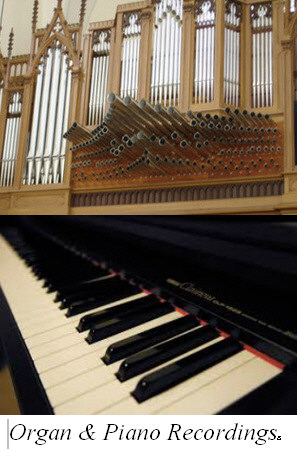
this music problem. Having also been trained as a Pipe Organist, recordings on site (which are a subset
of the smallchurchmusic.com site) are all actually played by Clyde, and also include piano and piano
with organ versions.
About the Recordings All recordings are in MP3 format.
Churches all around the world use the recordings, with downloads averaging over 60,000 per
month.
The recordings normally have an introduction, several verses and a slowdown on the last verse.
Users are encouraged to use software: Audacity (http://www.audacityteam.org) or Song Surgeon (http://songsurgeon.com) to adjust the MP3 number of verses, tempo and pitch to suit their local needs.
Mobile App
We have partnered with the developer of the popular NetTracks mobile app to offer the Small Church Music collection as a convenient mobile app. Experience the beloved Small Church Music collection through this iOS app featuring nearly 10,000 high-quality hymn recordings that can be organized into custom setlists and downloaded for offline use—ideal for worship services without musicians, congregational practice, and personal devotion. The app requires a small fee to cover maintenance costs. Please note: While Hymnary.org hosts this music collection, technical support for the app is provided exclusively by the app developer, not by Hymnary.org staff.
LicensingCopyright notice: Rev. Clyde McLennan, performer in this collection, has assigned his performer rights in this collection to Hymnary.org. Non-commercial use of these recordings is permitted. For permission to use them for any other purposes, please contact manager@hymnary.org.
Home/Music(smallchurchmusic.com)
List SongsAlphabetically
List Songsby Meter
List Songs byTune Name
About
Small Church Music
The Psalms, Hymns, and Spiritual Songs of the Old and New-Testament

Publication Date: 1742 Publisher: Daniel Henchman and Thomas Hancock Publication Place: Boston
The Psalms, Hymns, and Spiritual Songs of the Old and New-Testament