You help make Hymnary.org possible. More than 10 million people from 200+ countries found hymns, liturgical resources and encouragement on Hymnary.org in 2025, including you. Every visit affirms the global impact of this ministry.

If Hymnary has been meaningful to you this year, would you take a moment today to help sustain it? A gift of any size—paired with a note of encouragement if you wish—directly supports the server costs, research work and curation that keep this resource freely available to the world.

Give securely online today, or mail a check to:
Hymnary.org
Calvin University
3201 Burton Street SE
Grand Rapids, MI 49546

Thank you for your partnership, and may the hope of Advent fill your heart.

Person Results

Tune Identifier:"^werde_munter_schop$"
In:person

Planning worship? Check out our sister site, ZeteoSearch.org, for 20+ additional resources related to your search.
Showing 11 - 20 of 70Results Per Page: 102050

John H. Hopkins

1820 - 1891 Person Name: John Henry Hopkins, Jr., 1820-1891 Author of "Come with us, O blessed Jesus" in The Hymnal 1982 John Henry Hopkins, Jr MA USA 1820-1891. Born in Pittsburgh, PA, having 12 siblings, the son of pioneer parents (his father from Dublin, his mother from Hamburg) he became an ecclesiologist. His father had been an ironmaster, school teacher, lawyer, priest and second Episcopal Bishop of Vermont, (becoming presiding bishop in 1865). When his father founded the Vermont Episcopal Institute, he needed an assistant to help run it, so he picked his son to become a tutor and disciplinarian. The younger Hopkins played the flute and bugle in the school orchestra and also taught Sunday school. John Henry reflected the artistic talents of both parents in music, poetry, and art. After graduating from the University of Vermont in 1839, he returned to help his father with the school, but a financial crisis hit that year and the school had to close. He worked as a reported in New York City while studying law. He developed a throat ailment and went south to be in a warmer climate. From 1842-1844 he tutored the children of Episcopal Bishop Elliott of Savannah, GA, returning to take his M.A. from Vermont in 1845. He graduated from General Theological Seminary in 1850 and was ordained a deacon, serving as first instructor in church music at the Seminary. He founded and edited the “Church Journal” from 1853 to 1868. Interested in New York’s Ecclesiological Society, his artistic talents were apparent in designing stained-glass windows, episcopal seals, and a variety of other church ornaments. At the same time, his musical talents led to the writing and composing of a number of fine hymns and tunes, as well as anthems and services. He was ordained a priest in 1872, and was Rector of Trinity Church, Plattsburg, NY, from 1872-1876, then of Christ Episcopal Church in Williamsport, PA, from 1876-1887. He helped get the building debt paid off by 1879 with(in 10 years of its construction). During his time there a Sunday school building was also erected, having steam heat and a tiled floor. He designed some of the church furniture and bishop periphernalia as well as wrought iron tombs in Wildwood Cemetery. He also helped design two other church buildings in the area. A man of many talents, he was much beloved as a scholar, writer, preacher, controvertialist, musician, poet, and artist, excelling in all that he did. Totally devoted to his parish people, he especially loved children and was kind to anyone in need. He was considered very down-to-earth. He delivered the eulogy at the funeral of President Usysses S Grant in 1885. He was considered a great developer of hymnody in the Episcopal Church in the mid-19th century. His “Carols, hymns, and songs,”, published in 1863, had a 4th edition in 1883. In 1887 he edited “Great hymns of the church”. He wrote a biography of his father (the life of John Henry Hopkins, S.T.D.) He never married. He died at Hudson, NY. John Perry ======================= Hopkins, John Henry, D.D., Jun., son of J. H. Hopkins, sometime Bishop of Vermont, was born at Pittsburg, Pa., Oct. 28, 1820, educated at the University of Vermont, ordained in 1850, Rector of Christ's Church, Williamsport, Pa., 1876, and died at Troy, New York, Aug. 13, 1891. He published Poems by the Wayside written during more than Forty Years, N.Y., James Pott, 1883; and Carols, Hymns, and Songs, 1862; 3rd ed. 1882. Of his hymns the following are in common use: 1. Blow on, thou [ye] mighty Wind. Missions. 2. Come with us, O blessed Jesus. Holy Communion. 3. Glory to God the Father be. (Dated 1867.) Holy Trinity. 4. God hath made the moon whose beam. (Dated 1840.) Duty. 5. Lord, now round Thy Church behold. (Dated 1867.) For the Reunion of Christendom. These hymns are in his Poems by the Wayside, 1883. In the same volume there are translations of the O Antiphons. --John Julian, Dictionary of Hymnology, Appendix, Part II (1907) ============== Hopkins, J. H., p. 1571, ii. The following additional hymns by him are in the American Hymnal, revised and enlarged .... Protestant Episcopal Church. . . U.S.A., 1892:— 1. God of our fathers, bless this our land. National Hymn. 2. When from the east the wise men came. Epiphany. --John Julian, Dictionary of Hymnology, New Supplement (1907)

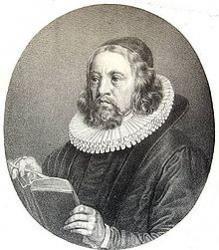
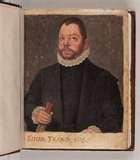
Thomas Kingo

1634 - 1703 Person Name: T. H. Kingo, 1634-1703 Author of "Like the Golden Sun Ascending" in Evangelical Lutheran Hymnary

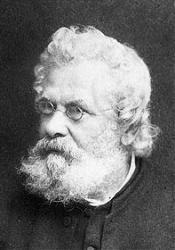
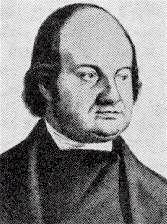
Karl Johann Philipp Spitta

1801 - 1859 Person Name: Karl J. Spitta Author of "Thou, Whose Coming Seers And Sages" in The Cyber Hymnal Spitta, Carl Johann Philipp, D.D., was born Aug. 1, 1801, at Hannover, where his father, Lebrecht Wilhelm Gottfried Spitta, was then living, as bookkeeper and teacher of the French language. In his eleventh year Spitta fell into a severe illness, which lasted for four years, and so threw him back that his mother (the father died in 1805) abandoned the idea of a professional career, and apprenticed him to a watchmaker. This occupation did not prove at all congenial to him, but he would not confess his dislike, and his family were ignorant of it till an old friend, who was trying to comfort him after the death of a younger brother, discovered his true feelings. The younger brother had been preparing for ordination, and so Carl was now invited by the family to adopt this career. He joyfully accepted the offer, left the workshop in the autumn of 1818, and succeeded, by dint of hard study during the winter, in gaining admission to the highest class in the Gymnasium (Lyceum) at Hannover, which he entered at Easter, 1819. He was thus able, at Easter, 1821, to proceed to the University of Göttingen, where he completed his theological course, under professors of pronounced Rationalistic opinions, at Easter, 1824 (D.D. from Gottingen, 1855). He then became, in the beginning of May, a tutor in the family of Judge (Oberamlmann) Jochnius, at Lüine, near Lüneburg. Here he remained till his ordination on Dec. 10, 1828, as assistant pastor at Sudwalde, near Hoya. In Nov., 1830, he became assistant chaplain to the garrison and to the prison at Hameln on the Weser, and would have succeeded as permanent chaplain there, in the beginning of 1837, had not the military authorities, alarmed by reports which described him as a Pietist and a Mystic, refused to sanction the arrangement. As a compensation, he was appointed pastor at Wechold, near Hoya, in Oct., 1837, and married just before settling there. On his birthday, Aug. 1, 1847, he was instituted as Lutheran superintendent at Wittingen; in Oct., 1853, at Peine; and in July, 1859, at Burgdorf—all his appointments having been in the kingdom of Hannover. A few weeks after removing to Burgdorf he was seized with gastric fever, but had apparently recovered, when, on Sept. 28, 1859, while sitting at his writing table, he was seized with cramp of the heart, and died in a quarter of an hour. Spitta had begun to write in verse when he was eight years old, along with his brother Heinrich. During his university course he continued to write songs and secular poems, and published a collection of songs anonymously as a Sangbüchlein der Liebe für Handwerksleute. At Göttingen he formed a life-long friendship with Adolf Peters. He was also on intimate terms with Heinrich Heine, who was a fellow member with them of the Burschenschaft, or student's patriotic union (see K. Goedeke'sGrundriss, vol. iii., 1881, p. 259); and this friendship continued till Heine, while visiting him at Ltine, so jested at things sacred, even in the presence of Spitta's pupils, that their friendship came to an end. After the spiritual change, which began about the end of his university course, Spitta ceased to write secular pieces. His hymnwriting proper seems to have begun in 1821. In writing to a friend on May 5, 1826, he says, "In the manner in which I formerly sang I sing no more. To the Lord I consecrate my life and my love, and likewise my song. His love is the one great theme of all my songs; to praise and exalt it worthily is the desire of the Christian singer. He gave to me song and melody; I give it back to Him." The most fruitful period of his hymnwriting was at Lüne, where many of his most popular hymns were composed in the quiet evenings, in his own room, often after fasting, and when, sitting at the piano or at his harp, he had tuned his spirit to song. Many others were inspired by the beautiful scenery of the valley of the Weser, and by the intercourse with friends during his residence at Hameln. In his later years his ecclesiastical duties absorbed his attention, and hardly any of his hymns were written after 1847. A number of them were first printed in the Christliche Monatsschrift zur häuslichen Erbauung für alle Stände, which appeared from Jan. to June, 1826, and was edited by Spitta and by Pastor Deichmann, of Lüneburg. Various causes doubtless contributed to the popularity of Spitta's Psalter und Harfe. The hymns therein are, as a rule, of moderate length, are clear and simple in style, refined in diction, sweet, flowing and melodious. Their quiet beauty, their tone of earnest, sincere, and childlike piety, of glowing devotion to the Saviour, and of calm resting on, what to Spitta were, the eternal verities, endeared them to all ranks and classes. They form a faithful mirror of his inner life and Chritian experience. They at once met and ministered to the revival of Evangelical religion in Germany, and thus enjoyed somewhat of the same good fortune and popularity which the renewed churchly life in England brought to Keble's Christian Year. As the title adopted shows Spitta meant them for family and private use, and for this they are best fitted, being, for the most part, subjective and individnal. They speedily, however, passed into the German hymnbooks for church use, both at home and abroad, and translations of them are found in almost all recent English and American collections. Another element of Spitta's popularity in Germany has been contributed by the very numerous musical settings which have appeared to his hymns. Koch, vii., 246, gives a list of the more important of the collective editions, but, besides these, many of the separate pieces have been set to music by various composers, the "Angel of Patience" being one of the greatest favourites. A number of Spitta's hymns are annotated under their original first lines. Of the rest we may note here the following:— I. From his Psalter und Harfe. 1st Series, Pirna, 1833, and the 2nd ed. Leipzig, 1834; 2nd Series, Leipzig, 1843. i. Allen ist ein Heil beschieden. Communion of Saints. First published at Pirna, 1833, as above, p. 27, in 5 stanzas of 7 lines, entitled "Unity in spirit." Another translation is:—“Salvation is a boon." By Miss Fry, 1859, p. 75. ii. Es wird mein Herz mit Freuden wach. Sunday Morning. First published at Leipzig, 1843, p. 61, in 7 st. of 4 1., entitled "Sunday Morning." Translated as:— My heart wakes with a joyful lay. This is a good and full tr. by Mrs. Findlater, in Hymns from the Land of Luther, 4th Ser. 1862, p. 82. Repeated, abridged and beginning "Awake! all hearts and joyful say," in G. S. Jellicoe's Collection, 1867, No. 26. Other trs. are: (1) "My heart awakes with holy glee." By Miss Manington, 1863, p. 143. (2) "Awake, my heart, this day of rest." By R. Massie, 1864, p. 51. (3) "My heart is bright with joy." By Lady Durand, 1873, p. 25. iii. Gottes Stadt steht festgegründet. Christian Church. First published at Leipzig, 1843, p. 97, in 6 stanzas of 12 lines, entitled "The City of God," and founded on Ps. lxxxvii. Tr. as:— By the holy hills surrounded, In full, by R.. Massie, in his Lyra Domestica, 1864, p. 82, repeated in the Wesleyan Hymn Book1875, No. 595. iv. Hochgesegnet seid ihr Boten. Foreign Missions. First pub. at Pirna, 1833, as above, p. 24, in 6 stanzas of 8 lines, entitled "The Missionaries to the Heathen." Tr. as:— Blest are ye, ye chosen bearers. In full, by R. Massie, in his Lyra Domestica, 1860, p. 95. Other trs. are: (1) "Ye messengers of Christ, By Him commissioned forth." By Miss Fry, 1859, p. 147. (2) "0 blessed are ye messengers, sent forth." By Lady Durand, 1873, p. 52. v. Ich glaube, darum rede ich. Faith. First published at Pirna, 1833, as above, p. 56, in 5 st. of 8 1., entitled " I believe." Tr. as:— I believe, and so have spoken. By R. Massie, in his Lyra Domestica, 1860, p. 55. vi. Ich höre deine Stimme. Ps. xxiii. First pub. at Pirna, 1833, as above, p. 44, in 7 st. of 8 1., entitled "The Lord is my Shepherd." Tr. as:— 1. I hear my Shepherd calling. This is a good and full tr. by R. Massie, in his Lyra Domestic, 1860, p. 44 2. Jesu, my Lord, my Shepherd. This is a very good translation, omitting st. vi., in the Catholic Apostolic Hymns for the Use of the Churches, n.d. [1868], marked as tr. by "M. E. A. 1867." Other trs. are: (1) "Shepherd of souls. Thy voice I hear, As stage." By Dr. R. Maguire, 1872, p. 166. (2) “I know Thy voice, my Shepherd.” By Lady Durand, 1873, p. 11. vii. Ich und mein Haus, wir sind bereit. Family Use. A fine hymn, founded on Joshua xxiv., 15. First pub. at Pirna, 1833, as above, p. 110, in 6 st. of 10 1., entitled “I and my house will serve the Lord." Tr. as:— I and my house are ready, Lord. In full, by R. Massie, in his Lyra Domestica, 1860, p. 103. viii. Im Osten flammt empor der gol'dne Morgen. Morning. First published at Pirna, 1833, as above, p. 91, in 7 st. of 6 1., entitled "At Morning." Tr. as:— The golden morn flames up the Eastern sky. This is a good and full tr. by Miss Winkworth, in the Lyra Germanica, 2nd Ser., 1858, p. 74. Other trs. are: (1) “The golden morn is in the East arisen." By the Hon. S. R. Maxwell in his Sacred Poems, 1857, p. 114. (2) "On the far East now flames the golden Morning." By S. A. Storrs, in her Thoughts and Sketches, 1857, p. 74. (3) "Lo! in the East the golden morn appearing." By Miss Fry, 1859, p. 1. (4) “The purple morning gilds the Eastern skies." By R. Massie, 1860, p. 6. (5) "Out from the East, the golden morn is riding." By Miss Manington. 1863, p. 113. (6) “See from the East the golden morn." By Dr. R. Maguire, 1883, p. 27. ix. Kehre wieder, kehre wieder. Lent. Founded on Jer. iii. 12, 13. First pub. at Pirna, 1833, as above, p. 29, in 5 st. of 10 l., entitled " Turn again." Translated as:— 1. Return, return! Poor long-lost wanderer, home. This is a free tr. by Miss Borthwick in Hymns from the Land of Luther, 2nd Ser., 1855, p. 25. 2. Turn, poor wanderer, ere the sentence. In full, by R. Massie, in his Lyra Domestic, 1860, p. 69. Other trs. are: (1) "Turn, O turn, no more delaying." By the Hon. S. R. Maxwell, in his Sacred Poems, 1857, p. 101. (2) "Return, return, thou lost one." By Lady Durand, 1873, p. 59. (3) "Return again! return again." By J. Kelly, in his Hymns of the Present Century, 1885, p. 60. x. Meine Stund' ist noch nicht kommen. Cross and Consolation. First published at Pirna, 1833, as above, p. 37, in 7 st. of 6 1., entitled "The Lord's Hour.” Tr. as:— Jesus' hour is not yet come. This is a free tr., omitting st. v., by Miss Borthwick, in Hymns from the Land of Luther, 2nd ser. 1855, p.43. Other trs. are:—(1) "'Tis not yet the time appointed." By R. Massie, 1860, p. 47, and in Reid's Praise Book, 1872. (2) " My times, O Lord, are in Thy hand." By Dr. R. Maguire, 1883, p. 99. xi. Kimm hin, was dein ist, Gott, nimms hin. Surrender to God. This beautiful hymn was first pub. at Leipzig, 1843, as above, p. 58, in 5 st. of 10 1., entitled "Resignation." Translated as:— I give Thee back Thine own again. A good and full tr. by R. Massie, in hisLyra Domestica, 1864, p. 49. xii. 0 du, der uns begegnet. Christian Service. First pub. at Leipzig, 1843, as above, p. 92, in 4 st. of 4 1., entitled "The Blessing of the Blest." Tr. as:— 0 Thou Whose grace first found us, Whose love. In full, by R. Massie, in his Lyra Domestica, 1864. xiii. O komm, du Geist der Wahrheit. Whitsuntide. First pub. at Pirna, 1833, as above, p. 12, in 7 st. of 8 1., entitled "Whitsunday." Tr. as:— 1. Draw, Holy Spirit, nearer. In full, by R. Massie, in his Lyra Domestica, 1860, p. 27. 2. 0 come, Eternal Spirit, Of truth, diffuse Thou light. xiv. 0 Vaterhand, die mich so treu geführet. Holy Trinity. A fine hymn, first pub. at Pirna, 1833, as above, p. 128, in 3 st. of 8 1., entitled "Father, Son, and Spirit.” Tr. as:— 1. O Father-Eye, that hath so truly watch'd. By Miss Winkworth, in her Lyra Germanica, 2nd Ser., 1858, p. 63. 2. Father whose hand hath led me so securely. xv. 0 welche fromme schöne Sitte. Spiritual Conversation. First pub. at Pirna, 1833, as above, p. 101, in 6 st. of 8 1., entitled "The Blessing of Christian fellowship." Tr. as:— It is a practice greatly blest. In full, by R. Massie, in his Lyra Domestica, 1860, p. 89. xvi. 0 wie freun wir uns der Stunde. Fellowship with Christ. First pub. at Leipzig, 1843, as above, p. 3, in 6 st. of 8 1., entitled "Thou hast the words of Eternal Life". Tr. as:— Oh J how blest the hour, Lord Jesus. In full, by R. Massie, in his Lyra Domestica, 1864, p. 5. Another tr. is: "How great the joy, how blest the hour." By Dr. R. Maguire, 1872, p. 182. xvii. 0 wie manche schone Stunde. Cross and Consolation. First published at Pirna, 1833, as above, p. 130, in 10 st. of 4 1., entitled "Comfort." Tr. as:— 1. O how many hours of gladness, Hath the Lord. In full, by R. Massie, in his Lyra Domestica, 1860, p. 126, repeated, abridged, in the Book of Common Praise, 1863. 2. O how many hours of beauty. This is a good and full tr., by Mrs. Findlater, in Hymns from the Land of Luther, 4th Ser., 1862, p. 11. Another tr. is: "O how many an hour of gladness." By Lady Durand, 1873, p. 16. xviii. Sehet, sehet, welche Liebe. The Love of the Holy Trinity. First pub. at Pirna, 1833, as above, p. 19, in 3 st. of 8 1., entitled " See what Love." Tr. as:— See, O see, what love the Father. In full, by R. Massie, in his Lyra Domestica, 1860, p. 50. Other trs. are : (1) "Behold the Father's love." By Miss Fry, 1859, p. 9. (2) "See! what wondrous love, how matchless." By Miss Manington, 1863, p. 33. (3) “Behold what love the Father hath—how great." By Dr. R. Maguire, 1872, p. 68. xix. Unser Wandel ist im Himmel! Wie ein Mensch in sich versenkt. The Christian Life. First pub. at Pirna, 1833, as above, p. 75, in 7 st. of 8 1., entitled "Our Conversation is in Heaven," and suggested by Philipp. iii. 20. Tr. as:— As a traveller returning. In full, by R. Massie, in his Lyra Domestica, 1860, p. 73. This is found in two centos :— 1. Jesus, like the magnet, raises (st. iii., v., vi.) in the Methodist New Congregational Hymn Book 1863. 2. Can we have our hearts in heaven (st. v., vii.) in Adams's Church Pastorals, Boston, U.S., 1864. Another tr. is: "We are citizens of heaven." In the British Herald, January, 1866, p. 205. xx. Wandle leuchtender und schöner. Easter. First published at Pirna, 1833, as above, p. 8, in 9 st. of 8 1., entitled "Easter Festival." Tr. as:— Sun, shine forth in all thy splendour. This is a full and good tr. by R. Massie, in his Lyra Domestica, 1860, p. 24. Another tr. is: "With brighter glory, Easter Sun." By Lady Durand, 1873, p. 4. xxi. Wir sind des Herrn, wir leben, oder sterben. Life in Christ. A fine hymn founded on Rom. xiv. 8. Tr. as:— 1. We are the Lord's; His all-sufficient merit. This is a good and full tr. by C. T. Astley, in his Songs in the Night, 1860, p. 32. 2. We are the Lord's, whether we live or die. Also a good and full tr. by R. Massie, in his Lyra Domestica, 1864, p. 81. Hymns not in English common use:— xxii. Ach, welche Marter, welche Flagen. Christ's Mercy. Tr. as "O Lord, what sorrows past expression." xxiii. Das Leben wird oft trübe. Spiritual Dryness. The trs. are: (1) "How weary and how worthless this life at times appears." (2) “Our life is often dark." (3) "This life is ofttimes gloomy." (4) "Life often seems so dreary.” xxiv. Der du in der Nacht des Todes. Epiphany. The trs. are: (1) "Thou Who in the night of death." (2) "Christ whose first appearance lighted." (3) "Thou who in death's night of terror." (4) "Christ, who in Death's night of darkness." xxv. Des Christen Schmuck und Ordensband. Rejoicing in Tribulation. The trs. are: (1) "The Christian's badge of honour here." (2) "The badge the Christian wears on earth." (3) "The Christian's star of honour here." (4) "The sign of faith, and love's true token xxvi. Du schöne Lilie auf dem Feld. Trust in God. The trs. are: (1) "Thou beauteous lily of the field, Who robed." (2) "Thou beauteous lily of the field! Who hath." (3) "Thou beauteous lily of the field, Thou child to Nature dear." (4) "Sweet lily of the field, declare." (5) "Thou pretty lily of the field." (6) "Thou lovely lily of the field." xxvii. Ein lieblich Loos ist uns gefallen. The Christian's Portion. xxviii. Ein Pilger schickt sich an zur Fahrt. For the Dying. Tr. as (1) "A pilgrim stands on Jordan's brink." (2) "A pilgrim for his new abode." xxix. Erhalt' in mir den Lebenstrieb, das Sehnen. The Plant of Grace. The trs. are (1) "Maintain in me the sap of life, the yearning." (2) "Excite in me, 0 Lord, an ardent thirst.” (3) "Uphold in me a living wish and longing." xxx. Es giebt ein Lied der Lieder. The Lord's Song. The trs. are: (1) "A Song of songs there is." (2) "There is a song so thrilling." (3) "There is a song now singing." (4) "One song of songs —the sweetest." (5) "A blessed Song of songs there is." xxxi. Freuet euch der schonen Erde. Joy in the Beauties of Nature. The trs. are: (1) "0 rejoice in Nature's beauties." (2) "In the beauteous earth rejoice ye." (3) "Rejoice in the beautiful earth! For well may." (4) "Rejoice in the beautiful earth For well she," &c. (5) "Joy ye o'er this earth so lovely." (6) "Rejoice in Earth's fair beauty." xxxii. Gehe hin in Gottes Namen. Before Work. The trs. are: (1) "Cheerfully to work proceed.” (2) "In the name of God advancing." (3) "In the Name of God go forward." xxxiii. Ich nehme, was du mir bestimmst. Submission to God's Will. The trs. are: (1) "What Thou appointest I receive." (2) "Give what Thou wilt oh Lord! my grateful heart." (3) "Thy will I cheerfully obey.” xxxiv. Ich steh' in xneines Herren Hand. Trust in God. Tr. as "I place myself in Jesus' hands." xxxv. In der Angst der Welt will ich nicht klagen. Christian Life. The trs. are: (1) "Amid the world's vexations." (2) "Uncomplaining, though with care grown hoary." (3) "In this earth—life's bitter anguish.” xxxvi. 0 du, den meine Seele liebt. Holy Communion. The trs. are: (1) "0 Thou, Who holdest in my heart." (2) "Oh Thou, my loving thoughts employ.” xxxvii. Still an deinem liebevollen Herzen. The Love of Christ. The trs. are: (1) "Safe on thy paternal breast." (2) "With calm repose, Oh let me lie." (3) "Still on Thy loving heart let me repose." xxxviii. Stimm' an das Lied vom Sterben. For the Dying. Sung at hisown funeral on Sunday, Oct. 1, 1859. The trs. are: (1) "I sing of death and dying." (2) "Sing now the Song of Dying." xxxix. Vom Oelberg' wogt es nieder. Christ weeping over Jerusalem. The trs. are: (1) "Hark! for loud notes of joy." (2) "Where yonder mount, with olives clad." (3) “From Olivet the surging crowd." xl. Was macht ihr dass ihr weinet. Communion of Saints. Founded on Acts xxi. 13. The trs. are: (1) "What mean ye by this wailing." (2) "What mean ye, dearly loved ones." (3) " What mean ye thus those tears to weep." (4) "How mean ye thus by weeping." (5) "Why is it that ye're weeping." xli. Weint nicht uber Jesu Schmerzen. Repentance. The trs. are: (1) "For Jesu's agony and death." (2) "Wherefore weep we over Jesus." (3) "Weep not over Jesu's sorrow." xlii. Wie wird uns sein, wenn endlich nach dent schweren. Eternal Life. The trs. are: (1) "How shall it be with us, when we, frail mortals." (2) "O what will be the day, when won at last." (3) "What shall we be, and whither shall we go?" (4) "How will it be? when past the conflict heavy.” (5) "O what shall we be, when the conflict o'er." xliii. Winter ist es. In dem weiten Reich. Winter. The trs. are: (1) "Winter is here, and none may dare intrude." (2) "It is winter. All seems dead or dying." (3) "Winter it is! o'er the mighty kingdom." (4) "It is Winter. The wide realm of Nature.” (5) "Winter is here. In Nature's wide domain." (6) "It is winter; and the wide domain.” xliv. Wohl uns, der Vater hat uns lieb. The Love of God. Founded on Rom. viii. 32. This was, according to Koch vii. 243, one of the hymns which Spitta wrote between Easter and July, 1824, while studying the Epistle to the Romans, and which on July 7, 1824, he sent to his brother Heinrich Spitta, professor of medicine at Rostock, but Ludwig Spitta dates it "Autumn, 1833." It is tr. as "How blest are we! that God of us." xlv. Wo ist göttliches Erbarmen. The Grace of Christ. The trs. are:— (1) "Oh where doth mercy dwell." (2) "Where is mercy and compassion." (3) "Where is Divine compassion, that." xlvi. Wort des Lebens, lautre Quelle. Holy Scripture. The trs. are: (1) "Word of Life! unsullied fountain." (2) "Thou word of Life, unsullied spring!" (3) "Word of Life, eternal Fountain." (4) "Word of Life, thou fountain bright.” II. From his Nachgelassene geistliche Lieder. Leipzig, 1861. Hardly any of these have come into use in Germany; and they have either remained unknown to or have been almost entirely ignored by translators into English. We need only note two, viz.:— xlvii. Die erste Ruhestatte die die Welt. Christmas. It is tr. as "The cradle which the world has drest." xlviii. 0 Herbst, du Abendstunde. Autumn. It is tr. as “0 autumn, fair pensive evening." By Miss Borthwick, in the Family Treasury, 1864, p. 191, dated September 1864, and included Thoughtful Hour, 1867, p. 181. [Rev. James Mearns, M.A.] --Excerpts from John Julian, Dictionary of Hymnology (1907) =================== Spitta, C. J. P. , p. 1076, ii. A new edition of the Psalter und Harfe (both parts), with biographical Introduction, was published at Gotha in 1890. --John Julian, Dictionary of Hymnology, Appendix, Part II (1907)

Anonymous

Person Name: Unknown Translator of "Jesus, joy of man's desiring" in The Mennonite Hymnal In some hymnals, the editors noted that a hymn's author is unknown to them, and so this artificial "person" entry is used to reflect that fact. Obviously, the hymns attributed to "Author Unknown" "Unknown" or "Anonymous" could have been written by many people over a span of many centuries.

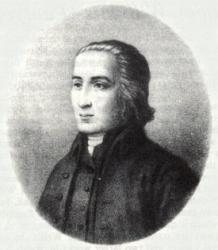
William Williams

1717 - 1791 Person Name: W. Williams, Pantycelyn Author (stanza 1) of "Wele'r hafan, wele'r ardal" in Old and New Welsh and English Hymns William Williams, called the "Watts of Wales," was born in 1717, at Cefn-y-coed, near Llandovery, Carmarthenshire. He originally studied medicine, but abandoned it for theology. He was ordained Deacon in the Church of England, but was refused Priest's Orders, and subsequently attached himself to the Calvinistic Methodists. For half a century he travelled in Wales, preaching the Gospel. He died in 1791. Williams composed his hymns chiefly in the Welsh language; they are still largely used by various religious bodies in the principality. Many of his hymns have appeared in English, and have been collected and published by Sedgwick. His two principal poetical works are "Hosannah to the Son of David," and "Gloria in Excelsis." --Annotations of the Hymnal, Charles Hutchins, M.A. 1872. ===================== Williams, William, of Pantycelyn, was the Sweet Singer of Wales. He was born at Cefn-y-Coed, in the Parish of Llanfair-y-bryn, near Llandovery, in 1717. He was ordained a deacon of the Established Church in 1740, by Dr. Claget, Bishop of St. Davids, and for three years he served the Curacies of Llan-wrtyd and Llanddewi-Abergwesyn. He never received Priest's Orders. He became early acquainted with the revivalist Daniel Rowlands, and for thirty-five years he preached once a month at Llanllian and Caio and Llansawel, besides the preaching journeys he took in North and South Wales. He was held in great esteem as a preacher. In 1744 his first book of hymns appeared under the title of Halleluiah, and soon ran through three editions. In1762, he published another book under the title of Y Môr o Wydr, which soon went through five editions. His son John published an excellent edition of his hymns in the year 181lines In addition to his Welsh hymns Williams also published several in English as:— (1.) Hosannah to the Son of David; or, Hymns of Praise to God, For our glorious Redemption by Christ. Some few translated from the Welsh Hymn-Book, but mostly composed on new Subjects. By William Williams. Bristol: Printed by John Grabham, in Narrow-Wine Street, 1759. This contains 51 hymns of which 11 are translated from his Welsh hymns. This little book was reprinted by D. Sedgwick in 1859. (2.) Gloria in Excelsis: or, Hymns of Praise to God and the Lamb. By W. Williams . . . Carmarthen. Printed for the Author by John Ross, removed to Priory Street, near the Church, M.DCC.LXXI. This contains 70 hymns, not including parts. From these volumes the following hymns are in common use:— i. From the Hosannah, 1759:— 1. Jesus, my Saviour is enough. Jesus, All in All. 2. My God, my God, Who art my all. Communion with God desired. 3. The enormous load of human guilt. God's love unspeakable. ii. From the Gloria in Excelsis, 1772. 4. Awake, my soul, and rise. Passiontide. 5. Beneath Thy Cross I lay me down. Passiontide. 6. Hark! the voice of my Beloved. The Voice of Jesus. 7. Jesus, lead us with Thy power. Divine Guidance Desired. Sometimes given as "Father, lead us with Thy power." 8. Jesus, Whose Almighty sceptre. Jesus as King. 9. Saviour, look on Thy beloved. The Help of Jesus desired. 10. White and ruddy is my Beloved. Beauties of Jesus. Williams is most widely known through his two hymns, "Guide me, O Thou great Jehovah," and "O'er those gloomy hills of darkness." Williams died at Pantycelyn, Jan. 11, 1791. [Rev. W. Glanffrwd Thomas] -- John Julian, Dictionary of Hymnology (1907) ================= See also in: Hymn Writers of the Church

Somerset Corry Lowry

1855 - 1932 Person Name: Somerset Corry Lowry, 1829-1899 Author of "Son of God, eternal Savior" in The Hymnal Lowry, Somerset Corry, M.A., son of James Corry Lowry, Q.C., of Rockdale, Dungannon, Ireland, b. in 1855, and educated at Repton and Trin. Hall, Camb., B.A. 1877, M.A. 1880. Ordained in 1879 to the Curacy of Doncaster. Subsequently Vicar of North Holmwood, Surrey, 1891-1900, and of St. Augustin's, Bournemouth, from 1900. He has published The Work of the Holy Spirit, 1894; Convalescence, 1897; Lessons from the Passion, 1899, &c. His hymns include:— 1. Behold, Lord! how the nations rage, [In Time of War.] Written "For Use during the War between Russia and Japan," in 1904, and printed as a leaflet by Jarvis & Co., Bournemouth. 2. Lord, while afar our brothers fight. [In Time of War.] Written at Holmwood, Surrey, in 1899, after the reverse of Colenso, and extensively used during the S. African War. Given in the 1904 ed. of Hymns Ancient & Modern. 3. 0 Saviour, once again the ebbing year. [For a Memorial Service.] Written at Holmwood, in 1898, for Queen Victoria's annual Service in memory of the Prince Consort. Included in Hymns of the Christ. Centuries, 1903. 4. 0 Son of God, enthroned above. [Advent] Written at Holmwood, in 1892, and given in M. Woodward's Children's Service Book, 1897. 5. Pressing forward. [Processional.] Also in Woodward's Children's Service Book, 1897. Written at Bournemouth, in 1888. 6. Son of God, Eternal Saviour. [For Unity.] Written at Holmwood, in 1893 ; printed in Goodwill, Feb. 1894, and included in the 1904 ed. of Hymns Ancient & Modern. 7. We meet as we have never met before. [Burial.] Written for use after a Child's Funeral, Holmwood, 1892, and given in Woodward's Children's Service Book, 1897. --John Julian, Dictionary of Hymnology, New Supplement (1907)

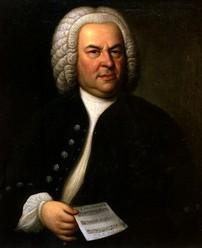
Johann Sebastian Bach

1685 - 1750 Person Name: J. S. Bach Arranger of "WERDE MUNTER" in Rejoice in the Lord Johann Sebastian Bach was born at Eisenach into a musical family and in a town steeped in Reformation history, he received early musical training from his father and older brother, and elementary education in the classical school Luther had earlier attended. Throughout his life he made extraordinary efforts to learn from other musicians. At 15 he walked to Lüneburg to work as a chorister and study at the convent school of St. Michael. From there he walked 30 miles to Hamburg to hear Johann Reinken, and 60 miles to Celle to become familiar with French composition and performance traditions. Once he obtained a month's leave from his job to hear Buxtehude, but stayed nearly four months. He arranged compositions from Vivaldi and other Italian masters. His own compositions spanned almost every musical form then known (Opera was the notable exception). In his own time, Bach was highly regarded as organist and teacher, his compositions being circulated as models of contrapuntal technique. Four of his children achieved careers as composers; Haydn, Mozart, Beethoven, Mendelssohn, Schumann, Brahms, and Chopin are only a few of the best known of the musicians that confessed a major debt to Bach's work in their own musical development. Mendelssohn began re-introducing Bach's music into the concert repertoire, where it has come to attract admiration and even veneration for its own sake. After 20 years of successful work in several posts, Bach became cantor of the Thomas-schule in Leipzig, and remained there for the remaining 27 years of his life, concentrating on church music for the Lutheran service: over 200 cantatas, four passion settings, a Mass, and hundreds of chorale settings, harmonizations, preludes, and arrangements. He edited the tunes for Schemelli's Musicalisches Gesangbuch, contributing 16 original tunes. His choral harmonizations remain a staple for studies of composition and harmony. Additional melodies from his works have been adapted as hymn tunes. --John Julian, Dictionary of Hymnology (1907)

Federico J. Pagura

1923 - 2016 Person Name: F. J. Pagura Translator of "Oh Jesús del Alma Humana Gozo" in Cántico Nuevo Federico José Pagura was an Argentine Methodist bishop and author and translator of hymns. Leland Bryant Ross

Ludwig Andreas Gotter

1661 - 1735 Author of "Schafft mit Ernst, ihr Menschenkinder" in Gesangbuch der Evangelisch-reformierten Kirchen der deutschsprachigen Schweiz Gotter, Ludwig Andreas, son of Johann Christian Gotter, Court preacher and Superintendent at Gotha, was born at Gotha, May 26, 1661. He was at first privy secretary and then Hofrath at Gotha, where he died Sept. 19, 1735. He was a pious, spiritually-minded man, with tendencies towards Pietism; and one of the best hymnwriters of the period. Of his printed hymns the earliest appeared in the Geistliches Gesang-Buch, Halle, 1697. Of the 23 included in Freylinghausen's Geistleiches Gesang-Buch, 1704, and Neues, 1714, seven have been translated into English, besides his version of J. W. Petersen's "Salve, crux beata, salve (q. v.). J. C. Wetzel, who had become acquainted with him during a visit Gotter made to Römhild in 1733, mentions a complete version of the Psalter (now in manuscript in the Ducal Library at Wernigerode) by him, and quotes from his manuscript the first lines of 42 hymns still unprinted (Wetzel's Analecta Hymnica, ii. 22-30; Koch, iv. 400-402; Allegemeine Deutsche Biographie, ix. 456). Of his hymns those translated into English are:— i. In English common use:— i. Erquicke mich, du Heil der Sunder. [The Great Physician.] On the Gospel for the third Sunday in Advent (St. Matt, xi.), turning it into a prayer for cures of our moral nature similar to the miracles of physical healing there recorded. In Freylinghausen, 1714, No. 771, in 10 st. of 6 1., and in Knapp's Evangelisches Lieder-Schatz, 1837, No. 196. The only translation in common use is:— Saviour of sinners, now revive us, of st. i., ii., v., x., by Miss Borthwick, as No. 236, in Dr. Pagenstecher's Collection, 1864. ii. Treuer Vater, deine Liebe. [True and False Christianity.] 1697, as above, p. 608, in 23 st. of 6 1., repeated in Freylinghausen, 1704; and in Porst's Gesang-Buch, 1713 (1855, No. 324). The only translation in common use is:— Father, Thine eternal kindness, omitting st. x, in J. C. Jacobi's Psalmodia Germanica, 1720, p. 3. Considerably altered in his edition, 1722, p. 50, and 1732, p. 78; and from this 8 st. were included as No. 542 in pt. i. of the Moravian Hymn Book, 1754. The translations of st. xii., xiii., altered from the 1732, and beginning, "Has temptation well nigh won me," were included in the Scottish Evangelical Union Hymn Book, 1856, and in Dr. J. Paterson's Collection, Glasgow, 1867. iii. Womit soil ioh dich wohl loben. [Praise and Thanksgiving.] A beautiful hymn of Thanksgiving (founded on Ps. xci.) for the wonderful ways by which God in His love and goodness has led us, and of trust in the continuance of His love to the end. 1697, as above, p. 577, in 14 st. of 6 l., and the refrain (altered from Hornburg's "Jesus, meines Lebens Leben.") "Tausend, tausend Mai sei dir, Grosser König, Dank dafür." Repeated in Freylinghausen, 1704, and as No. 1033, in the Berlin Geistliche Lieder S., ed. 1863. Lauxmann, in Koch, viii. 348-9, relates that st. iv. was adopted as a thanksgiving by the German Missionaries in Abyssinia on their deliverance by the capture of Magdala in 1868, and st. xi., by C. H. Bogatzky, after a narrow escape on one of his journeys in Bohemia; and adds that as the hymn, with its Swabian melody, was a great favourite of the poet Uhland, it was accordingly played by the trumpeters from the tower of St. George's Church, on July 14,1873, at the ceremony of the unveiling of the statue erected to his memory in Tübingen. The only translation in common use is :— Lord of Hosts! how shall I render. A good and full translation in Dr. J. Guthrie's Sacred Lyrics, 1869, p. 131; and from this st. i., ii., ix., xiii., xiv., were included as No. 50 in the Ibrox Hymnal, 1871. Another translation is, "With what fervour of devotion," by J. C. Jacobi, 1732, p. 157. ii. Hymns not in English common use:— iv. Herr Jesu, Gnadensonne. [Sanctification.] Perhaps his finest hymn. 1697, as above, p. 525, in 8 st. The translations are: (1) "Lord Jesus! Sun of graces," In the Supplement to German Psalter, edition 1765, p. 43. (2) “O shed abroad, Lord Jesus," a translation of st. vi., as No. 1086, in the Supplement of 1808 to the Moravian Hymn Book, 1801. v. 0 Jesu meine Zurersicht. [Lent.] 1714, as above, No. 772, in 14 st. Translated by N. L. Frothingham, 1870, p. 213, beginning with st. vii. vi. Sei hochgelobt, barmherz'ger Gott. [Praise for Redemption.] On Eph. i. 3. first in the Geistleiches Gesang-Buch, Darmstadt, 1698, p. 485, in 16 st. Translated as, "High praise to Thee, all-gracious God," by J. Wesley, in Hymns and Sacred Poems, 1740 (P. Works, 1868-72, v. i. p. 339). vii. Wachet auf, ihr faulen Christen. [Spiritual Watchfulness.] On St. Matt. xxvi. 41. 1697, as above, p. 425, in 7 st., each beginning and ending with the word, "Wachet." Translated as, "Arise! ye lingering saints, arise!" by Mrs. Findlater, in Hymns from the Land of Luther 1854. [Rev. James Mearns, M.A.] -- John Julian, Dictionary of Hymnology (1907)

Johann Franck

1618 - 1677 Person Name: J. Franck Author of "Unsre müden Augenlieder schließen sich jetzt schläfrig zu" in Deutsches Liederbuch Johann Franck (b. Guben, Brandenburg, Germany, 1618; d. Guben, 1677) was a law student at the University of Köningsberg and practiced law during the Thirty Years' War. He held several positions in civil service, including councillor and mayor of Guben. A significant poet, second only to Paul Gerhardt in his day, Franck wrote some 110 hymns, many of which were published by his friend Johann Crüger in various editions of the Praxis Pietatis melica. All were included in the first part of Franck’s Teutsche Gedichte bestehend im geistliche Sion (1672). Bert Polman ============= Franck, Johann, son of Johann Franck, advocate and councillor at Guben, Brandenburg, was born at Guben, June 1, 1618. After his father's death, in 1620, his uncle by marriage, the Town Judge, Adam Tielckau, adopted him and sent him for his education to the schools at Guben, Cottbus, Stettin and Thorn. On June 28, 1638, he matriculated as a student of law at the University of Königsberg, the only German university left undisturbed by the Thirty Years' War. Here his religious spirit, his love of nature, and his friendship with such men as Simon Dach and Heinrich Held, preserved him from sharing in the excesses of his fellow students. He returned to Guben at Easter, 1640, at the urgent request of his mother, who wished to have him near her in those times of war during which Guben frequently suffered from the presence of both Swedish and Saxon troops. After his return from Prague, May, 1645, he commenced practice as a lawyer. In 1648 he became a burgess and councillor, in 1661 burgomaster, and in 1671 was appointed the deputy from Guben to the Landtag (Diet) of Lower Lusatia. He died at Guben, June 18, 1677; and on the bicentenary of his death, June 18, 1877, a monumental tablet to his memory was affixed to the outer wall of the Stadtkirche at Guben (Koch, iii. 378-385; Allgemeine Deutsche Biographie, vii. 211-212; the two works by Dr. Hugo Jentsch of Guben, Johann Franck, 1877, and Die Abfassungszeit der geistlichen Lieder Johann Franck's, 1876). Of Franck's secular poems those before 1649 are much the best; his later productions becoming more and more affected and artificial, long-winded and full of classical allusions, and much inferior to those of Dach or Opitz. As a hymn writer he holds a high rank and is distinguished for unfeigned and firm faith, deep earnestness, finished form, and noble, pithy, simplicity of expression. In his hymns we miss the objectivity and congregational character of the older German hymns, and notice a more personal, individual tone; especially the longing for the inward and mystical union of Christ with the soul as in his "Jesus, meine Freude." He stands in close relationship with Gerhardt, sometimes more soaring and occasionally more profound, but neither on the whole so natural nor so suited for popular comprehension or Church use. His hymns appeared mostly in the works of his friends Weichmann, Crüger and Peter. They were collected in his Geistliches Sion, Guben, 1674, to the number of 110; and of these the 57 hymns (the other 53 being psalm versions of no great merit) were reprinted with a biographical preface by Dr. J. L. Pasig as Johann Franck's Geistliche Lieder, Grimma, 1846. Two of those translated into English are from the Latin of J. Campanus (q. v.). Four other hymns are annotated under their own first lines:—"Brunquell aller Güter"; "Dreieinigkeit der Gottheit wahrer Spiegel"; "Jesu, meine Freude"; "Schmücke dich, o liebe Secle." The rest are:— i. Hymns in English common use: -- i. Erweitert eure Pforten . [Advent]. Founded on Psalm xxiv. 7-10. First published in C. Peter's Andachts-Zymbeln, Freiberg, 1655, p. 25, in 7 stanzas of 8 lines; repeated 1674, p. 3, and 1846, p. 3, as above. Included in the 1688 and later editions of Crüger's Praxis pietatis, in Bollhagen's Gesang-Buch, 1736, &c. The only translation in common use is:—- Unfold your gates and open, a translation of st. 1, 3, 6, by A. T. Russell, as No. 30 in his Hymns & Psalms, 1851; repeated altered as No. 30 in Kennedy, 1863, and thus as No. 102 in Holy Song, 1869. ii. Herr Gott dich loben wir, Regier. Thanksgiving for Peace. Evidently written as a thanksgiving for the conclusion of the Thirty Years' War, by the Peace of Westphalia, Oct. 24, 1648. First published in the Crüger-Runge Gesang-Buch, Berlin, 1653, No. 306, in 9 st. of 8 l., as the first of the "Hymns of Thanksgiving for Peace attained"; and repeated 1674, p. 182, and 1846, p. 77, as above. Included in Crüger's Praxis, 1653, and many later collections, and, as No. 591, in the Unverfälschter Liedersegen, 1851. The only translation in common use is:— Lord God, we worship Thee, a very good version of st. 2, 3, 6, 8, by Miss Winkworth in her Chorale Book for England, 1863, No. 183. Repeated in full in the Society for Promoting Christian Knowledge Church Hymns, 1871; the Hymnary, 1872; the Psalmist, 1878; and in America in the Pennsylvania Lutheran Church Book, 1868. In the American Protestant Episcopal Collection, 1871; the Hymns & Songs of Praise, N. Y. 1874; and the Ohio Lutheran Hymnal, 1880, the translation of stanza 8 is omitted. iii. Herr ich habe missgehandelt. Lent. Of this fine hymn of penitence stanza i. appeared as No. 19 in Cruger's Geistliche Kirchenmelodien , Leipzig, 1649. The full form in 8 stanzas of 6 lines is No. 41 in the Crüger-Runge Gesang-Buch, Berlin, 1653, entitled "For the forgiveness of sins," repeated 1674, p. 39, and 1846, p. 37, as above. Included in Crüger's Praxis, 1653, and others, and in the Unverfälschter Liedersegen, 1851. The only translation in common use is:— Lord, to Thee I make confession, a very good translation, omitting st. 4, 5, 6, by Miss Winkworth in her Chorale Book for England, 1863, No. 44, repeated in the Appendix to the Hymnal for St. John's, Aberdeen, 1865-1870; and in the Pennsylvania Lutheran Ch. Book, 1868; Evangelical Hymnal, N. Y., 1880; Ohio Lutheran Hymnal, 1880. Another translation is: "Lord, how oft I have offended," by N. L. Frothingham, 1870, p. 177. iv. Herr Jesu, Licht der Heiden. Presentation in the Temple. Founded on the account in St. Luke ii., and probably the finest hymn on the subject. Dr. Jentsch, 1876, p. 9, thinks it was written before Dec. 8, 1669, as C. Peter, who died then, left a melody for it. We have not found the full text earlier than 1674, as above, p. 10, in 6 stanzas of 8 lines, entitled "On the Festival of the Purification of Mary" (1846, p. 10). Included in the 1688 and later editions of Crüger's Praxis, and in the Unverfälschter Liedersegen, 1851, No. 197. The translations in common use are:— 1. Light of the Gentile world , a translation, omitting st. 6, by Miss Winkworth in the first service of her Lyra Germanica, 1855, p. 193 (ed. 1876, p. 195), and thence as No. 147 in the Pennsylvania Lutheran Hymn Book, 1865. This version is in S.M. Double. 2. Light of the Gentile Nations, a good translation, omitting st. 6, by Miss Winkworth in her Chorale Book for England, 1863, No. 80. Repeated in Dr. Thomas's Augustine Hymn Book, 1866, and in America in the Pennsylvania Lutheran Church Book, 1868, and the Ohio Lutheran Hymnal, 1880. ii. Hymns not in English common use: v. Du geballtes Weltgebäude. Christ above all earthly things. Stanza i. in Cruger's Kirchenmelodien, 1649, No. 116. The full text (beginning "Du o schönes) is No. 239 in the Crüger-Runge Gesang-Buch, 1653, in 8 stanzas, entitled "Longing after Eternal Life." Repeated, 1674, p. 194, and 1846, p. 60, as above. The translations are: (1) "Let who will in thee rejoice," by Miss Winkworth, 1855, p. 180 (1876, p. 182). (2) "O beautiful abode of earth," by Miss Warner, 1858 (1861, p. 233). (3) "Thou, O fair Creation-building," by N. L. Frothingham, 1870, p. 232. vi. Unsre müden Augenlieder. Evening. Probably written while a student at Königsberg. First published in J. Weichmann's Sorgen-lägerin, Königsberg, 1648, Pt. iii., No. 4, in 7 st.; repeated 1674, p. 213, and 1846, p. 91, as above. The only translation is by H. J. Buckoll, 1842, p. 79, beginning with st. vi., "Ever, Lord, on Thee relying." [Rev. James Mearns, M.A.] --John Julian, Dictionary of Hymnology (1907)

Pages


Export as CSV
It looks like you are using an ad-blocker. Ad revenue helps keep us running. Please consider white-listing Hymnary.org or getting Hymnary Pro to eliminate ads entirely and help support Hymnary.org.