You help make Hymnary.org possible. More than 10 million people from 200+ countries found hymns, liturgical resources and encouragement on Hymnary.org in 2025, including you. Every visit affirms the global impact of this ministry.

If Hymnary has been meaningful to you this year, would you take a moment today to help sustain it? A gift of any size—paired with a note of encouragement if you wish—directly supports the server costs, research work and curation that keep this resource freely available to the world.

Give securely online today, or mail a check to:
Hymnary.org
Calvin University
3201 Burton Street SE
Grand Rapids, MI 49546

Thank you for your partnership, and may the hope of Advent fill your heart.

Person Results

Topics:guide
In:person

Planning worship? Check out our sister site, ZeteoSearch.org, for 20+ additional resources related to your search.
Showing 1 - 10 of 602Results Per Page: 102050

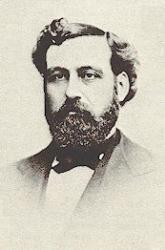
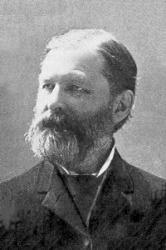
P. P. Bliss

1838 - 1876 Topics: God God Our Guide; God God Our Guide; God God Our Guide; God God Our Guide; God God Our Guide; God God Our Guide; God God Our Guide; God God Our Guide; God God Our Guide Composer of "[Precious promise God hath given]" in Christ in Song Philip P. Bliss (b. Clearfield County, PA, 1838; d. Ashtabula, OH, 1876) left home as a young boy to make a living by working on farms and in lumber camps, all while trying to continue his schooling. He was converted at a revival meeting at age twelve. Bliss became an itinerant music teacher, making house calls on horseback during the winter, and during the summer attending the Normal Academy of Music in Genesco, New York. His first song was published in 1864, and in 1868 Dwight L. Moody advised him to become a singing evangelist. For the last two years of his life Bliss traveled with Major D. W. Whittle and led the music at revival meetings in the Midwest and Southern United States. Bliss and Ira D. Sankey published a popular series of hymn collections entitled Gospel Hymns. The first book of the series, Gospel Songs, was published in 1874. Bliss's tragic death at the age of thirty-eight happened near the end of 1876. Philip P. Bliss and his wife were traveling to Chicago to sing for the evangelistic services led by Daniel W. Whittle at Dwight L. Moody's Tabernacle. But a train wreck and fire en route claimed their lives. Bert Polman ================= Bliss, Philip, b. at Clearfield County, Pennsylvania, July 9, 1838. In 1864 he went to Chicago in the employ of Dr. George F. Root, the musician, where he was engaged in conducting musical Institutes, and in composing Sunday School melodies. Originally a Methodist, he became, about 1871, a choirman of the First Congregational Church, Chicago, and the Superintendent of its Sunday Schools. In 1874 he joined D. W. Whittle in evangelical work. To this cause he gave (although a poor man) the royalty of his Gospel Songs, which was worth some thirty thousand dollars. His death was sudden. It occurred in the railway disaster at Ashtabula, Ohio, Dec. 30, 1876. ... Some of his verses have obtained wide popularity in most English-speaking countries. The more widely known, and specially those which are found in collections in use in G. Britain, are in the following American works:— i. The Prize, 1870. 1. I should like to die. Death anticipated. This is one of his earliest compositions, and is unworthy of the position it holds. 2. Through the valley of the shadow I must go. Death anticipated. 3. Whosoever heareth, shout, shout the sound. Jesus the Way. Written during the winter of 1869-70 after hearing Mr. H. Moorhouse (from England) preach on St. John iii. 16. ii. The Charm, 1871. 4. Almost persuaded now to believe. Procrastination. This was suggested by the following passage in a sermon by the Rev. Mr. Brundnge, Bliss being present at its delivery:—" He who is almost persuaded is almost saved, but to be almost saved is to be entirely lost." 5. Ho! my comrades! see the signal. Faithfulness. 6. O! Jerusalem, the golden city, bright, &c. Heaven. 7. On what Foundation do [did] you build? Christ the Foundation. iii. The Song Tree, 1872. 8. Light in the darkness, sailor, day is at hand. Safety. This hymn, “The Life-Boat," has attained to great popularity. The incident upon which it is based, that of the rescue of a ship's crew by a life-boat, is given in detail by Mr. Sankey in his Sacred Songs, &c, No. 99 (large ed.). It is sometimes known by its refrain, "Pull for the shore," &c. iv. The Joy, 1873. 9. In me ye may have peace. Peace. 10. To die is gain. Death anticipated. v. Sunshine, 1873. 11. Down life's dark vale we wander. Death anticipated. 12. More holiness give me. For Holiness. 13. Only an armour-bearer. Soldiers of the Cross. 14. Standing by a purpose true. Faithfulness. 15. This loving Saviour stands patiently. Invitation. vi. Gospel Songs, 1874. 16. A long time I wandered. Peace and Joy. 17. Brightly beams our Father's mercy. Mercy. 18. Come, brethren, as we march along. Praise. 19. Free from the law, O happy condition. Redemption. 20. Have you on the Lord believed? Fullness of Grace. This hymn arose out of the following circumstances :—" A vast fortune was left in the hands of a minister for one of his poor parishioners. Fearing that it might be sqmandered if suddenly bestowed upon him, the wise minister sent him a little at a time, with a note saying, “This is thine; use it wisely; there is more to follow.” Hence also the refrain ‘More to follow,’ by which the hymn is known." 21. How much owest thou? Divine Claims. 22. I know not the hour when my Lord will come. Death anticipated. Suggested by reading the book, The Gates Ajar. 23. See the gentle Shepherd standing. The Good Shepherd. 24. Though the way be sometimes dreary. Divine Leading. 25. Will you meet me at the fountain? Fountain of Living Water. The incident out of which this hymn arose is thus stated in The Christian, No. 365, "At the Industrial Exposition at Chicago it was an everyday appointment to meet at the Central Fountain. Mr. P. P. Bliss, whose mind seemed always set on things above, caught up the words, and wrote this hymn, 'Meet me at the Fountain.'" vii. Gospel Hymns, No. 1, 1875. 26. One offer of salvation. The Name of Jesus. 27. Wandering afar from the dwellings of men. The Lepers. viii. The International Lesson Monthly, 1875. 28. Weary gleaner, whence comest thou? Duty. 29. The whole world was lost in the darkness of Sin. Light of the world. 30. Man of sorrows! what a name. Redemption. 31. The Spirit, O sinner, in mercy doth move. Holy Spirit. ix. Gospel Hymns, No. 2, 1876. 32. At the feet of Jesus. The good choice. 33. Come, sing the Gospel's joyful sound. Salvation. 34. Cut it down, cut it down. Justice and Mercy. 35. Do you see the Hebrew captive? Prayer. 36. Hallelujah, He is risen. Easier. Written in the spring of 1876 and first sung by Bliss on Easter afternoon, 1876, in the Court House Square, Augusta, Georgia, to 5900 people. 37. In Zion's rock abiding. Safety. 38. Repeat the story o'er and o'er. Grace and Peace. 39. Tenderly the Shepherd. The Good Shepherd. x. Gospel Hymns, No. 3, 1878. 40. Hear ye the glad good news from heaven. Faith and Salvation. 41. I will sing of my Redeemer. Praise. xi. Gospel Hymns, No. 4, 1881. 42. 'Tis known on earth and heaven too. More about Jesus. xii. Various. 43. Sing over again to me. Words of Life. This appeared in a paper entitled Words of Life, 1874, The following are undated:— 44. March to the battle-field. Duty and Victory. 45. There is sin in the camp. Hinderances. 46. 'Tis the promise of God. Praise. 47. While the silvery moon-beams, fall, New Birth. 48. God is always near me. Omnipresence. Two hymns," I am so glad that our Father in heaven," and " Sowing the seed by the daylight [dawnlight] fair," (sometimes given as " Sowing our seed in the morning fair ") are usually attributed to Mr. Bliss. In his Gospel Songs, Cincinnati, 1874, however, he lays claim to the music only. Mr. Sankey attributes this last to "E. A. Oakey." With the exception of No. 48, these hymns are given in Mr. Sankey's Sacred Songs & Solos, Pts. i. and ii. Their popularity is far beyond their literary merits, and is mainly due to the simple melodies to which they are wedded. As a writer of hymns of this class Mr. Bliss is second only to Mrs. Van Alstyne. Many anecdotes concerning hymns of this class are given in American Evangelists; an Account of their work in England and America, by the Rev. Elias Nason, Boston, U.S., Lathrop & Co., 1877. Mr. Bliss is usually known as "P. P. Bliss." This is found on the title-pages of his collections. On his own authority, however, we are enabled to say that his name originally stood thus : “Philipp Bliss.” Early in life he separated the final p from his Christian name, constituted it a capital P, and thus produced "P. P. Bliss." (For this article we are mainly indebted to Professor F. M. Bird, and Mr. H. P. Main.) -John Julian, Dictionary of Hymnology (1907) ======================== Bliss, Philip , p. 151, i. "Sowing the seed by the daylight fair" is in the Family Treasury , Edinburgh, 1861, pt. i., p. 84. It is said to be by Miss Emily Sullivan Oakey; born at Albany, N. York, Oct. 8, 1829, died May 11, 1883. Note also that Bliss's hymn, No. 43. on p. 150, ii., should read, "Sing them over again to me." --John Julian, Dictionary of Hymnology, Appendix, Part II (1907) ===================== Bliss, P., p. 150, i. Two works have been brought to our notice, since the issue of our first edition of this Dictionary, which concern this author, viz.:— 1. Memoirs of Philip P. Bliss. Edited by D. W. Whittle. Contributions by Rev. E. P. Goodwin, Ira D. Sankey, and Geo. F. Root. Introduction by D. L. Moody. New York, &c.: A. S. Barnes & Co., 1877. 2. My Life and Sacred Songs. By Ira D. Sankey. With an Introduction by Theodore L. Cuyler, D.D). London: Hodder & Stoughton, and Morgan & Scott, 1906. These works have a special interest for those who use I. D. Sankey's Sacred Songs & Solos, and all of P. Bliss's publications. To Mr. Sankey's My Life, &c, we direct special attention for P. Bliss's hymns:— “Do you see the Hebrew captive kneeling?" p. 294. "Down life's dark vale we wander." p. 285. "Ho! my comrades, see the signal." p. 105. "'Tis the promise of God full salvation to give." p. 99. --John Julian, Dictionary of Hymnology, New Supplement (1907)

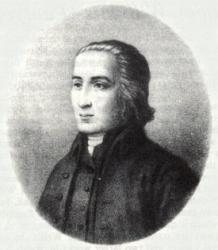
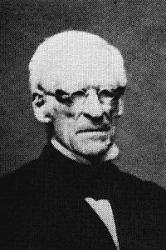
William Williams

1717 - 1791 Person Name: W. Williams Topics: Guide Guidance Author of "Guide Me" in Northfield Hymnal William Williams, called the "Watts of Wales," was born in 1717, at Cefn-y-coed, near Llandovery, Carmarthenshire. He originally studied medicine, but abandoned it for theology. He was ordained Deacon in the Church of England, but was refused Priest's Orders, and subsequently attached himself to the Calvinistic Methodists. For half a century he travelled in Wales, preaching the Gospel. He died in 1791. Williams composed his hymns chiefly in the Welsh language; they are still largely used by various religious bodies in the principality. Many of his hymns have appeared in English, and have been collected and published by Sedgwick. His two principal poetical works are "Hosannah to the Son of David," and "Gloria in Excelsis." --Annotations of the Hymnal, Charles Hutchins, M.A. 1872. ===================== Williams, William, of Pantycelyn, was the Sweet Singer of Wales. He was born at Cefn-y-Coed, in the Parish of Llanfair-y-bryn, near Llandovery, in 1717. He was ordained a deacon of the Established Church in 1740, by Dr. Claget, Bishop of St. Davids, and for three years he served the Curacies of Llan-wrtyd and Llanddewi-Abergwesyn. He never received Priest's Orders. He became early acquainted with the revivalist Daniel Rowlands, and for thirty-five years he preached once a month at Llanllian and Caio and Llansawel, besides the preaching journeys he took in North and South Wales. He was held in great esteem as a preacher. In 1744 his first book of hymns appeared under the title of Halleluiah, and soon ran through three editions. In1762, he published another book under the title of Y Môr o Wydr, which soon went through five editions. His son John published an excellent edition of his hymns in the year 181lines In addition to his Welsh hymns Williams also published several in English as:— (1.) Hosannah to the Son of David; or, Hymns of Praise to God, For our glorious Redemption by Christ. Some few translated from the Welsh Hymn-Book, but mostly composed on new Subjects. By William Williams. Bristol: Printed by John Grabham, in Narrow-Wine Street, 1759. This contains 51 hymns of which 11 are translated from his Welsh hymns. This little book was reprinted by D. Sedgwick in 1859. (2.) Gloria in Excelsis: or, Hymns of Praise to God and the Lamb. By W. Williams . . . Carmarthen. Printed for the Author by John Ross, removed to Priory Street, near the Church, M.DCC.LXXI. This contains 70 hymns, not including parts. From these volumes the following hymns are in common use:— i. From the Hosannah, 1759:— 1. Jesus, my Saviour is enough. Jesus, All in All. 2. My God, my God, Who art my all. Communion with God desired. 3. The enormous load of human guilt. God's love unspeakable. ii. From the Gloria in Excelsis, 1772. 4. Awake, my soul, and rise. Passiontide. 5. Beneath Thy Cross I lay me down. Passiontide. 6. Hark! the voice of my Beloved. The Voice of Jesus. 7. Jesus, lead us with Thy power. Divine Guidance Desired. Sometimes given as "Father, lead us with Thy power." 8. Jesus, Whose Almighty sceptre. Jesus as King. 9. Saviour, look on Thy beloved. The Help of Jesus desired. 10. White and ruddy is my Beloved. Beauties of Jesus. Williams is most widely known through his two hymns, "Guide me, O Thou great Jehovah," and "O'er those gloomy hills of darkness." Williams died at Pantycelyn, Jan. 11, 1791. [Rev. W. Glanffrwd Thomas] -- John Julian, Dictionary of Hymnology (1907) ================= See also in: Hymn Writers of the Church

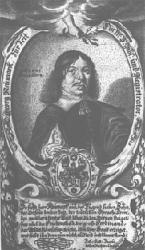
Georg Neumark

1621 - 1681 Person Name: Georg C. Neumark Topics: God Guide Author of "If Thou but Suffer God to Guide Thee" in The Hymnbook Georg Neumark (b. Langensalza, Thuringia, Germany, 1621; d. Weimar, Germany, 1681) lived during the time of the Thirty Years' War, when social and economic conditions were deplorable. He had personal trials as well. On his way to Königsberg to study at the university, traveling in the comparative safety of a group of merchants, he was robbed of nearly all his possessions. During the next two years he spent much of his time looking for employment. He finally secured a tutoring position in Kiel. When he had saved enough money, he returned to the University of Königsberg and studied there for five years. In Königsberg he again lost all his belongings, this time in a fire. Despite his personal suffering Neumark wrote many hymns in which he expressed his absolute trust in God. In 1651 he settled in Weimar, Thuringia, where he became court poet and archivist to Duke Johann Ernst and librarian and registrar of the city. Neumark wrote thirty-four hymns, of which "If You But Trust in God to Guide You" has become a classic. Bert Polman ============== Neumark, Georg, son of Michael Neumark, clothier at Langensalza, in Thuringia (after 1623 at Miihlhausen in Thuringia), was born at Langensalza, March 16, 1621; and educated at the Gymnasium at Schleueingen, and at the Gymnasium at Gotha. He received his certificate of dimission from the latter in Sept. 1641 (not 1640). He left Gotha in the autumn of 1641 along with a number of merchants who were going to the Michaelmas Fair at Leipzig. He then joined a similar party who were going from Leipzig to Lübeck; his intention being to proceed to Königsberg and matriculate at the University there. After passing through Magdeburg they were plundered by a band of highwaymen on the Gardelegen Heath, who robbed Neumark of all he had with him, save his prayer-book and a little money sewed up in the clothes he was wearing. He returned to Magdeburg, but could obtain no employment there, nor in Lüneburg, nor in Winsen, nor in Hamburg, to which in succession the friends he made passed him on. In the beginning of December he went to Kiel, where he found a friend in the person of Nicolaus Becker, a native of Thuringia, and then chief pastor at Kiel. Day after day passed by without an opening, till about the end of the month the tutor in the family of the Judge Stephan Henning fell into disgrace and took sudden flight from Kiel. By Becker's recommendation Neumark received the vacant position, and this sudden end of his anxieties was the occasion of the writing of his hymn as noted below. In Henning's house the time passed happily till he had saved enough to proceed to Königsberg, where he matriculated June 21, 1643, as a student of law. He remained five years, studying also poetry under Dach, and maintaining himself as a family tutor. During this time (in 1046) he again lost all his property, and this time by fire. In 1648 he left Königsberg, was for a short time at Warsaw, and spent 1649-50 at Thorn. He was then in Danzig, and in Sept. 1651 we find him in Hamburg. In the end of 1651 he returned to Thuringia, and bronght himself under the notice of Duke Wilhelm II. of Sachse-Weimar, the chief or president of the Fruit-bearing Society, the principal German literary union of the 17th century. The Duke, apparently in 1652, appointed him court poet, librarian and registrar of the administration at Weimar; and finally secretary of the Ducal Archives. In Sept. 1653 he was admitted as a member of the Fruit-bearing Society, of which he became secretary in 1656, and of which he wrote a history (Der Neu-Sprossende Teutsche Palmbaum, Nürnberg and Weimar, 1668); and, in 1679, became also a member of the Pegnitz Order. In 1681 he became blind, but was permitted to retain his emoluments till his death, at Weimar, July 18, 1681. [K. Goedeke's Grundriss, vol. iii., 1887, p. 74; Allgemeine Deutsche Biographie. xxiii. 539; Weimarisches Jahrbuch, vol. iii., 1855, p. 176, &c. The dates given by the different authorities vary exceedingly, and are quite irreconcilable. In the registers at Schleusingen Neumark is last mentioned in 1636, and then as in the Third Form. Dr. von Bamberg, director of the Gymnasium at Gotha, informs me that Neumark's name appears in the matriculation book there under January 31, 1641; and as one of the "newly entered" scholars.] A long list of Neumark's poetical works is given by Goedeke. A large proportion of his secular poems are pastorals, or else occasional poems written to order at Weimar; and in all there is little freshness, or happiness in expression, or glow of feeling. As a musician, and as a hymn-writer, he is of more importance. His hymns appeared in his (1) Poetisch-und Musikalisches Lustwäldchen, Hamburg, 1652; the enlarged edition, entitled (2) Fortgepfiantzter Musikalizch-Poetischer Lustwald, Jena, 1657; and (3) Unterschiedliche, so wol gottseliger Andacht; als auch zu christlichen Tugenden aufmuntemde Lieder, Weimar, 1675. Of the 34 hymns in these three works a few are found in the German hymn-books of the 17th century, and three or four still survive. The best of Neumark's hymns are those of Trust in God, and patient waiting for His help under trial and suffering; and one of these may be fairly called classical and imperishable. It is:— Wer nur den lieben Gott lässt walten. Trust in God. First published in his Fortgepflantzter musikalisch-poetischer Lustwald, Jena, 1657, p. 26, in 7 stanzas of 6 lines, entitled “A hymn of consolation. That God will care for and preserve His own in His own time. After the saying 'Cast thy burden upon the Lord, and He shall sustain thee'“(Ps. lv. 22). This, his finest hymn, was written in 1641, at Kiel, when after unsuccessful attempts to procure employment he became a tutor in the family of the judge Stephan Henning. Of this appointment Neumark, in his Thrünendes Haus-Kreuiz, Weimar, 1681, speaks thus:-— "Which good fortune coming suddenly, and as if fallen from heaven, greatly rejoiced me, and on that very day I composed to the honour of my beloved Lord the here and there well-known hymn 'Wer nur den lieben Gott lässt walten'; and had certainly cause enough to thank the Divine compassion for such unlooked for grace shown to me," &c. As the date of its composition is thus December, 1641, or at latest Jan. 1642, it is certainly strange that it was not published in his Lustwäldchen, Hamburg, 1652. In that volume he does give, at p. 32, a piece entitled, "a hymn of consolation, when, in 1646, through a dreadful fire I came to my last farthing." The apocryphal story, according to which the hymn was written at Hamburg, about 1653 (see Miller's Singers and Songs, 1869, p. 91), has not been traced earlier than 1744. The hymn speedily became popular, and passed into hymn-books all over Germany (Leipzig Vorrath, 1673, No. 1169), and still holds its place as in the Berlin Geistliche Lieder, ed. 1863, No. 73. Lauxmann, in Koch, viii. 386-390, relates that it was the favourite hymn of Magdalena Sibylla (d. 1687), wife of the Elector Johann Georg II. of Saxony; was sung, by his command, at the funeral, in 1740, of King Friedrich Wilhelm I. of Prussia; was sung, or rather played, by the first band of missionaries from Herrmannsburg as they set sail from Brunshausen on the Elbe (near Stade) on Oct. 28, 1853, &c. The beautiful melody by Neumark was probably composed in 1641 along with the hymn, and was published with it in 1657. On it J. S. Bach composed a cantata. It is well known in England through its use by Mendelssohn in his St. Paul ("To Thee, 0 Lord, I yield my spirit"), and from its introduction into Hymns Ancient & Modern (as Bremen), and many other collections. Translations in common use:-- 1. Who leaves th' Almighty God to reign. A full but free translation by Sir John Bowring in his Hymns, 1825, No. 58. His translations of stanzas ii., iv.-vi. beginning "How vain are sighs! how vain regret," are included in Curtis's Union Collection, 1827. 2. Who all his will to God resigneth. A good and full translation by A. T. Kussell, as No. 236 in his Psalms & Hymns, 1851. His translations of st. v.-vii. beginning "Say not, I am of God forsaken," are in Dr. Pagenstecher's Collection, 1864. 3. Leave God to order all thy ways. A full and good translation by Miss Winkworth, in her Lyra Germanica, 1st Ser. 1855, p. 152. This is given in full in M. W. Stryker's Christian Chorals, 1885, and, omitting st. vi., in W. F. Stevenson's Hymns for Church and Home, 1873, and the Baptist Hymnal, 1879. Further abridged forms are in the Baptist Psalms & Hymns, 1858; Harrow School Hymn Book, l866; Holy Song, 1869, and others. In the Pennsylvania Lutheran Church Book, 1868; and the American Presbyterian Hymnal, 1874, st. v., vi. are omitted, and the rest altered to 6 stanzas, beginning "My God, I leave to Thee my ways." 4. Him who the blessed God trusts ever. A good and full translation by Dr.John Ker in the Juvenile Missionary Magazine, of the United Presbyterian Church, 1857. It was revised, and st. iii., v., vi. omitted, for the Ibrox Hymnal, 1871, where it begins: "He who,” &c. 5. If thou but suffer God to guide thee. A full and good translation by Miss Winkworth (based on her Lyra Germanica version and set to the original melody), as No. 134 in her Chorale Book for England, 1863. Repeated in full in the Baptist Psalmist, 1878, and in America in the Ohio Lutheran Hymnal, 1880. It is found, in various abridged forms, in J. Robinson's Collection, 1869; Horder's Congregational Hymns , 1884; the Evangelical Hymnal, N. Y., 1880, and others. 6. He, who the living God hath chosen. A translation of st. i., ii., vii. by Miss Borthwick, as No. 237 in Dr. Pagenstecher's Collection, 1864. 7. He who doth glad submission render. A good translation omitting st. vi., by J. M. Sloan, as No. 284 in J. H. Wilson's Service of Praise, 1865, repeated, omitting the translations of st. ii., vii., in Flett's Collection, Paisley, 1871. Other translations are:— (1) "He that confides in his Creator." By J. C. Jacobi, 1720, p. 13 (1722, p. 36; 1732, p. 61). Repeated in the Moravian Hymn Book, 1754, and later eds. (1886, No. 183). (2) "0 Christian! let the Lord direct." By Miss Knight in her Trs. from the German in Prose and Verse, 1812, p. 85. (3) "To let God rule who's but contented." By H. W. Dulcken in his Book of German Song, 1856, p. 274. (4) "He who the rule to God hath yielded." By J. D. Burns in the Family Treasury, 1859, p. 309, and his Memoir & Remains, 1869, p. 240. (5) "Who trusts in God's all-wise direction." By R. Massie, in the British Herald, Aug. 1865, p. 120, and Reid's Praise Book, 1872. (6) "Who yields his will to God's good pleasure. In the British Herald, April, 1866, p. 244, and in Reid's Praise Book, 1872. (7) "He who commits his way to God." In the Family Treasury, 1878, p. 49. [Rev. James Mearns, M.A.] --John Julian, Dictionary of Hymnology (1907) See also in: Hymn Writers of the Church

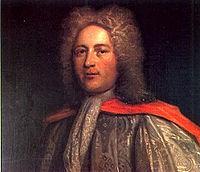
Thomas Hastings

1784 - 1872 Topics: Guide - Guidance Composer of "ZION" in Gospel Herald in Song Hastings, Thomas, MUS. DOC., son of Dr. Seth Hastings, was born at Washington, Lichfield County, Connecticut, October 15, 1784. In 1786, his father moved to Clinton, Oneida Co., N. Y. There, amid rough frontier life, his opportunities for education were small; but at an early age he developed a taste for music, and began teaching it in 1806. Seeking a wider field, he went, in 1817, to Troy, then to Albany, and in 1823 to Utica, where he conducted a religious journal, in which he advocated his special views on church music. In 1832 he was called to New York to assume the charge of several Church Choirs, and there his last forty years were spent in great and increasing usefulness and repute. He died at New York, May 15, 1872. His aim was the greater glory of God through better musical worship; and to this end he was always training choirs, compiling works, and composing music. His hymn-work was a corollary to the proposition of his music-work; he wrote hymns for certain tunes; the one activity seemed to imply and necessitate the other. Although not a great poet, he yet attained considerable success. If we take the aggregate of American hymnals published duriug the last fifty years or for any portion of that time, more hymns by him are found in common use than by any other native writer. Not one of his hymns is of the highest merit, but many of them have become popular and useful. In addition to editing many books of tunes, Hastings also published the following hymnbooks:— (1) Spiritual Songs for Social Worship: Adapted to the Use of Families and Private Circles in Seasons of Revival, to Missionary Meetings, &c, Utica, 1831-2, in which he was assisted by Lowell Mason; (2) The Mother's Hymn-book, 1834; (3) The Christian Psalmist; or, Watts's Psalms and Hymns, with copious Selections from other Sources, &c, N. Y., 1836, in connection with "William Patton; (4) Church Melodies, N. Y., 1858, assisted by his son, the Rev. T. S. Hastings; (5) Devotional Hymns and Poems, N. Y., 1850. The last contained many, but not all, of his original hymns. (6) Mother's Hymn-book, enlarged 1850. The authorship of several of Hastings's hymns has been somewhat difficult to determine. All the hymns given in the Spiritual Songs were without signatures. In the Christian Psalmist some of his contributions were signed "Anon." others "M. S.," whilst others bore the names of the tune books in which they had previously appeared; and in the Church Melodies some were signed with his name, and others were left blank. His MSS [manuscript] and Devotional Hymns, &c, enable us to fix the authorship of over 50 which are still in common use. These, following the chronological order of his leading work, are:— i. From the Spiritual Songs, 1831:— 1. Before Thy footstool kneeling. In Sickness. No. 358, in 3 stanzas of 8 lines. 2. Bleeding hearts defiled by sin. Fulness of Christ. No. 261, in 5 stanzas of 4 lines. 3. Child of sin and sorrow, Filled with dismay. Lent. No. 315, in 2 stanzas of 8 lines. It is sometimes given as "Child of sin and sorrow, Where wilt thou flee?" It is in extensive use. 4. Delay not, delay not, 0 sinner draw near. Exhortation to Repentance. No. 145, in 5 stanzas of 4 lines. Given in several important collections. 5. Forgive us, Lord, to Thee we cry. Forgiveness desired. No. 165, in 4 stanzas of 4 lines. 6. Gently, Lord, 0 gently lead us. Pilgrimage of Life. No. 29, in 2 stanzas of 8 lines. It is given in several collections. The first two lines are taken from a hymn which appeared in the Christian Lyre, 1830. 7. Go forth on wings of fervent prayer. For a blessing on the distribution of Books and Tracts. No. 250, in 4 stanzas of 5 lines. It is sometimes given as “Go forth on wings of faith and prayer," as in the Baptist Praise Book, N. Y., 1871, No. 1252; but the alterations are so great as almost to constitute it a new hymn. 8. Hail to the brightness of Zion's glad morning. Missionary Success. No. 239, in 4 stanzas of 4 lines. In several hymnbooks in Great Britain and America. 9. How calm and beautiful the morn. Easter. No. 291, in 5 stanzas of 6 lines. Very popular. 10. In this calm, impressive hour. Early Morning. No. 235, pt. i. in 3 stanzas of 6 lines. In several collections. 11. Jesus, save my dying soul. Lent. No. 398, in 4 stanzas of 4 lines. A deeply penitential hymn. 12. Now be the gospel banner. Missions. No. 178, in 2 stanzas of 8 lines. In several collections (see below). 13. Now from labour, and from care. Evening. No. 235. Pt. ii. in 3 stanzas of 6 lines. This hymn, with No. 10 above, "In this calm," &c, constitute one hymn of 6 st. in the Spiritual Songs, but divided into two parts, one for Morning and the other for Evening. Both parts are popular as separate hymns. 14. 0 God of Abraham, hear. Prayer on behalf of Children. No. 288, in 5 stanzas of 4 lines. In use in Great Britain. 15. 0 tell me, Thou Life and delight of my soul. Following the Good Shepherd. No. 151, in 5 stanzas of 4 lines, on Cant. i. 7, 8. 16. Return, O wanderer, to thy home. The Prodigal recalled. No. 183, in 3 stanzas of 4 lines, with the refrain, " Return, return " (see below). 17. Soft and holy is the place. Public Worship. No. 351, in 4 stanzas of 4 lines. In Dr. Hatfield's Church Hymn Book, N. Y., 1872, and some other collections, the opening line is altered to "Sweet and holy is the place." 18. That warning voice, 0 sinner, hear. Exhortation to Repentance. No. 231, in 4 stanzas of 6 lines. 19. To-day the Saviour calls. Lent. No. 176, in 4 stanzas of 4 lines. Dr. Hastings says, in a communication to Dr. Stevenson (Hymns for Church and Home, 1873), this hymn “was offered me in a hasty sketch which I retouched." The sketch was by the Rev. S. F. Smith. 20. Why that look of sadness. Consolation. No. 268, in 3 stanzas of 8 lines. 21. Zion, dreary and in anguish. The Church Comforted. No. 160, in 4 stanzas of 4 lines. Concerning the two hymns, No. 12, "Now be the gospel banner"; and No. 16, "Beturn, O wanderer, to thy home," Dr. Stevenson has the following note in his Hymns for Church and Home, London, 1873:— "In a letter to the Editor, Dr. Hastings wrote, not more than a fortnight before his death, 'These two hymns of mine were earlier compositions, the former ["Now be," &c.] for a Utica Sunday School celebration, the latter ["Return, 0 wanderer," &c.] after hearing a stirring revival sermon on the Prodigal Son, by the Rev. Mr. Kint, at a large union meeting in the Presbyterian Church, where two hundred converts were present. The preacher at the close eloquently exclaimed with tender emphasis, "Sinner, come home! come home! come home!" It was easy afterwards to write, "Return, 0 wanderer."'" Several additional hymns in the Spiritual Songs, 1831, have been ascribed to Dr. Hastings, but without confirmation. The sum of what can be said on his behalf is that the hymns are in his style, and that they have not been claimed by others. They are:— 22. Drooping souls, no longer mourn. Pardon promised. No. 40, in 3 stanzas of 8 1., of which st. i., ii. are altered from J. J. Harrod's Public, Parlour, and Cottage Hymns, Baltimore, 1823, that is, 8 years before the Spiritual Songs were published. 23. Dying souls, fast bound in sin. Pardon offered. No. 41, in 5 stanzas of 8 lines. It is usually given in an abridged form. ii. From his Mother's Hymn Book, 1834:—- 24. Forbid them not, the Saviour cried. Holy Baptism. No. 44. 25. God of mercy, hear our prayer. On behalf of Cliildrcn, No. 48, in 5 stanzas of 4 lines. It was included in J. Campbell's Comprehensive Hymn Book, Lond., 1837, and subsequently in several collections. 26. God of the nations, bow Thine ear. Missions. No. 115, in 4 stanzas of 6 lines. In several collections. 27. How tender is Thy hand. Affliction. No. 99, in 5 stanzas of 41. 28. Jesus, while our hearts are bleeding. Death. Resignation. No. 95, in 5 stanzas of 4 lines. This is in extensive use and is one of his best and most popular hymns. 29. Lord, I would come to Thee. Self-dedication of a Child. No. 72, in 4 stanzas of 4 lines. 30. 0 Lord, behold us at Thy feet. Lent. No. 59, in 4 stanzas of 4 lines. It is doubtful if this is by Hastings. It is sometimes signed "Mrs. T." 31. The rosy light is dawning. Morning. No. 11, in 3 stanzas of 8 lines. 32. The Saviour bids us [thee] watch and pray. Watch and Pray. No. 119, in 4 stanzas of 4 lines. 33. Thou God of sovereign grace. On behalf of Children. No. 66, in 6 stanzas of 4 lines. 34. Wherever two or three may meet. Divine Service. No. 56. 35. Within these quiet walls, 0 Lord. Mothers' Meetings. No. 58, in 5 stanzas of 4 lines. In Spurgeon's Our Own Hymn Book, 1866, No. 1010, it begins, "Within these peaceful walls." This reading is from J. Campbell's Comprehensive Hymn Book, London, 1837. It is very doubtful if this is by Hastings. iii. From the Christian Psalmist, 1836:— 36. Children, hear the melting story. On the life of Christ. No. 430, in 3 stanzas of 6 lines. It is given as from the Union Minstrel, and the statement that it is by Hastings is very doubtful, no evidence to that effect being in the possession of his family. Dr. Hatfield, in his Church Hymn Book, dates it 1830, and gives it as "Anon." 37. Go, tune thy voice to sacred song. Praise No. 190, in 5 stanzas of 5 lines, and given as from "ms." 38. He that goeth forth with weeping. Missions No. 212, in 2 stanzas of 8 lines, and given as from "ms." It is in several collections. 39. I love the Lord, Whose gracious ear. Ps. cxvi. Page 186, in 4 stanzas of 6 lines, as from "ms." 40. Lord of the harvest, bend Thine ear. For the Increase of the Ministry. No. 407, in 6 stanzas of 4 lines, as from "ms." This hymn Dr. Hastings altered for his Devotional Hymns & Poems, 1850, but it has failed to replace the original in the hymnbooks. iv. From the Reformed Dutch Additional Hymns, 1846:— 41. Child of sorrow, child of care [woe]. Trust. No. 168, in 2 stanzas of 8 lines, appeared in W. Hunter's Minstrel of Zion, 1845. 42. Heirs of an immortal crown. Christian Warfare. No. 136, in 2 stanzas of 8 lines. 43. O Saviour, lend a listening ear. Lent. No. 175. Stanzas vi., i., iv., v., altered. 44. The Lord Jehovah lives. Ps. xviii. No. 26, in 4 stanzas of 6 lines. These three hymns, together with many others, are given in the Dutch Reformed Hymns of the Church, N. Y., 1869. In the 1847 Psalms & Hymns there were, including these, 38 hymns by Hastings, and 2 which are doubtful. v. From Dr. Hastings's Devotional Hymns and Religious Poems, 1850:— 45. In time of fear, when trouble's near. Encouragement in Trial. Page 95, in 3 stanzas of 4 lines. In use in Great Britain. vi. From Church Melodies, 1858:—- 46. For those in bonds as bound with them. Missions. No. 416, in 5 stanzas of 4 lines, on Heb. xiii. 3. 47. Forget thyself, Christ bids thee come. Holy Communion. No. 683, in 3 stanzas of 6 lines. 48. Jesus, Merciful and Mild. Leaning on Christ. No. 585, in 4 stanzas of 8 1. In several collections. 49. Pilgrims in this vale of sorrow. Self-denial. No. 397, in 4 stanzas of 4 lines. 50. Saviour, I look to Thee. Lent. In time of Trouble. No. 129, in 4 stanzas of 7 lines. 51. Saviour of our ruined race. Holy Communion. No. 379, in 3 stanzas of 6 lines. 52. Why that soul's commotion? Lent. No. 211, in 3 stanzas of 8 lines. It is doubtful if this is by Hastings. vii. In Robinson's Songs of the Church, 1862: 53. Be tranquil, 0 my soul. Patience in Affliction. No. 519, in 4 stanzas of 4 lines. Altered in Robinson's Songs for the Sanctuary, 1865. 54. Peace, peace, I leave with you. Peace, the benediction of Christ. No. 386, in 3 stanzas of 7 lines. 55. Saviour, Thy gentle voice. Christ All in All. No. 492, in 3 stanzas of 7 lines. viii. In Bobinson's Songs for the Sanctuary, 1865:— 56. God of the morning ray. Morning. No. 53, in 2 stanzas of 7 lines. Of Hastings's hymns about 40 are in the Reformed Dutch Psalms & Hymns, 1847; 39 in Robinson's Songs for the Sanctuary, 1865; 15 in Hatfield's Church Hymn Book, 1872; and 13 in the Lyra Sacra Americana, 1868. They are also largely represented in other collections. Many other of his compositions are found in collections now or recently in common use, but these are not of the highest merit. [Rev. F. M. Bird, M.A.] --John Julian, Dictionary of Hymnology (1907) ======================== Hastings, T., p. 494, i. Additional hymns are:— 1. Children hear the wondrous story; and "Sinners, hear the melting story," are altered forms of No. 36, on p. 495, i. 2. Father, we for our children plead. On behalf of Children. 3. Forgive my folly, O Lord most holy. Lent. 4. Hosanna to the King, That for, &c. Praise to Jesus. 5. I look to Thee, O Lord, alone. Pardon desired. 6. Jesus, full of every grace. Pardon desired. 7. O why should gloomy thoughts arise? The Mourner Encouraged. 8. Peace to thee, O favoured one. Peace in Jesus. 9. Saviour, hear us through Thy merit. Forgiveness. Of these hymns, No. 3 is in Hasting’s Spiritual Songs, 1831; No. 9 in his Mother's Hymn Book, 1834, and his Devotional Hymns, 1850; and Nos. 4, 5 & 8 in his Devotional Hymns, 1850. --John Julian, Dictionary of Hymnology, Appendix, Part II (1907)

Kathrina von Schlegel

1697 - 1777 Person Name: Catharina A. von Schlegel Topics: Jesus Christ Guide; Jesus Christ Guide; Jesus Christ Guide; Jesus Christ Guide Author of "The Final Sentence" Schlegel, Catharina Amalia Dorothea von. Little is known of this lady. According to Koch, iv., p. 442, she was born Oct. 22, 1697, and was "Stiftsfräulein" in the Evangelical Lutheran Stift (i.e. Protestant nunnery) at Cöthen. On applying to Cöthen, however, her name did not occur in the books of the Stift; and from the correspondence which she carried on, in 1750-52, with Heinrich Ernst, Count Stolberg, it would rather seem that she was a lady attached to the little ducal court at Cöthen. (manuscript from Dr. Eduard Jacobs, Wernigerode, &c.) Further details of her life it has been impossible to obtain. The only one of her hymns which has passed into English is:— Stille, mein Wille, dein Jesus hilft siegen. Cross and Consolation. A fine hymn on waiting for God. It appeared in 1752, as above, No. 689, in 6 stanzas of 6 lines; and is included in Knapp's Evangelischer Lieder-Schatz, 1837, No. 2249 (1865, No. 2017). The translation in common "Be still my soul!—-the Lord is on thy side." This is a good translation, omitting stanzas iii., by Miss Borthwick, in Hymns from the Land of Luther, 2nd Ser., 1855, p. 37 (1884, p. 100). [Rev. James Mearns, M.A.] --Excerpts from John Julian, Dictionary of Hymnology (1907) ========== For a detailed biography of Schlegel, see James R. Eggert, “Catharina von Schlegel and Be Still, My Soul,” Logia, vol. 34, no. 2 (Eastertide 2025), pp. 37–44.

Jane Borthwick

1813 - 1897 Person Name: Jane L. Borthwick Topics: Jesus Christ Guide; Jesus Christ Guide; Jesus Christ Guide; Jesus Christ Guide Translator of "The Final Sentence" Miss Jane Borthwick, the translator of this hymn and many others, is of Scottish family. Her sister (Mrs. Eric Findlater) and herself edited "Hymns from the Land of Luther" (1854). She also wrote "Thoughts for Thoughtful Hours (1859), and has contributed numerous poetical pieces to the "Family Treasury," under the signature "H.L.L." --Annotations of the Hymnal, Charles Hutchins, M.A. 1872. ================================= Borthwick, Jane, daughter of James Borthwick, manager of the North British Insurance Office, Edinburgh, was born April 9, 1813, at Edinburgh, where she still resides. Along with her sister Sarah (b. Nov. 26, 1823; wife of the Rev. Eric John Findlater, of Lochearnhead, Perthshire, who died May 2, 1886) she translated from the German Hymns from the Land of Luther, 1st Series, 1854; 2nd, 1855; 3rd, 1858; 4th, 1862. A complete edition was published in 1862, by W. P. Kennedy, Edinburgh, of which a reprint was issued by Nelson & Sons, 1884. These translations, which represent relatively a larger proportion of hymns for the Christian Life, and a smaller for the Christian Year than one finds in Miss Winkworth, have attained a success as translations, and an acceptance in hymnals only second to Miss Winkworth's. Since Kennedy's Hymnologia Christiana, 1863, in England, and the Andover Sabbath Hymn Book, 1858, in America, made several selections therefrom, hardly a hymnal in England or America has appeared without containing some of these translations. Miss Borthwick has kindly enabled us throughout this Dictionary to distinguish between the 61 translations by herself and the 53 by her sister. Among the most popular of Miss Borthwick's may be named "Jesus still lead on," and "How blessed from the bonds of sin;" and of Mrs. Findlater's "God calling yet!" and "Rejoice, all ye believers." Under the signature of H. L. L. Miss Borthwick has also written various prose works, and has contributed many translations and original poems to the Family Treasury, a number of which were collected and published in 1857, as Thoughts for Thoughtful Hours (3rd edition, enlarged, 1867). She also contributed several translations to Dr. Pagenstecher's Collection, 1864, five of which are included in the new edition of the Hymns from the Land of Luther, 1884, pp. 256-264. Of her original hymns the best known are “Come, labour on” and "Rest, weary soul.” In 1875 she published a selection of poems translated from Meta Heusser-Schweizer, under the title of Alpine Lyrics, which were incorporated in the 1884 edition of the Hymns from the Land of Luther. She died in 1897. [Rev. James Mearns, M.A.] -- John Julian, Dictionary of Hymnology (1907) ======================== Borthwick, Jane, p. 163, ii. Other hymns from Miss Borthwick's Thoughtful Hours, 1859, are in common use:— 1. And is the time approaching. Missions. 2. I do not doubt Thy wise and holy will. Faith. 3. Lord, Thou knowest all the weakness. Confidence. 4. Rejoice, my fellow pilgrim. The New Year. 5. Times are changing, days are flying. New Year. Nos. 2-5 as given in Kennedy, 1863, are mostly altered from the originals. --John Julian, Dictionary of Hymnology, Appendix, Part II (1907) ============= Works: Hymns from the Land of Luther

Benjamin Beddome

1717 - 1795 Topics: Jesus Christ Guide; Jesus Christ Guide; Jesus Christ Guide; Jesus Christ Guide of "The Final Sentence" Benjamin Beddome was born at Henley-in Arden, Warwickshire, January 23, 1717. His father was a Baptist minister. He studied at various places, and began preaching in 1740. He was pastor of a Baptist society at Bourton-on-the-Water, Gloucestershire, until his death in 1795. In 1770, he received the degree of M.A. from the Baptist College in Providence, Rhode Island. He published several discourses and hymns. "His hymns, to the number of 830, were published in 1818, with a recommendation from Robert Hall." Montgomery speaks of him as a "writer worthy of honour both for the quantity and the quality of his hymns." --Annotations of the Hymnal, Charles Hutchins, M.A. 1872. ========================= Beddome, Benjamin , M.A. This prolific hymnwriter was born at Henley-in-Arden, Warwickshire, Jan. 23, 1717, where his father, the Rev. John Beddome, was atthat time Baptist Minister. He was apprenticed to a surgeon in Bristol, but removing to London, he joined, in 1739, the Baptist church in Prescott St. At the call of this church he devoted himself to the work of the Christian ministry, and in 1740 began to preach at Bourton-on-the-Water, in Gloucestershire. Declining invitations to remove to London or elsewhere, he continued pastor at Bourton until his death, on Sep. 3, 1795, at the age of 78. Mr. Beddome was for many years one of the most respected Baptist ministers in the West of England. He was a man of some literary culture. In 1770 he received the degree of M.A. from Providence College, Rhode Island. He was the author of an Exposition of the Baptist Catechism, 1752, in great repute at the time, and reprinted by Dr. C. Evans in 1772. It was his practice to prepare a hymn every week to be sung after his Sunday morning sermon. Though not originally intended for publication, he allowed thirteen of these to appear in the Bristol Baptist Collection of Ash & Evans (1769), and thirty-six in Dr. Rippon's Baptist Selection (1787), whence a number of them found their way into the General Baptist Hymn Book of 1793 and other collections. In 1817, a posthumous collection of his hymns was published, containing 830 pieces, with an introduction by the Rev. Robert Hall, and entitled "Hymns adapted to Public Worship or Family Devotion, now first published from the Manuscripts of the late Rev. B. Beddome, M.A." Preface dated "Leicester, Nov. 10, 1817." Some of the early copies bear the same date on the title page. Copies bearing both the 1817 and 1818 dates are in the British Museum. The date usually given is 1818. Some hymns are also appended to his Sermons, seven volumes of which were published l805—1819; and over twenty are given in the Baptist Register of various dates. Beddome's hymns were commended by Montgomery as embodying one central idea, "always important, often striking, and sometimes ingeniously brought out." Robert Hall's opinion is just, when in his "Recommendatory Preface" to the Hymns, &c, he says, p. vii.:— "The man of taste will be gratified with the beauty and original turns of thought which many of them ex¬hibit, while the experimental Christian will often perceive the most secret movements of his soul strikingly delineated, and sentiments pourtrayed which will find their echo in every heart." With the exception of a few composed for Baptisms and other special occasions, their present use in Great Britain is limited, but in America somewhat extensive. One of the best is the Ordination Hymn, "Father of Mercies, bow Thine ear." Another favourite is “ My times of sorrow and of joy," composed, by a singular coincidence, to be sung on Sunday, Jan. 14, 1778, the day on which his son died, most unexpectedly, in Edinburgh. "Let party names no more," is very popular both in Great Brit, and America. "Faith, His a precious gift," "Witness, ye men and angels, now," and the hymn for Holy Baptism, "Buried beneath the yielding wave," are also found in many collections. Beddome's popularity is, however, now mainly in America. [Rev. W. R. Stevenson, M.A.] Beddome is thus seen to be in common use to the extent of about 100 hymns. In this respect he exceeds every other Baptist hymnwriter; Miss Steele ranking second. The authorities for Beddome's hymns are: (1) A Collection of Hymns adapted to Public Worship, Bristol, W. Pine, 1769, the Collection of Ash & Evans; (2) Dr. Rippon's Selections 1787, and later editions; (3) Sermons printed from the Manuscripts of the late Rev. Benjamin Beddome, M.A.,... with brief Memoir of the Author, Dunstable & Lond., 1805-1819; (4) Dr. Rippon's Baptist Register, 1795, &c.; (5) The Beddome Manuscripts, in the Baptist College, Bristol; (6) and Hymns adapted to Public Worship, or Family Devotion now first published, from Manuscripts of the late Rev. B. Beddome, A.M. With a Recommendatory Preface by the Rev. R. Hall, A.M. Lond., 1817. In his Preface, Mr. Hall gives this account of the Beddome Manuscript:— "The present Editor was entrusted several years ago with the MSS, both in prose and verse, with permission from the late Messrs. S. & B. Beddome, sons of the Author, to publish such parts of them as he might deem proper. He is also indebted to a descendant of the Rev. W. Christian, formerly pastor of the Baptist Church at Sheepshead, Leicestershire, for some of the Author's valuable hymns, which had been carefully preserved in the family. From both these sources, as well as others of less consequence, the present interesting volume has been derived." -- Excerpts from John Julian, Dictionary of Hymnology (1907) ======================= Beddome, Benjamin, pp. 121-124. Other hymns in common use:— 1. Great God, before Thy mercy-seat. (1817). Lent. 2. Great God, oppressed with grief and fear. (1787.) Reading H. Scripture. 3. How glorious is Thy word, 0 God. Holy Scripture. From "When Israel, &c," p. 124, i. 4. In God I ever will rejoice. Morning. From his Hymns, &c, 1817. 5. Jesus, my Lord, divinely fair. (1817.) Jesus the King of Saints. Begins with stanza ii. of “Listen, ye mortals, while I sing." 6. Rejoice, for Christ the Saviour reigns. Missions. Altered form of "Shout, for the blessed, &c," p. 123, ii. 7. Satan, the world, and sin. (1817.) In Temptation. 8. Thou, Lord of all above. (1817.) Lent. 9. Unto Thine altar, Lord. (1787.) Lent. 10. Ye saints of every rank, with joy. (1800.) Public Worship. The dates given above are, 1787 and 1800, Rippon's Selection; and 1817 Beddome's Hymns. --John Julian, Dictionary of Hymnology, Appendix, Part II

William Croft

1678 - 1727 Topics: Jesus Christ Guide; Jesus Christ Guide; Jesus Christ Guide; Jesus Christ Guide Composer (attributed to) of "AND SHE ROCK THE BABY" William Croft, Mus. Doc. was born in the year 1677 and received his musical education in the Chapel Royal, under Dr. Blow. In 1700 he was admitted a Gentleman Extraordinary of the Chapel Boyd; and in 1707, upon the decease of Jeremiah Clarke, he was appointed joint organist with his mentor, Dr. Blow. In 1709 he was elected organist of Westminster Abbey. This amiable man and excellent musician died in 1727, in the fiftieth year of his age. A very large number of Dr. Croft's compositions remain still in manuscript. Cathedral chants of the XVI, XVII & XVIII centuries, ed. by Edward F. Rimbault, London: D. Almaine & Co., 1844

Robert Lowry

1826 - 1899 Topics: Jesus Christ Guide; Jesus Christ Guide; Jesus Christ Guide; Jesus Christ Guide Composer of "AND SHE ROCK THE BABY" Robert Lowry was born in Philadelphia, March 12, 1826. His fondness for music was exhibited in his earliest years. As a child he amused himself with the various musical instruments that came into his hands. At the age of seventeen he joined the First Baptist Church of Philadelphia, and soon became an active worker in the Sunday-school as teacher and chorister. At the age of twenty-two he gave himself to the work of the ministry, and entered upon a course of study at the University of Lewisburg, Pa. At the age of twenty-eight he was graduated with the highest honors of his class. In the same year of his graduation, he entered upon the work of the ministry. He served as pastor at West Chester, Pa., 1851-1858; in New York City, 1859-1861; in Brooklyn, 1861-1869; in Lewisburg, Pa., 1869-1875. While pastor at Lewisburg, he was also professor of belles lettres in the University, and received the honorary degree of D. D. in 1875. He then went to Plainfield, N. J., where he became pastor of Park Avenue Church. In each of these fields his work was crowned with marked success. Dr. Lowry was a man of rare administrative ability, a most excellent preacher, a thorough Bible student, and whether in the pulpit or upon the platform, always a brilliant and interesting speaker. He was of a genial and pleasing disposition, and a high sense of humor was one of his most striking characteristics. Very few men had greater ability in painting pictures from the imagination. He could thrill an audience with his vivid descriptions, inspiring others with the same thoughts that inspired him. His melodies are sung in every civilized land, and many of his hymns have been translated into foreign tongues. While preaching the Gospel, in which he found great joy, was his life-work, music and hymnology were favorite studies, but were always a side issue, a recreation. In the year 1880, he took a rest of four years, visiting Europe. In 1885 he felt that he needed more rest, and resigned his pastorate at Plainfield, and visited in the South and West, also spending some time in Mexico. He returned, much improved in health, and again took up his work in Plainfield. On the death of Wm. B. Bradbury, Messrs. Biglow & Main, successors to Mr. Bradbury in the publishing business, selected Dr. Lowry for editor of their Sunday-school book, Bright Jewels, which was a great success. Subsequently Dr. W. Doane was associated with him in the issue of the Sunday-school song book, Pure Gold, the sales of which exceeded a million copies. Then came Royal Diadem, Welcome Tidings, Brightest and Best, Glad Refrain, Good as Gold, Joyful Lays, Fountain of Song, Bright Array, Temple Anthems, and numerous other volumes. The good quality of their books did much to stimulate the cause of sacred song in this country. When he saw that the obligations of musical editorship were laid upon him, he began the study of music in earnest, and sought the best musical text-books and works on the highest forms of musical composition. He possessed one of the finest musical libraries in the country. It abounded in works on the philosophy and science of musical sounds. He also had some musical works in his possession that were over one hundred and fifty years old. One of his labors of love some years ago was an attempt to reduce music to a mathematical basis. On the established fact that Middle C has two hundred and fifty-six vibrations per second, he prepared a scale and went to work on the rule of three. After infinite calculation and repeated experiments, he carried it far enough to discover that it would not work. A reporter once asked him what was his method of composition — "Do you write the words to fit the music, or the music to fit the words?" His reply was, "I have no method. Sometimes the music comes and the words follow, fitted insensibly to the melody. I watch my moods, and when anything good strikes me, whether words or music, and no matter where I am, at home or on the street, I jot it down. Often the margin of a newspaper or the back of an envelope serves as a notebook. My brain is a sort of spinning machine, I think, for there is music running through it all the time. I do not pick out my music on the keys of an instrument. The tunes of nearly all the hymns I have written have been completed on paper before I tried them on the organ. Frequently the words of the hymn and the music have been written at the same time." The Doctor frequently said that he regarded "Weeping Will Not Save Me" as the best and most evangelistic hymn he ever wrote. The following are some of his most popular and sweetest gospel melodies: "Shall We Gather at the River?," "One More Day's Work for Jesus," "Where is My Wandering Boy To-night?," "I Need Thee Every Hour," "The Mistakes of My Life," "How Can I Keep from Singing?," "All the Way My Saviour Leads Me," "Saviour, Thy Dying Love," "We're Marching to Zion," etc. "Shall We Gather at the River?" is perhaps, without question, the most widely popular of all his songs. Of this Mr. Lowry said: "It is brass band music, has a march movement, and for that reason has become popular, though for myself I do not think much of it." Yet he tells us how, on several occasions, he had been deeply moved by the singing of that hymn, "Going from Harrisburg to Lewisburg once I got into a car filled with half-drunken lumbermen. Suddenly one of them struck up, "Shall We Gather at the River?" and they sang it over and over again, repeating the chorus in a wild, boisterous way. I did not think so much of the music then as I listened to those singers, but I did think that perhaps the spirit of the hymn, the words so flippantly uttered, might somehow survive and be carried forward into the lives of those careless men, and ultimately lift them upward to the realization of the hope expressed in my hymn." "A different appreciation of it was evinced during the Robert Raikes' Centennial. I was in London, and had gone to meeting in the Old Bailey to see some of the most famous Sunday-school workers in the world. They were present from Europe, Asia, and America. I sat in a rear seat alone. After there had been a number of addresses delivered in various languages, I was preparing to leave, when the chairman of the meeting announced that the author of "Shall We Gather at the River?" was present, and I was requested by name to come forward. Men applauded and women waved their handkerchiefs as I went to the platform. It was a tribute to the hymn; but I felt, when it was over, that, after all, I had perhaps done some little good in the world, and I felt more than ever content to die when God called." On Children's Day in Brooklyn, in 1865, this song was sung by over forty thousand voices. While Dr. Lowry said, "I would rather preach a gospel sermon to an appreciative, receptive congregation than write a hymn," yet in spite of his preferences, his hymns have gone on and on, translated into many languages, preaching and comforting thousands upon thousands of souls, furnishing them expression for their deepest feelings of praise and gratitude to God for His goodness to the children of men. What he had thought in his inmost soul has become a part of the emotions of the whole Christian world. We are all his debtors. Rev. Robert Lowry, D. D., died at his residence in Plainfield, K J., November 25, 1899. Dead, yet he lives and his sermons in gospel song are still heard and are doing good. Dr. Lowry was a great and good man, and his life, well spent, is highly worthy of a place among the world's greatest gospel song and hymn writers. -- Biography of Gospel Song and Hymn Writers ------- Lowry, Robert, D.D., son of Crozier Lowry, was born at Philadelphia, Pennsylvania, March 12, 1826, and educated at Lewisburg University. Having received ordination as a Baptist Minister, his first charge was at West Chester, Pennsylvania. From thence he passed to New York City, and then to Brooklyn, N. Y. In 1876 he was appointed Professor of Rhetoric in his University. On resigning his Professorship he undertook the charge of the 2nd Baptist Church, New Jersey. Dr. Lowry has been associated with some of the most popular Sunday School hymn-books published in the States, including Happy Voices, 1865; Chapel Melodies, 1868; Bright Jewels, 1869; Pure Gold, 1871; Royal Diadem, 1873; Tidal Wave, 1874; Fountain of Song1877; Welcome Tidings, 1877, &c. Of Dr. Lowry's hymns those which have attained the widest circulation are:— 1. Jerusalem, for ever bright. Heaven. Appeared in the American Tract Society's Happy Voices, 1865, with music by the author. 2. Low in the grave He lay. Resurrection of Christ. Written in 1874 and published in Brightest and Best, 1875. 3. Marching on, marching on. Sunday School Battle Song. Appeared, with music by the author, in Happy Voices, 1865. 4. My home is in heaven, my rest is not here. In Happy Voices, 1865, with music by the author. 5. My life flows on in endless song. Joy in God. In Bright Jewels, 1869; the Royal Diadem, 1873, and others in America and Great Britain, with music by the author. 6. One more day's work for Jesus. Work for Christ. Published, with music by the author, in Bright Jewels, 1869. 7. Shall we gather at the river? Mutual recognition in the Hereafter. The origin of this hymn is thus set forth in E. W. Long's Illustrated History of Hymns and their Authors, Philadelphia, 1876, p. 64:— ”On a very hot summer day, in 1864, a pastor was seated in his parlour in Brooklyn, N. Y. It was a time when an epidemic was sweeping through the city, and draping many persons and dwellings in mourning. All around friends and acquaintances were passing away to the spirit land in large numbers. The question began to arise in the heart, with unusual emphasis, ‘Shall we meet again? We are parting at the river of death, shall we meet at the river of life?' ‘Seating myself at the organ,’ says he, ‘simply to give vent to the pent up emotions of the heart, the words and music of the hymn began to flow out, as if by inspiration:— ‘Shall we gather at the river, Where bright angel feet have trod?’" In 1865 the hymn and music were given in Happy Voices, No. 220, in 5 stanzas of 4 lines and a chorus. The hymn has since passed into a great number of hymnals in Great Britain and America. 8. Take the wings of the morning; speed quickly thy flight. Exhortation to Repentance. Written for, and published with music by the author in, the Royal Diadem, 1873. 9. Weeping will not save me. Salvation through Faith. Published in the Chapel Melodies, 1868. 10. What can wash away my stain? Precious Blood of Jesus. Given in the Welcome Tidings, 1877, with music by the author. 11. Where is my wandering boy tonight! The absent Child. In the Fountain of Song, 1877, together with music by the author. Most of these hymns are given in Mr. I. D. Sankey's Sacred Songs & Solos, Pts. i., ii. --John Julian, Dictionary of Hymnology (1907)

James Edmeston

1791 - 1867 Person Name: James Edmeston, 1791-1867 Topics: God Guide Author of "Lead us, heavenly Father, lead us" in The Book of Praise Edmeston, James, born Sept. 10, 1791. His maternal grandfather was the Rev. Samuel Brewer, who for 50 years was the pastor of an Independent congregation at Stepney. Educated as an architect and surveyor, in 1816 he entered upon his profession on his own account, and continued to practice it until his death on Jan. 7, 1867. The late Sir G. Gilbert Scott was his pupil. Although an Independent by descent he joined the Established Church at a comparatively early age, and subsequently held various offices, including that of churchwarden, in the Church of St. Barnabas, Homerton. His hymns number nearly 2000. The best known are “Lead us, Heavenly Father, lead us” and "Saviour, breathe an evening blessing." Many of his hymns were written for children, and from their simplicity are admirably adapted to the purpose. For many years he contributed hymns of various degrees of merit to the Evangelical Magazine, His published works are:— (1) The Search, and other Poems, 1817. (2) Sacred Lyrics, 1820, a volume of 31 hymns and one poem. This was followed by a second Series, 1821, with 35; and a third Series, 1822, with 27 pieces respectively. (3) The Cottage Minstrel; or, Hymns for the Assistance of Cottagers in their Domestic Worship, 1821. This was published at the suggestion of a member of the Home Missionary Society, and contains fifty hymns. (4) One Hundred Hymns for Sunday Schools, and for Particular Occasions, 1821. (5) Missionary Hymns, 1822. (6) Patmos, a Fragment, and Other Poems, 1824. (7) The Woman of Shunam, and Other Poems, 1829. (8) Fifty Original Hymns, 1833. (9) Hymns for the Chamber of Sickness, 1844. (10) Closet Hymns and Poems, 1844. (11) Infant Breathings, being Hymns for the Young, 1846. (12) Sacred Poetry, 1847. In addition to those of his hymns which have attained to an extensive circulation, as those named above, and are annotated in this work under their respective first lines, there are also the following in common use in Great Britain and America:— 1. Along my earthly way. Anxiety. In his Sacred Lyrics, third set, 1822, in 8 stanzas of 4 lines. It is given in several collections, but usually in an abbreviated form, and generally somewhat altered. 2. Dark river of death that is [art] flowing. Death Anticipated. Given in his Sacred Lyrics, 3rd set, 1822, p. 39, in 9 stanzas of 4 lines. It is usually given in an abbreviated form, and sometimes as, "Dark river of death that art flowing." 3. Come, sacred peace, delightful guest. Peace. Appeared in his Closet Hymns, &c, 1844, in 4 stanzas of 4 lines. 4. Eternal God, before thy throne, Three nations. National Fast. 5. For Thee we pray and wait. Second Advent. 6. God intrusts to all. Parable of the Talents. This is No. 13 of his Infant Breathings, 1846, in 5 stanzas of 4 lines. It is a simple application of the parable to the life of a child. It is widely used. 7. God is here; how sweet the sound. Omnipresence. Given as No. 9 in his Sacred Lyrics, 1st set, 1820, in 6 stanzas of 4 lines. In the Baptist Hymnal, 1879, No. 45. St. i.-iii. are from this text, and iv. and v. are from another source. 8. How sweet the light of Sabbath eve. Sunday Evening. No. 10 in theCottage Minstrel, 1821, slightly altered. 9. Is there a time when moments flow. Sunday Evening. No. 5 of his Sacred Lyrics, 1st set, 1820, in 7 stanzas of 4 lines. 10. Little travellers Zionward. Burial of Children. No. 25 of his Infant Breathings, &c, 1846, in 3 stanzas of 8 lines. In the Leeds Hymn Book, 1853, it begins with stanza ii., "Who are they whose little feet?" 11. May we, Lord, rejoicing say. National Thanksgiving. Dated 1849 by the author in Spurgeon's Our Own Hymnbook, No. 1008. 12. Music, bring thy sweetest treasures. Holy Trinity. Dated 1837 by the author in Spurgeon's Our Own Hymnbook, No. 167. It is in his Sacred Poetry, 1847. 13. Roll on, thou mighty ocean. Departure of Missionaries. In his Missionary Hymns, 1822, in 4 stanzas of 4 lines. It is in common use in America. 14. Sweet is the light of Sabbath eve. Sunday Evening. In 5 stanzas of 41., from the Cottage Minstrel, 1821, where it is given as No. 10, and entitled "The Cottager's Reflections upon the Sabbath Evening." 15. The light of Sabbath eve. Sunday Evening. In 5 stanzas of 4 lines, as No. 11 in the Cottage Minstrel, 1821, p. 14, and headed, "Solemn Questions for the Sabbath Evening." 16. Wake, harp of Zion, wake again. Missions to the Jews. Dated 1846 by the author in Spurgeon's Our Own Hymnbook. It is in his Sacred Poetry, 1847. 17. When shall the voice of singing? In his Missionary Hymns, 1822. It is in a few American collections. 18. When the worn spirit wants repose. Sunday. No. 18, of his Sacred Lyrics, 1st set, 1820, in 4 stanzas of 4 lines. It is somewhat popular, and is given in several collections in Great Britain and America, as the Baptist Psalms & Hymns, 1858-80; the Church Praise Book, N. Y., 1881, &c. 19. Why should I, in vain repining? Consolation. No. 14 in the 1st set of his Sacred Lyrics, 1820, in 4 stanzas of 4 lines. -- John Julian, Dictionary of Hymnology (1907) ========================= Edmeston, James, p. 321, ii. Other hymns are:— 1. O Thou Whose mercy guides my way. Resignation. In his Sacred Lyrics, 1st set, 1820, p. 24, in 3 stanzas of 4 lines, and again in his Hymns for the Chamber of Sickness, 1844. 2. Parting soul, the flood awaits thee. Death anticipated. In his Sacred Lyrics, 1st set, 1820, p. 18, in 3 stanza of 8 lines, and based upon the passage in the Pilgrim's Progress:—"Now I further saw that betwixt them and the gate was a river, but there was no bridge to go over, and the river was very deep." 3. 'Tis sweet upon our pilgrimage. Praise. In hi3 Closet Hymns and Poems, 1846, in 3 stanzas of 4 lines, and headed "An Ebenezer Raided." 4. Welcome, brethren, enter in. Reception of Church Officers. Miller says, in his Singers and Songs, 1869, p. 420:—"This is No. 1 of five hymns supplied by Mr. Edmeston, at the request of a friend, for insertion in a provincial hymn-book, on the subject of admitting members," but he does not give the name of the book, neither have we identified It. The hymn, as given in the New Congregational Hymn Book, 1859, No. 840, is in 5 stanzas of 4 lines, of which Millet says stanza iii. is by another hand. --John Julian, Dictionary of Hymnology, Appendix, Part II (1907)

Pages


Export as CSV
It looks like you are using an ad-blocker. Ad revenue helps keep us running. Please consider white-listing Hymnary.org or getting Hymnary Pro to eliminate ads entirely and help support Hymnary.org.