

 My Starred Hymns
 My Hymnals
 My Purchased Files
Planning worship?
Check out our sister site, ZeteoSearch.org,
for 20+ additional resources related to your search.
- |
User Links
Search Results


Jeg vil mig Herren love
Author: H. Thomissøn Appears in 4 hymnals Topics: Nineteenth Sunday after Trinity Sunday High Mass Lyrics: 1 Jeg vil mig Herren love,
Som mine Synder bar,
Af Tro og al Formue
Til ham mit Hjerte staar;
Hans Navn vil jeg der skrive,
Og bære til min Død,
Han kan min Sorg fordrive,
Og skille mig fra al Nød.
2 Gud giv mig det at lære,
Som jeg ei selver kan!
Dig høves Tak og Ære
Af Kvinde og af Mand;
Gud, giv mig det i Sinde,
At love Herren god,
Om jeg er ude, inde,
Han lædsker mit Angers-Mod.
3 Han ligner Solen klare
Vidt over Verden bold,
Som skinner aabenbare,
Jeg gi'r mig ham i Vold.
Han kan vel Sorgen slukke,
Det fundet er med mig,
Min Tjenest vil jeg række
Af Hjertet, o Jesu, dig.
4 De Engles Himmel-Skare
Dig tjene ganske nær,
Dig Bud de tage vare,
Og gjør' hvad dig er kjært.
Gud satte os til Naade,
Alt ved sin høire Haand,
Bad dig saa styre, raade,
Dit Rige i alle Land.
5 Naar jeg mon mod dig bryde
Med Tanke, Id og Ord,
Lad mig den Værdskyld nyde,
Du haver Fyldest gjort.
Jeg beder for din' Vunder,
Du vorde mig ei vred!
Jeg synder alle Stunder,
Min Synd mig nu gjøres leed.
6 I Synden mig undfanged
Min Moder, det er vist,
Jeg har i Synden ganget,
Det veed du, Herre Krist!
Du mine Brøst forlade,
Som Magten har fuldt vel,
Jeg er nu stedt i Vaade
Alt baade til Liv og Sjæl!
7 Nu flyr jeg til din Naade,
Og gi'r mig i din Haand,
Du over mig maa raade
Til baade Liv og Aand!
Den Stund, jeg er i Live,
Jeg trøster paa din Pagt,
Hos dit Ord vil jeg blive,
Til dig stander al min Agt.
8 Saa længe, jeg skal være
Paa denne Verdens Ø,
Af dig vil jeg begjære,
Min Synd den maatte dø!
Det sker alt for din Pine,
Og ved din Helligaand,
Naar han med Gaver sine
Fornyer mit Sind og Aand.
9 O Jesu, Morgenstjerne,
Du Hjertens Balsam skjøn!
Dig takker jeg saa gjerne,
Velsignede Guds Søn!
Du Sjæl og Aand gjør rene,
Naar jeg for Dommen staar,
Som Guld og ædle Stene,
Og Kroppen som Solen klar!
10 O Jesu, Livsens Herre,
Du høre, hvad jeg bad,
Du vilde hos mig være,
Saa bli'r mit Hjerte glad!
Og giv mig Naader dine,
Naar jeg bortsove skal,
Frels mig fra Helveds Pine,
Før mig til Himmerigs Sal! Used With Tune: [Jeg vil mig Herren love] Text Sources: Dansk. fra Middelald
Jeg vil mig Herren love

Fra Himmelen hid til os ned
Appears in 6 hymnals Topics: Nineteenth Sunday after Trinity Sunday For Evening Lyrics: 1 Fra Himmelen hid til os ned
Skal alt vort Gode komme,
Vi selv slet intet kan og veed
At gjøre os til Fromme;
Paa Herren maa
Vi Haabet slaa,
Og fast paa hannem bygge;
Hos ham ei er
Omskiftelser,
Og ei Forandrings Skygge.
2 Han ved sit Ord og Helligaand
Til Livet os gjenfødte,
At vi som Planter af hans Haand
Skal som en Førstegrøde
Med Troens Frugt
Bepryde smukt
Vort Levnet allevegne,
Saa skal hans Kraft
Os give Saft,
Og Naade paa os regne.
3 Gid derfor vi med Fyrighed
Og Hjertens Andagt høre
Guds Ord, som vi tilfulde veed
Os salige kan gjøre!
Gid ogsaa med
Betænksomhed
Om Herrens Ord vi tale,
Og ikke om
Guds Helligdom
Med løse Læber prale!
4 Og om Guds Ord vor Synd og Skyld
Med Straffen heftig rører,
Og trykker paa den giftig' Byld,
Som os vor Død tilfører,
O gid vi da Ei vendes fra
Med Avind, Had og Vrede,
Men at vi maa
Ret kysse paa
Guds Haand, og ham tilbede!
5 Gud, ved din Aand os saa bered,
At daglig vi aftvætter
Vor Ondskabs
Overslødighed
Og Syndens onde Pletter,
Saa hver kan se,
At vi os te
Ny Skabninger at være,
Der for din Stol
Og Aasyns Sol
Vil sees i Himlens Ære!
Fra Himmelen hid til os ned
Gode Gud, se til enhver
Author: Ukjendt Appears in 4 hymnals Topics: Nineteenth Sunday after Trinity Sunday Lyrics: 1 Gode Gud, se til enhver,
Som paa Sattesengen er!
Hjælp dem, Herre Jesus, sød,
Trøst dem med din dyre Død!
Du er den, som læge kan,
Hjælpe baade Kvinde, Mand
Der, hvor ingen er istand.
2 Naar du vil, at jeg skal dø
Bort fra denne Verdens Ø,
Tugt mig ikke, bær ei streng
Paa min Gott-og Sygeseng!
Tænk paa mig udi min Nød,
Og udi den haard Død,
Jeg dig beder, Jesus sød!
3 Naar saa kommen er min Stund,
Herre Jesus, gjør Miskund!
Jeg dig beder inderlig,
Du, som har gjort Bøn for mig,
Hjælp mig, Jesus, at jeg maa
Ind udi dig Rige gaa,
Tage Ærens Krone paa!
Gode Gud, se til enhver


LOVE DIVINE
Appears in 887 hymnals Composer and/or Arranger: John Zundel Topics: Nineteenth Sunday after Trinity Tune Key: B Flat Major Incipit: 55653 23217 61654 Used With Text: Love divine, all love excelling
LOVE DIVINE
REDHEAD, 47
Appears in 125 hymnals Topics: Nineteenth Sunday after Trinity Tune Key: C Major Incipit: 33234 43551 6445 Used With Text: Come, my soul, thy suit prepare
REDHEAD, 47


Jesus han er Syndres Ven
Author: Joh. Schader; Brorson Hymnal: Salmebog for Lutherske Kristne i Amerika #646 (1919) Topics: Nineteenth Sunday after Trinity Sunday; Nineteenth Sunday after Trinity Sunday Lyrics: 1 Jesus han er Syndres Ven,
Dette Ord kan Døde vække,
Og os aabne Himmelen,
Naar os Helvede vil skrække;
Haster, løber til ham hen!
Jesus kan er Syndres Ven.
2 Jesus han er Syndres Ven,
Derfor kom han ned paa Jorden.
O den Glæde: Frelseren
Selv et Menneske er vorden!
Haster, løber til ham hen!
Jesus kan er Syndres Ven.
3 Jesus han er Syndres Ven,
Som for alle Syndre døde,
Lagde derved Djævelen
Og hans ganske Rige øde;
Haster, løber til ham hen!
Jesus kan er Syndres Ven.
4 Jesus han er Syndres Ven,
Vil dem fri fra Synden gjøre,
Straffen og Forbandelsen
Skal dem aldrig mere røre;
Haster, løber til ham hen!
Jesus kan er Syndres Ven.
5 Jesus han er Syndres Ven,
Endog de sig fra ham vendte,
Hen ud i Fordærvelsen
Og forsætlig Ondskab rendte;
Haster, løber til ham hen!
Jesus han er Syndres Ven.
6 Jesus han er Syndres Ven;
Vil de kun saa sant forsage
Ret for Alvor Djævelen,
Gud vil gjerne mod dem tage;
Haster, løber til ham hen!
Jesus kan er Syndres Ven.
7 Jesus han er Syndres Ven,
Vil sig nu med magt forbarme,
Strækker ud mod Synderen
Sine milde Naadens Arme;
Haster, løber til ham hen!
Jesus kan er Syndres Ven.
8 Jesus han er Syndres Ven,
Arme Synder, lad dig sige,
Vend dig om alvorligen!
Du skal finde Naadens Rige.
Haster, løber til ham hen!
Jesus kan er Syndres Ven.
9 Jesus han er Syndres Ven;
Ingen mer i Synden dvæle!
Hør, hvor raaber Frelseren:
Hid til mig, I arme Sjæle!
Haster, løber til ham hen!
Jesus kan er Syndres Ven.
10 Jesus han er Syndres Ven,
Hører det, al Verdens Ender,
Falder ind til Gud igjen,
Som udbreder sine Hænder!
Haster, løber til ham hen!
Jesus kan er Syndres Ven.
Languages: Norwegian
Jesus han er Syndres Ven
Nu bør ei Synden mere
Author: Kingo Hymnal: Salmebog for Lutherske Kristne i Amerika #488 (1919) Topics: Nineteenth Sunday after Trinity Sunday; Nineteenth Sunday after Trinity Sunday Lyrics: 1 Nu bør ei Synden mere
Med Magt og Herredom
Udi mit Kjød regjere,
Men daglig kastes om;
Thi jeg i Daaben er
Af Gud til Naade taget,
Har i den Pagt forsaget
Al' Satans Gjerninger.
2 Vil jeg af Daaben bramme
Og af min Jesu Død,
O, hvor maa jeg mig skamme,
Om jeg, som er gjenfød,
Ei kaster Bolt og Baand
Paa Synden, naar den fødes,
At den maa daglig dødes
Ved Herrens kraftig' Aand.
3 Hvad Trøst kan det mig give,
At Jesus ham opstod,
Om jeg vil stedse blive
Foruden Bøn og Bod
Forhærdet i min Synd,
Og altid mig indælte
I Vellyst og mig vælte
Af et i andet Dynd?
4 Nei, nei! jeg bør at lade
I Liv og Gjerning se,
At jeg vil Synden hade,
Og mig saaledes te,
At daglig jeg opstaar,
Og med al Hjertens Glæde
Vil Synden undertræde
Ved ham, som alt formaar.
5 O hjælp, at jeg korsfæster
Den gamle Adam saa,
At han ei bliver Mester;
O hjælp mig, at jeg maa
I Live være død
Fra Synd, fra Skam og Laster,
Som mig i Døden kaster,
Hjælp, Jesus, af den Nød!
6 Thi naar jeg ret har smaget
Din Døds og Pines Fynd,
Paa Dør er Satan jaget
Og hadet hver en Synd;
Jeg lever Synden ei,
Men tragter kun at trine
Ved Jesu Død og Pine
Paa Livsens rette Vei.
Languages: Norwegian
Nu bør ei Synden mere
Naar mit Øie, træt af Møie
Author: Brorson Hymnal: Salmebog for Lutherske Kristne i Amerika #477 (1919) Topics: Nineteenth Sunday after Trinity Sunday; Nineteenth Sunday after Trinity Sunday Lyrics: 1 Naar mit Øie, træt af Møie,
Mørkt og vaadt af Taare-Regn,
Ser med Længsel fra sit Fængsel
Op mod Salems blide Egn:
O, hvor svinder da min Ve
Vare ved derop at se!
2 Jeg fornemmer Folkestemmer
Alle Slags blandt Engles Lyd,
Dem de driver op med Iver
I Guds Lovsangs fulde Fryd:
O, hvor siger da min Sjæl
Verden gladelig farvel!
3 Ja, jeg skuer dine Druer,
Paradis, den Livets Frugt!
Dine søde Moser mode
Mig alt nu med deres Lugt,
Giver Tidens Aandedrag
Evighedens Luft og Smag.
4 Lammets klare Brudeskare
Ser jeg midt i Paradis,
Hvor de svømme som i Strømme
Af Guds søde Lov og Pris!
Snævre Vei og korte Tid,
O, hvad er din Ende blid!
5 Naadens Kilde, Jesus milde,
Som os Himlen vandt saa huld,
Se, hvor Dines Længsel pines
Under tidens Aften-Kuld!
Naar, o søde Brudgom, da
Vil du hente mig herfra?
Languages: Norwegian
Naar mit Øie, træt af Møie


Catherine Winkworth
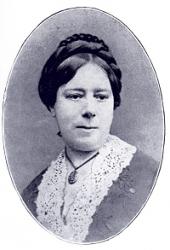
1827 - 1878 Topics: Nineteenth Sunday after Trinity Translator of "Faith is a living pow'r from heav'n " in Evangelical Lutheran hymnal Catherine Winkworth (b. Holborn, London, England, 1827; d. Monnetier, Savoy, France, 1878) is well known for her English translations of German hymns; her translations were polished and yet remained close to the original. Educated initially by her mother, she lived with relatives in Dresden, Germany, in 1845, where she acquired her knowledge of German and interest in German hymnody. After residing near Manchester until 1862, she moved to Clifton, near Bristol. A pioneer in promoting women's rights, Winkworth put much of her energy into the encouragement of higher education for women. She translated a large number of German hymn texts from hymnals owned by a friend, Baron Bunsen. Though often altered, these translations continue to be used in many modern hymnals. Her work was published in two series of Lyra Germanica (1855, 1858) and in The Chorale Book for England (1863), which included the appropriate German tune with each text as provided by Sterndale Bennett and Otto Goldschmidt. Winkworth also translated biographies of German Christians who promoted ministries to the poor and sick and compiled a handbook of biographies of German hymn authors, Christian Singers of Germany (1869).
Bert Polman
========================
Winkworth, Catherine, daughter of Henry Winkworth, of Alderley Edge, Cheshire, was born in London, Sep. 13, 1829. Most of her early life was spent in the neighbourhood of Manchester. Subsequently she removed with the family to Clifton, near Bristol. She died suddenly of heart disease, at Monnetier, in Savoy, in July, 1878. Miss Winkworth published:—
Translations from the German of the Life of Pastor Fliedner, the Founder of the Sisterhood of Protestant Deaconesses at Kaiserworth, 1861; and of the Life of Amelia Sieveking, 1863.
Her sympathy with practical efforts for the benefit of women, and with a pure devotional life, as seen in these translations, received from her the most practical illustration possible in the deep and active interest which she took in educational work in connection with the Clifton Association for the Higher Education of Women, and kindred societies there and elsewhere. Our interest, however, is mainly centred in her hymnological work as embodied in her:—
(1) Lyra Germanica, 1st Ser., 1855. (2) Lyra Germanica, 2nd Ser., 1858. (3) The Chorale Book for England (containing translations from the German, together with music), 1863; and (4) her charming biographical work, the Christian Singers of Germany, 1869.
In a sympathetic article on Miss Winkworth in the Inquirer of July 20, 1878, Dr. Martineau says:—
"The translations contained in these volumes are invariably faithful, and for the most part both terse and delicate; and an admirable art is applied to the management of complex and difficult versification. They have not quite the fire of John Wesley's versions of Moravian hymns, or the wonderful fusion and reproduction of thought which may be found in Coleridge. But if less flowing they are more conscientious than either, and attain a result as poetical as severe exactitude admits, being only a little short of ‘native music'"
Dr. Percival, then Principal of Clifton College, also wrote concerning her (in the Bristol Times and Mirror), in July, 1878:—
"She was a person of remarkable intellectual and social gifts, and very unusual attainments; but what specially distinguished her was her combination of rare ability and great knowledge with a certain tender and sympathetic refinement which constitutes the special charm of the true womanly character."
Dr. Martineau (as above) says her religious life afforded "a happy example of the piety which the Church of England discipline may implant.....The fast hold she retained of her discipleship of Christ was no example of ‘feminine simplicity,' carrying on the childish mind into maturer years, but the clear allegiance of a firm mind, familiar with the pretensions of non-Christian schools, well able to test them, and undiverted by them from her first love."
Miss Winkworth, although not the earliest of modern translators from the German into English, is certainly the foremost in rank and popularity. Her translations are the most widely used of any from that language, and have had more to do with the modern revival of the English use of German hymns than the versions of any other writer.
-- John Julian, Dictionary of Hymnology (1907)
============================
See also in:
Hymn Writers of the Church
Catherine Winkworth
John Stainer

1840 - 1901 Person Name: J. Stainer Topics: The Church Year Nineteenth Sunday after Trinity Composer of "[Thou hidden love of God, whose height]" in The Lutheran Hymnary
John Stainer
Isaac Watts
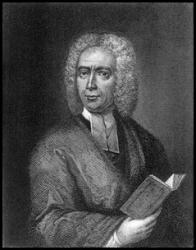
1674 - 1748 Person Name: Watts Topics: Nineteenth Sunday after Trinity Author of "Show pity, Lord; O Lord! forgive" in Church Book Isaac Watts was the son of a schoolmaster, and was born in Southampton, July 17, 1674. He is said to have shown remarkable precocity in childhood, beginning the study of Latin, in his fourth year, and writing respectable verses at the age of seven. At the age of sixteen, he went to London to study in the Academy of the Rev. Thomas Rowe, an Independent minister. In 1698, he became assistant minister of the Independent Church, Berry St., London. In 1702, he became pastor. In 1712, he accepted an invitation to visit Sir Thomas Abney, at his residence of Abney Park, and at Sir Thomas' pressing request, made it his home for the remainder of his life. It was a residence most favourable for his health, and for the prosecution of his literary labours. He did not retire from ministerial duties, but preached as often as his delicate health would permit.
The number of Watts' publications is very large. His collected works, first published in 1720, embrace sermons, treatises, poems and hymns. His "Horae Lyricae" was published in December, 1705. His "Hymns" appeared in July, 1707. The first hymn he is said to have composed for religious worship, is "Behold the glories of the Lamb," written at the age of twenty. It is as a writer of psalms and hymns that he is everywhere known. Some of his hymns were written to be sung after his sermons, giving expression to the meaning of the text upon which he had preached. Montgomery calls Watts "the greatest name among hymn-writers," and the honour can hardly be disputed. His published hymns number more than eight hundred.
Watts died November 25, 1748, and was buried at Bunhill Fields. A monumental statue was erected in Southampton, his native place, and there is also a monument to his memory in the South Choir of Westminster Abbey. "Happy," says the great contemporary champion of Anglican orthodoxy, "will be that reader whose mind is disposed, by his verses or his prose, to imitate him in all but his non-conformity, to copy his benevolence to men, and his reverence to God." ("Memorials of Westminster Abbey," p. 325.)
--Annotations of the Hymnal, Charles Hutchins, M.A., 1872.
=================================
Watts, Isaac, D.D. The father of Dr. Watts was a respected Nonconformist, and at the birth of the child, and during its infancy, twice suffered imprisonment for his religious convictions. In his later years he kept a flourishing boarding school at Southampton. Isaac, the eldest of his nine children, was born in that town July 17, 1674. His taste for verse showed itself in early childhood. He was taught Greek, Latin, and Hebrew by Mr. Pinhorn, rector of All Saints, and headmaster of the Grammar School, in Southampton. The splendid promise of the boy induced a physician of the town and other friends to offer him an education at one of the Universities for eventual ordination in the Church of England: but this he refused; and entered a Nonconformist Academy at Stoke Newington in 1690, under the care of Mr. Thomas Rowe, the pastor of the Independent congregation at Girdlers' Hall. Of this congregation he became a member in 1693.
Leaving the Academy at the age of twenty, he spent two years at home; and it was then that the bulk of the Hymns and Spiritual Songs (published 1707-9) were written, and sung from manuscripts in the Southampton Chapel. The hymn "Behold the glories of the Lamb" is said to have been the first he composed, and written as an attempt to raise the standard of praise. In answer to requests, others succeeded. The hymn "There is a land of pure delight" is said to have been suggested by the view across Southampton Water. The next six years of Watts's life were again spent at Stoke Newington, in the post of tutor to the son of an eminent Puritan, Sir John Hartopp; and to the intense study of these years must be traced the accumulation of the theological and philosophical materials which he published subsequently, and also the life-long enfeeblement of his constitution.
Watts preached his first sermon when he was twenty-four years old. In the next three years he preached frequently; and in 1702 was ordained pastor of the eminent Independent congregation in Mark Lane, over which Caryl and Dr. John Owen had presided, and which numbered Mrs. Bendish, Cromwell's granddaughter, Charles Fleetwood, Charles Desborough, Sir John Hartopp, Lady Haversham, and other distinguished Independents among its members. In this year he removed to the house of Mr. Hollis in the Minories. His health began to fail in the following year, and Mr. Samuel Price was appointed as his assistant in the ministry. In 1712 a fever shattered his constitution, and Mr. Price was then appointed co-pastor of the congregation which had in the meantime removed to a new chapel in Bury Street. It was at this period that he became the guest of Sir Thomas Abney, under whose roof, and after his death (1722) that of his widow, he remained for the rest of his suffering life; residing for the longer portion of these thirty-six years principally at the beautiful country seat of Theobalds in Herts, and for the last thirteen years at Stoke Newington. His degree of D.D. was bestowed on him in 1728, unsolicited, by the University of Edinburgh. His infirmities increased on him up to the peaceful close of his sufferings, Nov. 25, 1748. He was buried in the Puritan restingplace at Bunhill Fields, but a monument was erected to him in Westminster Abbey.
His learning and piety, gentleness and largeness of heart have earned him the title of the Melanchthon of his day. Among his friends, churchmen like Bishop Gibson are ranked with Nonconformists such as Doddridge. His theological as well as philosophical fame was considerable. His Speculations on the Human Nature of the Logos, as a contribution to the great controversy on the Holy Trinity, brought on him a charge of Arian opinions. His work on The Improvement of the Mind, published in 1741, is eulogised by Johnson. His Logic was still a valued textbook at Oxford within living memory. The World to Come, published in 1745, was once a favourite devotional work, parts of it being translated into several languages. His Catechisms, Scripture History (1732), as well as The Divine and Moral Songs (1715), were the most popular text-books for religious education fifty years ago. The Hymns and Spiritual Songs were published in 1707-9, though written earlier. The Horae Lyricae, which contains hymns interspersed among the poems, appeared in 1706-9. Some hymns were also appended at the close of the several Sermons preached in London, published in 1721-24. The Psalms were published in 1719. The earliest life of Watts is that by his friend Dr. Gibbons. Johnson has included him in his Lives of the Poets; and Southey has echoed Johnson's warm eulogy. The most interesting modern life is Isaac Watts: his Life and Writings, by E. Paxton Hood. [Rev. H. Leigh Bennett, M.A.]
A large mass of Dr. Watts's hymns and paraphrases of the Psalms have no personal history beyond the date of their publication. These we have grouped together here and shall preface the list with the books from which they are taken.
(l) Horae Lyricae. Poems chiefly of the Lyric kind. In Three Books Sacred: i.To Devotion and Piety; ii. To Virtue, Honour, and Friendship; iii. To the Memory of the Dead. By I. Watts, 1706. Second edition, 1709. (2) Hymns and Spiritual Songs. In Three Books: i. Collected from the Scriptures; ii. Composed on Divine Subjects; iii. Prepared for the Lord's Supper. By I. Watts, 1707. This contained in Bk i. 78 hymns; Bk. ii. 110; Bk. iii. 22, and 12 doxologies. In the 2nd edition published in 1709, Bk. i. was increased to 150; Bk. ii. to 170; Bk. iii. to 25 and 15 doxologies. (3) Divine and Moral Songs for the Use of Children. By I. Watts, London, 1715. (4) The Psalms of David Imitated in the Language of the New Testament, And apply'd to the Christian State and Worship. By I. Watts. London: Printed by J. Clark, at the Bible and Crown in the Poultry, &c, 1719. (5) Sermons with hymns appended thereto, vol. i., 1721; ii., 1723; iii. 1727. In the 5th ed. of the Sermons the three volumes, in duodecimo, were reduced to two, in octavo. (6) Reliquiae Juveniles: Miscellaneous Thoughts in Prose and Verse, on Natural, Moral, and Divine Subjects; Written chiefly in Younger Years. By I. Watts, D.D., London, 1734. (7) Remnants of Time. London, 1736.
454 Hymns and Versions of the Psalms, in addition to the centos are all in common use at the present time.
--Excerpts from John Julian, Dictionary of Hymnology (1907)
==================================
Watts, I. , p. 1241, ii. Nearly 100 hymns, additional to those already annotated, are given in some minor hymn-books.
--John Julian, Dictionary of Hymnology, Appendix, Part II (1907)
=================
Watts, I. , p. 1236, i. At the time of the publication of this Dictionary in 1892, every copy of the 1707 edition of Watts's Hymns and Spiritual Songs was supposed to have perished, and all notes thereon were based upon references which were found in magazines and old collections of hymns and versions of the Psalms. Recently three copies have been recovered, and by a careful examination of one of these we have been able to give some of the results in the revision of pp. 1-1597, and the rest we now subjoin.
i. Hymns in the 1709 ed. of Hymns and Spiritual Songs which previously appeared in the 1707 edition of the same book, but are not so noted in the 1st ed. of this Dictionary:—
On pp. 1237, L-1239, ii., Nos. 18, 33, 42, 43, 47, 48, 60, 56, 58, 59, 63, 75, 82, 83, 84, 85, 93, 96, 99, 102, 104, 105, 113, 115, 116, 123, 124, 134, 137, 139, 146, 147, 148, 149, 162, 166, 174, 180, 181, 182, 188, 190, 192, 193, 194, 195, 197, 200, 202.
ii. Versions of the Psalms in his Psalms of David, 1719, which previously appeared in his Hymns and Spiritual Songs, 1707:—
On pp. 1239, U.-1241, i., Nos. 241, 288, 304, 313, 314, 317, 410, 441.
iii. Additional not noted in the revision:—
1. My soul, how lovely is the place; p. 1240, ii. 332. This version of Ps. lxiv. first appeared in the 1707 edition of Hymns & Spiritual Songs, as "Ye saints, how lovely is the place."
2. Shine, mighty God, on Britain shine; p. 1055, ii. In the 1707 edition of Hymns & Spiritual Songs, Bk. i., No. 35, and again in his Psalms of David, 1719.
3. Sing to the Lord with [cheerful] joyful voice, p. 1059, ii. This version of Ps. c. is No. 43 in the Hymns & Spiritual Songs, 1707, Bk. i., from which it passed into the Ps. of David, 1719.
A careful collation of the earliest editions of Watts's Horae Lyricae shows that Nos. 1, 7, 9, 10, 11, 12, 14, 16, p. 1237, i., are in the 1706 ed., and that the rest were added in 1709. Of the remaining hymns, Nos. 91 appeared in his Sermons, vol. ii., 1723, and No. 196 in Sermons, vol. i., 1721. No. 199 was added after Watts's death. It must be noted also that the original title of what is usually known as Divine and Moral Songs was Divine Songs only.
--John Julian, Dictionary of Hymnology, New Supplement (1907)
===========
See also in:
Hymn Writers of the Church
Isaac Watts